BY:K.CHITRA
MENTAL STATUS EXAMINATION
Evaluation of psychiatric patients
• Interview of the patient
• Interview of the relatives
• History taking
• MSE
• Physical Examination and investigations
• The weather is very awesome. Its toooooo much cold. We all are in Govt college
of nursing and all are enjoying the weather. U're a bus driver. At the first stop 4
people get on. At the second stop 8 people get on, at the third stop 2 people get
off and, at the forth stop everyone got off.
• The question is what color are the bus driver's eyes?
• What is the name of driver?
DEFINITION:
Mental Status Examination (MSE) is defined as the systematic evaluation of
behavior, emotion and cognitive functions of individual. • It is a standardized form
at in which the clinician records the psychiatric signs and symptoms present at the
time of the interview.
PSYCHOMOTOR ACTIVITY:
• Increased/ decreased .
• Excitement/ stupor .
• Abnormal involuntary movements like tremors, tics.
• Social withdrawal, autism.
SPEECH.
• Coherence: Speech is coherent or not.(LOGI)
• Relevance: Relevant/ irrelevant
• Volume: Increased/decreased
• Tone: Low/high/ normal pitch
• Manner: Formal/ Informal.
• Reaction time: Normal/ late reaction
MOOD(SUBJECTIVES) & AFFECT(OBJECTIVES):
• Appropriate/ inappropriate
• Pleasure affect
• Unpleasurable affect
• Other affects: – Anhedonia may occur in both schizophrenia and depression.
THOUGHT:
a) Form of thought: – Relevant or not
– loosening of association,
– Tangentiality or circumstantiality,
– illogical thinking
– perseveration
– verbigeration.
THOUGHT:
B) Stream of thought/ flow of thought:
– productivity
– flight of ideas
– poverty of content of speech
– thought block
c) Content of thought
– Delusions
– Obsession
– Phobia (irrational fear)
– Preoccupation
– Fantasy
a) Illusions: – whether visual, auditory or in other sensory fields,
– whether occur in clear consciousness or not
a) Hallucinations:
– whether auditory, visual, olfactory, gustatory or tactile domains.
– what was heard, how many voices were heard & in which part of the day
– male or female voices
– whether this are second person or third person hallucinations
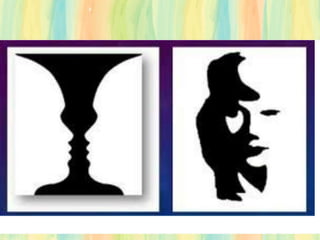
DISORDERS OF PERCEPTIONS:
a) Attention and concentration:
• Attention:
– easily aroused and sustained
– repeat digits forward and backwards
– start with two digit numbers, increasing gradually up to eight digit numbers or
till failure occurs on three consecutive occasions.
– ask to list the months of the year forward and backward
COGNITIVE FUNCTIONS:
• Concentration:
– easily distractible or not;
– ask to subtract serial sevens from hundred(100- 7test), or serial threes from fifty
(50-3 test), or
– to count backwards from 20, or – enumerate the names of the months in the
reverse order
b) Memory: – Immediate Retention and Recall(IR and R)
: Use the digit span test to assess the immediate memory; digit forward and back
wards subtests.
– Recent Memory:
• Ask how the patient come to the room/hospital;
• what he ate for breakfast the same morning
– Remote Memory:
• Ask for the date and place of marriage, name and birthdays of children, any other
relevant questions from the person’s past.
• Note any amnesia or confabulation, Dejavu if present.
c) Orientation:
– Time
– Place
– Person
d) Abstraction:
– Proverb Testing: The meaning of simple proverbs should be asked. (e,g features of
bird flock together/rolling stones gather no mass)
– Similarities between familiar objects should be asked, like: table/ chair; banana/
orange etc.
e) Intelligence:
– about general information,
– e.g.; ask about the current or past prime minister and president of India, the
capital of India and the name of various states.
• Judgment: :
-Personal (future plans)
-Social (perception of the society.)
-Test (Present a situation and ask their response to the situation).
g) Insight:
Ask patient’s attitude towards his present state;
whether there is an illness or not;
if yes which kind of illness;
is any treatment needed;
is there hope for recovery;
what is the cause of illness.
a) Sleep:
– Insomnia
– Hypersomnia
– Early Morning Awakening
b) Episodic Disturbance
GENERAL OBSERVATIONS:
• General assessment of the patient should be written along with:
– Patient’s history starting from admission history,
– Reason of admission,
– Diagnosis,
– Treatment etc.
IX. SUMMARY & CLINICAL DIAGNOSIS:
ALLPPT.com _ Free PowerPoint Templates, Diagrams and Charts

MENTAL STATUS EXAMINATION.

  • 1.
  • 2.
    Evaluation of psychiatricpatients • Interview of the patient • Interview of the relatives • History taking • MSE • Physical Examination and investigations
  • 3.
    • The weatheris very awesome. Its toooooo much cold. We all are in Govt college of nursing and all are enjoying the weather. U're a bus driver. At the first stop 4 people get on. At the second stop 8 people get on, at the third stop 2 people get off and, at the forth stop everyone got off. • The question is what color are the bus driver's eyes? • What is the name of driver?
  • 4.
    DEFINITION: Mental Status Examination(MSE) is defined as the systematic evaluation of behavior, emotion and cognitive functions of individual. • It is a standardized form at in which the clinician records the psychiatric signs and symptoms present at the time of the interview.
  • 6.
    PSYCHOMOTOR ACTIVITY: • Increased/decreased . • Excitement/ stupor . • Abnormal involuntary movements like tremors, tics. • Social withdrawal, autism.
  • 7.
    SPEECH. • Coherence: Speechis coherent or not.(LOGI) • Relevance: Relevant/ irrelevant • Volume: Increased/decreased • Tone: Low/high/ normal pitch • Manner: Formal/ Informal. • Reaction time: Normal/ late reaction
  • 8.
    MOOD(SUBJECTIVES) & AFFECT(OBJECTIVES): •Appropriate/ inappropriate • Pleasure affect • Unpleasurable affect • Other affects: – Anhedonia may occur in both schizophrenia and depression.
  • 9.
    THOUGHT: a) Form ofthought: – Relevant or not – loosening of association, – Tangentiality or circumstantiality, – illogical thinking – perseveration – verbigeration.
  • 10.
    THOUGHT: B) Stream ofthought/ flow of thought: – productivity – flight of ideas – poverty of content of speech – thought block c) Content of thought – Delusions – Obsession – Phobia (irrational fear) – Preoccupation – Fantasy
  • 16.
    a) Illusions: –whether visual, auditory or in other sensory fields, – whether occur in clear consciousness or not a) Hallucinations: – whether auditory, visual, olfactory, gustatory or tactile domains. – what was heard, how many voices were heard & in which part of the day – male or female voices – whether this are second person or third person hallucinations DISORDERS OF PERCEPTIONS:
  • 17.
    a) Attention andconcentration: • Attention: – easily aroused and sustained – repeat digits forward and backwards – start with two digit numbers, increasing gradually up to eight digit numbers or till failure occurs on three consecutive occasions. – ask to list the months of the year forward and backward COGNITIVE FUNCTIONS:
  • 18.
    • Concentration: – easilydistractible or not; – ask to subtract serial sevens from hundred(100- 7test), or serial threes from fifty (50-3 test), or – to count backwards from 20, or – enumerate the names of the months in the reverse order
  • 19.
    b) Memory: –Immediate Retention and Recall(IR and R) : Use the digit span test to assess the immediate memory; digit forward and back wards subtests. – Recent Memory: • Ask how the patient come to the room/hospital; • what he ate for breakfast the same morning – Remote Memory: • Ask for the date and place of marriage, name and birthdays of children, any other relevant questions from the person’s past. • Note any amnesia or confabulation, Dejavu if present.
  • 20.
    c) Orientation: – Time –Place – Person d) Abstraction: – Proverb Testing: The meaning of simple proverbs should be asked. (e,g features of bird flock together/rolling stones gather no mass) – Similarities between familiar objects should be asked, like: table/ chair; banana/ orange etc.
  • 21.
    e) Intelligence: – aboutgeneral information, – e.g.; ask about the current or past prime minister and president of India, the capital of India and the name of various states. • Judgment: : -Personal (future plans) -Social (perception of the society.) -Test (Present a situation and ask their response to the situation).
  • 22.
    g) Insight: Ask patient’sattitude towards his present state; whether there is an illness or not; if yes which kind of illness; is any treatment needed; is there hope for recovery; what is the cause of illness.
  • 23.
    a) Sleep: – Insomnia –Hypersomnia – Early Morning Awakening b) Episodic Disturbance GENERAL OBSERVATIONS:
  • 24.
    • General assessmentof the patient should be written along with: – Patient’s history starting from admission history, – Reason of admission, – Diagnosis, – Treatment etc. IX. SUMMARY & CLINICAL DIAGNOSIS:
  • 25.
    ALLPPT.com _ FreePowerPoint Templates, Diagrams and Charts