What is
Mental Health??
Mental health refers to the maintenance of
successful mental activity.
What is
Mental Health??
Mental health refers to the maintenance of
successful mental activity.
This includes maintaining productive daily activities
and maintaining fulfilling relationships with others.
It also includes maintaining the abilities to
adapt to change and to cope with stresses.
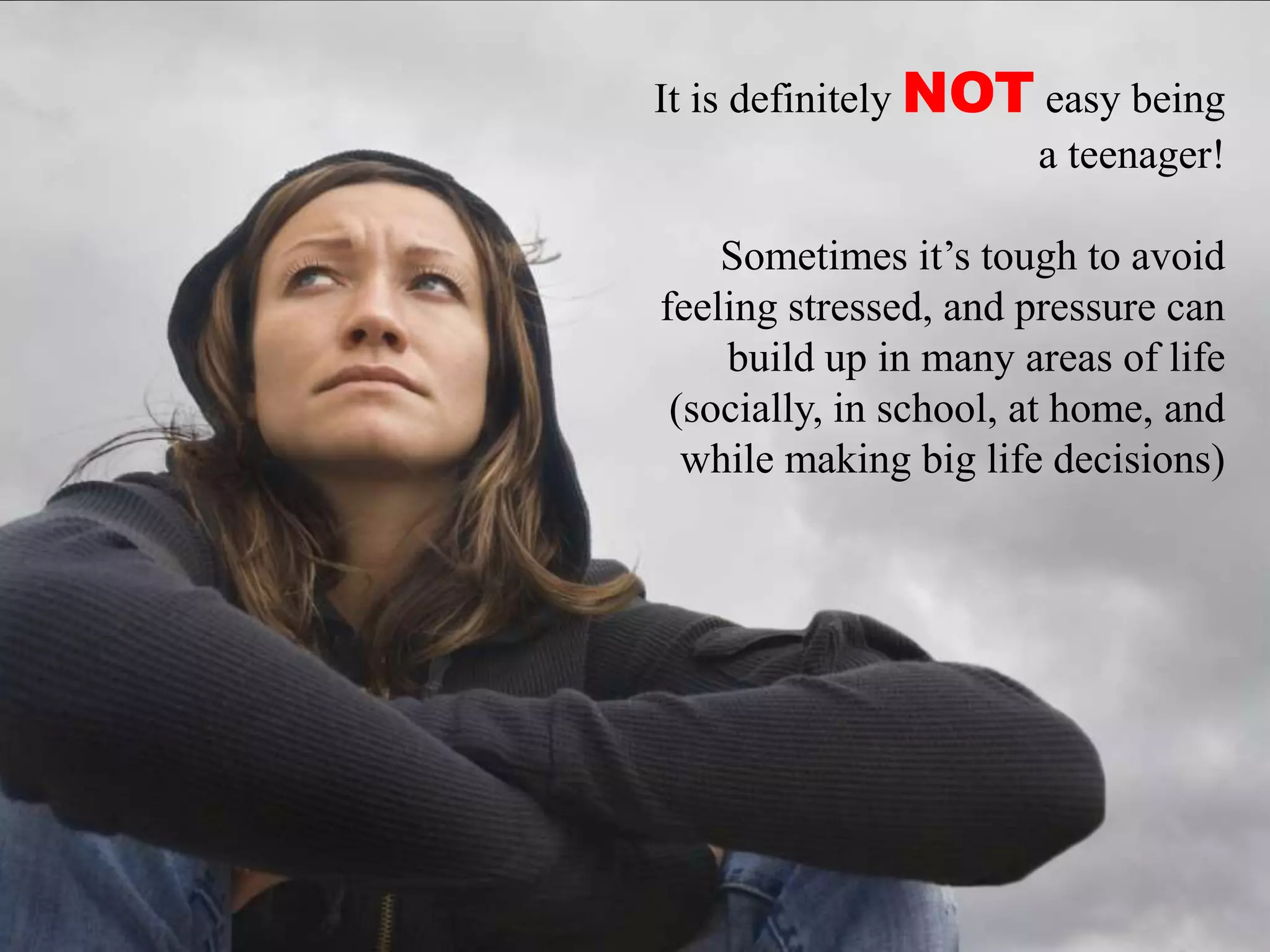
It is definitely NOT easy being
a teenager!
Sometimes it’s tough to avoid
feeling stressed, and pressure can
build up in many areas of life
(socially, in school, at home, and
while making big life decisions)
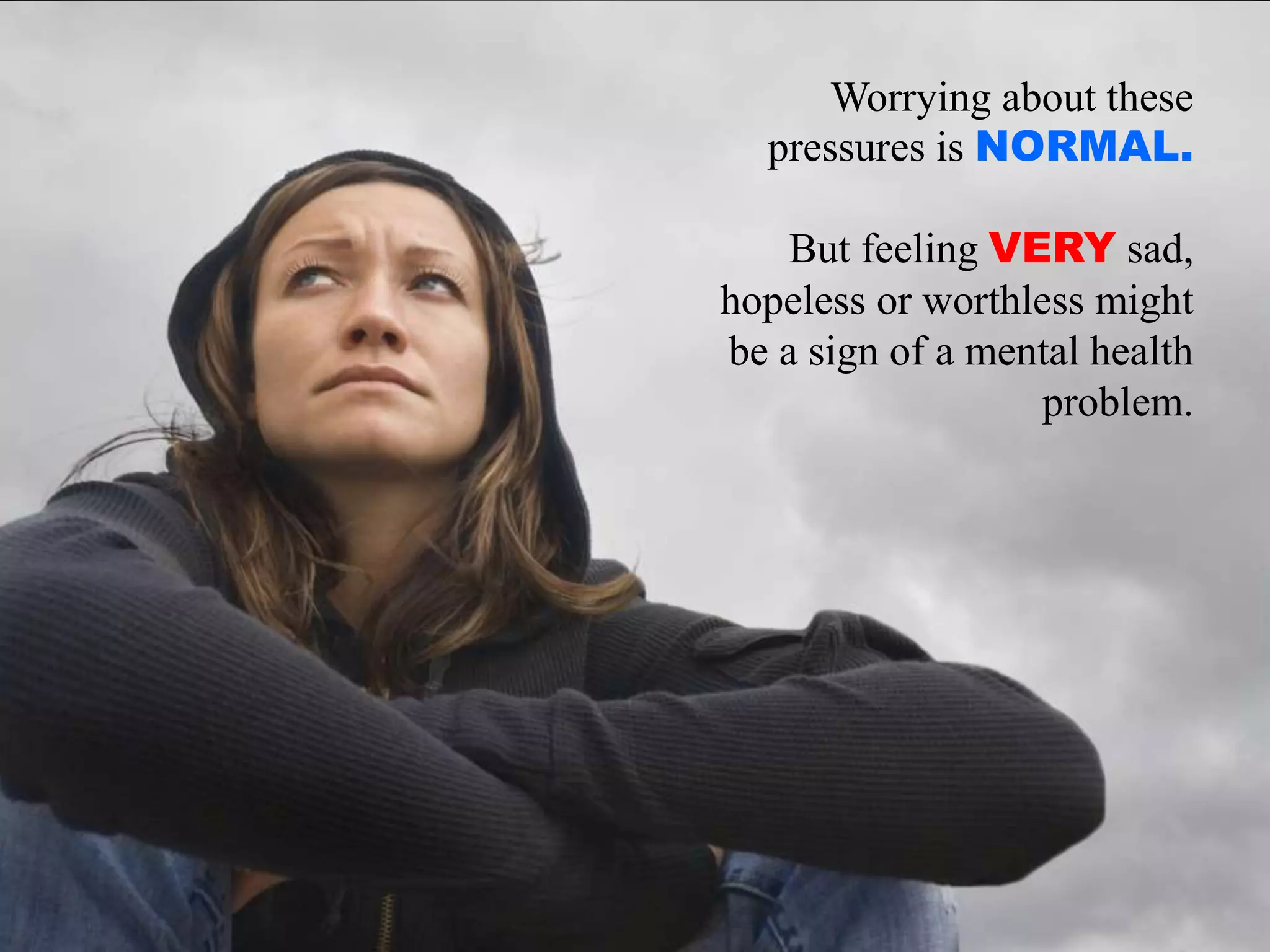
Worrying about these
pressures is NORMAL.
But feeling VERY sad,
hopeless or worthless might
be a sign of a mental health
problem.
How resilient are you?
How flexible are you in
different situations?
Environment?
Resiliency – is the capacity to establish
and maintain one’s balance and well
being in the face of adversity.
Adaptability – the capacity to adjust to
changes necessary for one’s survival
and balance.
SELF ESTEEM AND BODY
ESTEEM
• Self-esteem is all about how much you
feel you are worth — and how much you
feel other people value you.
• Body image is how you view your physical
self — including whether you feel you are
attractive and whether others like your
looks.
So, what are the
CAUSES
of mental illness??
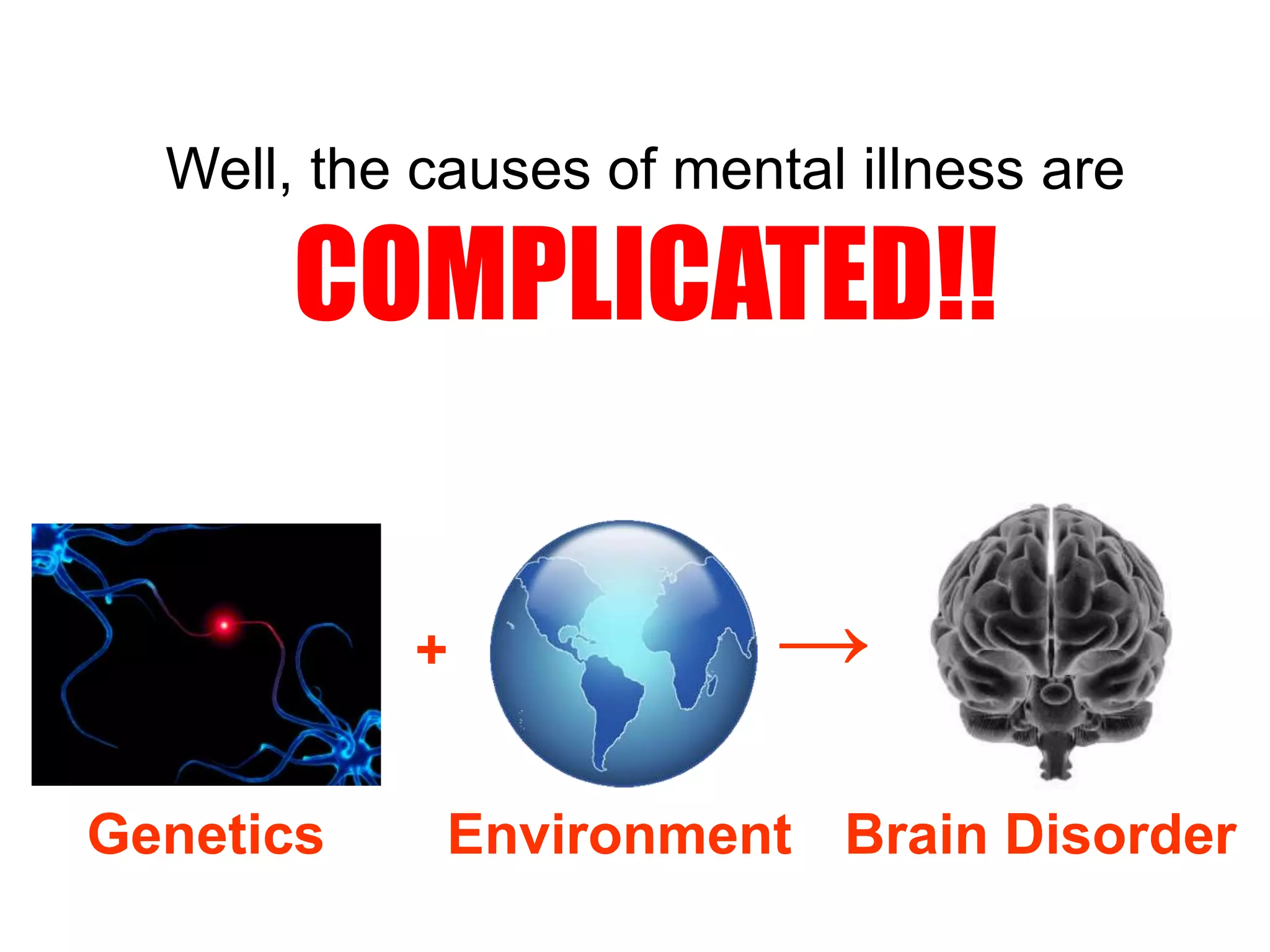
Well, the causes of mental illness are
COMPLICATED!!
Genetics Environment
+ →
Brain Disorder
What do we know about the
causes of mental illness?
The symptoms of mental
illness are a result of
abnormal brain functioning.
Mental illness is a brain
disorder.
Mental illness is rarely if
ever caused by stress alone
What do we know about the
causes of mental illness?
It is not the consequence of bad
behavior.
It is not the result of personal
weakness or deficits in personality.
Only in exceptional cases is it caused
by nutritional factors.
It is not caused by poverty.
MENTAL HEALTH CHALLENGES
ADHD (Attention Deficit Hyperactivity
Disorder)
Autism Spectrum Disorder
Bi-Polar Disorder
Depression
Eating Disorders
Post-Traumatic Stress Disorder (PTSD)
Schizophrenia
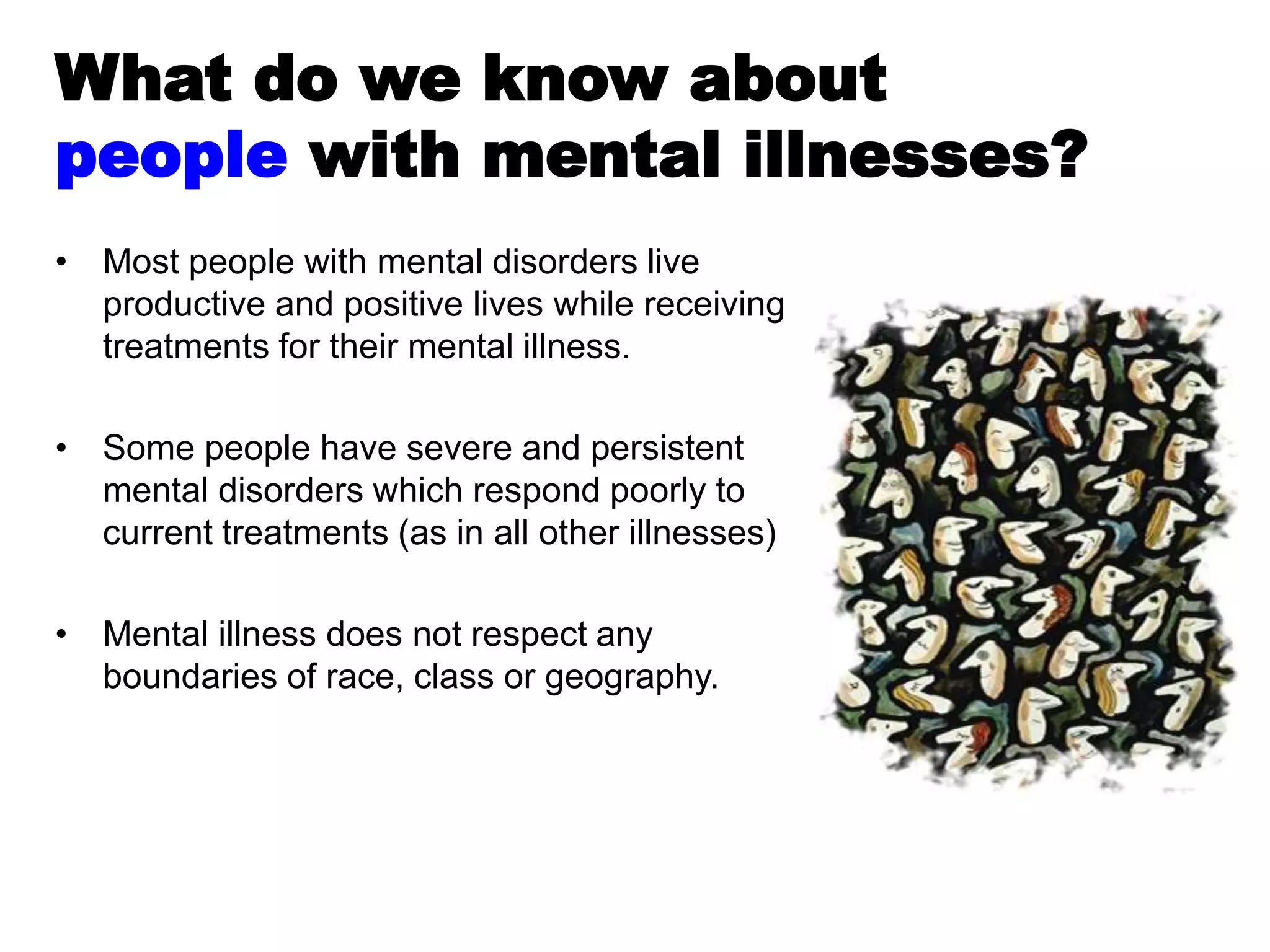
• Most people with mental disorders live
productive and positive lives while receiving
treatments for their mental illness.
• Some people have severe and persistent
mental disorders which respond poorly to
current treatments (as in all other illnesses)
• Mental illness does not respect any
boundaries of race, class or geography.
What do we know about
people with mental illnesses?
Mental health problems can be treated!
If you feel VERY sad, stressed or worried, it might help
to talk to someone about how you are feeling.
Why is mental health so
important?
What can I do to help protect
my mental health?
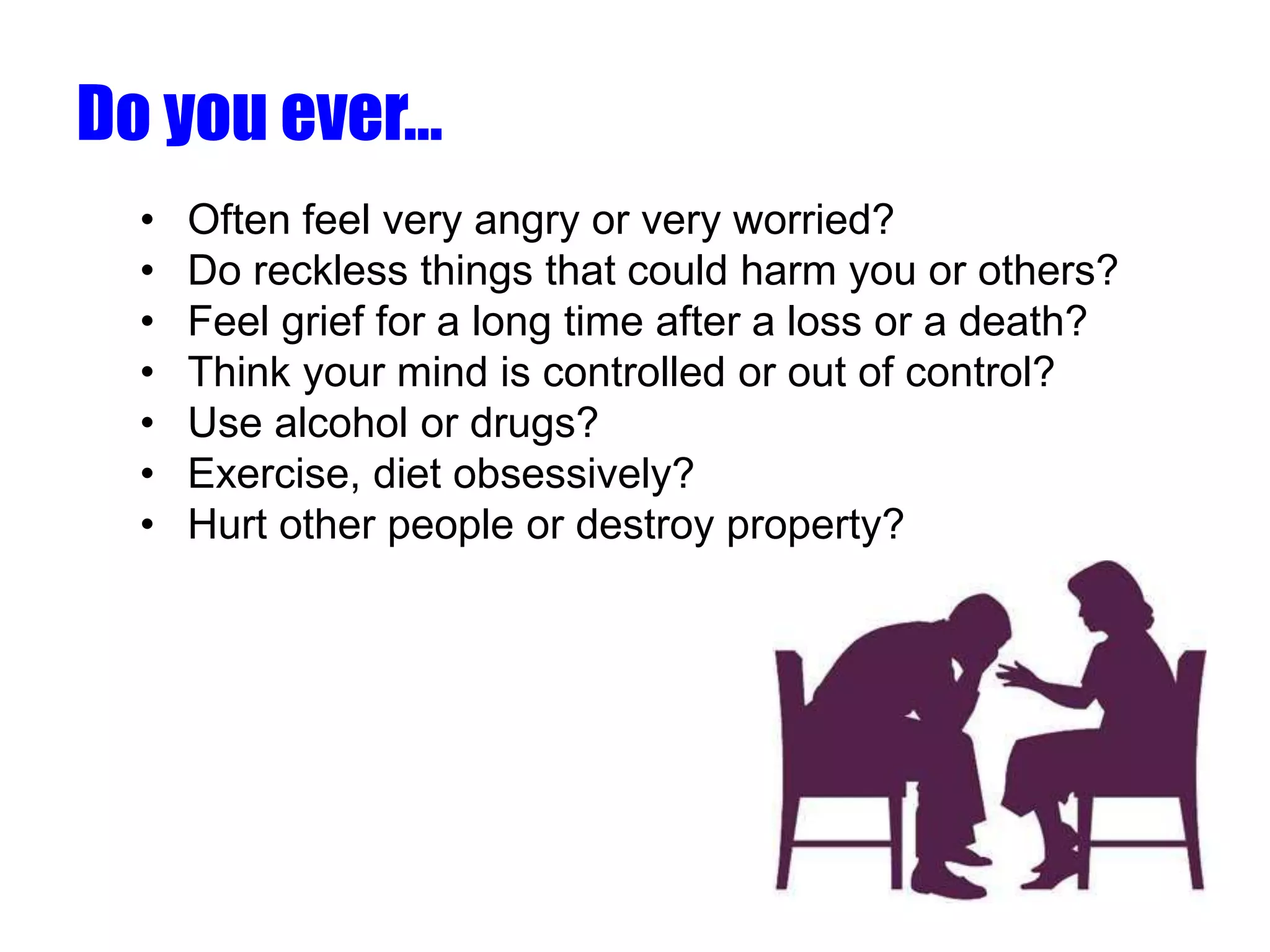
Do you ever…
• Often feel very angry or very worried?
• Do reckless things that could harm you or others?
• Feel grief for a long time after a loss or a death?
• Think your mind is controlled or out of control?
• Use alcohol or drugs?
• Exercise, diet obsessively?
• Hurt other people or destroy property?
Do you ever…
• Often feel very angry or very worried?
• Do reckless things that could harm you or others?
• Feel grief for a long time after a loss or a death?
• Think your mind is controlled or out of control?
• Use alcohol or drugs?
• Exercise, diet and/or binge-eat obsessively?
• Hurt other people or destroy property?
If you feel any of these
things, it might help to talk
to a parent, teacher, school
counselor or physician.
Journal Writing1
Explain the following statements (minimum
of 5 sentences)
1. Self-care is not selfish, you
deserve it!
2. There is no health without mental
health.
Pointers
• Defense mechanism
• Aspects of holistic
development
• Concepts of holistic
development
• Big Five Model
(Ocean)
• Stages of personality
development
• Types of stress
• Symptoms of stress
• Parts of the brain (lobes
and their function)
• Theories
• Concepts of mental
health(WHO)
• Mind map on mental
health
Types of test
1. Identification
2. Multiple choice
(situational and
conceptual
3. Mind mapping

Chapter 7 mental health and well being

  • 3.
    What is Mental Health?? Mentalhealth refers to the maintenance of successful mental activity.
  • 4.
    What is Mental Health?? Mentalhealth refers to the maintenance of successful mental activity. This includes maintaining productive daily activities and maintaining fulfilling relationships with others. It also includes maintaining the abilities to adapt to change and to cope with stresses.
  • 5.
    It is definitelyNOT easy being a teenager! Sometimes it’s tough to avoid feeling stressed, and pressure can build up in many areas of life (socially, in school, at home, and while making big life decisions)
  • 6.
    Worrying about these pressuresis NORMAL. But feeling VERY sad, hopeless or worthless might be a sign of a mental health problem.
  • 7.
    How resilient areyou? How flexible are you in different situations? Environment?
  • 8.
    Resiliency – isthe capacity to establish and maintain one’s balance and well being in the face of adversity. Adaptability – the capacity to adjust to changes necessary for one’s survival and balance.
  • 9.
    SELF ESTEEM ANDBODY ESTEEM • Self-esteem is all about how much you feel you are worth — and how much you feel other people value you. • Body image is how you view your physical self — including whether you feel you are attractive and whether others like your looks.
  • 10.
    So, what arethe CAUSES of mental illness??
  • 11.
    Well, the causesof mental illness are COMPLICATED!! Genetics Environment + → Brain Disorder
  • 12.
    What do weknow about the causes of mental illness? The symptoms of mental illness are a result of abnormal brain functioning. Mental illness is a brain disorder. Mental illness is rarely if ever caused by stress alone
  • 13.
    What do weknow about the causes of mental illness? It is not the consequence of bad behavior. It is not the result of personal weakness or deficits in personality. Only in exceptional cases is it caused by nutritional factors. It is not caused by poverty.
  • 14.
    MENTAL HEALTH CHALLENGES ADHD(Attention Deficit Hyperactivity Disorder) Autism Spectrum Disorder Bi-Polar Disorder Depression Eating Disorders Post-Traumatic Stress Disorder (PTSD) Schizophrenia
  • 15.
    • Most peoplewith mental disorders live productive and positive lives while receiving treatments for their mental illness. • Some people have severe and persistent mental disorders which respond poorly to current treatments (as in all other illnesses) • Mental illness does not respect any boundaries of race, class or geography. What do we know about people with mental illnesses?
  • 16.
    Mental health problemscan be treated! If you feel VERY sad, stressed or worried, it might help to talk to someone about how you are feeling.
  • 17.
    Why is mentalhealth so important?
  • 18.
    What can Ido to help protect my mental health?
  • 19.
    Do you ever… •Often feel very angry or very worried? • Do reckless things that could harm you or others? • Feel grief for a long time after a loss or a death? • Think your mind is controlled or out of control? • Use alcohol or drugs? • Exercise, diet obsessively? • Hurt other people or destroy property?
  • 20.
    Do you ever… •Often feel very angry or very worried? • Do reckless things that could harm you or others? • Feel grief for a long time after a loss or a death? • Think your mind is controlled or out of control? • Use alcohol or drugs? • Exercise, diet and/or binge-eat obsessively? • Hurt other people or destroy property? If you feel any of these things, it might help to talk to a parent, teacher, school counselor or physician.
  • 27.
    Journal Writing1 Explain thefollowing statements (minimum of 5 sentences) 1. Self-care is not selfish, you deserve it! 2. There is no health without mental health.
  • 28.
    Pointers • Defense mechanism •Aspects of holistic development • Concepts of holistic development • Big Five Model (Ocean) • Stages of personality development • Types of stress • Symptoms of stress • Parts of the brain (lobes and their function) • Theories • Concepts of mental health(WHO) • Mind map on mental health Types of test 1. Identification 2. Multiple choice (situational and conceptual 3. Mind mapping