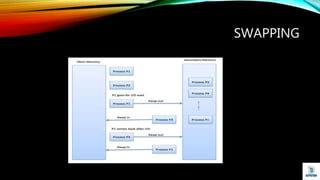
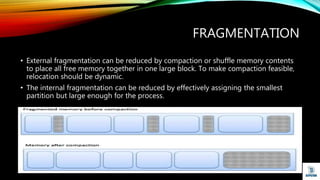
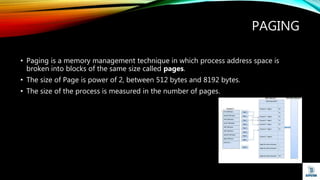
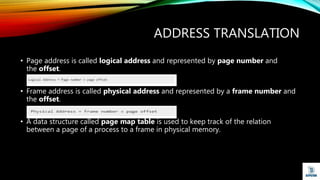
This document discusses memory management techniques in operating systems. It defines memory management as the functionality that handles primary memory and moves processes between main memory and disk. It describes process address spaces and different types of addresses. It also covers static vs dynamic loading and linking, swapping, memory allocation, fragmentation, paging, segmentation, and address translation. Paging breaks processes into fixed-size blocks called pages, while segmentation divides processes into variable-length segments. The operating system uses techniques like page mapping tables, segment maps, and memory compaction to manage memory.