Name : Dhananjay Kapse
Class:9th ‘B’
Sub:Science
Roll.No:02
Topic:Communicable
Diseases
Disease
It is a term for an abnormal condition that
impairs the normal functioning of the body
Disease Causes…
Discomfort, Dysfunction, Distress and Death.
Disabilities, Disorders, Syndromes, Infections and
other unusual variations of structure and functions.
Types Of Diseases:
 Communicable/Contagious
These Are Infectious Disease Capable Of
Passing From One Person To Another.
Communicable Disease
Diseases that are spread from one person to the other.
Diseases that are “catching”
Diseases that are caused by germs or pathogens.
Examples of pathogens include: viruses, bacteria ,
parasitic worms and fungi.
Non-communicable Disease
Are those diseases which are not infectious
which may result from genetics or lifestyle.
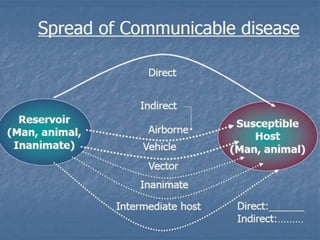
Infectious diseases are those that are transmitted from
person to person by direct or indirect contact. Viruses,
bacteria, parasites, and fungi all cause infectious disease.
Malaria, measles, and respiratory illnesses are examples
of infectious diseases.
Modes of Transmission
Some Communicable Diseases Are
As Follows:
Malaria
Aids
Typhoid
Elephantiasis
Tuberculosis
Cholera
 1. Malaria:
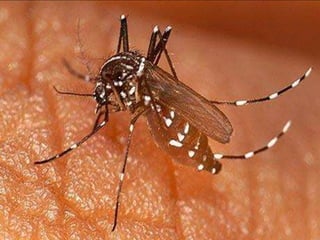
 Malaria is a very common disease in developing countries. The word malaria is
derived from the word ‘mal-aria meaning bad air. Ronald Ross first discovered the
transmission of malaria by mosquitoes, while he was working in India in 1897.
Malaria is one of the most widespread diseases in the world.
 Each year, there are 300 to 500 million clinical cases of malaria, 90 percent of
them in Africa alone. Among all infectious diseases, malaria continues to be one of
the biggest contributors to disease burden in terms of deaths and suffering.
Malaria kills more than one million children a year in the developing world,
accounting for about half of malaria deaths globally.
The risk of getting malaria extends to almost the entire
population in India (almost 95 percent). The following
states that have the highest number of malaria cases are
Madhya Pradesh, Maharashtra, Orissa, Karnataka,
Rajasthan, Assam, Gujarat and Andhra Pradesh.
Common Symptoms Of Malaria
Include:
 shaking chills that are moderate to severe.
 high fever.
 profuse sweating.
 headache.
 nausea.
 vomiting.
 diarrhoea.
 anemia.
Preventions of Malaria
Use a spray containing permethrin on clothing.
Apply insect repellents regularly in cream, spray or gel form
that contain diethyltoluamide (DEET).
Use coils and mats impregnated with insecticide in closed
rooms to repel the mosquitoes.
Malaria prophylaxis are taken.
Anti-malarial drugs are used such as chloroquine.
Aids
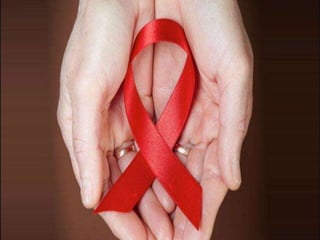
 AIDS is a syndrome caused by the HIV virus.4 It is when a person’s
immune system is too weak to fight off many infections, and develops when the
HIV infection is very advanced. This is the last stage of HIV infection where
the body can no longer defend itself and may develop various diseases,
infections and if left untreated, death.
 There is currently no cure for HIV or AIDS. However, with the right
treatment and support, people can live long and healthy lives with HIV. To do
this, it is especially important to take treatment correctly and deal with any
possible side-effects.
Common Symptoms Of Aids
 Headache
 Diarrhea
 Nausea and vomiting
 Fatigue
 Aching muscles
 Sore throat
 Red rash that doesn't itch, usually on the torso.
 fever
Prevention Of Aids
 Some ways to protect yourself-
 Monogamous Relationship.
 Protected Sex.
 Sterile needles.
 New shaving/cutting blades.
 Anti-retroviral drugs are used-
 AZT (Zidovudine).
 Viramune (Nevirapine).
 Norvir (Ritonavir).
Typhoid
 Typhoid fever is an acute, systemic infection presenting as fever with abdominal symptoms,
caused by Salmonella typhi and paratyphi. Before nineteenth century, typhus and typhoid fever
were considered to be the same. Enteric fever is an alternative name for typhoid. Salmonella typhi
and paratyphi colonise only humans.
 The organisms are acquired via ingestion of food or water, contaminated with human excreta
from infected persons. Direct person-to-person transmission is rare. Typhoid is a global health
problem. It is seen in children older than the age of one.
 Outbreak of typhoid in developing countries results in high mortality. The recent development of
antibiotic resistant organisms is causing much concern. Typhoid fever is more common in the tropics.
It tends to occur in places, where the sanitation standards are poor. A bacterial organism called
salmonella typhi causes typhoid fever.
Symptoms Of Typhoid
 Typhoid is notorious for causing a fever that can reach temperatures as high as 39-40°C (103-104°F).
 Profuse sweating
 Children and young adults aged between 5 and 19 years are most commonly affected
 Headache and muscle pain
 Abdominal bloating and discomfort
 Nausea and vomiting
 Loss of appetite
 Diarrhea or constipation. While children are more likely to get diarrhea, adults may get constipated.
 Fatigue
 Small pink rash of flat spots across the body, especially the torso
Prevention Of Typhoid
Avoid drinking untreated water
Wash your hands
Avoid raw fruits and vegetables
Choose hot foods
Take your antibiotics
Avoid handling food
Elephantiasis
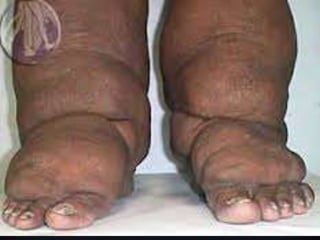
Elephantiasis refers to a parasitic infection that causes
extreme swelling in the arms and legs. The disease is
caused by the filarial worm, which is transmitted form
human to human via the female mosquito when it takes a
blood meal. The parasite grows into an adult worm that
lives in the lymphatic system of humans
Symptoms Of Elephantiasis
 Fever
 Pain in lymph nodes
 swollen lymph nodes
 Thickening skin
Prevention Of Elephantiasis
 Washing Hands and Feet
 Application of Ointment
 Wearing Shoes
 Taking Precaution Against Mosquitoes
 Wearing Elastic Bandages
Tuberculosis
 Tuberculosis remains a worldwide public health problem, particularly in the
Third World countries. Tuberculosis is India’s biggest public health problem. An
estimated that 5, 00,000 deaths annually are reported due to this disease, while a
similar number of persons get cured.
 The population in the Third World countries like India is exposed to tuberculo-
sis. The disease, however, does not develop in everyone who is exposed. Poor
nutrition, overcrowding, low socio-economic status, are more likely to develop the
disease.
The prevalence of people who are infected is about 30 percent of
the population. The prevalence of infection is more common in the
younger population. The vast majority of cases are to be found in
rural and semi-urban areas, where more than 80 percent of the
country’s population lives. In urban areas, tuberculosis is found
more frequently in slum-dwellers and lower socio-economic groups
than in well-off groups.
Symptoms Of Tuberculosis
 Overall Sensation Of Feeling Unwell
 Cough, Possibly With Bloody Mucus
 Fatigue
 Shortness Of Breath
 Weight Loss
 Low-grade Fever
 Night Sweats
 Chest Pain When Breathing
TUBERCULOSIS PREVENTION
Do not spend long periods of time in stuffy, enclosed rooms with
anyone who has active TB until that person has been treated for at
least 2 weeks.
Use protective measures, such as face masks, if you work in a
facility that cares for people who have untreated TB.
If you live with someone who has active TB, help and encourage
the person to follow treatment instructions.
Cholera
 Cholera is an acute diarrhoeal disease caused by V. Cholera (classical or El
T). It is now commonly due to the El T or biotype. The majority of infections
are mild or symptomatic. Epidemics of cholera are characteristically abrupt
and often create an acute public health problem. They have a high potential to
spread fast and cause deaths. The epidemic reaches a peak and subsides
gradually as the ‘force of infection declines. Often, when time control
measures are instituted, the epidemic has already reached its peak and is
waning
Symptoms Of Cholera
Sudden Onset Of Painless, Profuse, Watery Diarrhoea
Nausea And Vomiting Early In The Illness
Dehydration.
Prevention Of Cholera
Drink only safe water
Wash hands with soap and water frequently
Eat food that's completely cooked and hot
Stick to fruits and vegetables that you can peel yourself
Be wary of dairy foods
communicable Diseases

communicable Diseases

  • 1.
    Name : DhananjayKapse Class:9th ‘B’ Sub:Science Roll.No:02 Topic:Communicable Diseases
  • 2.
    Disease It is aterm for an abnormal condition that impairs the normal functioning of the body
  • 3.
    Disease Causes… Discomfort, Dysfunction,Distress and Death. Disabilities, Disorders, Syndromes, Infections and other unusual variations of structure and functions.
  • 4.
    Types Of Diseases: Communicable/Contagious These Are Infectious Disease Capable Of Passing From One Person To Another.
  • 5.
    Communicable Disease Diseases thatare spread from one person to the other. Diseases that are “catching” Diseases that are caused by germs or pathogens. Examples of pathogens include: viruses, bacteria , parasitic worms and fungi.
  • 6.
    Non-communicable Disease Are thosediseases which are not infectious which may result from genetics or lifestyle.
  • 7.
    Infectious diseases arethose that are transmitted from person to person by direct or indirect contact. Viruses, bacteria, parasites, and fungi all cause infectious disease. Malaria, measles, and respiratory illnesses are examples of infectious diseases. Modes of Transmission
  • 8.
    Some Communicable DiseasesAre As Follows: Malaria Aids Typhoid Elephantiasis Tuberculosis Cholera
  • 10.
     1. Malaria: Malaria is a very common disease in developing countries. The word malaria is derived from the word ‘mal-aria meaning bad air. Ronald Ross first discovered the transmission of malaria by mosquitoes, while he was working in India in 1897. Malaria is one of the most widespread diseases in the world.  Each year, there are 300 to 500 million clinical cases of malaria, 90 percent of them in Africa alone. Among all infectious diseases, malaria continues to be one of the biggest contributors to disease burden in terms of deaths and suffering. Malaria kills more than one million children a year in the developing world, accounting for about half of malaria deaths globally.
  • 12.
    The risk ofgetting malaria extends to almost the entire population in India (almost 95 percent). The following states that have the highest number of malaria cases are Madhya Pradesh, Maharashtra, Orissa, Karnataka, Rajasthan, Assam, Gujarat and Andhra Pradesh.
  • 13.
    Common Symptoms OfMalaria Include:  shaking chills that are moderate to severe.  high fever.  profuse sweating.  headache.  nausea.  vomiting.  diarrhoea.  anemia.
  • 14.
    Preventions of Malaria Usea spray containing permethrin on clothing. Apply insect repellents regularly in cream, spray or gel form that contain diethyltoluamide (DEET). Use coils and mats impregnated with insecticide in closed rooms to repel the mosquitoes. Malaria prophylaxis are taken. Anti-malarial drugs are used such as chloroquine.
  • 15.
    Aids  AIDS isa syndrome caused by the HIV virus.4 It is when a person’s immune system is too weak to fight off many infections, and develops when the HIV infection is very advanced. This is the last stage of HIV infection where the body can no longer defend itself and may develop various diseases, infections and if left untreated, death.  There is currently no cure for HIV or AIDS. However, with the right treatment and support, people can live long and healthy lives with HIV. To do this, it is especially important to take treatment correctly and deal with any possible side-effects.

  • 17.
    Common Symptoms OfAids  Headache  Diarrhea  Nausea and vomiting  Fatigue  Aching muscles  Sore throat  Red rash that doesn't itch, usually on the torso.  fever
  • 18.
    Prevention Of Aids Some ways to protect yourself-  Monogamous Relationship.  Protected Sex.  Sterile needles.  New shaving/cutting blades.  Anti-retroviral drugs are used-  AZT (Zidovudine).  Viramune (Nevirapine).  Norvir (Ritonavir).
  • 19.
    Typhoid  Typhoid feveris an acute, systemic infection presenting as fever with abdominal symptoms, caused by Salmonella typhi and paratyphi. Before nineteenth century, typhus and typhoid fever were considered to be the same. Enteric fever is an alternative name for typhoid. Salmonella typhi and paratyphi colonise only humans.  The organisms are acquired via ingestion of food or water, contaminated with human excreta from infected persons. Direct person-to-person transmission is rare. Typhoid is a global health problem. It is seen in children older than the age of one.  Outbreak of typhoid in developing countries results in high mortality. The recent development of antibiotic resistant organisms is causing much concern. Typhoid fever is more common in the tropics. It tends to occur in places, where the sanitation standards are poor. A bacterial organism called salmonella typhi causes typhoid fever.
  • 21.
    Symptoms Of Typhoid Typhoid is notorious for causing a fever that can reach temperatures as high as 39-40°C (103-104°F).  Profuse sweating  Children and young adults aged between 5 and 19 years are most commonly affected  Headache and muscle pain  Abdominal bloating and discomfort  Nausea and vomiting  Loss of appetite  Diarrhea or constipation. While children are more likely to get diarrhea, adults may get constipated.  Fatigue  Small pink rash of flat spots across the body, especially the torso
  • 22.
    Prevention Of Typhoid Avoiddrinking untreated water Wash your hands Avoid raw fruits and vegetables Choose hot foods Take your antibiotics Avoid handling food
  • 23.
    Elephantiasis Elephantiasis refers toa parasitic infection that causes extreme swelling in the arms and legs. The disease is caused by the filarial worm, which is transmitted form human to human via the female mosquito when it takes a blood meal. The parasite grows into an adult worm that lives in the lymphatic system of humans
  • 25.
    Symptoms Of Elephantiasis Fever  Pain in lymph nodes  swollen lymph nodes  Thickening skin
  • 26.
    Prevention Of Elephantiasis Washing Hands and Feet  Application of Ointment  Wearing Shoes  Taking Precaution Against Mosquitoes  Wearing Elastic Bandages
  • 27.
    Tuberculosis  Tuberculosis remainsa worldwide public health problem, particularly in the Third World countries. Tuberculosis is India’s biggest public health problem. An estimated that 5, 00,000 deaths annually are reported due to this disease, while a similar number of persons get cured.  The population in the Third World countries like India is exposed to tuberculo- sis. The disease, however, does not develop in everyone who is exposed. Poor nutrition, overcrowding, low socio-economic status, are more likely to develop the disease.
  • 28.
    The prevalence ofpeople who are infected is about 30 percent of the population. The prevalence of infection is more common in the younger population. The vast majority of cases are to be found in rural and semi-urban areas, where more than 80 percent of the country’s population lives. In urban areas, tuberculosis is found more frequently in slum-dwellers and lower socio-economic groups than in well-off groups.
  • 30.
    Symptoms Of Tuberculosis Overall Sensation Of Feeling Unwell  Cough, Possibly With Bloody Mucus  Fatigue  Shortness Of Breath  Weight Loss  Low-grade Fever  Night Sweats  Chest Pain When Breathing
  • 31.
    TUBERCULOSIS PREVENTION Do notspend long periods of time in stuffy, enclosed rooms with anyone who has active TB until that person has been treated for at least 2 weeks. Use protective measures, such as face masks, if you work in a facility that cares for people who have untreated TB. If you live with someone who has active TB, help and encourage the person to follow treatment instructions.
  • 32.
    Cholera  Cholera isan acute diarrhoeal disease caused by V. Cholera (classical or El T). It is now commonly due to the El T or biotype. The majority of infections are mild or symptomatic. Epidemics of cholera are characteristically abrupt and often create an acute public health problem. They have a high potential to spread fast and cause deaths. The epidemic reaches a peak and subsides gradually as the ‘force of infection declines. Often, when time control measures are instituted, the epidemic has already reached its peak and is waning
  • 34.
    Symptoms Of Cholera SuddenOnset Of Painless, Profuse, Watery Diarrhoea Nausea And Vomiting Early In The Illness Dehydration.
  • 35.
    Prevention Of Cholera Drinkonly safe water Wash hands with soap and water frequently Eat food that's completely cooked and hot Stick to fruits and vegetables that you can peel yourself Be wary of dairy foods