



MELATONIN AND Recent Advances
CONTENTS
 Introduction
 Source of melatonin
 Melatonin receptors
 Melatonin biosynthesis
 Physiological role of melatonin
 Therapeutic uses
 Causes of low melatonin levels
 Adverse effects
 Conclusion
MELATONIN
 N acetyl 5 methoxy tryptamine
 Discovered by ALONE LERNER in 1958.
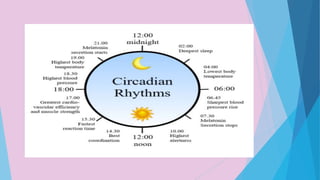
 HORMONE OF DARKNESS
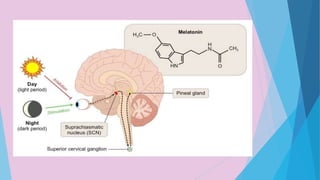
 Secreted in darkness in both nocturnal and diurnal.
 Effects produced by activation of melatonin receptors.
 Naturally occurring compound found in all living creatures
from algae to human at levels that vary in daily cycles.
TROPICAL FOOD SOURCES
SECRETION
Role of melatonin in diabetes
 The effects of melatonin on insulin secretion are mediated through the melatonin
receptors (MT1 and MT2).
 It decreases insulin secretion by inhibiting cAMP and cGMP pathways but activates the
phospholipaseC/IP3 pathway, which mobilizes Ca2+from organelles and, consequently
increases insulin secretion.
 Both in vivo and in vitro, insulin secretion by the pancreatic islets in a circadian manner, is
due to the melatonin action on the melatonin receptors inducing a phase shift in the cells.
 Melatonin may be involved in the genesis of diabetes as a reduction in melatonin levels
and a functional interrelationship between melatonin and insulin was observed in diabetic
patients.
 Evidences from experimental studies proved that melatonin induces production of insulin
growth factor and promotes insulin receptor tyrosine phosphorylation.
 The disturbance of internal circadian system induces glucose intolerance and insulin
resistance, which could be restored by melatonin supplementation.
 Therefore, the presence of melatonin receptors on human pancreatic islets may have an
impact on pharmacotherapy of type 2 diabetes.
Sleep and Inflammatory Bowel Disease
 Sleep disturbances are associated with a greater risk of serious adverse health events, economic
consequences, and, most importantly, increased all-cause mortality.
 Several studies support the associations among sleep, immune function, and inflammation. The
relationship between sleep disturbances and inflammatory conditions is complex and not
completely understood.
 Sleep deprivation can lead to increased levels of inflammatory cytokines, including interleukin (IL)-
1β IL-6, tumor necrosis factor-α and C-reactive protein, which can lead to further activation of the
inflammatory cascade.
 Further research is still needed to better characterize sleep disturbances in the IBD population as
well as to assess the effects of various therapeutic interventions to improve sleep quality. It is
possible that the diagnosis and treatment of sleep disturbances in this population may provide an
opportunity to alter disease outcomes.
METABOLISM
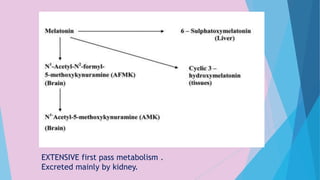
EXTENSIVE first pass metabolism .
Excreted mainly by kidney.
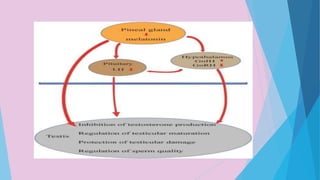
Summary of effects
DIM LIGHT MELATONIN ONSET
 The human body produces its own melatonin before 2 hours of bedtime ,
provided light is dim.
 This natural action is known as DLMO and helps to keep the body on
regular sleep awake schedule.
 Considered GOLD STANDARD test for measuring melatonin levels and
circadian rythmn disorders .
 It is useful for determining whether an individual is entrained
(synchronized) to 24 hour light dark cycle or is in a free running state.
 It is useful for assessing phase delays or advances in rythms in entrained
individuals.
 DLMO is useful for identifying optimal application times for therapies such
as bright light or external melatonin treatment.
 DLMO test is useful for discovering and understanding disturbances in
human biological clock.
Causes of low melatonin levels
Alcohol
Caffeine
NSAIDS
Beta blockers
Glucocorticoids
Nicotine
Antidepressants
Frequent stress
AGOMELATINE
 Treatment of MDD in patients <75 years of age.
 25 mg/day at bedtime ; dose may be doubled if
symptoms do not improve after 2 weeks.
 Nausea , dizziness, headache , somnolence ,
insomnia , migraine ,diarrhea,constipation ,
vomiting,abdominal pain, hyperhidrosis , backpain ,
fatigue , anxiety , increase in AST and ALT levels .
PROLONGED RELEASE MELATONIN
 Short term (daily for upto 13 weeks) treatment of primary
insomnia characterized by poor quality sleep in patients >55
years of age .
 2 mg /day before going to sleep and after food .
 Headache , nasopharyngitis , backpain , arthralgia .
RAMELTEON
 Treatment of insomnia characterized by difficulty of sleep
onset.
 8 mg/ day within 30 mins of going to bed and without
food.
 Somnolence, dizziness , fatigue , nausea , exacerbated
insomnia .
TASIMELTEON
 Treatment of non 24 hour sleep wake disorders in adults .
 20 mg /day just prior to going to bed and without sleep.
 Headache , increase ALT levels , night mares or unusual
dreams ,URTI , UTI.
ADVERSE EFFECTS >3 mg/day
 Surliness
 Migraines
 Unsteadiness
 Steamed stomach
 The runs
 Joint torment
 Nervousness
 Hypertensive Individual or who taking
meds that circulatory strain should
address specialist as may cause perilous
and sudden spikes.
 Increase serum prolactin levels.
 Decrease serum luteinizing hormone.
 Nausea
 Vivid dreams / night mares
 Reduced blood flow
 Hypothermia
 Hormone flunctuation
 Drowsiness / dizziness
 Confusion / hallucinations
 Fatique
 Menstrual irregularities
 Contraindicated in patients on
corticosteroids.
Melatonin and recent advances

Melatonin and recent advances

  • 1.
  • 2.
    CONTENTS  Introduction  Sourceof melatonin  Melatonin receptors  Melatonin biosynthesis  Physiological role of melatonin  Therapeutic uses  Causes of low melatonin levels  Adverse effects  Conclusion
  • 4.
    MELATONIN  N acetyl5 methoxy tryptamine  Discovered by ALONE LERNER in 1958.  HORMONE OF DARKNESS  Secreted in darkness in both nocturnal and diurnal.  Effects produced by activation of melatonin receptors.  Naturally occurring compound found in all living creatures from algae to human at levels that vary in daily cycles.
  • 10.
  • 15.
  • 21.
    Role of melatoninin diabetes  The effects of melatonin on insulin secretion are mediated through the melatonin receptors (MT1 and MT2).  It decreases insulin secretion by inhibiting cAMP and cGMP pathways but activates the phospholipaseC/IP3 pathway, which mobilizes Ca2+from organelles and, consequently increases insulin secretion.  Both in vivo and in vitro, insulin secretion by the pancreatic islets in a circadian manner, is due to the melatonin action on the melatonin receptors inducing a phase shift in the cells.  Melatonin may be involved in the genesis of diabetes as a reduction in melatonin levels and a functional interrelationship between melatonin and insulin was observed in diabetic patients.  Evidences from experimental studies proved that melatonin induces production of insulin growth factor and promotes insulin receptor tyrosine phosphorylation.  The disturbance of internal circadian system induces glucose intolerance and insulin resistance, which could be restored by melatonin supplementation.  Therefore, the presence of melatonin receptors on human pancreatic islets may have an impact on pharmacotherapy of type 2 diabetes.
  • 23.
    Sleep and InflammatoryBowel Disease  Sleep disturbances are associated with a greater risk of serious adverse health events, economic consequences, and, most importantly, increased all-cause mortality.  Several studies support the associations among sleep, immune function, and inflammation. The relationship between sleep disturbances and inflammatory conditions is complex and not completely understood.  Sleep deprivation can lead to increased levels of inflammatory cytokines, including interleukin (IL)- 1β IL-6, tumor necrosis factor-α and C-reactive protein, which can lead to further activation of the inflammatory cascade.  Further research is still needed to better characterize sleep disturbances in the IBD population as well as to assess the effects of various therapeutic interventions to improve sleep quality. It is possible that the diagnosis and treatment of sleep disturbances in this population may provide an opportunity to alter disease outcomes.
  • 32.
  • 33.
    EXTENSIVE first passmetabolism . Excreted mainly by kidney.
  • 42.
  • 44.
    DIM LIGHT MELATONINONSET  The human body produces its own melatonin before 2 hours of bedtime , provided light is dim.  This natural action is known as DLMO and helps to keep the body on regular sleep awake schedule.  Considered GOLD STANDARD test for measuring melatonin levels and circadian rythmn disorders .  It is useful for determining whether an individual is entrained (synchronized) to 24 hour light dark cycle or is in a free running state.  It is useful for assessing phase delays or advances in rythms in entrained individuals.  DLMO is useful for identifying optimal application times for therapies such as bright light or external melatonin treatment.  DLMO test is useful for discovering and understanding disturbances in human biological clock.
  • 46.
    Causes of lowmelatonin levels Alcohol Caffeine NSAIDS Beta blockers Glucocorticoids Nicotine Antidepressants Frequent stress
  • 50.
    AGOMELATINE  Treatment ofMDD in patients <75 years of age.  25 mg/day at bedtime ; dose may be doubled if symptoms do not improve after 2 weeks.  Nausea , dizziness, headache , somnolence , insomnia , migraine ,diarrhea,constipation , vomiting,abdominal pain, hyperhidrosis , backpain , fatigue , anxiety , increase in AST and ALT levels .
  • 51.
    PROLONGED RELEASE MELATONIN Short term (daily for upto 13 weeks) treatment of primary insomnia characterized by poor quality sleep in patients >55 years of age .  2 mg /day before going to sleep and after food .  Headache , nasopharyngitis , backpain , arthralgia .
  • 52.
    RAMELTEON  Treatment ofinsomnia characterized by difficulty of sleep onset.  8 mg/ day within 30 mins of going to bed and without food.  Somnolence, dizziness , fatigue , nausea , exacerbated insomnia .
  • 53.
    TASIMELTEON  Treatment ofnon 24 hour sleep wake disorders in adults .  20 mg /day just prior to going to bed and without sleep.  Headache , increase ALT levels , night mares or unusual dreams ,URTI , UTI.
  • 54.
    ADVERSE EFFECTS >3mg/day  Surliness  Migraines  Unsteadiness  Steamed stomach  The runs  Joint torment  Nervousness  Hypertensive Individual or who taking meds that circulatory strain should address specialist as may cause perilous and sudden spikes.  Increase serum prolactin levels.  Decrease serum luteinizing hormone.  Nausea  Vivid dreams / night mares  Reduced blood flow  Hypothermia  Hormone flunctuation  Drowsiness / dizziness  Confusion / hallucinations  Fatique  Menstrual irregularities  Contraindicated in patients on corticosteroids.