DAILY
LESSON LOG
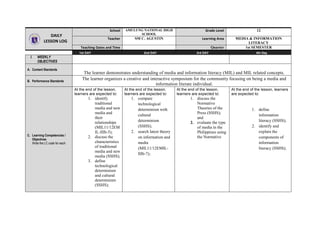
School AMULUNG NATIONAL HIGH
SCHOOL
Grade Level 12
Teacher SM C. AGUSTIN Learning Area MEDIA & INFORMATION
LITERACY
Teaching Dates and Time Quarter 1st SEMESTER
1st DAY 2nd DAY 3rd DAY 4th Day
I. WEEKLY
OBJECTIVES
A. Content Standards
The learner demonstrates understanding of media and information literacy (MIL) and MIL related concepts.
B. Performance Standards
The learner organizes a creative and interactive symposium for the community focusing on being a media and
information literate individual.
C. Learning Competencies /
Objectives
Write the LC code for each
At the end of the lesson,
learners are expected to:
1. identify
traditional
media and new
media and
their
relationships
(MIL11/12EM
IL-IIIb-5);
2. discuss the
characteristics
of traditional
media and new
media (SSHS);
3. define
technological
determinism
and cultural
determinism
(SSHS);
At the end of the lesson,
learners are expected to:
1. compare
technological
determinism with
cultural
determinism
(SSHS);
2. search latest theory
on information and
media
(MIL11/12EMIL-
IIIb-7);
At the end of the lesson,
learners are expected to:
1. discuss the
Normative
Theories of the
Press (SSHS);
and
2. evaluate the type
of media in the
Philippines using
the Normative
At the end of the lesson, learners
are expected to:
1. define
information
literacy (SSHS);
2. identify and
explain the
components of
information
literacy (SSHS);
II. CONTENT
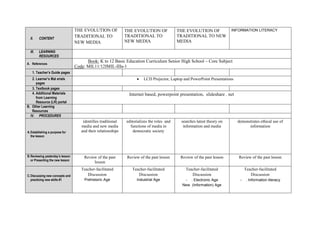
THE EVOLUTION OF
TRADITIONAL TO
NEW MEDIA
THE EVOLUTION OF
TRADITIONAL TO
NEW MEDIA
THE EVOLUTION OF
TRADITIONAL TO NEW
MEDIA
INFORMATION LITERACY
III. LEARNING
RESOURCES
A. References
Book: K to 12 Basic Education Curriculum Senior High School – Core Subject
Code: MIL11/12IMIL-IIIa-1
1. Teacher’s Guide pages
2. Learner’s Mat erials
pages
 LCD Projector, Laptop and PowerPoint Presentations
3. Textbook pages
4. Additional Materials
from Learning
Resource (LR) portal
Internet based, powerpoint presentation, slideshare . net
B. Other Learning
Resources
IV. PROCEDURES
A.Establishing a purpose for
the lesson
identifies traditional
media and new media
and their relationships
editorializes the roles and
functions of media in
democratic society
searches latest theory on
information and media
demonstrates ethical use of
information
B.Reviewing yesterday’s lesson
or Presenting the new lesson
Review of the past
lesson
Review of the past lesson Review of the past lesson Review of the past lesson
C.Discussing new concepts and
practicing new skills #1
Teacher-facilitated
Discussion
Prehistoric Age
Teacher-facilitated
Discussion
Industrial Age
Teacher-facilitated
Discussion
- . Electronic Age
New (Information) Age
Teacher-facilitated
Discussion
- . Information literacy
D. Developing mastery
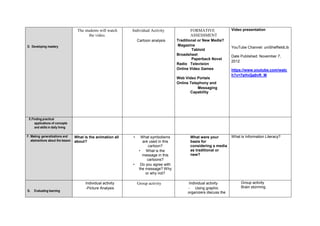
The students will watch
the video.
Individual Activity
Cartoon analysis
FORMATIVE
ASSESSMENT
Traditional or New Media?
Magazine
Tabloid
Broadsheet
Paperback Novel
Radio Television
Online Video Games
Web Video Portals
Online Telephony and
Messaging
Capability
Video presentation
YouTube Channel: uniSheffieldLib
Date Published: November 7,
2012
https://www.youtube.com/watc
h?v=7sHvQa0vR_M
E.Finding practical
applications of concepts
and skills in daily living
F. Making generalizations and
abstractions about the lesson
What is the animation all
about?
• What symbolisms
are used in this
cartoon?
• What is the
message in this
cartoons?
• Do you agree with
the message? Why
or why not?
What were your
basis for
considering a media
as traditional or
new?
What is Information Literacy?
G. Evaluating learning
Individual activity
-Picture Analysis
Group activity Individual activity
- Using graphic
organizers discuss the
Group activity
Brain storming
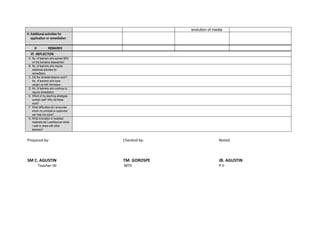
Prepared by: Checked by: Noted:
SM C. AGUSTIN TM. GOROSPE JB. AGUSTIN
Teacher IIII MTII P II
evolution of media
H. Additional activities for
application or remediation
V. REMARKS
VI. REFLECTION
A. No. of learners who earned 80%
on the formative assessment
B. No. of learners who require
additional activities for
remediation.
C. Did the remedial lessons work?
No. of learners who have
caught up with the lesson.
D. No. of learners who continue to
require remediation
E. Which of my teaching strategies
worked well? Why did these
work?
F. What difficulties did I encounter
which my principal or supervisor
can help me solve?
G. What innovation or localized
materials did I use/discover which
I wish to share with other
teachers?

MEDIA LITERACY-DLL 4.docx

  • 1.
    DAILY LESSON LOG School AMULUNGNATIONAL HIGH SCHOOL Grade Level 12 Teacher SM C. AGUSTIN Learning Area MEDIA & INFORMATION LITERACY Teaching Dates and Time Quarter 1st SEMESTER 1st DAY 2nd DAY 3rd DAY 4th Day I. WEEKLY OBJECTIVES A. Content Standards The learner demonstrates understanding of media and information literacy (MIL) and MIL related concepts. B. Performance Standards The learner organizes a creative and interactive symposium for the community focusing on being a media and information literate individual. C. Learning Competencies / Objectives Write the LC code for each At the end of the lesson, learners are expected to: 1. identify traditional media and new media and their relationships (MIL11/12EM IL-IIIb-5); 2. discuss the characteristics of traditional media and new media (SSHS); 3. define technological determinism and cultural determinism (SSHS); At the end of the lesson, learners are expected to: 1. compare technological determinism with cultural determinism (SSHS); 2. search latest theory on information and media (MIL11/12EMIL- IIIb-7); At the end of the lesson, learners are expected to: 1. discuss the Normative Theories of the Press (SSHS); and 2. evaluate the type of media in the Philippines using the Normative At the end of the lesson, learners are expected to: 1. define information literacy (SSHS); 2. identify and explain the components of information literacy (SSHS);
  • 2.
    II. CONTENT THE EVOLUTIONOF TRADITIONAL TO NEW MEDIA THE EVOLUTION OF TRADITIONAL TO NEW MEDIA THE EVOLUTION OF TRADITIONAL TO NEW MEDIA INFORMATION LITERACY III. LEARNING RESOURCES A. References Book: K to 12 Basic Education Curriculum Senior High School – Core Subject Code: MIL11/12IMIL-IIIa-1 1. Teacher’s Guide pages 2. Learner’s Mat erials pages  LCD Projector, Laptop and PowerPoint Presentations 3. Textbook pages 4. Additional Materials from Learning Resource (LR) portal Internet based, powerpoint presentation, slideshare . net B. Other Learning Resources IV. PROCEDURES A.Establishing a purpose for the lesson identifies traditional media and new media and their relationships editorializes the roles and functions of media in democratic society searches latest theory on information and media demonstrates ethical use of information B.Reviewing yesterday’s lesson or Presenting the new lesson Review of the past lesson Review of the past lesson Review of the past lesson Review of the past lesson C.Discussing new concepts and practicing new skills #1 Teacher-facilitated Discussion Prehistoric Age Teacher-facilitated Discussion Industrial Age Teacher-facilitated Discussion - . Electronic Age New (Information) Age Teacher-facilitated Discussion - . Information literacy
  • 3.
    D. Developing mastery Thestudents will watch the video. Individual Activity Cartoon analysis FORMATIVE ASSESSMENT Traditional or New Media? Magazine Tabloid Broadsheet Paperback Novel Radio Television Online Video Games Web Video Portals Online Telephony and Messaging Capability Video presentation YouTube Channel: uniSheffieldLib Date Published: November 7, 2012 https://www.youtube.com/watc h?v=7sHvQa0vR_M E.Finding practical applications of concepts and skills in daily living F. Making generalizations and abstractions about the lesson What is the animation all about? • What symbolisms are used in this cartoon? • What is the message in this cartoons? • Do you agree with the message? Why or why not? What were your basis for considering a media as traditional or new? What is Information Literacy? G. Evaluating learning Individual activity -Picture Analysis Group activity Individual activity - Using graphic organizers discuss the Group activity Brain storming
  • 4.
    Prepared by: Checkedby: Noted: SM C. AGUSTIN TM. GOROSPE JB. AGUSTIN Teacher IIII MTII P II evolution of media H. Additional activities for application or remediation V. REMARKS VI. REFLECTION A. No. of learners who earned 80% on the formative assessment B. No. of learners who require additional activities for remediation. C. Did the remedial lessons work? No. of learners who have caught up with the lesson. D. No. of learners who continue to require remediation E. Which of my teaching strategies worked well? Why did these work? F. What difficulties did I encounter which my principal or supervisor can help me solve? G. What innovation or localized materials did I use/discover which I wish to share with other teachers?