VIRAL MARKETING
PRESENTED BY
-
DEVESH VERMA
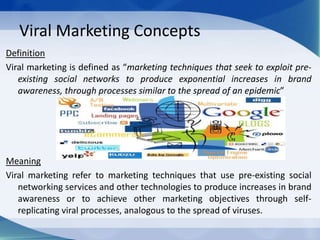
Viral Marketing Concepts
Definition
Viral marketing is defined as “marketing techniques that seek to exploit pre-
existing social networks to produce exponential increases in brand
awareness, through processes similar to the spread of an epidemic”
Meaning
Viral marketing refer to marketing techniques that use pre-existing social
networking services and other technologies to produce increases in brand
awareness or to achieve other marketing objectives through self-
replicating viral processes, analogous to the spread of viruses.
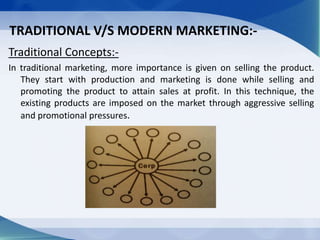
TRADITIONAL V/S MODERN MARKETING:-
Traditional Concepts:-
In traditional marketing, more importance is given on selling the product.
They start with production and marketing is done while selling and
promoting the product to attain sales at profit. In this technique, the
existing products are imposed on the market through aggressive selling
and promotional pressures.
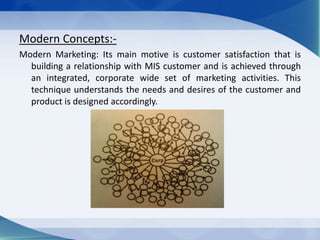
Modern Concepts:-
Modern Marketing: Its main motive is customer satisfaction that is
building a relationship with MIS customer and is achieved through
an integrated, corporate wide set of marketing activities. This
technique understands the needs and desires of the customer and
product is designed accordingly.
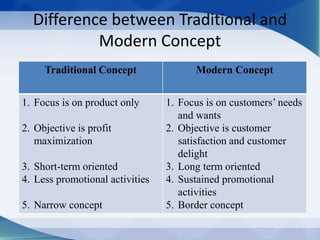
Difference between Traditional and
Modern Concept
Traditional Concept Modern Concept
1. Focus is on product only
2. Objective is profit
maximization
3. Short-term oriented
4. Less promotional activities
5. Narrow concept
1. Focus is on customers’ needs
and wants
2. Objective is customer
satisfaction and customer
delight
3. Long term oriented
4. Sustained promotional
activities
5. Border concept
Techniques of viral marketing:-
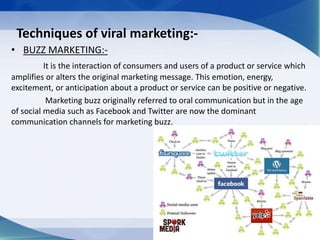
• BUZZ MARKETING:-
It is the interaction of consumers and users of a product or service which
amplifies or alters the original marketing message. This emotion, energy,
excitement, or anticipation about a product or service can be positive or negative.
Marketing buzz originally referred to oral communication but in the age
of social media such as Facebook and Twitter are now the dominant
communication channels for marketing buzz.
• WORD OF MOUTH MARKETING:-
Word-of-mouth marketing is a term used in the marketing and
advertising industry to describe activities that companies undertake to
generate personal recommendations as well as referrals for brand names,
products and services.
Word-of-mouth promotion is highly valued by advertisers. It is
believed that this form of communication has valuable source credibility Also
people tend to believe people who they know. In order to promote and
manage word-of-mouth communications.
ADVANTAGES AND DISADVANTAGES OF VIRAL
MARKETING
ADVANTAGES:-
• High credibility
• Low cost
• Great reach
• High efficiency
DISADVANTAGES:-
• Association with unknown groups
• Not all products or services are viral
• Once unleashed are not controllable
• Limited size of information
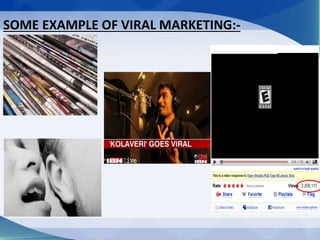
SOME EXAMPLE OF VIRAL MARKETING:-
THANK YOU…!!!

VIRAL MARKETING

  • 1.
  • 2.
    Viral Marketing Concepts Definition Viralmarketing is defined as “marketing techniques that seek to exploit pre- existing social networks to produce exponential increases in brand awareness, through processes similar to the spread of an epidemic” Meaning Viral marketing refer to marketing techniques that use pre-existing social networking services and other technologies to produce increases in brand awareness or to achieve other marketing objectives through self- replicating viral processes, analogous to the spread of viruses.
  • 3.
    TRADITIONAL V/S MODERNMARKETING:- Traditional Concepts:- In traditional marketing, more importance is given on selling the product. They start with production and marketing is done while selling and promoting the product to attain sales at profit. In this technique, the existing products are imposed on the market through aggressive selling and promotional pressures.
  • 4.
    Modern Concepts:- Modern Marketing:Its main motive is customer satisfaction that is building a relationship with MIS customer and is achieved through an integrated, corporate wide set of marketing activities. This technique understands the needs and desires of the customer and product is designed accordingly.
  • 5.
    Difference between Traditionaland Modern Concept Traditional Concept Modern Concept 1. Focus is on product only 2. Objective is profit maximization 3. Short-term oriented 4. Less promotional activities 5. Narrow concept 1. Focus is on customers’ needs and wants 2. Objective is customer satisfaction and customer delight 3. Long term oriented 4. Sustained promotional activities 5. Border concept
  • 6.
    Techniques of viralmarketing:- • BUZZ MARKETING:- It is the interaction of consumers and users of a product or service which amplifies or alters the original marketing message. This emotion, energy, excitement, or anticipation about a product or service can be positive or negative. Marketing buzz originally referred to oral communication but in the age of social media such as Facebook and Twitter are now the dominant communication channels for marketing buzz.
  • 7.
    • WORD OFMOUTH MARKETING:- Word-of-mouth marketing is a term used in the marketing and advertising industry to describe activities that companies undertake to generate personal recommendations as well as referrals for brand names, products and services. Word-of-mouth promotion is highly valued by advertisers. It is believed that this form of communication has valuable source credibility Also people tend to believe people who they know. In order to promote and manage word-of-mouth communications.
  • 8.
    ADVANTAGES AND DISADVANTAGESOF VIRAL MARKETING ADVANTAGES:- • High credibility • Low cost • Great reach • High efficiency
  • 9.
    DISADVANTAGES:- • Association withunknown groups • Not all products or services are viral • Once unleashed are not controllable • Limited size of information
  • 10.
    SOME EXAMPLE OFVIRAL MARKETING:-
  • 11.