MEDIA SCHEDULING
Scheduling
• Media scheduling is simply a time-table showing:
• (1) The time decision – when to advertise,
• (2) The duration/space decision – how much to advertise each time,
and
• (3) The frequency to advertise the message through different media –
how many times in a year (or specified time period) the message
should be advertised in each of the media.
What is scheduling?
Scheduling refers to the pattern of advertising timing, represented as
plots on a yearly flowchart. These plots indicate the pattern of
scheduled times advertising must appear to coincide with favorable
selling periods. The classic scheduling models
are Continuity, Flighting and Pulsing.
Continuous
This model is primarily for non-seasonal products, yet sometimes
for seasonal products. Advertising runs steadily with little variation
over the campaign period.
There may be short gaps at regular intervals and also long gaps—for
instance, one ad every week for 52 weeks, and then a pause. This
pattern of advertising is prevalent in service and packaged goods
that require continuous reinforcement on the audience for top of
mind recollection at point of purchase.
Continuous
Time
Flighting (or "bursting")
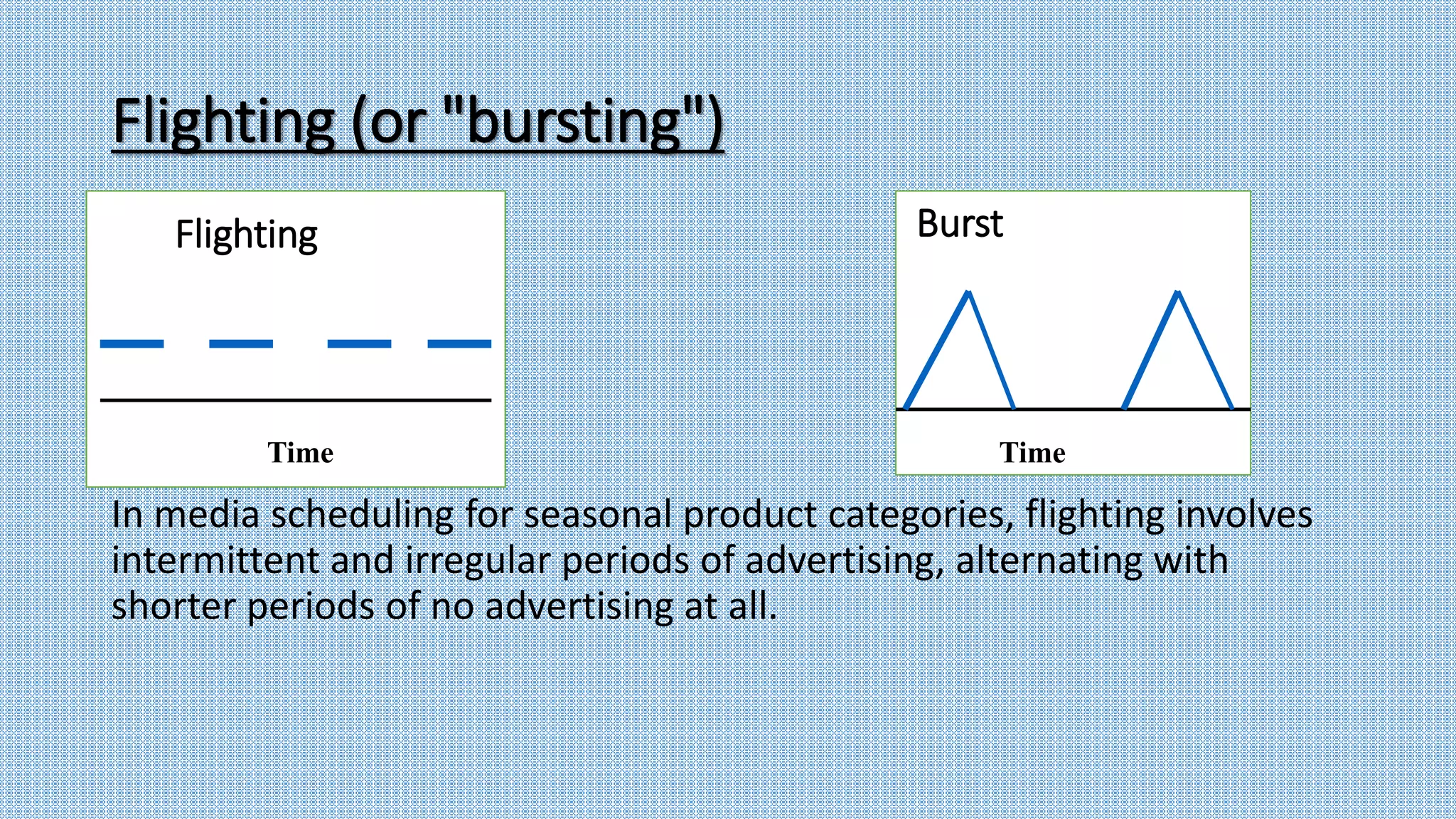
In media scheduling for seasonal product categories, flighting involves
intermittent and irregular periods of advertising, alternating with
shorter periods of no advertising at all.
Flighting
Time
Burst
Time
Pulsing
Pulsing combines flighting and continuous scheduling by using a low advertising
level all year round and heavy advertising during peak selling periods. Product
categories that are sold year round but experience a surge in sales at intermittent
periods are good candidates for pulsing. For instance, under-arm deodrants, sell all
year, but more in summer months.
Pulsing
Time
The number of different people or households and the number of times a person
or household is exposed to a communications vehicle or an ad or campaign over a
specified time period (usually four weeks).Thus, to an advertiser, the following six
types of schedules are available.
• Steady pulse: Steady pulse is the easiest types of schedules to prepare. For
instance, one ad per week for 52 weeks or one ad per month for 12 months may
be prepared.
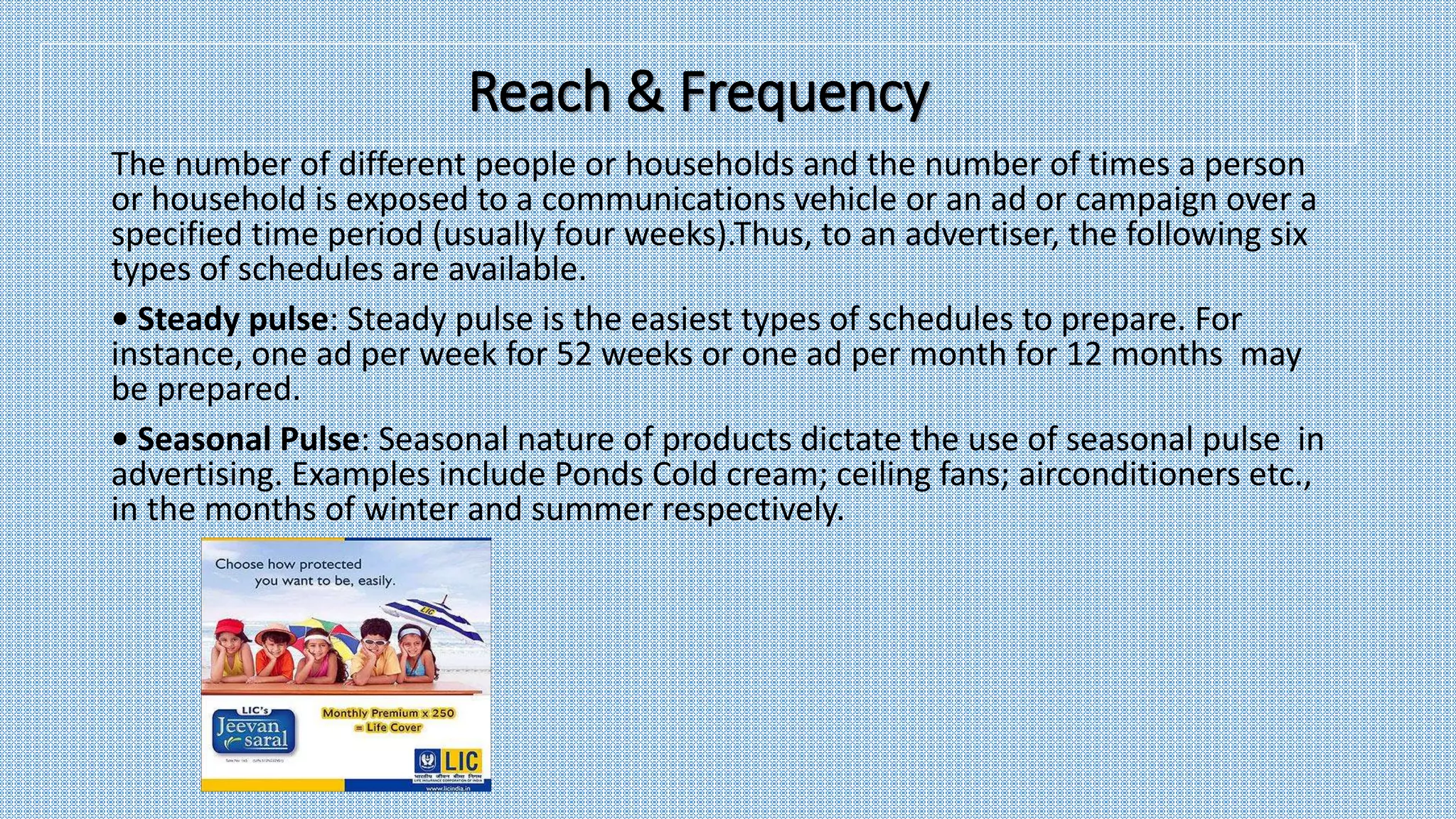
• Seasonal Pulse: Seasonal nature of products dictate the use of seasonal pulse in
advertising. Examples include Ponds Cold cream; ceiling fans; airconditioners etc.,
in the months of winter and summer respectively.
Reach & Frequency
• Period Pulse: Scheduling of media at regular intervals but not related to the,
seasons of the year, is called the periodic pulse. Examples may include media
scheduling of consumer durables (e.g. mixes) and during Puja or X-mas festivals, for
gift purposes.
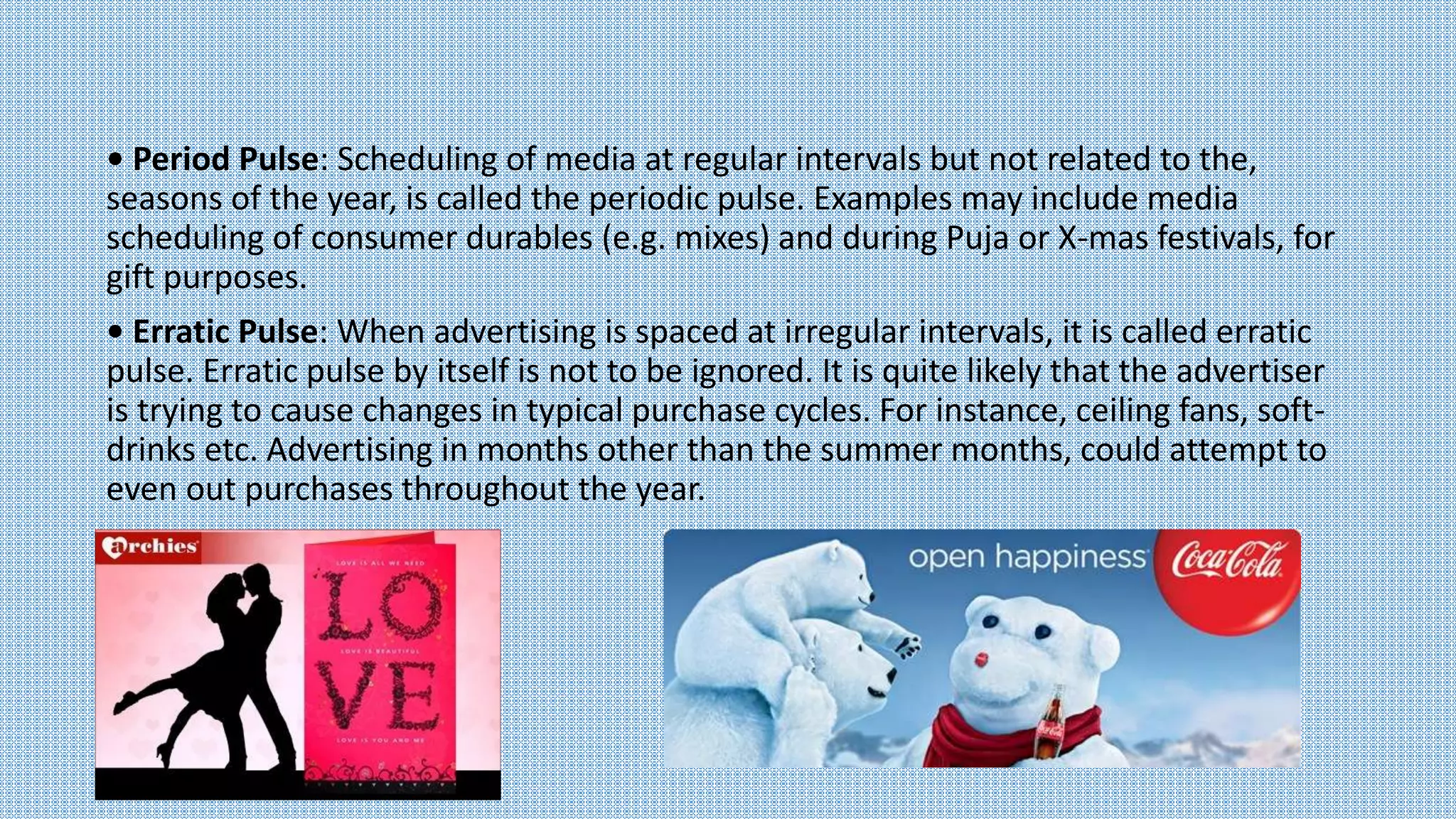
• Erratic Pulse: When advertising is spaced at irregular intervals, it is called erratic
pulse. Erratic pulse by itself is not to be ignored. It is quite likely that the advertiser
is trying to cause changes in typical purchase cycles. For instance, ceiling fans, soft-
drinks etc. Advertising in months other than the summer months, could attempt to
even out purchases throughout the year.
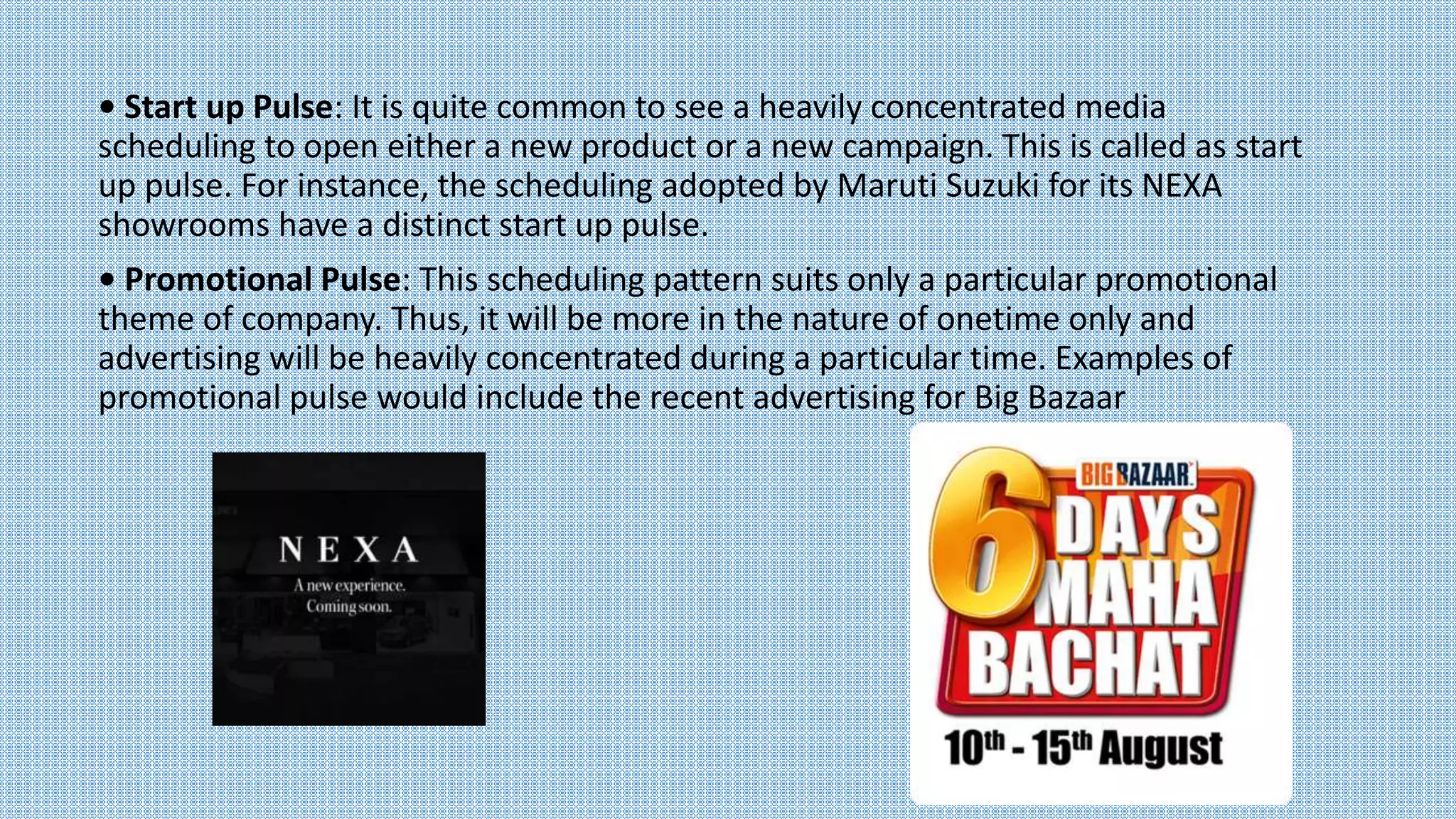
• Start up Pulse: It is quite common to see a heavily concentrated media
scheduling to open either a new product or a new campaign. This is called as start
up pulse. For instance, the scheduling adopted by Maruti Suzuki for its NEXA
showrooms have a distinct start up pulse.
• Promotional Pulse: This scheduling pattern suits only a particular promotional
theme of company. Thus, it will be more in the nature of onetime only and
advertising will be heavily concentrated during a particular time. Examples of
promotional pulse would include the recent advertising for Big Bazaar
Phrases of Scheduling
• MACRO SCHEDULING
• MICRO SCHEDULING
Macro-scheduling:
• The macro-scheduling involves allocating advertising expenditure and
frequency (repetition/reproduction of message) in relation to season
or broad picture of business cycle. The macro-scheduling problem
concerns with how to schedule advertising in relation to seasonal and
business cycle trends.
• The broad picture of seasonal and/or cyclical trend is considered. This
is due to the fact that the demand is fluctuated as per seasons and/or
business cycle. Therefore, it is desirable to vary advertising
expenditures to follow seasonal patterns. Company, as per its
calculation, can spend more or less during the season or particular
phase of business cycle.
Micro-scheduling:
• The micro-scheduling problem concerns with allocating advertising
expenditure and frequency within a short period to obtain the
maximum response or impact. In other words, the problem deals with
how to distribute advertising expenditure within the given time.
Thank You!

Medi a scheduling

  • 1.
  • 2.
    Scheduling • Media schedulingis simply a time-table showing: • (1) The time decision – when to advertise, • (2) The duration/space decision – how much to advertise each time, and • (3) The frequency to advertise the message through different media – how many times in a year (or specified time period) the message should be advertised in each of the media.
  • 3.
    What is scheduling? Schedulingrefers to the pattern of advertising timing, represented as plots on a yearly flowchart. These plots indicate the pattern of scheduled times advertising must appear to coincide with favorable selling periods. The classic scheduling models are Continuity, Flighting and Pulsing.
  • 4.
    Continuous This model isprimarily for non-seasonal products, yet sometimes for seasonal products. Advertising runs steadily with little variation over the campaign period. There may be short gaps at regular intervals and also long gaps—for instance, one ad every week for 52 weeks, and then a pause. This pattern of advertising is prevalent in service and packaged goods that require continuous reinforcement on the audience for top of mind recollection at point of purchase. Continuous Time
  • 5.
    Flighting (or "bursting") Inmedia scheduling for seasonal product categories, flighting involves intermittent and irregular periods of advertising, alternating with shorter periods of no advertising at all. Flighting Time Burst Time
  • 6.
    Pulsing Pulsing combines flightingand continuous scheduling by using a low advertising level all year round and heavy advertising during peak selling periods. Product categories that are sold year round but experience a surge in sales at intermittent periods are good candidates for pulsing. For instance, under-arm deodrants, sell all year, but more in summer months. Pulsing Time
  • 7.
    The number ofdifferent people or households and the number of times a person or household is exposed to a communications vehicle or an ad or campaign over a specified time period (usually four weeks).Thus, to an advertiser, the following six types of schedules are available. • Steady pulse: Steady pulse is the easiest types of schedules to prepare. For instance, one ad per week for 52 weeks or one ad per month for 12 months may be prepared. • Seasonal Pulse: Seasonal nature of products dictate the use of seasonal pulse in advertising. Examples include Ponds Cold cream; ceiling fans; airconditioners etc., in the months of winter and summer respectively. Reach & Frequency
  • 8.
    • Period Pulse:Scheduling of media at regular intervals but not related to the, seasons of the year, is called the periodic pulse. Examples may include media scheduling of consumer durables (e.g. mixes) and during Puja or X-mas festivals, for gift purposes. • Erratic Pulse: When advertising is spaced at irregular intervals, it is called erratic pulse. Erratic pulse by itself is not to be ignored. It is quite likely that the advertiser is trying to cause changes in typical purchase cycles. For instance, ceiling fans, soft- drinks etc. Advertising in months other than the summer months, could attempt to even out purchases throughout the year.
  • 9.
    • Start upPulse: It is quite common to see a heavily concentrated media scheduling to open either a new product or a new campaign. This is called as start up pulse. For instance, the scheduling adopted by Maruti Suzuki for its NEXA showrooms have a distinct start up pulse. • Promotional Pulse: This scheduling pattern suits only a particular promotional theme of company. Thus, it will be more in the nature of onetime only and advertising will be heavily concentrated during a particular time. Examples of promotional pulse would include the recent advertising for Big Bazaar
  • 10.
    Phrases of Scheduling •MACRO SCHEDULING • MICRO SCHEDULING
  • 11.
    Macro-scheduling: • The macro-schedulinginvolves allocating advertising expenditure and frequency (repetition/reproduction of message) in relation to season or broad picture of business cycle. The macro-scheduling problem concerns with how to schedule advertising in relation to seasonal and business cycle trends. • The broad picture of seasonal and/or cyclical trend is considered. This is due to the fact that the demand is fluctuated as per seasons and/or business cycle. Therefore, it is desirable to vary advertising expenditures to follow seasonal patterns. Company, as per its calculation, can spend more or less during the season or particular phase of business cycle.
  • 12.
    Micro-scheduling: • The micro-schedulingproblem concerns with allocating advertising expenditure and frequency within a short period to obtain the maximum response or impact. In other words, the problem deals with how to distribute advertising expenditure within the given time.
  • 13.