Chapter 13


Special Senses: The Eye and Ear
The Eye

Contains the sensory receptor cell for vision

The eyeball is the organ of sight that transmits an
external image by the way of the nervous system- optic
nerve-to the brain.

Other structures that play a role in vision:

   eye muscles

   eyelids

   conjunctiva

   lacrimal apparatus

The study of the eye is known as ophthalmology.
Eye Figure
The internal structures of the eye.
The Eyeball
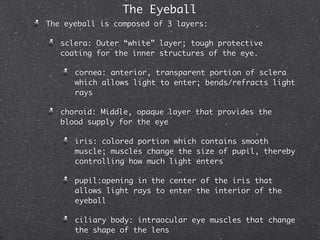
The eyeball is composed of 3 layers:

   sclera: Outer “white” layer; tough protective
   coating for the inner structures of the eye.

      cornea: anterior, transparent portion of sclera
      which allows light to enter; bends/refracts light
      rays

   choroid: Middle, opaque layer that provides the
   blood supply for the eye

      iris: colored portion which contains smooth
      muscle; muscles change the size of pupil, thereby
      controlling how much light enters

      pupil:opening in the center of the iris that
      allows light rays to enter the interior of the
      eyeball

      ciliary body: intraocular eye muscles that change
      the shape of the lens
The Eyeball         (cont.)


Retina:The 3rd and innermost layer of the eyeball.

   Contains rods and cones

   macula lutea (yellow spot)

      fovea centralis: depression within macula
      lutea which is the point of clearest vision

   optic disk: lacks sensory receptors and causes a
   blind spot in each eye’s field of vision

   aqueous humor: watery-fluid space between cornea
   and lens

   vitreous humor: semisolid gel large open area
   between the lens and the retina
Eye Muscles
6 muscles connect the eyeball to the skull

   4 rectus-- pull the eye up, down, left and right;

   2 oblique muscles--produce diagonal eye movement
The Eyelids


A pair of eyelids over each eyeball provides protection
from foreign particles, injury from intense light, and
trauma.

Both upper and lower edges of the eyelids have
eyelashes or cilia that protect the eye from foreign
particles.

Sebaceous glands secrete lubricating oil onto the
eyeball
Conjunctiva


The mucous membrane lining that forms a continuous
covering on the underside of each eyelid and across the
anterior surface of each eyeball.

Serves as protection for the eye by sealing of the
eyeball in the socket.
Lacrimal Apparatus
The lacrimal gland is located under the outer upper
corner of each eyelid.

Glands produce tears. Tears function of washing and
lubricating the anterior surface of the eyeball.

Lacrimal ducts are located in the inner eye socket and
collect tears and drain them into the nasolacrimal
duct, which ultimately drains tears into the nasal
cavity.
The Path of Vision
When light rays strike the eye, the pass:

   cornea--> pupil-->aqueous humor--> lens-->vitreous
   humor-->retina (rods and cones)

   When light rays hit the retina, and upside-down
   image is sent nerve impulses to the optic nerve,
   which are sent to the brain, where the upside-down
   image is translated into the right-side up image we
   see.

Vision requires:

   coordination of external eye muscles so that both
   eyes move together

   correct amount of light admitted by the pupil

   correct focus of light on the retina by the lens

   optic nerve transmitting sensory images to the brain
The Ear

Contains the sensory receptors for hearing and
equilibrium (balance)

Hearing and equilibrium sensory information is carried
to the brain by the vestibulocochlear (cranial) nerve.

The ear is subdivided into 3 areas:

   external ear

   middle ear

   inner ear

The study of the ear is referred to as otology, and the
study of hearing disorders is called audiology.
Ear Figure
 The internal structures of the ear.
External Ear
Consist of 3 parts:

   auricle: also known as the pinna; referred to as
   “the ear” because this is the only visible portion;
   earlobe functions like a funnel to capture sound
   waves as they pass the outer ear and channel
   through the external auditory meatus

   auditory canal: canal that leads from exterior
   opening of the ear to the eardrum

      ear wax or cerumen is produced within the
      auditory canal to help protect and lubricate the
      ear

   tympanic membrane: eardrum; as sound moves along
   auditory canal, it strike the membrane causing it
   to vibrate; this conducts the sound into the middle
   ear
Middle Ear
Located in a small cavity in the temporal bone of the
skull

Air-filled cavity that contains 3 tiny bones called
ossicles that are vital for the hearing process:

   malleus:also known as the hammer

   incus:also known as the anvil

   stapes:also known as the stirrup; last of the
   ossicles that is attached to a very thin membrane
   that covers the opening to the inner ear called the
   oval window

The eustachian tube or auditory tube connects the
nasopharynx with the middle ear. Each time one swallows
the tube opens; this connection allows pressure to
equalize between the middle ear cavity and atmospheric
pressure.
Inner Ear

Located in a cavity within the temporal bone

Fluid-filled cavity is referred to as the labyrinth

Contains the hearing and equilibrium sensory organs
that contain hair cells (sensory receptors):

   cochlea (hearing): hair cells referred to as organs
   of Corti

   semicircular canals (equilibrium)

   utricle (equilibrium)

   saccule (equilibrium)
The Path of Sound

Sound waves travel down the external auditory canal
strike the eardrum, causing it to vibrate.

The ossicles conduct these vibrations across the middle
ear from the eardrum to the oval window.

Oval window movements initiate vibrations in the fluid
that fills the cochlea.

As fluid vibrations strike a hair cell, they bend the
small hairs and stimulate the nerve ending, which then
sends an electrical impulse to the brain on the
cochlear portion of the vestibulocochlear nerve.

Med Term Presentation #3

  • 1.
  • 2.
    The Eye Contains thesensory receptor cell for vision The eyeball is the organ of sight that transmits an external image by the way of the nervous system- optic nerve-to the brain. Other structures that play a role in vision: eye muscles eyelids conjunctiva lacrimal apparatus The study of the eye is known as ophthalmology.
  • 3.
    Eye Figure The internalstructures of the eye.
  • 4.
    The Eyeball The eyeballis composed of 3 layers: sclera: Outer “white” layer; tough protective coating for the inner structures of the eye. cornea: anterior, transparent portion of sclera which allows light to enter; bends/refracts light rays choroid: Middle, opaque layer that provides the blood supply for the eye iris: colored portion which contains smooth muscle; muscles change the size of pupil, thereby controlling how much light enters pupil:opening in the center of the iris that allows light rays to enter the interior of the eyeball ciliary body: intraocular eye muscles that change the shape of the lens
  • 5.
    The Eyeball (cont.) Retina:The 3rd and innermost layer of the eyeball. Contains rods and cones macula lutea (yellow spot) fovea centralis: depression within macula lutea which is the point of clearest vision optic disk: lacks sensory receptors and causes a blind spot in each eye’s field of vision aqueous humor: watery-fluid space between cornea and lens vitreous humor: semisolid gel large open area between the lens and the retina
  • 6.
    Eye Muscles 6 musclesconnect the eyeball to the skull 4 rectus-- pull the eye up, down, left and right; 2 oblique muscles--produce diagonal eye movement
  • 7.
    The Eyelids A pairof eyelids over each eyeball provides protection from foreign particles, injury from intense light, and trauma. Both upper and lower edges of the eyelids have eyelashes or cilia that protect the eye from foreign particles. Sebaceous glands secrete lubricating oil onto the eyeball
  • 8.
    Conjunctiva The mucous membranelining that forms a continuous covering on the underside of each eyelid and across the anterior surface of each eyeball. Serves as protection for the eye by sealing of the eyeball in the socket.
  • 9.
    Lacrimal Apparatus The lacrimalgland is located under the outer upper corner of each eyelid. Glands produce tears. Tears function of washing and lubricating the anterior surface of the eyeball. Lacrimal ducts are located in the inner eye socket and collect tears and drain them into the nasolacrimal duct, which ultimately drains tears into the nasal cavity.
  • 10.
    The Path ofVision When light rays strike the eye, the pass: cornea--> pupil-->aqueous humor--> lens-->vitreous humor-->retina (rods and cones) When light rays hit the retina, and upside-down image is sent nerve impulses to the optic nerve, which are sent to the brain, where the upside-down image is translated into the right-side up image we see. Vision requires: coordination of external eye muscles so that both eyes move together correct amount of light admitted by the pupil correct focus of light on the retina by the lens optic nerve transmitting sensory images to the brain
  • 11.
    The Ear Contains thesensory receptors for hearing and equilibrium (balance) Hearing and equilibrium sensory information is carried to the brain by the vestibulocochlear (cranial) nerve. The ear is subdivided into 3 areas: external ear middle ear inner ear The study of the ear is referred to as otology, and the study of hearing disorders is called audiology.
  • 12.
    Ear Figure Theinternal structures of the ear.
  • 13.
    External Ear Consist of3 parts: auricle: also known as the pinna; referred to as “the ear” because this is the only visible portion; earlobe functions like a funnel to capture sound waves as they pass the outer ear and channel through the external auditory meatus auditory canal: canal that leads from exterior opening of the ear to the eardrum ear wax or cerumen is produced within the auditory canal to help protect and lubricate the ear tympanic membrane: eardrum; as sound moves along auditory canal, it strike the membrane causing it to vibrate; this conducts the sound into the middle ear
  • 14.
    Middle Ear Located ina small cavity in the temporal bone of the skull Air-filled cavity that contains 3 tiny bones called ossicles that are vital for the hearing process: malleus:also known as the hammer incus:also known as the anvil stapes:also known as the stirrup; last of the ossicles that is attached to a very thin membrane that covers the opening to the inner ear called the oval window The eustachian tube or auditory tube connects the nasopharynx with the middle ear. Each time one swallows the tube opens; this connection allows pressure to equalize between the middle ear cavity and atmospheric pressure.
  • 15.
    Inner Ear Located ina cavity within the temporal bone Fluid-filled cavity is referred to as the labyrinth Contains the hearing and equilibrium sensory organs that contain hair cells (sensory receptors): cochlea (hearing): hair cells referred to as organs of Corti semicircular canals (equilibrium) utricle (equilibrium) saccule (equilibrium)
  • 16.
    The Path ofSound Sound waves travel down the external auditory canal strike the eardrum, causing it to vibrate. The ossicles conduct these vibrations across the middle ear from the eardrum to the oval window. Oval window movements initiate vibrations in the fluid that fills the cochlea. As fluid vibrations strike a hair cell, they bend the small hairs and stimulate the nerve ending, which then sends an electrical impulse to the brain on the cochlear portion of the vestibulocochlear nerve.