Mechanical Engineering
Programme of Anna University
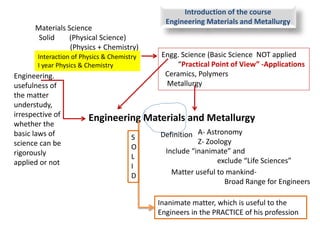
Engineering Materials and Metallurgy
Definition A- Astronomy
Z- Zoology
Include “inanimate” and
exclude “Life Sciences”
Matter useful to mankind-
Broad Range for Engineers
Inanimate matter, which is useful to the
Engineers in the PRACTICE of his profession
S
O
L
I
D
Materials Science
Solid (Physical Science)
(Physics + Chemistry)
Engg. Science (Basic Science NOT applied
“Practical Point of View” -Applications
Ceramics, Polymers
Metallurgy
Interaction of Physics & Chemistry
I year Physics & Chemistry
Engineering.
usefulness of
the matter
understudy,
irrespective of
whether the
basic laws of
science can be
rigorously
applied or not
Introduction of the course
Engineering Materials and Metallurgy
Engineering Materials
Metals &
Alloys
Ceramics &
Glasses
Polymers
Structures
Nature
Application
Prop erties
1. Optical
2. Mechanical
(Unit3;Mechanical
Properties &
Testing – LAB)
3. Electrical
4. Magnetic
5. Thermal
(Unit2: Heat
Treatment)
Engg.
Thermodynamics-III
Heat & Mass
Transfer –IV
Thermal Engg.- V
Unit5: Non
Metallic
Materials
Strength of
Materials –IV
MT I - III
Kinematics of
Machinery – III
Fluid Mechanics &
Machinery –III
MT II – IV
Dynamics of
Machinery – V
Design of Machine
Elements-V
Electrical Drives and
Controls– III
Electronics & MP -IV
Machinery
Engg. Graphics
AUTO CAD
TQM
Applied Hydraulics &
Pneumatics
Design of Transmission
System VI
Mechatronics -VII
Mathematics, Engg. Metrology & Measurements, Environment Science, Principles of management, TQM,
Engg. Economics & Cost Analysis
Devices
Interconnectivity of all the courses of Mechanical Engineering
• Electrical
Subjects
• Electronics
Subjects
• Mechanical
Subjects
• Basic
Sciences
(Maths,
Physics
Chemistry)
Computers English
Labs &
Project Work
Management
Subjects
Engineering Professionals no longer attached
to particular discipline
Interdisciplinar y
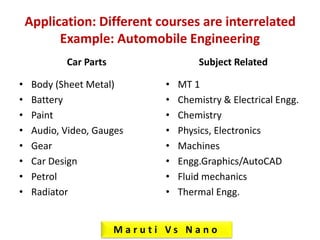
Application: Different courses are interrelated
Example: Automobile Engineering
Car Parts
• Body (Sheet Metal)
• Battery
• Paint
• Audio, Video, Gauges
• Gear
• Car Design
• Petrol
• Radiator
Subject Related
• MT 1
• Chemistry & Electrical Engg.
• Chemistry
• Physics, Electronics
• Machines
• Engg.Graphics/AutoCAD
• Fluid mechanics
• Thermal Engg.
M a r u t i V s N a n o

Mechanical Engineering Programme introduction

  • 1.
  • 2.
    Engineering Materials andMetallurgy Definition A- Astronomy Z- Zoology Include “inanimate” and exclude “Life Sciences” Matter useful to mankind- Broad Range for Engineers Inanimate matter, which is useful to the Engineers in the PRACTICE of his profession S O L I D Materials Science Solid (Physical Science) (Physics + Chemistry) Engg. Science (Basic Science NOT applied “Practical Point of View” -Applications Ceramics, Polymers Metallurgy Interaction of Physics & Chemistry I year Physics & Chemistry Engineering. usefulness of the matter understudy, irrespective of whether the basic laws of science can be rigorously applied or not Introduction of the course Engineering Materials and Metallurgy
  • 3.
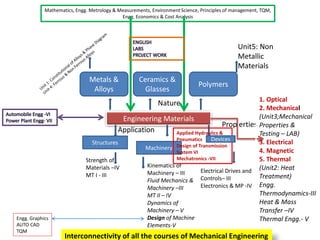
    Engineering Materials Metals & Alloys Ceramics& Glasses Polymers Structures Nature Application Prop erties 1. Optical 2. Mechanical (Unit3;Mechanical Properties & Testing – LAB) 3. Electrical 4. Magnetic 5. Thermal (Unit2: Heat Treatment) Engg. Thermodynamics-III Heat & Mass Transfer –IV Thermal Engg.- V Unit5: Non Metallic Materials Strength of Materials –IV MT I - III Kinematics of Machinery – III Fluid Mechanics & Machinery –III MT II – IV Dynamics of Machinery – V Design of Machine Elements-V Electrical Drives and Controls– III Electronics & MP -IV Machinery Engg. Graphics AUTO CAD TQM Applied Hydraulics & Pneumatics Design of Transmission System VI Mechatronics -VII Mathematics, Engg. Metrology & Measurements, Environment Science, Principles of management, TQM, Engg. Economics & Cost Analysis Devices Interconnectivity of all the courses of Mechanical Engineering
  • 4.
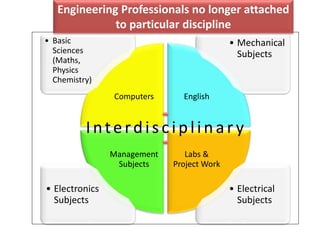
    • Electrical Subjects • Electronics Subjects •Mechanical Subjects • Basic Sciences (Maths, Physics Chemistry) Computers English Labs & Project Work Management Subjects Engineering Professionals no longer attached to particular discipline Interdisciplinar y
  • 5.
    Application: Different coursesare interrelated Example: Automobile Engineering Car Parts • Body (Sheet Metal) • Battery • Paint • Audio, Video, Gauges • Gear • Car Design • Petrol • Radiator Subject Related • MT 1 • Chemistry & Electrical Engg. • Chemistry • Physics, Electronics • Machines • Engg.Graphics/AutoCAD • Fluid mechanics • Thermal Engg. M a r u t i V s N a n o