SCHOOL OF MANAGEMENT
STUDIES,KAKINADA
Topic: EXCEPTIONS TO DEMAND OF LAW
SAYYED ISSAHAQ AZEEM
14021E0019
1ST-SEM
MBA
LAW OF DEMAND
In economics, the law states that, all else being equal,
as the price of a product increases(↑), quantity
demanded falls(↓); likewise, as the price of a product
decreases(↓), quantity demanded increases(↑).There is
an INVERSE relationship between quantity demand and
its price.
EXCEPTIONS TO DEMAND OF LAW
The law of demand does not apply in every case and
situation. The circumstances when the law of demand
becomes ineffective are known as exceptions of the law.
Some of these important exceptions are as under.
Giffen Goods.
Conspicuous consumption.
Conspicuous necessities.
Expected changes in price.
Ignorance.
Extraordinary situations.
Change in fashion.
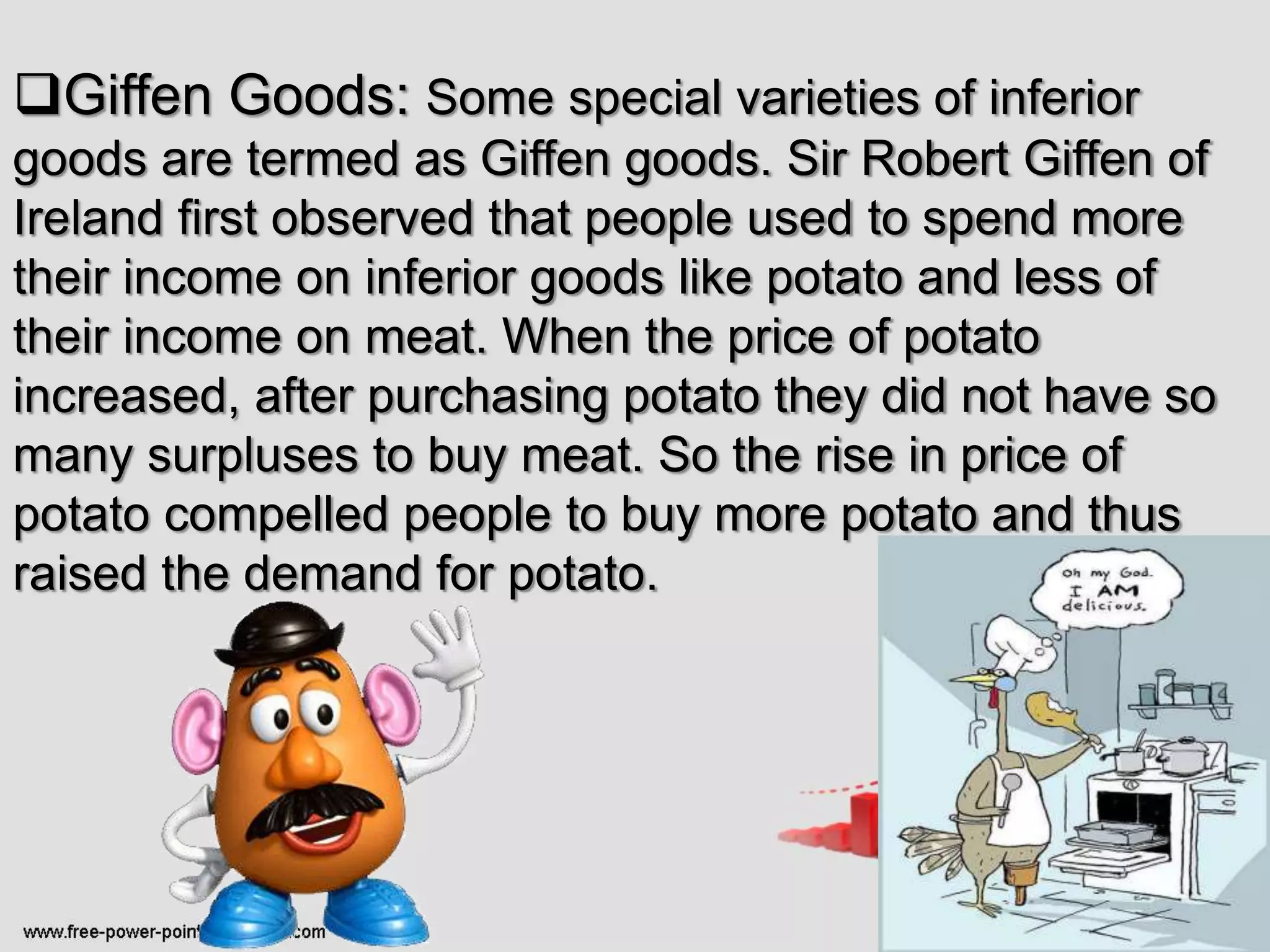
Giffen Goods: Some special varieties of inferior
goods are termed as Giffen goods. Sir Robert Giffen of
Ireland first observed that people used to spend more
their income on inferior goods like potato and less of
their income on meat. When the price of potato
increased, after purchasing potato they did not have so
many surpluses to buy meat. So the rise in price of
potato compelled people to buy more potato and thus
raised the demand for potato.
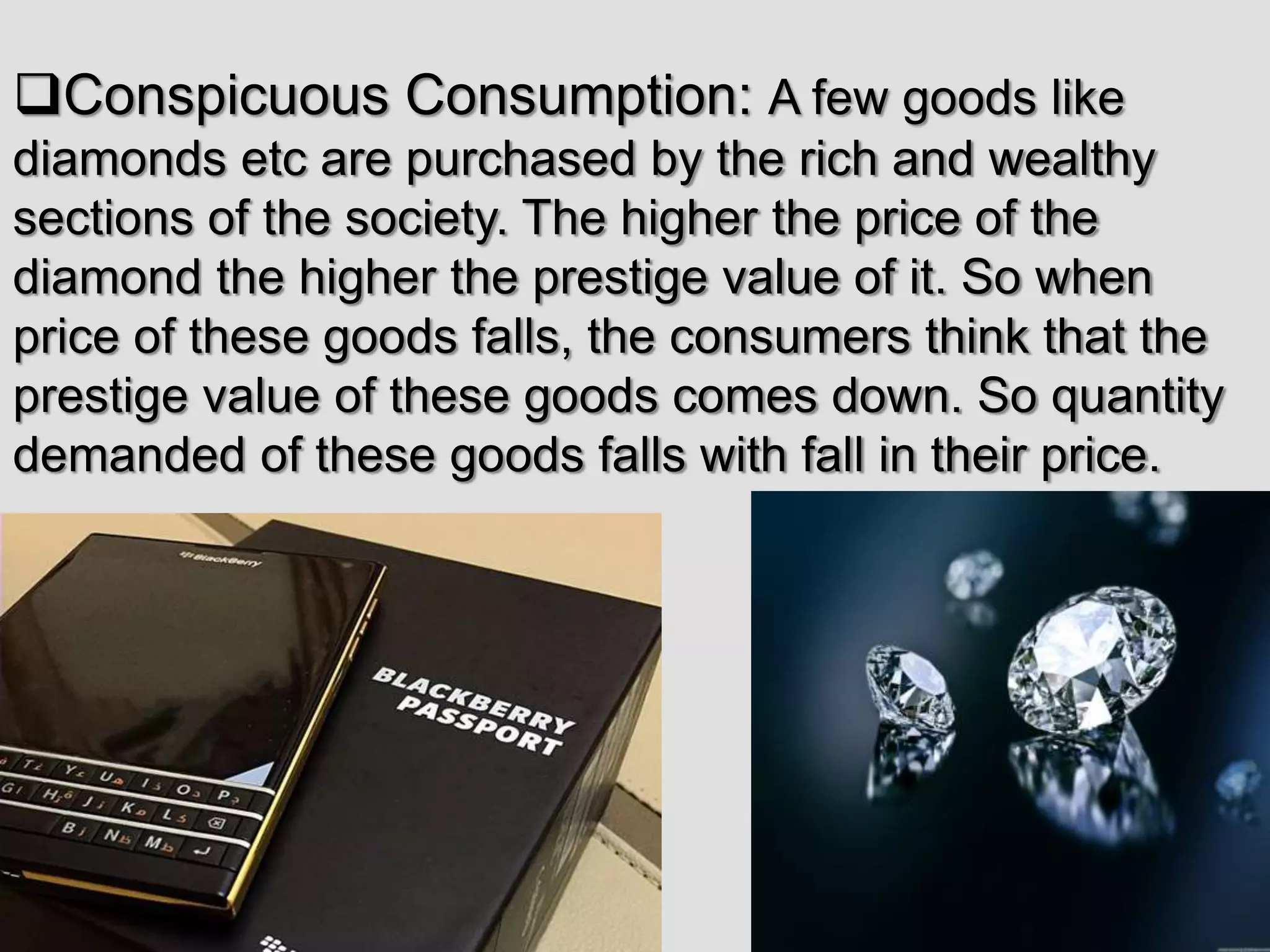
Conspicuous Consumption: A few goods like
diamonds etc are purchased by the rich and wealthy
sections of the society. The higher the price of the
diamond the higher the prestige value of it. So when
price of these goods falls, the consumers think that the
prestige value of these goods comes down. So quantity
demanded of these goods falls with fall in their price.
Conspicuous Necessities: Certain things
become the necessities of modern life. So we have to
purchase them despite their high price. The demand
for T.V. sets, automobiles and refrigerators etc. has not
gone down in spite of the increase in their price. These
things have become the symbol of status. So they are
purchased despite their rising price.
Expected change in price: When the prices are
rising households tend to purchase large quantities of
the commodity out of the apprehension that prices may
still go up. When prices are expected to fall further, they
wait to buy goods in future at still lower prices.
Ignorance: A consumer’s ignorance is another factor
that at times induces him to purchase more of the
commodity at a higher price. This is especially so when
the consumer is haunted by the phobia that a high-
priced commodity is better in quality than a low-priced
one.
Extraordinary Situations: Emergencies like war,
famine etc. negate the operation of the law of demand.
At such times, households behave in an abnormal way.
Households accentuate scarcities and induce further
price rises by making increased purchases even at
higher prices during such periods.
Change in Fashion: A change in fashion and tastes
affects the market for a commodity.
ANY
QUERIES
THANK YOU

EXEMPTIONS TO DEMAND OF LAW

  • 1.
    SCHOOL OF MANAGEMENT STUDIES,KAKINADA Topic:EXCEPTIONS TO DEMAND OF LAW SAYYED ISSAHAQ AZEEM 14021E0019 1ST-SEM MBA
  • 2.
    LAW OF DEMAND Ineconomics, the law states that, all else being equal, as the price of a product increases(↑), quantity demanded falls(↓); likewise, as the price of a product decreases(↓), quantity demanded increases(↑).There is an INVERSE relationship between quantity demand and its price.
  • 3.
    EXCEPTIONS TO DEMANDOF LAW The law of demand does not apply in every case and situation. The circumstances when the law of demand becomes ineffective are known as exceptions of the law. Some of these important exceptions are as under. Giffen Goods. Conspicuous consumption. Conspicuous necessities. Expected changes in price. Ignorance. Extraordinary situations. Change in fashion.
  • 4.
    Giffen Goods: Somespecial varieties of inferior goods are termed as Giffen goods. Sir Robert Giffen of Ireland first observed that people used to spend more their income on inferior goods like potato and less of their income on meat. When the price of potato increased, after purchasing potato they did not have so many surpluses to buy meat. So the rise in price of potato compelled people to buy more potato and thus raised the demand for potato.
  • 5.
    Conspicuous Consumption: Afew goods like diamonds etc are purchased by the rich and wealthy sections of the society. The higher the price of the diamond the higher the prestige value of it. So when price of these goods falls, the consumers think that the prestige value of these goods comes down. So quantity demanded of these goods falls with fall in their price.
  • 6.
    Conspicuous Necessities: Certainthings become the necessities of modern life. So we have to purchase them despite their high price. The demand for T.V. sets, automobiles and refrigerators etc. has not gone down in spite of the increase in their price. These things have become the symbol of status. So they are purchased despite their rising price.
  • 7.
    Expected change inprice: When the prices are rising households tend to purchase large quantities of the commodity out of the apprehension that prices may still go up. When prices are expected to fall further, they wait to buy goods in future at still lower prices. Ignorance: A consumer’s ignorance is another factor that at times induces him to purchase more of the commodity at a higher price. This is especially so when the consumer is haunted by the phobia that a high- priced commodity is better in quality than a low-priced one.
  • 8.
    Extraordinary Situations: Emergencieslike war, famine etc. negate the operation of the law of demand. At such times, households behave in an abnormal way. Households accentuate scarcities and induce further price rises by making increased purchases even at higher prices during such periods. Change in Fashion: A change in fashion and tastes affects the market for a commodity.
  • 9.