Maturity Model
Name: Masud Alam Ansari
Regd: 11716156
Roll: B-65
Introduction
It is framework, guide and model of defining a means
of evolving improvements in processes associated with
what is being measured.
Philosophy
• Descriptive: as-is assessment
• Prescriptive: determine where and how to improve.
• Comparative: compare with similar organization.
Basis for Maturity Models
Greater process maturity should mean greater business
benefit(s)
• Reduced cost
• Greater efficiency
• Reduced risk
Implementation of Maturity Model
• Project management.
• Programs and portfolios(Investment)
• Quality management.
• Risk and business management.
Life Cycle Of Maturity Model
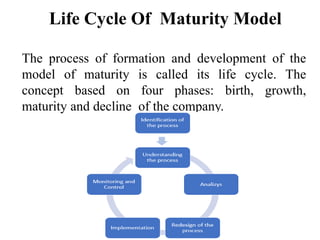
The process of formation and development of the
model of maturity is called its life cycle. The
concept based on four phases: birth, growth,
maturity and decline of the company.
Issues With Maturity Models
• How to know you are at a given level?
• What are the costs of achieving a given maturity
level?
• What work is needed to increase maturity?
• What is the cost of operationalizing processes?
• Are the costs justified?
• What is the real value of process maturity?
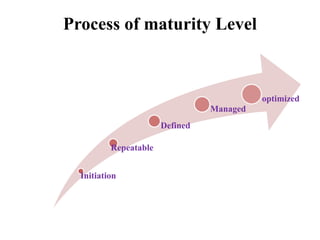
Process of maturity Level
Initiation
Repeatable
Defined
Managed
optimized
• Initiation-Processes are unpredictable.
• Repeatable-Processes are planned, documented
and performed
• Defined-Processes are well characterized and
understand.
• Managed- Processes are controlled using tools.
• Optimized-Improvement.
Outcomes
• Help clients to understand that they need to
change.
• Help users to learn the platform better.
• Empower client in multi-vendor relationship.
• Provide a point of reference for connecting the
dots.
• Provide mechanism for verifying strategy.
Maturity model

Maturity model

  • 1.
    Maturity Model Name: MasudAlam Ansari Regd: 11716156 Roll: B-65
  • 2.
    Introduction It is framework,guide and model of defining a means of evolving improvements in processes associated with what is being measured. Philosophy • Descriptive: as-is assessment • Prescriptive: determine where and how to improve. • Comparative: compare with similar organization.
  • 3.
    Basis for MaturityModels Greater process maturity should mean greater business benefit(s) • Reduced cost • Greater efficiency • Reduced risk
  • 4.
    Implementation of MaturityModel • Project management. • Programs and portfolios(Investment) • Quality management. • Risk and business management.
  • 5.
    Life Cycle OfMaturity Model The process of formation and development of the model of maturity is called its life cycle. The concept based on four phases: birth, growth, maturity and decline of the company.
  • 6.
    Issues With MaturityModels • How to know you are at a given level? • What are the costs of achieving a given maturity level? • What work is needed to increase maturity? • What is the cost of operationalizing processes? • Are the costs justified? • What is the real value of process maturity?
  • 7.
    Process of maturityLevel Initiation Repeatable Defined Managed optimized
  • 8.
    • Initiation-Processes areunpredictable. • Repeatable-Processes are planned, documented and performed • Defined-Processes are well characterized and understand. • Managed- Processes are controlled using tools. • Optimized-Improvement.
  • 9.
    Outcomes • Help clientsto understand that they need to change. • Help users to learn the platform better. • Empower client in multi-vendor relationship. • Provide a point of reference for connecting the dots. • Provide mechanism for verifying strategy.