PEOPLE CAPABILITY AND
MATURITY MODEL LEVELS
BY ,
K.VIJAY KUMAR REDDY
17R21E0050
CONTENTS:
1.Introduction
2.Steps of PCMM
3. Why do we need a PCMM
4. PCMM Levels
5. Maturity framework
INTRODUCTION
• The PCMM is a framework that help organization successfully address
their critical people issues.
• Based on the best current practices in fields such as human resources,
knowledge management, and organization development.
• PCMM guides organization in improving their processes for managing
and their workforces.
STEPS OF PCMM
Step1:Characterize the maturity of their workforce practices.
Step2: Set priorities for immediate action
step3:Integrate workforce development with process
improvement
step4:Become an employer of choice
WHY DO WE NEED A PCMM?
1. Employment security
2. Selective hiring of new personnel
3. Self-managed teams and decentralization of decision making
4. Comparatively high compensation contingent on organizational
performance
5. Extensive training
6. Reduced status distinctions and barriers and
7. Extensive sharing of financial and performance information.
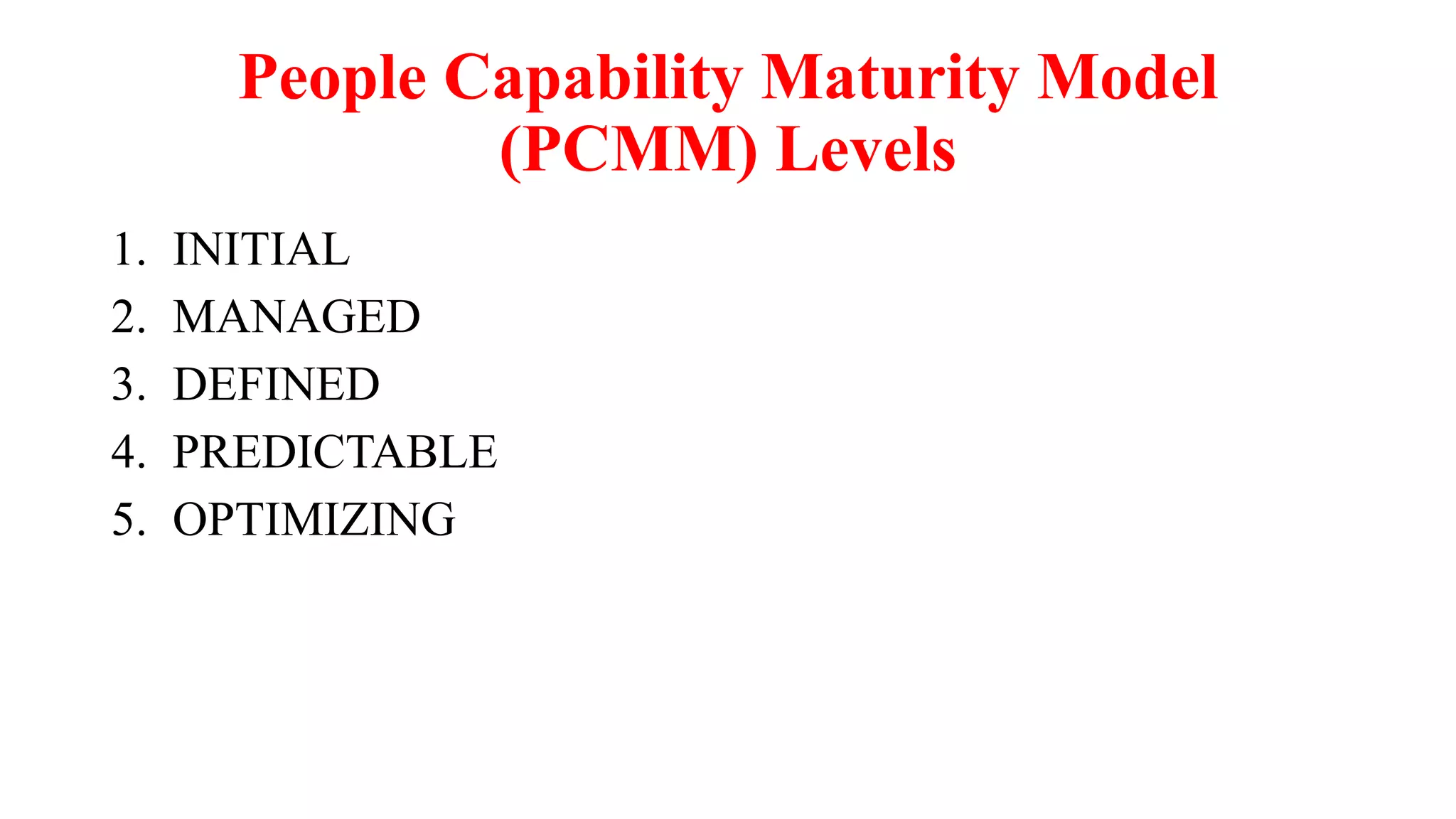
People Capability Maturity Model
(PCMM) Levels
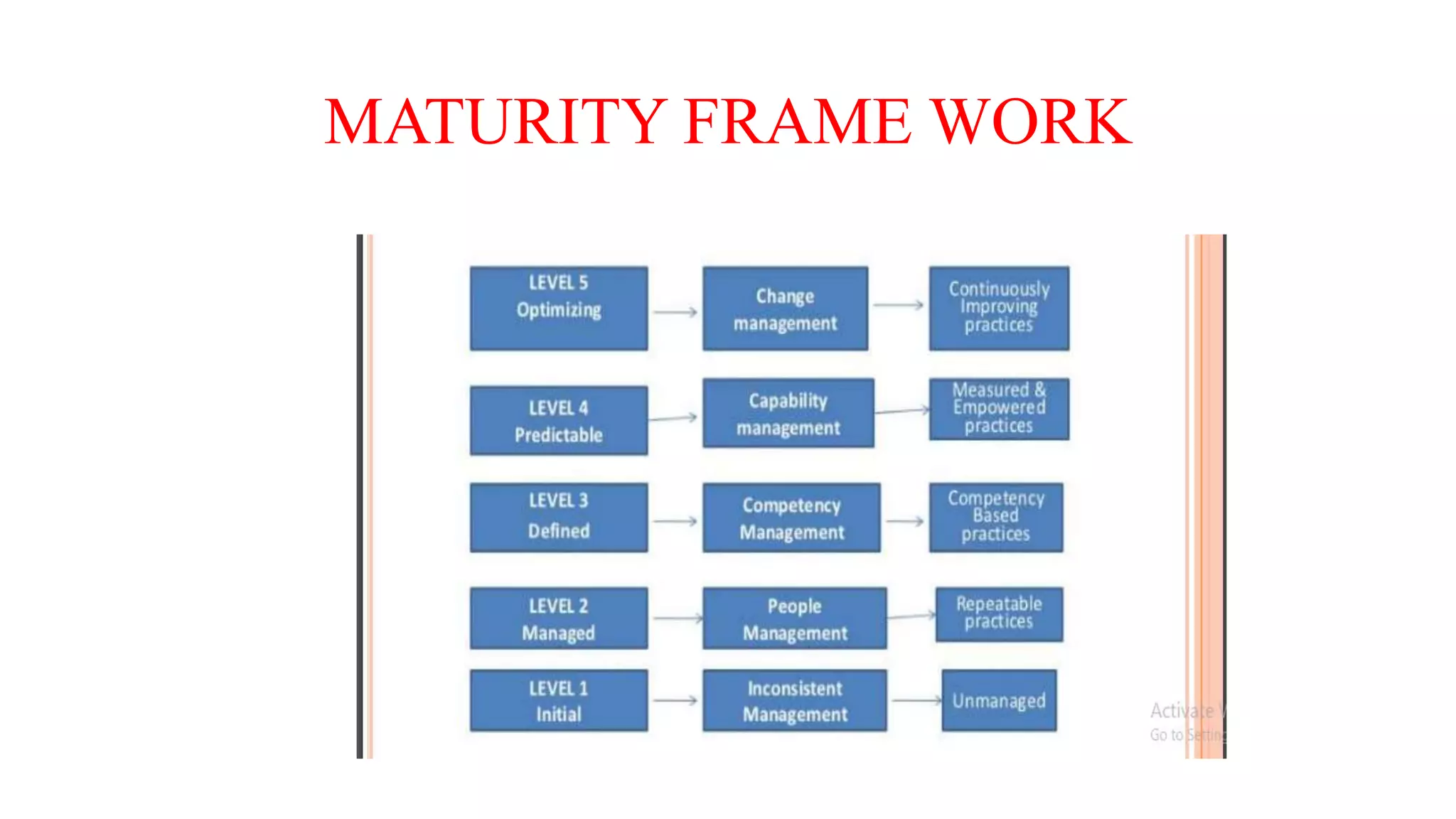
1. INITIAL
2. MANAGED
3. DEFINED
4. PREDICTABLE
5. OPTIMIZING
The Initial Maturity Level 1:
Organizations at the Initial Level typically exhibit four
characteristics:
1. Inconsistency in performing practices
2. Displacement of responsibility
3. Ritualistic practices and
4. An emotionally detached workforce.
The Managed Maturity Level 2:
Organizations at the Managed Level exhibit four
characteristics:
1. Better individual understanding
2. Better mangers understanding
3. Better relations
4. Better environment
The Defined Maturity Level 3:
• The primary objective of the Defined Level is to help an
organization gain a competitive advantage by developing the
various competencies.
• These workforce competencies represent the critical pillars
that support the strategic business plan.
• Their absence poses a severe risk to strategic business
objectives.
The Predictable Maturity Level 4:
• At the Predictable Level, the organization manages and
exploits the capability created by its framework of workforce
competencies.
• The organization is able to predict its capability for
performing work because it can quantify the capability of its
workforce.
The Optimizing Maturity Level 5:
• At the Optimizing Level, the entire organization is focused on
continual improvement.
• these improvements are made to the capability of individuals
and workgroups, to the performance of competency-based
processes, and to workforce practices and activities.
MATURITY FRAME WORK
People capability and maturity model levels

People capability and maturity model levels

  • 1.
    PEOPLE CAPABILITY AND MATURITYMODEL LEVELS BY , K.VIJAY KUMAR REDDY 17R21E0050
  • 2.
    CONTENTS: 1.Introduction 2.Steps of PCMM 3.Why do we need a PCMM 4. PCMM Levels 5. Maturity framework
  • 3.
    INTRODUCTION • The PCMMis a framework that help organization successfully address their critical people issues. • Based on the best current practices in fields such as human resources, knowledge management, and organization development. • PCMM guides organization in improving their processes for managing and their workforces.
  • 4.
    STEPS OF PCMM Step1:Characterizethe maturity of their workforce practices. Step2: Set priorities for immediate action step3:Integrate workforce development with process improvement step4:Become an employer of choice
  • 5.
    WHY DO WENEED A PCMM? 1. Employment security 2. Selective hiring of new personnel 3. Self-managed teams and decentralization of decision making 4. Comparatively high compensation contingent on organizational performance 5. Extensive training 6. Reduced status distinctions and barriers and 7. Extensive sharing of financial and performance information.
  • 6.
    People Capability MaturityModel (PCMM) Levels 1. INITIAL 2. MANAGED 3. DEFINED 4. PREDICTABLE 5. OPTIMIZING
  • 7.
    The Initial MaturityLevel 1: Organizations at the Initial Level typically exhibit four characteristics: 1. Inconsistency in performing practices 2. Displacement of responsibility 3. Ritualistic practices and 4. An emotionally detached workforce.
  • 8.
    The Managed MaturityLevel 2: Organizations at the Managed Level exhibit four characteristics: 1. Better individual understanding 2. Better mangers understanding 3. Better relations 4. Better environment
  • 9.
    The Defined MaturityLevel 3: • The primary objective of the Defined Level is to help an organization gain a competitive advantage by developing the various competencies. • These workforce competencies represent the critical pillars that support the strategic business plan. • Their absence poses a severe risk to strategic business objectives.
  • 10.
    The Predictable MaturityLevel 4: • At the Predictable Level, the organization manages and exploits the capability created by its framework of workforce competencies. • The organization is able to predict its capability for performing work because it can quantify the capability of its workforce.
  • 11.
    The Optimizing MaturityLevel 5: • At the Optimizing Level, the entire organization is focused on continual improvement. • these improvements are made to the capability of individuals and workgroups, to the performance of competency-based processes, and to workforce practices and activities.
  • 12.