Learning TargetS:
a. interpret and explain the Grouping,
Exponent, Multiplication, Division,
Addition, Subtraction (GEMDAS) Rule;
and
b. perform two or more different
operations on whole numbers with or
without exponents and grouping
symbols.
Tell which
operations should
be solved first.
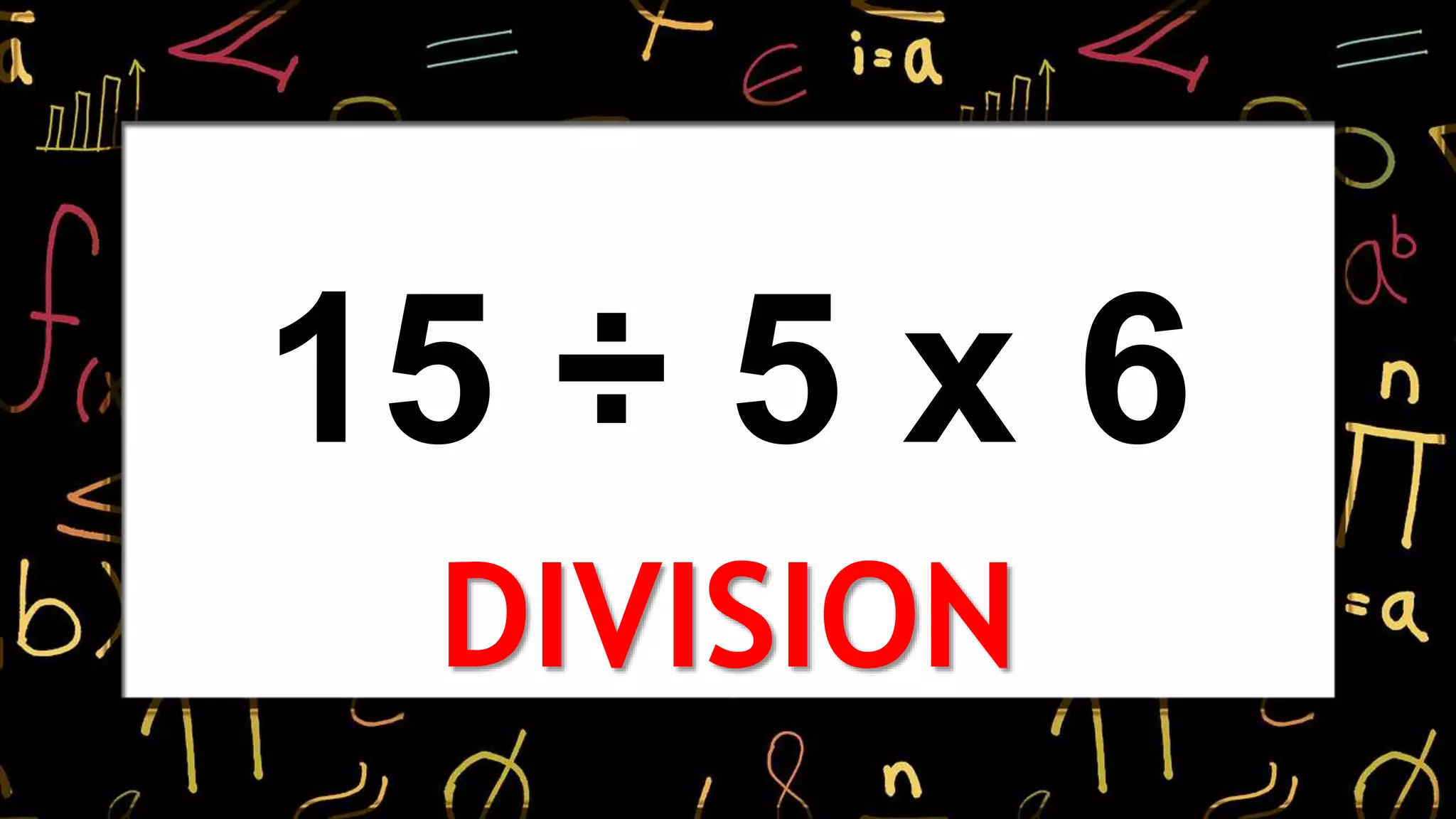
15 ÷ 5 x 6
DIVISION
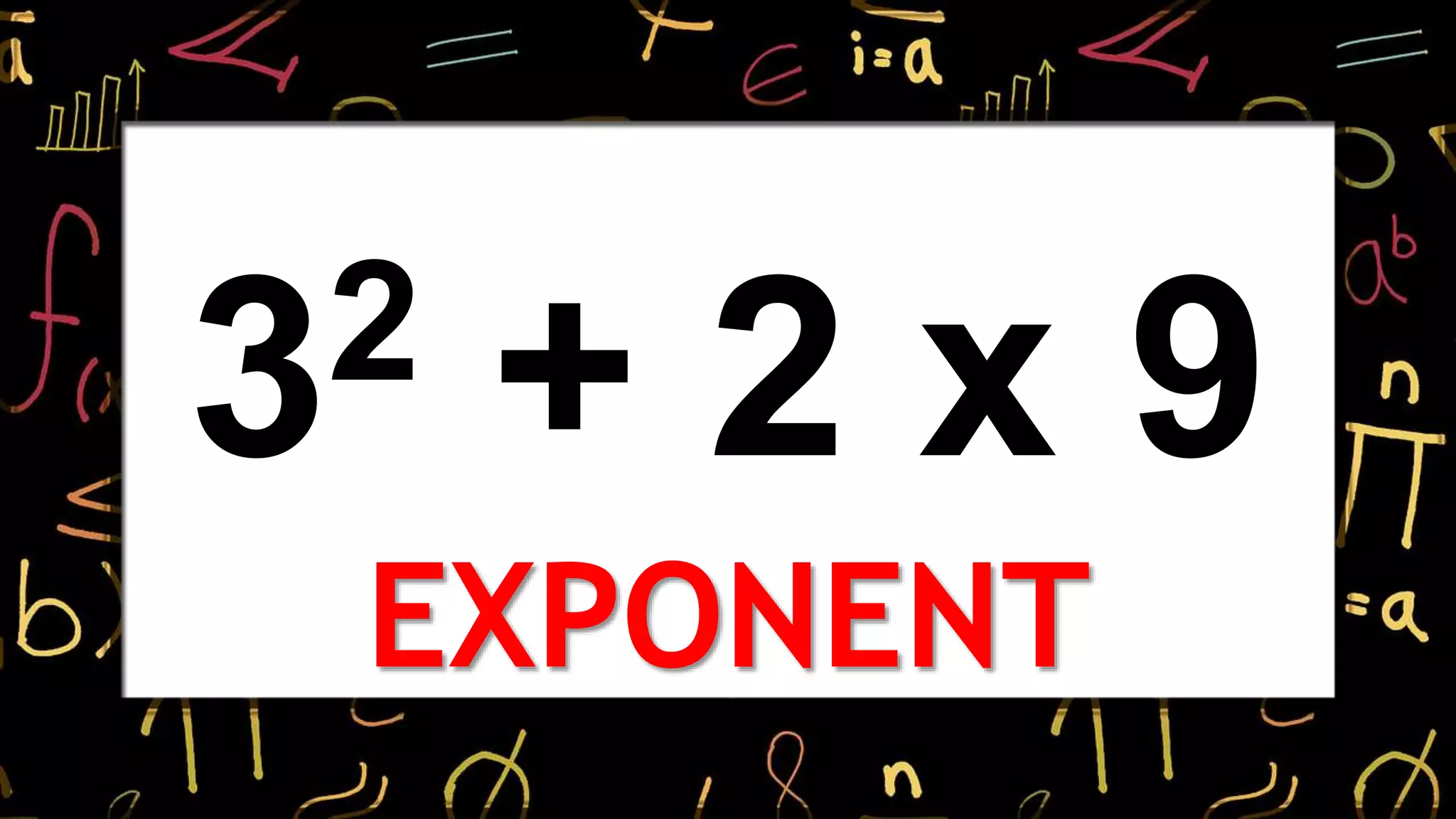
32 + 2 x 9
EXPONENT
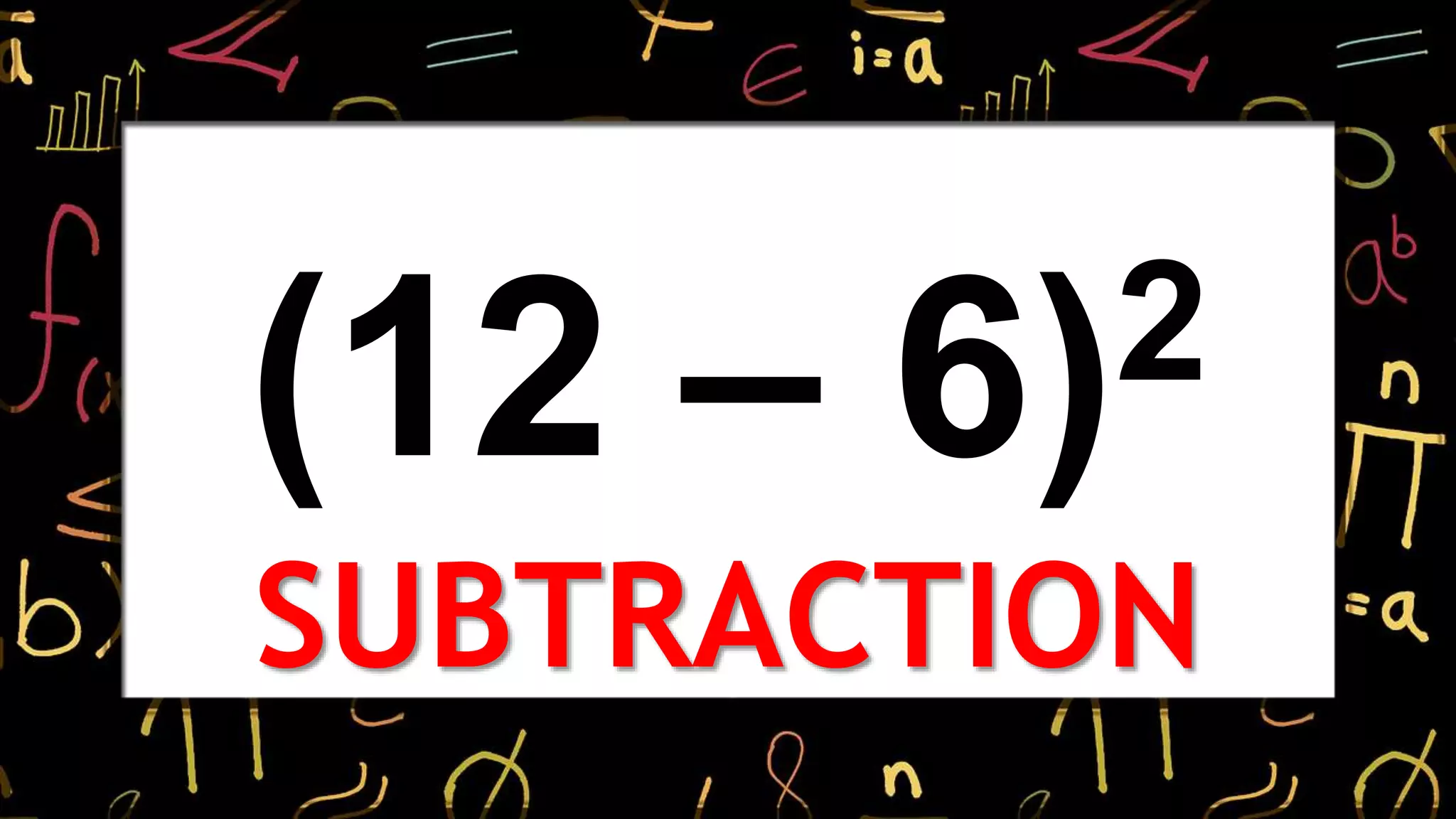
(12 – 6)2
SUBTRACTION
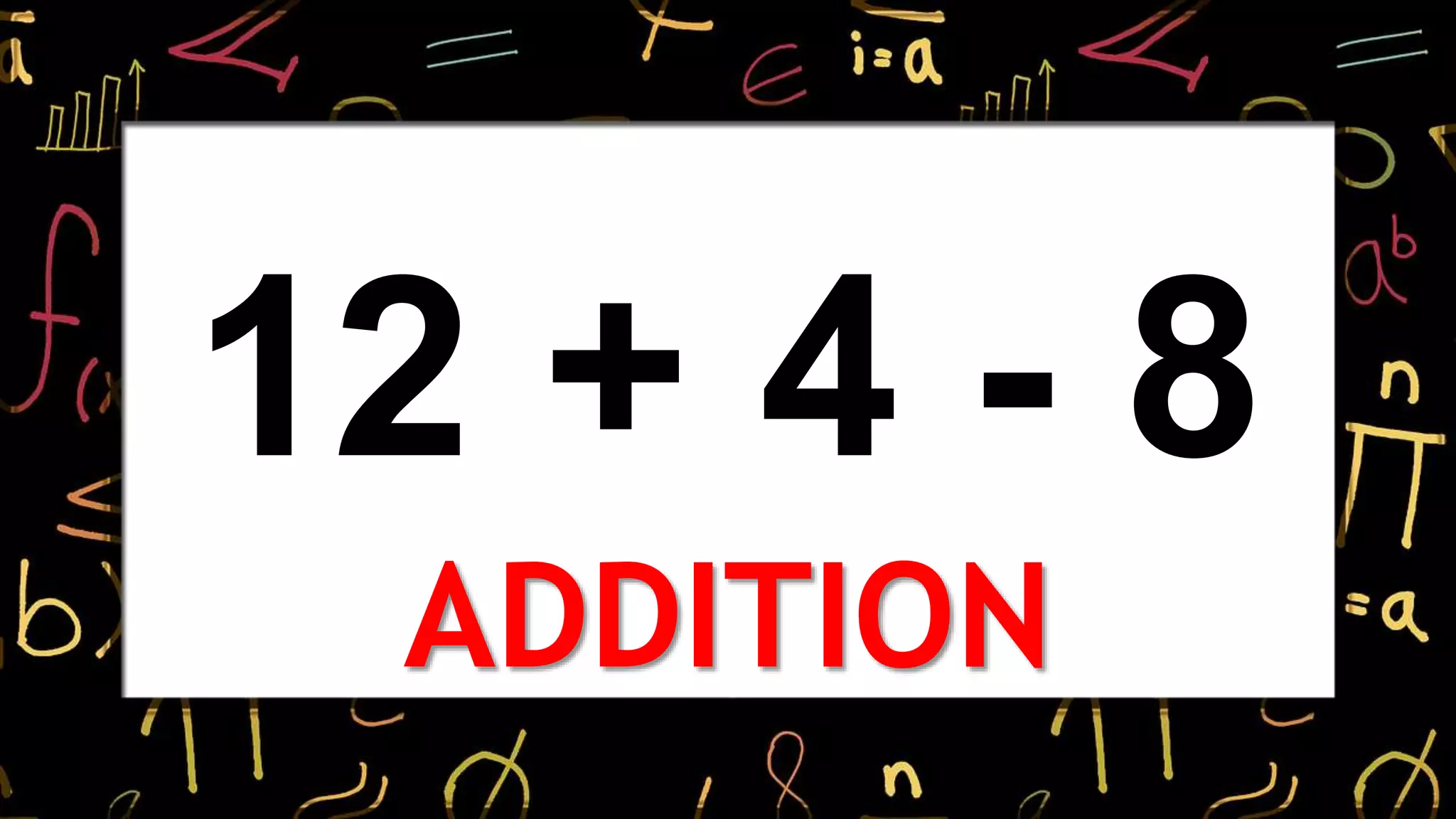
12 + 4 - 8
ADDITION
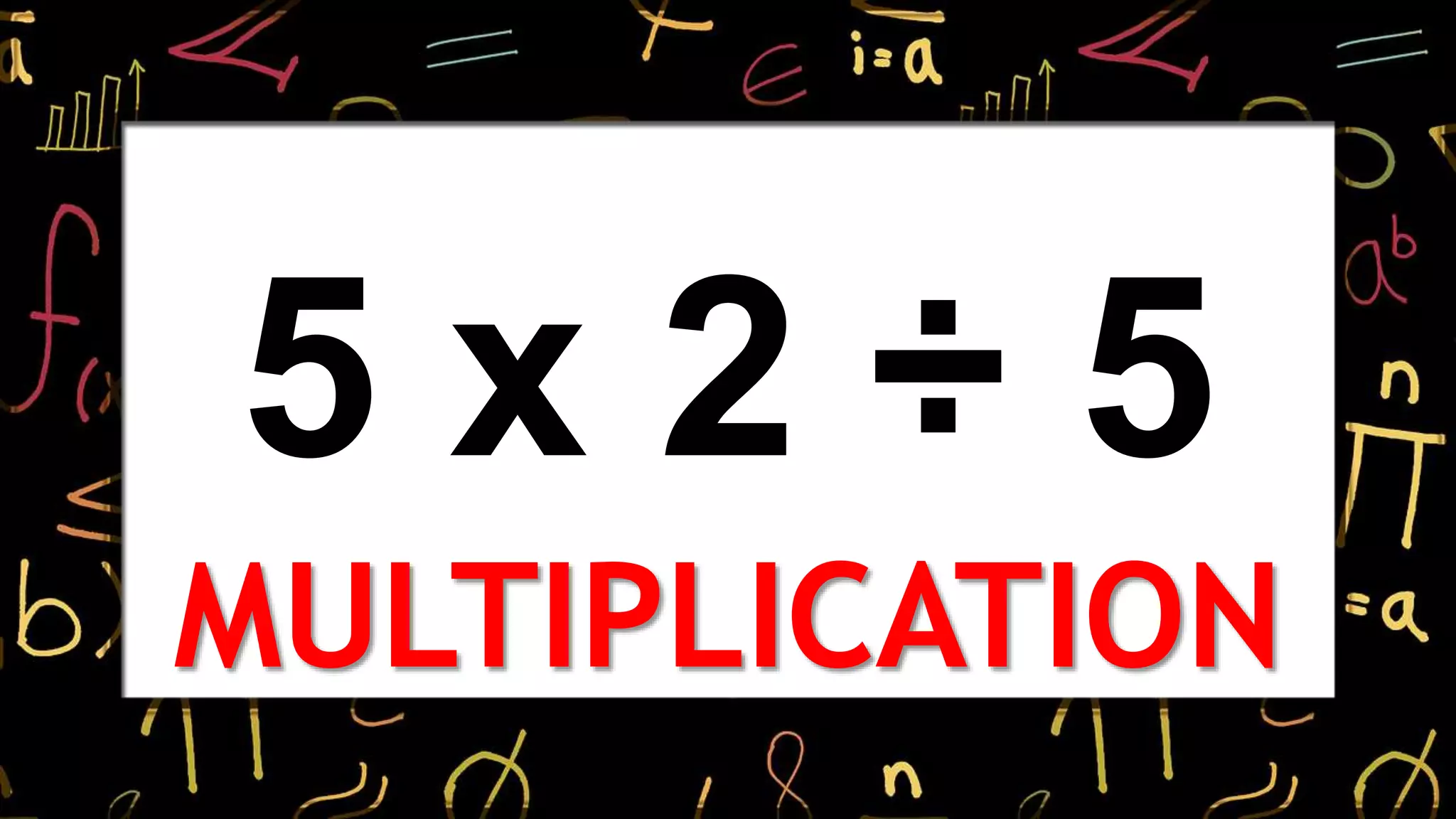
5 x 2 ÷ 5
MULTIPLICATION
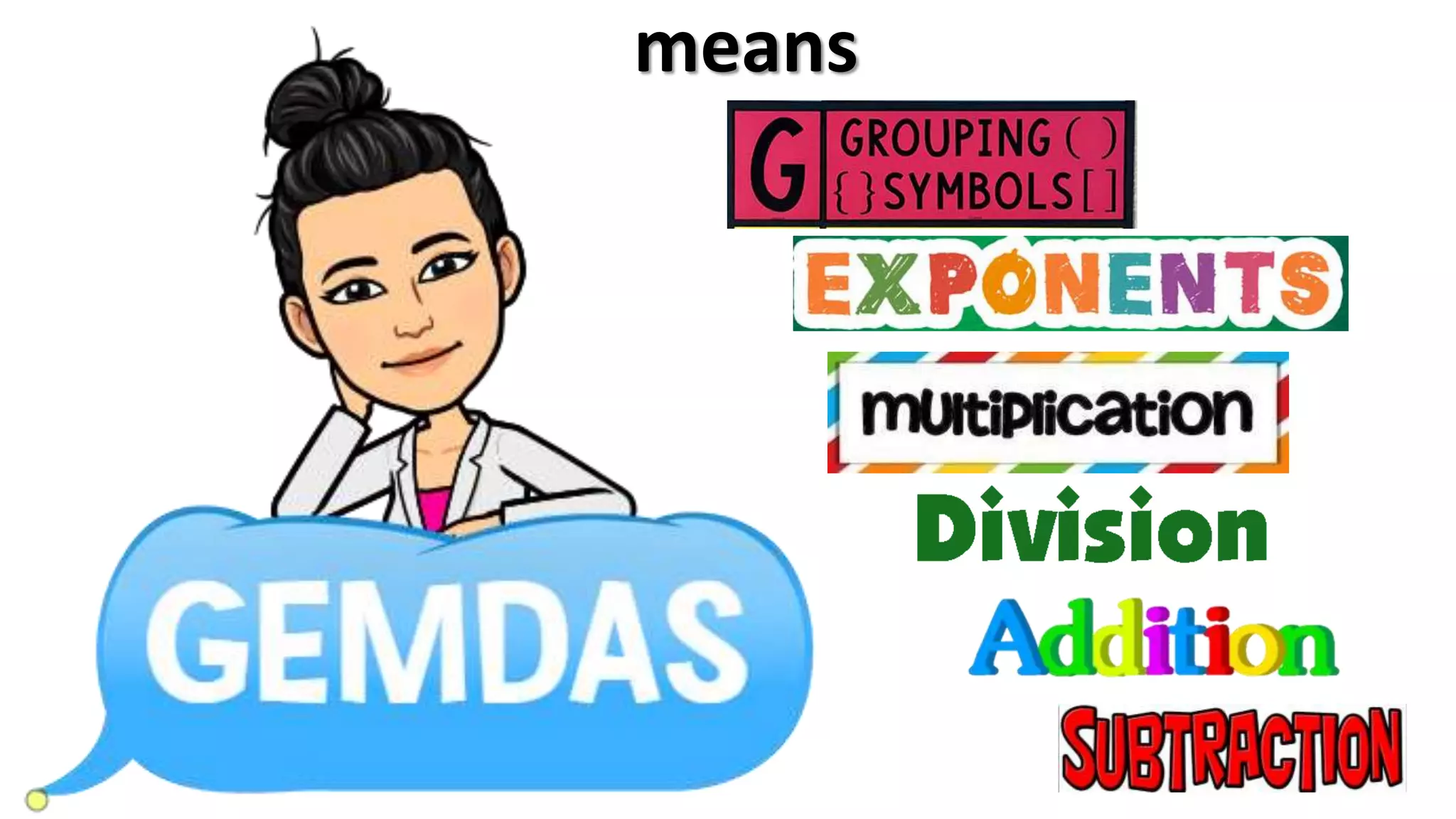
means
means
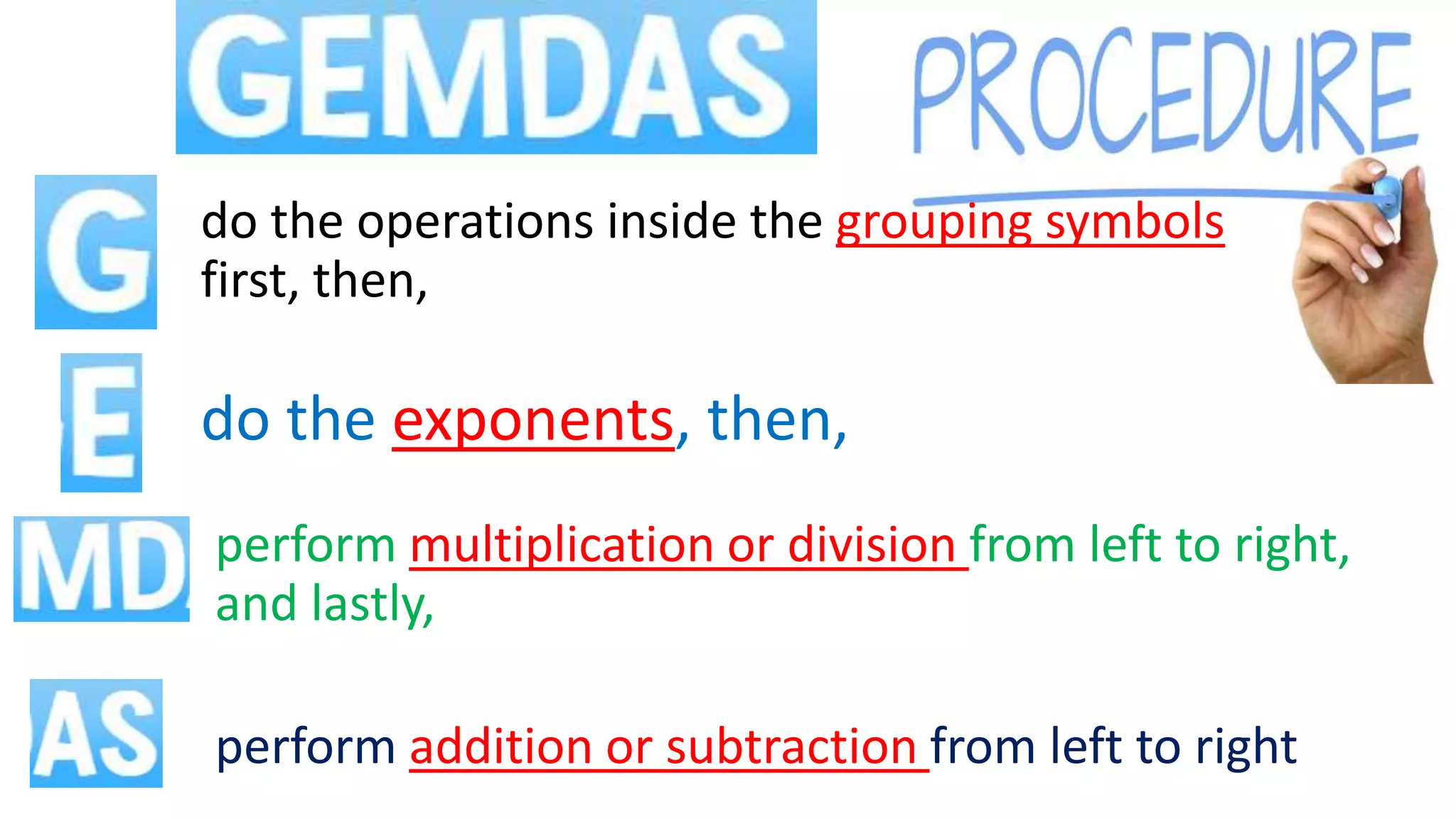
perform addition or subtraction from left to right
perform multiplication or division from left to right,
and lastly,
do the operations inside the grouping symbols
first, then,
do the exponents, then,
Solution: Apply GMDAS
2 + { 7 – [ 4 + 5 – ( 3 + 2 ) ] – 1 }
Study the examples below on solving equations with series of operations.
2 + { 7 – [ 4 + 5 – ( 3 + 2 ) ] – 1 }
Do the operations inside the grouping
symbols.
N = 4
Add and subtract from left to right
2 + { 7 – [ 4 + 5 – 5 ] – 1 }
2 + { 7 – 4 – 1 }
2 + 2
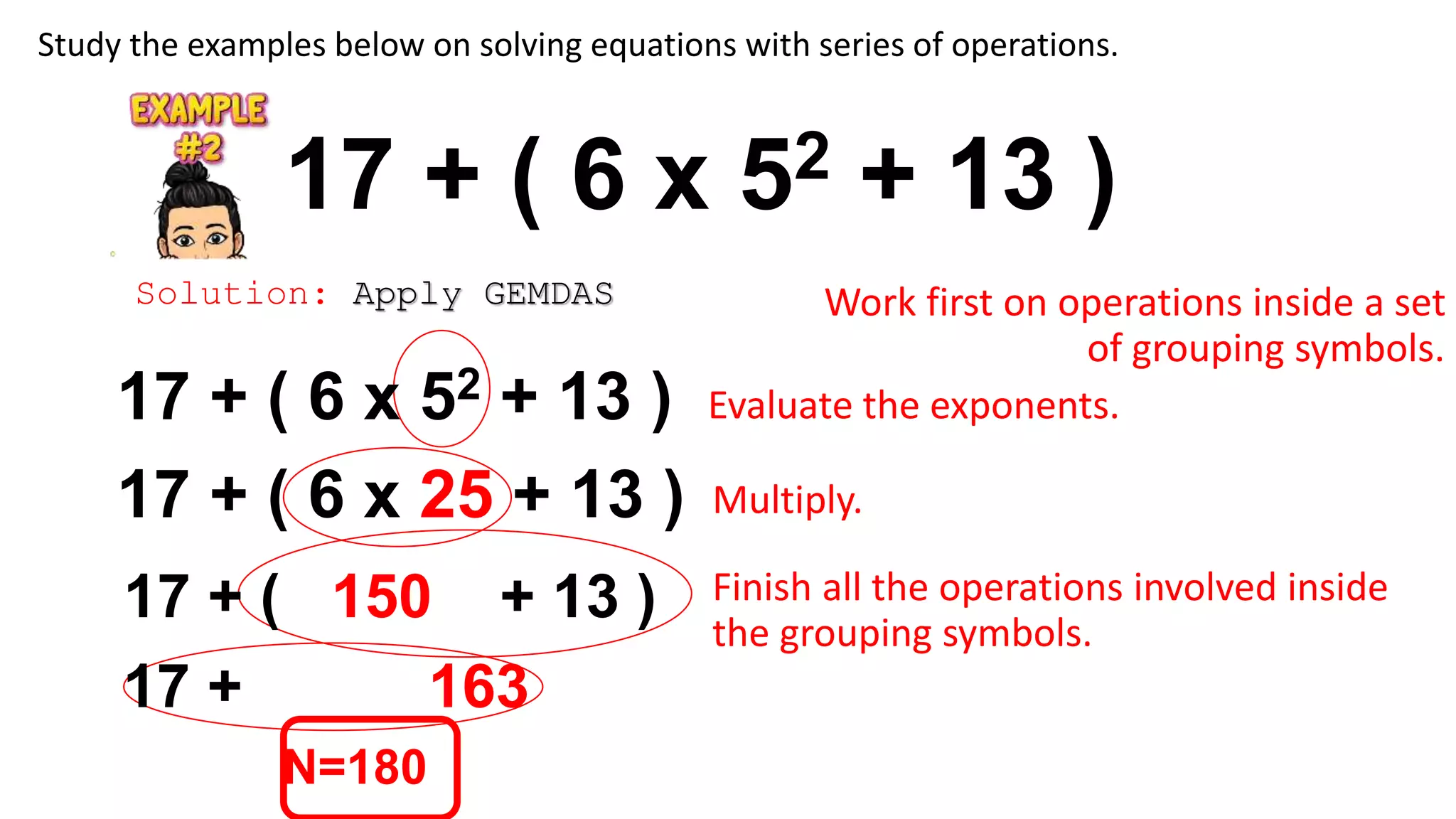
Solution: Apply GEMDAS
17 + ( 6 x 52 + 13 )
Study the examples below on solving equations with series of operations.
Work first on operations inside a set
of grouping symbols.
N=180
Evaluate the exponents.
Multiply.
Finish all the operations involved inside
the grouping symbols.
17 + ( 6 x 52 + 13 )
17 + ( 6 x 25 + 13 )
17 + ( 150 + 13 )
17 + 163
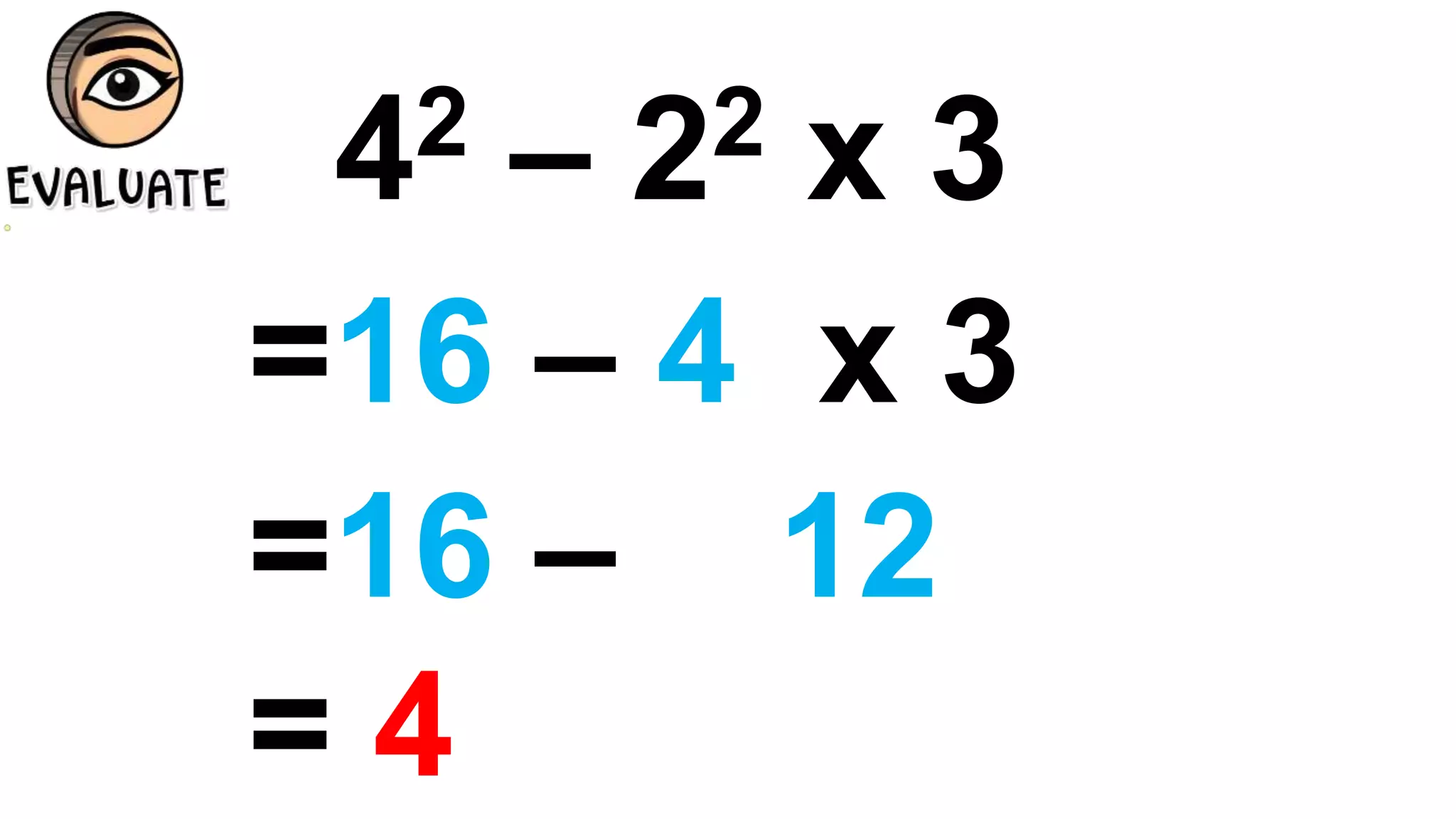
42 – 22 x 3
=16 – 4 x 3
=16 – 12
= 4
Performing series of operations is
like doing a series of tasks. You
need to make priorities and
accomplish first the things which
are urgent and important.
What priorities do you fail to neglect at times?
Why?
Have you ever experienced doing a series of tasks in only
one day?
What did you do to finish all the tasks well?
Solve each
problem.
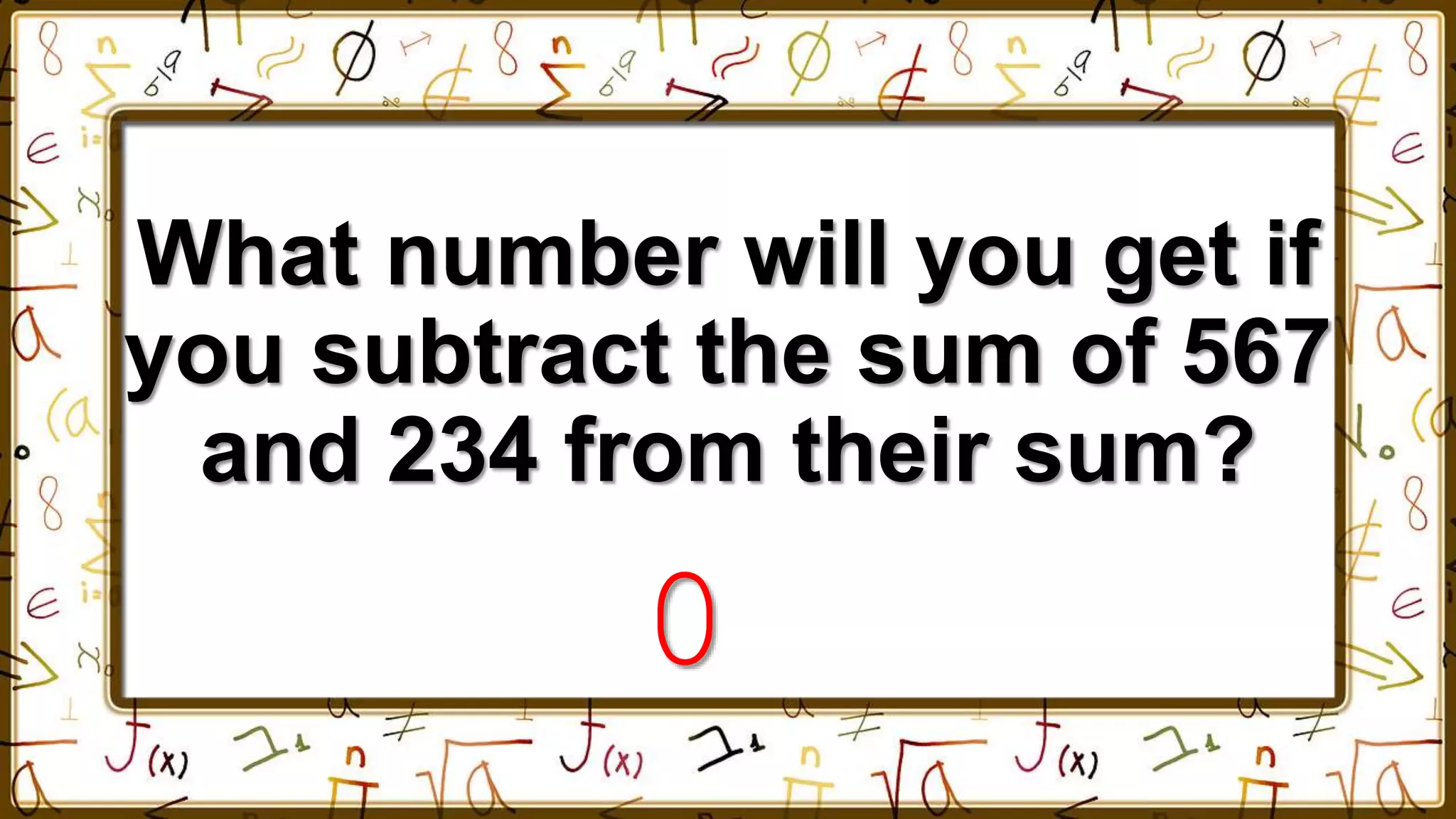
What number will you get if
you subtract the sum of 567
and 234 from their sum?
0
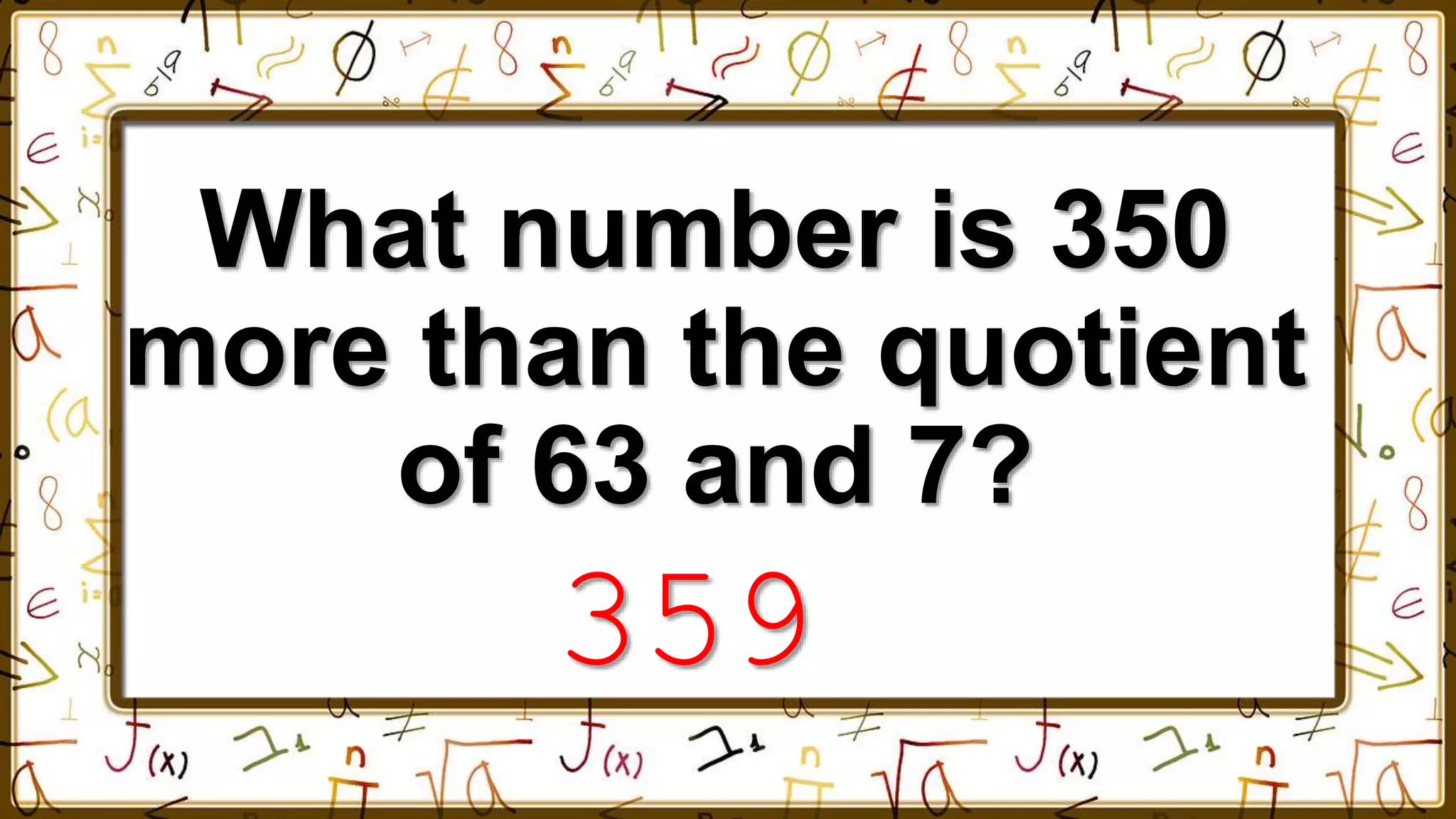
What number is 350
more than the quotient
of 63 and 7?
359
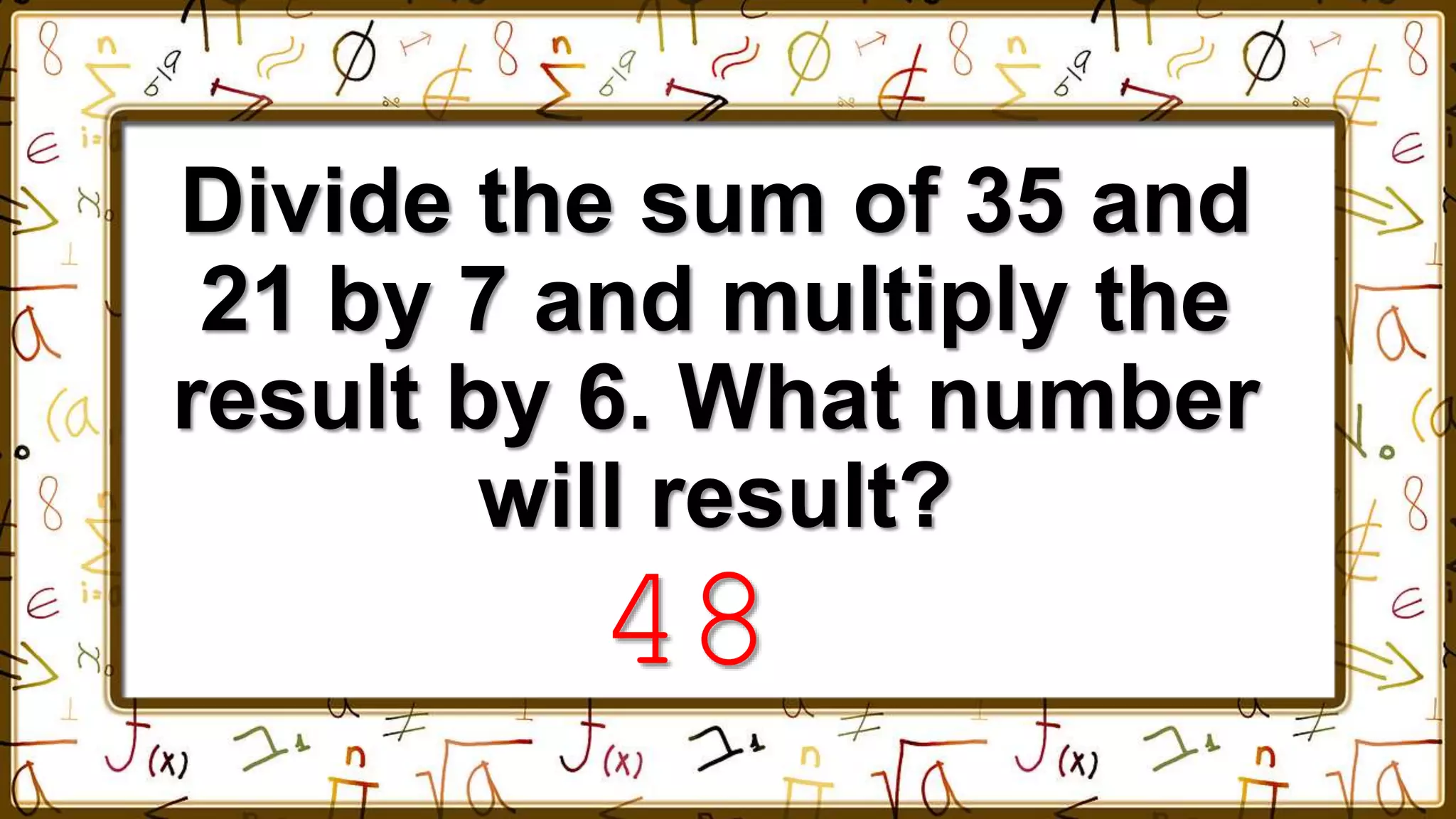
Divide the sum of 35 and
21 by 7 and multiply the
result by 6. What number
will result?
48
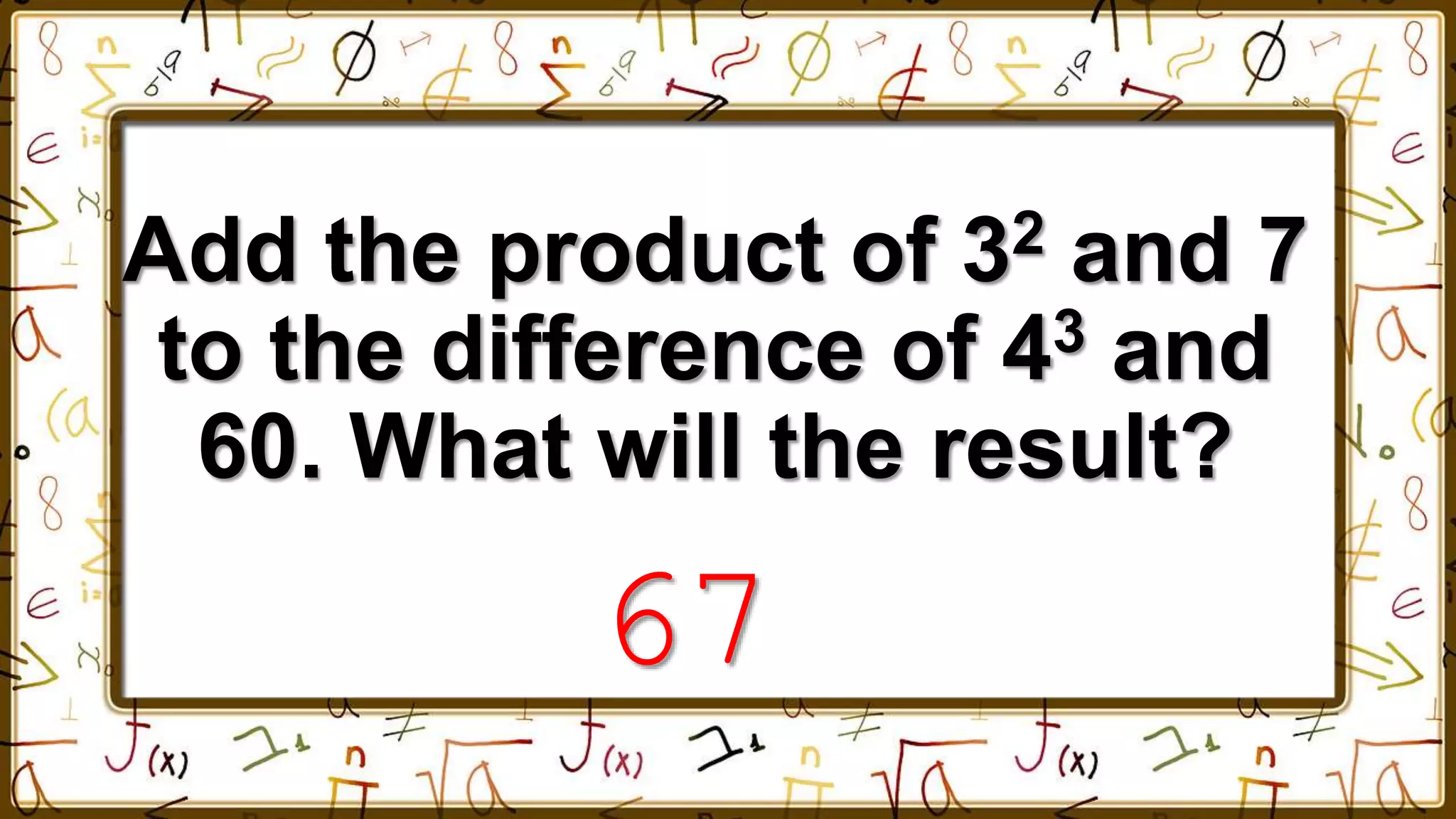
Add the product of 32 and 7
to the difference of 43 and
60. What will the result?
67
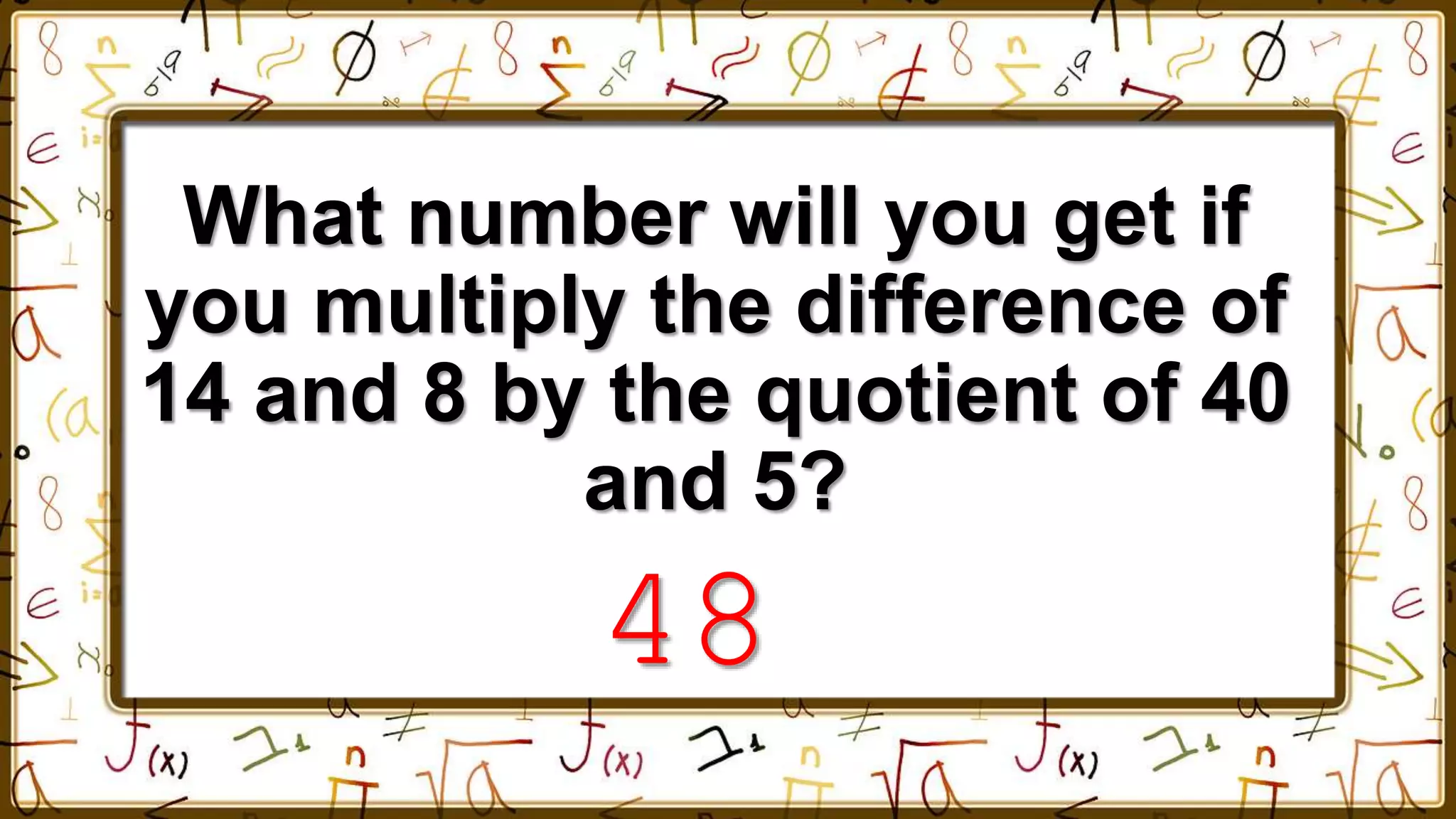
What number will you get if
you multiply the difference of
14 and 8 by the quotient of 40
and 5?
48

Math 6 - Order of Operations GEMDAS.pptx

  • 2.
    Learning TargetS: a. interpretand explain the Grouping, Exponent, Multiplication, Division, Addition, Subtraction (GEMDAS) Rule; and b. perform two or more different operations on whole numbers with or without exponents and grouping symbols.
  • 3.
  • 4.
    15 ÷ 5x 6 DIVISION
  • 5.
    32 + 2x 9 EXPONENT
  • 6.
  • 7.
    12 + 4- 8 ADDITION
  • 8.
    5 x 2÷ 5 MULTIPLICATION
  • 9.
  • 10.
  • 11.
    perform addition orsubtraction from left to right perform multiplication or division from left to right, and lastly, do the operations inside the grouping symbols first, then, do the exponents, then,
  • 12.
    Solution: Apply GMDAS 2+ { 7 – [ 4 + 5 – ( 3 + 2 ) ] – 1 } Study the examples below on solving equations with series of operations. 2 + { 7 – [ 4 + 5 – ( 3 + 2 ) ] – 1 } Do the operations inside the grouping symbols. N = 4 Add and subtract from left to right 2 + { 7 – [ 4 + 5 – 5 ] – 1 } 2 + { 7 – 4 – 1 } 2 + 2
  • 13.
    Solution: Apply GEMDAS 17+ ( 6 x 52 + 13 ) Study the examples below on solving equations with series of operations. Work first on operations inside a set of grouping symbols. N=180 Evaluate the exponents. Multiply. Finish all the operations involved inside the grouping symbols. 17 + ( 6 x 52 + 13 ) 17 + ( 6 x 25 + 13 ) 17 + ( 150 + 13 ) 17 + 163
  • 14.
    42 – 22x 3 =16 – 4 x 3 =16 – 12 = 4
  • 15.
    Performing series ofoperations is like doing a series of tasks. You need to make priorities and accomplish first the things which are urgent and important. What priorities do you fail to neglect at times? Why? Have you ever experienced doing a series of tasks in only one day? What did you do to finish all the tasks well?
  • 16.
  • 17.
    What number willyou get if you subtract the sum of 567 and 234 from their sum? 0
  • 18.
    What number is350 more than the quotient of 63 and 7? 359
  • 19.
    Divide the sumof 35 and 21 by 7 and multiply the result by 6. What number will result? 48
  • 20.
    Add the productof 32 and 7 to the difference of 43 and 60. What will the result? 67
  • 21.
    What number willyou get if you multiply the difference of 14 and 8 by the quotient of 40 and 5? 48