Order of Operations By Thomas Englert
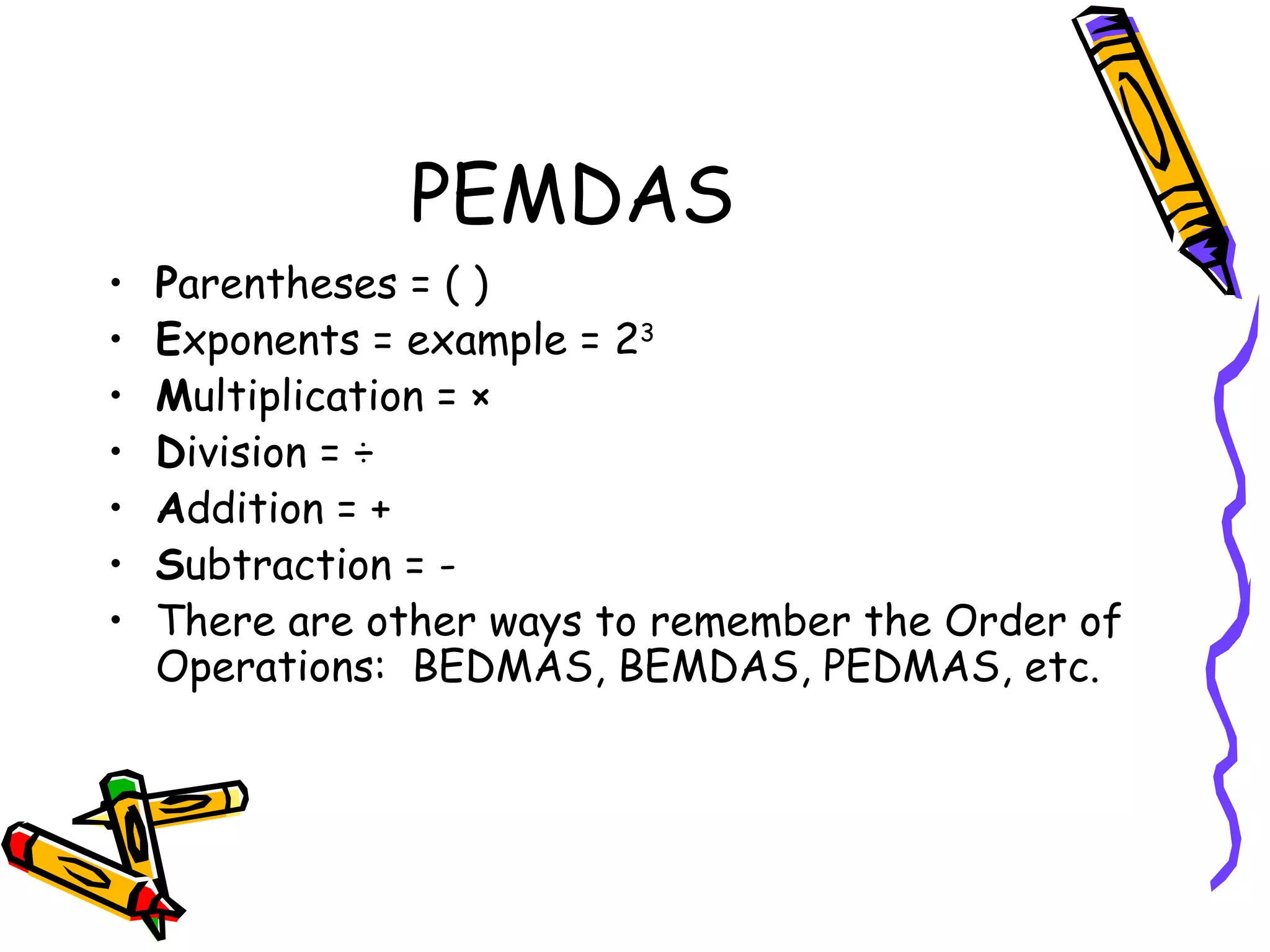
PEMDAS P arentheses = ( ) E xponents = example =  2 3 M ultiplication = × D ivision =  ÷ A ddition = + S ubtraction = - There are other ways to remember the Order of Operations:  BEDMAS, BEMDAS, PEDMAS, etc.
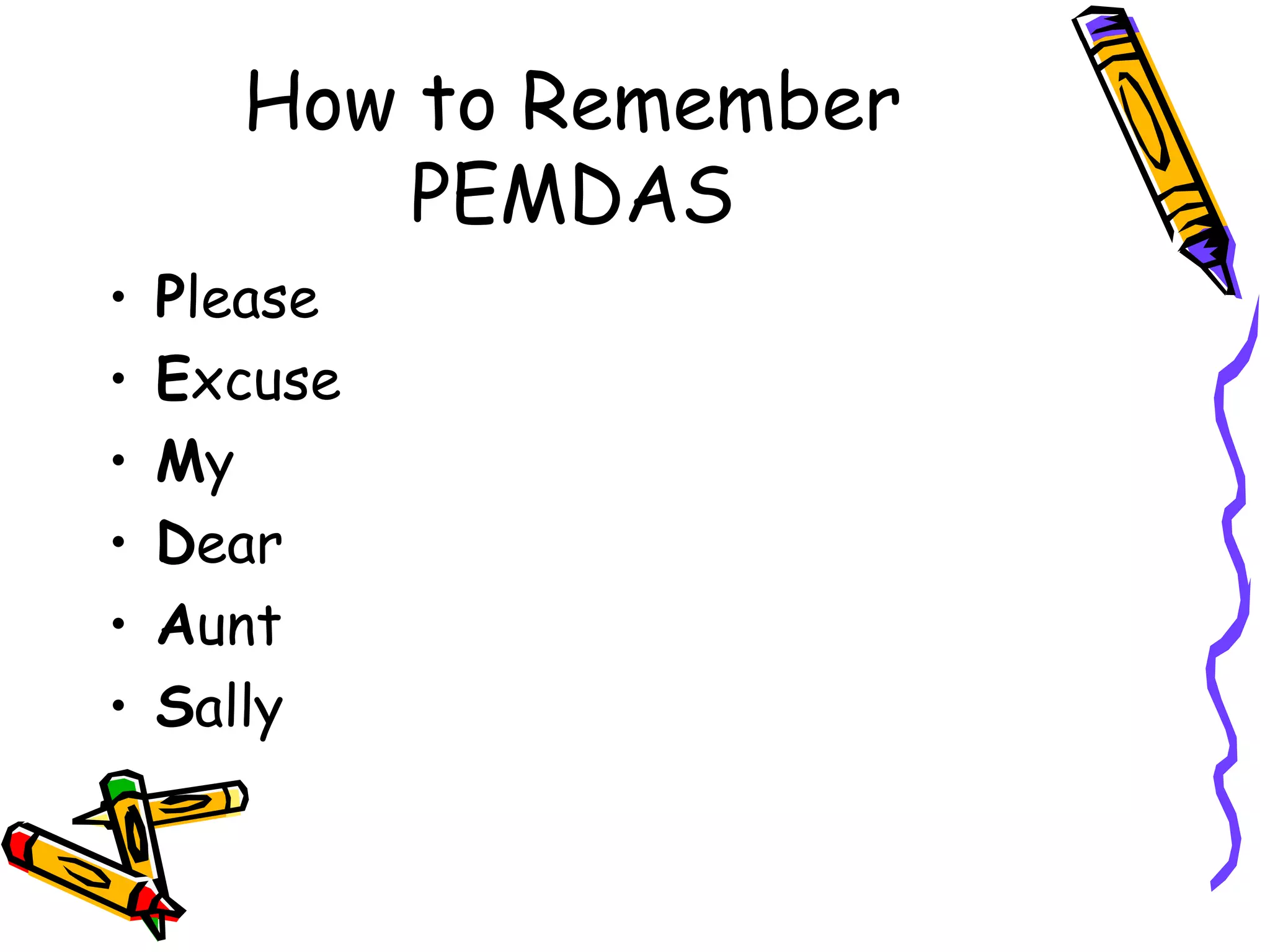
How to Remember PEMDAS P lease E xcuse M y D ear A unt S ally
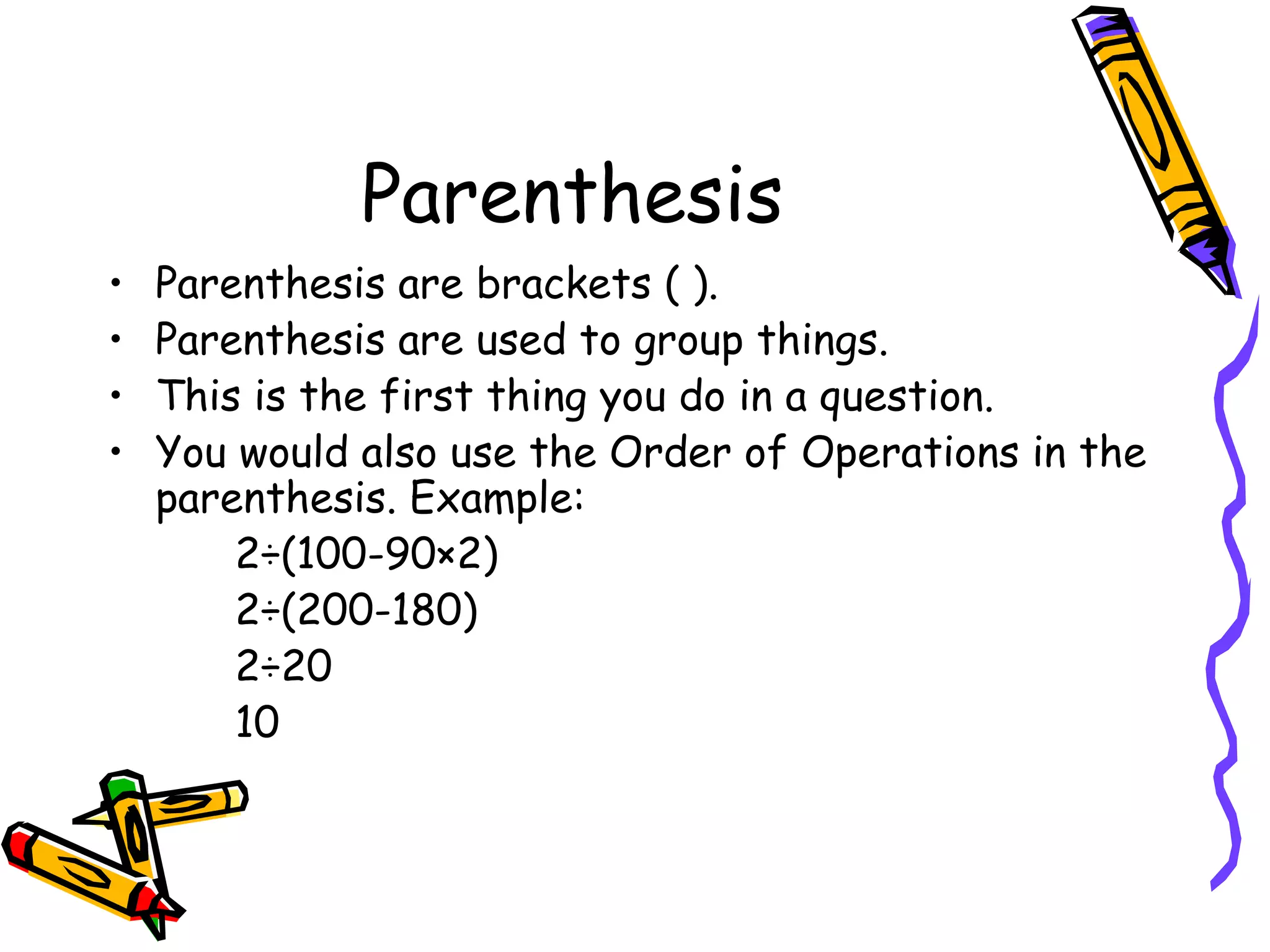
Parenthesis Parenthesis are brackets ( ). Parenthesis are used to group things. This is the first thing you do in a question. You would also use the Order of Operations in the parenthesis. Example: 2÷(100-90×2) 2÷(200-180) 2÷20 10
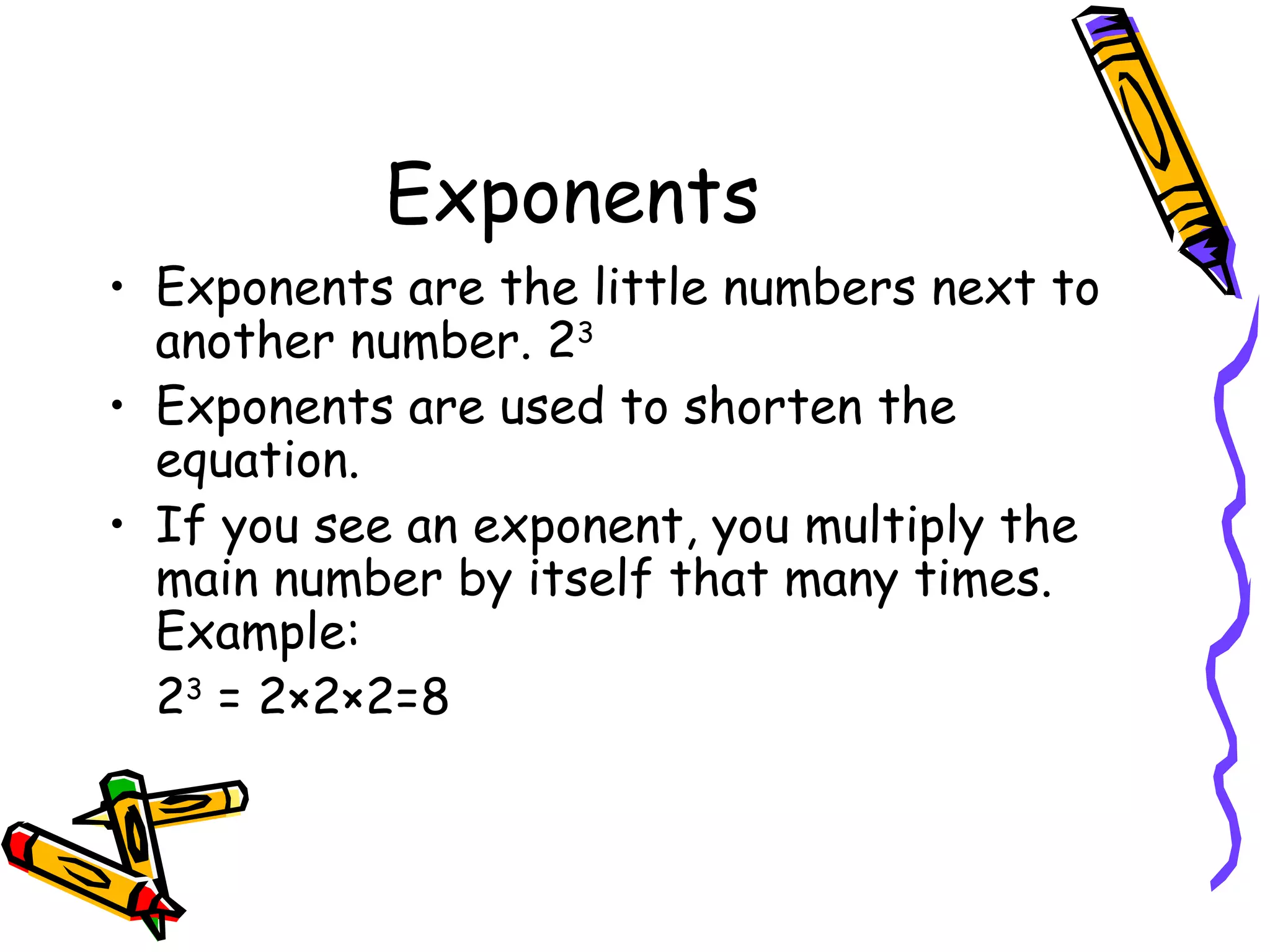
Exponents Exponents are the little numbers next to another number. 2 3 Exponents are used to shorten the equation. If you see an exponent, you multiply the main number by itself that many times. Example: 2 3  = 2×2×2=8
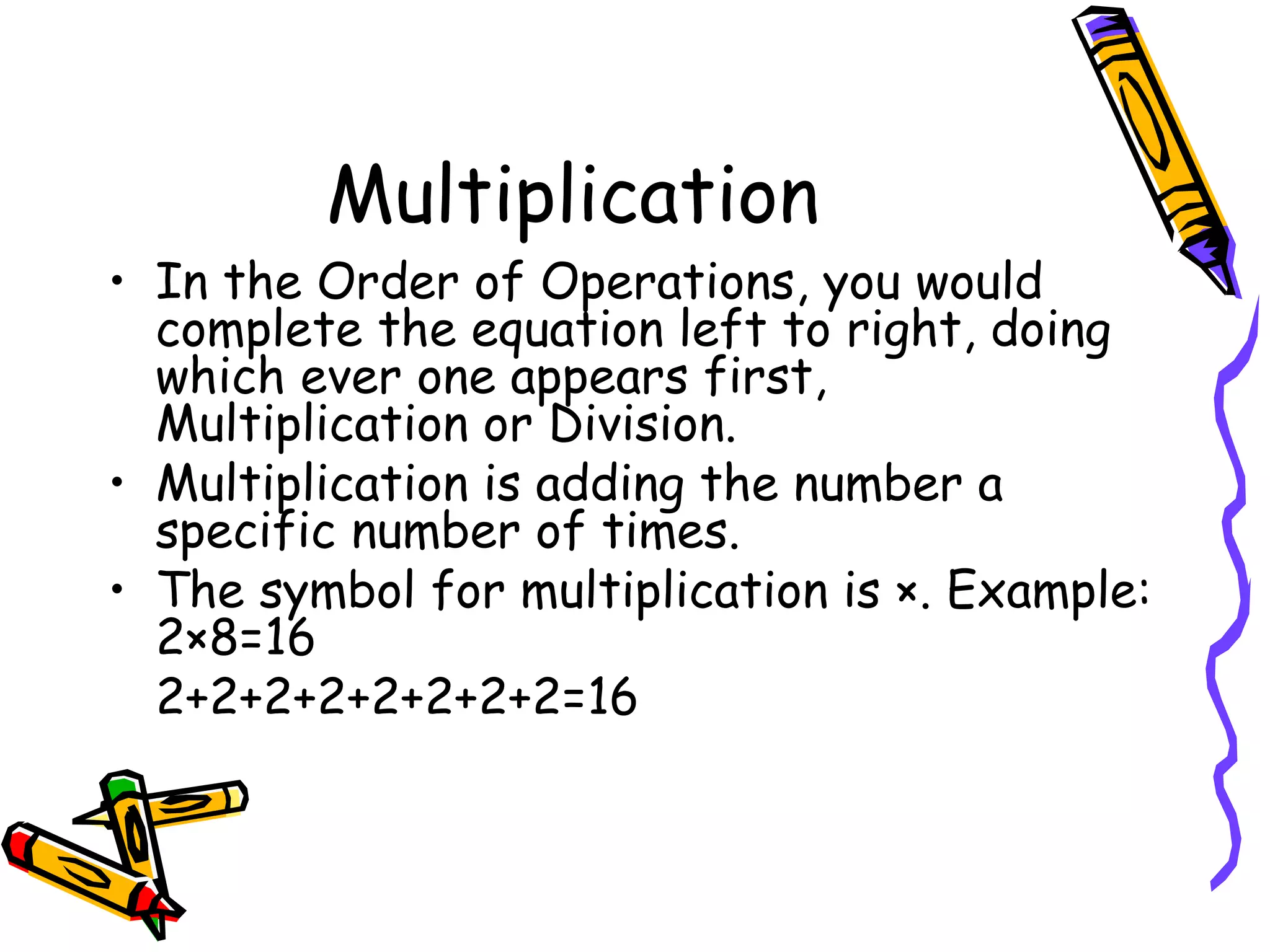
Multiplication In the Order of Operations, you would complete the equation left to right, doing which ever one appears first, Multiplication or Division. Multiplication is adding the number a specific number of times. The symbol for multiplication is ×. Example: 2×8=16 2+2+2+2+2+2+2+2=16
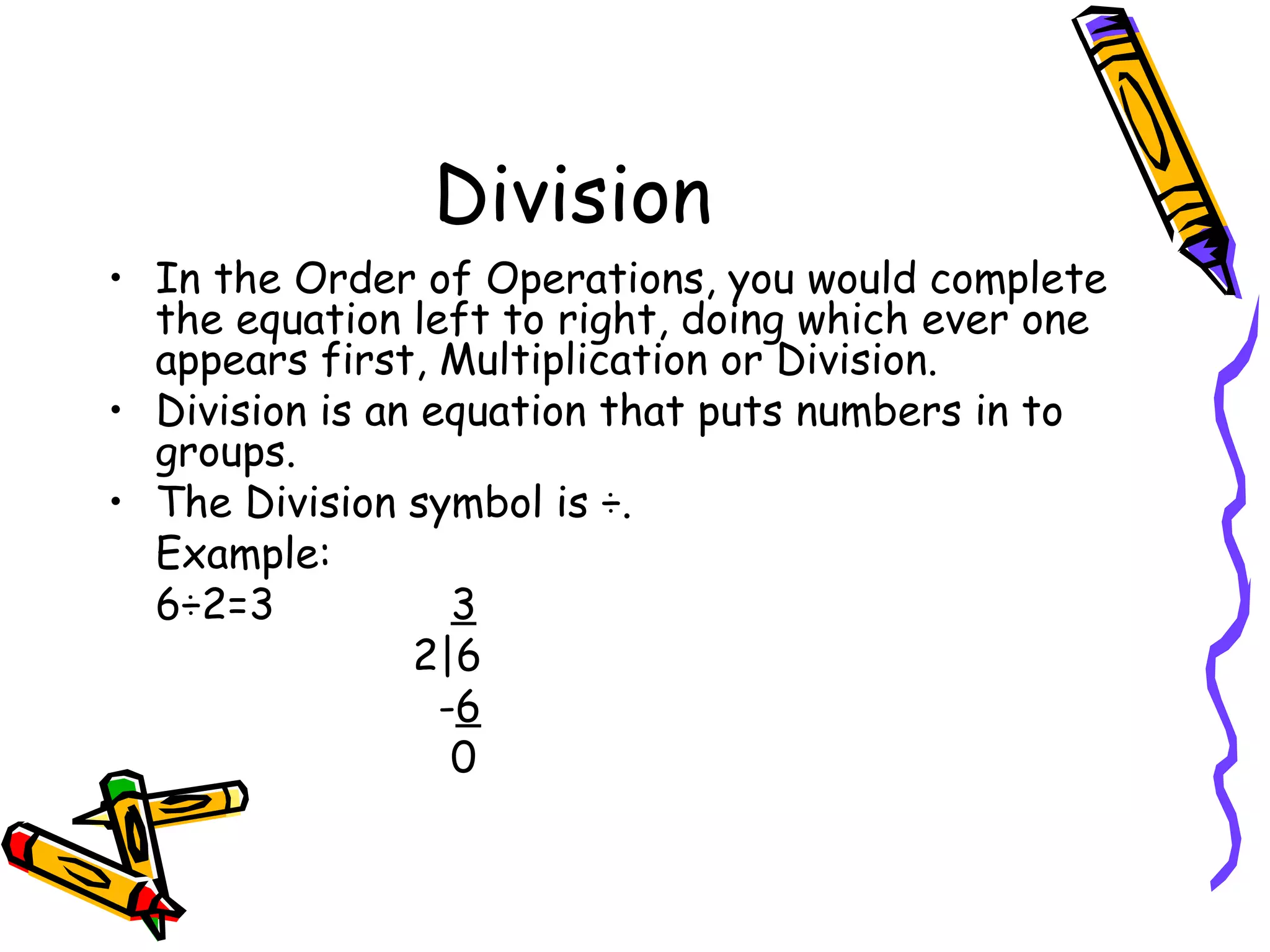
Division In the Order of Operations, you would complete the equation left to right, doing which ever one appears first, Multiplication or Division. Division is an equation that puts numbers in to groups. The Division symbol is ÷. Example:  6÷2=3   3   2|6   - 6   0
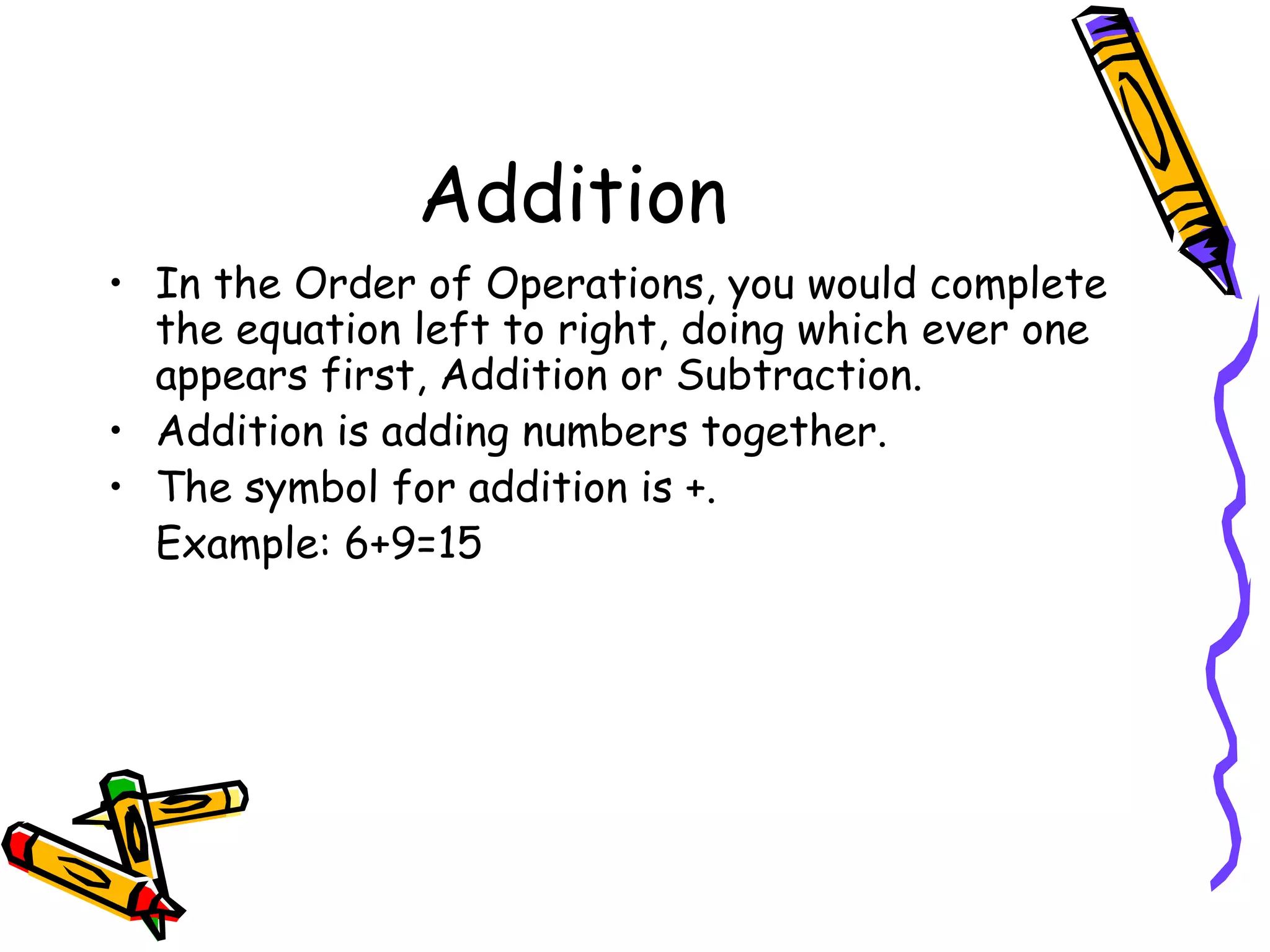
Addition In the Order of Operations, you would complete the equation left to right, doing which ever one appears first, Addition or Subtraction. Addition is adding numbers together. The symbol for addition is +. Example: 6+9=15
Subtraction In the Order of Operations, you would complete the equation left to right, doing which ever one appears first, Addition or Subtraction. Subtraction is taking away a specific number. The symbol for subtraction is -. Example: 17-8=9
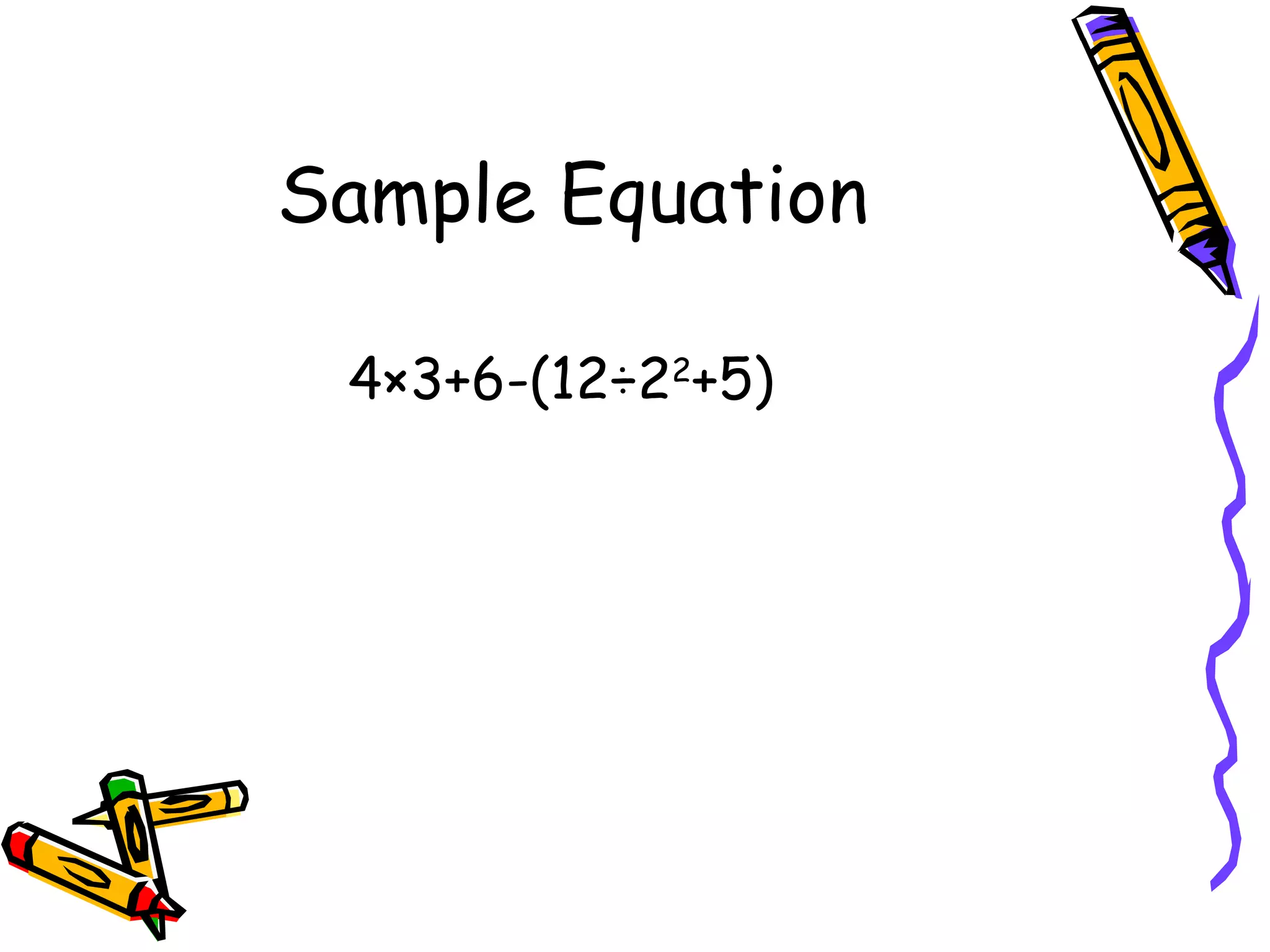
Sample Equation 4×3+6-(12÷2 2 +5)

My Order of Operations Slide show

  • 1.
    Order of OperationsBy Thomas Englert
  • 2.
    PEMDAS P arentheses= ( ) E xponents = example = 2 3 M ultiplication = × D ivision = ÷ A ddition = + S ubtraction = - There are other ways to remember the Order of Operations: BEDMAS, BEMDAS, PEDMAS, etc.
  • 3.
    How to RememberPEMDAS P lease E xcuse M y D ear A unt S ally
  • 4.
    Parenthesis Parenthesis arebrackets ( ). Parenthesis are used to group things. This is the first thing you do in a question. You would also use the Order of Operations in the parenthesis. Example: 2÷(100-90×2) 2÷(200-180) 2÷20 10
  • 5.
    Exponents Exponents arethe little numbers next to another number. 2 3 Exponents are used to shorten the equation. If you see an exponent, you multiply the main number by itself that many times. Example: 2 3 = 2×2×2=8
  • 6.
    Multiplication In theOrder of Operations, you would complete the equation left to right, doing which ever one appears first, Multiplication or Division. Multiplication is adding the number a specific number of times. The symbol for multiplication is ×. Example: 2×8=16 2+2+2+2+2+2+2+2=16
  • 7.
    Division In theOrder of Operations, you would complete the equation left to right, doing which ever one appears first, Multiplication or Division. Division is an equation that puts numbers in to groups. The Division symbol is ÷. Example: 6÷2=3 3 2|6 - 6 0
  • 8.
    Addition In theOrder of Operations, you would complete the equation left to right, doing which ever one appears first, Addition or Subtraction. Addition is adding numbers together. The symbol for addition is +. Example: 6+9=15
  • 9.
    Subtraction In theOrder of Operations, you would complete the equation left to right, doing which ever one appears first, Addition or Subtraction. Subtraction is taking away a specific number. The symbol for subtraction is -. Example: 17-8=9
  • 10.