MAHENDRAN.M
B.B.A
Ayya Nadar Janaki Ammal College,
Sivakasi
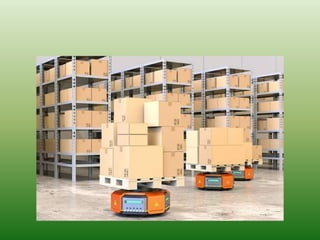
 Material handling is the movement, protection,
storage and control of materials and products
throughout manufacturing, warehousing,
distribution, consumption and disposal.
 As a process, material handling incorporates a wide
range of manual, semi-automated
and automated equipment and systems that support
logistics and make the supply chain work.
 Forecasting
 Resource allocation
 Production planning
 Flow and process management
 Inventory management and control
 Customer delivery
 After-sales support and service
 A company’s material handling system and
processes are put in place to improve customer
service, reduce inventory, shorten delivery time,
and lower overall handling costs in manufacturing,
distribution and transportation.
 There is a variety of manual, semi-automated
and automated material handling equipment and
technologies available to aid in the movement,
protection, storage and control of materials and
products throughout manufacturing, distribution,
consumption and disposal.
 When designing a material handling system, it is
important to refer to best practices to ensure that all the
equipment and processes—including manual, semi-
automated and automated—in a facility work together
as a unified, system.
 By analyzing the goals of the material handling process
and aligning them to guidelines, such as the 10
Principles of Material Handling, a properly designed
system will improve customer service, reduce inventory,
shorten delivery time, and lower overall handling costs
in manufacturing, distribution and transportation.
 Define the needs, strategic performance objectives
and functional specification of the proposed system
and supporting technologies at the outset of the
design. The plan should be developed in a team
approach, with input from consultants, suppliers and
end users, as well as from management,
engineering, information systems, finance and
operations.
 All material handling methods, equipment, controls
and software should be standardized and able to
perform a range of tasks in a variety of operating
conditions.
 Material handling processes should be simplified
by reducing, combining, shortening or eliminating
unnecessary movement that will impede
productivity. Examples include using gravity to
assist in material movement, and employing
straight-line movement as much as possible.
 Work and working conditions should be adapted to
support the abilities of a worker, reduce repetitive
and strenuous manual labor, and emphasize safety.
 Because less effort and work is required to move
several individual items together as a single load (as
opposed to moving many items one at a time), unit
loads—such as pallets, containers or totes of
items—should be used
 To maximize efficient use of space within a facility,
it is important to keep work areas organized and free
of clutter, to maximize density in storage areas
(without compromising accessibility and flexibility),
and to utilize overhead space
 Material movement and storage should be
coordinated throughout all processes, from
receiving, inspection, storage, production, assembly,
packaging, unitizing and order selection, to
shipping, transportation and the handling of returns.
 Energy use and potential environmental impact
should be considered when designing the system,
with reusability and recycling processes
implemented when possible, as well as safe
practices established for handling hazardous
materials.
 To improve operational efficiency, responsiveness,
consistency and predictability, automated material
handling technologies should be deployed when
possible and where they make sense to do so.
 For all equipment specified for the system, an
analysis of life cycle costs should be conducted.
Areas of consideration should include capital
investment, installation, setup, programming,
training, system testing, operation, maintenance and
repair, reuse value and ultimate disposal.
 Material handling systems are used in every
industry, including:
 Aerospace
 Appliance
 Automotive
 Beverage
 Chemicals
 Construction
 Consumer goods
 E-Commerce
 Food
 Hardware
 Hospital
 Manufacturing
 Materials processing
 Paper
 Pharmaceutical
 Plastics
 Retail
 Warehousing and distribution
THANK
YOU

Material handling

  • 1.
    MAHENDRAN.M B.B.A Ayya Nadar JanakiAmmal College, Sivakasi
  • 2.
     Material handlingis the movement, protection, storage and control of materials and products throughout manufacturing, warehousing, distribution, consumption and disposal.  As a process, material handling incorporates a wide range of manual, semi-automated and automated equipment and systems that support logistics and make the supply chain work.
  • 4.
     Forecasting  Resourceallocation  Production planning  Flow and process management  Inventory management and control  Customer delivery  After-sales support and service
  • 5.
     A company’smaterial handling system and processes are put in place to improve customer service, reduce inventory, shorten delivery time, and lower overall handling costs in manufacturing, distribution and transportation.
  • 7.
     There isa variety of manual, semi-automated and automated material handling equipment and technologies available to aid in the movement, protection, storage and control of materials and products throughout manufacturing, distribution, consumption and disposal.
  • 8.
     When designinga material handling system, it is important to refer to best practices to ensure that all the equipment and processes—including manual, semi- automated and automated—in a facility work together as a unified, system.  By analyzing the goals of the material handling process and aligning them to guidelines, such as the 10 Principles of Material Handling, a properly designed system will improve customer service, reduce inventory, shorten delivery time, and lower overall handling costs in manufacturing, distribution and transportation.
  • 9.
     Define theneeds, strategic performance objectives and functional specification of the proposed system and supporting technologies at the outset of the design. The plan should be developed in a team approach, with input from consultants, suppliers and end users, as well as from management, engineering, information systems, finance and operations.
  • 10.
     All materialhandling methods, equipment, controls and software should be standardized and able to perform a range of tasks in a variety of operating conditions.
  • 11.
     Material handlingprocesses should be simplified by reducing, combining, shortening or eliminating unnecessary movement that will impede productivity. Examples include using gravity to assist in material movement, and employing straight-line movement as much as possible.
  • 12.
     Work andworking conditions should be adapted to support the abilities of a worker, reduce repetitive and strenuous manual labor, and emphasize safety.
  • 13.
     Because lesseffort and work is required to move several individual items together as a single load (as opposed to moving many items one at a time), unit loads—such as pallets, containers or totes of items—should be used
  • 14.
     To maximizeefficient use of space within a facility, it is important to keep work areas organized and free of clutter, to maximize density in storage areas (without compromising accessibility and flexibility), and to utilize overhead space
  • 15.
     Material movementand storage should be coordinated throughout all processes, from receiving, inspection, storage, production, assembly, packaging, unitizing and order selection, to shipping, transportation and the handling of returns.
  • 16.
     Energy useand potential environmental impact should be considered when designing the system, with reusability and recycling processes implemented when possible, as well as safe practices established for handling hazardous materials.
  • 17.
     To improveoperational efficiency, responsiveness, consistency and predictability, automated material handling technologies should be deployed when possible and where they make sense to do so.
  • 18.
     For allequipment specified for the system, an analysis of life cycle costs should be conducted. Areas of consideration should include capital investment, installation, setup, programming, training, system testing, operation, maintenance and repair, reuse value and ultimate disposal.
  • 20.
     Material handlingsystems are used in every industry, including:  Aerospace  Appliance  Automotive  Beverage  Chemicals  Construction  Consumer goods  E-Commerce
  • 21.
     Food  Hardware Hospital  Manufacturing  Materials processing  Paper  Pharmaceutical  Plastics  Retail  Warehousing and distribution
  • 22.