Material Development for Gas Turbine
and Jet Engine Turbine Blades
Presented By:
Ahmed Galal
Presented To:
Dr. Hanady Salem
Outline
• Concept of Gas Turbine Operation
• Service conditions of turbine blades
• Blade Development
– Material Development
– Processing Development
– Cooling Trends
– Coatings
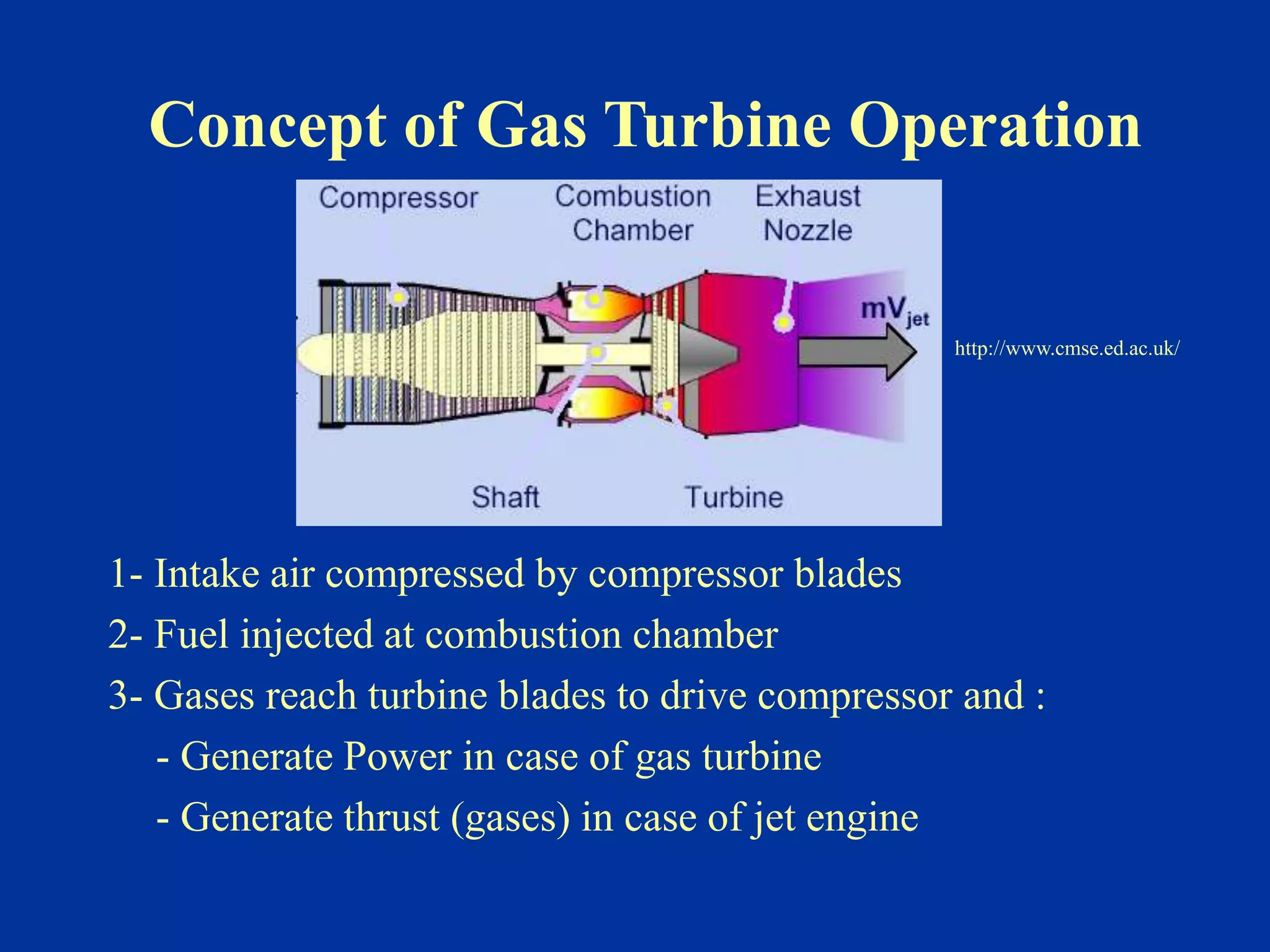
Concept of Gas Turbine Operation
1- Intake air compressed by compressor blades
2- Fuel injected at combustion chamber
3- Gases reach turbine blades to drive compressor and :
- Generate Power in case of gas turbine
- Generate thrust (gases) in case of jet engine
http://www.cmse.ed.ac.uk/
Turbine Blade Service Conditions
Turbine blades are exposed to many types of
stresses that can cause different modes of
failure:
1- Cyclic Fatigue
2- Thermal Fatigue
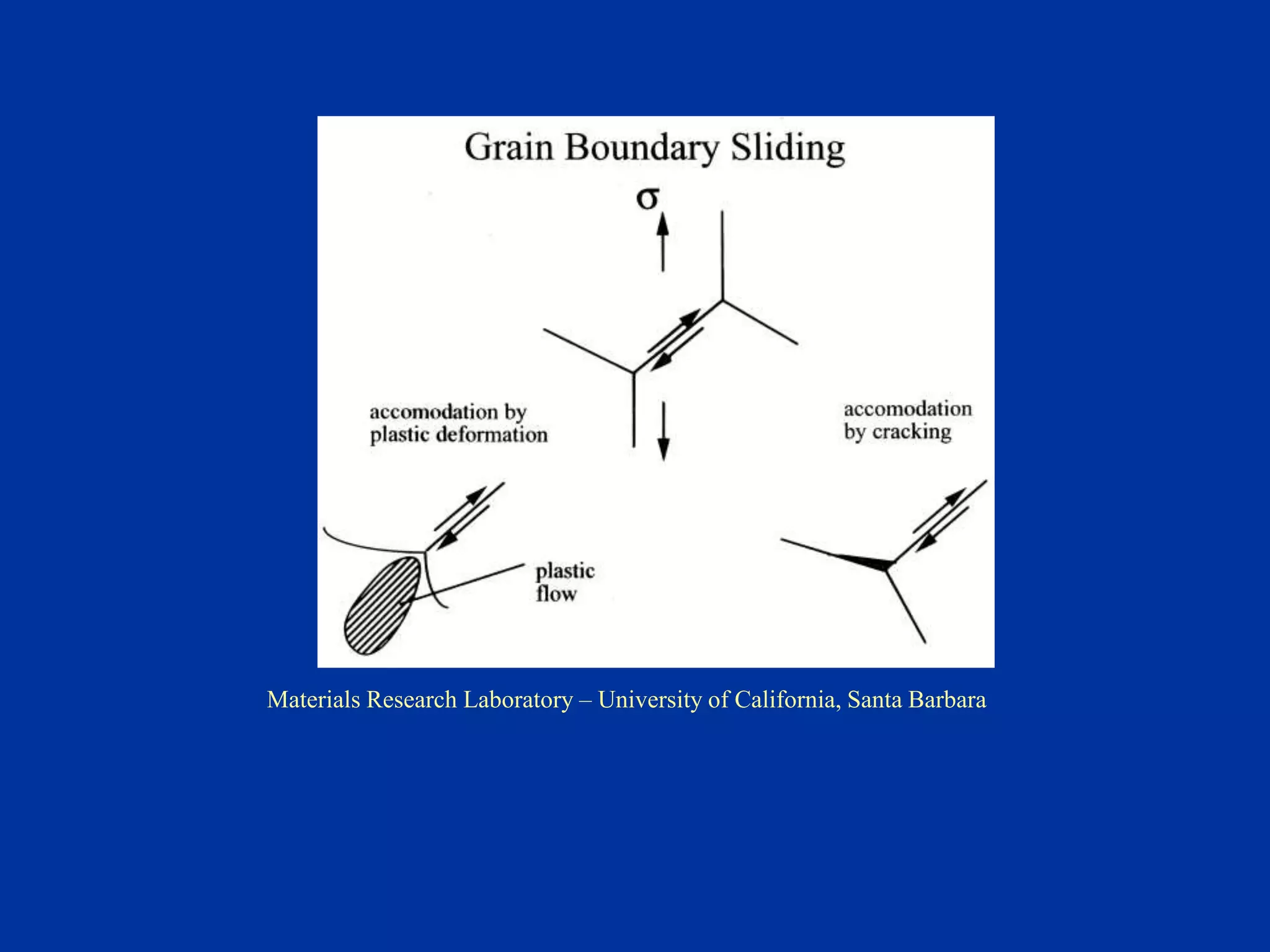
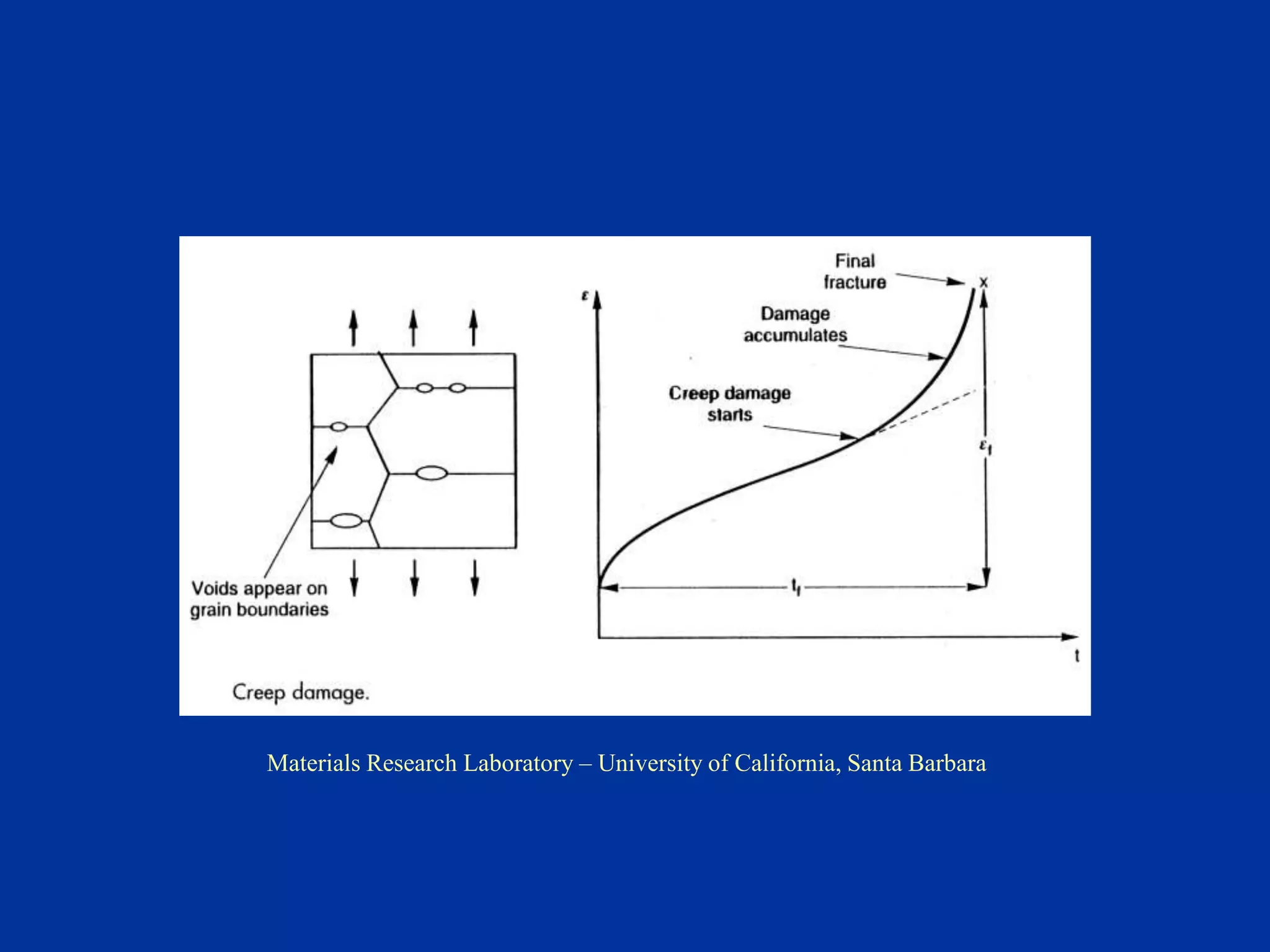
3- Creep
4- Hot Corrosion
5- Erosion
Blade Development
• Turbine development measured by firing
temperatures
• Higher firing temperature Higher
efficiency and higher power/weight ratio
• Major limiting factor on temperature is
Creep
Material Development
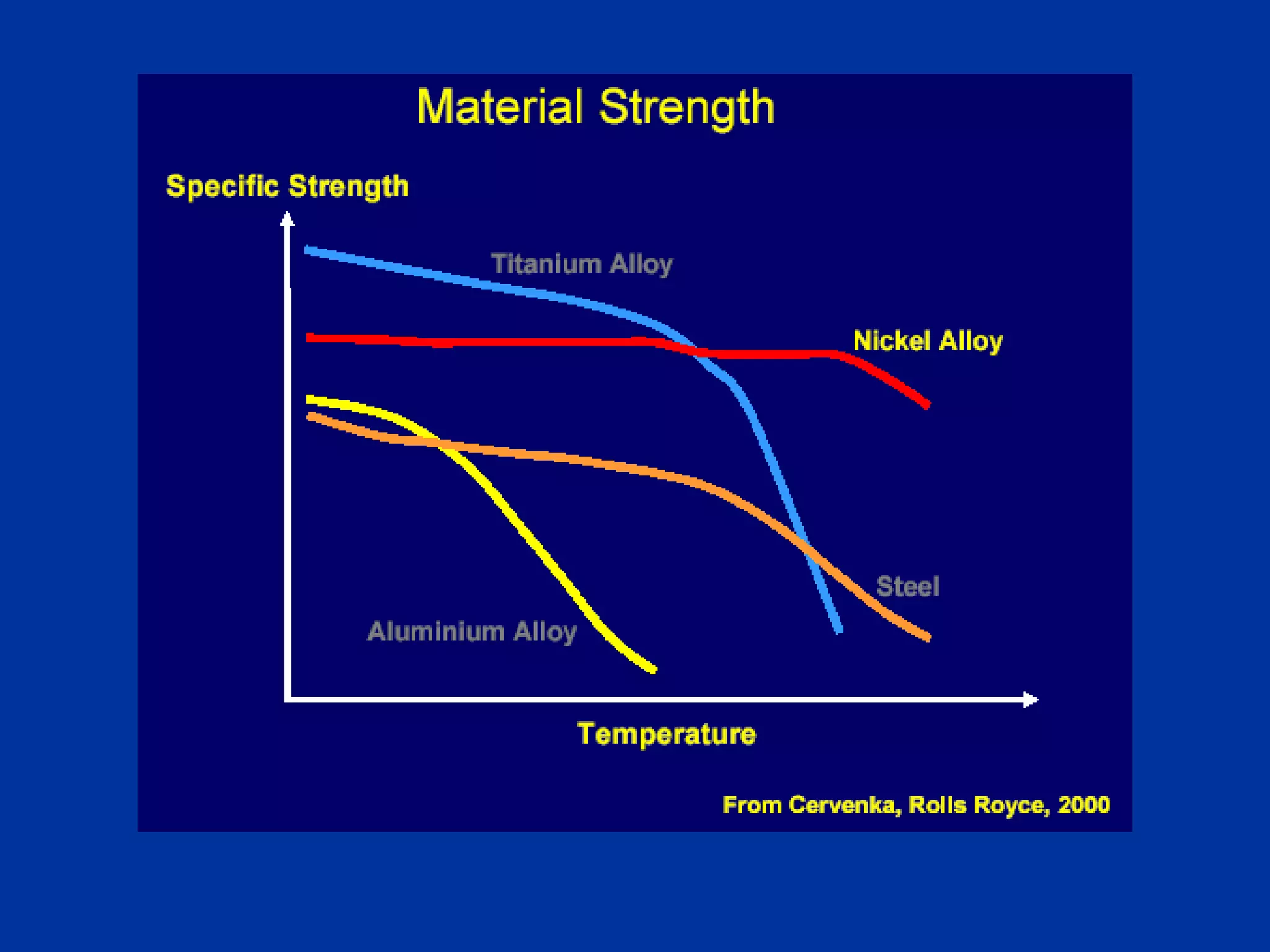
• First turbine used “stayblade” steel. Not enough creep resistance
• It was replaced by Rex 78, age hardened austenitic steel
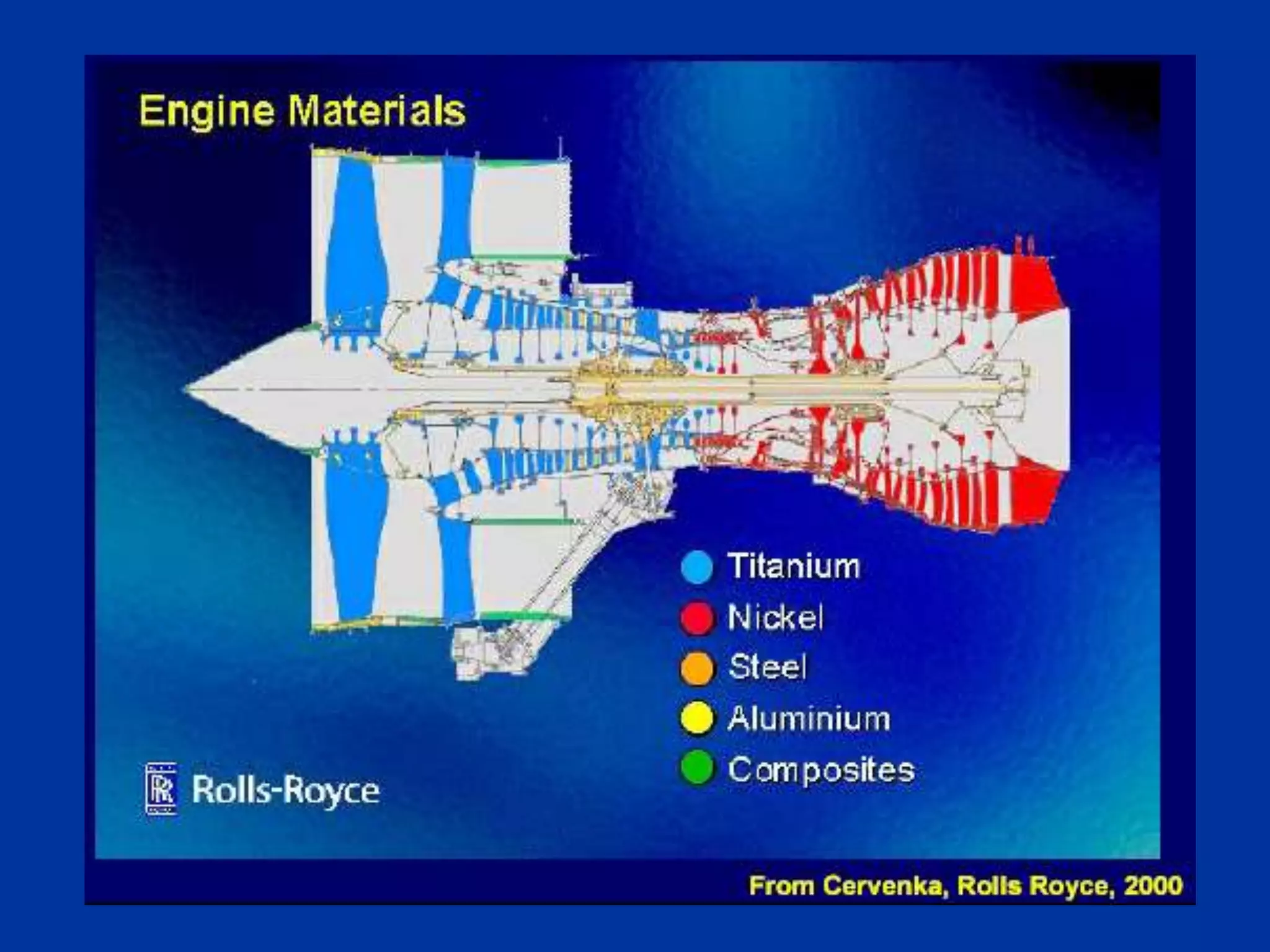
• 1940s was the introduction of Ni based superalloys. Since that
time, all turbine blades have been made of these alloys.
Material Development
• First turbine used “stayblade” steel. Not enough creep resistance
• It was replaced by Rex 78, age hardened austenitic steel
• 1940s was the introduction of Ni based superalloys. Since that
time, all turbine blades have been made of these alloys.
• These alloys had the best high temperature capabilities
compared to other alloys
Material Development
1- Wrought Alloys:
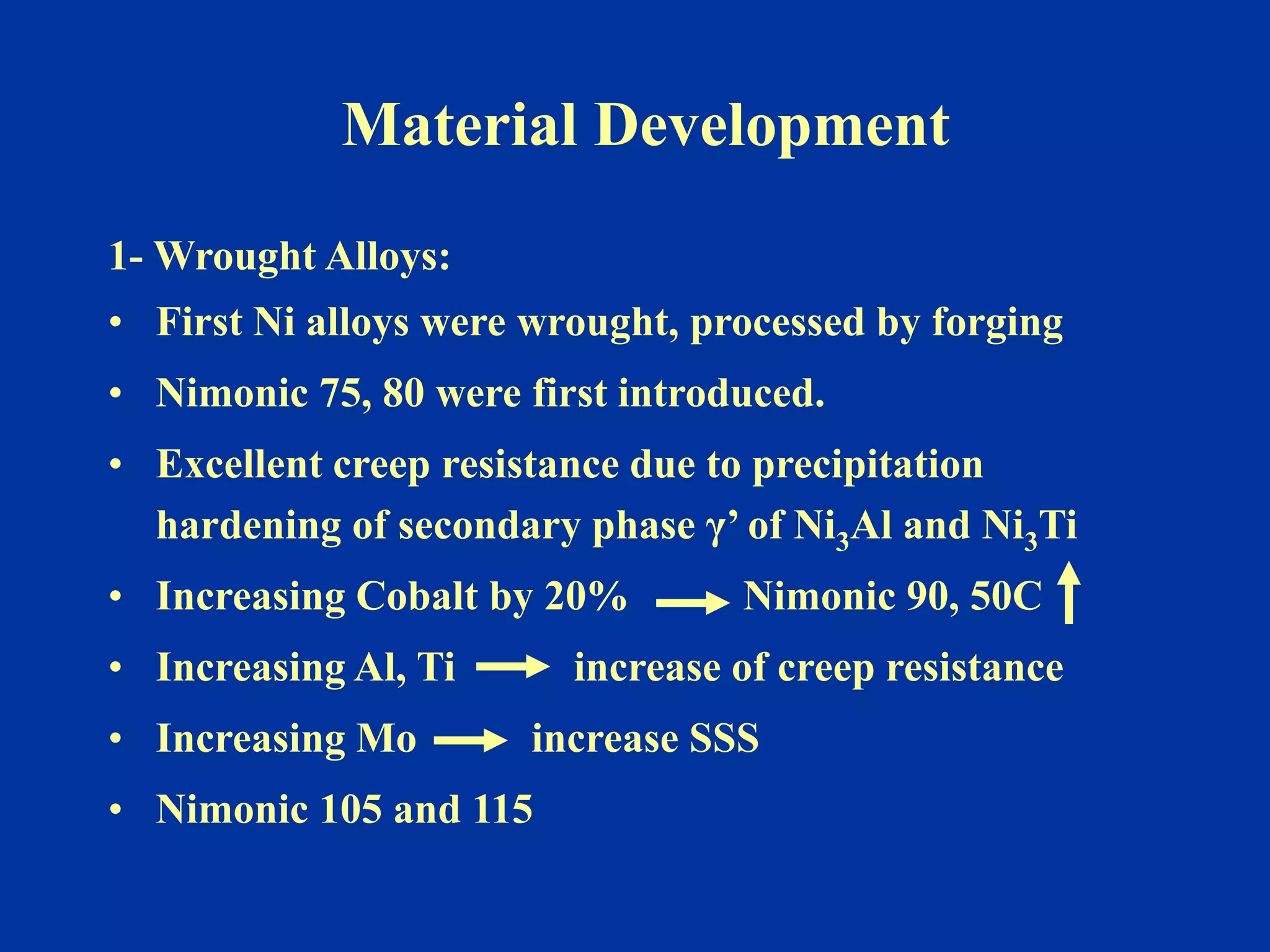
• First Ni alloys were wrought, processed by forging
• Nimonic 75, 80 were first introduced.
• Excellent creep resistance due to precipitation
hardening of secondary phase γ’ of Ni3Al and Ni3Ti
• Increasing Cobalt by 20% Nimonic 90, 50C
• Increasing Al, Ti increase of creep resistance
• Increasing Mo increase SSS
• Nimonic 105 and 115
Material Development
1- Cast Alloys:
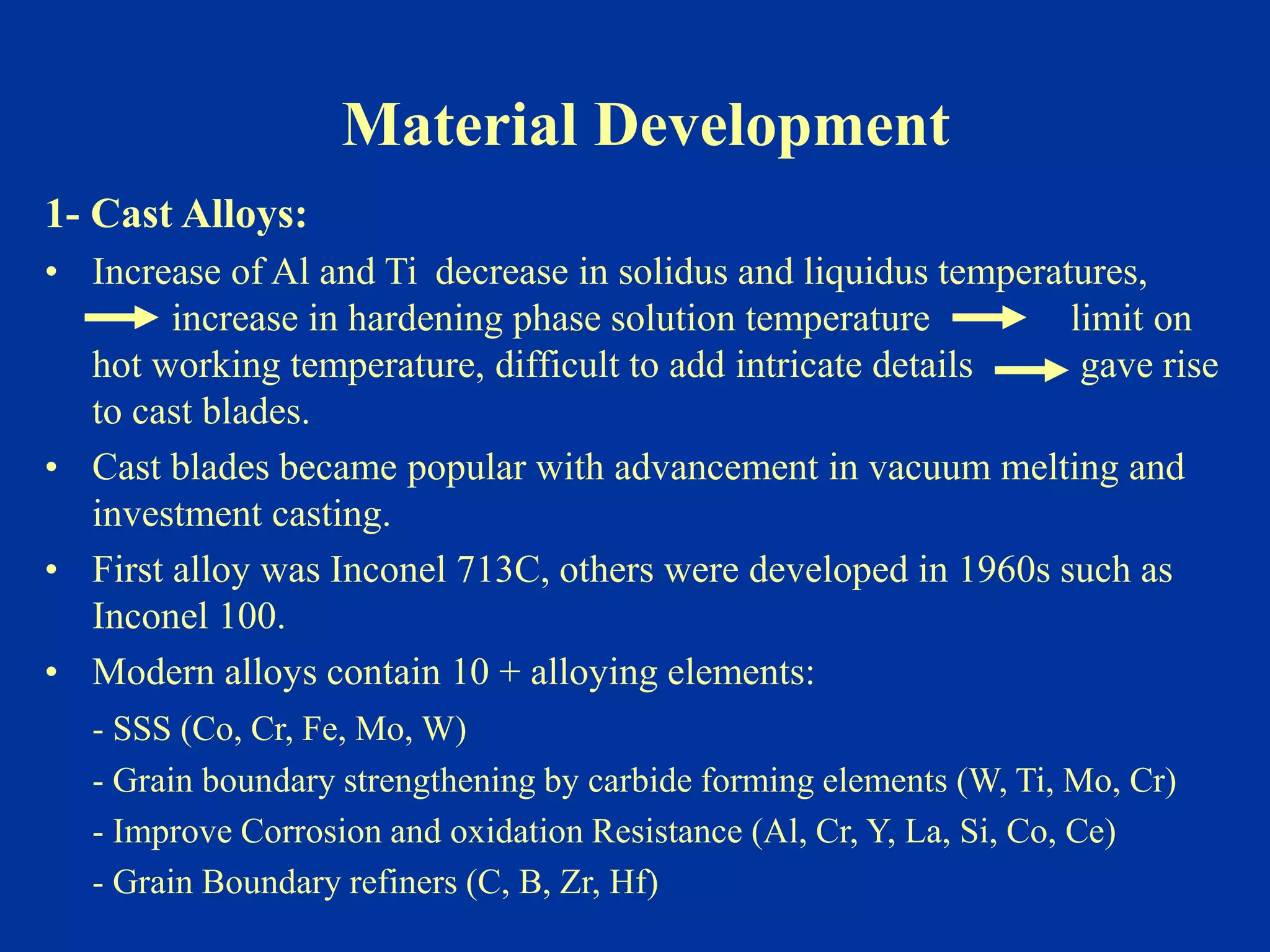
• Increase of Al and Ti decrease in solidus and liquidus temperatures,
increase in hardening phase solution temperature limit on
hot working temperature, difficult to add intricate details gave rise
to cast blades.
• Cast blades became popular with advancement in vacuum melting and
investment casting.
• First alloy was Inconel 713C, others were developed in 1960s such as
Inconel 100.
• Modern alloys contain 10 + alloying elements:
- SSS (Co, Cr, Fe, Mo, W)
- Grain boundary strengthening by carbide forming elements (W, Ti, Mo, Cr)
- Improve Corrosion and oxidation Resistance (Al, Cr, Y, La, Si, Co, Ce)
- Grain Boundary refiners (C, B, Zr, Hf)
Processing Development
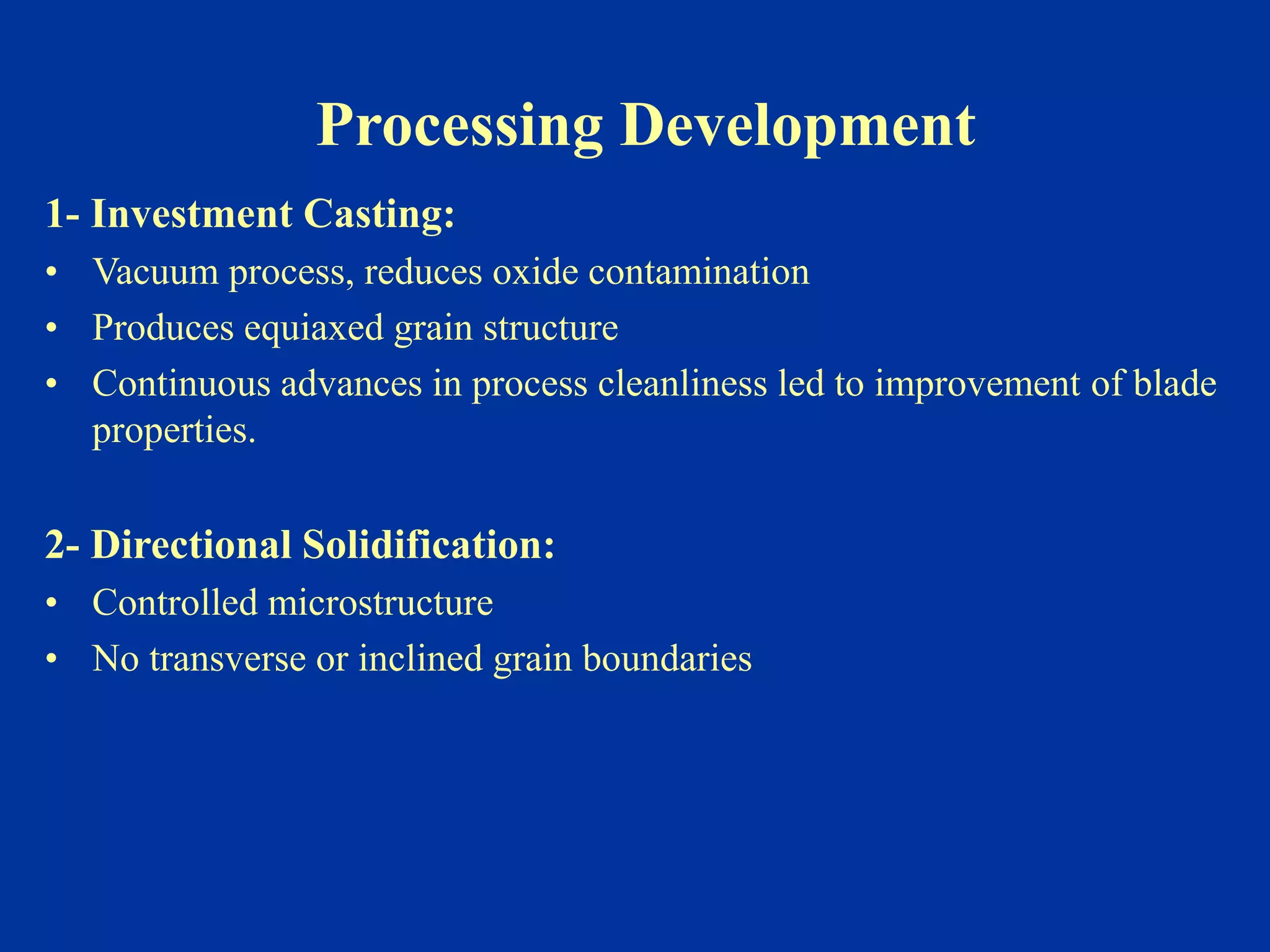
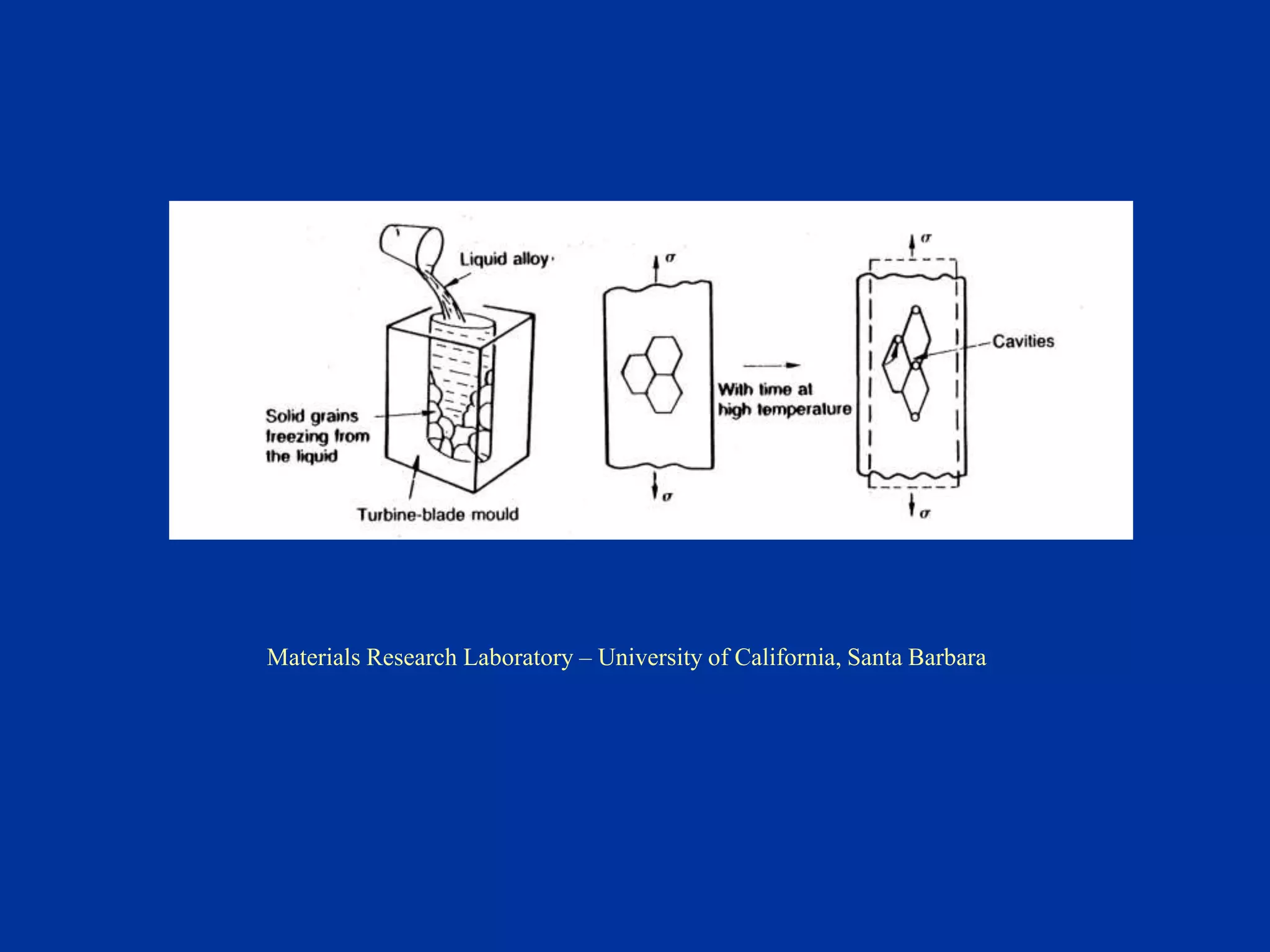
1- Investment Casting:
• Vacuum process, reduces oxide contamination
• Produces equiaxed grain structure
• Continuous advances in process cleanliness led to improvement of blade
properties.
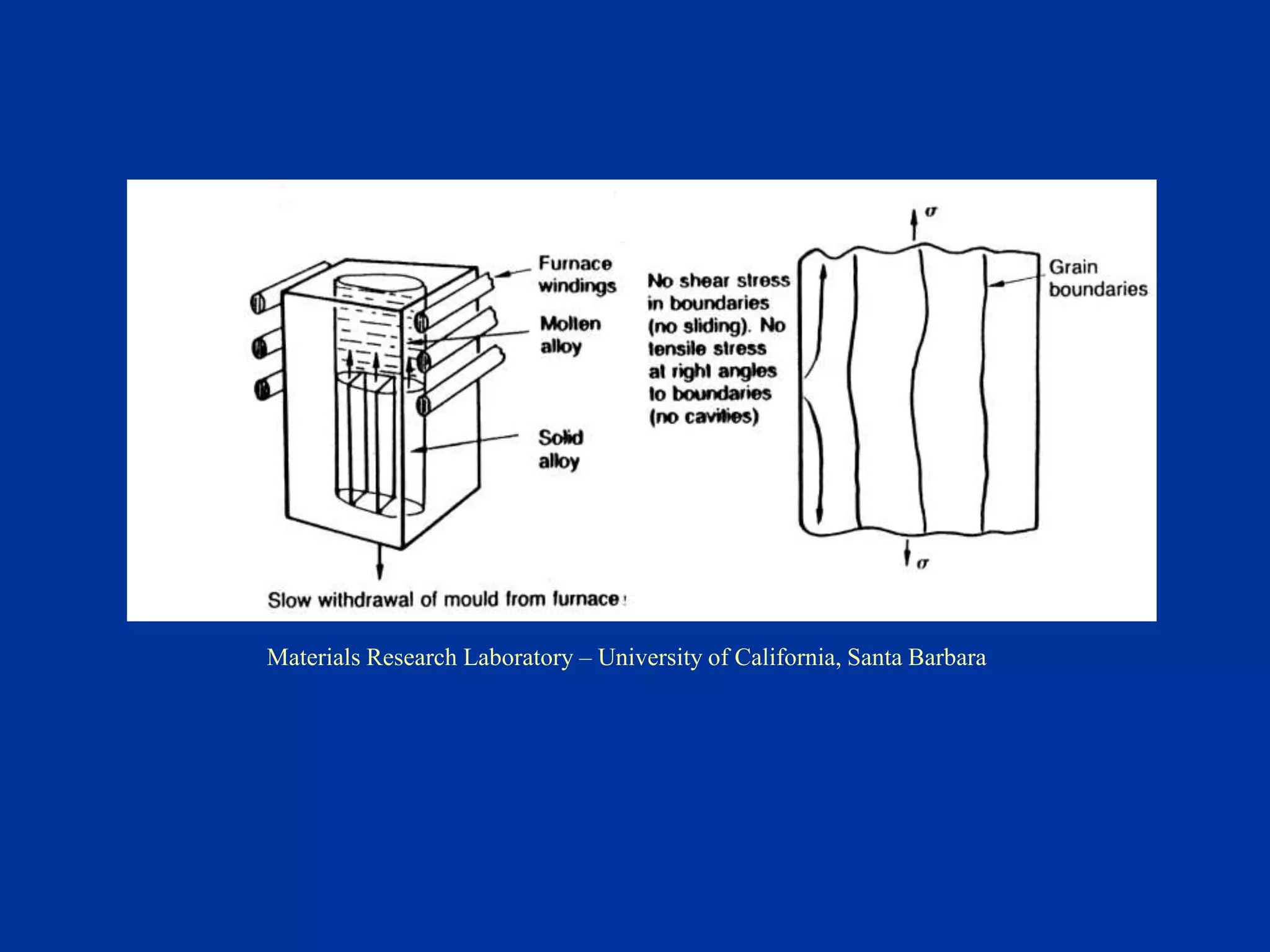
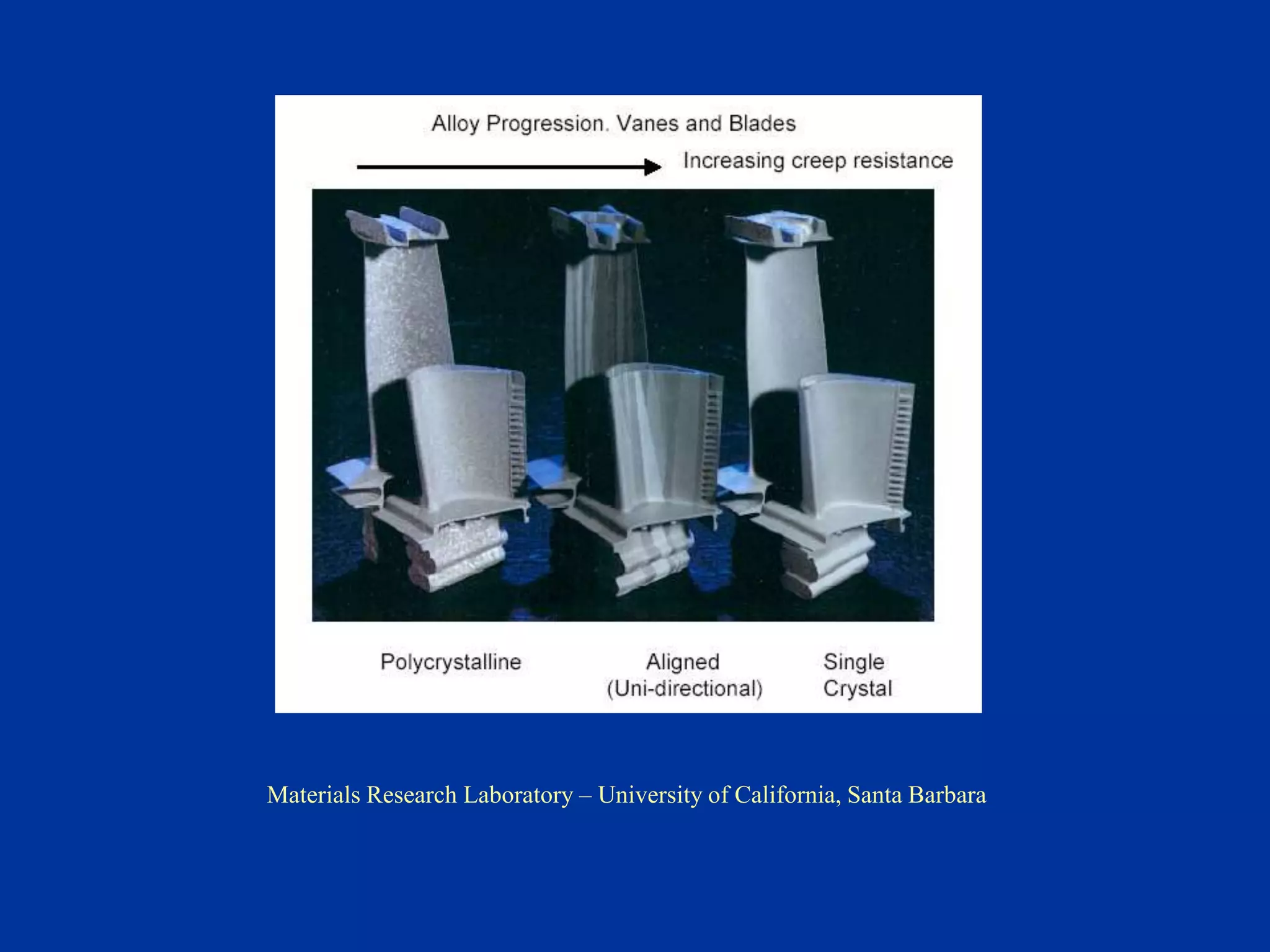
2- Directional Solidification:
• Controlled microstructure
• No transverse or inclined grain boundaries
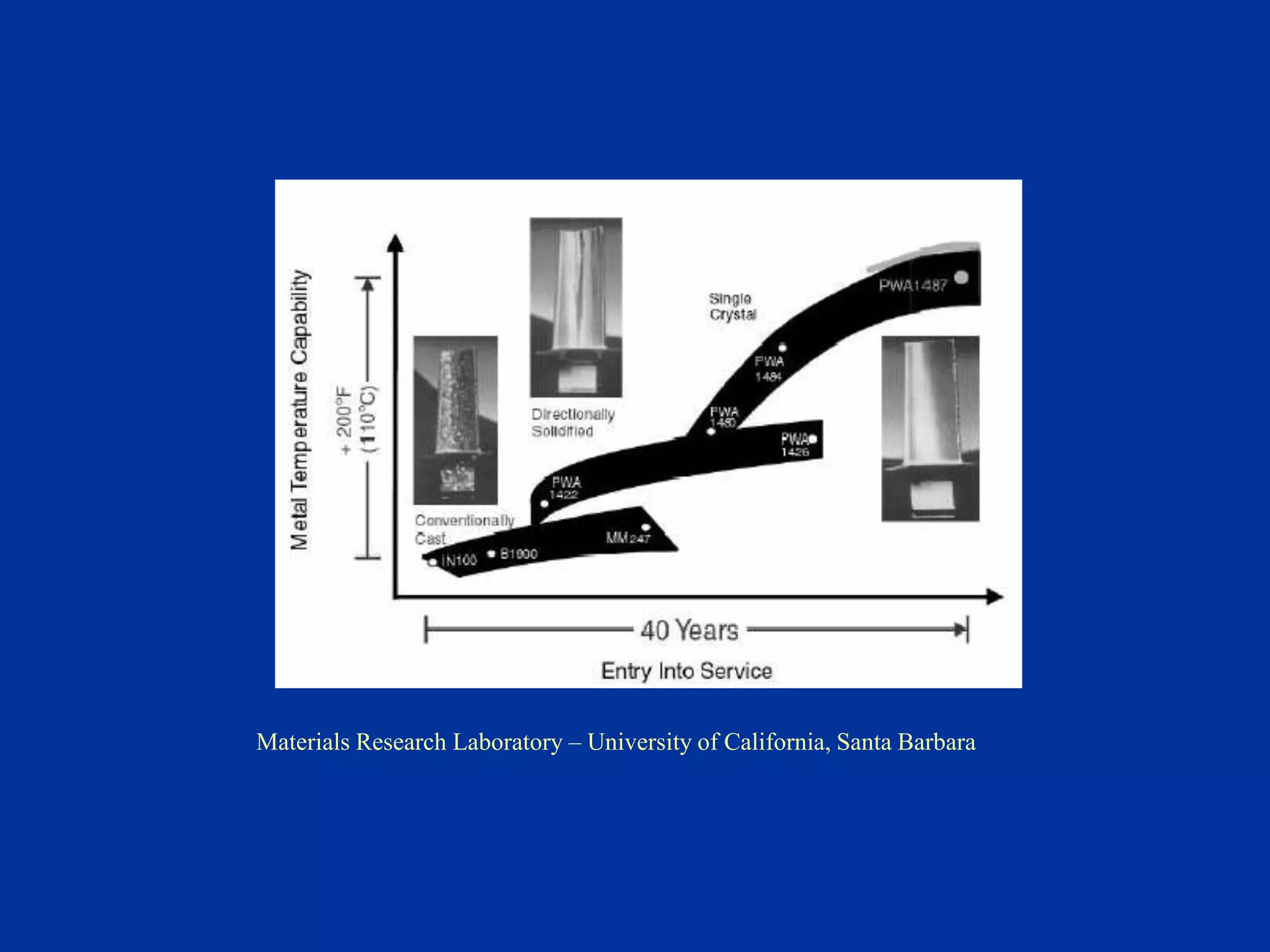
Materials Research Laboratory – University of California, Santa Barbara
Processing Development
3- Single Crystal:
• No grain boundaries
• Crystal Alignment
Materials Research Laboratory – University of California, Santa Barbara
Cooling Trends
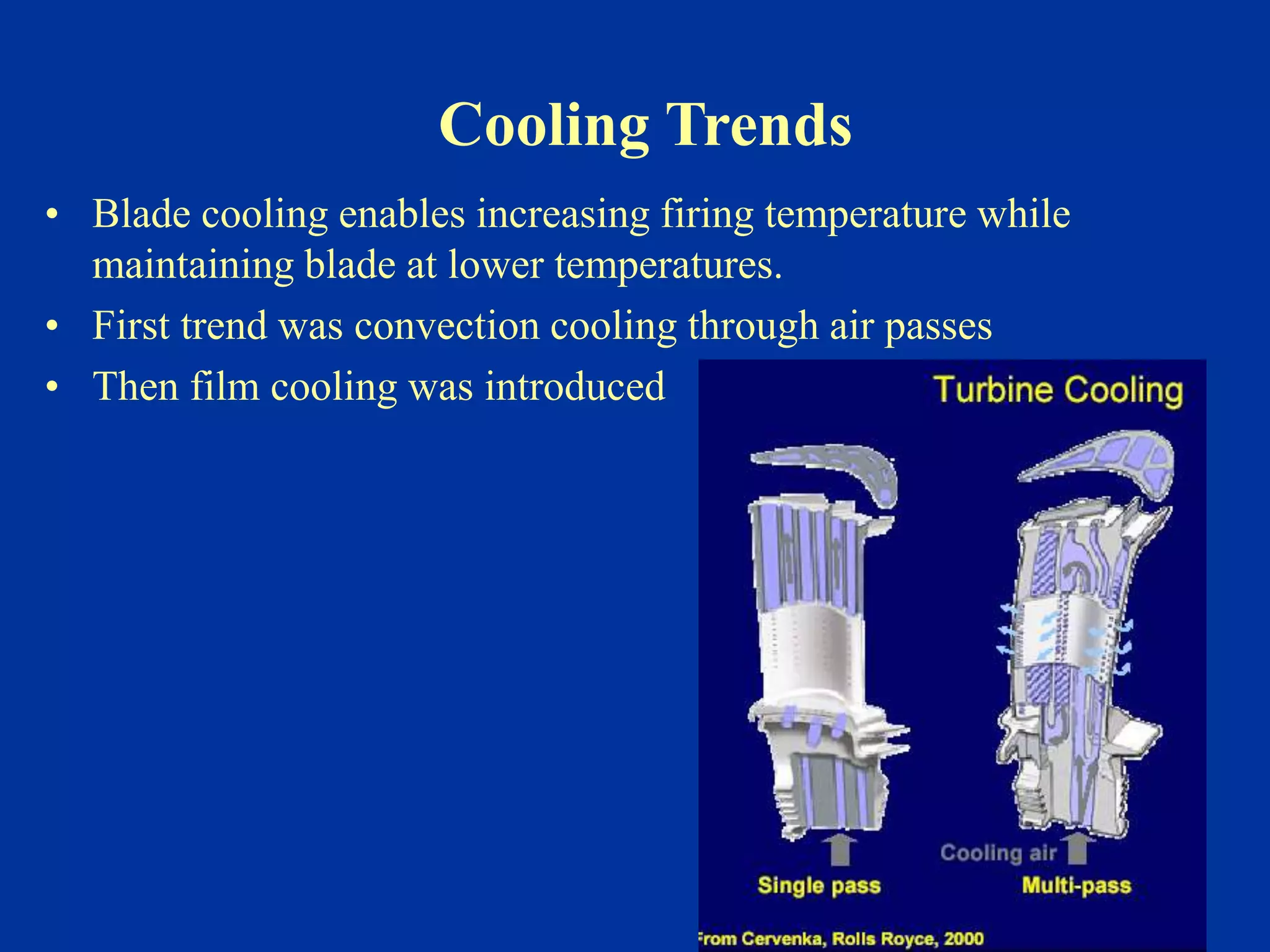
• Blade cooling enables increasing firing temperature while
maintaining blade at lower temperatures.
• First trend was convection cooling through air passes
• Then film cooling was introduced
Coating Trends
1- For Oxidation:
• Aluminide diffusion coating
• MCrAlY coating by Physical vapor deposition
2- Thermal Barrier Coating (TBC):
• Using ceramic materials such as Zirconia (0.3-0.4 mm thick),
deposited over a layer of MCrAlY overlay coating
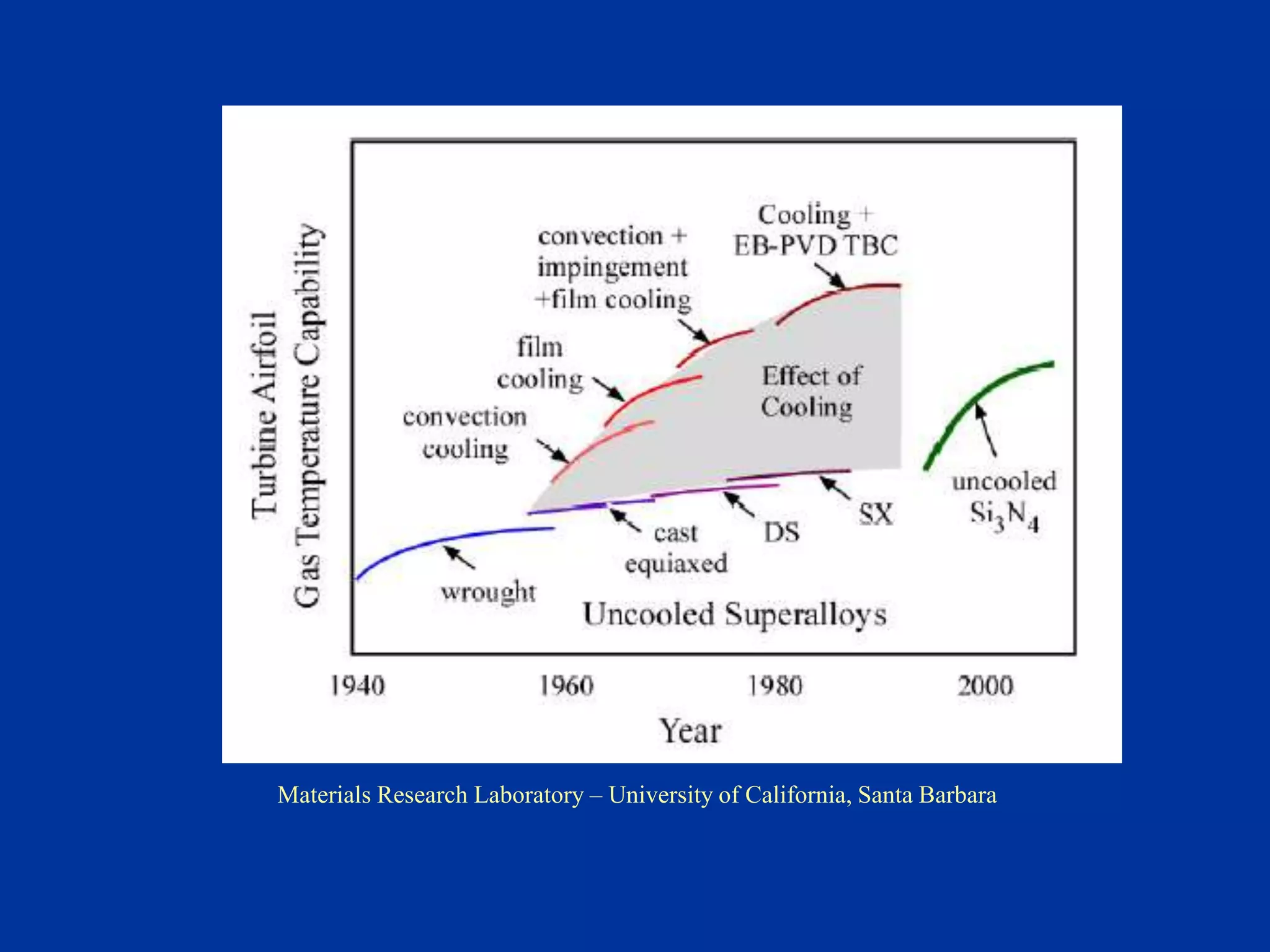
Materials Research Laboratory – University of California, Santa Barbara
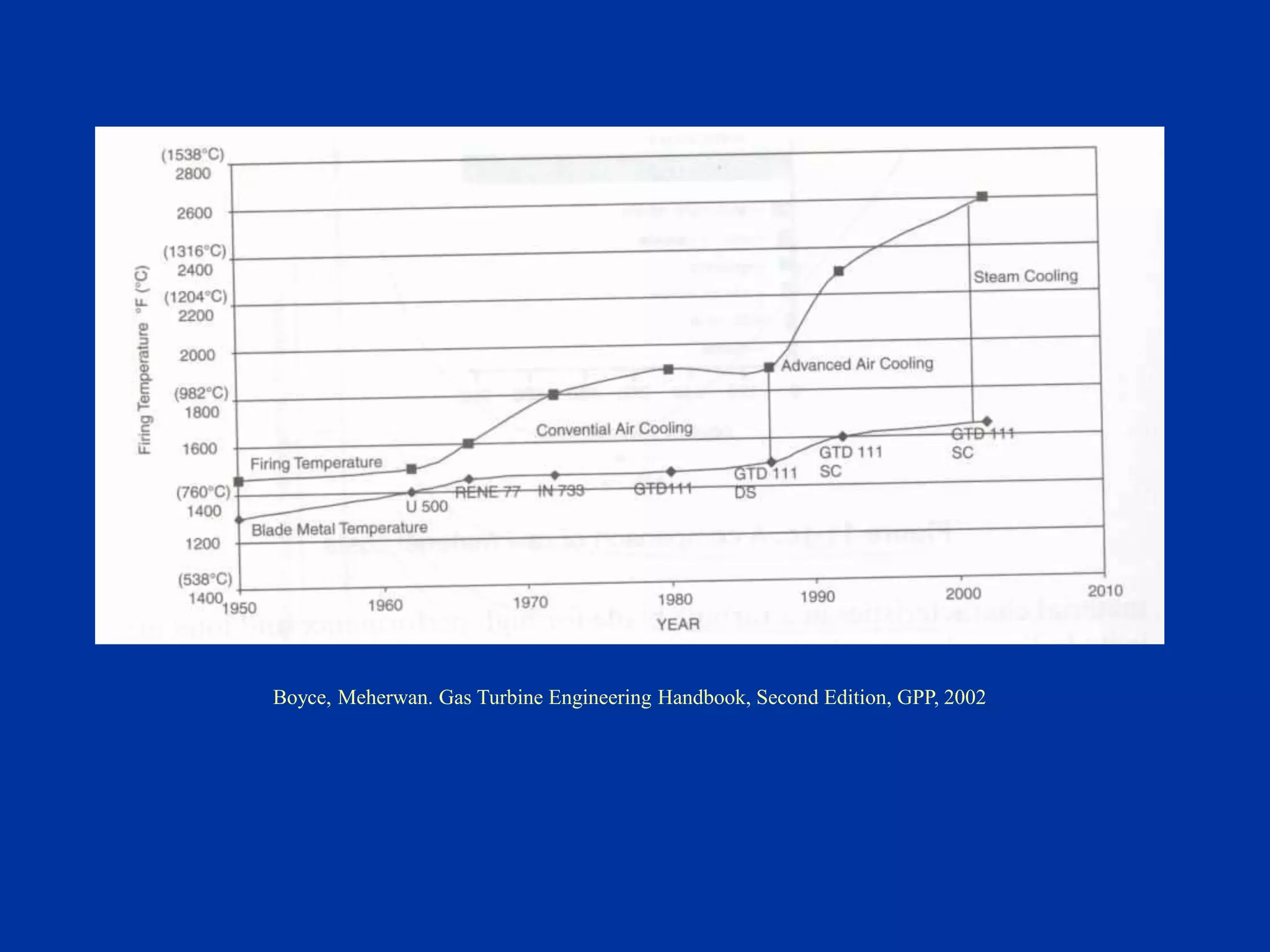
Boyce, Meherwan. Gas Turbine Engineering Handbook, Second Edition, GPP, 2002

Material Development for Gas Turbine and Jet Engine.ppt

  • 1.
    Material Development forGas Turbine and Jet Engine Turbine Blades Presented By: Ahmed Galal Presented To: Dr. Hanady Salem
  • 2.
    Outline • Concept ofGas Turbine Operation • Service conditions of turbine blades • Blade Development – Material Development – Processing Development – Cooling Trends – Coatings
  • 3.
    Concept of GasTurbine Operation 1- Intake air compressed by compressor blades 2- Fuel injected at combustion chamber 3- Gases reach turbine blades to drive compressor and : - Generate Power in case of gas turbine - Generate thrust (gases) in case of jet engine http://www.cmse.ed.ac.uk/
  • 4.
    Turbine Blade ServiceConditions Turbine blades are exposed to many types of stresses that can cause different modes of failure: 1- Cyclic Fatigue 2- Thermal Fatigue 3- Creep 4- Hot Corrosion 5- Erosion
  • 5.
    Blade Development • Turbinedevelopment measured by firing temperatures • Higher firing temperature Higher efficiency and higher power/weight ratio • Major limiting factor on temperature is Creep
  • 6.
    Material Development • Firstturbine used “stayblade” steel. Not enough creep resistance • It was replaced by Rex 78, age hardened austenitic steel • 1940s was the introduction of Ni based superalloys. Since that time, all turbine blades have been made of these alloys.
  • 8.
    Material Development • Firstturbine used “stayblade” steel. Not enough creep resistance • It was replaced by Rex 78, age hardened austenitic steel • 1940s was the introduction of Ni based superalloys. Since that time, all turbine blades have been made of these alloys. • These alloys had the best high temperature capabilities compared to other alloys
  • 10.
    Material Development 1- WroughtAlloys: • First Ni alloys were wrought, processed by forging • Nimonic 75, 80 were first introduced. • Excellent creep resistance due to precipitation hardening of secondary phase γ’ of Ni3Al and Ni3Ti • Increasing Cobalt by 20% Nimonic 90, 50C • Increasing Al, Ti increase of creep resistance • Increasing Mo increase SSS • Nimonic 105 and 115
  • 11.
    Material Development 1- CastAlloys: • Increase of Al and Ti decrease in solidus and liquidus temperatures, increase in hardening phase solution temperature limit on hot working temperature, difficult to add intricate details gave rise to cast blades. • Cast blades became popular with advancement in vacuum melting and investment casting. • First alloy was Inconel 713C, others were developed in 1960s such as Inconel 100. • Modern alloys contain 10 + alloying elements: - SSS (Co, Cr, Fe, Mo, W) - Grain boundary strengthening by carbide forming elements (W, Ti, Mo, Cr) - Improve Corrosion and oxidation Resistance (Al, Cr, Y, La, Si, Co, Ce) - Grain Boundary refiners (C, B, Zr, Hf)
  • 12.
    Processing Development 1- InvestmentCasting: • Vacuum process, reduces oxide contamination • Produces equiaxed grain structure • Continuous advances in process cleanliness led to improvement of blade properties. 2- Directional Solidification: • Controlled microstructure • No transverse or inclined grain boundaries
  • 13.
    Materials Research Laboratory– University of California, Santa Barbara
  • 14.
    Materials Research Laboratory– University of California, Santa Barbara
  • 15.
    Materials Research Laboratory– University of California, Santa Barbara
  • 16.
    Materials Research Laboratory– University of California, Santa Barbara
  • 17.
    Processing Development 3- SingleCrystal: • No grain boundaries • Crystal Alignment
  • 18.
    Materials Research Laboratory– University of California, Santa Barbara
  • 19.
    Materials Research Laboratory– University of California, Santa Barbara
  • 20.
    Cooling Trends • Bladecooling enables increasing firing temperature while maintaining blade at lower temperatures. • First trend was convection cooling through air passes • Then film cooling was introduced
  • 21.
    Coating Trends 1- ForOxidation: • Aluminide diffusion coating • MCrAlY coating by Physical vapor deposition 2- Thermal Barrier Coating (TBC): • Using ceramic materials such as Zirconia (0.3-0.4 mm thick), deposited over a layer of MCrAlY overlay coating
  • 22.
    Materials Research Laboratory– University of California, Santa Barbara
  • 23.
    Boyce, Meherwan. GasTurbine Engineering Handbook, Second Edition, GPP, 2002