Case studies
• Cover two media - How does it represent masculinity?
• Past and present/ contemporary (last 5 years)
• Identify key themes
• How is this text about the construction of identity?
• What does this text say about the construction of
identity?
• How does it deal with the construction of identity?
• How do audiences respond to these representations?
What are the effects of these representations?
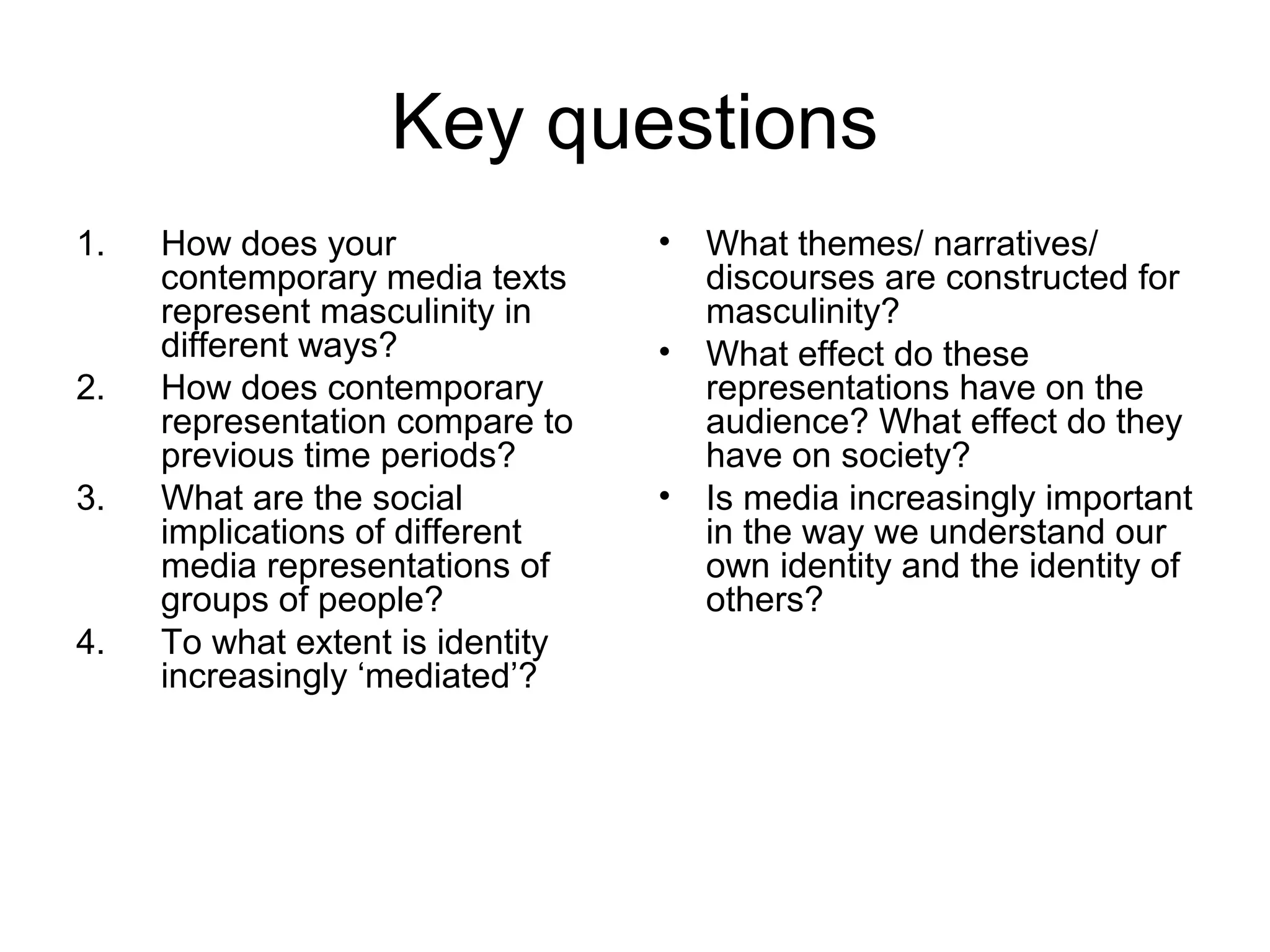
Key questions
1. How does your
contemporary media texts
represent masculinity in
different ways?
2. How does contemporary
representation compare to
previous time periods?
3. What are the social
implications of different
media representations of
groups of people?
4. To what extent is identity
increasingly ‘mediated’?
• What themes/ narratives/
discourses are constructed for
masculinity?
• What effect do these
representations have on the
audience? What effect do they
have on society?
• Is media increasingly important
in the way we understand our
own identity and the identity of
others?
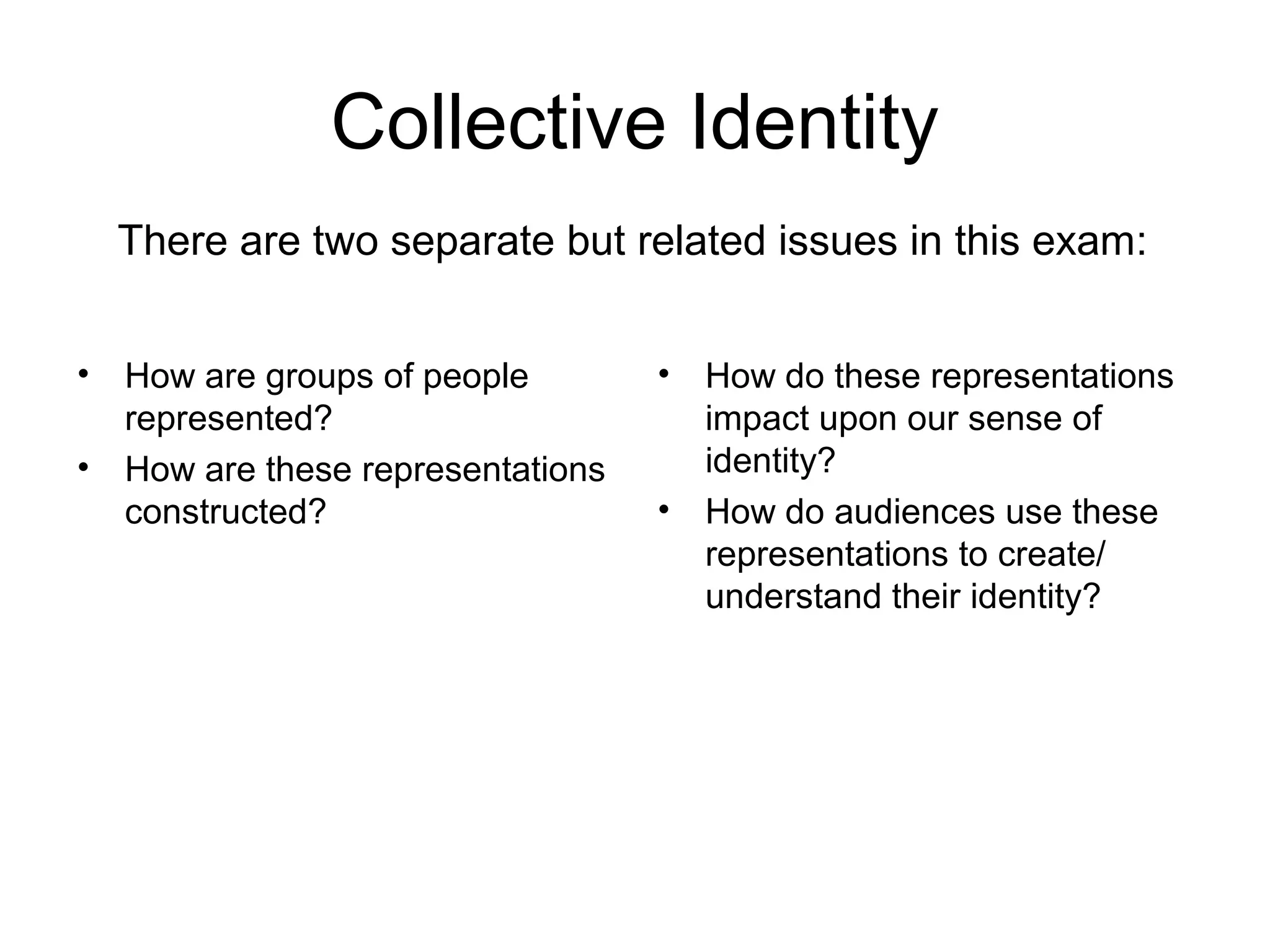
Collective Identity
• How are groups of people
represented?
• How are these representations
constructed?
• How do these representations
impact upon our sense of
identity?
• How do audiences use these
representations to create/
understand their identity?
There are two separate but related issues in this exam:
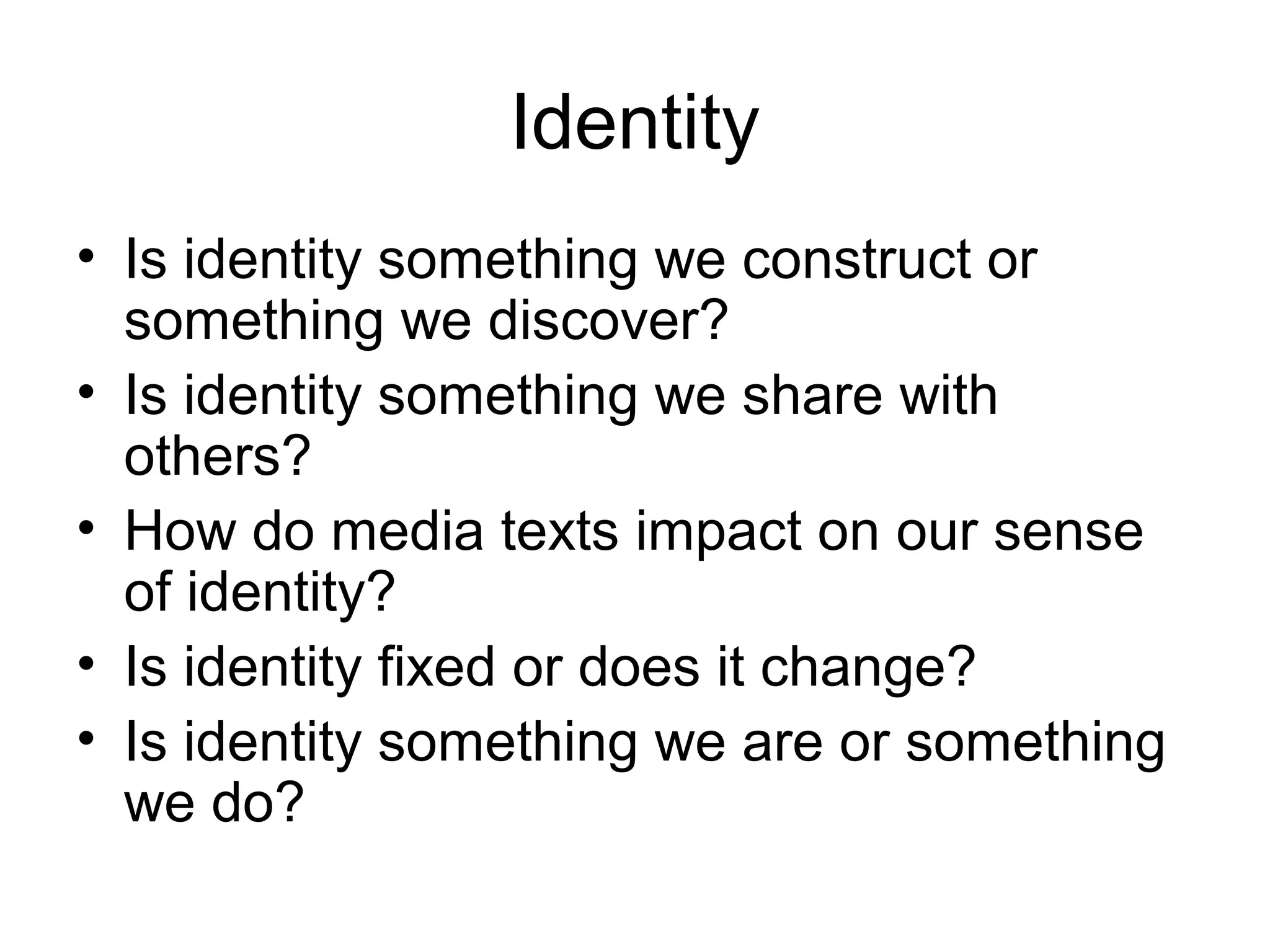
Identity
• Is identity something we construct or
something we discover?
• Is identity something we share with
others?
• How do media texts impact on our sense
of identity?
• Is identity fixed or does it change?
• Is identity something we are or something
we do?
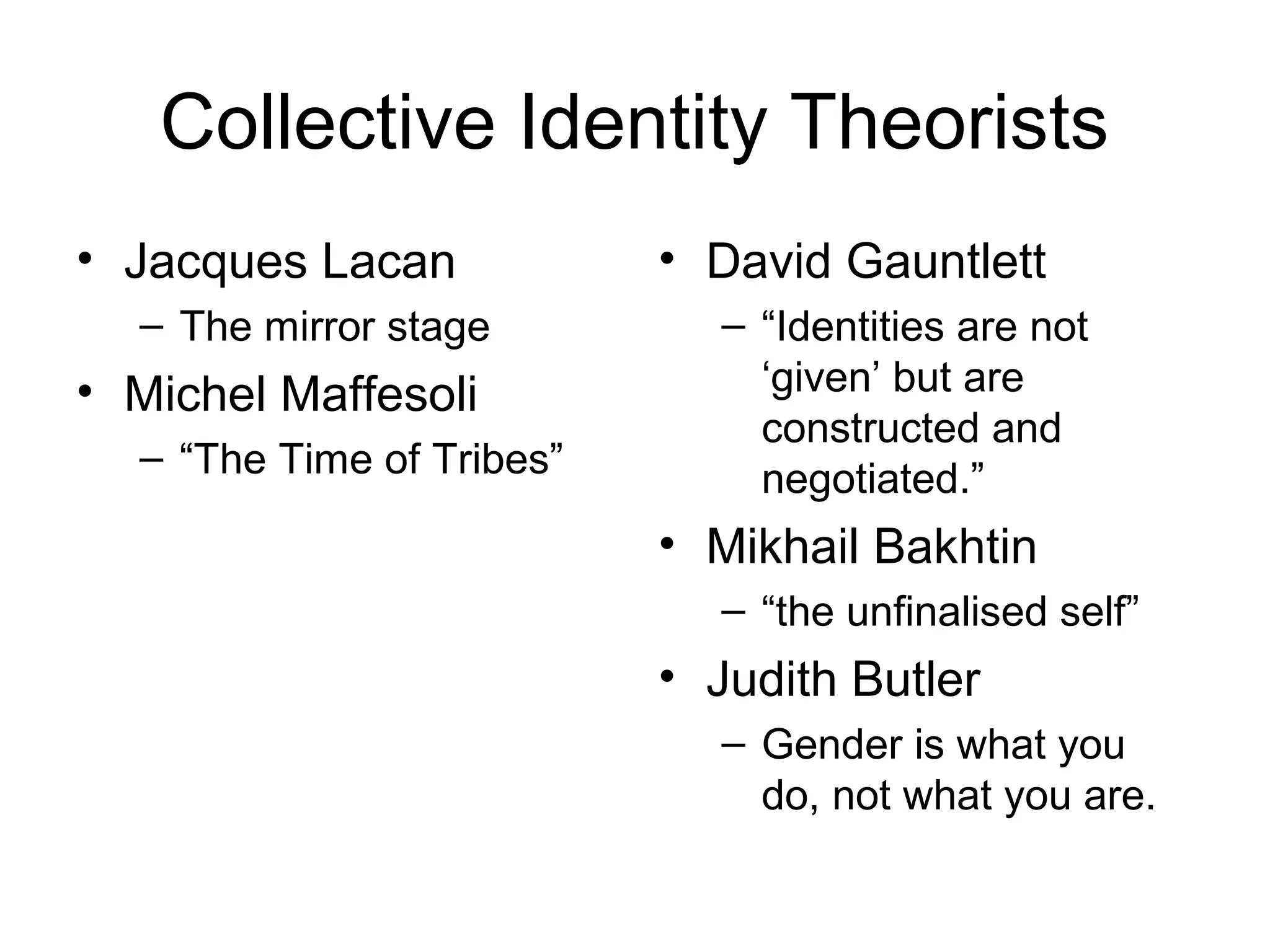
Collective Identity Theorists
• Jacques Lacan
– The mirror stage
• Michel Maffesoli
– “The Time of Tribes”
• David Gauntlett
– “Identities are not
‘given’ but are
constructed and
negotiated.”
• Mikhail Bakhtin
– “the unfinalised self”
• Judith Butler
– Gender is what you
do, not what you are.
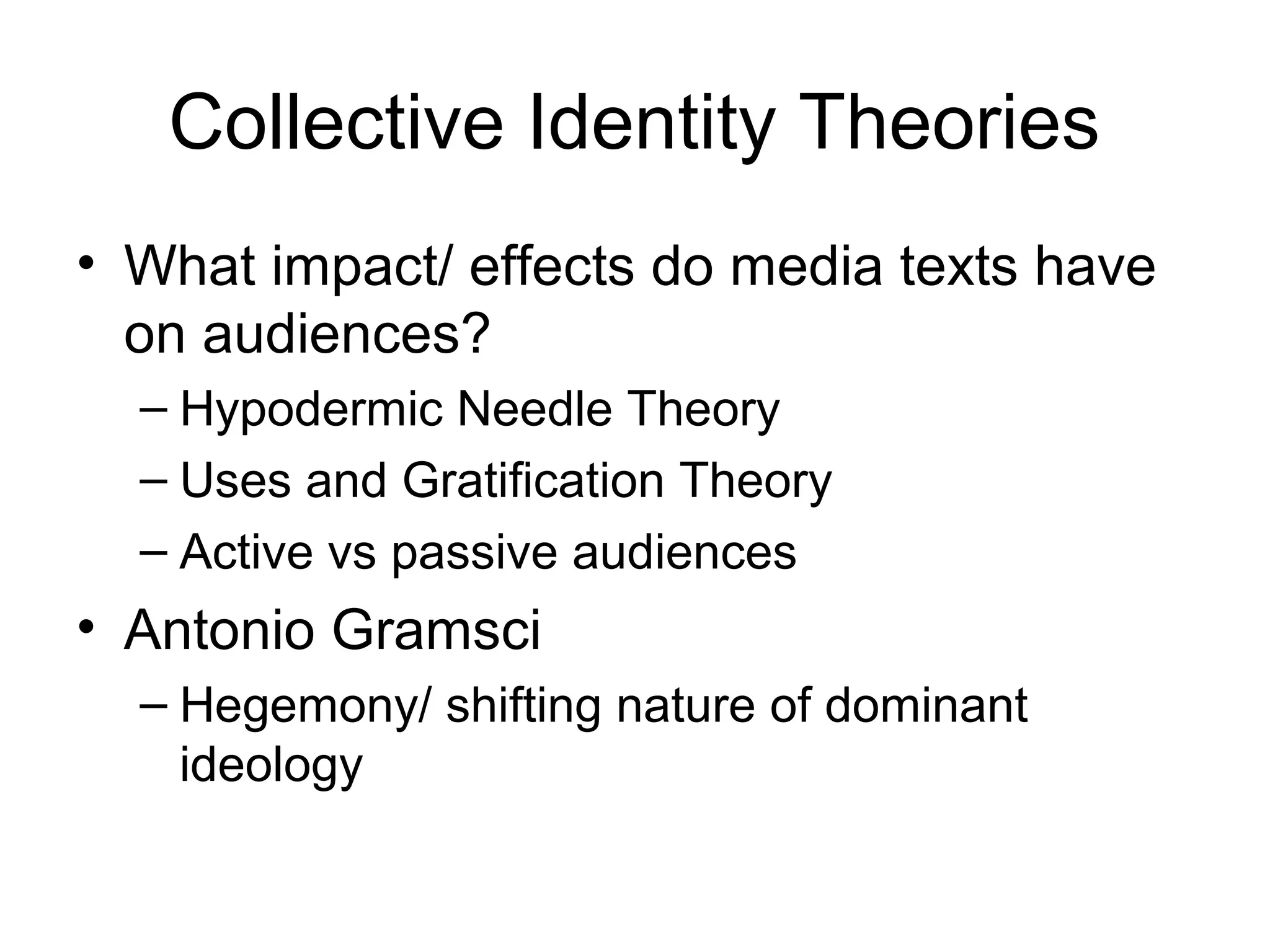
Collective Identity Theories
• What impact/ effects do media texts have
on audiences?
– Hypodermic Needle Theory
– Uses and Gratification Theory
– Active vs passive audiences
• Antonio Gramsci
– Hegemony/ shifting nature of dominant
ideology
Magazines and Gender Theorists
• Judith Butler
• David Gauntlett:
– "These [male] magazines are all about the social construction of
masculinity. That is, if you like, their subject-matter."
– http://www.theory.org.uk/gay-id.htm
– http://theoryhead.com/gender/discuss.htm
– http://theoryhead.com/gender/extract.htm
– Check Moodle also ‘Media, Gender and Identity’ David Gauntlett
– ‘Media, Culture and Society’ Paul Hodkinson
Useful things to do/ ways to revise
• Learn your texts
• Research your texts and find essays
• Read reviews/ analysis of your texts (Guardian/ BBC/
Daily Mail)
• Read reports about masculinity
• Learn a few quotes/ applicable ideas from relevant
theorists/ critics
• Ensure you can apply and comment on/ evaluate/
criticise the theories/ reports
• Ensure you can answer the four key questions on an
earlier slide
Mikhail Bakhtin
• Mikhail Bakhtin agreed individual people cannot be
finalised, completely understood, known, or labelled. He
saw identity as the ‘unfinalised self’, meaning a person is
never fully revealed or known. Many icons of the
postmodern age change and adapt their identity and
consequently can be seen in these terms: Marilyn
Manson’s manipulations of traditional binary oppositions
such as male/ female, beauty/ grotesque; Lady Gaga’s
manipulations of femininity; or Madonna’s consistent
reinventions of herself can all be seen as examples of
the ‘unfinalisable self.”
– From ‘Media Magazine’ April 2010
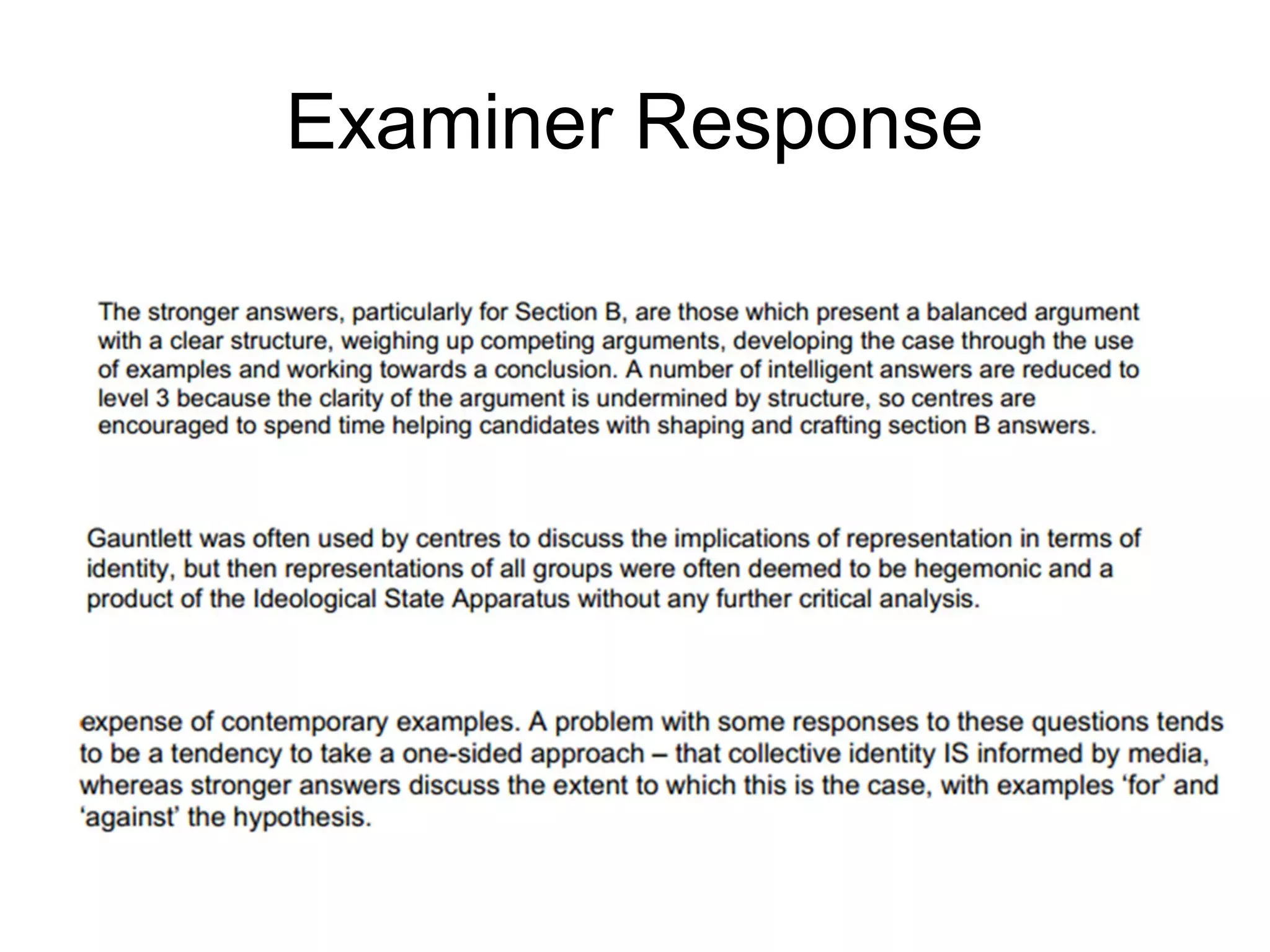
Examiner Response
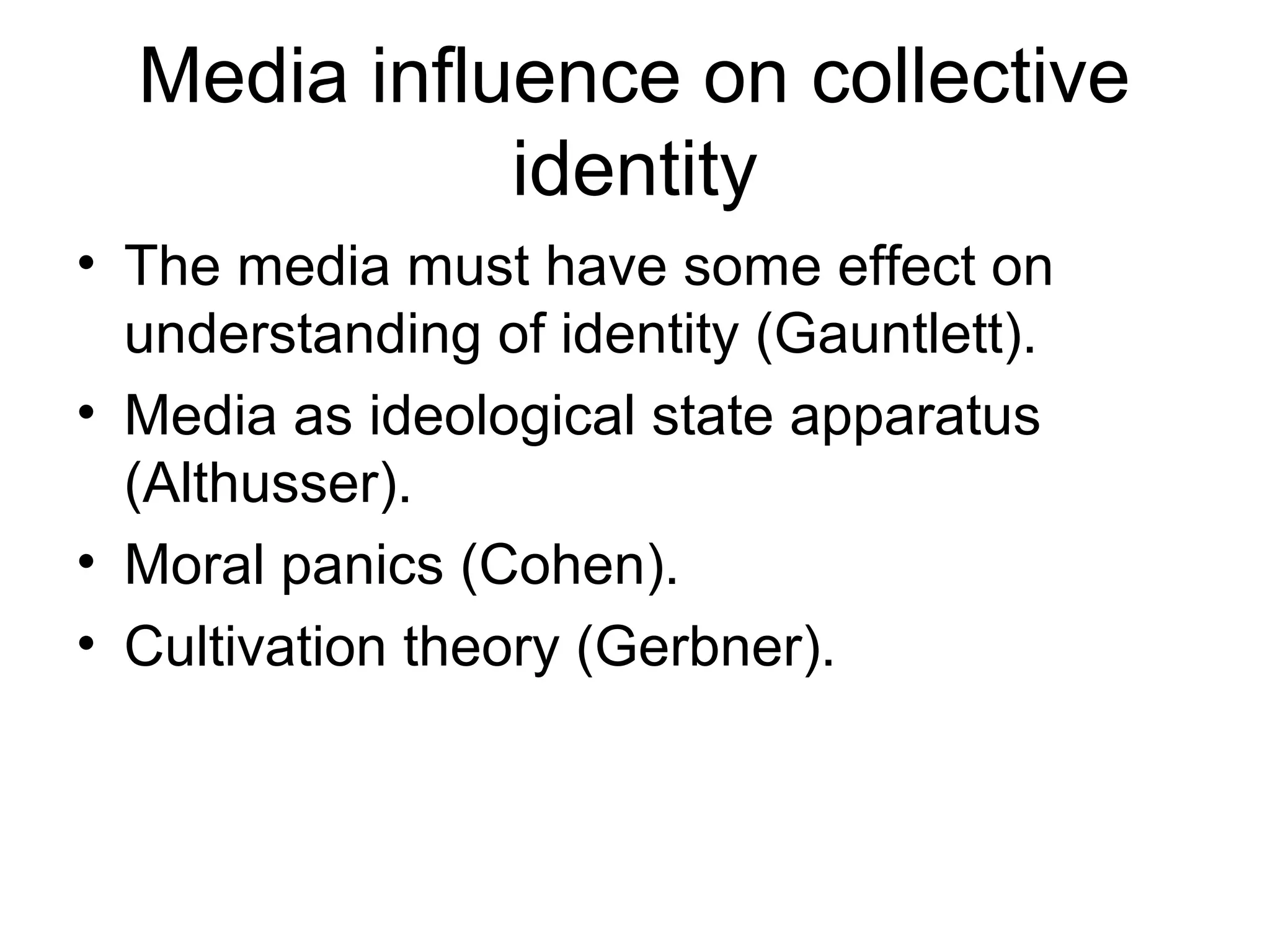
Media influence on collective
identity
• The media must have some effect on
understanding of identity (Gauntlett).
• Media as ideological state apparatus
(Althusser).
• Moral panics (Cohen).
• Cultivation theory (Gerbner).
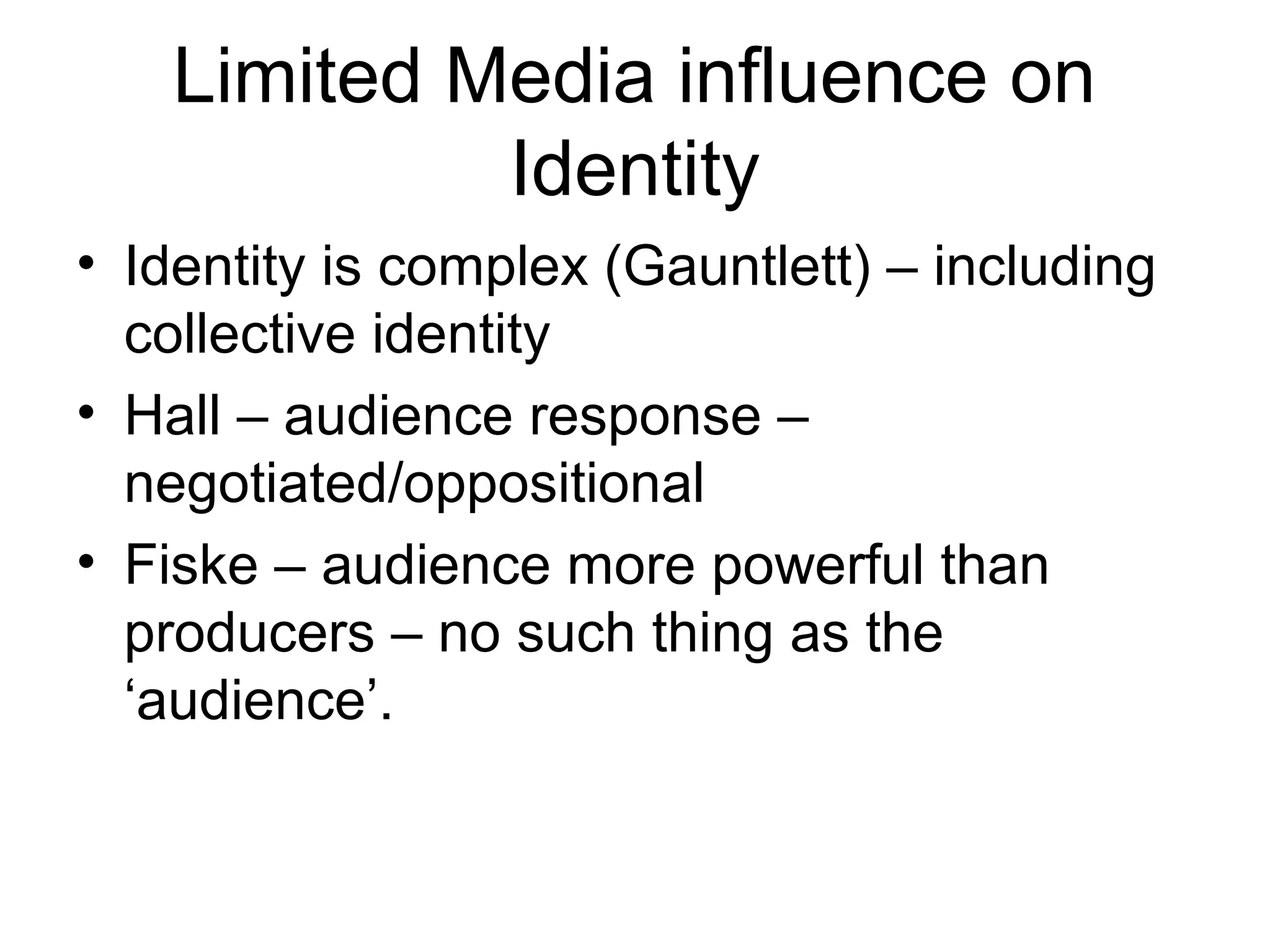
Limited Media influence on
Identity
• Identity is complex (Gauntlett) – including
collective identity
• Hall – audience response –
negotiated/oppositional
• Fiske – audience more powerful than
producers – no such thing as the
‘audience’.
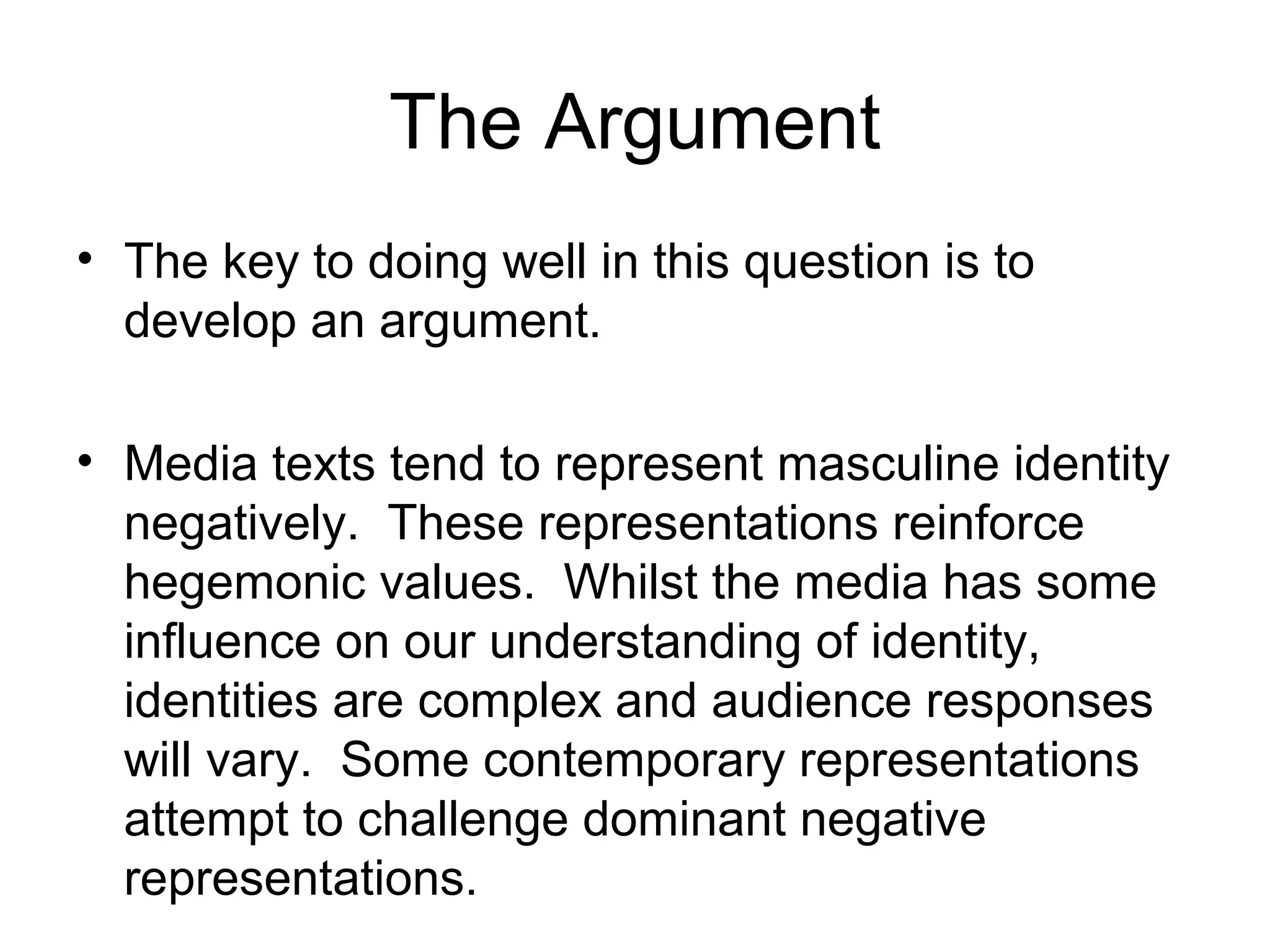
The Argument
• The key to doing well in this question is to
develop an argument.
• Media texts tend to represent masculine identity
negatively. These representations reinforce
hegemonic values. Whilst the media has some
influence on our understanding of identity,
identities are complex and audience responses
will vary. Some contemporary representations
attempt to challenge dominant negative
representations.
Possible Structure
• Introduction – carefully chosen quote introducing
argument, focus and texts.
• Historical representation
• Contemporary Negative representations
• Contemporary Positive representations
• Conclusion – sum up argument, prediction for
the future. How/why might representations
change/stay the same?
Finally
• Refer to at least two types of media.
• Refer to historical and future.
• Most of essay should be focused on
contemporary (since 2009)
representations.
• Link to theory throughout.
• Clear, balanced argument in relation to
effect of media representations/link
between media representations and
collective identity.

Masculinity presentation 2nd may

  • 2.
    Case studies • Covertwo media - How does it represent masculinity? • Past and present/ contemporary (last 5 years) • Identify key themes • How is this text about the construction of identity? • What does this text say about the construction of identity? • How does it deal with the construction of identity? • How do audiences respond to these representations? What are the effects of these representations?
  • 3.
    Key questions 1. Howdoes your contemporary media texts represent masculinity in different ways? 2. How does contemporary representation compare to previous time periods? 3. What are the social implications of different media representations of groups of people? 4. To what extent is identity increasingly ‘mediated’? • What themes/ narratives/ discourses are constructed for masculinity? • What effect do these representations have on the audience? What effect do they have on society? • Is media increasingly important in the way we understand our own identity and the identity of others?
  • 4.
    Collective Identity • Howare groups of people represented? • How are these representations constructed? • How do these representations impact upon our sense of identity? • How do audiences use these representations to create/ understand their identity? There are two separate but related issues in this exam:
  • 5.
    Identity • Is identitysomething we construct or something we discover? • Is identity something we share with others? • How do media texts impact on our sense of identity? • Is identity fixed or does it change? • Is identity something we are or something we do?
  • 6.
    Collective Identity Theorists •Jacques Lacan – The mirror stage • Michel Maffesoli – “The Time of Tribes” • David Gauntlett – “Identities are not ‘given’ but are constructed and negotiated.” • Mikhail Bakhtin – “the unfinalised self” • Judith Butler – Gender is what you do, not what you are.
  • 7.
    Collective Identity Theories •What impact/ effects do media texts have on audiences? – Hypodermic Needle Theory – Uses and Gratification Theory – Active vs passive audiences • Antonio Gramsci – Hegemony/ shifting nature of dominant ideology
  • 8.
    Magazines and GenderTheorists • Judith Butler • David Gauntlett: – "These [male] magazines are all about the social construction of masculinity. That is, if you like, their subject-matter." – http://www.theory.org.uk/gay-id.htm – http://theoryhead.com/gender/discuss.htm – http://theoryhead.com/gender/extract.htm – Check Moodle also ‘Media, Gender and Identity’ David Gauntlett – ‘Media, Culture and Society’ Paul Hodkinson
  • 9.
    Useful things todo/ ways to revise • Learn your texts • Research your texts and find essays • Read reviews/ analysis of your texts (Guardian/ BBC/ Daily Mail) • Read reports about masculinity • Learn a few quotes/ applicable ideas from relevant theorists/ critics • Ensure you can apply and comment on/ evaluate/ criticise the theories/ reports • Ensure you can answer the four key questions on an earlier slide
  • 10.
    Mikhail Bakhtin • MikhailBakhtin agreed individual people cannot be finalised, completely understood, known, or labelled. He saw identity as the ‘unfinalised self’, meaning a person is never fully revealed or known. Many icons of the postmodern age change and adapt their identity and consequently can be seen in these terms: Marilyn Manson’s manipulations of traditional binary oppositions such as male/ female, beauty/ grotesque; Lady Gaga’s manipulations of femininity; or Madonna’s consistent reinventions of herself can all be seen as examples of the ‘unfinalisable self.” – From ‘Media Magazine’ April 2010
  • 13.
  • 14.
    Media influence oncollective identity • The media must have some effect on understanding of identity (Gauntlett). • Media as ideological state apparatus (Althusser). • Moral panics (Cohen). • Cultivation theory (Gerbner).
  • 15.
    Limited Media influenceon Identity • Identity is complex (Gauntlett) – including collective identity • Hall – audience response – negotiated/oppositional • Fiske – audience more powerful than producers – no such thing as the ‘audience’.
  • 16.
    The Argument • Thekey to doing well in this question is to develop an argument. • Media texts tend to represent masculine identity negatively. These representations reinforce hegemonic values. Whilst the media has some influence on our understanding of identity, identities are complex and audience responses will vary. Some contemporary representations attempt to challenge dominant negative representations.
  • 17.
    Possible Structure • Introduction– carefully chosen quote introducing argument, focus and texts. • Historical representation • Contemporary Negative representations • Contemporary Positive representations • Conclusion – sum up argument, prediction for the future. How/why might representations change/stay the same?
  • 18.
    Finally • Refer toat least two types of media. • Refer to historical and future. • Most of essay should be focused on contemporary (since 2009) representations. • Link to theory throughout. • Clear, balanced argument in relation to effect of media representations/link between media representations and collective identity.