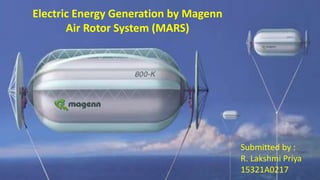
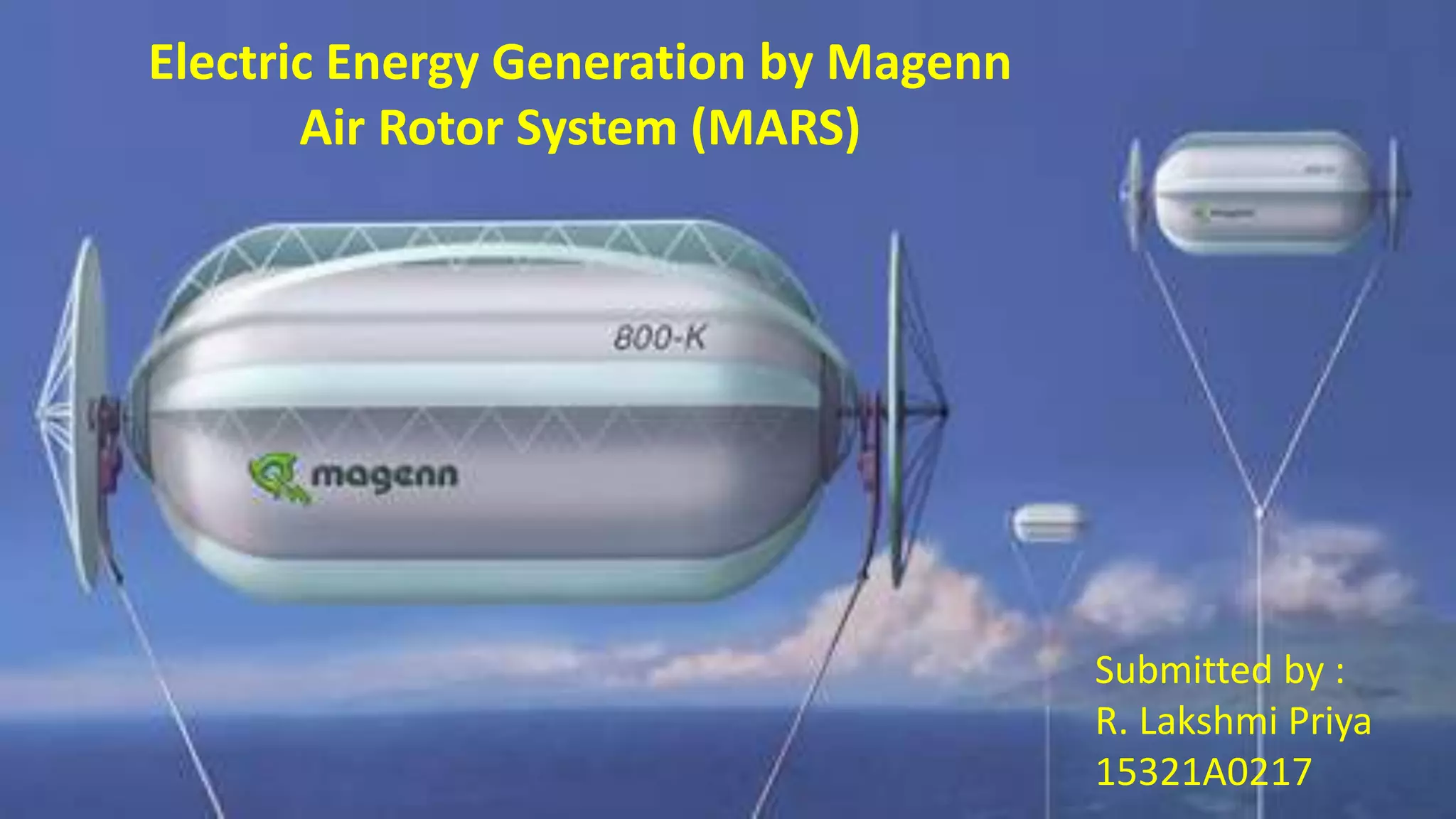
Electric Energy Generation by Magenn
Air Rotor System (MARS)
Submitted by :
R. Lakshmi Priya
15321A0217
WHY WIND
ENERGY?
• Renewable Source of Energy.
• Reduces dependency on fossil energy
supply.
• Contributes to a healthy environment.
• Cost effective energy solution
What is MARS?
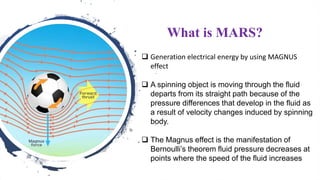
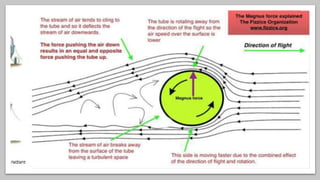
 Generation electrical energy by using MAGNUS
effect
 A spinning object is moving through the fluid
departs from its straight path because of the
pressure differences that develop in the fluid as
a result of velocity changes induced by spinning
body.
 The Magnus effect is the manifestation of
Bernoulli’s theorem fluid pressure decreases at
points where the speed of the fluid increases
Why MARS?
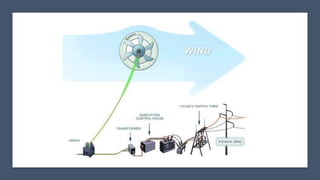
MARS is a lighter-than-air tethered
wind turbine that rotates about a
horizontal axis.
This electrical energy is transferred
down the 1000-foot tether for
immediate use, or to a set of
batteries for later use, or to the
power grid.
HISTORY
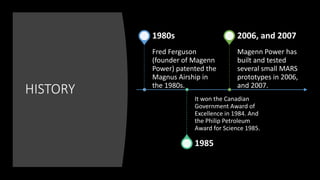
Fred Ferguson
(founder of Magenn
Power) patented the
Magnus Airship in
the 1980s.
1980s
It won the Canadian
Government Award of
Excellence in 1984. And
the Philip Petroleum
Award for Science 1985.
1985
Magenn Power has
built and tested
several small MARS
prototypes in 2006,
and 2007.
2006, and 2007
COMPONENTS
Balloon Generator
Wind
Vane
Stabilizer
Ropes or
Wires
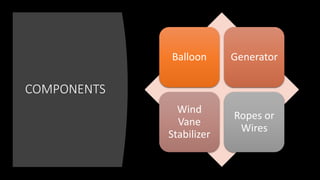
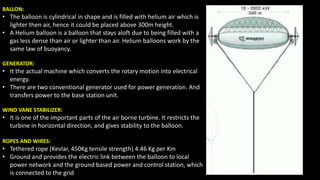
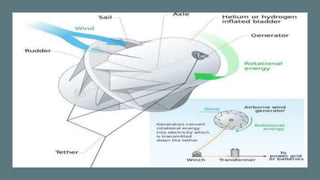
BALLON:
• The balloon is cylindrical in shape and is filled with helium air which is
lighter then air, hence it could be placed above 300m height.
• A Helium balloon is a balloon that stays aloft due to being filled with a
gas less dense than air or lighter than air. Helium balloons work by the
same law of buoyancy.
GENERATOR:
• It the actual machine which converts the rotary motion into electrical
energy.
• There are two conventional generator used for power generation. And
transfers power to the base station unit.
WIND VANE STABILIZER:
• It is one of the important parts of the air borne turbine. It restricts the
turbine in horizontal direction, and gives stability to the balloon.
ROPES AND WIRES:
• Tethered rope (Kevlar, 450Kg tensile strength) 4.46 Kg per Km
• Ground and provides the electric link between the balloon to local
power network and the ground based power and control station, which
is connected to the grid
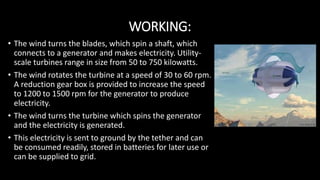
WORKING:
• The wind turns the blades, which spin a shaft, which
connects to a generator and makes electricity. Utility-
scale turbines range in size from 50 to 750 kilowatts.
• The wind rotates the turbine at a speed of 30 to 60 rpm.
A reduction gear box is provided to increase the speed
to 1200 to 1500 rpm for the generator to produce
electricity.
• The wind turns the turbine which spins the generator
and the electricity is generated.
• This electricity is sent to ground by the tether and can
be consumed readily, stored in batteries for later use or
can be supplied to grid.
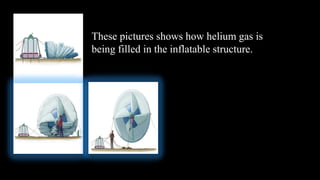
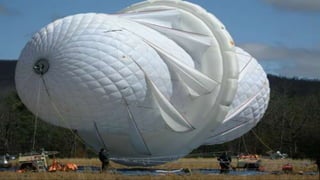
These pictures shows how helium gas is
being filled in the inflatable structure.
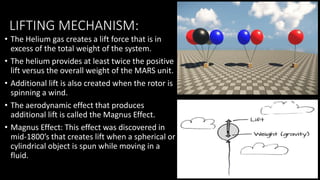
LIFTING MECHANISM:
• The Helium gas creates a lift force that is in
excess of the total weight of the system.
• The helium provides at least twice the positive
lift versus the overall weight of the MARS unit.
• Additional lift is also created when the rotor is
spinning a wind.
• The aerodynamic effect that produces
additional lift is called the Magnus Effect.
• Magnus Effect: This effect was discovered in
mid-1800’s that creates lift when a spherical or
cylindrical object is spun while moving in a
fluid.
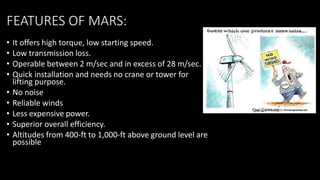
FEATURES OF MARS:
• It offers high torque, low starting speed.
• Low transmission loss.
• Operable between 2 m/sec and in excess of 28 m/sec.
• Quick installation and needs no crane or tower for
lifting purpose.
• No noise
• Reliable winds
• Less expensive power.
• Superior overall efficiency.
• Altitudes from 400-ft to 1,000-ft above ground level are
possible
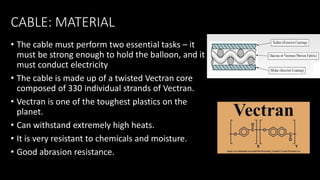
CABLE: MATERIAL
• The cable must perform two essential tasks – it
must be strong enough to hold the balloon, and it
must conduct electricity
• The cable is made up of a twisted Vectran core
composed of 330 individual strands of Vectran.
• Vectran is one of the toughest plastics on the
planet.
• Can withstand extremely high heats.
• It is very resistant to chemicals and moisture.
• Good abrasion resistance.
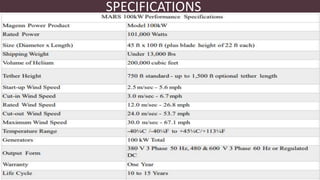
SPECIFICATIONS
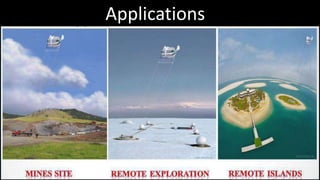
Applications
LIMITATIONS
• MARS units cannot be installed within five
miles of the boundary of any airport.
• Initial cost is high.
CONCLUSION
• This Kind of technology can reduce our Dependencies
on Fossil Fuels which are Depleting at a rapid rate.
• As there is no Pollution in this system Green Energy
can be produced which can reduce green house gases.
• As it can be near Demand centers cost on Power lines
is reduces.
• If this technology is implemented it can eliminate
power problems of all Nations in coming years.
THANK YOU
MARS(Magenn air rotor system)

MARS(Magenn air rotor system)

  • 1.
    Electric Energy Generationby Magenn Air Rotor System (MARS) Submitted by : R. Lakshmi Priya 15321A0217
  • 2.
    WHY WIND ENERGY? • RenewableSource of Energy. • Reduces dependency on fossil energy supply. • Contributes to a healthy environment. • Cost effective energy solution
  • 4.
    What is MARS? Generation electrical energy by using MAGNUS effect  A spinning object is moving through the fluid departs from its straight path because of the pressure differences that develop in the fluid as a result of velocity changes induced by spinning body.  The Magnus effect is the manifestation of Bernoulli’s theorem fluid pressure decreases at points where the speed of the fluid increases
  • 5.
    Why MARS? MARS isa lighter-than-air tethered wind turbine that rotates about a horizontal axis. This electrical energy is transferred down the 1000-foot tether for immediate use, or to a set of batteries for later use, or to the power grid.
  • 6.
    HISTORY Fred Ferguson (founder ofMagenn Power) patented the Magnus Airship in the 1980s. 1980s It won the Canadian Government Award of Excellence in 1984. And the Philip Petroleum Award for Science 1985. 1985 Magenn Power has built and tested several small MARS prototypes in 2006, and 2007. 2006, and 2007
  • 7.
  • 8.
    BALLON: • The balloonis cylindrical in shape and is filled with helium air which is lighter then air, hence it could be placed above 300m height. • A Helium balloon is a balloon that stays aloft due to being filled with a gas less dense than air or lighter than air. Helium balloons work by the same law of buoyancy. GENERATOR: • It the actual machine which converts the rotary motion into electrical energy. • There are two conventional generator used for power generation. And transfers power to the base station unit. WIND VANE STABILIZER: • It is one of the important parts of the air borne turbine. It restricts the turbine in horizontal direction, and gives stability to the balloon. ROPES AND WIRES: • Tethered rope (Kevlar, 450Kg tensile strength) 4.46 Kg per Km • Ground and provides the electric link between the balloon to local power network and the ground based power and control station, which is connected to the grid
  • 10.
    WORKING: • The windturns the blades, which spin a shaft, which connects to a generator and makes electricity. Utility- scale turbines range in size from 50 to 750 kilowatts. • The wind rotates the turbine at a speed of 30 to 60 rpm. A reduction gear box is provided to increase the speed to 1200 to 1500 rpm for the generator to produce electricity. • The wind turns the turbine which spins the generator and the electricity is generated. • This electricity is sent to ground by the tether and can be consumed readily, stored in batteries for later use or can be supplied to grid.
  • 11.
    These pictures showshow helium gas is being filled in the inflatable structure.
  • 12.
    LIFTING MECHANISM: • TheHelium gas creates a lift force that is in excess of the total weight of the system. • The helium provides at least twice the positive lift versus the overall weight of the MARS unit. • Additional lift is also created when the rotor is spinning a wind. • The aerodynamic effect that produces additional lift is called the Magnus Effect. • Magnus Effect: This effect was discovered in mid-1800’s that creates lift when a spherical or cylindrical object is spun while moving in a fluid.
  • 15.
    FEATURES OF MARS: •It offers high torque, low starting speed. • Low transmission loss. • Operable between 2 m/sec and in excess of 28 m/sec. • Quick installation and needs no crane or tower for lifting purpose. • No noise • Reliable winds • Less expensive power. • Superior overall efficiency. • Altitudes from 400-ft to 1,000-ft above ground level are possible
  • 16.
    CABLE: MATERIAL • Thecable must perform two essential tasks – it must be strong enough to hold the balloon, and it must conduct electricity • The cable is made up of a twisted Vectran core composed of 330 individual strands of Vectran. • Vectran is one of the toughest plastics on the planet. • Can withstand extremely high heats. • It is very resistant to chemicals and moisture. • Good abrasion resistance.
  • 17.
  • 19.
  • 20.
    LIMITATIONS • MARS unitscannot be installed within five miles of the boundary of any airport. • Initial cost is high.
  • 21.
    CONCLUSION • This Kindof technology can reduce our Dependencies on Fossil Fuels which are Depleting at a rapid rate. • As there is no Pollution in this system Green Energy can be produced which can reduce green house gases. • As it can be near Demand centers cost on Power lines is reduces. • If this technology is implemented it can eliminate power problems of all Nations in coming years.
  • 22.