Technical Seminar on
MAGENN AIR ROTOR SYSTEM
(MARS)
Presented By
AJAS.T
D3 EEE
RNO : 6
OVERVIEW
 INTRODUCTION
 HISTORY
 COMPONENTS
 WORKING
 LIFTING MECHANISM
 FEATURES OF MARS
 ADVANTAGES
 APPLICATION
 LIMITATIONS
 CONCLUSION
INTRODUCTION
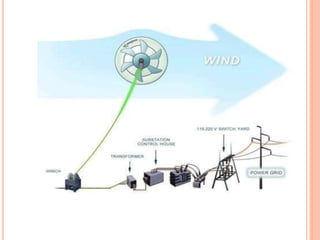
• MARS is a lighter-than-air tethered wind turbine that
rotates about a horizontal axis in response to wind,
generating electrical energy.
• This electrical energy is transferred
tether for immediate use, or to a set
use, or to the power grid.
down the 1000-foot
of batteries for later
• Helium sustains MARS and allows it to ascend to a
higher altitude than traditional wind turbines.
HISTORY
 Fred Ferguson (founder of Magenn Power)
patented the MagnusAirship in the 1980s.
 It won the Canadian GovernmentAward of
Excellence in 1984.And the Philip Petroleum
Award for Science 1985.
 Magenn Power has built and tested several
small MARS prototypes in 2006, and 2007.
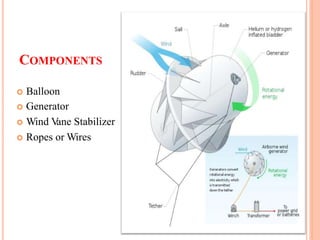
COMPONENTS
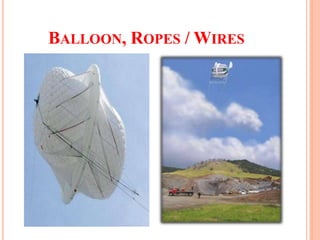
 Balloon
 Generator
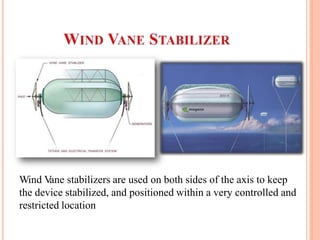
 Wind Vane Stabilizer
 Ropes or Wires
Wind Vane stabilizers are used on both sides of the axis to keep
the device stabilized, and positioned within a very controlled and
restricted location
BALLOON, ROPES / WIRES
WORKING
The wind turns the blades, which spin a shaft, which connects
to a generator and makes electricity. Utility-scale turbines
range in size from 50 to 750 kilowatts.

The wind rotates the turbine at a speed of 30 to 60 rpm.
A reduction gear box is provided to increase the speed to 1200
to 1500 rpm for the generator to produce electricity.

The wind turns the turbine which spins the generator and the
electricity is generated.

This electricity is sent to ground by the tether and can be
consumed readily, stored in batteries for later use or can be
supplied to grid.

LIFTING MECHANISM
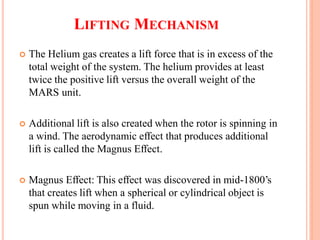
The Helium gas creates a lift force that is in excess of the
total weight of the system. The helium provides at least
twice the positive lift versus the overall weight of the
MARS unit.

Additional lift is also created when the rotor is spinning
a wind. The aerodynamic effect that produces additional
lift is called the Magnus Effect.
in
Magnus Effect: This effect was discovered in mid-1800’s
that creates lift when a spherical or cylindrical object is
spun while moving in a fluid.

FEATURES OF MARS
 It offers high torque, low starting speed.
 Low transmission loss.
 Operable between 2 m/sec and in excess of 28 m/sec.
 Quick installation and needs no crane or tower for lifting purpose.
 No noise
 Reliable winds
 Less expensive power.
 Superior overall efficiency.
 Altitudes from 400-ft to 1,000-ft above ground level are possible
CABLE: MATERIAL
 The cable must perform two essential tasks – it must be strong enough to hold the
balloon, and it must conduct electricity
 The cable is made up of a twisted Vectran core composed of 330 individual strands of
Vectran.
 Vectran is one of the toughest plastics on the planet.
 Can withstand extremely high heats.
 It is very resistant to chemicals and moisture.
 good abrasion resistance
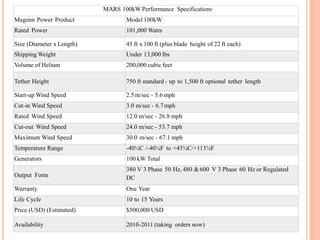
MARS 100kW Performance Specifications
Magenn Power Product Model 100kW
Rated Power 101,000 Watts
Size (Diameter x Length) 45 ft x 100 ft (plus blade height of 22 ft each)
Shipping Weight Under 13,000 lbs
Volume of Helium 200,000 cubic feet
Tether Height 750 ft standard - up to 1,500 ft optional tether length
Start-up Wind Speed 2.5 m/sec - 5.6 mph
Cut-in Wind Speed 3.0 m/sec - 6.7mph
Rated Wind Speed 12.0 m/sec - 26.8 mph
Cut-out Wind Speed 24.0 m/sec - 53.7 mph
Maximum Wind Speed 30.0 m/sec - 67.1 mph
Temperature Range -40¼C /-40¼F to +45¼C/+113¼F
Generators 100 kW Total
Output Form
380 V 3 Phase 50 Hz, 480 &600 V 3 Phase 60 Hz or Regulated
DC
Warranty One Year
Life Cycle 10 to 15 Years
Price (USD) (Estimated) $500,000 USD
Availability 2010-2011 (taking orders now)
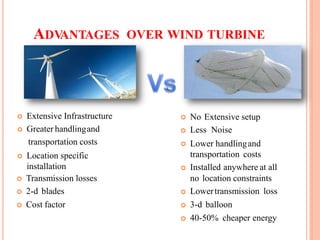
ADVANTAGES OVER WIND TURBINE
 Extensive Infrastructure
 Greater handlingand
transportation costs
 Location specific
installation
No Extensive setup
Less Noise
Lower handlingand
transportation costs
Installed anywhere at all




 Transmission losses
 2-d blades
 Cost factor
no location constraints
Lowertransmission loss
3-d balloon
40-50% cheaper energy



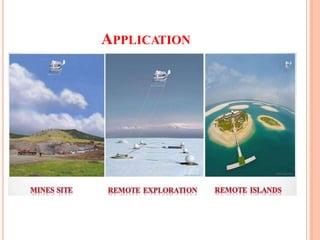
APPLICATION
LIMITATIONS
MARS units cannot be installed within
boundary of any airport.
five miles of the
Initial cost is high.
Helium gas leaks at a rate of 0.5 percent per month. The
drawback of the technology is that the balloon has to be
re-filled with helium every 6 months, seeing as the gas
leaks.

Another disadvantage of floating windmills is that they
have to be taken down in extremely powerful winds,
whereas common wind turbines are simply shut down.

CONCLUSION
 This Kind of technology can reduce our Dependencies
on Fossil Fuels which are Depleting at a rapid rate.
 As there is no Pollution in this system Green Energy can
be produced which can reduce green house gases.
 As it can be near Demand centers cost on Power lines is
reduces
 If this technology is implemented it can eliminate power
problems of all Nations in coming years.
MAGENN AIR ROTOR SYSTEM

MAGENN AIR ROTOR SYSTEM

  • 2.
    Technical Seminar on MAGENNAIR ROTOR SYSTEM (MARS) Presented By AJAS.T D3 EEE RNO : 6
  • 3.
    OVERVIEW  INTRODUCTION  HISTORY COMPONENTS  WORKING  LIFTING MECHANISM  FEATURES OF MARS  ADVANTAGES  APPLICATION  LIMITATIONS  CONCLUSION
  • 4.
    INTRODUCTION • MARS isa lighter-than-air tethered wind turbine that rotates about a horizontal axis in response to wind, generating electrical energy. • This electrical energy is transferred tether for immediate use, or to a set use, or to the power grid. down the 1000-foot of batteries for later • Helium sustains MARS and allows it to ascend to a higher altitude than traditional wind turbines.
  • 5.
    HISTORY  Fred Ferguson(founder of Magenn Power) patented the MagnusAirship in the 1980s.  It won the Canadian GovernmentAward of Excellence in 1984.And the Philip Petroleum Award for Science 1985.  Magenn Power has built and tested several small MARS prototypes in 2006, and 2007.
  • 6.
    COMPONENTS  Balloon  Generator Wind Vane Stabilizer  Ropes or Wires
  • 7.
    Wind Vane stabilizersare used on both sides of the axis to keep the device stabilized, and positioned within a very controlled and restricted location
  • 8.
  • 9.
    WORKING The wind turnsthe blades, which spin a shaft, which connects to a generator and makes electricity. Utility-scale turbines range in size from 50 to 750 kilowatts.  The wind rotates the turbine at a speed of 30 to 60 rpm. A reduction gear box is provided to increase the speed to 1200 to 1500 rpm for the generator to produce electricity.  The wind turns the turbine which spins the generator and the electricity is generated.  This electricity is sent to ground by the tether and can be consumed readily, stored in batteries for later use or can be supplied to grid. 
  • 11.
    LIFTING MECHANISM The Heliumgas creates a lift force that is in excess of the total weight of the system. The helium provides at least twice the positive lift versus the overall weight of the MARS unit.  Additional lift is also created when the rotor is spinning a wind. The aerodynamic effect that produces additional lift is called the Magnus Effect. in Magnus Effect: This effect was discovered in mid-1800’s that creates lift when a spherical or cylindrical object is spun while moving in a fluid. 
  • 12.
    FEATURES OF MARS It offers high torque, low starting speed.  Low transmission loss.  Operable between 2 m/sec and in excess of 28 m/sec.  Quick installation and needs no crane or tower for lifting purpose.  No noise  Reliable winds  Less expensive power.  Superior overall efficiency.  Altitudes from 400-ft to 1,000-ft above ground level are possible
  • 13.
    CABLE: MATERIAL  Thecable must perform two essential tasks – it must be strong enough to hold the balloon, and it must conduct electricity  The cable is made up of a twisted Vectran core composed of 330 individual strands of Vectran.  Vectran is one of the toughest plastics on the planet.  Can withstand extremely high heats.  It is very resistant to chemicals and moisture.  good abrasion resistance
  • 14.
    MARS 100kW PerformanceSpecifications Magenn Power Product Model 100kW Rated Power 101,000 Watts Size (Diameter x Length) 45 ft x 100 ft (plus blade height of 22 ft each) Shipping Weight Under 13,000 lbs Volume of Helium 200,000 cubic feet Tether Height 750 ft standard - up to 1,500 ft optional tether length Start-up Wind Speed 2.5 m/sec - 5.6 mph Cut-in Wind Speed 3.0 m/sec - 6.7mph Rated Wind Speed 12.0 m/sec - 26.8 mph Cut-out Wind Speed 24.0 m/sec - 53.7 mph Maximum Wind Speed 30.0 m/sec - 67.1 mph Temperature Range -40¼C /-40¼F to +45¼C/+113¼F Generators 100 kW Total Output Form 380 V 3 Phase 50 Hz, 480 &600 V 3 Phase 60 Hz or Regulated DC Warranty One Year Life Cycle 10 to 15 Years Price (USD) (Estimated) $500,000 USD Availability 2010-2011 (taking orders now)
  • 15.
    ADVANTAGES OVER WINDTURBINE  Extensive Infrastructure  Greater handlingand transportation costs  Location specific installation No Extensive setup Less Noise Lower handlingand transportation costs Installed anywhere at all      Transmission losses  2-d blades  Cost factor no location constraints Lowertransmission loss 3-d balloon 40-50% cheaper energy   
  • 16.
  • 17.
    LIMITATIONS MARS units cannotbe installed within boundary of any airport. five miles of the Initial cost is high. Helium gas leaks at a rate of 0.5 percent per month. The drawback of the technology is that the balloon has to be re-filled with helium every 6 months, seeing as the gas leaks.  Another disadvantage of floating windmills is that they have to be taken down in extremely powerful winds, whereas common wind turbines are simply shut down. 
  • 18.
    CONCLUSION  This Kindof technology can reduce our Dependencies on Fossil Fuels which are Depleting at a rapid rate.  As there is no Pollution in this system Green Energy can be produced which can reduce green house gases.  As it can be near Demand centers cost on Power lines is reduces  If this technology is implemented it can eliminate power problems of all Nations in coming years.