
Presented by,
Saneem Nazim,
S4 MBA,
Roll No: 12
CHMM College
“Marketing research is the systematic
gathering, recording and analyzing of the data
about the marketing problems towards the end of
providing information useful in marketing decision
making.”
-Still and Cundiff
Research includes:
 Sales research
 Product research
 Advertising research
 Motivation research
 Service marketing research
 Micro environmental research
 Product Research
Product market research serves several goals: new
product design and market validation research, or
assessing existing product strength and line extension
potential.
 Concept Testing
Concept testing research evaluates advertising
concepts, ad theme concepts and appeals, new product
concepts, pricing, brand concepts, brand names, and
positioning strategy concepts.
 Branding Research
Branding decisions drive branding marketing research
strategy. Brand Management and Research services
help to understand the brand's value, strengths and
vulnerabilities and increase the brand position
 Brand Equity Research
Brand equity research measures the breadth and depth of
brand power in the target markets. A key to research
design is the goal of a brand equity measurement study.
 Advertising Research
Advertising research design is determined by specific
advertising goals and the stage of ad development, or
campaign.
 Pricing Research
Various types of research used to explore the role of
price, optimal pricing, and pricing demand curves
 Sales Analysis
An analysis of sales by period or year to project
trends, identify problems and measure a retailer's
performance
 Positioning Research
Studies designed to help identify the optimal positioning
for a brand or service
 Market Segmentation
Market segmentation is a process by which market
researchers identify key attributes about customers and
potential consumers that can be used to create distinct
target market groups
 Customer Satisfaction Research
It is area of marketing research which focuses on
customers' perceptions with their shopping or
purchase experience.
I. Defining the problem and setting the objectives:
The definition of the problem helps in determining the
techniques to be used, the extent of information to be
collected. After defining the basic problem, the
researcher must specify the objective of the study.
II. Conducting situational analysis:
It means collecting the information about the business
environment.
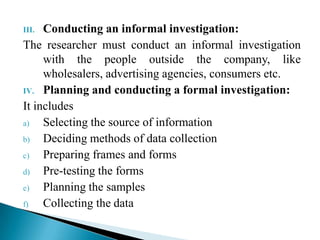
III. Conducting an informal investigation:
The researcher must conduct an informal investigation
with the people outside the company, like
wholesalers, advertising agencies, consumers etc.
IV. Planning and conducting a formal investigation:
It includes
a) Selecting the source of information
b) Deciding methods of data collection
c) Preparing frames and forms
d) Pre-testing the forms
e) Planning the samples
f) Collecting the data
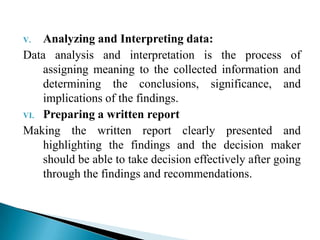
V. Analyzing and Interpreting data:
Data analysis and interpretation is the process of
assigning meaning to the collected information and
determining the conclusions, significance, and
implications of the findings.
VI. Preparing a written report
Making the written report clearly presented and
highlighting the findings and the decision maker
should be able to take decision effectively after going
through the findings and recommendations.
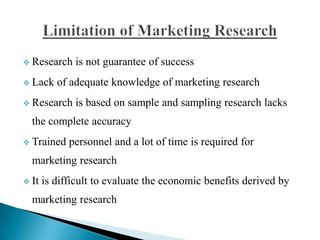
 Research is not guarantee of success
 Lack of adequate knowledge of marketing research
 Research is based on sample and sampling research lacks
the complete accuracy
 Trained personnel and a lot of time is required for
marketing research
 It is difficult to evaluate the economic benefits derived by
marketing research
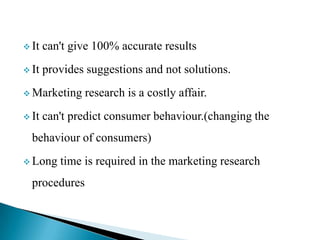
 It can't give 100% accurate results
 It provides suggestions and not solutions.
 Marketing research is a costly affair.
 It can't predict consumer behaviour.(changing the
behaviour of consumers)
 Long time is required in the marketing research
procedures
Marketing Research

Marketing Research

  • 1.
    Presented by, Saneem Nazim, S4MBA, Roll No: 12 CHMM College
  • 2.
    “Marketing research isthe systematic gathering, recording and analyzing of the data about the marketing problems towards the end of providing information useful in marketing decision making.” -Still and Cundiff
  • 3.
    Research includes:  Salesresearch  Product research  Advertising research  Motivation research  Service marketing research  Micro environmental research
  • 4.
     Product Research Productmarket research serves several goals: new product design and market validation research, or assessing existing product strength and line extension potential.  Concept Testing Concept testing research evaluates advertising concepts, ad theme concepts and appeals, new product concepts, pricing, brand concepts, brand names, and positioning strategy concepts.
  • 5.
     Branding Research Brandingdecisions drive branding marketing research strategy. Brand Management and Research services help to understand the brand's value, strengths and vulnerabilities and increase the brand position  Brand Equity Research Brand equity research measures the breadth and depth of brand power in the target markets. A key to research design is the goal of a brand equity measurement study.
  • 6.
     Advertising Research Advertisingresearch design is determined by specific advertising goals and the stage of ad development, or campaign.  Pricing Research Various types of research used to explore the role of price, optimal pricing, and pricing demand curves  Sales Analysis An analysis of sales by period or year to project trends, identify problems and measure a retailer's performance
  • 7.
     Positioning Research Studiesdesigned to help identify the optimal positioning for a brand or service  Market Segmentation Market segmentation is a process by which market researchers identify key attributes about customers and potential consumers that can be used to create distinct target market groups  Customer Satisfaction Research It is area of marketing research which focuses on customers' perceptions with their shopping or purchase experience.
  • 8.
    I. Defining theproblem and setting the objectives: The definition of the problem helps in determining the techniques to be used, the extent of information to be collected. After defining the basic problem, the researcher must specify the objective of the study. II. Conducting situational analysis: It means collecting the information about the business environment.
  • 9.
    III. Conducting aninformal investigation: The researcher must conduct an informal investigation with the people outside the company, like wholesalers, advertising agencies, consumers etc. IV. Planning and conducting a formal investigation: It includes a) Selecting the source of information b) Deciding methods of data collection c) Preparing frames and forms d) Pre-testing the forms e) Planning the samples f) Collecting the data
  • 10.
    V. Analyzing andInterpreting data: Data analysis and interpretation is the process of assigning meaning to the collected information and determining the conclusions, significance, and implications of the findings. VI. Preparing a written report Making the written report clearly presented and highlighting the findings and the decision maker should be able to take decision effectively after going through the findings and recommendations.
  • 11.
     Research isnot guarantee of success  Lack of adequate knowledge of marketing research  Research is based on sample and sampling research lacks the complete accuracy  Trained personnel and a lot of time is required for marketing research  It is difficult to evaluate the economic benefits derived by marketing research
  • 12.
     It can'tgive 100% accurate results  It provides suggestions and not solutions.  Marketing research is a costly affair.  It can't predict consumer behaviour.(changing the behaviour of consumers)  Long time is required in the marketing research procedures