The Mark of Gender Monique Wittig
Monique Wittig (1935-2003) Active Publication 1964-1999 Founding French Feminist Described as a “Radical Lesbian” Strong Universalist Tendencies
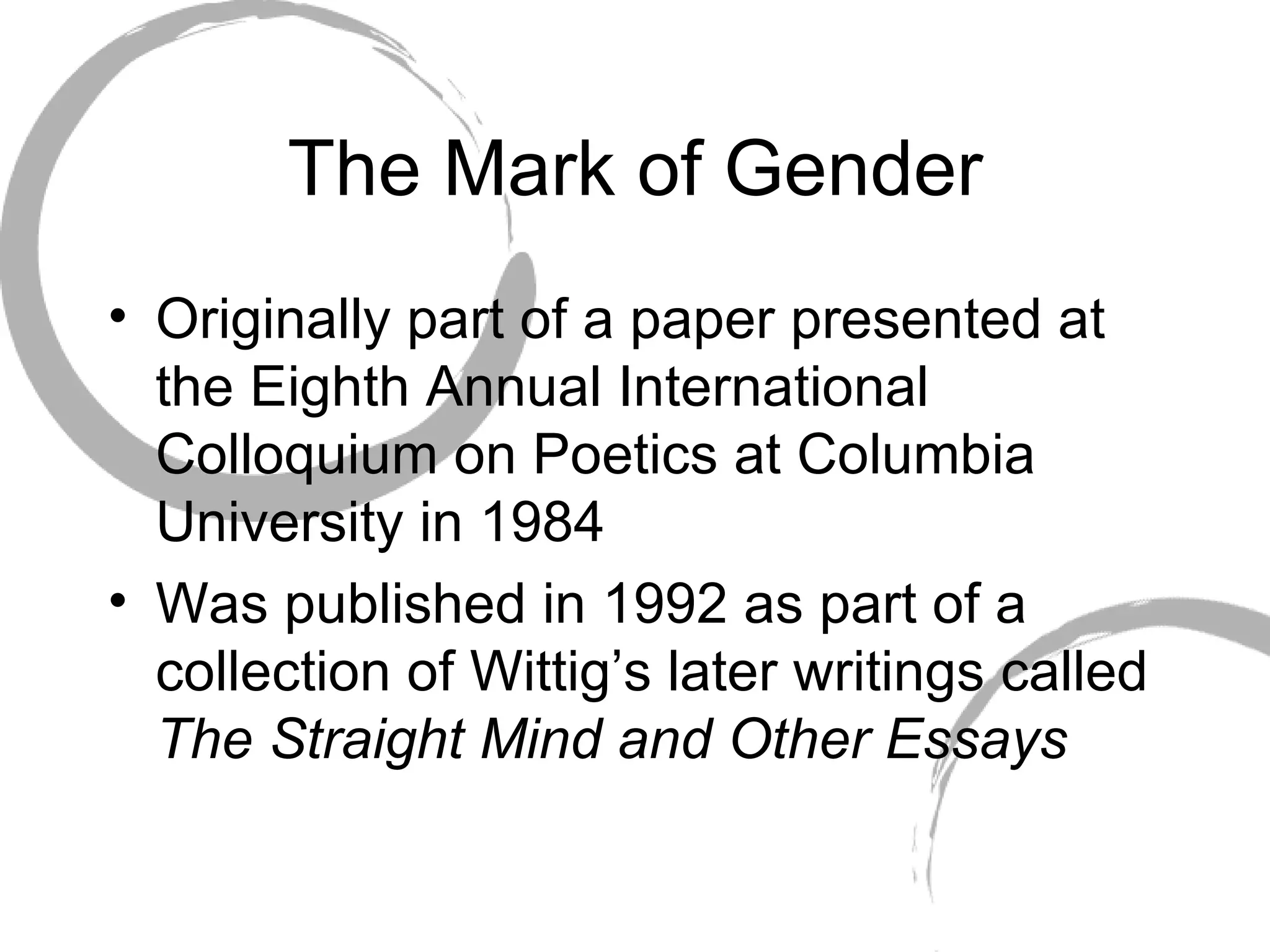
The Mark of Gender Originally part of a paper presented at the Eighth Annual International Colloquium on Poetics at Columbia University in 1984 Was published in 1992 as part of a collection of Wittig’s later writings called  The Straight Mind and Other Essays
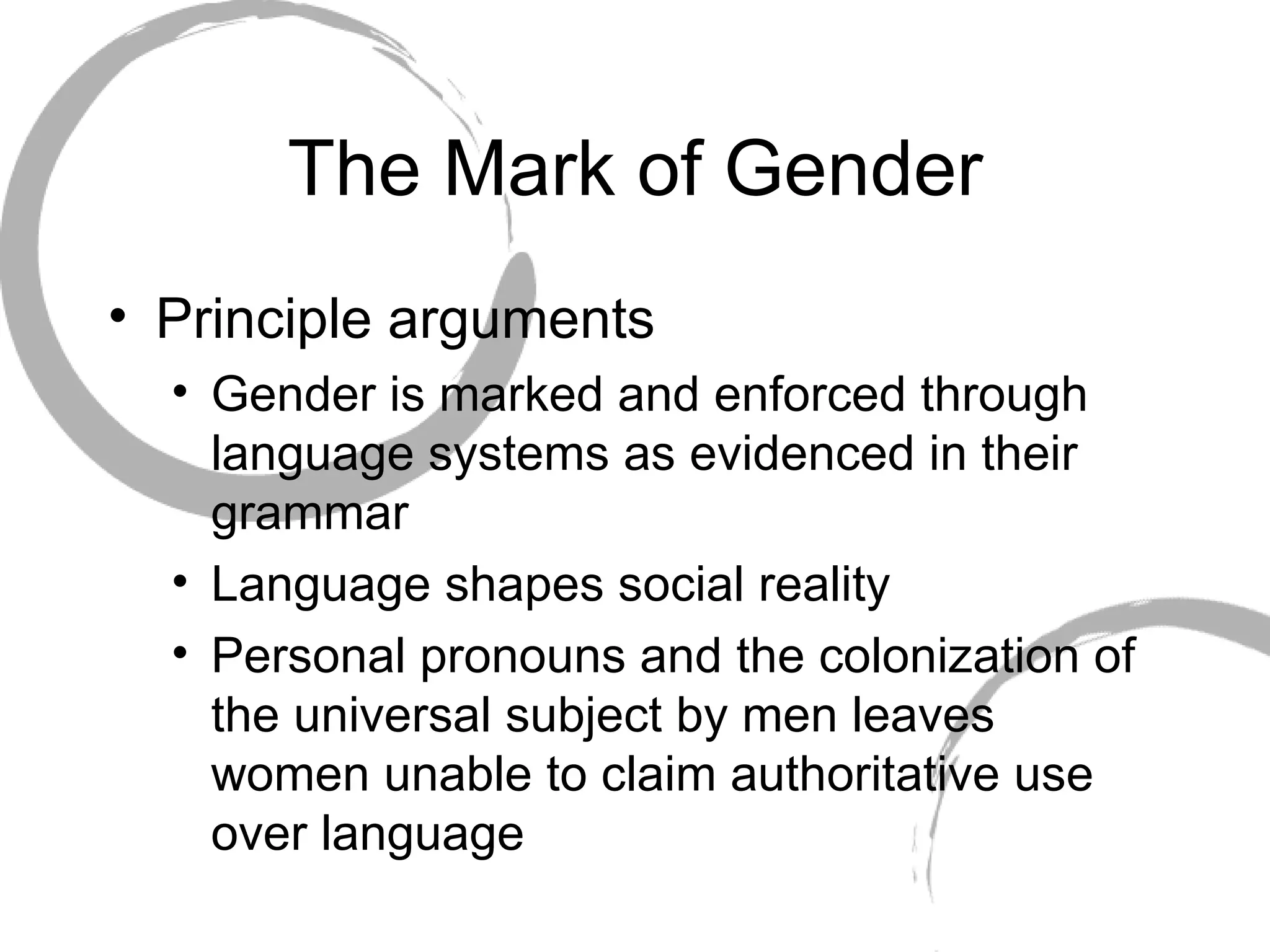
The Mark of Gender Principle arguments Gender is marked and enforced through language systems as evidenced in their grammar Language shapes social reality Personal pronouns and the colonization of the universal subject by men leaves women unable to claim authoritative use over language
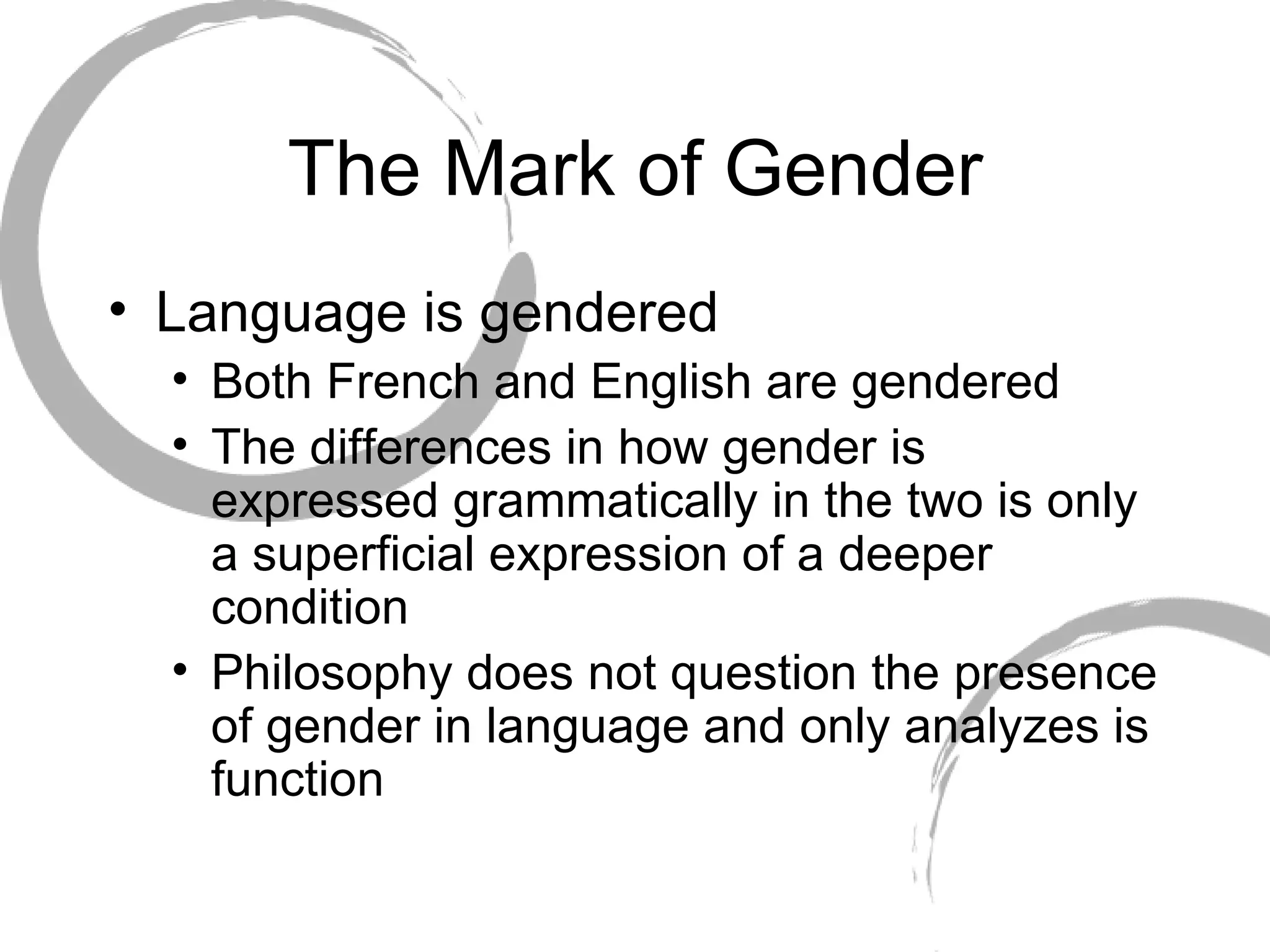
The Mark of Gender Language is gendered Both French and English are gendered The differences in how gender is expressed grammatically in the two is only a superficial expression of a deeper condition Philosophy does not question the presence of gender in language and only analyzes is function
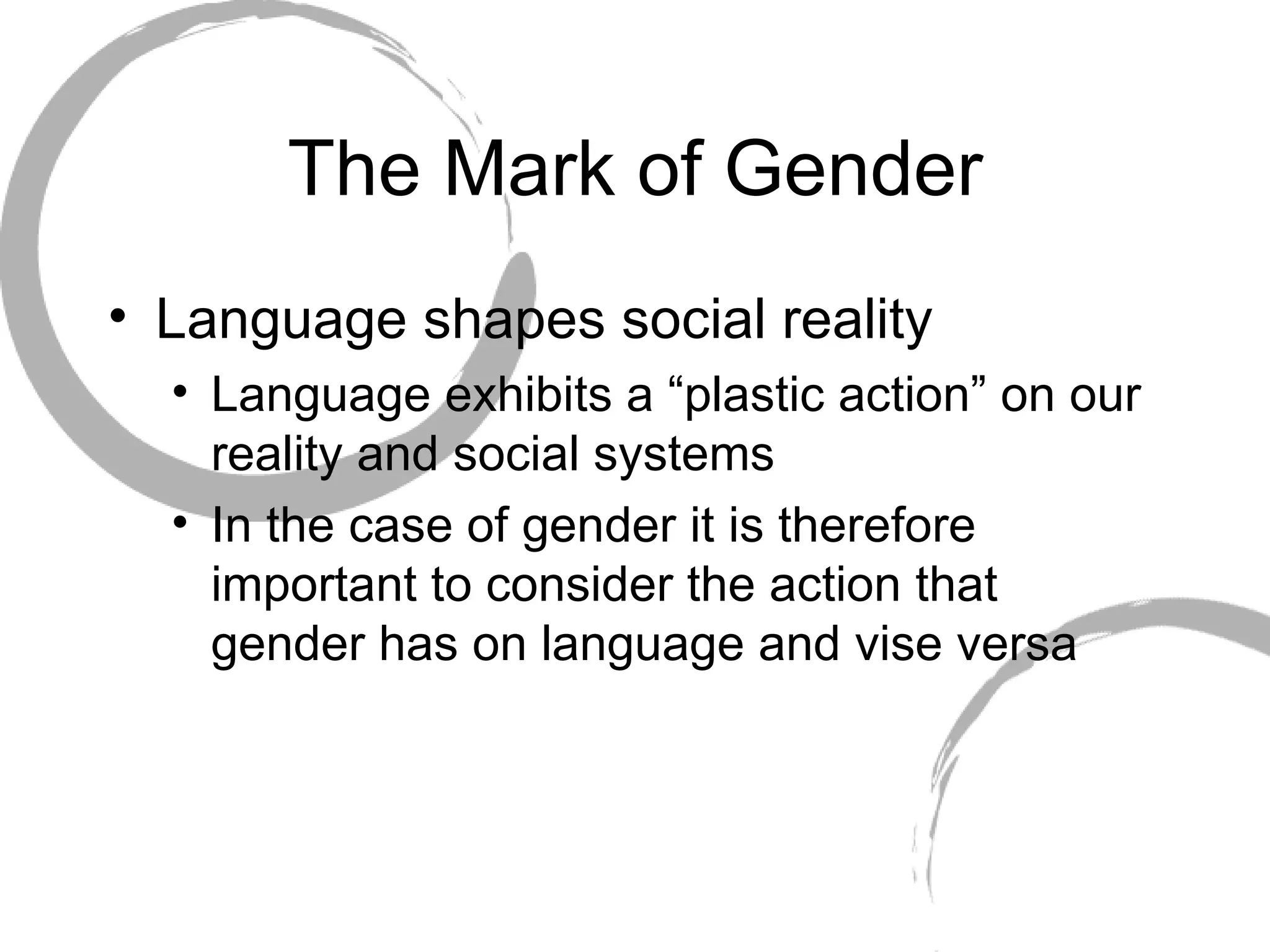
The Mark of Gender Language shapes social reality Language exhibits a “plastic action” on our reality and social systems In the case of gender it is therefore important to consider the action that gender has on language and vise versa
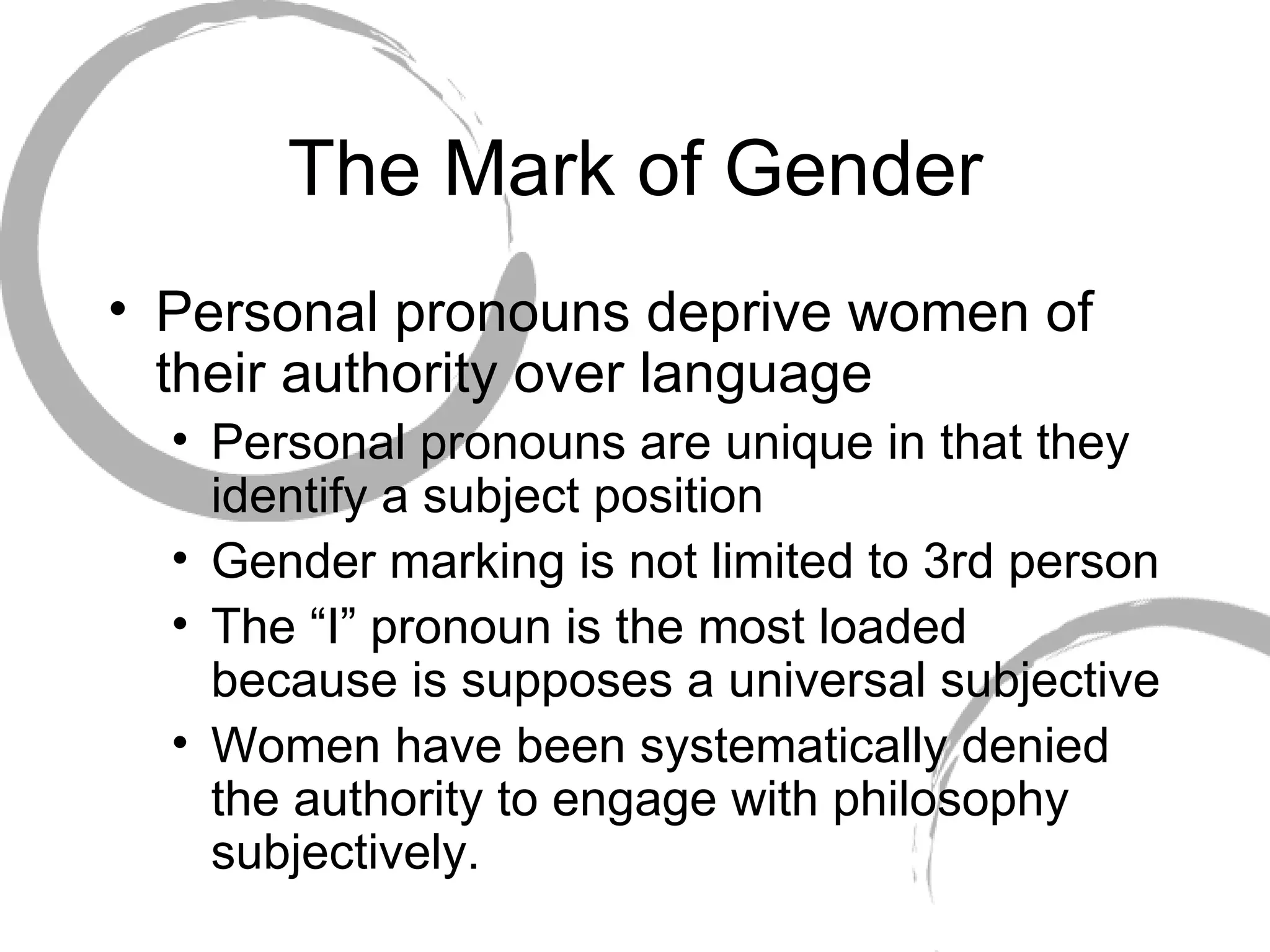
The Mark of Gender Personal pronouns deprive women of their authority over language Personal pronouns are unique in that they identify a subject position Gender marking is not limited to 3rd person The “I” pronoun is the most loaded because is supposes a universal subjective Women have been systematically denied the authority to engage with philosophy subjectively.

Mark of gender presentation

  • 1.
    The Mark ofGender Monique Wittig
  • 2.
    Monique Wittig (1935-2003)Active Publication 1964-1999 Founding French Feminist Described as a “Radical Lesbian” Strong Universalist Tendencies
  • 3.
    The Mark ofGender Originally part of a paper presented at the Eighth Annual International Colloquium on Poetics at Columbia University in 1984 Was published in 1992 as part of a collection of Wittig’s later writings called The Straight Mind and Other Essays
  • 4.
    The Mark ofGender Principle arguments Gender is marked and enforced through language systems as evidenced in their grammar Language shapes social reality Personal pronouns and the colonization of the universal subject by men leaves women unable to claim authoritative use over language
  • 5.
    The Mark ofGender Language is gendered Both French and English are gendered The differences in how gender is expressed grammatically in the two is only a superficial expression of a deeper condition Philosophy does not question the presence of gender in language and only analyzes is function
  • 6.
    The Mark ofGender Language shapes social reality Language exhibits a “plastic action” on our reality and social systems In the case of gender it is therefore important to consider the action that gender has on language and vise versa
  • 7.
    The Mark ofGender Personal pronouns deprive women of their authority over language Personal pronouns are unique in that they identify a subject position Gender marking is not limited to 3rd person The “I” pronoun is the most loaded because is supposes a universal subjective Women have been systematically denied the authority to engage with philosophy subjectively.