Factors and Criteria to Quantify the Bioproduction Potential of Coastal Areas and Presentation of a simple Operational Index of Biological Value (IBV) Coastal Management   By Lars Hankanson  Reference From the Open Marine Biology Journal,2009,  page 6-15  Reported by Martin Jerome G Goli-Cruz 07-45881
The Topic is all about :   Bioproduction potential of coastal areas  Objectives To review and discuss simple criteria related to the bioproduction potenials of coastal areas.
What is Coastal Zone ?   A coastal may be regarded as a “pantry and nursery for the sea.” Coastal areas can have a bio production many times higher than most productive land areas.  Reasons  Because in coastal areas have producers
P H Y T O  PLANKTON
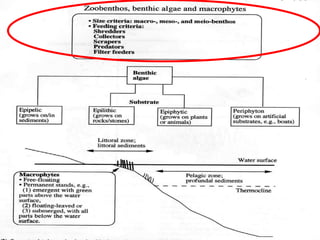
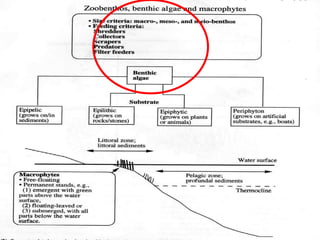
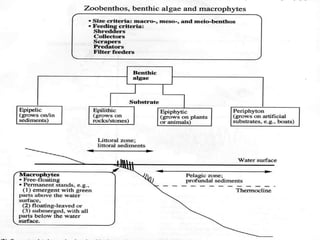
BENTHIC ALGAE
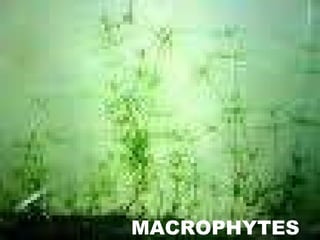
MACROPHYTES
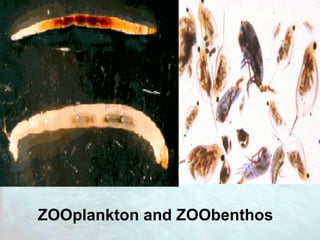
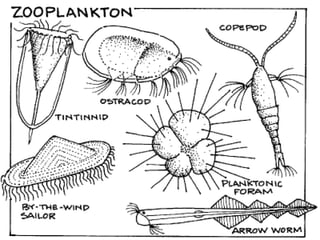
ZOOplankton and ZOObenthos
 
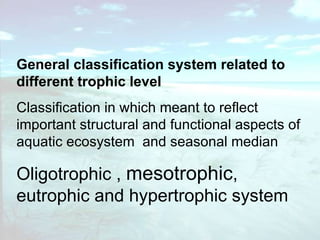
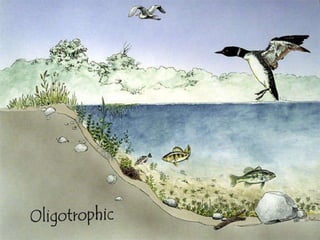
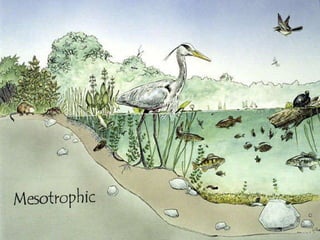
General classification system related to different trophic level  Classification in which meant to reflect important structural and functional aspects of aquatic ecosystem  and seasonal median  Oligotrophic ,  mesotrophic , eutrophic and hypertrophic system


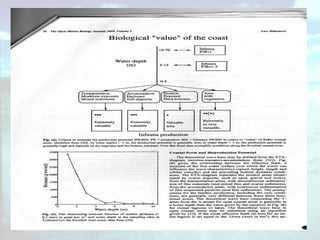
Important Bio Indicators Can be predicted by practically useful models and they are regulated by a set of abiotic factors, such as salinity, nutrient concentrations coastal morphometry and water exchange.
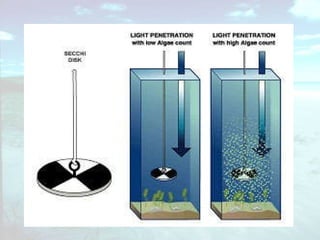
Secchi depth as standard measure of water clarity  Chlorophyll-a concentrations a measure of phytoplankton Biomass
 
The oxygen saturation in the deep-water zone An indicator reflecting sedimentation, oxygen consumption, oxygen concentrations and the habitat conditions for zoobenthos, an important functional group.  The Macrophyte cover  An important variable for the bioproduction potential, including fish production of coastal areas


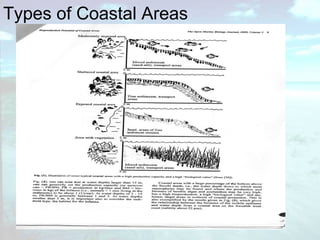
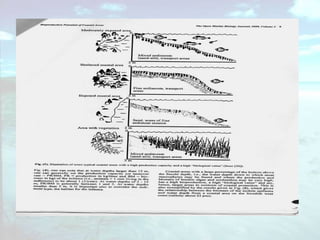
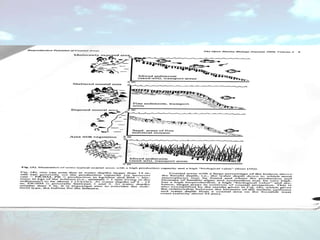
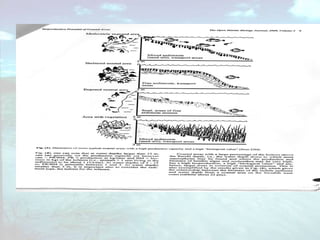
Types of Coastal Areas


Conclusion  That coastal areas with a high proportion of the bottom area above the Secchi depth generally have a high potential bioproduction and (2) that the bioproduction potential also depends on the substrate, i.e., on the bottom dynamic conditions prevailing in the coastal area,  In short on the sedimentological characteristics, which are closely linked to the exposure. If the exposure is very high, the coastal area would generally be dominated by coarse sediments and bare rocks, if the exposure is limited, the coastal area may have a dense macrophyte cover and be dominated by fine sediments. Such areas should have a high bioproduction potential.
Marine science Article

  • 1.
    Factors and Criteriato Quantify the Bioproduction Potential of Coastal Areas and Presentation of a simple Operational Index of Biological Value (IBV) Coastal Management By Lars Hankanson Reference From the Open Marine Biology Journal,2009, page 6-15 Reported by Martin Jerome G Goli-Cruz 07-45881
  • 2.
    The Topic isall about : Bioproduction potential of coastal areas Objectives To review and discuss simple criteria related to the bioproduction potenials of coastal areas.
  • 3.
    What is CoastalZone ? A coastal may be regarded as a “pantry and nursery for the sea.” Coastal areas can have a bio production many times higher than most productive land areas. Reasons Because in coastal areas have producers
  • 4.
    P H YT O PLANKTON
  • 5.
  • 6.
  • 7.
  • 8.
  • 9.
    General classification systemrelated to different trophic level Classification in which meant to reflect important structural and functional aspects of aquatic ecosystem and seasonal median Oligotrophic , mesotrophic , eutrophic and hypertrophic system
  • 10.
  • 11.
  • 12.
  • 13.
    Important Bio IndicatorsCan be predicted by practically useful models and they are regulated by a set of abiotic factors, such as salinity, nutrient concentrations coastal morphometry and water exchange.
  • 14.
    Secchi depth asstandard measure of water clarity Chlorophyll-a concentrations a measure of phytoplankton Biomass
  • 15.
  • 16.
    The oxygen saturationin the deep-water zone An indicator reflecting sedimentation, oxygen consumption, oxygen concentrations and the habitat conditions for zoobenthos, an important functional group. The Macrophyte cover An important variable for the bioproduction potential, including fish production of coastal areas
  • 17.
  • 18.
  • 19.
  • 20.
  • 21.
  • 22.
  • 23.
  • 24.
  • 25.
    Conclusion Thatcoastal areas with a high proportion of the bottom area above the Secchi depth generally have a high potential bioproduction and (2) that the bioproduction potential also depends on the substrate, i.e., on the bottom dynamic conditions prevailing in the coastal area, In short on the sedimentological characteristics, which are closely linked to the exposure. If the exposure is very high, the coastal area would generally be dominated by coarse sediments and bare rocks, if the exposure is limited, the coastal area may have a dense macrophyte cover and be dominated by fine sediments. Such areas should have a high bioproduction potential.