AUXILIARY MARINE MACHINERY
SYSTEMS
.
Introduction
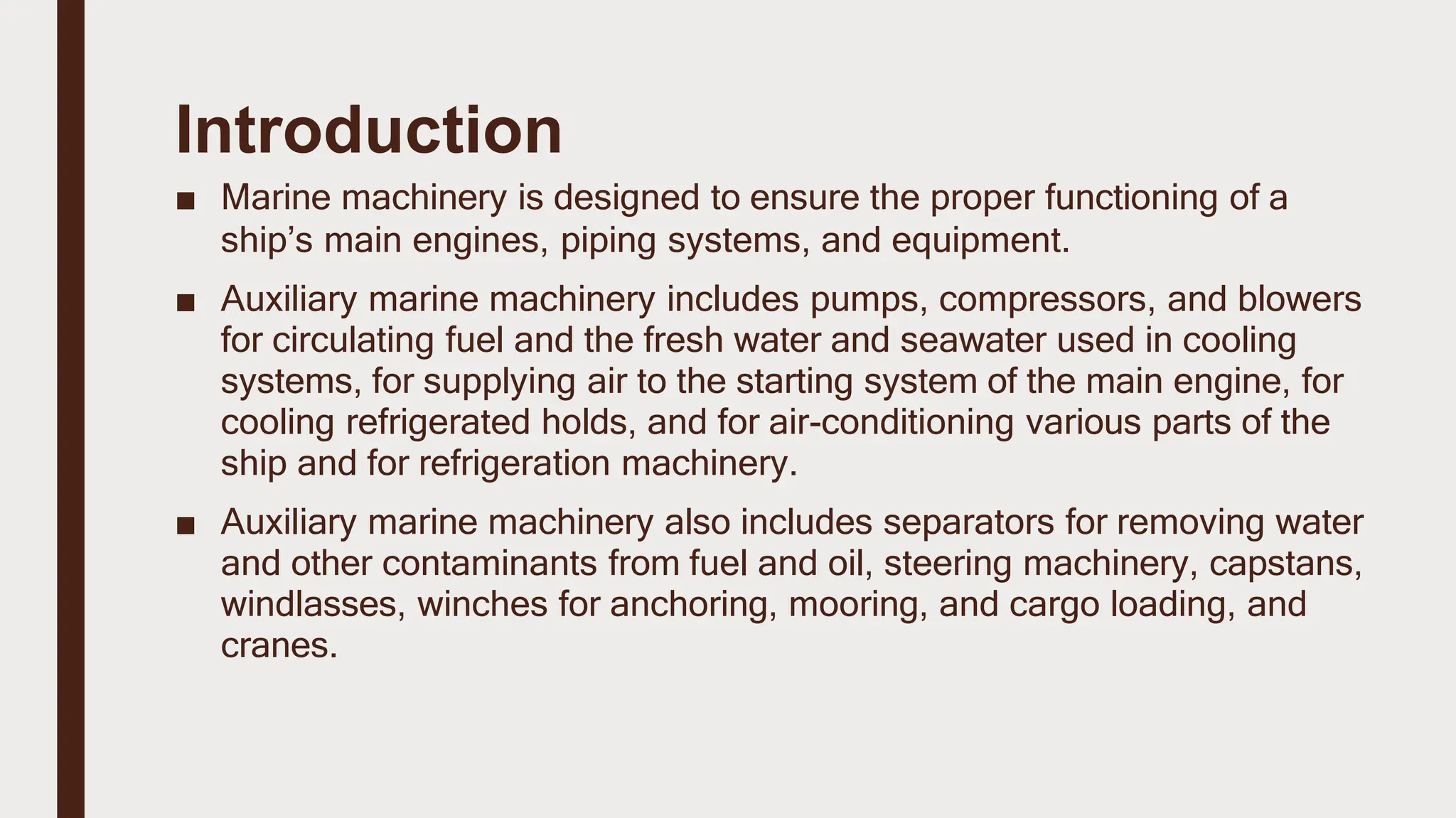
■ Marine machinery is designed to ensure the proper functioning of a
ship’s main engines, piping systems, and equipment.
■ Auxiliary marine machinery includes pumps, compressors, and blowers
for circulating fuel and the fresh water and seawater used in cooling
systems, for supplying air to the starting system of the main engine, for
cooling refrigerated holds, and for air-conditioning various parts of the
ship and for refrigeration machinery.
■ Auxiliary marine machinery also includes separators for removing water
and other contaminants from fuel and oil, steering machinery, capstans,
windlasses, winches for anchoring, mooring, and cargo loading, and
cranes.
■ A ship might reasonably be divided into three distinct areas: the cargo-
carrying holds or tanks, the accommodation and the machinery space.
■ Depending upon the type each ship will assume varying proportions and
functions. An oil tanker, for instance, will have the cargo-carrying region.
■ The accommodation areas in each of these ship types will be sufficient
to meet the requirements for the ship's crew, provide a navigating
bridge area and a communications centre.
■ The machinery space size will be decided by the particular machinery
installed and the auxiliary equipment necessary.
■ Machinery space requirements will probably be larger because of air
conditioning equipment, stabilisers and other passenger related
equipment.
Pipe Design and Production
Ship Piping Systems
Marine Piping Systems
Piping system
PIPING SYSTEM AND PLAN
AN EFFICIENT PIPING SYSTEM IS ESSENTIAL TO THE SAFETY AND
CORRECT OPERATION OF ANY ENGINEERING COMPLEX:
This is especially true for marine installation like ships. A ships
machinery / deck contains hundreds of meters of piping and
hundreds of fittings.
Valves, strainers, branch pipes, etc. Are examples of fittings
which are found in a pipe system. Piping arrangement cover all
systems and fittings.
The influences of operational and safety requirements , as well
as legislation result in somewhat complicated arrangements.
PREPARATION OF PLAN
• It is a usual practice for piping plans to be in
diagrammatic form and this is accepted in general by
most classification society rules.
• Many firms adopt the method of having a separate
diagram for each of the piping system on vessel
which simplifies the work and reduce possibility of
mistakes.
POINTS TO BE TAKEN CARE IN DIAGRAMATIC
FORM OF PIPING SYSTEM:
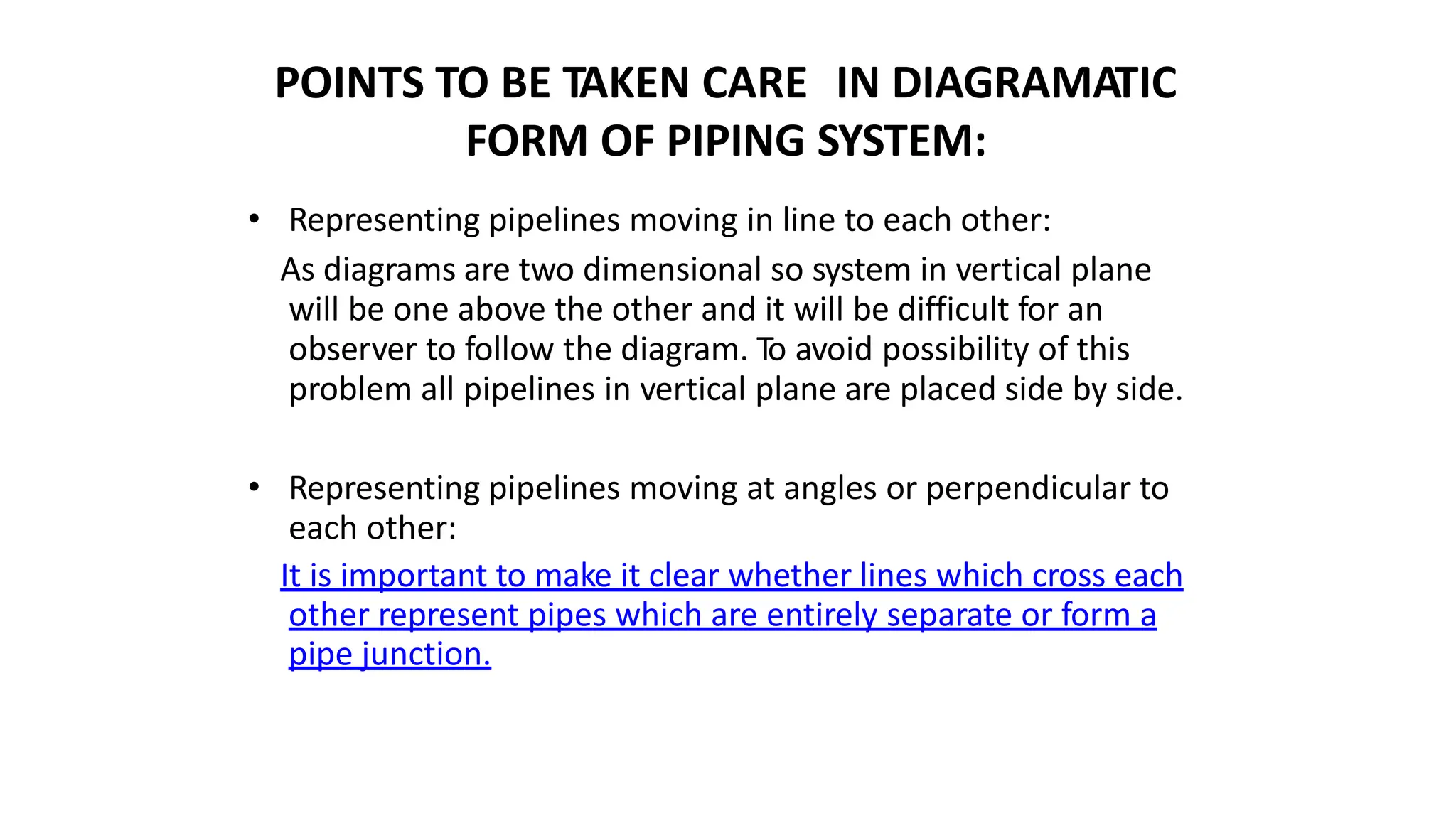
• Representing pipelines moving in line to each other:
As diagrams are two dimensional so system in vertical plane
will be one above the other and it will be difficult for an
observer to follow the diagram. To avoid possibility of this
problem all pipelines in vertical plane are placed side by side.
• Representing pipelines moving at angles or perpendicular to
each other:
It is important to make it clear whether lines which cross each
other represent pipes which are entirely separate or form a
pipe junction.
• Size of pipeline i.e. Bore of pipe to be clearly stated
on the plan. Outside diameter or the thickness of
the pipe should be stated for pressure pipes and for
air and sounding pipes which are fitted to tanks
forming part of ships structure.
• Direction of flow should be indicated on pipe: i.e.
leading to and from pumps and each pipe should be
completed to the final terminal point.
• Diagrams of bilge system in the machinery space
should indicate capacity of the pumps for bilge
service etc.
Cross & Junction
USE OF SYMBOLS
Symbols are most helpful in diagrammatic work. Some firms have table of
standard symbols amounting to 100 or more in numbers. This would be
exceedingly difficult to keep their meaning in mind without constant
reference to the table. It is always advisable to keep the no. of symbols
within reasonable limits and they should be indicated in some convenient
position on each plan.
Symbols
1 January 2021 M a r i n e E n g i n e e r i n g K n o w l e d g e U E 2 3 1 | Y A S S E R B . A . F A R A G
Valves
Globe Valve
VALVE DISC
VALVE STEM
HANDWHEEL
BONNET
VALVE SEA
T
STUFFING
BOX
VALVE
STEM
LOCKING
NUT
VALVE
DISC
Valve Disc and Stem
FULLY OPEN
SHUT
PARTILY OPEN
(THROTTLED)
521
M a r i n e E n g i n e e r i n g K n o w l e d g e U E 2 3 1 | Y A S S E R B . A . F A R A G
1 January 2021
Globe Valve
522
M a r i n e E n g i n e e r i n g K n o w l e d g e U E 2 3 1 | Y A S S E R B . A . F A R A G
1 January 2021
Non-rising stem gate valve
523
M a r i n e E n g i n e e r i n g K n o w l e d g e U E 2 3 1 | Y A S S E R B . A . F A R A G
1 January 2021
Rising stem handwheel assembly
STEM
BUSHING
COLLARS ON BUSHING
PREVENTS UP OR DOWN
MOVEMENT OF
HANDWHEEL
HANDWHEEL
FIXED TO STEM
BUSHING
ROTA
TION OF THREAD
IN THE STEM BUSHING
CAUSES IT TO MOVE
VERTICALLY
LEFT HAND
THREAD
HANDWHEEL
SECURING NUT
YOKE
VALVE
OPEN
VALVE
CLOSED
COLLAR ON STEM TO
PREVENT UP OR DOWN
MOVEMENT
LEFT HAND THREAD
NUT
OPEN
CLOSE
524
M a r i n e E n g i n e e r i n g K n o w l e d g e U E 2 3 1 | Y A S S E R B . A . F A R A G
1 January 2021
Rising stem handwheel assembly
STEM BUSHING
HANDWHEEL FIXED
TO STEM BUSHING
COLLARS ON BUSHING
PREVENTS UP OR DOWN
MOVEMENT OF
HANDWHEEL
ROTATION OF THREAD IN
THE STEM BUSHING
CAUSES IT TO MOVE
VERTICALLY
LEFT HAND THREAD
HANDWHEEL
SECURING NUT
YOKE
525
M a r i n e E n g i n e e r i n g K n o w l e d g e U E 2 3 1 | Y A S S E R B . A . F A R A G
1 January 2021
Swing Check Valve
VAL
VE COVER
PIVOT ARM
PIVOT PIN
VAL
VE SEAT FACE
VAL
VE BODY
VAL
VE DISC ASSEMBL
Y
ANGLE PLUG
FLOW
526
M a r i n e E n g i n e e r i n g K n o w l e d g e U E 2 3 1 | Y A S S E R B . A . F A R A G
1 January 2021
Swing Check Valve Operation
NO FLOW
VAL
VE IN SHUT POSITION
(UNDER GRAVITY)
FULL FLOW
VAL
VE IN OPEN POSITION
REDUCED FLOW
VAL
VE IN PART-OPEN POSITION
WRONG FLOW
VAL
VE IN SHUT POSITION
(UNDER PRESSURE)
527
M a r i n e E n g i n e e r i n g K n o w l e d g e U E 2 3 1 | Y A S S E R B . A . F A R A G
1 January 2021
SDNR Valve in Closed Position
SDNR Valve Stem
Open, Disc Closed
SDNR Valve in
Closed Position
SDNR Stem
Open, Disc
Open
SDNR Stopping Back-Flow
Screw Down Non-Return Valve
528
M a r i n e E n g i n e e r i n g K n o w l e d g e U E 2 3 1 | Y A S S E R B . A . F A R A G
1 January 2021
Direct acting relief valve
SEAT
BALL OR
POPPET
SPRING
O-RING SEAL
LOCKNUT
THREAD
RETURN TO OIL
TANK
FROM PUMP
DISCHARGE
RELIEF VAL
VE
INLET Port
OIL TO SYSTEM
ADJUSTMENT
KNOB
529
M a r i n e E n g i n e e r i n g K n o w l e d g e U E 2 3 1 | Y A S S E R B . A . F A R A G
1 January 2021
Plug Valve
HANDLE
GLAND FOLLOWER
STEM
PACKING
VALVE BONNET
VALVE BODY
VALVE PLUG
VALVE PORT
V
AL
VE CLOSED V
AL
VE OPEN
530
M a r i n e E n g i n e e r i n g K n o w l e d g e U E 2 3 1 | Y A S S E R B . A . F A R A G
1 January 2021
4-Way Valve
PLUG ROT
A
TES TO
ST
ART
, DIVERT OR
STOP FLOW
STEM
T
APERED PLUG
PORT
VALV PLUG AND BODY
531
M a r i n e E n g i n e e r i n g K n o w l e d g e U E 2 3 1 | Y A S S E R B . A . F A R A G
1 January 2021
Butterfly & Ball Valve
BALL
STEM
HANDLE
FLOW CAN
BE IN EITHER
DIRECTION
VALVE BODY
HANDLE
OPEN/CLOSE
D INDICATOR
VALVE DISC
NEOPRENE
INSERT
Ball Valve Butterfly Valve
532
M a r i n e E n g i n e e r i n g K n o w l e d g e U E 2 3 1 | Y A S S E R B . A . F A R A G
1 January 2021
Fuel Tank Shut Off Valve
VALVE STEM
NUT
DISC
SEAT
STEM MOVEMENT ON
OPERATION
HYDRAULIC
PRESSURE
RESET HANDLE (TO
OPEN VALVE)
RELEASE
PISTON
LATCH
MOVEMENT
533
M a r i n e E n g i n e e r i n g K n o w l e d g e U E 2 3 1 | Y A S S E R B . A . F A R A G
1 January 2021
1 January 2021 M a r i n e E n g i n e e r i n g K n o w l e d g e U E 2 3 1 | Y A S S E R B . A . F A R A G
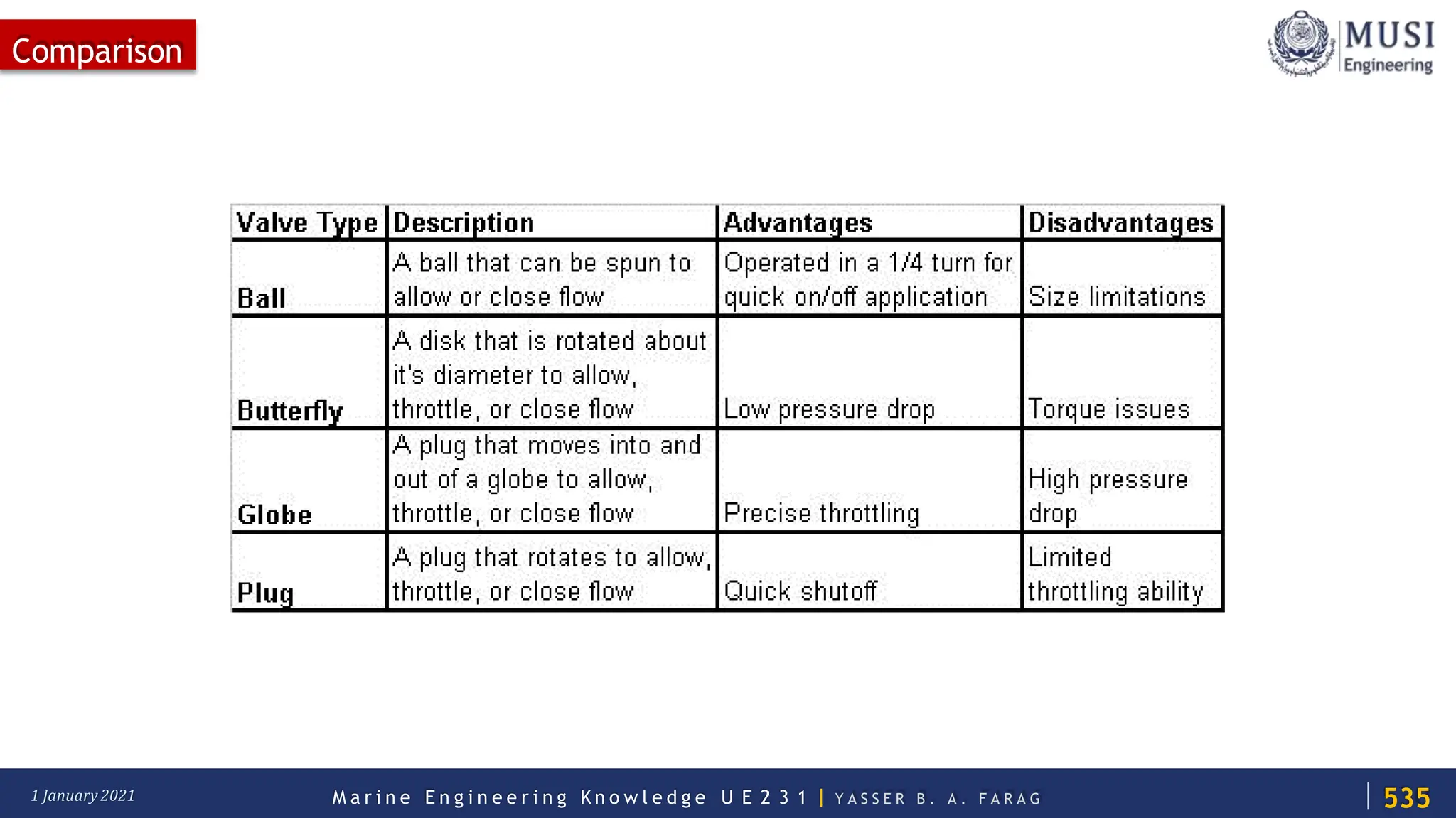
Comparison
535
M a r i n e E n g i n e e r i n g K n o w l e d g e U E 2 3 1 | Y A S S E R B . A . F A R A G
1 January 2021
General pumping arrangement
• The basic plan for most ships pumping system
shows suction pipes, together with air and
sounding pipes, for all the compartments
outside machinery space.
18 September 2020 M a r i n e E n g i n e e r i n g K n o w l e d g e U E 2 3 1 | Y A S S E R B . A . F A R A G
How Pump Works?
Pumps are defined as machines which supply Energy to a liquid in order to move it from one place to
another, which is at higher energy levels. Pumps enable liquids to :
1. Flow from a region of low pressure to a region of high pressure.
2. Flow from a low level to a higher level.
3. Flow at a faster rate.
Pumps operate by some mechanism (typically reciprocating or rotary), and consume energy to perform
mechanical work by moving the fluid. Pumps operate via many energy sources, including manual
operation, electricity, engines, or wind power, come in many sizes, from microscopic for use in medical
applications to large industrial pumps.
253
M a r i n e E n g i n e e r i n g K n o w l e d g e U E 2 3 1 | Y A S S E R B . A . F A R A G
18 September 2020
General pumping system
Total Head losses
255
M a r i n e E n g i n e e r i n g K n o w l e d g e U E 2 3 1 | Y A S S E R B . A . F A R A G
18 September 2020
4. General pumping system
The System Total
Head Losses:
Ht  H fs  Hvs  Hs  Hds  Hd  Hvap  Hvd  H fd
Tuesday, February 10, 2015 20
Ht  H fs  Hvs  Hs  Hds  Hd  Hvap  Hvd  H fd
Where:
Hes = pressure head acting on the liquid surface at the suction inlet
Hfs = loss in pressure head due to friction resistance at the suction piping side.
Hvs = loss in pressure head due to velocity of the liquid in the suction pipe, it is negligible at
low velocity.
Hs = height of the liquid free surface above the center line of the pump (negative when the
level is below the pump)
Hvap = loss in pressure head due to vapor pressure of the liquid at the working temperature.
Hfd = pressure head loss due to friction resistance in the discharge pipe.
Hd = pressure head losses due to the height of the discharge tank
Hed = pressure head acting on the liquid surface at the discharge outlet.
Hvd = loss in pressure head due to velocity of the liquid in the discharge pipe, it is negligible
at low velocity.
4. General pumping system
37
T
otal System Head losses
𝑯
𝑯
𝑯
𝑯
= 𝑯
𝑯
𝑯
𝑯
𝑯
𝑯
+ 𝑯
𝑯
𝑯
𝑯
𝑯
𝑯
∓ 𝑯
𝑯
𝑯
𝑯
− 𝑯
𝑯
𝑯
𝑯
𝑯
𝑯
+ 𝑯
𝑯
𝑯
𝑯
𝑯
𝑯
+ 𝑯
𝑯
𝑯
𝑯
𝑯
𝑯
+ 𝑯
𝑯
𝑯
𝑯
+ 𝑯
𝑯
𝑯
𝑯
𝑯
𝑯
+ 𝑯
𝑯
𝑯
𝑯
𝑯
𝑯
𝑯
𝑯
Where:
Hes => pressure head acting on the liquid surface at the suction inlet.
Hfs => loss in pressure head due to friction resistance at the suction side.
Hvs => loss in pressure head due to velocity of the liquid in the suction pipe, it is negligible at low velocity
.
Hs => height of the liquid free surface above the center line of the pump (negative when the level is below the pump)
Hvap => loss in pressure head due to vapor pressure of the liquid at the working temperature.
Hfd => pressure head loss due to friction resistance in the discharge pipe.
Hd => pressure head losses due to the height of the discharge tank
Hed => pressure head acting on the liquid surface at the discharge outlet.
Hvd => loss in pressure head due to velocity of the liquid in the discharge pipe, it is negligible at low velocity
.
256
M a r i n e E n g i n e e r i n g K n o w l e d g e U E 2 3 1 | Y A S S E R B . A . F A R A G
18 September 2020
PUMP POWER
CALCULATION
K
P 
Q Ht  
a
Where:
Pa = power absorbed in kilo watt
Q = quantity delivered in liters/second
Ht = total head losses in meter
 = density of liquid in gm/ml (1 for fresh water)
K = Constant (101.9368)
Tuesday, February 10, 2015 39
K

Q  H t  
Pa
Where:
P = power absorbed in kilo watt
a
Q = quantity delivered in liters/second
Ht
ρ
K
= total head losses in meter
= density of liquid in gm/ml (1 for fresh water)
= Constant (101.9368)
257
M a r i n e E n g i n e e r i n g K n o w l e d g e U E 2 3 1 | Y A S S E R B . A . F A R A G
18 September 2020
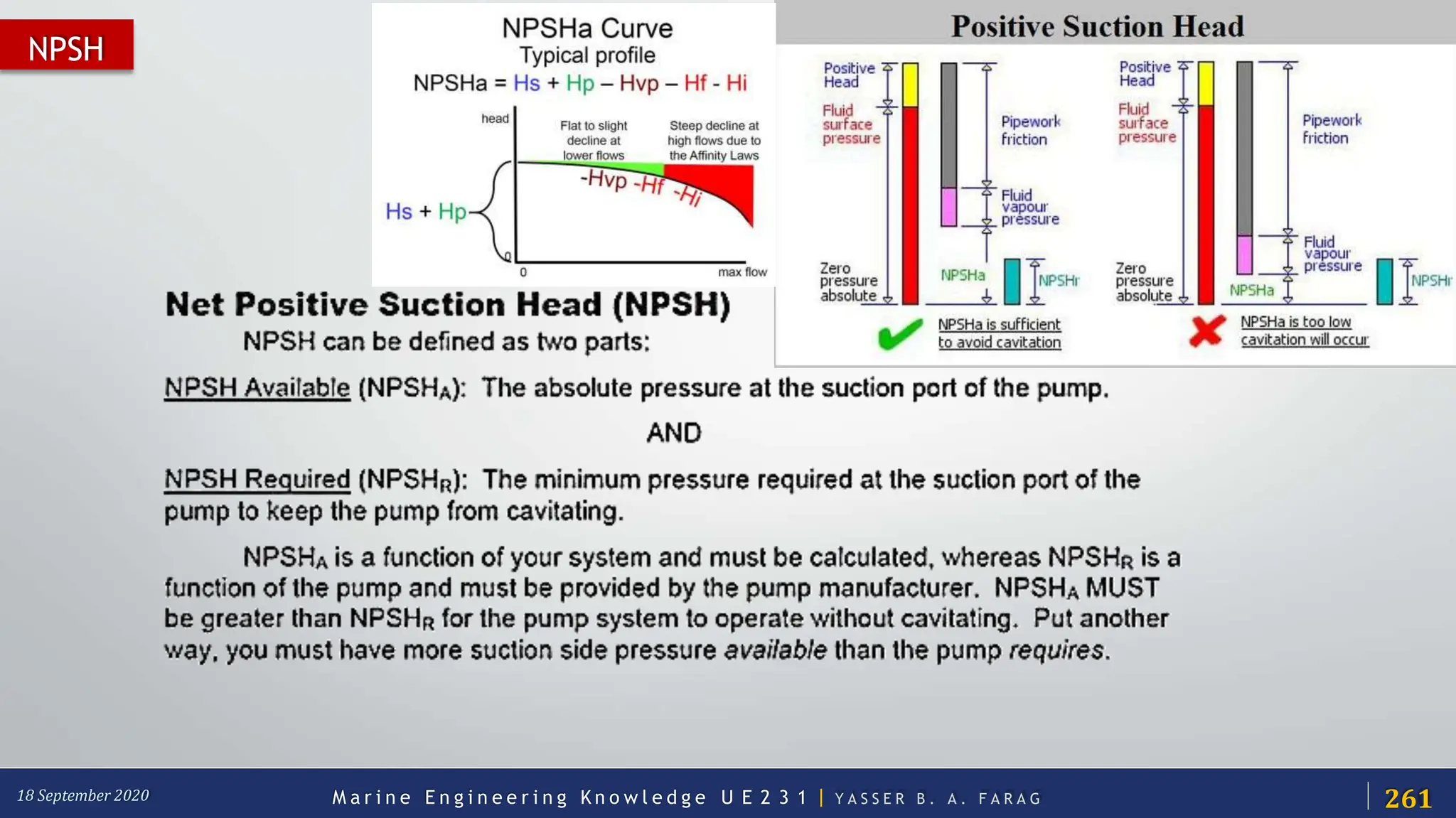
NET POSITIVE SUCTION HEAD
Tuesday, February 10, 2015 41
• The input power to the pump required from the prime mover is
• For an electrically driven pump, the power consumed is
Power & Efficiency
Pa
Pc
Motor
losses
Pi
Pump
losses
M
258
M a r i n e E n g i n e e r i n g K n o w l e d g e U E 2 3 1 | Y A S S E R B . A . F A R A G
18 September 2020
System Characteristic curve
Q: Flow Rate
H: Head
h
Q = Zero
259
M a r i n e E n g i n e e r i n g K n o w l e d g e U E 2 3 1 | Y A S S E R B . A . F A R A G
18 September 2020
Net Positive Suction Head- NPSH
Where:
Hes
Hfs
Hs => height of the liquid free surface above the center line of the pump (Suction lift)
=> pressure head represent the barometric pressure
=> loss in pressure head due to friction resistance at the suction side.
Hvap => loss in pressure head due to vapor pressure of the liquid at the working temperature.
260
M a r i n e E n g i n e e r i n g K n o w l e d g e U E 2 3 1 | Y A S S E R B . A . F A R A G
18 September 2020
NPSH
261
M a r i n e E n g i n e e r i n g K n o w l e d g e U E 2 3 1 | Y A S S E R B . A . F A R A G
18 September 2020
Q: Flow Rate
H: Head
NPSH
262
M a r i n e E n g i n e e r i n g K n o w l e d g e U E 2 3 1 | Y A S S E R B . A . F A R A G
18 September 2020
Example (1)
(PB= 1bar), (Lsuc Suction head above pump=23 m), (Vp= 0.17 bar
, at 25 ˚C), (hf =7m) – fresh water liquid
By aid of simple sketch describe above example & Calculate the NPSH and the gauge reading at pump
suction
PB : Barometric pressure.
LSuc: Suction head [above pump (+) / under pump (-)].
Vp: V
apor pressure.
hf: Friction losses in the piping system leading to pump suction.
2
4
.3m
263
M a r i n e E n g i n e e r i n g K n o w l e d g e U E 2 3 1 | Y A S S E R B . A . F A R A G
18 September 2020
(PB= 1bar), (Lsuc Suction head above pump=23 m),
(Vp= 0.75 bar at 90 ˚C), (hf =7m) – fresh water liquid -
By aid of simple sketch describe above example & Calculate the NPSH and the gauge reading at pump
suction
PB : Barometric pressure.
LSuc: Suction head [above pump (+) / under pump (-)].
Vp: Vapor pressure.
hf: Friction losses in the piping system leading to pump suction.
1
8
.6
4m
Example (2)
264
M a r i n e E n g i n e e r i n g K n o w l e d g e U E 2 3 1 | Y A S S E R B . A . F A R A G
18 September 2020
Application
𝑯
𝑯
𝟑
𝟑
𝑸
𝑸
𝟑
𝟑
𝑯
𝑯
𝟐
𝟐𝑸
𝑸
𝟐
𝟐
𝑯
𝑯
𝟏
𝟏𝑸
𝑸
𝟏
𝟏
𝑯
𝑯
𝟒
𝟒
𝑸
𝑸
𝟒
𝟒
p
p
H: Head
??
NPSHav
Q: Flow Rate
Filter
265
M a r i n e E n g i n e e r i n g K n o w l e d g e U E 2 3 1 | Y A S S E R B . A . F A R A G
18 September 2020
Contents
1. Classification of pumps.
2. Positive displacement pump
3. Centrifugal Pump Characteristics
4. General Pumping System
5. The Ejector.
6. Cargo Systems
7. Pump Calculations
8. Pressure Surge & Safety
Tuesday, February 10, 2015 52
What is Pump ?
Tuesday, February 10, 2015 53
Pumps are defined as machines which supply Energy to a
liquid in order to move it from one place to another, which is at
higher energy levels. Pumps enable liquids to :
1. Flow from a region of low pressure to a region
of high pressure.
2. Flow from a low level to a higher level.
3. Flow at a faster rate.
How Pump Works?
Pumps operate by some mechanism (typically reciprocating or
rotary), and consume energy to perform mechanical work by
moving the fluid. Pumps operate via many energy sources,
including manual operation, electricity, engines, or wind power,
come in many sizes, from microscopic for use in medical
applications to large industrial pumps.
Tuesday, February 10, 2015 54
2. Classification of pumps
Tuesday, February 10, 2015 55
Pump types
266
M a r i n e E n g i n e e r i n g K n o w l e d g e U E 2 3 1 | Y A S S E R B . A . F A R A G
18 September 2020
18 September 2020 M a r i n e E n g i n e e r i n g K n o w l e d g e U E 2 3 1 | Y A S S E R B . A . F A R A G
Positive displacement
pumps
• Before the advent of very large tankers, Reciprocating
pumps were commonly installed for cargo discharge.
• The piston pump is a well known pump onboard oil
tankers. It is used to pump cargo deposits ashore at the
end of the discharging operation
• Being positive displacement pumps, they have good tank
draining capability.
2.1. Positive displacement pumps
Tuesday, February 10, 2015 59
Positive displacement pumps
The displacement pumping action is
achieved by the reduction or increase
in volume of a space causing the liquid
(or gas) to be physically moved. The
method employed is either a piston in a
cylinder using a reciprocating motion, or
a rotating unit using vanes, gears or
screws.
269
M a r i n e E n g i n e e r i n g K n o w l e d g e U E 2 3 1 | Y A S S E R B . A . F A R A G
18 September 2020
2.2. Properties of Positive displacement pump
1. The chambers of the displacement pump are alternatively filled
and emptied. A positive amount of liquid passes through the
pump. They mechanically displaces the liquid inside pump
Small to medium discharge rates
Tuesday, February 10, 2015 61
2. They can develop high pressures.
3. They do not require a priming device. Some times, they
used as a priming device for other types of pumps.
4. They MUST be fitted with a relief valve to limit the
system pressure.
5. They can pump fluids with a wide range of viscosity.
6. The sealing between the high pressure and the low-
pressure sides depends on the close clearances built
into the pump.
2.2. Properties of Positive displacement pump
Tuesday, February 10, 2015 62
2.3. Q-H Curve for Positive Displacement pumps
Tuesday, February 10, 2015 63
Reciprocating pump
The pump is a double-acting, that is liquid is
admitted to either side of the piston where it
is alternately drawn in and discharged. As the
piston moves upwards, suction takes place
below the piston and liquid is drawn in, the
valve arrangement ensuring that the
discharge valve cannot open on the suction
stroke. Above the piston, liquid is discharged
and the suction valve remains closed. As the
piston travels down, the operations of suction
and discharge occur now on opposite sides.
279
M a r i n e E n g i n e e r i n g K n o w l e d g e U E 2 3 1 | Y A S S E R B . A . F A R A G
18 September 2020
Reciprocating pump
271
M a r i n e E n g i n e e r i n g K n o w l e d g e U E 2 3 1 | Y A S S E R B . A . F A R A G
18 September 2020
Diaphragm pump
272
M a r i n e E n g i n e e r i n g K n o w l e d g e U E 2 3 1 | Y A S S E R B . A . F A R A G
18 September 2020
Or when the Screws revolve inside a screw
pump
2.1. Positive displacement pumps
These Screws are working like an
endless piston which constantly
moves forward
Tuesday, February 10, 2015 67
Screw pump
These Screws are working like an endless piston
which constantly moves forward
273
M a r i n e E n g i n e e r i n g K n o w l e d g e U E 2 3 1 | Y A S S E R B . A . F A R A G
18 September 2020
Screw pump
The liquid enters the outer suction manifolds and passes
through the meshing worm wheels, which are gear driven
from the motor to the central discharge manifold. Such
pumps are quite and reliable and are particularly suited to
pumping all fluids in particular oil, but it should be free form
the abrasive material. The pump can deal with large volume
of air whilst running smoothly and maintain discharge
pressure. It will be suited to tank draining and intermittent
fluid supply such as may occur in lubricating oil supply
systems engine, with vessel rolling.
274
M a r i n e E n g i n e e r i n g K n o w l e d g e U E 2 3 1 | Y A S S E R B . A . F A R A G
18 September 2020
Counter Screw Pump
• Timing gears are fitted to some screw
pumps to insure correct clearance is
maintained at all times between the screws,
thereby preventing overheating and possible
seizure.
• Modern designs of screws preclude the use
of timing gears, ensure efficient simple
operation, eliminate turbulence and
vibration.
275
M a r i n e E n g i n e e r i n g K n o w l e d g e U E 2 3 1 | Y A S S E R B . A . F A R A G
18 September 2020
Counter Screw Pump
276
M a r i n e E n g i n e e r i n g K n o w l e d g e U E 2 3 1 | Y A S S E R B . A . F A R A G
18 September 2020
Triple Screw Pump
277
M a r i n e E n g i n e e r i n g K n o w l e d g e U E 2 3 1 | Y A S S E R B . A . F A R A G
18 September 2020
Triple Screw Pump
278
M a r i n e E n g i n e e r i n g K n o w l e d g e U E 2 3 1 | Y A S S E R B . A . F A R A G
18 September 2020
https://youtu.be/nvK-jL3SzxQ
Or a Gear Pump
2.1. Positive displacement pumps
Tuesday, February 10, 2015 74
Gear pump
Diesel engines and gearbox lubrication
systems are normally supplied by gear
pumps which are independently driven
for large slow speed and stand by duties
but usually shaft driven for medium and
high speed engines. Gear pumps are also
used for fuel and oil transfer
, boiler
combustion systems and other duties.
279
M a r i n e E n g i n e e r i n g K n o w l e d g e U E 2 3 1 | Y A S S E R B . A . F A R A G
18 September 2020
Gear pump
• The liquid being pumped is forced out after
being carried around between the gear teeth
and housing, as the teeth mesh together
. It is
certain that the centrifugal effect contributes
to the pumping action. There is no side thrust
with straight gear teeth.
• Side thrust produced by single helical gears
causes' severe wear and in one pump opened for
examination, bronze bearing bushes exhibited
wear to a depth 3 mm. despite the excessive
clearance duet o wear it was noted that the
pump continued to be effective when repaired
as far as possible.
280
M a r i n e E n g i n e e r i n g K n o w l e d g e U E 2 3 1 | Y A S S E R B . A . F A R A G
18 September 2020
Attached grar pump
• Gear pump can be used in attached with a
reversible diesel engine. This pump should be
fitted with control valves to control the
direction of flow in case of reversed direction
of the engine rotation.
281
M a r i n e E n g i n e e r i n g K n o w l e d g e U E 2 3 1 | Y A S S E R B . A . F A R A G
18 September 2020
Screw pump Vs. Gear pump
282
M a r i n e E n g i n e e r i n g K n o w l e d g e U E 2 3 1 | Y A S S E R B . A . F A R A G
18 September 2020
Internal Gear Pump
2.1. Positive displacement pumps
Tuesday, February 10, 2015 10
Internal Gear Pump
https://youtu.be/TtlIvEovEtQ
Internal gear pumps in cast iron, for a wide range of viscous, non-corrosive liquids and are specifically designed for
numerous applications and those involving high viscosity liquids. It is suitable for pumping oil, asphalt, chocolate, paint,
lacquer
, molasses, soap, other industrial viscous liquids, additives, polyol, viscose, sulphate soap, maltose, grease, pitch,
base oil, bitumen, polyester
283
M a r i n e E n g i n e e r i n g K n o w l e d g e U E 2 3 1 | Y A S S E R B . A . F A R A G
18 September 2020
Lobe Pump
284
M a r i n e E n g i n e e r i n g K n o w l e d g e U E 2 3 1 | Y A S S E R B . A . F A R A G
18 September 2020
Rotary Vane pump
285
M a r i n e E n g i n e e r i n g K n o w l e d g e U E 2 3 1 | Y A S S E R B . A . F A R A G
18 September 2020
Positive displacement pumps Properties
1. The chambers of the displacement pump are alternatively filled and emptied. A positive amount
of liquid passes through the pump. They mechanically displaces the liquid inside pump.
2. They have limmitted flow rate as it depends on the pump speed and size.
3. Pump’s sealing is critical for this type of pump to operate efficiently.
4. They can develop high pressures to overcome high system’s head as it has tight clearances.
5. It’s efficiency greatly affected with liquid’s viscosity as viscous liquids provide better sealing
inside the pump, however it may require more power to displace such liquid.
6. They can be used as a transfer pump for viscous liquids like HFO or LUB, Sludge pump and as a
bilge pump.
7. They do not require a priming device. Some times, they used as a priming device for other types
of pumps.
8. It must be fitted with a relieve valve on its discharge line to limit the system and pump head.
286
M a r i n e E n g i n e e r i n g K n o w l e d g e U E 2 3 1 | Y A S S E R B . A . F A R A G
18 September 2020
Positive displacement pump Q-H Curve
Q: Flow Rate
H: Head
Real
Ideal
Slippage
287
M a r i n e E n g i n e e r i n g K n o w l e d g e U E 2 3 1 | Y A S S E R B . A . F A R A G
18 September 2020
18 September 2020 M a r i n e E n g i n e e r i n g K n o w l e d g e U E 2 3 1 | Y A S S E R B . A . F A R A G
Roto-dynamic pumps
3. Centrifugal Pump
1. How it works?
• Rotation of the impeller causes any liquid
contained in it to flow towards the
periphery because of the centrifugal force
generated. The center or eye of the
impeller is thus evacuated and liquid from
the suction line then flows in to fill the
void.
• Assume there are no losses through
the volute casing and the flow pattern is
laminar, A1V1 = A2V2 = Constant
Tuesday, February 10, 2015 86
3. Centrifugal Pump
1. How it
works?
Tuesday, February 10, 2015 87
3. Centrifugal Pump
2. Construction
Impeller : Bronze, Bronze Aluminum, Stainless steel
Open, Semi open or Closed type.
Shaft : Stainless Steel
Casing : Cost Iron, Cost Steel or Gun metal ( Depends on
Liquid medium ).
Volute Casing
Diffuser Casing
More Quantity
Higher Head ( Boiler Feed Pump)
Casing Ring – Wear Ring – Cover Ring :
Cupper ,Protects the Impeller and Casing from Wear and
maintains the Clearance between Shaft and Casing
Bearings
:
Horizontal
Double entry
Vertical
Very big
Small
Very Small
Why?
Tuesday, February 10, 2015 88
FLUID
2. Construction
Impeller Shapes
Tuesday, February 10, 2015 89
3. Centrifugal Pump
Closed Type Semi-Closed Type Open Type
3. Centrifugal Pump
2. Construction
Single and double eye inlet
IMPELLER
SEALING RING
DRIVE SHAFT DRIVE SHAFT
KEY
KEY
Tuesday, February 10, 2015 90
3. Centrifugal Pump
2. Construction
Tuesday, February 10, 2015 91
Centrifugal Pump
convert most of the kinetic energy in the liquid into pressure.
Rotation of the impeller causes any liquid
contained in it to flow towards the
periphery because of the centrifugal
force generated. The center or eye of the
impeller is thus evacuated and liquid from
the suction line then flows in to fill the
void. Assume there are no losses through
the volute casing and the flow pattern is
laminar
, A1V1 = A2V2 = Constant
In a centrifugal pump liquid enters the centre or eye of the impeller and flows radially out between
the vanes, its velocity being increased by the impeller rotation. A diffuser or volute is then used to
Discharge
Volute Casing
Impeller
Suction
Cut water
289
M a r i n e E n g i n e e r i n g K n o w l e d g e U E 2 3 1 | Y A S S E R B . A . F A R A G
18 September 2020
Centrifugal Pump
290
M a r i n e E n g i n e e r i n g K n o w l e d g e U E 2 3 1 | Y A S S E R B . A . F A R A G
18 September 2020
Components
• Impeller: Bronze, Aluminum bronze, Stainless steel
Open, Semi open or Closed type.
• Shaft: Stainless Steel
• Casing: Cost Iron, Cost Steel or Gun metal (
Depends on Liquid medium ).
Volute Casing => More Quantity
Diffuser => Higher Head ( Boiler Feed Pump)
• Casing Ring – Wear Ring – Cover Ring:
Cupper ,Protects the Impeller and Casing from
Wear and maintains the Clearance between Shaft
and Casing
• Bearings: Horizontal => Very big
Double entry => Small
Vertical => Very Small
291
M a r i n e E n g i n e e r i n g K n o w l e d g e U E 2 3 1 | Y A S S E R B . A . F A R A G
18 September 2020
Impeller types
292
M a r i n e E n g i n e e r i n g K n o w l e d g e U E 2 3 1 | Y A S S E R B . A . F A R A G
18 September 2020
Impeller Shapes
Liquid
ClosedType Semi-ClosedType OpenType
293
M a r i n e E n g i n e e r i n g K n o w l e d g e U E 2 3 1 | Y A S S E R B . A . F A R A G
18 September 2020
Axial thrust
This is the oldest method for balancing axial thrust and involves reducing the pressure in a chamber equipped with a
throttling gap, usually down to the pressure level encountered at the impeller inlet. The pressure is balanced via
balancing holes in the impeller
.
294
M a r i n e E n g i n e e r i n g K n o w l e d g e U E 2 3 1 | Y A S S E R B . A . F A R A G
18 September 2020
Clearances
295
M a r i n e E n g i n e e r i n g K n o w l e d g e U E 2 3 1 | Y A S S E R B . A . F A R A G
18 September 2020
Wear ring
296
M a r i n e E n g i n e e r i n g K n o w l e d g e U E 2 3 1 | Y A S S E R B . A . F A R A G
18 September 2020
Wear ring
• Wear rings act as a seal between the high-pressure and
low-pressure regions within a pump.
• Leakage past the wear rings (QL) recirculates within
the impeller as shown in Figure.
• The operators only see the flow coming out of the pump
(Q).
• The total energy consumption of the pump, however
, is
a function of the total flow through the impeller Q + QL
297
M a r i n e E n g i n e e r i n g K n o w l e d g e U E 2 3 1 | Y A S S E R B . A . F A R A G
18 September 2020
Single and double eye
IMPELLER
SEALING RING
DRIVE SHAFT DRIVE SHAFT
KEY
KEY
Q
H
Single entry
Double entry
NPSH
required
Axial thrust balancing by double-
entry impeller arrangement
298
M a r i n e E n g i n e e r i n g K n o w l e d g e U E 2 3 1 | Y A S S E R B . A . F A R A G
18 September 2020
Wear ring
299
M a r i n e E n g i n e e r i n g K n o w l e d g e U E 2 3 1 | Y A S S E R B . A . F A R A G
18 September 2020
Wear ring
300
M a r i n e E n g i n e e r i n g K n o w l e d g e U E 2 3 1 | Y A S S E R B . A . F A R A G
18 September 2020
Volute Casing
301
M a r i n e E n g i n e e r i n g K n o w l e d g e U E 2 3 1 | Y A S S E R B . A . F A R A G
18 September 2020
Centrifugal Pump Characteristic Curve
C a v i t a t i o n
3. Centrifugal Pump
In the suction area of the pump, high local speeds of the fluid occur. This
gives rise to low pressures at these points. Due to the reduction in
pressure, the liquid may vaporize causing bubbles to form. The bubbles then
collapse when they reach a high-pressure area. This happens very
quickly and can cause very high-pressure hammer blows, which result in
pitting, noise, vibration, pump damage and fall off in pump performance.
Tuesday, February 10, 2015 10
6
Multi Staging
3. Centrifugal Pump
Tuesday, February 10, 2015 10
7
SUCTION
When a centrifugal pump is operating, the liquid leaving
the impeller produces a drop in pressure at the entry or eye
of the impeller . This causes liquid from the suction pipe to
flow into the pump. In turn, there is a movement of the
liquid to be pumped. The latter is normally subject to
atmospheric pressure . A centrifugal pump will maintain a
suction lift of four metres or more once it has been primed,
because of the water passing through.
The water in a pump acts like a piston for water in the
suction pipe and an empty pump will not operate.
A pump which is required to initiate suction from a liquid
level below itself, must be fitted with an air pump.
3. Centrifugal Pump
Tuesday, February 10, 2015 10
8
Characteristic Curve
Losses:
1. Friction losses in bearings, glands, surfaces of
impeller and casing
2. Head losses due to shock at entry and exit to
impeller vanes and eddies formed by vanes edges.
3. Leakage loss in thrust balance devices, gland
sealing, clearance between cut water and casing
and bearing seals.
302
M a r i n e E n g i n e e r i n g K n o w l e d g e U E 2 3 1 | Y A S S E R B . A . F A R A G
18 September 2020
Applications
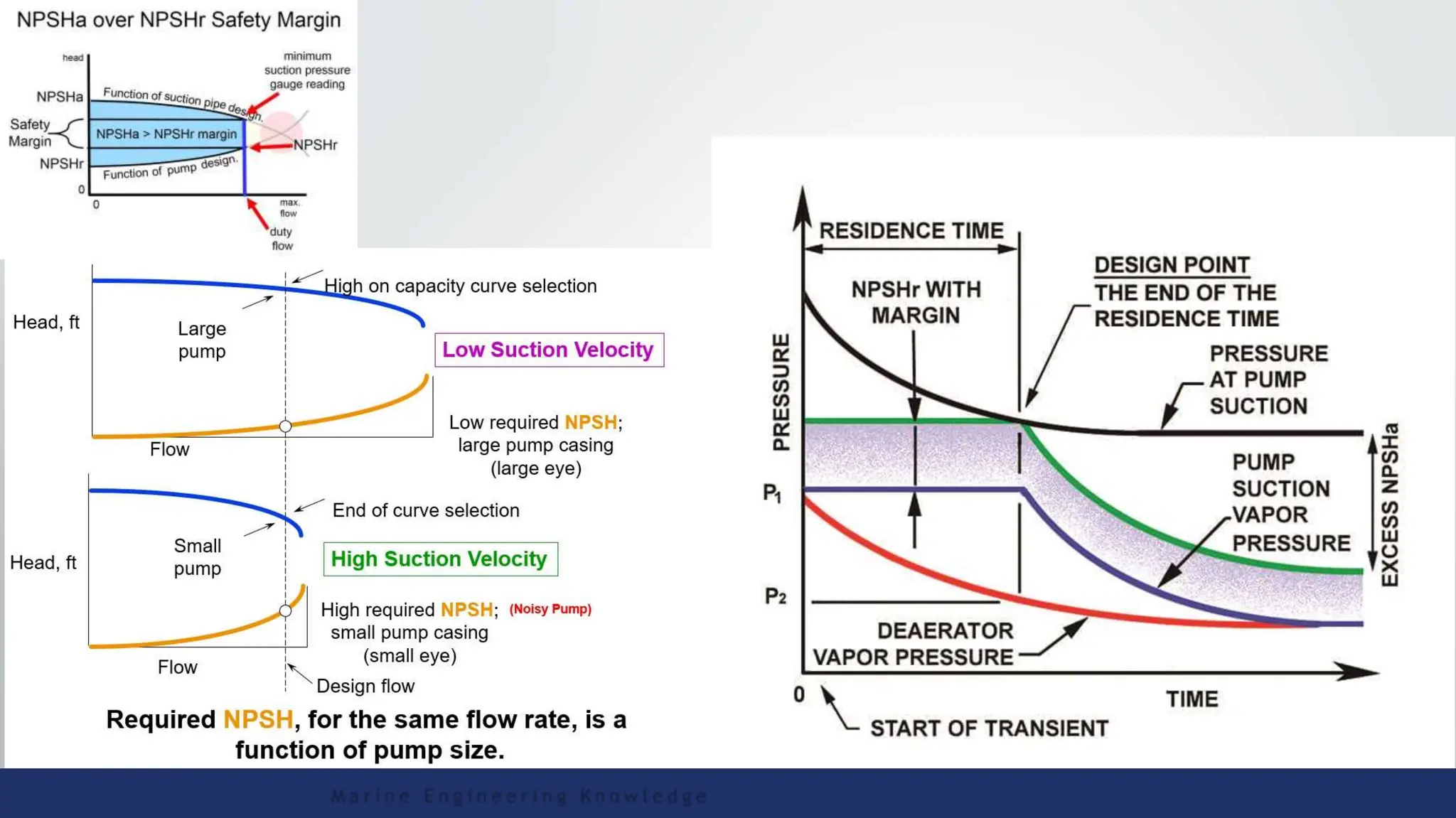
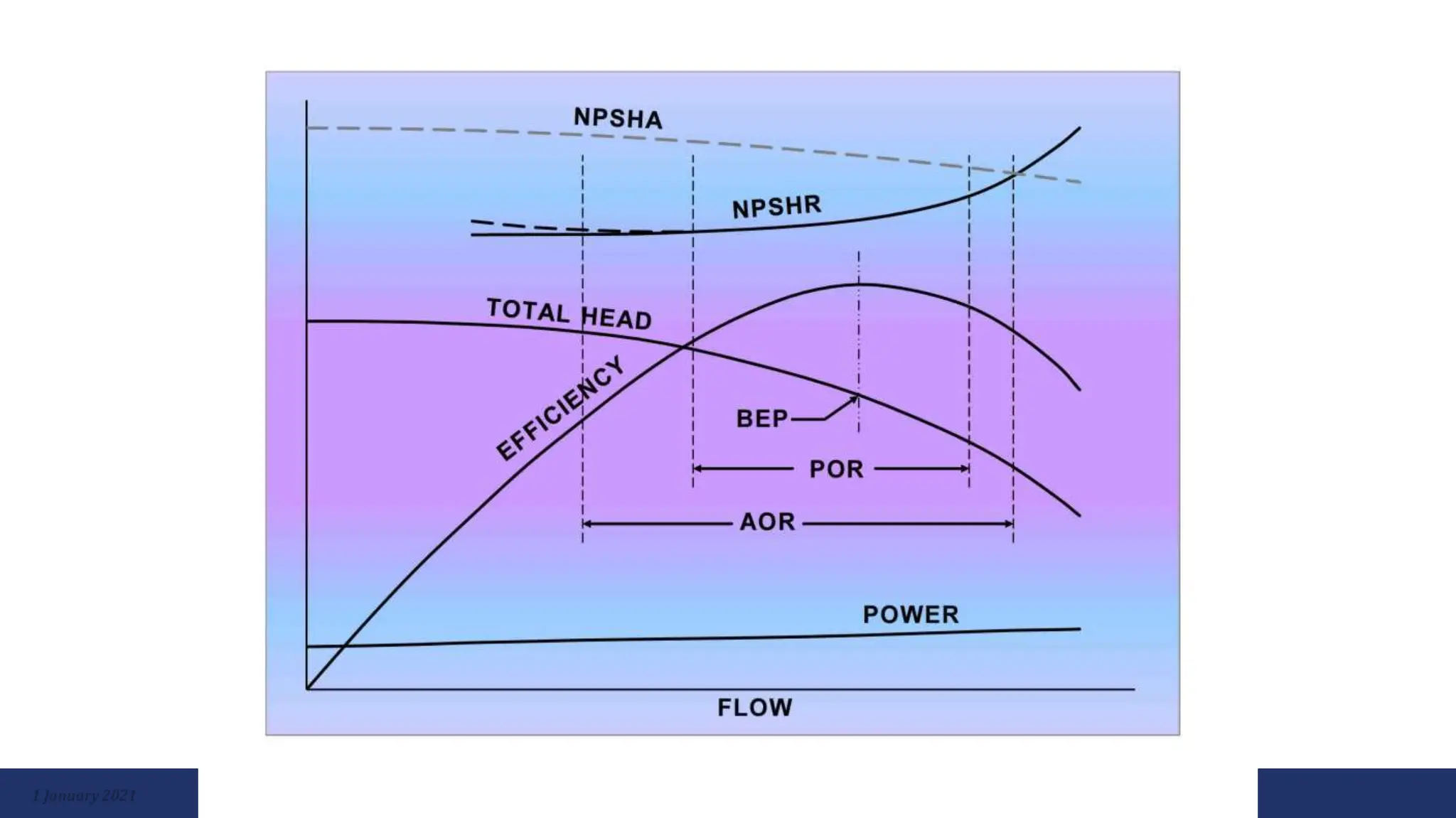
NPSH Available MUST BE > NPSH Required
Head (m)
Pump characteristic
303
M a r i n e E n g i n e e r i n g K n o w l e d g e U E 2 3 1 | Y A S S E R B . A . F A R A G
18 September 2020
NPSH required
NPSH available
Flow (m3/hr)
System head losses
Comparison between Centrifugal and positive displacement pumps with respect to L.O duties
Q
H
Total
head
Quantity
CentrifugalH/Q
Positive
displacement
H/Q
Positive displacement
resultant pressure drop
Centrifugal Q increase
Positive displacement
Q increase
Centrifugal resultant pressure drop
Fall in system resistance
304
M a r i n e E n g i n e e r i n g K n o w l e d g e U E 2 3 1 | Y A S S E R B . A . F A R A G
18 September 2020
• High Flow rate.
• Relatively Low discharge head
• Needs priming
• Simple and easy to maintain
• Low cost
• Perform better with high Oil temperature
• Discharge pressure could be increased by
means of multi-staging or using a diffuser
.
• It can be used in systems where high flow
rate is required like : Fire System, Ballast
System, Cooling Water Pump and as a cargo
pump onboard tankers
Centrifugal Pump properties
Q
H
n=1000 RPM
n=800 RPM
Operating points
Static
head
System characteristic
𝑚
𝑚
3
ℎ𝑟
𝑟
mlc
305
M a r i n e E n g i n e e r i n g K n o w l e d g e U E 2 3 1 | Y A S S E R B . A . F A R A G
18 September 2020
3. Centrifugal Pump
3.
Properties
• High Flow rate.
• Low discharge head
• Needs priming
• Simple and easy to maintain
• Low cost
• Perform better with high oil temperature
Tuesday, February 10, 2015 11
3
Performance Improvements
306
M a r i n e E n g i n e e r i n g K n o w l e d g e U E 2 3 1 | Y A S S E R B . A . F A R A G
18 September 2020
Diffuser
307
M a r i n e E n g i n e e r i n g K n o w l e d g e U E 2 3 1 | Y A S S E R B . A . F A R A G
18 September 2020
Multi Staging – in series
308
M a r i n e E n g i n e e r i n g K n o w l e d g e U E 2 3 1 | Y A S S E R B . A . F A R A G
18 September 2020
Multi Staging – in series
• Centrifugal pumps in series are used to overcome
larger system head loss than one pump can
handle alone.
• For two identical pumps in series the head will be
twice the head of a single pump at the same flow
rate - as indicated in point 2. With a constant
flowrate the combined head moves from 1 to 2.
• Note! In practice the combined head and flow rate
moves along the system curve to point 3.
• point 3 is where the system operates with both
pumps running.
• point 1 is where the system operates with one
pump running
Head
Flow
rate
One pump
T
wo pumps in-series
1
2
3
h2
h1
q1 q3
Operating point
New operating point
h3
309
M a r i n e E n g i n e e r i n g K n o w l e d g e U E 2 3 1 | Y A S S E R B . A . F A R A G
18 September 2020
Multi Staging – in Parallel
When the system characteristic curve is
considered with the curve for pumps in
parallel, the operating point at the
intersection of the two curves represents a
higher volumetric flow rate than for a single
pump and a greater system head loss. As
shown in Figure, a greater system head loss
occurs with the increased fluid velocity
resulting from the increased volumetric flow
rate. Because of the greater system head, the
volumetric flow rate is actually less than twice
the flowrate achieved by using a single pump.
Head
Flow rate
One pump
T
wo pumps in-parllel
1
2
3
q2
h1
q1 q3
Operating point
New operating point
h3
310
M a r i n e E n g i n e e r i n g K n o w l e d g e U E 2 3 1 | Y A S S E R B . A . F A R A G
18 September 2020
Multi Staging – in Parallel
Head
Flow rate
One pump
T
wo pumps in-parllel
1
2
3
q2
h1
q1 q3
Operating point
New operating point
h3
• Centrifugal pumps in parallel are used to overcome
larger volume flows than one pump can handle alone.
• for two identical pumps in parallel, and the head is
kept constant, the flowrate doubles as indicated with
point 2 compared to a single pump
• Note! In practice the combined head and volume flow
moves along the system curve as indicated from 1 to 3.
• point 3 is where the system operates with both pumps
running
• point 1 is where the system operates with one pump
running
• In practice, if one of the pumps in parallel or series
stops, the operation point moves along the system
resistance curve from point 3 to point 1 - the head and
flow rate are decreased.
311
M a r i n e E n g i n e e r i n g K n o w l e d g e U E 2 3 1 | Y A S S E R B . A . F A R A G
18 September 2020
Emergency Bilge Pump
• The function of this pump is to drain compartments adjacent
to a damaged (holed) compartment.
• The pump is capable of working when completely submerged.
• The pump is a standard centrifugal pump with reciprocating
or rotary air pumps.
• The motor is enclosed in an air bell so that even with the
compartment full of water the compressed air in the bell
prevents water gaining access to the motor
.
• The motor is usually dc operated by a separate remote
controlled electric circuit which is part of the vessels
emergency essential electric circuit.
• The pump is designed to operate for long periods without
attention and is also suitable for use as an emergency fire
pump.
• This design is particularly suited for use in large passenger
vessels giving outputs of about 60 kg/s.
312
M a r i n e E n g i n e e r i n g K n o w l e d g e U E 2 3 1 | Y A S S E R B . A . F A R A G
18 September 2020
18 September 2020 M a r i n e E n g i n e e r i n g K n o w l e d g e U E 2 3 1 | Y A S S E R B . A . F A R A G
Priming
Priming means filling the pump casing with liquid in order to operate. Centrifugal pumps must be
primed prior its operation while positive displacement pumps are self-priming.
When starting a centrifugal pump the suction valve is opened and the discharge valve left shut: then the
motor is started and the priming unit will prime the suction line. Once the pump is primed the delivery
valve can be slowly opened and the quantity of liquid can be regulated by opening or closing the delivery
valve. When stopping the pump the delivery valve is closed and the motor stopped.
The centrifugal pump can be primed by one of the following methods:
• The pump to be submerged in the suction tank
• High head tank or any means of head pressure applied on the pump suction.
• Ejector
• Positive displacement priming pump
• Central priming system.
Priming Methods
314
M a r i n e E n g i n e e r i n g K n o w l e d g e U E 2 3 1 | Y A S S E R B . A . F A R A G
18 September 2020
Primer
• When a centrifugal pump is operating, the liquid leaving the
impeller produces a drop in pressure at the entry or eye of the
impeller .
• This causes liquid from the suction pipe to flow into the pump.
In turn, there is a movement of the liquid to be pumped. The
latter is normally subject to atmospheric pressure .
• A centrifugal pump will maintain a suction lift of four metres
or more once it has been primed, because of the water passing
through.
• The water in a pump acts like a piston for water in the suction
pipe and an empty pump will not operate.
• A pump which is required to initiate suction from a liquid level
below itself, must be fitted with an air pump.
M a r i n e E n g i n e e r i n g K n o w l e d g e U E 2 3 1 | Y A S S E R B . A . F A R A G
18 September 2020
Primer
316
M a r i n e E n g i n e e r i n g K n o w l e d g e U E 2 3 1 | Y A S S E R B . A . F A R A G
18 September 2020
Water Ring Pump
Suction port
Discharge port
Impeller
Casing
317
M a r i n e E n g i n e e r i n g K n o w l e d g e U E 2 3 1 | Y A S S E R B . A . F A R A G
18 September 2020
Water Ring Pump
Tuesday, February 10, 2015 12
6
Ejector
318
M a r i n e E n g i n e e r i n g K n o w l e d g e U E 2 3 1 | Y A S S E R B . A . F A R A G
18 September 2020
Ejector
• The ejector design is simple and is used for stripping.
• This ejector has no revolving or reciprocating parts and is
thereby especially easy to maintain.
A2
V2
P2
A1
V1
P1
Vacuum
319
M a r i n e E n g i n e e r i n g K n o w l e d g e U E 2 3 1 | Y A S S E R B . A . F A R A G
18 September 2020
5. The Ejector
Tuesday, February 10, 2015 30
Venturi Tube
5. The Ejector
Tuesday, February 10, 2015 13
0
P2
The ejector design is simple and is used for stripping. This ejector
has no revolving or reciprocating parts and is thereby especially easy
to maintain.
A1
V1
A2
V2
5. The Ejector
Tuesday, February 10, 2015 13
1
5. The Ejector
The propellant (driving water), a liquid or gas, is forced through a nozzle into a mixer tube.
The velocity of the propellant will naturally increase as it passes through the nozzle. Due to
the propellant’s velocity and direction, plus the friction force between the propellant and the
liquid, the surrounding liquid will be sucked into the ejector’s mixer tube. The mixer tube
is connected to an expanding tube, the diffusor. Here some of the kinetic energy supplied to
the liquid in the mixer tube is transformed into potential energy. The capacity depends on
the friction force between the two mediums, suction head, delivery head and the
propellant’s velocity. The ejector has the advantage that it does not lose the suction
capacity even if it sucks air or vapour.
Tuesday, February 10, 2015 13
2
The ejector’s efficiency is between 30% and 40%. Even if the
propellant’s efficiency is up to approximately 70%, the total
efficiency for the whole ejector system is far less than
compared to a pump system, such as a centrifugal pump.
Another drawback with ejectors is that the propellant is
mixed with the pumping liquid. This implies that if the ejector
is to be used in cargo transfer operation,. the cargo itself must
be used as propellant liquid The ejector is frequently used as
a bilge pump in hold spaces. A common arrangement for a
hold space is as follows:
The ejector is usually submerged in a bilge sump and the
propellant is normally supplied from a seawater pump. On-
board gas carriers where the hull is the secondary barrier, the
ejector may also be used to pump cargo from hold space. In
that case, the liquefied cargo itself must be used as a
propellant
5. The Ejector
Tuesday, February 10, 2015 13
3
Tips:
• Be aware that the ejector has a limitation on the propellant’s pressure.
Higher pressure than recommended by the supplier may result in
reduced suction capacity.
• Start the ejector by opening all valves on delivery side first, and then
adjust the correct propellant pressure. The ejector’s suction valves should
be opened last, which will prevent the propellant’s flow back into the tank
that is to be stripped.
• Stop the ejector by using the opposite procedure.
Tuesday, February 10, 2015 13
4
5. The Ejector
5. The Ejector  Case Study
As the drawing shows the ejector is positioned 3 meters above the liquid level. The
liquid level in the slop tank is 15 meters above the ejector and the propellant's
pressure is 8 bars. The ejector’s capacity can be found by use of the performance
curve for the specific ejector.
Tuesday, February 10, 2015 13
5
Tuesday, February 10, 2015
Institute of upgrading studies 37
Central Priming System
System advantages:
1. Saving in total power
2. Reduced capital cost
3. Simplified maintenance
4. Automatic operation
320
M a r i n e E n g i n e e r i n g K n o w l e d g e U E 2 3 1 | Y A S S E R B . A . F A R A G
18 September 2020
18 September 2020 M a r i n e E n g i n e e r i n g K n o w l e d g e U E 2 3 1 | Y A S S E R B . A . F A R A G
Axial Flow Pumps
These tend to fit somewhere between positive displacement and centrifugal. They tend to be of the
very large capacity type. The axial flow pump is used where large quantities of water at a low head
are required, for example in condenser circulating.
Axial Flow Pump
322
M a r i n e E n g i n e e r i n g K n o w l e d g e U E 2 3 1 | Y A S S E R B . A . F A R A G
18 September 2020
UPPER GEARBOX
DRIVE SHAFT
EXTENSION PIPE
TUNNEL LOWER GEARBOX
PROPELLER
An axial-flow pump uses a screw propeller to axially accelerate the liquid. The outlet passages and guide
vanes are arranged to convert the velocity increase of the liquid into a pressure.
Axial Flow Pump
323
M a r i n e E n g i n e e r i n g K n o w l e d g e U E 2 3 1 | Y A S S E R B . A . F A R A G
18 September 2020
Characteristics
• The Pump is efficient, simple in design and is
available in wide range of capacities.
• It can if required, be reversible in operation (a
friction clutch between motor and pump would
be required) and
• ideally suited to scoop intake for condensers
as it offers very little resistance when idling.
324
M a r i n e E n g i n e e r i n g K n o w l e d g e U E 2 3 1 | Y A S S E R B . A . F A R A G
18 September 2020
Characteristic Curve
325
M a r i n e E n g i n e e r i n g K n o w l e d g e U E 2 3 1 | Y A S S E R B . A . F A R A G
18 September 2020
Application
326
M a r i n e E n g i n e e r i n g K n o w l e d g e U E 2 3 1 | Y A S S E R B . A . F A R A G
18 September 2020
Comparison between different pump’s types
Centrifugal
327
M a r i n e E n g i n e e r i n g K n o w l e d g e U E 2 3 1 | Y A S S E R B . A . F A R A G
18 September 2020
Head
Axial
Positive
displacement
Discharge
100%
18 September 2020 M a r i n e E n g i n e e r i n g K n o w l e d g e U E 2 3 1 | Y A S S E R B . A . F A R A G
Pump shaft sealing
Packing
329
M a r i n e E n g i n e e r i n g K n o w l e d g e U E 2 3 1 | Y A S S E R B . A . F A R A G
18 September 2020
Mechanical Seal
330
M a r i n e E n g i n e e r i n g K n o w l e d g e U E 2 3 1 | Y A S S E R B . A . F A R A G
18 September 2020
Comparison
331
M a r i n e E n g i n e e r i n g K n o w l e d g e U E 2 3 1 | Y A S S E R B . A . F A R A G
18 September 2020
18 September 2020 M a r i n e E n g i n e e r i n g K n o w l e d g e U E 2 3 1 | Y A S S E R B . A . F A R A G
Cavitation
Vapor pressure
𝑵
𝑵
𝑵
𝑵
𝑵
𝑵
𝑯
𝑯
𝑯
𝑯
𝑯
𝑯
= 𝑯
𝑯
𝑯
𝑯
𝑯
𝑯
± 𝑯
𝑯
𝑯
𝑯
− 𝑯
𝑯
𝑯
𝑯
𝑯
𝑯
− 𝑯
𝑯
𝑯
𝑯
𝑯
𝑯
𝑯
𝑯
Hvap Vapor pressure is the pressure at which a liquid and its Vapor co-exist in equilibrium at a given temperature. The Vapor
pressure of liquid can be obtained from Vapor pressure tables. When the Vapor pressure is converted to head, it is referred to as
Vapor pressure head, hvap. The value of hvap of a liquid increases with the rising temperature and in effect, opposes the pressure on
the liquid surface, the positive force that tends to cause liquid flow into the pump suction i.e. it reduces the suction pressure head.
Basis of
Comparison
333
M a r i n e E n g i n e e r i n g K n o w l e d g e U E 2 3 1 | Y A S S E R B . A . F A R A G
18 September 2020
Evaporation Boiling
Meaning It is when the liquid or state changes into a vapour
Boiling is steaming or bubbling up under the influence
of heat
Boiling occurs throughout the liquid because of the
addition of a lot of heat
It requires a temperature which is greater than the
boiling point
Occurrence It occurs at the surface of the liquid
T
emperature Evaporations needs a little change in temperature
Nature Evaporation is a natural process It is an unnatural process
Time It takes a longer time to complete Boiling requires a shorter period of time
Energy It requires little to no energy A lot of energy adds in this process
Water vapor pressure curve
0
10
20
30
40
50
60
70
80
90
100
110
0 50 100 150 200 250 300 350 400 450 500 550 600 650 700 750 800 850 900 950 1000 1050
Temperature
(
C
)
Pressure ( mmHg )
Atm pressure @ 760 mm Hg = 1.0133 bar
Add
heat
Lower
pressure
Liquid
Vapor
334
M a r i n e E n g i n e e r i n g K n o w l e d g e U E 2 3 1 | Y A S S E R B . A . F A R A G
18 September 2020
Vapor Pressure
Tempratu
re ( C )
Pressure
Pressure ( mm
Hg ) ( bar )
Max
Elevatio
n (m)
0 4.6 0.0061 10.27
5 6.5 0.0087 10.24
10 9.2 0.0123 10.21
15 12.8 0.0171 10.16
25 23.8 0.0317 10.01
30 31.8 0.0424 9.90
35 41.2 0.0549 9.77
40 55.3 0.0737 9.58
45 71.9 0.0959 9.36
50 92.5 0.1233 9.08
55 118 0.1573 8.73
60 149.4 0.1992 8.30
65 187.5 0.2500 7.78
70 233.7 0.3116 7.16
75 289.1 0.3854 6.40
80 355.1 0.4734 5.51
85 433.6 0.5781 4.44
90 525.8 0.7010 3.18
95 633.9 0.8451 1.71
100 760 1.0133 0.00
105 906.1 1.2080 -1.99
110 1074.6 1.4327 -4.28
1. pitting,
2. noise,
3. vibration,
4. pump damage and fall off in
pump performance.
LOW
PRESSURE
DRIVE SHAFT
IMPELLER
HIGH PRESSURE HIGH PRESSURE
SHAFT
SEAL
SEALING
RING
In the suction area of the pump, high local speeds of the fluid
occur. This gives rise to low pressures at these points. Due to
causing
the reduction in pressure, the liquid may vaporize
bubbles to form. The bubbles then collapse when they reach a
high-pressure area. This happens very quickly and can cause
very high-pressure hammer blows, which result in:
Centrifugal Pump Cavitation
335
M a r i n e E n g i n e e r i n g K n o w l e d g e U E 2 3 1 | Y A S S E R B . A . F A R A G
18 September 2020
Cavitation in pumps
90 % of pumps problems are due to CAVITATION
336
M a r i n e E n g i n e e r i n g K n o w l e d g e U E 2 3 1 | Y A S S E R B . A . F A R A G
18 September 2020
Cavitation in pumps
H: Head
𝑵
𝑵
𝑵
𝑵
𝑵
𝑵
𝑯
𝑯
𝑯
𝑯
𝑯
𝑯
𝑵
𝑵
𝑵
𝑵
𝑵
𝑵
𝑯
𝑯
𝒓
𝒓
𝑯
𝑯
𝒓
𝒓
Q: Flow Rate
Cavitation
𝑵
𝑵
𝑵
𝑵
𝑵
𝑵
𝑯
𝑯
𝑯
𝑯
𝑯
𝑯 𝑵
𝑵
𝑵
𝑵
𝑵
𝑵
𝑯
𝑯
𝒓
𝒓
𝑯
𝑯
𝒓
𝒓
>
337
M a r i n e E n g i n e e r i n g K n o w l e d g e U E 2 3 1 | Y A S S E R B . A . F A R A G
18 September 2020
Cavitation in propellers
338
M a r i n e E n g i n e e r i n g K n o w l e d g e U E 2 3 1 | Y A S S E R B . A . F A R A G
18 September 2020
Cavitation in SUBMARINES !
339
M a r i n e E n g i n e e r i n g K n o w l e d g e U E 2 3 1 | Y A S S E R B . A . F A R A G
18 September 2020
Video
340
M a r i n e E n g i n e e r i n g K n o w l e d g e U E 2 3 1 | Y A S S E R B . A . F A R A G
18 September 2020
20 October 2020 M a r i n e E n g i n e e r i n g K n o w l e d g e U E 2 3 1 | Y A S S E R B . A . F A R A G
M a r i n e E n g i n e e r i n g K n o w l e d g e U E 2
20 October 2020 158
Reynold’s No= Density x Velocity of fluid flow X Pipe diameter
Kinematic Viscosity
 Reynolds No < 2000 the fluid is Laminar
 Reynolds No > 2500 the fluid is Turbulent
T
ypes of Flow
For Water
369
M a r i n e E n g i n e e r i n g K n o w l e d g e U E 2
20 October 2020
Flow Pattern
Heat exchanger is classified as heater
and cooler from the function point of
view, and as shell and tube and plate
type from structure point of view.
The heat exchanger mediums could be
two liquids or liquid and air or steam
and liquid or electricity and fluid. One
of cooler type may be immersed type as
duct cooler or keel cooler.
370
M a r i n e E n g i n e e r i n g K n o w l e d g e U E 2
20 October 2020
Where :
 Q is total heat transfer
 K is the Thermal conductivity
 x is the wall thickness
  is the logarithmic mean temperature difference
Heat transfer
371
M a r i n e E n g i n e e r i n g K n o w l e d g e U E 2
20 October 2020
20 October 2020 M a r i n e E n g i n e e r i n g K n o w l e d g e U E 2 3 1 | Y A S S E R B . A . F A R A G
Shell & tube type
M a r i n e E n g i n e e r i n g K n o w l e d g e U E 2
20 October 2020 162
Construction
373
M a r i n e E n g i n e e r i n g K n o w l e d g e U E 2
20 October 2020
Shell & Tube
Finned T
ubes
In recent designs of tube heaters and coolers
the guided flow concept has been introduced,
i.e. a secondary heating or cooling, surface in
the form of radial fins integral with the tubes
between which flow is guided radially
,
alternately out and in from section to section.
The joint arrangements at the tube plate ends are different. At the fixed
end, gaskets are fitted between either side of the tube plate and the shell
and end cover. At the other end, the tube plate is free to move with seals
fitted either side of a safety expansion ring.
374
M a r i n e E n g i n e e r i n g K n o w l e d g e U E 2
20 October 2020
T
ubes
• Made of aluminum brass (76 per cent copper; 22 per cent zinc ; 2 per cent aluminum) are commonly used .
• The successful use of aluminum brass has apparently depended on the presence of a protective film formed along the
tube length by corrosion of iron in the system .
• Thus unprotected iron in water boxes and other parts, while itself corroding, has prolonged tube life .This was made
apparent when steel was replaced by other corrosion resistant materials or protected more completely .
• The remedy in these systems has been to fit sacrificial soft iron or mild steel anodes in water boxes or to introduce iron
in the form of ferrous sulphate fed into the sea water by dosing the sea water to a strength of 1 ppm for an hour per day
over a few weeks and subsequently to dose before entering and after leaving port for a short period .
• Early tube failures may be due to pollution in coastal waters or to turbulence in some cases.
T
ube Plates
• Naval brass tube plates are used with aluminum brass tubes. Other materials found in service are gunmetal, aluminum
bronze and sometimes special alloys .
375
M a r i n e E n g i n e e r i n g K n o w l e d g e U E 2
20 October 2020
Tubes configuration
376
20 October 2020
WATER BOXES AND COVERS
• Easily removable covers on water boxes permit repairs and cleaning to be carried out.
• The covers and water boxes are commonly of cast iron or fabricated from mild steel.
• Where they have been coated with rubber or a bitumastic type coating, the iron or steel has been protected but has provided no
protection for the tubes and tube plate. Uncoated ferrous (iron) materials in water boxes provide a protective film on the tubes as
the unprotected iron itself corrodes, the products of corrosion coating the tubes. The iron also gives some measure of cathodic
protection.
• Headers or water boxes surround the tube plates and enclose the shell. They are arranged for either a single pass or a double pass
of cooling liquid.
• The tube bundle has baffles fitted which serve to direct the liquid to be cooled up and down over the tubes as it passes along the
cooler. The baffles also support the tubes.
• Should either liquid leak past the seal it will pass out of the cooler and be visible. There will be no intermixing or contamination.
• The shell or cylinder is fabricated or cast . It is in contact with the liquid being cooled . This may be oil, with which
there is no corrosion problem, or water
, which is normally inhibited against corrosion.
377
M a r i n e E n g i n e e r i n g K n o w l e d g e U E 2
20 October 2020
Shell & Tube Type
T
ube plates
Baffles
C.W outlet
Shells T
ubes stack
C.W inlet
Sacrificial anodes
Always Ensure laminar flow is maintained during operation!
378
M a r i n e E n g i n e e r i n g K n o w l e d g e U E 2
20 October 2020
20 October 2020 M a r i n e E n g i n e e r i n g K n o w l e d g e U E 2 3 1 | Y A S S E R B . A . F A R A G
Plate type
M a r i n e E n g i n e e r i n g K n o w l e d g e U E 2
20 October 2020 169
The plate-type heat exchanger is made up of a
number of pressed plates surrounded by seals and
held together in a frame. The inlet and outlet
branches for each liquid are attached to one end
plate.
Construction
380
M a r i n e E n g i n e e r i n g K n o w l e d g e U E 2
20 October 2020
Construction
381
M a r i n e E n g i n e e r i n g K n o w l e d g e U E 2
20 October 2020
The arrangement of seals between the
plates provides passageways between
adjacent plates for the cooling liquid and
the hot liquid. The plates have various
designs of corrugations to aid heat
transfer and provide support for the large,
flat surface. A double seal arrangement is
provided at each branch point with a drain
hole to detect leakage and prevent
intermixing or contamination.
Plate Type
382
M a r i n e E n g i n e e r i n g K n o w l e d g e U E 2
20 October 2020
Joints
The joint material is normally nitrile rubber which is bonded to
the plate with suitable adhesive such as Plibond. Other joint
materials for higher temperatures are available, such as
compressed asbestos fiber
.
The nitrile rubber is suitable for temperatures up to about
100°C. At high temperatures the rubber hardens and loses its
elasticity . The rubber joints are compressed when the cooler is
assembled and the clamping bolts tightened .
Overtightening can cause damage to the chevron corrugated
plates so the cooler stack must be tightened, and dimensions
checked, during the process
383
M a r i n e E n g i n e e r i n g K n o w l e d g e U E 2
20 October 2020
Plates
384
M a r i n e E n g i n e e r i n g K n o w l e d g e U E 2
20 October 2020
Plate Type
385
M a r i n e E n g i n e e r i n g K n o w l e d g e U E 2
20 October 2020
 Compact and space saving, virtually no head room required.
 Easily inspected and cleaned, all the pipe connections are at the frame
plate hence they don't have to be disturbed when plates are dismantled.
 Variable capacity, plate number can be altered to meet capacity
requirements.
 With titanium plates there is virtually minimum corrosion or erosion
risk
 Turbulent flow (which is erosive) which takes place between the plates
will increase heat transfer and enable fewer plates to be used.
The major advantage over tube type coolers is that their higher
efficiency is reflected in a smaller size for the same cooling capacity.
Advantages
386
M a r i n e E n g i n e e r i n g K n o w l e d g e U E 2
20 October 2020
HEs Selection
In selection of a heat exchanger certain points should be considered some are:
1. Quantity of fluid, maximum to minimum to be cooled.
2. Range of inlet and outlet temperature of fluid to be cooled.
3. As above for the cooling medium.
• Specific heat of the mediums.
• streamline of turbulent flow
.
• Type of medium, corrosive or non corrosive for safety
.
4. Operating pressures.
5. Maintenance fouling cleaning access.
6. Position in system and associated pipe work.
7. Cost, material
387
M a r i n e E n g i n e e r i n g K n o w l e d g e U E 2
20 October 2020
20 October 2020 M a r i n e E n g i n e e r i n g K n o w l e d g e U E 2 3 1 | Y A S S E R B . A . F A R A G
T
emperature Control
M a r i n e E n g i n e e r i n g K n o w l e d g e U E 2
20 October 2020 178
Temperature control
 Temperature control of coolers is usually achieved by adjusting the cooling liquid outlet valve. The inlet valve is
left open and this ensures a constant pressure within the cooler.
 This is particularly important with sea water cooling where reducing pressure could lead to aeration or the
collecting of air within the cooler.
 Air remaining in a cooler will considerably reduce the cooling effect.
 Methods of controlling temperature of hot liquid when the cooling medium is Sea water are basically are:
1. Bypass a proportion or all of the hot fluid flow.
2. Bypass or limit the sea water flow (outlet v/v only)
3. By spilling part of the sea water discharge back into the pump suction
389
M a r i n e E n g i n e e r i n g K n o w l e d g e U E 2
20 October 2020
Temperature control
M/E Cooler
P & I
controller
T
emperature sensor
3-way valve
C.W
inlet
C.W
outlet
Oil inlet
Oil outlet
By pass
390
M a r i n e E n g i n e e r i n g K n o w l e d g e U E 2
20 October 2020
Corrosion Control
1. By using Zinc anodes to avoid galvanic corrosion
2. Using iron headers to have a protective film on the tube stack
3. Avoiding aeration by controlling the flow by throttling on the liquid outlet.
4. Controlling the flow velocity and maintain laminar flow inside the H.E
5. Periodic maintenance and cleaning
6. Avoiding overheating, and hence avoiding scales formation.
7. If the H.E to be reserved for long period, it should be filled with fresh water
8. T
ubes to be made of aluminium brass.
391
M a r i n e E n g i n e e r i n g K n o w l e d g e U E 2
20 October 2020
Cleaning Methods
1. Mechanical Cleaning :
by soft brushes ( Avoid damage the protective
Film of the inside of the tubes or plates)
2. Chemical Cleaning:
By an Acid (Hydrochloric Acid) advised by the
maker (depending on the cooled liquid and
cooling medium)
392
M a r i n e E n g i n e e r i n g K n o w l e d g e U E 2
20 October 2020
EXAMPLES OF PIPING SYSTEMS
• Bilge system.
• Ballast system.
• Oil fuel transfer system.
• Oil fuel service system.
• Cooling water system.
• Lubrication oil system.
• Compressed air system.
• Steam system.
• Exhaust system.
• Boiler feed system.
• Cargo tank pumping system.
• Inert gas system. & etc. etc .
Seawater Cooling System
Arrangement
• Conventional and Central cooling High and low sea chests
• Suctions are arranged from two sea inlets preferably on the opposite
sides of the ships
• Filters can be cleaned without interrupting the water supply in the
system.
• Temperature controlled three-way valves to re- circulate water when the
water is cold
Main and Auxiliary Sea water Systems
• The main sea water cooling pumps supply cooling sea water to the two low
temperature central fresh water coolers. Main sea water cooling pump
No.3 which is fitted with a twin speed motor and a self priming unit has an
emergency direct bilge suction form the starboard forward tank top area,
the valve handwheel of which projects approximately 1.0m above the floor
plate level.
• The fresh water generator sea water pump operates the vacuum ejector
on the FW generator, it also provides cooling water to cool the vapour
produced during operation and supplies the FW generator with feed
water
.
• The sea water pumps take suction from the SW crossover main which
connects with the low sea chest on the port side of the ship and the high
sea chest on the starboard side. The common sea water suction manifold
has suction filters at each end, the filters connecting with the port and
starboard sea chests at the sides of the vessel.
Main and Auxiliary Sea water Systems
• An anti-fouling marine growth prevention system (MGPS) is fitted which
inhibits the growth of marine organisms in the entire sea water system
and prevents corrosion in the system. The MGPS system must be
operational at all times when the sea water system is working.
• The sea suction valves at each sea chest are remotely operated by means
of hydraulic deck stand valves located at the 3rd deck level; the deck stand
valve for valve is located just aft of the HFO service tanks, the deck stand
valves are located just aft of the auxiliary boiler control panel. If necessary
the valves may be operated locally if required. This is carried out by lining
up the manual handle and spindle key slot and inserting the attached
drive key. It is necessary to swing the bypass lever on the control cylinder
to the open position, turning the valve handle will operated the valve in
the required direction. The overboard discharge valves for the reefer
cooling sea water system and the fresh water generator sea water system
are operated locally. The discharge lines are lead to common overboard sea
chests rather than directly to the ship’s side.
Main and Auxiliary Sea water Systems
• The starboard overboard sea chest houses the discharges from the central
coolers, FW evaporator, main engine air cooler drain tank cooling water
transfer pump (via an oil content sampling unit), ballast overboard
discharge to starboard, auxiliary and exhaust gas boiler blowdown, black
and grey direct sewage discharge. The port overboard sea chest serves the
reefer container coolers, port ballast discharge, bilge discharge from the
fire and bilge pump and the discharge from the cargo hold pump.
• The main cooling sea water pumps discharge to a common sea water
pressure manifold which supplies sea water to the two central fresh water
coolers. The sea water then flows overboard through the starboard
overboard sea chest. A branch line from the main sea water pump
discharge line supplies water to the sewage plant for flushing purposes.
• The reefer cooling sea water pumps discharge into a common sea water
pressure manifold which supplies the two reefer fresh water coolers. The
sea water then flows overboard through the port overboard sea chest.
Main and Auxiliary Sea water Systems
• The central fresh water coolers and the reefer fresh water coolers have a
facility for backflushing, the backflushing system is operated in order to
remove debris from the sea water side of the cooler; this helps maintain the
effectiveness of the coolers. Each cooler has an inline filter at the sea water
inlet, this must be maintained in a clean condition by removal and manual
cleaning as necessary. The interval between cleaning of the inline filter (and
backflushing) depends upon the nature and condition of the sea water in
which the vessel is operating. An increase in the sea water pressure drop
across the cooler indicates fouling and cleaning of the inline filter is
necessary. If this cleaning does not reduce the pressure drop the cooler
should be back flushed. Inline filter cleaning at monthly intervals should
maintain the cooler sea water surfaces in a clean condition.
• Cleaning of an cooler inline filter means removal of the filter from the cooler
.
This requires the cooler to be isolated from the sea water circulation system,
by closing the cooler sea water inlet and outlet valves, and then draining of
the cooler sea water side. Sea water in the cooler is drained to the bilge and
the operator must be prepared to pump the bilge after draining the cooler
.
Each central cooler holds approximately 987 litres of sea water, the reefer
cooler each hold approximately 307 litres of sea water
.
Main and Auxiliary Sea water Systems
• The sea water cooling pumps can be started and stopped locally or from the pump
control screen display in the engine control room; at the control screen one of the
pumps is started as the duty pump and another is selected as the standby pump,
the pump display is shown on the next page. The standby pump starts
automatically if the operating pump is unable to maintain pressure for any reason.
A pressure switch on the discharge side of the pumps provides the start signal for
the standby pump. The Local/Remote selector switch for each pump is located on
it’s respective group starter panel (GSP) on the main switchboard. The GSP for each
main sea water pump also houses an ammeter, hour meter, space heater on/off
switch plus indicator and a start/stop button.
• Failure of either running pump or a pressure drop below the cut-in set value will
start the standby pump.
• Other pumps taking suction from the SW crossover main are:
 Fire and general service pump
 Fire and bilge pumps
 Two ballast pumps
• The port low sea chest has a vent pipe extending to the upper deck level,
additionally, each sea chest has a steam connection for weed/ice clearing.
Procedure for the Operation of the Sea Water Cooling
System Crossover Suction Main
a) Ensure that all suction strainers are clear
.
b) Ensure all the pressure gauge and instrumentation valves are open and
that the instrumentation is reading correctly.
c) Set up the valves as shown in the table below. In this case the low
(port) sea suction is in use
d) Ensure that the MGPS is operational and start the MGPS when one
or more sea water pumps is operating, the procedure for operating
the MGPS is described on page 6 of this section.
e) The sea suction main is now fully functional, the required sea
water pumps may be started as required when a consumer is lined
up.
Procedure for the Operation of the Main Sea Water
Cooling System
a) Ensure that the sea water crossover suction main is operational as
described above.
b) Ensure all the pressure gauge and instrumentation valves are open
and that the instrumentation is reading correctly.
c) Set up the valves as shown in the table below.
d) Select the duty pump(s) and the standby pump for the main cooling sea
water system and start the duty pump(s) from the screen display.
e) Vent the coolers to ensure that there are no pockets of air in the line.
Main sea water pump No.3 offers the system a degree of flexibility and
therefore an increase in the plant efficiency due to it’s twin speed
operation mode, this allows the delivery volume of the sea water pumps
to be more closely matched to the cooling load. Normally two pumps are
required for operation when the sea water temperature reaches 26°C.
Seawater Cooling System
Cooling water returns to sea inlet.
Overboard Discharge
1 January 2021 M a r i n e E n g i n e e r i n g K n o w l e d g e U E 2 3 1 | Y A S S E R B . A . F A R A G
Central Cooling System
Procedure for the Operation of the Backflushing System on the Main Central
Fresh Water Coolers
a) Ensure that the cooling load will be maintained by one cooler while the
other one is being backflushed. Each main cooler has a capacity of 60% of
the maximum cooling load on the system. The cooler being back-flushed
will still be generating a cooling effect as the silt/debris is being cleaned
away.
b) Set the sea water cooling valves as indicated below:
• For No.1 Central Fresh Water Cooler
 Open the backflushing outlet valve and inlet valve
 Close the sea water inlet valve and outlet valve
• For No.2 Central Fresh Water Cooler
 Open the backflushing outlet valve CS29 and inlet valve CS28
 Close the sea water inlet valve CS27 and outlet valve CS30
Procedure for the Operation of the Backflushing System on the Main Central
Fresh Water Coolers
• c) Sea water will flow into the central cooler via the outlet connection and
will flow out via the inlet connection. Debris on the cooler surfaces will be
dislodged by this counter flow of sea water and will be discharged
overboard.
• d) Leave the backflushing system operating for about 15 minutes and then
open the cooler main sea water inlet and outlet valves and close the
backflushing inlet and outlet valves. Check the sea water flow through the
cooler
. The cooler is now back in operation and the other cooler may be
back-flushed. If the cooling load can be maintained during the
backflushing operation, then the backflush operation can be maintained
for as long as is practicable before reverting to the normal flow
Procedure for the Operation of the Fresh
Water Evaporator Sea Water System
a) Ensure that the sea water crossover suction main is
operational as described above.
b)Ensure all the pressure gauge and instrumentation
valves are open and that the instrumentation is
reading correctly.
c) Set up the valves as shown in the following table:
d) Start the fresh water generator ejector pump and
operate the fresh water generator as required.
Central Cooling System
The system can be divided into three main parts:
1. sea water circuit
2. high temperature circuit
3. low temperature circuit.
1. SEA W
ATER CIRCUIT
• The main and stand-by pumps would be of the double entry
centrifugal type .
• Main circulating pumps must have direct bilge suctions, for
emergency
, with a diameter two thirds that of the main sea
water inlet.
• In motor ships a direct suction on another pump of the same
capacity is acceptable .
537
M a r i n e E n g i n e e r i n g K n o w l e d g e U E 2 3 1 | Y A S S E R B . A . F A R A G
1 January 2021
2. HIGH TEMPERATURE CIRCUIT
• Cooling water for the main engine and
auxiliary engines is circulated by the pumps
on the left .
• At the outlet, the water is taken to the fresh
water distiller and the heat used for
evaporation of sea water
.
• From the outlet of the fresh water distiller
the water is led back to the suction of the
high temperature pump through a control
valve (C) which is governed by engine inlet
temperature.
• The control valve mixes the low and high
temperature steams to produce the required
inlet figure-about 62°C. Outlet is about
70°C.
Central Cooling System
538
M a r i n e E n g i n e e r i n g K n o w l e d g e U E 2 3 1 | Y A S S E R B . A . F A R A G
1 January 2021
High Temperature Cooling Water System
Main Engine Fresh Water Cooling System
• The main engine high temperature (HT) cooling system has two cooling water
pumps rated at 489m3/h with a pressure of 30mth. The pumps supply cooling
water to the main engine jackets, cylinder heads and exhaust valves.
• The system operates on a closed circuit principle with the pumps discharging
water to the engine cooling system; from the engine the cooling water returns
to the pump suction. Cooling water from the engine outlet may also be
passed through the fresh water generator as the heating medium. Return
water from the fresh water generator is led to the pump suction. A three-way
valve in the return line to the pump suction also has a connection with the low
temperature central cooling system allowing cooler water from the LT system
to flow into the HT system should the temperature at the engine outlet exceed
the set value of 90°C. Water flowing from the LT to the HT cooling system
replaces hotter water from the HT system which flows to the LT system via
valve CH11 which is normally open. Valve CH11 is closed when warming
through the HT system via the preheater
.
High Temperature Cooling Water System
• High temperature water flowing into the fresh water generator is regulated by the inlet
valve and outlet valves at the fresh water
. Between the fresh water generator inlet and
outlet pipes there is a fresh water generator bypass valve which must be fully open
when the fresh water generator is not in use. The fresh water generator is the only
direct means of cooling water circulating in the HT system hence the need for transfer
of water between the HT and LT systems.
• A jacket cooling water preheater is provided, this being steam heated. The preheater
is used when it is necessary to warm through the main engine prior to starting from
cold; normally the main engine will be circulated with water in order to maintain
temperature. The preheater is located between the HT cooling water circulation
pumps and the engine inlet. A valve bypassing the preheater, is throttled to ensure a
flow through the preheater at all times. The preheater maintains the main engine
jacket cooling water temperature when the main engine is at idle or on low load.
• Jacket cooling fresh water is supplied by the circulating pumps to the engine cooling
water inlet pipe and from this it is directed to the individual cylinder units which are
provided with inlet and outlet valves. These valves allow individual cylinder units to be
isolated for maintenance; drains at the cylinder units allow water to be drained to the
jacket water drain tank. Each cylinder unit can be isolated and drained as necessary.
High Temperature Cooling Water System
• The upper part of the engine cooling water system is connected to the cooling
water expansion tank by means of a vent pipe, this allowing for expansion in the
system and the venting of air
.
• The HT cooling fresh water system is linked to the LT central cooling system by
means of two pipe connections. One of these allows water from the HT system
to flow into the LT central cooling system via CH11, the other allows water from
the LT central cooling system to flow into the HT system, via the temperature
controlled three-way valve. The temperature at the HT cooling water outlet from
the engine is maintained at 90°C, with the three-way valve regulating the flow of
water between the LT and HT systems in order to maintain set point value. The
HT cooling water system is balanced so that any water flowing out is immediately
replaced by water flowing in from the LT system. The LT system connection to the
three-way valve is at the outlet from main engine air coolers.
• When the engine is operating the water entering the main engine jacket HT
cooling fresh water pump suction is a mixture of water from the HT system and
from the LT central cooling system. The actual mixture depends upon the
temperature of the water leaving the main engine and hence the opening of the
three-way valve.
High Temperature Cooling Water System
• When preheating the main engine from cold, the system discharge valve to the LT
system CH11 should be closed. This prevents the flow of water between the HT
and LT systems, so assisting the HT system to retain heat during the warming
through period.
• A portion of the circulating cooling water may be directed through the preheater
(the quantity is regulated by means of the bypass valve CH05). The preheater is
normally maintained in operation when the engine is stopped or operating at low
load, it may also be operated in order to ensure sufficient heat is available in the
jacket cooling fresh water for operation of the fresh water generator
. The steam
supply to the main engine jacket cooling fresh water preheater is automatically
controlled by a temperature sensor in the inlet line to the main engine.
• The expansion tank provides a positive head to the system as well as allowing for
thermal expansion of the water in the system. The system can be drained to the
jacket water drain tank, which when a unit(s) is being refilled, the water drained
into the jacket water drain tank can be transferred back to the expansion header
tank via the cooling water transfer pump and isolating valve CH33. The expansion
tank can also be replenished using the fresh water hydrophore system. The cooling
water expansion tank is fitted with a local level indicator and a temperature
indicator
.
High Temperature Cooling Water System
• In order to prevent corrosion, chemical treatment is added to the fresh
cooling water
. This treatment is added to the fresh water expansion tank and
is applicable to the HT and LT systems as they both use the same circulating
water
. It is essential that the circulating fresh water is tested daily and the
correct chemical treatment is added in order to prevent corrosion in the
cooling water system. A log must be kept of the cooling water tests and the
treatment added.
Preparation for the Operation of the Main Engine
Jacket Cooling Water System
• The description assumes that the system is being started from cold.
a) Ensure that the HT cooling fresh water system is fully charged with water and that
all air is vented from the system. Ensure that the cooling fresh water expansion
tank is at the correct level and top up from the fresh water system if necessary.
b) Ensure that power is available at the three-way control valve and that the valve is
operational.
c) Ensure all the pressure gauge and instrumentation valves are open and that all
instruments and gauges are reading correctly.
d) Ensure that the fresh water generator is bypassed, that valve CH10 is open and the
fresh water generator inlet valve CH08 and outlet valve CH09 are closed.
e) Ensure that all the main engine individual cylinder inlet and outlet valves are open.
f) Ensure that all the main engine individual cylinder vent and drain valves are closed.
g) Ensure that the condensate drain line is open from the jacket water preheater
SE10, that there is a steam supply available and that the steam supply
temperature control valve is operational.
h) Set up the valves as shown in the following table:
Preparation for the Operation of the Main Engine
Jacket Cooling Water System
i) Select and start one main engine jacket HT cooling pump as the duty pump and
set the other as the standby.
• The HT cooling pumps can be started and stopped locally or from the pump
control screen display in the engine control room; at the control screen one of
the pumps is started as the duty pump and another is selected as the standby
pump, the pump display is shown on the next column. The standby pump
starts automatically if the operating pump is unable to maintain pressure for
any reason. A pressure switch on the discharge side of the pumps provides the
start signal for the standby pump. The Local/Remote selector switch for each
pump is located on it’s respective group starter panel (GSP) on the main
switchboard.
• Failure of the running pump or a pressure drop below the cut-in set value will
start the standby pump.
Preparation for the Operation of the Main
Engine Jacket Cooling Water System
j) Vent the system, including all engine cylinders.
k) Supply steam to the preheater via the system steam isolating valve and
the steam control valve, check that condensate flows from the preheater, a
drain valve is fitted at the drain trap.
l) Slowly bring the jacket cooling water temperature up to operating
temperature in line with the engine manufacturers recommendations. The
steam supply control valve is regulated by the temperature of the jacket
cooling water being supplied to the main engine. The normal engine inlet
temperature should be 73°C.
m) As the temperature approaches normal operating temperature, the LT link
valve CH11 should be opened. The HT and LT system are now linked.
Preparation for the Operation of the Main
Engine Jacket Cooling Water System
n) Test the system for chemical concentration daily and add chemicals as required. The system is connected to
the LT central cooling system and so both systems are tested and treated together.
o) When the jacket system is at the correct temperature and the main engine has been warmed through for the
required period of time, the main engine may be started provided that all other systems are operational. The
preheater bypass valve CH05 must be throttled in when the main engine is started.
p) When the engine is at full power, circulate water through the fresh water generator and operate as required.
Note: When the engine is warmed through from the cold condition attention must be paid to all pipe
connections, joints and valves in order that any leaks may be quickly detected.
3. LOW TEMPERATURE CIRCUIT
• T
emperature of the water leaving the central
coolers is governed by the control valve (F).
• Components of the system are arranged in
parallel or series groups as required .
• The pressure control valve works on a by-
pass. T
emperature of the water after the
cooler may be 35 °C. and at exit from the
main engine oil coolers, it is about 45°C .
• Fresh water in both the high and low
temperature systems is treated chemically to
prevent corrosion in the pipes and coolers.
Central Cooling System
539
M a r i n e E n g i n e e r i n g K n o w l e
d g e U E 2 3 1 | Y A S S E R B . A
1 January 2021
Low temperature Cooling water System
• The low temperature central fresh water cooling system works on the
closed circuit principle; it is linked to the HT main engine jacket cooling
fresh water system but it may be considered as a closed circuit. The
system has the following features:
• Three circulating pumps which supply the services at a rate of 950m3/h
and
a pressure of 25mth.
• Pressure switches on the pump discharges which start the standby pump on
low pressure.
• Two central coolers, which are cooled by sea water
.
• An expansion tank which provides a positive head to the system, as well as
allowing for thermal expansion. This tank can be topped up from the fresh
water hydrophore system or via the cooling water transfer pump. The
positive head ensures that, in the event of failure at the coolers, fresh
water leaks into the sea water system and sea water does not leak into the
fresh water system. This prevents contamination of the fresh water system
by sea water which could cause corrosion.
Low temperature Cooling water System
• Water in the LT system circulates through individual systems as required in
order to maintain the desired temperatures in those systems. The
pipework is permanently vented from the highest point of the system to
the expansion tank.
• The circulating pumps receive suction from the system return main lines
and discharge water into the outlet main via the fresh water coolers. A
three-way temperature controlled valve at the outlet from the coolers
allows some of the circulating water to bypass the coolers. Water flowing
from the pumps to the LT cooling water distribution manifold is a
combination of water which has passed through the coolers and water
which has bypassed the coolers. The setting of the three-way valve
maintains a water temperature at the distribution manifold of 36°C. Each
of the central fresh water coolers has a capacity of 60% of the total
maximum cooling requirement.
Low temperature Cooling water System
• The LT central cooling system supplies the following:
• Main engine charge air coolers
• Generator engine (No.1, 2 and 3 jacket cooling system and HT charge air
cooler (engine driven circulation pumps); LO cooler, LT charge air cooler
and alternator
• Generator engine nozzle cooling units
• The intermediate shaft bearings (two)
• Main engine LO coolers
• Turbocharger LO cooler
• Stern tube LO cooler
• Steam dump condenser/drain cooler
• No.1, No.2 and No.3 main air compressors
• Accommodation air conditioning units and provision refrigeration units
• No.1 and No.2 engine control room and workshop unit coolers
• Fin stabiliser oil coolers
Low temperature Cooling water System
• Each generator engine is provided with an engine driven cooling water
pump for the HT circuit which covers the cylinders and the HT charge air
cooler
. A preheating unit, with an electrically driven pump, is fitted in
order to ensure that the engines may be warmed through before starting.
With one engine operating and the central cooling water system up to
temperature, warm water from the central cooling system will circulate
around the standby generator engines and maintain them in a warm
condition.
• The LT central cooling pumps supply cooling water to the main engine
charge air coolers and to other items of plant.
• The main engine LO coolers are provide with a temperature controlled
threeway bypass valve which maintains the LO temperature at the desired
value of 45°C. This valve diverts some of the cooling the water flow
directly into the outlet line from the LO coolers thus reducing the cooling
effect on the LO circulating through the coolers.
Preparation for the Operation of the Low Temperature
Fresh Water Cooling System
• The description assumes setting up the system for the first time. In
practice the system will normally be operating with at least one generator
engine running and so heated water will be circulating. Generator engine
jacket cooling is part of the low temperature cooling system and so heated
water will be available to the jacket systems of engines on standby. Excess
heat from the operating generator engine(s) and other operating
equipment is removed by sea water circulating through the central coolers.
The generator engine cooling fresh water system is provided with an
electric preheater in order to allow the generator engines to be warmed
through when on shore power prior to starting. The preheater unit has its
own electrically driven circulation pump.
a) Replenish the system from the expansion tank, which is filled from the
fresh water system or the cooling water transfer pump if water is available
in this tank.
b) Ensure all pressure gauge and instrumentation valves are open and that
instruments and gauges are operating correctly.
c) Set up valves as shown in the tables below:
Preparation for the Operation of the Low Temperature
Fresh Water Cooling System
• The description assumes setting up the system for the first time. In
practice the system will normally be operating with at least one generator
engine running and so heated water will be circulating. Generator engine
jacket cooling is part of the low temperature cooling system and so heated
water will be available to the jacket systems of engines on standby. Excess
heat from the operating generator engine(s) and other operating
equipment is removed by sea water circulating through the central coolers.
The generator engine cooling fresh water system is provided with an
electric preheater in order to allow the generator engines to be warmed
through when on shore power prior to starting. The preheater unit has its
own electrically driven circulation pump.
a) Replenish the system from the expansion tank, which is filled from the
fresh water system or the cooling water transfer pump if water is available
in this tank.
b) Ensure all pressure gauge and instrumentation valves are open and that
instruments and gauges are operating correctly.
Preparation for the Operation of the Low Temperature
Fresh Water Cooling System
• Note: System valves in the above table are shown as open but they must be
closed if an item of equipment is being isolated for maintenance.
Operation
a) Start one low temperature cooling fresh water pump. Under normal
circumstances two pumps will be running in Master mode when the operating
load is established and most of the services that can be supplied are on line,
the third pump will be set to Standby.
b) Supply sea water to the central fresh water cooler
. Fresh cooling water in the
central cooling system will bypass the central coolers by means of the
temperature controlled three-way valve until the cooling fresh water reaches
the desired temperature.
c) Check the level of chemical treatment and dose as necessary.
d) Start the generator engine preheater and raise the temperature of one or more
generator engine jacket cooling systems. When the temperature is correct the
generator engine can be started. As the generator operates it will supply heated
water to the central cooling system.
Preparation for the Operation of the Low Temperature
Fresh Water Cooling System
e) The central LT cooling system will warm up due to heat supplied by the
generator engine. Other machinery systems may be operated as required.
When the load on the system increases to the point where it is necessary to
start the second pump, bring the second pump on line. Two pumps should now
be running with the third on standby. If the ship has been on shore power, a
number of systems may already be operating at their operating temperature.
When the systems come on line check that the correct temperatures are being
maintained throughout the system and that there are no leaks. Vent as
necessary the sections on the system.
f) When the low temperature central cooling system is operating at the
desired temperature the generator engine preheater unit may be shut
down.
g) Check the water condition in the central cooling system on a daily basis and add
treatment chemicals as required.
Note: Chemicals may be added to the cooling water expansion tank via the
hopper at the top of the tank.
Generator Engine Nozzle Cooling System
• Nozzle cooling modules provide cooling for the generator engine fuel
injectors. One nozzle cooling module serves No.1 generator engine and the
other nozzle cooling module serves No.2 and No.3 generator engines. A pump
circulates the nozzle cooling water through a heat exchanger to the engine
fuel injectors. The return is via a sight glass, any FO contamination of the
nozzle cooling water should be observed in this sight glass.
• The heat exchanger which is a sealed type is cooled by water from the LT FW
cooling system. The nozzle cooling water returns to the pump suction; the
complete system is pressurised by a 2.0 bar buffer pre-charged to 1.5 bar
.
There is one nozzle cooling pump for each module, make-up water for the
system is supplied to the unit from the LT cooling fresh water system into the
suction side of the pump.
• The nozzle unit control panel has a manual/auto selection switch which when
set to AUTO starts and stops the nozzle cooling pump only when a generator
engine on the system is running. The control panel also has a hours run meter,
manual start and stop pushbuttons, stopped and run indication, indication
lamps for the power source being on and any abnormal fault condition.
Refer Container Fresh water cooling System
• Container cooling fresh water is supplied by a separate fresh water circulation
system which has its own fresh water pumps, coolers, heater, sea water
pumps, expansion tank, chemical dosing plant and steriliser unit. The
expansion tank is supplied with make-up water from the fresh water
hydrophore system and is provided with a low level alarm.
• The coolers are supplied with sea water by means of container cooling sea
water pumps. The container cooling fresh water system operates on demand
from the reefer container system. The container cooling fresh water preheater
maintains a minimum temperature of 3°C in the circulating water system on
return from the reefer containers; this prevents the water freezing in the
pipeline system.
• A three-way temperature controlled valve located in the cooler outlet line
regulates the water flow through the coolers or bypassing the coolers thereby
regulating the temperature of the water being supplied to the reefer
containers. The temperature is maintained at 25°C in the supply line to the
reefer units.
Refer Container Fresh water cooling System
• The steriliser is located between the container cooling water supply and
return lines. The steriliser branch line valves should always be open to ensure
that there is always a flow of water through the steriliser
. The steriliser
operates automatically to maintain the water in a sterile condition.
• A pressure control valve is fitted to maintain the pressure in the reefer water
circuits within acceptable limits; the valve is set to a pressure of 5.0 bar
. This
valve bypasses the reefer circuit and passes water from the delivery to the
return lines.
• A chemical dosing tank located adjacent to the expansion tank is provided to
allow the introduction of corrosion inhibiting chemicals to the cooling water
system. The tank is isolated from the system, a charge of chemicals is put in
the tank and then the supply and return valves are opened so that the
chemical is discharged into the circulation system.
Note: On the vessel, the chemical dosing tank does not have isolation valve
fitted, the supply from the pump, therefore the dosing tank is always under
pressure.
Procedure for Operating the Reefer Container
Fresh Water Cooling System
a) Check that the container cooling fresh water expansion tank is at the
correct level and top up as necessary. This is achieved by means of the
filling valve from the fresh water hydrophore system.
b) Check all instrumentation on the system and ensure that it is operational
and reads correctly.
c) Ensure that the inlet and outlet valves for the holds are open and that the
supply and return valves for each tier of containers are also open.
d) Supply sea water to the container cooling fresh water coolers
Note: Each tier of containers has a supply and return manifold with inlet and
outlet cooling water valves at the pipe connections to the container hoses.
The manifold valves must be open when a reefer container is operational.
Procedure for Operating the Reefer Container Fresh Wate
System
f) Select one of the container cooling fresh water pumps as the duty pump
and the others as standby pumps. The number of pumps required will
depend upon the cooling requirement which is determined by the
number of reefer containers on board. Each pump and cooler is rated as
50% of the total reefer load, therefore the pump and cooler
requirements will be determined by the reefer load being carried.
g) Start the duty pump and check that water is circulating around the
container cooling fresh water system and that the correct temperature is
being maintained.
h) Start the steriliser unit and ensure that it is operating correctly.
i) Open the heater steam supply and drain valves and ensure that
the temperature control valves are operating for the steam supply
and cooler bypass as required.
j) Open the supply and return valves at the reefer containers as required
and check their operation.
Procedure for Operating the Reefer Container Fresh Wate
System
k) Check that the container cooling fresh water system is being maintained
at the correct temperature and that there are no leaks.
l) Test the concentration of corrosion inhibiting chemical level in the
circulating water each day and operate the dosing unit to add treatment
chemicals as necessary.
Central Cooling System
540
M a r i n e E n g i n e e r i n g K n o w l e d g e U E 2 3 1 | Y A S S E R B . A . F A R A G
1 January 2021
ADVANTAGES
1. Provided that chemical treatment is maintained
correctly corrosion will be eliminated in the fresh
water system .
2. Pipes, valves and coolers in contact with only fresh
water
, can be of cheaper materials.
3. The constant temperature level of the cooling
water means that control of engine coolers is easier
.
4. The number of sea water inlet valves is reduced
together with the filters that require cleaning
5. The higher water speeds possible in the fresh water
system result in reduced pipe dimensions and
installation cost .
541
M a r i n e E n g i n e e r i n g K n o w l e d g e U E 2 3 1 | Y A S S E R B . A . F A R A G
1 January 2021
Freshwater Cooling System
Arrangement
• Freshwater from engine is delivered to freshwater
generator (evaporator)
Pressure in the system is regulated by he
expansion tank
Temperature-controlled three-way valves to allow
re-circulation
High-temperature circuit (jacket cooler), low-
temperature circuit (lubricating oil)
•
•
•
Freshwater Cooler (Plate-type)
Jacket Water Pump
Freshwater Header Tank
The Sea Water MGPS Antifouling System
• The sea water system is protected against fouling by the antifouling
system. The system protects against marine growth and corrosion by
means of anodes. The marine growth protection anodes (MG) are made
from copper and the trap corrosion anodes (TC) are made from
aluminium. The anodes are fitted in the suction strainers.
• The port and starboard side strainers each have two MG anodes and two
TC anodes. Anode life is approximately 2.5 years. A low current must be
maintained at the sea suction strainer which is not operating.
• The MG anodes release copper ions when an electric current is applied
and these ions combine with those released from the sea water during
electrolysis. The effect of the ions is to prevent or discourage micro-
organisms from entering the sea water circulation system thus preventing
the breeding of these organisms within the sea water system.
• The TC anodes form aluminium hydroxide when an electric current is
applied. This forms an anti-corrosion barrier on the steel pipework of the
sea water system.
The Sea Water MGPS Antifouling System
• It is essential that the correct current is always applied to the anodes at
the operating sea water suction chest; too low a current results in
insufficient protection and too high a current results in rapid wasting of
the anodes. The anodes must be checked periodically in order to ensure
that they are wasting at the expected rate. Rapid wasting will result in loss
of protection when the anodes are depleted but the rapid wasting of the
copper anodes can result in high copper deposits on the sea suction
strainer resulting in partial blockage. The design current is for the sea
water flow of 3,000m3/h, if the sea water flow rate is reduced from this
value the current applied to the anodes should also be reduced.
• The current settings for the MG and TC anodes should be the same and
the currents are adjusted by means of the setting knobs on the control
panel. Adjustment of current should only be made after consulting the
Cathelco operating manual. Incorrect setting of the current can result in
inadequate protection against marine growth and corrosion.
• The control panel is located at engine room lower plate level .
The Sea Water MGPS Antifouling System
• Operating Procedure
a) Turn the main power switch at the control panel to the ON position.
b) Set the anode currents to the desired values by means of the control
knobs, checking the current on the digital ammeter above the control
knob.
• When the vessel is in ‘Blue Water’ the anode life may be extended by
turning the current down to 0.2 A.
• If there is signs of marine growth infestation the current may be increased
by a maximum of 0.2 A, but if no fouling is present the current may be
reduced by a maximum of 0.2 A.
Note: If the ship is in fresh or brackish water the display may not reach the
recommended current value and this may cause the warning LED to
illuminate. This can be ignored as it is the setting in sea water which is
important.
1 January 2021 M a r i n e E n g i n e e r i n g K n o w l e d g e U E 2 3 1 | Y A S S E R B . A . F A R A G
Fire, Bilge & Ballast Systems
Fire-Fighting Systems
Fire-fighting System
Fire-Fighting Systems
Three groups:
• Fire Main
– Seawater as fire extinguishing medium
– At least two fire pumps and are located in two different
compartments
– An international shore connection is provided at port
and starboard for external water supply
– System is tested with at least streams of water directed
from one fire pump.
– Pressure relief valve is fitted to mains to protect sudden
over-pressure.
Fire-Fighting Systems
Three groups:
• Carbon Dioxide system
– Dry fire protection
– Used in compartments that have potential for fire:
engine room, emergency generator room, paint locker
and galley hood
– System is equipped with audio and visual alarm to alert
personnel to evacuate
–Prior to CO2 release, ventilation fans and fire damper to
be shut.
Fire-Fighting Systems
Three groups:
• Sprinkle system
– Wet fire protection mainly for accommodation area
– System is filled with fresh water and pressurized by
compressed air
– Subsequently, water is supplied from fire main
– Sprinkle and fire main systems are separated by an
alarm check valve.
– When the pressure in the sprinkle drops below the fire
main fire pressure, the fire main pressure will overcome
the internal pressure of the valve lift and automatically
push open to accommodate the fire main.
Fixed Fire System
The fire water supply system has to at least comply with international
requirements of SOLAS, II-2, Reg. 10
543
M a r i n e E n g i n e e r i n g K n o w l e d g e U E 2 3 1 | Y A S S E R B . A . F A R A G
1 January 2021
SOLAS requirements
544
M a r i n e E n g i n e e r i n g K n o w l e d g e U E 2 3 1 | Y A S S E R B . A . F A R A G
1 January 2021
SOLAS requirements
545
M a r i n e E n g i n e e r i n g K n o w l e d g e U E 2 3 1 | Y A S S E R B . A . F A R A G
1 January 2021
SOLAS requirements
546
M a r i n e E n g i n e e r i n g K n o w l e d g e U E 2 3 1 | Y A S S E R B . A . F A R A G
1 January 2021
SOLAS requirements
547
M a r i n e E n g i n e e r i n g K n o w l e d g e U E 2 3 1 | Y A S S E R B . A . F A R A G
1 January 2021
Fixed Fire System
548
M a r i n e E n g i n e e r i n g K n o w l e d g e U E 2 3 1 | Y A S S E R B . A . F A R A G
1 January 2021
Emergency Fire Pump
549
M a r i n e E n g i n e e r i n g K n o w l e d g e U E 2 3 1 | Y A S S E R B . A . F A R A G
1 January 2021
Bilge System
Bilge System
Bilge system cargo ship
Bilge system tanker machinery space
Bilge system
• Features:
Main bilge line to which the bilge suctions from various
compartments are connected with two bilge pumps.
Emergency bilge suction from machinery space led to
main circulating pump or to the cooling water pump
sea inlet line.
In tankers one direct bilge suction in after well, while
the bilge injection and the other direct bilge suction
are fitted at opposite sides of the forward end of
machinery space.
Reciprocating pump suction lifts at various
temperatures.
Pumping bilge rules >90m long
550
M a r i n e E n g i n e e r i n g K n o w l e d g e U E 2 3 1 | Y A S S E R B . A . F A R A G
1 January 2021
Pumping bilge rules >90m long
551
M a r i n e E n g i n e e r i n g K n o w l e d g e U E 2 3 1 | Y A S S E R B . A . F A R A G
1 January 2021
SOLAS Requirements
552
M a r i n e E n g i n e e r i n g K n o w l e d g e U E 2 3 1 | Y A S S E R B . A . F A R A G
1 January 2021
SOLAS Requirements
553
M a r i n e E n g i n e e r i n g K n o w l e d g e U E 2 3 1 | Y A S S E R B . A . F A R A G
1 January 2021
Bilge System
• Basic requirement is to provide effective drainage
to all dry spaces and at the same time prevent
water from entering the spaces through this
system.
Discharge of oily water from machinery spaces is
to comply with MARPOLAnnex 1
Oily water is treated in an oily-water separator
before being allowed to be discharged.
Discharge water must be monitored with purity
not to exceed ppm set by MARPOL.
•
•
•
Bilge System
Bilge main diameter, dm
L(B  D)  25
dm 1.68
L = length of ship
B = Breadth
D = Depth
Branch bilge main diameter, db
l (B  D)  25
db  2.15
l = length of compartment
(mm)
(mm)
Bilge System
Bilge pump capacity, Q
2
103
Q  5.75
dm
•
•
Two bilge pumps are required
Suctions are arranged such that water can be
pumped out when ship is inclined 5°
Arrangement must be such that water cannot pass
from sea or ballast system into dry spaces through
the bilge system
•
(m3/h)
Bilge & Ballast system
554
M a r i n e E n g i n e e r i n g K n o w l e d g e U E 2 3 1 | Y A S S E R B . A . F A R A G
1 January 2021
Bilge & Ballast system
Shaft tunnel
Ballast
Mud boxes
Non-return bilge valves
Non-return flap valves
Sounding pipes
Bilge level alarm
Bilge
Sanitary
G.S.P
Recirculating
Pump
Bilge level alarm
Hold
Pumps
Engine
room
Bilge main
Hold
Hold
Hold
Direct suction
Bilge injection
Aft. master v/v
Fwd. master v/v
T
o & from Fwd. holds
T
o & from
Aft. Holds
and tunnel
wells
555
M a r i n e E n g i n e e r i n g K n o w l e d g e U E 2 3 1 | Y A S S E R B . A . F A R A G
1 January 2021
Bilge system – DNV GL
556
M a r i n e E n g i n e e r i n g K n o w l e d g e U E 2 3 1 | Y A S S E R B . A . F A R A G
1 January 2021
Bilge system – DNV GL
557
M a r i n e E n g i n e e r i n g K n o w l e d g e U E 2 3 1 | Y A S S E R B . A . F A R A G
1 January 2021
Bilge system – DNV GL
558
M a r i n e E n g i n e e r i n g K n o w l e d g e U E 2 3 1 | Y A S S E R B . A . F A R A G
1 January 2021
Bilge system – DNV GL
559
M a r i n e E n g i n e e r i n g K n o w l e d g e U E 2 3 1 | Y A S S E R B . A . F A R A G
1 January 2021
Bilge system – DNV GL
560
M a r i n e E n g i n e e r i n g K n o w l e d g e U E 2 3 1 | Y A S S E R B . A . F A R A G
1 January 2021
Typical Bilge system
561
M a r i n e E n g i n e e r i n g K n o w l e d g e U E 2 3 1 | Y A S S E R B . A . F A R A G
1 January 2021
Bilge & Ballast system
When the tank is full the screw lift ballast valve is shut and the line is blanked off until the tank requires
to be pumped out. When the tank is to be used for dry cargo the ballast line is blanked and the bilge line is
open. Great care is necessary to avoid any mistakes being made and a rigid routine is advised. Clear
explanatory notices are to be provided and all valves and fittings should be in good order and easily
accessible.
562
M a r i n e E n g i n e e r i n g K n o w l e d g e U E 2 3 1 | Y A S S E R B . A . F A R A G
1 January 2021
Oily-water Separator
Emergency Bilge Pump
• The function of this pump is to drain compartments
adjacent to a damaged compartment.
• The pump is capable of working when completely submerged
• The pump is a standard centrifugal pump with reciprocating
or rotary air pumps.
• The motor is enclosed in an air bell so that even with the
compartment full of water the compressed air in the bell
prevents water gaining access to the motor
.
• The motor is usually dc operated by a separate remote
controlled electric circuit which is part of the vessels
emergency essential electric circuit.
• The pump is designed to operate for long periods without
attention and is also suitable for use as an emergency fire
pump.
• This design is particularly suited for use in large passenger
vessels giving outputs of about 216 t/hr
.
563
M a r i n e E n g i n e e r i n g K n o w l e d g e U E 2 3 1 | Y A S S E R B . A . F A R A G
1 January 2021
Ballast system
Ballast System
Ballast System
Ballast System
• For safe operation, at least two ballast pumps are
to be connected to ballast tanks.
Stripping eductor can also be used for emptying
the bilges in cargo holds with 2 non-return valves
between hold and system
Ship side valve material must not of grey cast iron
and to direct mechanical manual operate
•
•
Air and Sounding Systems
Purposes
• to secure ventilation of tanks, cofferdam and tunnels to prevent ov
pressurizing and vacuum (air pipes)
to ascertain the level of liquid in tanks, cofferdam and tunnels (So
pipes)
Vent pipes need to prevent flooding of spaces through their upper
Vent pipes need to safely prevent flammable liquids or vapours d
their fire hazards
•
•
•
1 January 2021 M a r i n e E n g i n e e r i n g K n o w l e d g e U E 2 3 1 | Y A S S E R B . A . F A R A G
Domestic Fresh water system
Freshwater Generator (Evaporator)
Fresh Water Generators
(desalinator)
(distiller)
(evaporator)
Waste heat recovery
Derleyen : H.Nejat ÖZTEZCAN
Hüseyin Nejat ÖZTEZCAN Chief EnginC
ee
h
r ief Engineer
Hüseyin Nejat ÖZTEZCAN Chief Engineer
Fresh water production from sea water for domestic and auxiliary
purposes is an essential requirement aboard ships.
A considerable amount of fresh water is consumed in a ship.
The crew consumes an average 100 liter/head/day. In a steam ship (a
ship whose main propulsion unit is steam turbine or a ship which is a
large tanker having steam turbine driven cargo oil pumps) the
consumption for the boiler can be as high as 30 tonnes/day.
Sufficient potable water may be taken on in port to meet crew and
passenger requirement. But the quality of this water will be too poor for
use in water tube boilers and for filling expansion tanks.
It is common practice to take on only a minimum supply of potable
water and make up the rest by distillation of sea water.
The stowage space that would have been used for fresh water can
hence be utilized for fuel or extra space made available for cargo when
fresh water generator is installed on a ship.
The equipment used on board for the production of freshwater from
seawater is known as fresh water generator
.
Hüseyin Nejat ÖZTEZCAN Chief Engineer
There are two methods for generating fresh water:
• Distillation
• Reverse Osmosis (RO)
Distillation is a process in which impure water is boiled and the steam is
collected and condensed in a separate container, leaving many of the
solid contaminants behind.
Reverse osmosis (RO) desalination is a method of producing fresh water
from seawater by a process similar to filtration, rather than by
traditional evaporative distillation. A semipermeable membrane allows
water molecules to pass through while blocking the passage of most
other ions.
Hüseyin Nejat ÖZTEZCAN Chief Engineer
Distillation is cheaper and effective for less quantity but RO is costly and
for large quantity production. RO is used on Passenger ship where large
quantity of water is consumed.
Distillation = (Evaporation + Condensation)
Reverse Osmosis = (Semi permeable membrane - filter)
What ever type of plant is used, essential requirement of any fresh
water generator is that it should produce fresh water as economically as
possible.
Distillation process (method) is widely used on merchant ships.
Distillation is the combination of 2 process, evaporation and
condensation.
Evaporation can be done in 2 ways :
Evaporation by Boiling
Evaporation by Flash
Distillation can be done by 2 ways - Boiling or Flash.
Boiling and distillation process, on the basis of condenser's
structure it is divided into 2 following types :
(1) Tube type
(2) Plate type. Hüseyin Nejat ÖZTEZCAN Chief Engineer
FRESH WATER
PRODUCTION
DISTILATION
MEMBRANE
REVERSE OSMOSIS
FLASH
BOILING
Hüseyin Nejat ÖZTEZCAN Chief Engineer
Treatment
Total
Hardness
Calcium
Hardness
Silica
Sodium
Chloride
TDS
Typical examples of water produced
Sea Water 250 200 14 15000 15000
Distillation <0.2 <0.2 <0.2 <20 <20
Reverse Osmosis 20 5 <1 <750 <750
Hüseyin Nejat ÖZTEZCAN Chief Engineer
What ever type of plant is used, essential requirement of any fresh
water generator is that it should produce fresh water as economically as
possible..
Even with a very efficient engine, only about 50% of the heat in the fuel
is converted into useful work at the crankshaft. The remainder
potentially wasted.
Main engine jacket cooling water also contains a considerable quantity
of heat this may be recovered in fresh water evaporators.
Shaft power
Output
49%
Lubricating oil
cooler
3%
Jacket water
cooler
5%
Air cooler
17%
Heat radiation
1%
Exhaust gas
26%
Standart Engine Fuel Consumption % 100 (167
gr/kW)
Hüseyin Nejat ÖZTEZCAN Chief Engineer
A desalination plant (also known as a fresh water generator)
onboard a floating structure is quite different from a land-based
desalination plant.
It operates in a very corrosive environment .
Rolling and pitching of the ship is also taken into consideration while
designing the desalination plant.
To avoid cavitation problems, an adequate quantity of water at
required pressure is always made available at a pump suction.
The vapours which are condensed on the condenser tubes are
collected in a product water sump. A sloping product water sump
may be provided depending on the extent of rolling to enable the
product water pump suction to be always full of liquid and avoid
cavitation problems or dry running of the pump.
Hüseyin Nejat ÖZTEZCAN Chief Engineer
Materials of Construction for Fresh Water Generator :
The shell is usually fabricated steel (or non-ferrous metal like
cupro-nickels) which has been shot blasted then coated with
some form of protective.
The important points about protective coatings are:
•They must be inert and prevent corrosion.
•They must resist the effect of acid cleaning and water
treatment chemicals
•They must have a good bond with the metal
Hüseyin Nejat ÖZTEZCAN Chief Engineer
Heat exchangers use aluminium brass tubes and muntz netal
tube plate (60/40 copper alloyed with zinc) in the case of tube
type fresh water generator.
For plate type, titanium plates are used for condenser and
evaporator. Demister is made of layered knitted wire of monel
metal.
A distilling plant be capable of operating for at least 90 days at
rated capacity without shutdown for cleaning.
Maritime Administration specifications require that "each
desalination unit be capable of unattended automatic operation
after being put on the line locally."
Hüseyin Nejat ÖZTEZCAN Chief Engineer
Boiling Process :
Sea Water is boiled in the evaporator at saturation temperature,
corresponding to the pressure in the evaporator.
Sea Water is kept at saturation temperature always.
It is of 2 types
If evaporator is plate type then it is called Plate type fresh water
generator
and If tubes are used for heating then it is called Tube type fresh
water generator. Also called submerged type, because heating
coils are submerged.
Hüseyin Nejat ÖZTEZCAN Chief Engineer
Conde
ns
Wapor
Condens
Sea water
Hüseyin Nejat ÖZTEZCAN Chief Engineer
Advantages and Disadvantages of Shell and Tube and Plate type Heat
Exchangers
A . Plate Type Heat Exchangers
Advantages
• Simple and Compact in size
• Heat transfer efficiency is more
• Can be easily cleaned
• No extra space is required for dismantling
• Capacity can be increased by introducing plates in pairs
• Leaking plates can be removed in pairs, if necessary without
replacement
• Maintenance is simple
• Turbulent flow help to reduce deposits which would interfere with
heat transfer
Hüseyin Nejat ÖZTEZCAN Chief Engineer
Disadvantages
• Initial cost is high since Titanium plates are expensive
• Finding leakage is difficult since pressure test is not as easy as tube
coolers
• Bonding material between plates limits operating temperature of
the cooler
• Pressure drop caused by plate cooler is higher than tube cooler
• Careful dismantling and assembling to be done
• Over tightening of the clamping bolts result in increased pressure
drop across the cooler
• Joints may be deteriorated according to the operating conditions
• Since Titanium is a noble metal, other parts of the cooling system
are susceptible to corrosion
Hüseyin Nejat ÖZTEZCAN Chief Engineer
B. Shell and Tube Heat Exchangers
Advantages
• Less expensive as compared to Plate type coolers
• Can be used in systems with higher operating temperatures and pressures
• Pressure drop across a tube cooler is less
• Tube leaks are easily located and plugged since pressure test is
comparatively easy
• Using sacrificial anodes protects the whole cooling system against corrosion
Disadvantages
• Heat transfer efficiency is less compared to plate type cooler
• Cleaning and maintenance is difficult since a tube cooler requires enough
clearance at one end to remove the tube nest
• Capacity of tube cooler cannot be increased.
• Requires more space in comparison to plate coolers
Hüseyin Nejat ÖZTEZCAN Chief Engineer
Fresh Water Generator Working Principle:
Water is generally produced on board using the distilation method.
•Fresh water is produced by evaporating sea water using heat from
any of the heat source.
•The evaporated sea water is then again cooled by the sea water
and the cycle repeats.
•Generally the heat source available is taken from the main engine
jacket water, which is used for cooling the main engine components
such as cylinder head, liner etc.
•The temperature available from this jacket water is about 80°C
Hüseyin Nejat ÖZTEZCAN Chief Engineer
•But at this temperature the evaporation of water is not possible as
we all know that the evaporation of water takes place at 100°C
under atmospheric pressure.
•Thus in order to produce fresh water at 80°C, we need to reduce
the atmospheric pressure, which is done by creating a vacuum
inside the chamber where the evaporation is taking place.
•Also, as a result of the vacuum the cooling of the evaporated sea
water will also take place at lower temperature.
•This cooled water is collected and transferred to the tank.
Hüseyin Nejat ÖZTEZCAN Chief Engineer
WATER – PRESSURE AND BOILING POINTS
Boiling
Point
Pressure Boiling Point Pressure
°C atm °C atm
5 0,0085 55 0,1553
10 0,0120 60 0,1965
15 0,0167 65 0,2468
20 0,0229 70 0,3075
25 0,0311 75 0,3804
30 0,0418 80 0,4674
35 0,0554 85 0,5704
40 0,0727 90 0,6919
45 0,0945 95 0,8342
50 0,1216 100 1,0000
Flash Process
Hüseyin Nejat ÖZTEZCAN Chief Engineer
How we create a vacuum in fresh water generators ?
Vacuum is created using a device called “Air Ejector”
An air ejector is a device which uses the motion of moving fluid
(Motive Fluid) to transport another fluid (Suction fluid). It is has a
wide range of application in steam ejector in boiler condenser, fresh
water generator and in priming the centrifugal pump.
Ejector Pump
The ejector pump supplies seawater to the ejectors and also to the
heat exchanger
.
The seawater goes to the ejectors in order to create a vacuum in the
boiling section.
This vacuum serves to lower the boiling point of the water, and to
allow the brine from the desalinated water to be returned to the
sea. Hüseyin Nejat ÖZTEZCAN Chief Engineer
An air ejector which uses the high pressure motive fluid such as sea
water to flow through the nozzle. The function of the nozzle is to
convert the pressure energy of the motive fluid into the velocity
energy.
P1-pressure of the fluid entering the nozzle.
V1- velocity of the fluid entering the nozzle.
P2- pressure of the fluid leaving the nozzle.
V2- velocity of the fluid leaving the nozzle.
By Bernoulli’s theorem:
P1 × V1 = P2 × V2.
Hüseyin Nejat ÖZTEZCAN Chief Engineer
This diagram shows the basic components of an Ejector used in the
Fresh Water Generators.
This Ejector was designed for use with sea water.
These are:
1)There are three connections. One for the high pressure sea water
(ejector pump discharge), one for the low pressure (LP) suction
entrained and one for the medium pressure discharge.
2) The suction (in this case air or brine) comes in at the side.
3)There is a nozzle for converting the pressure energy of the high
pressure motive into kinetic energy.
Hüseyin Nejat ÖZTEZCAN Chief Engineer
REGULATIONS REGARDING PRUDUCTION OF SEA
WATER ON BOARD SHIP
• Cannot be used in ports, anchorages and closer to shore than
12 nm because of domestic sewage and industrial effluents.
• Engine must be running at full ahead sea speed during start of FWG
• Ensure main engine parameters are normal
• Shipo is not maneuvering
• There is no oil/chemical reported in the visinity of the ship
• Unfit as potable water because:
- Not sterilised
- Tasteless
- Slightly acidic in nature
- Devoid of any minerals requried for human body.
SHELL AND TUBE TYPES FRESH WATER
GENERATORS (SASAKURA)
Hüseyin Nejat ÖZTEZCAN Chief Engineer
PLATE TYPES FRESH WATER GENERATORS
Hüseyin Nejat ÖZTEZCAN Chief Engineer
ALFA LAVAL
Hüseyin Nejat ÖZTEZCAN Chief Engineer
OPERATION PRINCIPLES
• The Evaporator Chamber is kept under vacuum by a Water Ejector
.
Sea water supplied by Ejector Pump drives Water Ejector, and
enters into the Tubes of Condenser as a cooling medium, then is
discharged overboard.
• Parts of the jacket cooling water (fresh water) circulates to the
outside of the heater tubes giving up some of its heat to the sea
water which flows inside the tubes.
• The heated sea water (feed water) evaporates as it enters the main
chamber due to the vacuum condition. Water droplets are removed
from the vapor by the deflector and mesh separator
. The seperated
droplets fall back into the brine, which is extracted from the
chamber and discharged overboard.
Hüseyin Nejat ÖZTEZCAN Chief Engineer
• The vapor passes to the condenser tube bundle which is cooled by
sea water flowing inside the tubes. The condensed vapor is
collected and pumped to the fresh water storage tank by the
distillate pump.
• The sea water used in the condenser becomes warmed up as the
vapor gives up its heat of condensation. Part of this warm sea
water is used as the feed water to the FWG.
• The salinity of the distllate is monitored by a conductivity dedector
.
If the salinity exceeds the specific level, the selenoid valve in the
discharge line of the distillate pump is automatically activated and
the faulty distillate is returned to the brine side of the evaporation
chamber.
Hüseyin Nejat ÖZTEZCAN Chief Engineer
FRESH WATER GENERATORS MAIN COMPONENTS AND FUNCTIONS
• The main body of a fresh water generator on the ship consists of a
large cylindrical body with two compartments. One of the
compartments is the condenser and the other is the evaporator.
• Condenser: It exchanges the latent heat ın the produced fresh
vapours to the cooling water so that the vapours are condensed
and accumulated ın the bottom of the condenser ‘s shell.
• Evaporator: It is used to boil off the seawater at lower temperature
with the help of vacuum created inside Fresh Water Generator
shell.
Hüseyin Nejat ÖZTEZCAN Chief Engineer
• An Air Ejector: To Create Vacuum In the main body.
• A Brine Ejector: The brine ejector removing brine and salt
deposits from the evaporator chamber
.
• Combined brine and air ejector: The combined brine and air
ejector extracts brine and incondensable gases from the
separator vessel.
• A Sea Water Ejector Pump: For supplying necessary sea water
required for production of fresh water .
• A Fresh Water Distillate Pump: For pumping the f/w produced
from condensor chamber into f/w storage tank.
Hüseyin Nejat ÖZTEZCAN Chief Engineer
• A Salinometer: For measuring the ppm of Fresh Water produced
which is generally 1-10 ppm. If more than 10 ppm (as set by
operater), an alarm sounds and The Fresh Water produced is
bypassed back to the evaporater.
• Demister: The water vapour pass through the demister which will
remove the carried salt and only allow the water vapour to pass
through.
• Vacuum Breaker Valve: For releasing the vacuum at the time of
shutting down.
• Flow Meter: The flow meter ındicates the accumulated fresh water
produced.
• Relief Valve: For releasing the excess pressure.
• Control panel: Contains motor starters with thermal overload relays
and running lights for each pump, salinometer and alarm panel.
SALINOMETER
•Pure distilled water may be considered a non-conductor of
electricity. The addition of impurities such as salts in solution
increases the conductivity of the water, and this can be measured.
Since the conductivity of the water is, for low concentrations,
related to the impurity content, a conductivity meter can be used
to monitor the salinity of the water.
Hüseyin Nejat ÖZTEZCAN Chief Engineer
CONTROL PANEL AND SALINOMETER
Hüseyin Nejat ÖZTEZCAN Chief Engineer
Starting the Fresh Water Generator
1. Before starting the fresh water generator we have to check that
the ship is not in congested water, canals and is 20 nautical miles
away from the shore. This is done because near the shore the
effluents from factories and sewage are discharged into the sea
can get into the fresh water generator
.
2. Check whether engine is running above 50 rpm, the reason for
this is that at low rpm the temperature of jacket water which is
around 60 degrees and not sufficient for evaporation of water
.
3. Check the drain valve present at the bottom of the generator is in
close position.
10 minutes. Hüseyin Nejat ÖZTEZCAN Chief Engineer
4. Now open suction and discharge valves of the sea water ejector
pump which will provide water for evaporation, cooling and to
the ejector for creating vacuum.
5. Open the sea water discharge valve from where the water is sent
back to the sea after circulating inside the fresh water generator
.
6. Close the vacuum breaker valve situated on top of the generator
.
7. Now start the sea water pump and check the pressure of the
pump. The pressure is generally 3-4 bars.
8. Wait for the vacuum to build up. Vacuum should be at least 90%
which can be seen on the gauge present on the generator
.
Generally the time taken for the generation of vacuum is about
Generally it is on auto start
Hü
.seyin Nejat ÖZTEZCAN Chief Engineer
9. When vacuum is achieved open the valve for feed water
treatment, this is to prevent scale formation inside the plates.
10. Now open hot water (jacket water) inlet and outlet valves slowly
to about half. Always open the outlet valve first and then inlet
valve. Slowly start to increase the opening of the valves to full
open.
11.Now we can see that the boiling temperature starts increasing and
the vacuum starts dropping.
12.The vacuum drop to about 85% which is an indication that
evaporation is started.
13. Open the valve from fresh water pump to drain.
14. Switch on the salinometer if it has to be started manually.
Hüseyin Nejat ÖZTEZCAN Chief Engineer
15. Now start fresh water pump and taste the water coming out of the
drain.
16.When fresh water starts producing it is seen that the boiling
temperature drops again slightly and vacuum comes back to the
normal value.
17.Check the water coming out of the salinometer is not salty and also
check the reading of the salinometer. This is done to see if the
salinometer is working properly or not and to prevent the whole fresh
water from getting contaminated with salt water. The value of
salinometer is kept below 10ppm.
18.After checking the taste of the water coming out of the salinometer,
open valve for tank from the pump and close drain valve.
Note : The distillate water shall be disposed out for min. 30 minutes at
the initial start up of the distillate pump.
Hüseyin Nejat ÖZTEZCAN Chief Engineer
REGULATING THE CAPACITY
The capacity (quantity of produced water) of the Fresh Water
Generator is regulated by increasing or decreasing the quantities of
Jacket cooling water to the heat exchanger. The capacity of the plant
is measured by means of the water meter
.
The quantity of the Jacket cooling water shall be regulated by the
by-pass valve to the fresh water cooIer until the plant produces its
normaI capacity.
In case that the temperature of the jacket cooling water is lower
than the prescribed one, the flow quantity passing throught the
heat exchanger shall be increased more.
The supply of cooling sea water to the condenser is regulated so
that the cooling sea water temperature rises about prescribed value
when passing through the cooling tubes of the condenser.
Hüseyin Nejat ÖZTEZCAN Chief Engineer
The evaporation temperature should be about 450C to 600 C.
Evaporation temp. may become much lower than suitable range
when ship sails in low sea water temp. area. In such case,
Evaporation temp. must be raised by means of either adjusting
"VACUUM ADJUST VALVE" on air extraction line, or reducing
condenser cooling sea water flow rate .
If the evaporation temperature is too high which may occur at high
cooling sea water temperature, the quantity of cooling sea water to
the condenser is increased which will make the evaporation
temperature drop.
Too high evaporation temperatures increase the risk of scale
formation in the tubes of the heat exchanger, and too low
evaporation temperature will owing to the resulting great vapour
volumes mean a risk that sea water drops air brought with to the
condenser resulting in fresh water with a too high salt content.
Hüseyin Nejat ÖZTEZCAN Chief Engineer
Stopping the Fresh water Generator
1. Close the jacket water inlet valves. Generally inlet is closed first
and then the outlet valve.
2. Close the valve for feed water treatment.
3. Stop fresh water pump.
4. Switch off the salinometer
.
5. Stop ejector pump.
6. Open vacuum breaker valve.
7. Close sea water suction valve and overboard valve. This is
generally not required as they are non- return valves.
Precautions for Operation of Fresh water Generator :
1.Seawater pressure at the inlet of air ejector must be 3 bar or
more.
2.The pressure at ejector outlet should not exceed 0.8 bar.
3.Never start fresh water generator distillate pump in dry
condition.
4.Operate jacket cooling water valves to the fresh water
generator gradually to avoid thermal shock to the main engine.
5.Feed water to be supplied for a few minutes to cool down
the evaporator before stopping.
6.Never open the drain valve of evaporator before opening
vacuum breaker. OtheH
rü
w
sey
iin
sN
e
ejaa
t Öt
ZT
m
EZC
o
AN
sCp
hie
h
f E
e
ngr
inie
c
er pressure causes
MAİNTENANCE
Why you need to perform regular maintenance duties ?
Regular maintenance of the plant will improve performance and
availability.
The maintenance schedule will tell you how often service should be
performed on the main components. As the actual operating
conditions of the plant are of major influence on the life time, the
overhaul dates are not obligatory but only recommended intervals.
When the plant has been in operation for a longer period of time
and experience has been established as to the actual performance,
it will be possible to adapt the maintenance schedule.
Hüseyin Nejat ÖZTEZCAN Chief Engineer
During the operation of evaporating plants, scale will form on the
heating surfaces. The rate of scale formation will depend upon the
operating temperature, the flow rate and density of the brine.
Scale formation will result in greater requirements for heating to
produce the rated quantities of distilled water or a fall-off in
production for a fixed heating supply.
Cold shocking, the alternate rapid heating and cooling of the tube
surfaces, for a boiling process type, can reduce scale build-up.
Ultimately, however, the plant must be shut down and the scale
removed either by chemical treatment or manual cleaning.
Also a routine maintenance of the generator should be carried out
by shutting down the plant and removing the scale manually or by
chemical treatments. Hüseyin Nejat ÖZTEZCAN Chief Engineer
Hüseyin Nejat ÖZTEZCAN Chief Engineer
The internal walls of the chamber or the shell should also be
cleaned when the overall cleaning is done.
Air ejectors and educators should also be checked for holes or
leakages, which can prevent the formation of desired vacuum.
The distiller, feed and brine pumps should also be properly
maintained to prevent any interruption in the flow of fresh and sea
water. The processes and the phenomena used in both plate and
tube type FWGs are the same.
A constant check should be kept on the flow meter to prevent
excessive or very less flow.
The salinometer alarm should be precisely set and given a constant
watch. This is to prevent the degrading of the quality of fresh water
produced.
Hüseyin Nejat ÖZTEZCAN Chief Engineer
Maintenance of Plate surface :
Clean Plate surface as follows:
1.Remove tightening bolts
2. Open plate stack
3. Remove plate stack
4. Submerge plates completely in a hot, inhibited acid bath at
maximum 50ºC.
5. Scrub plates with a soft brush and plain hot water at maximum 50°C.
6.Examine plates and gaskets for possible damage, and remove
damaged plates and/ or replace damaged gaskets.
If a defective plate is found, remove the plate together with one of the
adjacent plates.
The end plate and start plate cannot be removed but must always be
replaced, with a corresponding plate.
7.Reassemble the plate stack in accordance with attached assembly
scheme.
8. Tighten plate stack to measurements stated in technical specification.
9. Vacuum test the freshwater generator before start up.
10.The evaporator section is pressure tested by letting hot water
circulate through the section with bypass valve for hot water in normal
running position.
11.The condenser section is pressure tested by starting the ejector
pump and letting sea water circulate through the condenser section.
NOTE! Measure and note the tightening measure before removing
tightening bolts.
NOTE! Be careful not to da
H
m
üseyin
ag
N
e
ejat
tÖ
h
ZT
e
EZC
g
Aa
Ns
Ch
k
ie
e
f E
t
ngd
ine
u
erring manual cleaning.
• Whenever the sections are dismantled, inside the chambers;
isolated layers must be checked for defects. Repair any
damage according to the maintenance guide for coating. To
preserve this coating DO NOT scrape or scratch the inside
surface of the seperator vessel.
• Whenever the seperator vessel is opened check that the
anodes are functioning. If the anodes are not functioning
and/or worn replace them.
Hüseyin Nejat ÖZTEZCAN Chief Engineer
How Scale Formation Occurs in Fresh Water Generator:
The performance of fresh water generator reduces with the
formation of scales because of reduction in heat transfer
efficiency. Three scales which are normally found in fresh water
generators are:
•Calcium Carbonate, CaCO3
•Magnesium Hydroxide, Mg(OH)2
•Calcium Sulphate, CaSO4
Calcium carbonate and magnesium hydroxide scale formation
mainly depends on the temperature of operation. Calcium
sulphate scale formation depends mainly on the density of the
evaporator contents or brine.
It is recommended to operate fresh water generator at its rated
capacity, not more. More production of water than rated capacity
means higher concentrati
H
o
üsn
eyin
o
Nf
eja
b
t Ö
rZiT
n
EZe
CAN
aC
n
hie
d
f En
m
gino
eer
r e scale formation.
Hüseyin Nejat ÖZTEZCAN Chief Engineer
How to Minimize Scale Formation
Scale formation in fresh water generator can be controlled and
minimized by continuous chemical treatment. Their trade name
is different, like:
•Vaptreat (by “UNITOR”)
•Ameroyal (by “DREW CHEMICALS”)
These chemicals minimize calcium carbonate scale formation
and possibility of foaming.
The compound is non toxic, no-acidic, and can be used in fresh
water generator producing water for drinking purposes. It would
be continuously fed into the feed line using a metering pump or
by gravity.
Amount of chemical to be dosed depends on the capacity of
fresh water produced.
Hüseyin Nejat ÖZTEZCAN Chief Engineer
CLEANING THE TUBES (DESCALJNG METHOD)
The fresh water generator is equipped with a heater, a condenser and a
preheater. Scale forms mainly in the heating tubes of the heater.
Chemical cleaning of the whole system can be made by fitting adapter
(option) to the corrosion plate connection of the condenser water
chamber
.
Sea water boils and evaporates in the heating tubes, and consequently
sea water touching the heating tubes is considerably concentrated and
supersaturated. This is why scale is deposited in the heating tubes.
Cleaning (descaling) of the of the heating tubes should be made twice or
three times a year in general. However, the interval depends upon the
operating conditions and the properties of sea water.
Hüseyin Nejat ÖZTEZCAN Chief Engineer
CLEANING METHOD:
Scale may be either peeled off by physical methods or dissolved by
chemical methods. The former includes the use of brush and drill,
the rapid cooling method, injection of pressurized water, etc., but it
is rather difficult to completely remove scale by these methods.
• CHEMICAL METHODS
a) Submerged Cleaning
Pour chemical solution into the heater through the sight hole until
the upper tube plate is soaked and leave it as it is. The time required
for cleaning varies in the thickness of scale. When the solution
becomes saturation, it has no capacity for cleaning.
In this case interchange with·new solution a few times.
b) Circulated Cleaning
As the drawing shows, by fitting the adapter for the inlet of solution to
the connection of corrosion plate at cooling water inlet nozzle of
condenser water chamber, and using the socket of bottom cover for
outlet of solution, clean the whole system of heat exchangers.
Hüseyin Nejat ÖZTEZCAN Chief Engineer
FRESH WATER GENERATOR TYPE VSP-36-100/125 CC/SWC
Hüseyin Nejat ÖZTEZCAN Chief Engineer
MAINTENANCE
Hüseyin Nejat ÖZTEZCAN Chief Engineer
TROUBLE SHOOTING
A
C
Hüseyin Nejat ÖZTEZCAN Chief Engineer
D B
B
Hüseyin Nejat ÖZTEZCAN Chief Engineer
A C D
Hüseyin Nejat ÖZTEZCAN Chief Engineer
Hüseyin Nejat ÖZTEZA
CA
L
N
FC
A
hiL
efA
EV
ng
A
inL
eeA
r QUA-100-HW, AQUA-125-HW
Hüseyin Nejat ÖZTEZCAN Chief Engineer
•Half the seawater flow - compared to other freshwater generators
only half the seawater is needed, which means smaller seawater
pumps can be used. Optimized distribution prevents dry spots and
inhibits the natural scaling process.
•Lower costs and emissions - the reduction in seawater pumping
needs has a corresponding effect on the consumption of electrical
energy. Less fuel has to be burned, which reduces both operating
costs and CO2 emissions.
•3-in-1 plate technology - The AQUA Blue incorporates the
evaporation, separation and condensation processes into a single
type of titanium plate. Desalination is handled within a single plate
pack that also contains the process vacuum. No outer shell is
necessary.
Fresh Water Generator system
• The fresh water generator fitted is able to produce up to 35m3 of fresh
water per day and essentially consists of the following main components:
 Evaporator - The evaporator is a plate type heat exchanger located in the
lower part of the generator and is supplied with sea water (feed) and hot
water from the main engine high temperature cooling system.
 Separator - The separator separates out the brine from the fresh water
vapour produced inside the generator and is located between the
evaporator and condenser sections.
 Condenser - The condenser is located in the upper part of the generator
and condenses the hot vapour into liquid so that it can be easily pumped
to the distilled water storage tanks
 Combined brine/air ejector - The brine and air ejector is driven by sea
water supplied from the fresh water generator ejector pump and is used
to extract spent brine and any condensable gases from inside the
generator casing. In doing this the ejector also produces a vacuum inside
the generator’s casing.
Fresh Water Generator system
 Sea water ejector pump - The fresh water generator ejector pump
supplies the generator with sea water for use in the evaporator and
driving water for the brine/air ejector
. The pump is independent of the
generator and takes its suction from the sea water crossover main.
 Fresh water distillate pump - The distillate pump extracts the condensed
fresh water vapour from the condenser and pumps it to the port and
starboard domestic fresh water tanks or the distillate tank.
 Salinometer - The salinometer continually monitors the quality of the
water being produced and directs any out of specification fresh water into
the evaporator eductor
.
 Control panel - The control panel is mounted on the fresh water
generator and contains the motor starters, running lights, salinometer,
contacts for remote alarms and controls for starting and stopping the
generator
.
Fresh Water Generator Operation
• The fresh water generator is based on two sets of titanium plate heat
exchangers acting as an evaporator (lower section) and condenser (upper
section) respectively with the heat input to the generator being supplied from
the ship’s main engine high temperature cooling system.
• To achieve low temperature evaporation within the generator and so improve
its operating efficiency, the pressure within the evaporator chamber is
reduced. This is achieved using the sea water driven eductor that operates as a
brine eductor on the evaporator casing. The sea water flow initially passes
through the eductor before being directed into the condenser plate stack at
the top of the evaporator
. Prior to the sea water entering the eductor a small
branch line is taken of the main, this is used as the feed supply via an orifice
and manually adjusted feed regulating valve into the evaporator
. The feed
water entering the evaporator flashes off in response to its lowered boiling
point due to the vacuum conditions. After passing around a deflector plate and
then passing through a demister, the hot water vapour is drawn upwards into
the condensing heat exchanger fitted near the top of the unit. The brine
droplets are separated out in the demister and fall to the bottom of the
evaporator chamber where they are extracted by the combined brine and air
ejector that is driven by the sea water ejector pump.
Fresh Water Generator Operation
• Sea water supplied by the sea water ejector pump condenses the vapour
to form distilled water
. This is extracted by the distillate pump and
discharged through a salinometer which monitors the salinity of the fresh
water
. In the event that it rises above a preset value, 10ppm, an alarm is
sounded through the local control panel to the engine room alarm system,
the condensate is then directed into the eductor suction line via a solenoid
operated dump valve.
• A flow meter is fitted at the distillate pump discharge to monitor the
amount of fresh water being produced, at full capacity the generator is
capable of producing 35 tonnes of fresh water per day.
• The distillate from the fresh water generator can be discharged to the port
and starboard fresh water tanks via a rehardening filter and silver ion
steriliser
. The distillate can also be directed to the distillate tank for use in
the boiler, in this case bypassing the rehardening filter and steriliser unit.
• There is also a connection on the discharge line that allows for filling of
the fresh water generator chemical treatment tank.
Procedure for Starting the Fresh Water Generator
• To operate the fresh water generator, the main engine HT fresh water cooling
system and the main engine must both be operational. The sea water crossover
main must also be operational.
a) A filling valve on one of the fresh water tanks water tank must be opened.
b) Ensure that the fresh water generator control panel is switched on, that instrument
and gauge cocks are open and that all of the instrumentation is reading correctly.
Switching on the fresh water generator also starts the salinometer but by default
the alarm is deactivated for a period of 10 minutes at start up.
c) Add the correct chemical to the chemical treatment dosing tank and dilute to the
correct concentration using fresh water
. The fresh water is supplied from the fresh
water generator outlet, this should be done when the fresh water generator is
operating. Alternatively fresh water may be added manually from the domestic
fresh water system by means of a water container
.
• Treatment chemical is added to the feed sea water in order to prevent scaling in the
fresh water generator and foaming during evaporation. The flow valve must be
adjusted to give the correct flow rate and this depends upon the treatment chemical
used. The suction effect of the sea water flow draws treatment chemical into the
water flow and so no dosing pump is required.
Procedure for Starting the Fresh Water Generator
d) Ensure that the fresh water generator jacket water bypass valve CH10 is open
and that the fresh water generator jacket water inlet valve CH08 and outlet
valve CH09 are closed.
e) The distillate pump outlet valve must be initially closed as must the evaporator
feed water inlet valve
f) Ensure that the fresh water generator ejector pump discharge strainer is clean.
g) Close the air vent valves on the evaporator shell.
h) Set the valves as in the following table:
i) Close the drain valve on the water ejector
.
j) Start the sea water ejector pump to create a vacuum inside the fresh
water generator
.
k) When the minimum of 90% vacuum has been obtained open the feed water
inlet valve to the evaporator, open the chemical treatment valve and start the
pump, check that the flow rate is correct. The flow rate must be adjusted at the
fresh water generator supply valve to give the dosing rate recommended by the
chemical treatment supplier
. The flow meter will indicate the flow rate.
Procedure for Starting the Fresh Water Generator
l) Open the fresh water generator jacket cooling water outlet valve and the inlet
valve. The inlet valve should be opened slowly in order to avoid thermal shock.
As the inlet valve is opened the bypass valve should be throttled, insure the
pressure and flow are maintained in the HT circuit.
m) Boiling will commence in the evaporator section and the vacuum will fall to
about 85%.
n) Ensure that the salinometer is operating and that the salinometer alarm level is
set to 10ppm.
o) Allow the evaporator to stabilise ensuring water levels are steady and
temperatures are not excessive. Once evaporation has stabilised check the
salinometer reading by pressing the SETUP pushbutton. Pressing the + or -
pushbuttons at this stage enables the alarm setting to be changed.
p) When fresh water is present in the inspection glass on the suction side of
the distillate pump, start the distillate pump and open the outlet valve from
the distillate pump to the fresh water storage tanks.
Procedure for Starting the Fresh Water Generator
• The output capacity is regulated by increasing or decreasing the amount of
main engine jacket water passing through the heat exchanger
. Operate the
evaporator jacket water bypass valve to regulate the output capacity, ensuring
that under-cooling does not occur
. This should be done gradually over a
prolonged period of time.
• To check that the fresh water generator is operating correctly and that no
fouling has occurred, compare the operating temperatures, pressures and
production with the data supplied in the manufacturer’s manual and adjust the
flow rates and temperatures accordingly.
WARNING
• Do not operate the plant in restricted waters if the water produced is to be
used for human consumption. There are strict regulations governing the
operation of fresh water generators near coasts and estuaries and these
should be observed. Contact the bridge for information regarding these
restrictions when the ship is in coastal waters.
CAUTION
• It is important to note that the fresh water generator must not be operated
without water inside the unit as permanent damage can be caused.
Stopping the Fresh Water Generator Plant
a) Fully open the fresh water generator jacket water bypass valve and then close
the HT outlet and inlet valves, . The valves should be operated slowly to avoid
thermal shock.
b) Stop the chemical feed water treatment, close the supply valve.
c) Stop the distillate pump and close the discharge valve.
d) Press the salinometer ALARM OFF pushbutton to silence the alarm when
the fresh water generator is shut down.
e) Allow the fresh water generator to cool down before stopping the ejector pump,
approximately one hour
.
f) Open the vacuum breaker air screw valve.
g) Close the overboard discharge valve and the ejector pump valves .
h) Close the filling valve on the fresh water tank or distilled water tank being filled.
i) Open the water ejector drain valve.
j) Switch off the fresh water generator at the control panel.
Note: Only approved water treatment chemicals must be used and the
recommended concentration must be strictly adhered to at all times.
Chemical Treatment
• During sea water evaporation inside the fresh water generator there is a risk of
scale formation on the heating surfaces that can reduce the efficiency of the
plant resulting in decreased fresh water production.
• It is therefore important that during normal operations, when the evaporator is
working on boiling temperatures above 45°C, that chemical injection into the
feed water system is utilised. The injection unit is filled with chemical diluted
with water in accordance with the chemical supplier’s recommendations. It is
important to ensure that the diluted mix is thoroughly stirred to provide a
homogenous blend of chemicals and water and that it is prepared before it is
required for use. The flow meter from the chemical dosing unit to the feed
water line should be adjusted to cover the maximum fresh water output from
the fresh water generator but the exact quantity is dependent on which
supplier’s chemical is used.
WARNING
Care must be taken when handling feed water treatment chemicals to avoid
direct skin, eye or clothing contact. Approved eye protection and gloves MUST
be worn at all times. In the event of accidental contact, seek medical attention
immediately.
Hüseyin Nejat ÖZTEZCAN Chief Engineer
The combined brine/air ejector driven by the cooling water creates
the necessary vacuum in order to lower the evaporation temperature
of the feed water.
Hüseyin Nejat ÖZTEZCAN Chief Engineer
The feed water is introduced into the evaporator section through an
orifice, and is distributed into every second plate channel (evaporation
channels).
Hüseyin Nejat ÖZTEZCAN Chief Engineer
The hot water is distributed into the remaining channels, thus
transferring its heat to the feed water in the evaporation channels.
Having reached boiling temperature – which is lower than atmospheric
pressure – the feed water undergoes a partial evaporation and
generates a mixture of vapour and brine. The brine is separated from
the vapour and extracted by the combined brine/air ejector
.
Hüseyin Nejat ÖZTEZCAN Chief Engineer
Having passed a separation zone the vapour enters every second plate
channel in the condenser section.
The cooling water supplied distributes itself into the remaining channels,
thus absorbing the heat being transferred from the condensing vapour
.
The produced fresh water is extracted by the freshwater pump and
pumped to the freshwater storage tank.
Hüseyin Nejat ÖZTEZCAN Chief Engineer
FRESH WATER GENERATOR
QUESTIONS and ANSWERS
Hüseyin Nejat ÖZTEZCAN Chief Engineer
• Why fresh water generator is fitted on ships ?
To produce the high purity distilled water from sea water. To
provide make up water for boiler and portable water for
drinking and domestic use. So can save cost.
• What is temperature of Main Engine jacket cooling water
entering to fresh water generator?
It is about 80 C degree
Hüseyin Nejat ÖZTEZCAN Chief Engineer
• What are the causes of loss of vacuum in fresh water generator ?
•Failure of ejector pump
•Failure of ejector nozzle (fouling, erosion)
•Malfunction of check valve (at ejector nozzle)
•Defective vacuum breaker
•Any air leakage into the system (At joint)
• What will happen when vacuum reach 100% in fresh water
generator ?
1. Increase the salinity because of agitation. At that time boiling rate
is very high.
2. To control this condition, open the vacuum breaker to maintain
93% vacuum.
Hüseyin Nejat ÖZTEZCAN Chief Engineer
• What are the reasons loss of facuum or over-pressure of shell?
The shell pressure of the fresh water generator rises and rate of
freshwater produced reduces. The reasons are:
1.Air leaks into the evaporator shell in large quantities and air
ejector cannot cope.
2.The cooling water flow through the condenser is reduced or
cooling water temperature is high. This cause saturation
temperature and hence saturation pressure within the condenser
to rise.
3.Malfunctioning of the air ejector
.
4.Flow rate of the heating medium increased and excess water
vapour produced. Since this excess vapours cannot be condensed,
shell pressure increases or vacuum falls.
Hüseyin Nejat ÖZTEZCAN Chief Engineer
• REASON FOR FRESH WATER GENERATOR SALINITY ALARM?
1. Vaccum is too high,which is leading to rapid boiling of sea water in
fresh water generator
.
2. Same goes with the low waccum but with less boiling temperature.
3. Jacket water from main engine is not properly set to flow in to the
generator
.
4. Brine ejector is not working properly, hence too much brine
carryover in the condensation.
5. Demister mesh, is not working properly, leading to large carryovers.
6. Vaccum relief valve or the FWG space is leaking.
7. Alarm level hes been set too low, as compared to salinity maintained
by the FWG.
Hüseyin Nejat ÖZTEZCAN Chief Engineer
• What are the safeties in a FWG?
Safeties in a FWG are:
1.Vacuum breaker for releasing the vacuum at the time of shutting
down.
2. Relief Valve for releasing the excess pressure.
3.High Salinity Alarm: It is fitted to the salinometer as it measures
higher salt content in the water produced, it sounds the alarm.
4. Temperature Guage.
Hüseyin Nejat ÖZTEZCAN Chief Engineer
• Where does the ejector pump takes suction from?
• What if ejector pump fails and we have to run FWG?
Ejector pump has a separate sea water suction (a separate sea chest.)
In case the ejector pump fails and we need to run the FWG, there is a
separate line from fire and general service pump as the discharge
pressure of this pump is around 3-4 bar and ejector pump discharges at
pressure not less than 4 bar.
Main sea water cannot be used ın this case because main sea water
pump has discharge pressure around 1-2 bar.
Hüseyin Nejat ÖZTEZCAN Chief Engineer
• What are the reasons salt water carry over (Priming)?
Salt water may be carried over in large quantities during operation
of the freshwater generator
. This is called priming. General reasons
of the priming are:
1.Level of salt water inside the shell is high. When water level is high
agitation due to boiling occurs and salt water may carry over along
with the vapours.
2.When the salt water brine density is too high, agitation of salt
water occurs which results in priming.
3.Increased evaporation rate.
Hüseyin Nejat ÖZTEZCAN Chief Engineer
• What are the reasons of the gradual increase in level of brine?
For the satisfactory operation of the freshwater generator, a
constant level of brine to be maintained in the shell.
Brine is the concentrated sea water after liberation of water
vapours.
This brine is gradually extracted from the shell. Usually this is
achieved by the combined air-brine ejector
. It extracts air as well as
brine from the shell.
Any fault in the ejector or ejector pump cause increase in the brine
level.
Hüseyin Nejat ÖZTEZCAN Chief Engineer
• Reasons for increase in Salinity of Freshwater?
Possible causes are:
1.Brine level inside shell too high.
2.Leaking condenser tubes or plates.
3.Operation of evaporator near shore with contaminated feed water.
4.Shell temperature and pressure too low.
5.Increased solubility of CO2 generated from the salt water due to
reduced sea water temperature. This dissolved CO2 makes water
acidic and conductivity of water increases.
Hüseyin Nejat ÖZTEZCAN Chief Engineer
Salinity of distilled water produced from fresh water generator onboard depends on
A. Amount of feed set in fresh water production
B. Amount of salt water leaking from condenser if any
C. Temperature of the sea water used
D. Efficiency of brine ejector from the evaporator shell
Answer-A, C & D
Scale formation in a fresh water generator evaporator can lead to
A. Impaired heat transfer
B. Reduced capacity
C. Increased shell temperature
D. All of the above
Answer-D
Amount of distilled water produced in fresh water generator onboard decreases with
A. Increase in vacuum in the fresh water generator shell
B. Decrease in sea water temperature
C. Decrease in efficiency of heat exchanger
D. Increase in sea water temperature
Answer-C and D
. A high reading at a salinity cell located in the loop seal between
two stages of a flash type evaporator would indicate _.
a) chill shocking is necessary to remove scale
b) leakage at the second-stage condenser
c) faulty operation of the brine overboard pump
d) carryover in the first-stage
• In which of the following Fresh Water Generators would an air
ejector be unnecessary?
a) Reverse Osmosis Unit
b) Submerged tube type FWG Unit
c) Plate type FWG Unit
d) Flash Type FWG Unit
Hüseyin Nejat ÖZTEZCAN Chief Engineer
REVERSE OSMOSIS
Hüseyin Nejat ÖZTEZCAN Chief Engineer
REVERSE OSMOSIS
Reverse Osmosis (RO) is one of the methods which are used on
board for generating fresh water.
Generally this is used on passenger vessels wherein there is a large
requirement of fresh water production.
However, in merchant ships the evaporation method is used as
reverse osmosis is costly and includes large maintenance cost for
membrane.
Hüseyin Nejat ÖZTEZCAN Chief Engineer
Osmosis
To understand the purpose and process of Reverse Osmosis you must
first understand the naturally occurring process of Osmosis.
Osmosis is a naturally occurring phenomenon and one of the most
important processes in nature. It is a process where a weaker saline
solution will tend to migrate to a strong saline solution. Examples of
osmosis are when plant roots absorb water from the soil and our
kidneys absorb water from our blood.
What is meant by Osmosis ?
•When different concentration solutions are separated by a semi-
permeable membrane, water from less concentrated solution pass to
the other solution through the membrane to equalize the concentration
of the two solution.
Hüseyin Nejat ÖZTEZCAN Chief Engineer
Working Principle Of RO:
Osmosis describes the process whereby a fluid will pass from a
more dense to a less dense solution through a semi-permeable
membrane.
It is very important to the water absorbtion processes of plants.
RO is a process which uses a semi- permeable membrane which
retains both salt and impurities from sea water while allowing
water molecules to pass.
Filtration of up to 90% is possible thus making the produced water
unsuitable for boiler feed without further conditioning. Improved
quality is possible using a two or more pass system
Hüseyin Nejat ÖZTEZCAN Chief Engineer
What is meant by Reverse Osmosis ?
•The pressure greater than the osmotic pressure is applied to the
side of higher concentration solution, the osmosis process
is reversed.
•Water from the stronger solution is forced back through the semi-
permeable membrane to dilute the initially weak solution on the
other side and further increase the concentration of the
strong solution. The total pressure required for this process
consists of the osmotic pressure (up to 28 bar for sea water)
plus the system pressure losses and net driving pressures
(around 25 bar).
Hüseyin Nejat ÖZTEZCAN Chief Engineer
A semi-permeable membrane is a membrane that will allow some
atoms or molecules to pass but not others.
A simple example is a screen door
. It allows air molecules to pass
through but not pests or anything larger than the holes in the
screen door
.
Another example is Gore-tex clothing fabric that contains an
extremely thin plastic film into which billions of small pores have
been cut. The pores are big enough to let water vapor through, but
small enough to prevent liquid water from passing.
Hüseyin Nejat ÖZTEZCAN Chief Engineer
How does Reverse Osmosis work?
Reverse Osmosis works by using a high pressure pump to increase
the pressure on the salt side of the RO and force the water across
the semi-permeable RO membrane, leaving almost all (around 95%
to 99%) of dissolved salts behind in the reject stream.
The amount of pressure required depends on the salt concentration
of the feed water. The more concentrated the feed water, the more
pressure is required to overcome the osmotic pressure.
The desalinated water that is demineralized or deionized, is called
permeate (or product) water.
The water stream that carries the concentrated contaminants that
did not pass through the RO membrane is called the reject (or
concentrate) stream.
Hüseyin Nejat ÖZTEZCAN Chief Engineer
Salt Rejection %
This equation tells you how effective the RO membranes are
removing contaminants. It does not tell you how each individual
membrane is performing, but rather how the system overall on
average is performing.
A well-designed RO system with properly functioning RO membranes
will reject 95% to 99% of most feed water contaminants. You can
determine effective the RO membranes are removing contaminants
by using the following equation:
The higher the salt rejection, the better the system is performing.
A low salt rejection can mean that the membranes require cleaning or
replacement. Hüseyin Nejat ÖZTEZCAN Chief Engineer
Salt Passage %
This is simply the inverse of salt rejection described in the previous
equation.
This is the amount of salts expressed as a percentage that are
passing through the RO system.
The lower the salt passage, the better the system is performing.
A high salt passage can mean that the membranes require cleaning
or replacement.
Hüseyin Nejat ÖZTEZCAN Chief Engineer
Recovery %
Percent Recovery is the amount of water that is being 'recovered' as
good permeate water. Another way to think of Percent Recovery is the
amount of water that is not sent to drain as concentrate, but rather
collected as permeate or product water.
The higher the recovery % means that you are sending less water to
drain as concentrate and saving more permeate water.
However, if the recovery % is too high for the RO design then it can lead
to larger problems due to scaling and fouling.
The % Recovery for an RO system is established with the help of design
software taking into consideration numerous factors such as feed water
chemistry and RO pre-treatment before the RO system.
Therefore, the proper % Recovery at which an RO should operate at
depends on what it was designed for
.
By calculating the % Recovery you can quickly determine if the
system is operating outside of the intended design.
For example, if the recovery rate is 75% then this means that for
every 100 gallons of feed water that enter the RO system, you are
recovering 75 gallons as usable permeate water and 25 gallons are
going to drain as concentrate.
Industrial RO systems typically run anywhere from 50% to 85%
recovery depending the feed water characteristics and other design
considerations.
The calculation for % Recovery is below:
Hüseyin Nejat ÖZTEZCAN Chief Engineer
RO Membrane Cleaning
RO membranes will inevitably require periodic cleaning, anywhere
from 1 to 4 times a year depending on the feed water quality.
As a general rule, if the normalized pressure drop or the normalized
salt passage has increased by 15%, then it is time to clean the RO
membranes.
If the normalized permeate flow has decreased by 15% then it is
also time to clean the RO membranes.
You can either clean the RO membranes in place or have them
removed from the RO system and cleaned off site by a service
company that specializes in this service. It has been proven that
offsite membrane cleaning is more effective at providing a better
cleaning than onsite cleaning skids.
Hüseyin Nejat ÖZTEZCAN Chief Engineer
One problem with any filtration system is that deposits accumulate
and gradually blocks the filter.
-The sea water is supplied at a pressure of about 60 bar, a relief
valve is fitted to the system.
-The Osmosis production plant is best suited to the production of
large quantities of water rather than smaller quantities of steam
plant feed quality.
SEMI PERMEABLE MEMBRANE: The semi permeable membrane
which is typically made of polyamide membrane sheets wrapped in
a spiral form around a perforated tube resembling a loosely wound
like a toilet paper roll.
The material used for sea water purification is spirally wound
polyamide or polysulphonate sheets.
Hüseyin Nejat ÖZTEZCAN Chief Engineer
Pretreatment and post treatment
Sea water feed for reverse osmosis plant is pretreated before being
passed through.
The chemical sodium hexa- phosphate is added to assist wash
through of salt deposits on the surface of the elements and the sea
water is steriliazed to remove bacteria which could otherwise
become resident in the filter.
Chlorine is reduced by compressed carbon filter while solids are
removed by other filters.
Treatment is also necessary to make the water drinkable.
Reverse Osmosis process flow chart.
SEA WATER
SAND FILTRATION
ANTISCALANT DOSING
CARTRIDGE FİLTRATION
HP FEED PUMP
MEMBRAN
Hüse
F
yR
in N
E
eS
jatH
ÖZT
W
EZCA
A
N
T
Ch
E
ie
R
f Engineer
Hüseyin Nejat ÖZTEZCAN Chief Engineer
Backwashing:
Backwashing of the filters is carried out to remove the
accumulated solid particulates from the filtering media layers; it
involves reversing the normal flow and discharging it to waste.
Backwashing is carried out on a set frequent depending upon the
feed quality or if the differential pressure increases by 1.0 bar
between the inlet to the outlet.
The backwash flow rate will vary depending upon the feed water
temperature. It is critical that the correct flow rate is used; a
satisfactory wash may not be achieved if it is too low or, on the
other hand, media may be washed away if the wash water flow
rate is too high.
Hüseyin Nejat ÖZTEZCAN Chief Engineer
2018
Domestic Water System
• Freshwater is made by Freshwater generator
(evaporator)
Delivery of water to accommodation from
hydrophore units is by compressed air
Domestic water is sterilized before consumption
Domestic water is heated and then circulated (by
hot-water circulating pumps)
Domestic water is also used by HFO, DO and LO
separators
•
•
•
•
Hydrophore
unit
Domestic Water Heater
Automatic Domestic Water Supply System
• consists of a tank or reservoir for water supply
. The pump discharge is
led in and out of the bottom of the tank on its way to the piping
system.
• The tank containing the water has an air space provided above the
water
. As the water is used up the pressure of air will drop.
• A pressure switch is connected to the tank, this switch is almost
identical to that described in the refrigeration section so that when air
pressure falls to say 2 bar the lead from the tank to the bellows serves
to operate the switch so starting the pump. The pump builds up water
quantity in the tank until the air pressure is say 4 bar when the
pressure switch serves to shut off the pump.
• The differential for cut in and out can be adjusted for reasonable
running periods whilst maintaining a satisfactory pressure on sanitary
and/or fresh water fittings.
565
M a r i n e E n g i n e e r i n g K n o w l e d g e U E 2 3 1 | Y A S S E R B . A . F A R A G
1 January 2021
Reason for distillate treatment
• The low operating temperature of the evaporator described, is not sufficient to sterilize the product.
Despite precautions near the coast, harmful organisms may enter with the sea water and pass through
to the domestic water tank and system.
• Additionally there is a likelihood that while in the domestic tank, water may become infested with
bacteria, due to a build up of a colony of organisms from some initial contamination.
• Sterilization by the addition of chlorine, is recommended in Merchant Shipping Notice M1214.
• Another problem with distilled water is that having none of the dissolved solids common in fresh
water it tastes flat.
• It also tends to be slightly acidic due to its ready absorption of carbon dioxide (CO2). This condition
makes it corrosive to pipe systems and less than beneficial to the human digestive tract.
566
M a r i n e E n g i n e e r i n g K n o w l e d g e U E 2 3 1 | Y A S S E R B . A . F A R A G
1 January 2021
Fresh water treatment system
For domestic purposes the water used must be:
1. Slightly alkaline,
2. Sterilized,
3. Clear and
4. Pleasant tasting.
• T
o give alkalinity and to improve the taste of insipid distilled water
,
carbonates of calcium and magnesium are used as a filter bed in a
neutralizer
.
• T
o sterilize the water chlorine is used, this would normally be
solutions of hypochlorite or possibly the powder calcium chloride.
About 0.25 to 1 kg of chlorine would be required for every
1,000,000 kg of water
.
• T
o produce clear water it can be passed through a sand bed filter
.
• T
o improve taste a de-chlorination process is used. Chlorinated
water is passed through an activated carbon filter bed which will
absorb excess chlorine. Neutralizer
, sand bed filter and carbon bed
filter can all have their flows reversed for cleaning purposes
567
M a r i n e E n g i n e e r i n g K n o w l e d g e U E 2 3 1 | Y A S S E R B . A . F A R A G
1 January 2021
Hüseyin Nejat ÖZTEZCAN Chief Engineer
DRINKING WATER TREATMENT
The low operating temperature of the evaporator is not sufficient
to sterilize. Harmful organisms may enter with the sea water and
pass through to the domestic water tank. There is a likelihood that
while in the domestic tank, water may become infested with
bacteria.
Sterilization by the addition of chlorine, is recommended.
Hüseyin Nejat ÖZTEZCAN Chief Engineer
DRINKING WATER TREATMENT
•Filtration – to remove any solid particulate matter – using
carbon filter, membrane filter etc.
•Sterilisation – to remove bacteria – through chlorination, UV
treatment, ozonisation etc.
•Neutralisation – to neutralise acidic nature – add calcium or
magnesium carbonate
• Mineralisation – to add minerals required for human body by
dosing calcium or magnesium carbonate
Water Disinfection Methods
• Chlorine sterilization
• Ultra violet light disinfection
• Ozone water disinfection
Hüseyin Nejat ÖZTEZCAN Chief Engineer
CHLORINE STERILIZATION AND CONDITIONING
The distillated water is passed through a neutralite unit containing
magnesium and calcium carbonate. Some absorption of CO2 from the
water and the neutralizing effect of these compounds, removes acidity.
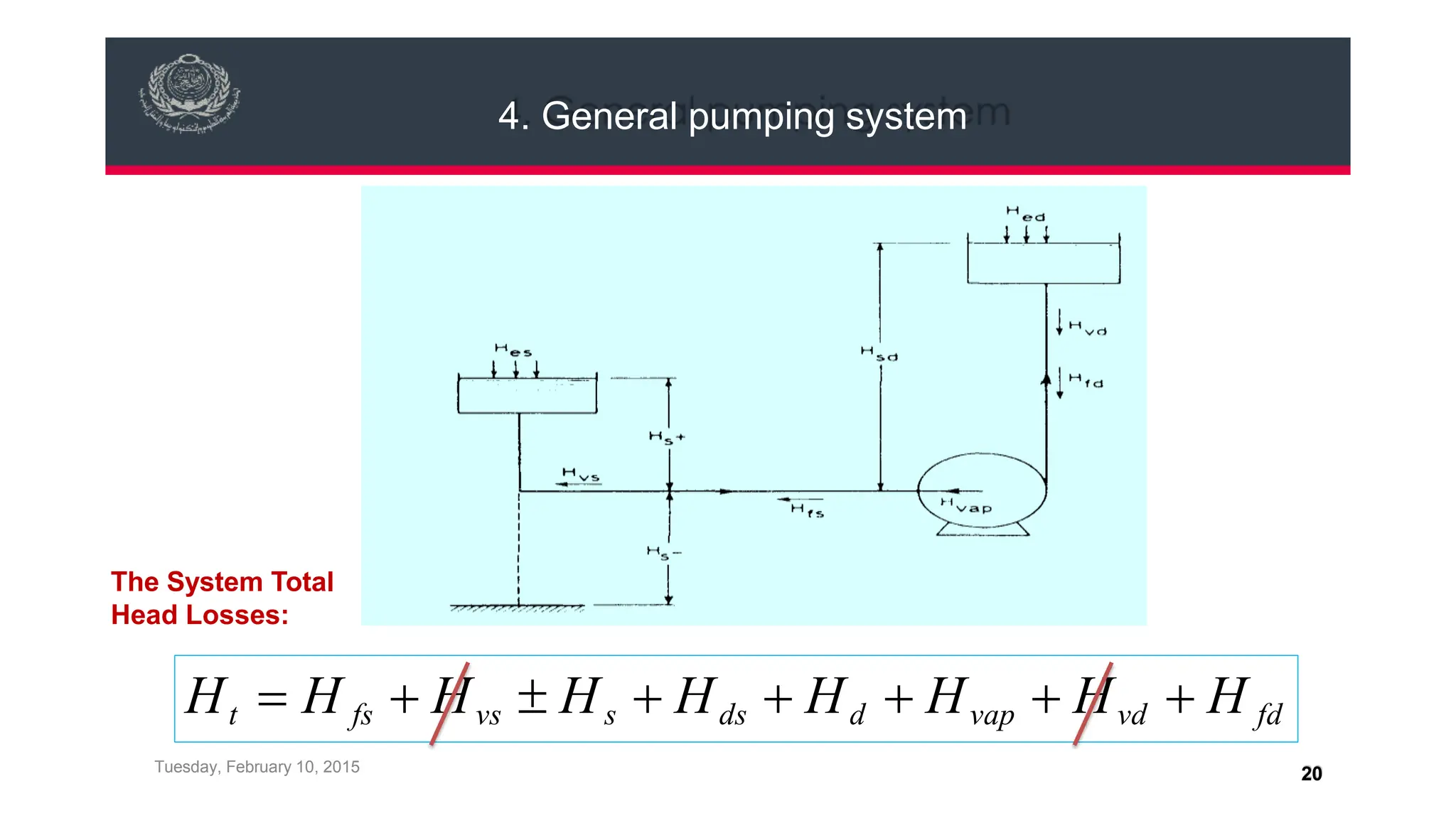
The addition of hardness salts also gives the water a better taste.
The sterilizing agent chlorine, being a gas, is carried into the water as a
constituent of sodium hypochlorite (a liquid) or in granules of calcium
chloride dissolved in water. The addition is set to bring chlorine content
to 0.2 ppm.
The passage of water from storage tanks to the domestic system, is by
way a carbon filter which removes the chlorine taste
CHLORINE STERILIZATION
Hüseyin Nejat ÖZTEZCAN Chief Engineer
Ultra violet light disinfection
The UV light is an effective and clean water disinfection method, it
inactivates bacterias and other harmful contaminants. UV light as a
disinfection method is non residual so is actually doesn’t leave any
disinfectant in the water.
Ozone water disinfection
Water disinfection methods also include the use of Ozone (O3), this is a
very unstable molecule which is a powerful oxidant that’s toxic for
organisms living in water. Ozone offers a very wide spectrum
disinfection ability. the Ozone must be produced on site using oxygen
and a UV light normally. Ozone disinfectant produces less hazardous by
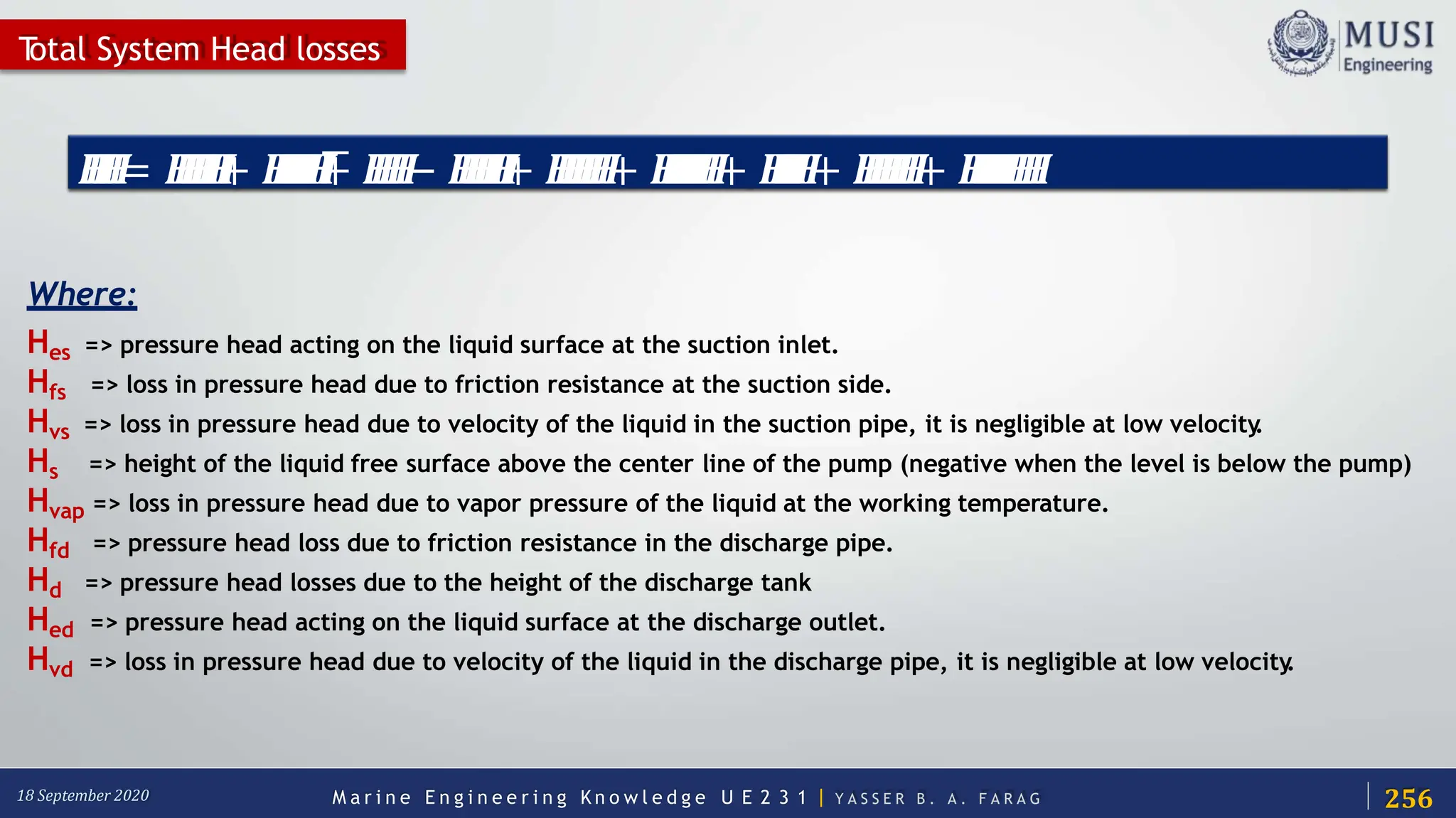
products that Chlorine does.
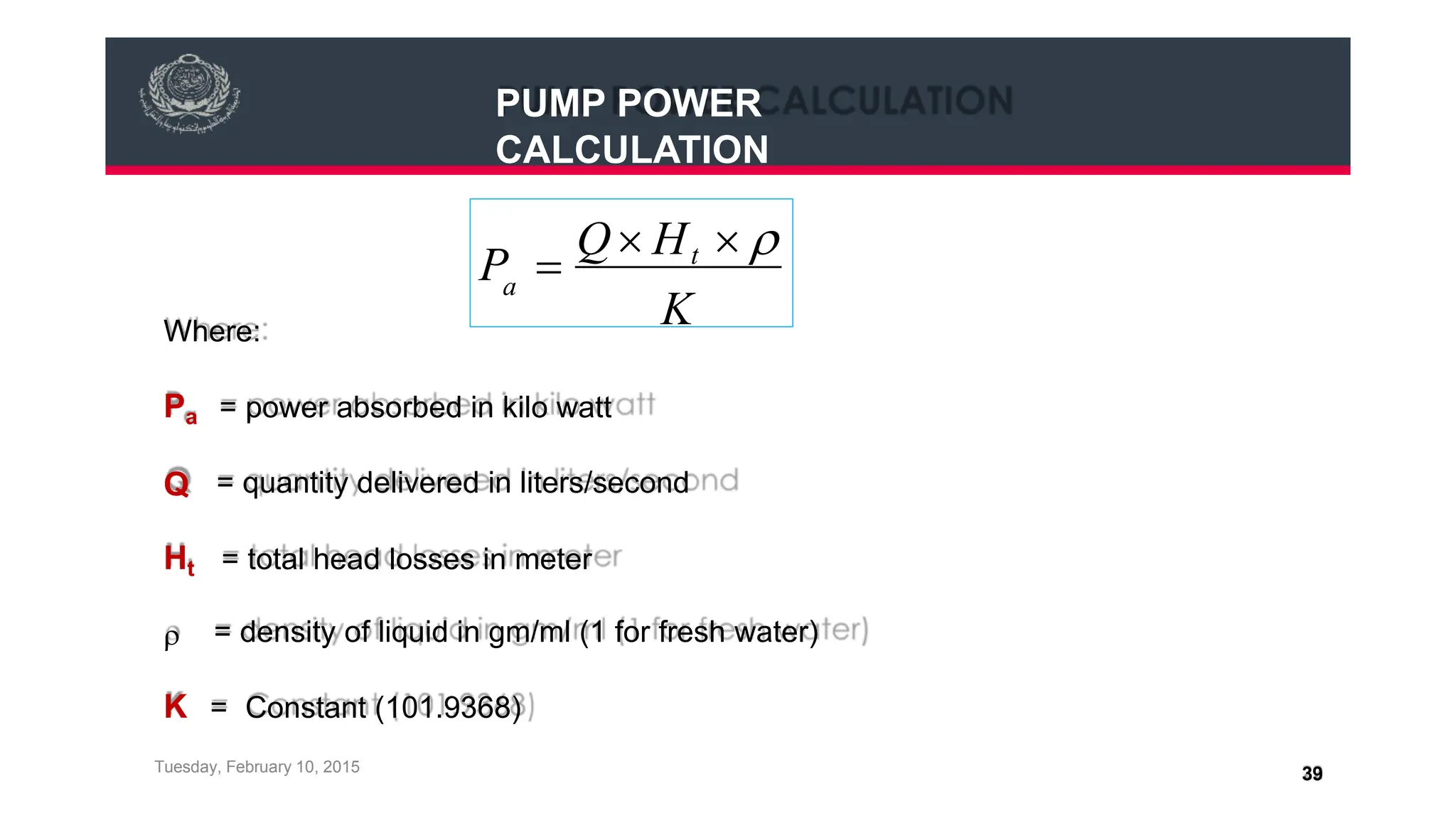
Hüseyin Nejat ÖZTEZCAN Chief Engineer
Some of the important points that should be considered during
maintenance of drinking water systems on ships are:
• Check Salinity Alarm: The salinity alarm or salinity indicator needs
regular checks as it allows only pure fresh water to flow into the fresh
water tank.
• Stop Fresh Water Generator At Right Time: Whenever a vessel
approaches any port, land or estuary, the Fresh Water Generator
must be stopped as at such places the sea water is heavily infected
with bacteria ,which may be transferred to the fresh water stored
onboard. As per recommended in Safety Management System
Manual or Flag State Requirements, the Fresh Water Tanks are
generally cleaned once in six months or on yearly basis.
• Use High Pressure Spray While Cleaning Tanks: While cleaning the
fresh water tanks it is advisable to use high pressure spray of fresh
water.
Hüseyin Nejat ÖZTEZCAN Chief Engineer
• Be Careful While Using Chemicals and Scrubbing: Chemicals, if any,
are to be used should be biodegradable. Mostly fresh water tanks do
not get rusted and have a special coating inside. It should be kept in
mind not to scrub the tank surface too hard so that it results in
removal of coating from the tank walls.
• Take Proper Steps While Applying Paint: Paint if applied on the tank
surface must be of approved type, immiscible in water and suitable
to the surface.
• Follow Proper Enclosed Space Entry Procedures: If ship’s staff is
involved in cleaning fresh water tanks, enclosed space entry
checklist and procedures must be complied with.
• Open Separator Shell When Required: The separator shell and heat
exchanger covers can be opened up and inspected during scheduled
inspections for scale formation or if cooling tubes are fouled with
any sludge formation.
Hüseyin Nejat ÖZTEZCAN Chief Engineer
• Use Scale Inhibitors: Scale inhibitors are used to prevent scale
formation by dispersing scale deposits and delaying reaction.
Scale formation inside heat exchanger requires cleaning if specific
temperatures cannot be obtained for inlet and outlet of fresh
water
.
• Remove Damaged Coating: In case coating inside fresh water
generator is damaged, the damaged covering is to be scraped off
and the surface should be then thoroughly dried. After putting
the undercoat on the steel surface, epoxy-resin or food coating
(as prescribed by FWG manufacturer) is to be applied.
• Clean Drinking Water Fountains: Various drinking water fountains
inside accommodation require scheduled cleaning and
replacement of filters as well.
• Cleaning of Fresh Water Tank: The fresh water tank must be
inspected and cleaned at regular intervals of time (normally 6
months).
Fresh water Sterilization
Silver Ion Sterilization:
• The device works by releasing Silver ions, or charged particles into
the water line before the water reaches the storage tank.
• The Silver ions act to eliminate bacteria.
• The amount of metal released to the water passing through the
unit is controlled be the current setting
• The silver content of the water in the domestic system should not
exceed 0.08 ppm.
• This concentration must be checked by laboratory annually
.
568
M a r i n e E n g i n e e r i n g K n o w l e d g e U E 2 3 1 | Y A S S E R B . A . F A R A G
1 January 2021
Fresh water Sterilization
Ultra Violet light – UV treatment
• Simple and save technology without the use of chemicals
• For the purpose of killing bacteria UV light is employed.
• This is generated by low pressure mercury lamps that are
designed to produce optimal UV wavelength in water to
achieve maximum effect.
• Normally fitted downstream of the filters normally a 5 micron
is used
• Water enters the unit and flows in annular space between the
quartz sleeve and the outside chamber
.
• The flow rate is important to ensure complete effectiveness
• The lamp should be replaced every 12 months.
• Direct eye contact with the UV light should be avoided.
569
M a r i n e E n g i n e e r i n g K n o w l e d g e U E 2 3 1 | Y A S S E R B . A . F A R A G
1 January 2021
FW System maintenance
570
M a r i n e E n g i n e e r i n g K n o w l e d g e U E 2 3 1 | Y A S S E R B . A . F A R A G
1 January 2021
FW System maintenance
571
M a r i n e E n g i n e e r i n g K n o w l e d g e U E 2 3 1 | Y A S S E R B . A . F A R A G
1 January 2021
Sounding arrangement
Non Return Valves on hold bilge
suction
Scupper for draining holds
Blanking arrangement for deep
tanks
Closing appliances for air pipes
Air and Sounding Systems
Machinery Spaces
•
Heavy fuel oil overflow tank has short self-closing type sounding pipe
HFO overflow tank air pipe is led to open deck as required.
Lubricating oil sump tank air pipe may end inside machinery space but
away from ignition sources
•
•
Air and Sounding Systems
Machinery Spaces
• Air or overflow pipes internal are are normally
required to be 1.25 times the area of respective
filling pipes for a tank.
Velocity in the air pipe is not to exceed 4 m/s
when using one pump for one tank.
•
Air and Sounding Systems
Fuel Oil Systems
Main concerns
• Fire hazards
– Flash point
– Insulation
– Remote control of fuel oil valves
– Stopping of pumps
– Collection of drains from leaks
Materials
– Fuel oil pipes and their valves and fittings is required to
be of steel or other fire-resistance materials
•
Main Engine Fuel Oil Service System
• The main and diesel generator engines are intended to burn HFO at all times.
Such fuel normally has a viscosity of up to 700cSt at 50°C and this is too high
for effective atomisation and combustion. A viscosity at the fuel injectors of
between 13 and 17cSt is needed for effective engine operation therefore the
fuel must be heated before it is delivered to the engine fuel injection system.
The temperature to which it is heated depends upon the initial viscosity of the
fuel. A viscosity-temperature chart is provided so that the heating temperature
can be determined for any fuel of known viscosity. The viscosity controller
monitors viscosity directly and adjusts the heating accordingly so there should
be no need for the engineer to intervene. However, knowing what the heating
temperature should be allows the engineer to check the functioning of the
viscosity controller and enables manual intervention, should the viscosity
controller malfunction.
• Heavy fuel oil is stored on board in four HFO storage tanks, one of these being
dedicated to low sulphur HFO. There are separate HFO and low sulphur heavy
fuel oil (LSHFO) settling and service tanks. Under normal circumstances the
main engine and generator engines operate continuously on HFO but when
environmental circumstances dictate the fuel oil supply system is changed over
to LSHFO operation.
Main Engine Fuel Oil Service System
• Fuel oil (HFO or LSHFO) is transferred from the storage tank(s) to the
associated settling tank by means of the HFO transfer pump and from the
settling tank the fuel oil is passed through a centrifugal separator before
discharge to the associated service tank. There is one HFO transfer pump and
one MDO transfer pump; a crossover pipe system, fitted with blanks, allows
either pump to be used for HFO or MDO as required. The HFO and MDO
transfer pumps are normally used to transfer fuel oil from the storage to the
settling tanks (MDO service tank in the case of MDO) but they may be used to
transfer HFO between the storage tanks (if necessary) in order to maintain the
trim and stability of the vessel.
• There are three centrifugal separators which are used to process HFO and fill
the appropriate HFO service tank. Each separator has its own feed pump but
cross connection valves allow the pumps to be used with any separator
.
Centrifugal separator No.3 may also be used for diesel oil and it is generally set
up for this operation.
Main Engine Fuel Oil Service System
• At least one of the HFO separators will normally be running at all times, with
the throughput balanced to match the fuel consumption of the main and
generator engines and the auxiliary boiler
. In an emergency the main engine
and can be changed over to diesel oil operation, in this case the generator
engines will also have to run on MDO. The three diesel generator engines
normally operate on HFO, the supply being taken from the fuel oil preparation
unit which also supplies the main engine, although they (one or and
combination) can be run on MDO independently from the main engine FO
supply. Flow meters in the diesel generator engine fuel supply and return lines
enable the fuel consumption of the diesel generator engines to be determined.
A flow meter in the fuel oil preparation unit after the FO supply pumps enables
the total fuel consumption to be calculated for the main engine and generator
engines.
• The boiler HFO supply is taken from the service tanks and supplied to the
burner unit via the boiler FO pumps and a heater
. The boiler may also burn
MDO from the MDO service tank and waste sludge oil from the clarified oil
boiler tank or the sludge preparation tank. The boiler pilot burner operates on
diesel oil.
Main Engine Fuel Oil Service System
• Outlet valves from all fuel tanks are of the quick-closing type with a collapsible
bridge which can be operated from the fire control station on A deck. After being
tripped from the fire control station the valves must be reset locally. The FO service
and settling tanks are also fitted with a self-closing test cocks to test for the
presence of water and to drain any water present. Tundishes under the self-closing
test cock drain any test liquid to the waste oil tank. All tanks and heaters are
supplied with steam at 7kg/cm² from the ship’s steam supply, with condensate
flowing to the drain cooler and then into the observation tank before passing into
the cascade tank, the observation tank is fitted with an oil detection unit.
• The steam supply to both fuel oil preparation unit heaters is controlled by a
viscosity controller
. All fuel oil pipework is trace heated by small bore steam pipes
laid adjacent to the fuel oil pipe and encased in the same lagging.
• Heated and filtered fuel oil is supplied to the main engine from the HFO service
tank, or the LSHFO service tank if operating on low sulphur fuel. However, it is
possible to run the main engine on MDO should that be necessary. There are
supply valves to the fuel oil preparation unit from the HFO service tanks and the
MDO service tanks, in normal operations the valve from the HFO service tanks is
open and the valve from the MDO service tank is closed. In order to change to
operation on MDO the valve from the MDO service tank is opened and the three-
way valve is changed over from the HFO service tanks to the MDO service tank.
Main Engine Fuel Oil Service System
• Heavy fuel oil from the HFO service tank, or LSHFO service tank, is supplied to one
of two low pressure fuel oil supply pumps. The second pump will be on automatic
standby and will start in the event of discharge pressure drop or voltage failure of
the running pump. A suction filter is located immediately before each low
pressure FO supply pump, an automatic backflushing filter set (15μm) with a
manual bypass filter is located directly after the FO supply pumps. A fuel
flowmeter is located at the outlet from the low pressure FO supply pumps and
automatic filter unit. A pressure regulating valve, set at a pressure of 5.0kg/cm2 is
located after the FO supply pumps, this returns released FO back to the pump
suction.
• The low pressure FO supply pumps discharge through the flowmeter to the fuel
mixing unit from which the FO circulation pumps take suction. There is also a
connection to the fuel mixing unit from the main engine and generator engine
return fuel lines. Valve FM32 connects the return FO line to the fuel mixing unit,
this return line is also provided with an automatic regulating valve from the main
engine FO supply line, set at 10.0kg/cm2. If necessary the FO return can be
directed back to the FO service tank via FM33, in normal operations is valve is
kept shut, it is necessary to use this return line then the appropriate inlet valve to
the HFO or LSHFO service tank must be open.
Main Engine Fuel Oil Service System
• Heavy fuel oil is drawn from the fuel mixing unit into the operating FO circulating
pump which discharges to the FO heaters and viscosity testing and control unit.
The second FO circulating pump will be selected for automatic standby and will
start in the event of discharge pressure drop or voltage failure of the running
pump. The fuel oil circulating pump discharges through a pair of main engine fuel
oil heaters where the oil is heated to a temperature corresponding to a viscosity
of 12cSt using steam at a pressure of 7kg/cm² A viscosity controller is located in
the fuel line after the heaters and is used to regulate the steam supply to the
heaters in order to maintain the correct fuel viscosity. The viscosity measuring
device can be bypassed if necessary. Normally only one of the fuel oil heaters is
required in order to maintain the HFO at the desired viscosity.
• The heated FO passes through a final filter (35μm) to the main engine fuel rail
which supplies the common rail fuel pumps. The inlet line to the engine fuel
system, which is provided with a pressure regulating valve, connects the engine
fuel supply line with the outlet fuel line from the engine. This valve is set at a
pressure of 8kg/cm2 and it regulates the pressure at the inlet to the main engine
fuel pumps, diverting excess oil to the HFO outlet line from the engine to the fuel
oil mixing unit.
Main Engine Fuel Oil Service System
• The main engine operates on the common rail fuel system with a number of
engine driven high pressure fuel pumps pressurising the fuel rail. From the
common fuel rail the high pressure fuel is directed to the cylinder injectors via the
volumetric fuel control unit.
• Fuel is supplied to the cylinder fuel injectors with the correct timing and in the
correct amount to allow the cylinders to develop the desired power
. There is no
circulation of fuel through the fuel injectors but fuel is released at the fuel rail
pressurisation pumps and the common fuel rail; this ensures circulation of fuel
and maintains the common fuel rail at the correct temperature at all times. The
released fuel flows back to the FO mixing unit in the fuel preparation unit.
• The high pressure fuel pump lines, the common fuel rail and the high pressure
fuel injector pipes on the engine, between the common rail and the injectors, are
sheathed; any leakage from the annular spaces formed between the sheathing
and the high pressure pipe is led to an alarmed leakage tank and then to the fuel
oil drain tank.
• The generator engine HFO supply is taken at the outlet from the fuel preparation
unit before the final filter
. The FO return line from the generator engines joins the
main engine fuel return system between the main engine outlet and the fuel
mixing unit.
Main Engine Fuel Oil Service System
CAUTION
• Care must always be exercised when dealing with fuel oil and the overheating of
HFO and MDO in the service tanks and the fuel system must be avoided.
• Note: The main and generator engines are normally operated continuously on
HFO. The fuel preparation unit supplies the main and generator engines and so if
the fuel supply to the fuel preparation unit is changed to MDO or LSHFO the main
and generator engines will be supplied with the same fuel.
• Note: If circumstances require a change to low sulphur fuel consideration must
be given to changing the main engine cylinder lubricant. Normally the cylinder
lubricating oil has a high alkalinity in order to neutralise the acid products of
combustion. If the engine fuel is changed to one with a very low sulphur content
(below about 1.5%) the high alkaline additive in the cylinder oil can result in
deposits on the cylinder line which can cause damage to the line and piston rings.
The engine builder and cylinder lubricant supplier must be consulted for advice
on cylinder lubrication if the main engine is to operate for prolonged periods on
very low sulphur fuel.
Main Engine Fuel Oil Service System
CAUTION
• Care must always be exercised when dealing with fuel oil and the overheating of
HFO and MDO in the service tanks and the fuel system must be avoided.
• Note: The main and generator engines are normally operated continuously on
HFO. The fuel preparation unit supplies the main and generator engines and so if
the fuel supply to the fuel preparation unit is changed to MDO or LSHFO the main
and generator engines will be supplied with the same fuel.
• Note: If circumstances require a change to low sulphur fuel consideration must
be given to changing the main engine cylinder lubricant. Normally the cylinder
lubricating oil has a high alkalinity in order to neutralise the acid products of
combustion. If the engine fuel is changed to one with a very low sulphur content
(below about 1.5%) the high alkaline additive in the cylinder oil can result in
deposits on the cylinder line which can cause damage to the line and piston rings.
The engine builder and cylinder lubricant supplier must be consulted for advice
on cylinder lubrication if the main engine is to operate for prolonged periods on
very low sulphur fuel.
Procedure for Preparing the Main Engine Fuel
Oil Service System for Operation
• It should be remembered that the main engine and the generator engines normally
operate on HFO at all times and they use the same HFO system. A change to MDO can
be made for reasons given below and either the entire fuel system or the generator
engine fuel system is changed to MDO operation for normal use. It is possible to
change just one generator engine to MDO operation, this would for example be done
prior to shutting down for major maintenance. A ‘port’ generator engine MDO pump is
provided to flush MDO through a generator(s) engine’s fuel system and supply MDO to
the generator engines separately from the main fuel preparation unit. There are
separate HFO and MDO supply and return lines for all generator engines. The MDO
supply line has a pressure relief valve which operates at a pressure of 4.0kg/cm2
returning back to the MDO service tank.
• The following procedure illustrates starting from cold, with the entire fuel system
charged with MDO and in a shut down condition. This will only occur during dry-
docking when shore power is used; the generator engines would then be flushed
through with MDO and would need to be changed to HFO operation when the main
fuel system is changed to HFO. The main engine is to be started on MDO and be
changed over to HFO operation when running. Changing to HFO operation should take
place when the main engine is operating below 75% of MCR and this power should be
maintained until the fuel temperature has stabilised at the correct value.
Procedure for Preparing the Main Engine Fuel
Oil Service System for Operation
a) Start one of the HFO separators and fill the HFO service tank/ LSHFO service tank from
the appropriate FO settling tank. Ensure that the MDO service tank has sufficient fuel for
operating the main engine and generator engines, replenish this tank if required.
b) Ensure that the filters are clean.
c) Ensure that the HFO service tank/LSHFO service tank is heated to the desired temperature
and that trace heating steam is available at the HFO lines. A steam supply must be available
for tank and trace heating.
d) Ensure that all instrumentation valves are open and that all instruments and gauges are
reading correctly.
• The main engine is supplied with MDO from the MDO service tank via tank quick-closing
valve FM59EV, line non-return valve FM65 and three-way supply valve FM03
• The generator engines will be operating on MDO which is supplied by the fuel preparation
unit or the ‘port’ generator engine MDO pump. When the fuel oil preparation unit is
operating it may also be used to supply MDO to the generator engines. However, when the
fuel oil preparation unit is changed to HFO the generator engines will be supplied with HFO
and this can cause instability in power generation and electrical supply due to changes in
fuel temperature. In order to avoid this the generator engines should be supplied with MDO
by the ‘port’ generator engine MDO pump until the main engine is operating satisfactorily
on HFO.
Procedure for Preparing the Main Engine Fuel
Oil Service System for Operation
• Individual generator engines can be changed to HFO operation off load . The ‘port’
generator engine MDO pump suction valve FM60 and discharge valve FM62 are
normally left open but the recirculation line valve back to the MDO service tank
FM63 is normally closed.
f) Check that there is sufficient HFO in the HFO service tank and that the fuel in
the tank has been heated to the correct temperature.
g) Select and start the duty FO supply pump and the duty high pressure FO
circulating pump.
• The FO circulating and supply pumps can be started and stopped locally or from the
pump control screen display in the engine control room. The standby pump starts
automatically if the operating pump is unable to maintain pressure for any reason. A
pressure switch on the discharge side of the pumps provides the start signal for the
standby pump. The Local/ Remote selector switch for each pump is located on it’s
respective group starter panel (GSP) on the main switchboard.
Procedure for Preparing the Main Engine Fuel
Oil Service System for Operation
• Failure of the running pump or a pressure drop below the cut-in set value will start the
standby pump.
h) Start and run the main engine on MDO and ensure that it operates correctly. When the
time has come to change over to HFO operation and the engine is operating steadily at
below 75% MCR, proceed as follows.
i) Open the engine HFO line trace heating steam and drain valves together with the
steam supply and drain valves for the fuel heaters.
j) Check that the trace heating lines are warm and that the HFO in the HFO service tank is
at the correct temperature.
k) Check that the HFO service tank quick-closing outlet valve FM01EV is open (this will
normally be open when it is permitted to burn HFO as the tank valve also supplies the
auxiliary boiler). Turn the three-way fuel supply valve FM03 so that the FO supply pumps
take suction from the HFO service tank rather than the MDO service tank. Heated HFO
will be drawn from the HFO service tank and will flow through the system. It will be mixed
with returning MDO flowing back to the fuel mixing unit, the viscosity controller will
monitor the mixture and adjust the steam supply to the heater in order to obtain the
correct viscosity.
Procedure for Preparing the Main Engine Fuel
Oil Service System for Operation
l) Monitor the engine operation for any abnormal conditions. The engine conditions will
fluctuate slightly during the transition phase from MDO to HFO operation and exhaust
temperatures and speed will vary slightly.
m) Gradually all MDO in the return line and the fuel mixing unit will be used and the engine will
be operating on HFO with the viscosity controller maintaining the correct fuel viscosity. The
time taken for all of the MDO to be displaced depends upon the engine’s fuel consumption
but all MDO in the engine fuel supply system should have been used in about 15 minutes.
n) When the engine is running under stable conditions on HFO, the load may be
increased above 75% MCR to the desired value.
o) The outlet quick-closing valve FM59EV from the MDO service tank must be left open as
MDO is supplied to the generator engines via the ‘port’ generator engine MDO pump. The
nonreturn line valve (FM65) from the MDO service tank to the fuel preparation unit three-
way supply valve should be closed.
p) The main engine is now operating on HFO.
Note: The main engine is designed to run and manoeuvre on HFO and the change to MDO
operation should only be made if the fuel system is to be flushed through for maintenance
work, or when the plant is to be switched off for prolonged periods or for environmental
reasons.
Procedure for Preparing the Main Engine Fuel
Oil Service System for Operation
Note: It is assumed that the HFO service tank is to be used and return oil will pass to this tank
when the change is made to HFO operation.
CAUTION
Trace heating should not be applied to sections of pipeline isolated by any closed valves on the
fuel oil side as damage could occur due to the restricted expansion of the contents.
• As the main engine and the generator engines take fuel from the same fuel preparation unit,
changing from HFO to MDO or vice versa will cause both engine systems to operate on the
same fuel. The main engine and generator engines are designed to run on HFO at all times.
However, changeover to MDO can become necessary if, for instance, an engine in question is
expected to have a prolonged inactive period due to major repairs of the fuel oil system etc,
or a dry-docking resulting in a prolonged stoppage of the main engine. Additionally,
environmental legislation may require the use of low sulphur fuels. If there is a need to
change the main and generator engines to LSHFO or MDO for environmental or other
reasons, the entire fuel system may be charged with LSHFO or MDO.
Procedure for Changing the Entire Fuel System to Low Sulphur
Heavy Fuel Oil Operation from Heavy Fuel Oil Operation whilst
the Engine is Running
• A change from HFO to LSHFO may be made at any time whilst the engine is
running without any special precautions as the LSHFO has similar heating
requirements as the HFO. Under normal circumstances a changeover to
LSHFO will be made before the vessel arrives at the environmentally sensitive
region and a change from LSHFO to HFO operation will be made when the
vessel is at sea moving away from the environmentally sensitive region.
a) Ensure that the main engine is operating under stable conditions and that
the HFO and LSHFO service tanks have sufficient fuel for prolonged operation
of the main and generator engines and the auxiliary boiler
.
b) Ensure that the fuel tanks are at the correct temperature, that all trace heating
is satisfactory and that the fuel preparation unit is operating correctly.
c) Open the quick-closing outlet valve from the LSHFO service tank FM02EV
.
Close the quick-closing outlet valve from the HFO service tank FM01EV
. LSHFO
will be supplied to the fuel preparation unit and will gradually replace all of the
HFO in the fuel system. The main and generator engines will then operate on
LSHFO.
Procedure for Changing the Entire Fuel System to Low Sulphur
Heavy Fuel Oil Operation from Heavy Fuel Oil Operation whilst
the Engine is Running
d) When all HFO in the system has been replaced by LSHFO (about 10 to 15
minutes with the engine operating at normal full speed), open the return line
inlet valve FM34 to the LSHFO service tank and close the return line inlet valve
FM66 to the HFO service tank. The returning fuel from the main engine goes
to the FO mixing unit and not to the service tank but returning fuel from the
boiler fuel unit goes back to the service tank and so it is important that the
return valve is open on the tank from which fuel is taken.
Note: The procedure for changing the fuel system from LSHFO to HFO operation
is the same as that described above except that the HFO tank valve is opened
and the LSHFO service tank valve is closed. When changing from LSHFO to
HFO operation the tank return valves must also be changed over as soon as
the change to HFO operation is made. This avoids the risk of any HFO being
returned to the LSHFO service tank and so prevents contamination of the
LSHFO in the tank.
Note: The HFO and LSHFO service tanks should be replenished from the
associated settling tank via the separator system in order to maintain an
adequate supply in the tank.
Procedure for Changing the Entire Fuel System to Diesel Oil
Operation from Heavy Fuel Oil Operation whilst the Engine
is Running
• A changeover can be performed at any time during engine running but is
more usually carried out just prior to arrival in port. To protect the injection
equipment against rapid temperature changes, which may cause sticking/
scuffing of the fuel valves and of the fuel pump plungers and suction valves,
the changeover is carried out as follows (manually).
• This procedure puts the entire fuel system on MDO operation and so the
generator engines will also be changed to MDO operation.
a) Check that there is sufficient MDO in the MDO service tank and fill the tank
if necessary.
b) Reduce the main engine load to 50% of MCR load.
c) Open the sludge cock on the MDO service tank in order to remove any water
from the tank.
d) Check that the MDO service tank quick-closing valve FM59EV is open. This
valve will always be left open to supply MDO to the ‘port’ generator engine
MDO pump.
e) Shut off the steam supply to the FO heaters and the trace heating lines.
Procedure for Changing the Entire Fuel System to Diesel Oil Operation
from Heavy Fuel Oil Operation whilst the Engine is Running
f) When the temperature of the HFO in the FO heater has dropped to about 25ºC
above the temperature in the MDO service tank, but not below 75ºC, open the non-
return fuel line valve FM65 from the MDO service tank. Change the fuel supply
three-way valve in order to supply MDO to the fuel preparation unit and shut off
HFO from the fuel preparation unit.
g) The HFO service tank quick-closing valve FM01EV (or the LSHFO service tank valve
FM02EV if LSHFO is being supplied) should remain open in order to supply HFO or
LSHFO to the boiler
. The appropriate return valve on the HFO or LSHFO tank must be
left open.
h) Diesel oil is now fed to the FO supply pumps and as the HFO is gradually used by the
engine MDO will fill the fuel lines.
Note: If, after the changeover, the temperature at the heater suddenly drops
considerably, the transition must be moderated by supplying a small amount of steam
to the heater, which now contains diesel oil.
Note: The generator engines will be changed to MDO operation at the same time as the
main engine and the operation of the generator engines must also be monitored
during this changeover period. In order to prevent generator engine instability
problems during the changeover period it is preferable to change at least one
generator engine to MDO operation separately prior to carrying out the changeover
operation.
Procedure for Changing the Entire Fuel System from Heavy Fuel Oil Supply to Diesel Oil
Supply during Standstill
• Ideally the change to MDO should be undertaken whilst the main engine is running but
under some circumstances it may be necessary to flush the fuel system with MDO
whilst the engine is stopped. It should be remembered that the main engine is normally
manoeuvred on HFO and HFO will remain in the fuel system whilst the engine is
stopped under normal circumstances. Heavy fuel oil is recirculated from the main
engine fuel manifold outlet back to the fuel mixing unit from where the FO circulating
pump takes suction. When changing from HFO to MDO during engine standstill, the
HFO in the fuel lines must be replaced by MDO and the HFO is forced back to the HFO
service tank, or the LSHFO service tank if the engine has been operating on LSHFO, as it
is replaced by MDO.
• The procedure described below assumes that the fuel system is still being circulated
with hot HFO supplied from the HFO service tank.
a) Shut off the steam supply to the FO heaters and the trace heating system.
b) Ensure that there is sufficient ullage in the HFO service tank (or the LSHFO service tank)
to accommodate the oil displaced from the fuel system. Ensure that the return inlet
valve to the HFO service tank FM66 (or the return inlet valve FM34 to the LSHFO
service tank if the engine has been operating on LSHFO) is open. This valve should
always be open when the engine is operating on this type of fuel.
c) Sludge the MDO service tank to remove any water
.
Procedure for Changing the Entire Fuel System from
Heavy Fuel Oil Supply to Diesel Oil Supply during
Standstill
• Regarding temperature levels before changeover, see ‘Changeover from Heavy
Fuel to Diesel Oil during Running’.
d) Check that the MDO service tank quick-closing outlet valve FM59EV is
open. This valve will normally be left open to supply MDO to the ‘port’
generator engine MDO pump.
e) Open the MDO supply non-return line valve FM65 and turn the fuel supply
three-way valve FM03 to supply MDO to the fuel preparation unit.
f) The operating HFO service tank quick-closing valve FM01EV (or the LSHFO
service tank valve FM02EV) should remain open in order to supply fuel to the
auxiliary boiler from this tank.
g) Open the fuel system return valve to the service tank FM33 and close the fuel
mixing unit inlet valve FM32.
h) The FO supply pump and FO circulating pump will draw MDO into the
fuel system and displace HFO (or LSHFO).
Procedure for Changing the Entire Fuel System from
Heavy Fuel Oil Supply to Diesel Oil Supply during
Standstill
i) When the HFO is replaced by MDO, open the inlet valve to the fuel mixing
unit FM32 and close the return line valve to the fuel oil service tanks FM33. It
will take about 10 minutes for all of the HFO in the system to be displaced by
MDO; a check can be made on the temperature of the inlet line to the fuel
service tanks as a drop in temperature will indicate the return of MDO rather
than heated HFO. Some MDO will be pumped to the HFO service tank (or the
LSHFO service tank if that has been operating) but the quantity will be small
and the MDO will be diluted in the HFO in the tank.
j) When the system is filled with MDO stop the viscosity controller
.
k) When convenient, the FO supply and circulating pumps may be stopped if the
generator engines are to be supplied by the ‘port’ DO pump, otherwise the
supply and circulating pumps must remain in service to maintain the supply to
the generator engines.
Generator Engine Fuel Oil Service System
• The three generator engines are designed to run on HFO at all times but they may
operate on MDO should that become necessary. The fuel lines should be flushed
with MDO when an engine is shut down for prolonged periods.
• Heavy fuel oil is supplied to the generator engine from the main fuel supply line
after the viscosity transducer of the fuel preparation unit. Fuel supply lines to the
generator engines are fitted with trace steam heating. A pressure regulating valve
is located in the supply line to the generator engines and this is adjusted to give a
pressure of 7.5kg/cm2 in the generator engine fuel supply line. This pressure
regulating valve may be bypassed.
• Fuel oil flowing from the main FO line passes through a flow meter to the generator
engine supply manifold and then to the individual generator engines via supply
valves arranged in a manifold with the return, crossover isolation valves and flow
control valves in one area. Immediately before the individual engine inlets there is
a quick-closing valve, these valves are operated from control cabinets located in way
of the respective forward entrance doors to the generator rooms on the third deck.
• The flow control valve should be adjusted to ensure the correct fuel supply
pressure to the generator engine. Some heated HFO will always bypass the engine
through this valve, this ensures that the engine fuel supply system remains hot
even when the engine is not running.
Generator Engine Fuel Oil Service System
• Excess fuel is supplied to the engine and that fuel not used by the engine, together with the
fuel flowing through the flow control valve, returns to the mixing unit of the fuel preparation
unit. Return flow is via a flow meter thus allowing the generator engine fuel consumption to
be determined (the fuel inlet flow meter reading minus the fuel outlet flow meter reading).
• There is a supply connection to the generator engines from the ‘port’ generator engine MDO
pumps for flushing through the system and for operation on MDO should that be required.
Return MDO lines from the generator engines flow to the MDO service tank. A pressure relief
valve in the return line to the MDO service tank (located by the manifold valves for No.2 and
3 generator engine) is set at a pressure of 4.0kg/cm2, this allows that pressure to be
maintained in the MDO generator system. The ‘port’ generator engine MDO pump has a
direct line back to the MDO service tank via the pressure relief valve and line valve FM63
which should be open when initially circulation MDO when the generators are being prepared
to be changed over to run on MDO.
• Individual generator engines may be changed to MDO operation as required with the other
engines operating on HFO.
• The high pressure fuel injection lines on the engine are sheathed and any leakage from the
annular spaces formed by the sheathing is led initially to a fuel oil leakage pot which is
adjacent to the line filters on the engine. The hot FO supply pipeline into the engine passes
through this leakage alarm pot to ensure any liquid in the pot remains hot and fluid and
does not set. From here the fuel leakage runs down to the to the fuel oil drain tank.
Procedure for the Operation of the Generator Engine
Fuel Oil Service System
a) Ensure that all instrumentation valves are open and check that all instrumentation is reading
correctly.
b) Ensure the filters are clean.
c) The generator engines will operate on HFO which comes from the main fuel system,
the viscosity being regulated by the viscosity controller and the heaters raising the
temperature.
• If any work is to be carried out on the fuel system of the generator engine the fuel system
may be flushed through with MDO.
• The ‘port’ generator engine MDO pump suction and discharge valves must be open,
together with the MDO service tank outlet valve FM59EV, in order to ensure that the
generator engines will be able to operate on MDO should that be necessary. The line valve
FM63 to the pressure regulating valve must also be open to ensure circulation until a
generator is changed over to MDO, this valve should then be shut when a generator is
changed onto MDO.
Note: When a generator engine is shut down, heated HFO will be circulated through the fuel
system by the high pressure FO circulating pump and the fuel system will remain ready for
an engine restart. The fuel bypass flow control valve allows some circulating fuel to bypass
the engine and this ensures that the fuel system is maintained in a warm condition.
Procedure for Flushing an Generator Engine Fuel System
with Diesel Oil when the Engine is Stopped
a) Ensure that the engine is shut down and the starting system is disabled.
b) Ensure that there is sufficient MDO in the MDO service tank.
c) The system valves must be set as in the description above for normal operation of the generator fuel
system.
d) For the generator engine concerned set the valves.
e) Shut off tracing steam to the fuel system of the generator engine concerned.
f) Start the ‘port’ generator engine MDO pump and supply MDO to the fuel system of the generator engine
concerned. HFO will be forced out of the generator engine system and be replaced by MDO. The HFO
will flow back through the FO return line and into the fuel mixing unit.
g) When the HFO has been replaced by MDO in the engine system open the MDO outlet valve for the
generator engine concerned and close the HFO outlet valve for that engine. Purging of the HFO from the
generator engine system will take about 5 minutes; when the temperature of the fuel outlet pipe from the
engine falls this indicates that MDO is flowing.
h) When the fuel system of the generator engine concerned is charged with MDO stop the ‘port’ generator
engine MDO pump.
• The generator engine fuel oil system is now charged with MDO.
i) The engine may be run on MDO if the MDO ‘port’ pump is kept operating in order to supply MDO to the
generator engine concerned.
• If the fuel system of another generator engine is to be flushed through with MDO the above procedure is
repeated for that engine.
• Before starting the engine the fuel system may be refilled with heated HFO from the fuel preparation
unit.
Procedure for Flushing the Generator Engine Fuel
System with Heated Heavy Fuel Oil for Starting
a) Ensure that heated HFO is circulating in the main fuel system and that the
fuel preparation unit is functioning correctly.
b) Ensure that the generator engine concerned is disabled and cannot be started
accidentally.
c) For the generator engine concerned set the valves as follows:
d) Heated HFO will circulate through the generator engine fuel oil system and the
displaced MDO will flow to the fuel mixing unit and will mix with the HFO
already in the system.
Note: In each case the HFO outlet valve from the engine must be opened and
the MDO outlet valve closed; this is quickly followed by opening of the HFO
inlet valve and closing of the MDO inlet valve.
Note: Although the system described above allows MDO to flow into the HFO
circulation system, the amount is very small compared with the quantity of
HFO circulating and the dilution effect is insignificant. Allowing the MDO to
flow into the HFO system prevents any HFO from getting into the MDO
system.
Boiler Fuel Oil System
• Fuel oil for the boiler is taken from the HFO service tank or the low sulphur
HFO service tank. The boiler may also be operated on MDO from the MDO
service tank when starting from cold and when setting the supply line for
sludge burning. MDO is used in the ignition burner which provides ignition for
the main burner
. The MDO for the ignition burner is taken from the MDO
supply line to the MDO supply pump.
• The boiler may also burn sludge oil taken from the sludge preparation tank or
the clarified oil boiler tank. Sludge oil is pumped to the sludge preparation
tank by the sludge pump, which takes suction from the waste oil tank, the
main engine LO sludge tank, the generator engine LO sludge tank and the fuel
oil sludge tank. The sludge preparation tank overflows to the waste oil tank.
• Fuel is supplied to the boiler’s main burner by one of two FO service pumps
which are part of the boiler fuel oil unit. The pump switches on the boiler’s
control panel must be turned to MAN in order to enable the pumps to
operate. Selector switches on the boiler control panels are used to select the
pumps for duty and standby operation. The burner inlet pressure sensing
point activates the pump changeover in the event of low pressure indicating
boiler FO burner pump failure.
FO Storage and Transfer
Important concerns
•
•
•
•
•
•
Overflow pipes
Quick-closing valves
Drain to waste oil tanks (spill trays)
Level gauge with heat-resistant glass for sounding
Remote control of fuel oil valves
Insulation of hot surfaces where fuel oil leaks
(possibly in a spray form) is possible
HFO Settling Tank
HFO Service Tank
Quick-closing Valves
FO Supply to Engine
FO System
FO Supply to Engine
Main components
•
•
•
•
•
•
•
•
•
Storage (bunkers)
Transfer pump
Settling tank
Heater
Purifier
Service tank
Filter
Viscosity controller
Return Tank (10 to 15 minutes engine operation)
HFO Duplex Filter
HFO Transfer Pump
HFO Heater
HFO Separator
HFO Separation System
Diesel Fuel Separation System
SEPARATOR
S
• PRUFIER
• CLARIFIER
NEJAT ÖZTEZCAN
CHIEF ENGINEER
Nejat Öztezcan Chief Engineer 1
Nejat Öztezcan Chief Engineer 50
2
SEPARATION
Separation as a means of removing impurities from a fuel can be
undertaken by means of gravity in a settling tank or by means of
centrifuging the fuel.
Both methods work on the same principles that by subjecting the
fuel to a constant force, the denser components of the fuel
i.e water and dirt will be separated from the lighter components
i.e. the fuel itself.
Both fuel oils and lubricating oils require treatment before
passing to the engine.
Nejat Öztezcan Chief Engineer 50
3
If an oily water mix is placed into a tank then separation of the
two parts will begin with the lighter element rising to the top.
The rate the separations occurs is governed by several factors
including the difference in specific gravities and the force of
gravity acting upon it.
For mixes placed into a settling tank there is little that can be done
about the gravity but the difference in the specific gravities can be
increased by heating.
This because water density changes at a much reduced rate when
compared to oil.
A wide shallow tank will increase the rate of clarification over a tall
thin tank
When a volume of light oil is placed into a tank contain a weir and a
quantity of water the fluids will tend to arrange themselves as shown
above. The height of the water in the weir rises to a point governed
by the volume ( and thereby relative height) and specific gravity of
the light oil.
Knowing this it is possible to form a rudimentary purification system
GRAVITY SEPARATION
Nejat Öztezcan Chief Engineer 50
4
As a oil/water mix is fed into the tank separation begins with heavy
particulates falling to the base of the tank along with water which
joins the other water excess overflowing the heavy phase weir.
Hopefully clear oil passes over the light phase weir. The problem
arises that to ensure their is sufficient time to allow for full
separation of the oily mix the flow would have to be very small
relative to the size of the tank.
interface
Nejat Öztezcan Chief Engineer 50
5
Efficiency of gravity separation are dependent on a number of
factors;
1. Time
2. Speed
3. Distance
4. Relative density
5. Particle size and shape
6. Liberation
Distance
Nejat Öztezcan Chief Engineer 50
6
Nejat Öztezcan Chief Engineer 50
7
Centrifuging
Centrifuging is the process by which the effects of gravity can be
amplified by the use of centrifugal force to the extent that the
separation process becomes rapid and continuous.
The principle of operation of the centrifuge is simple. When a bowl
containing impure fuel is rotated, centrifugal forces will throw any
item with density greater than the fuel oil density (solids and free
water) to the periphery of the bowl.
Centrifugal separators used for the separation of two liquids of
different densities (fuel and water) are known as purifiers and those
used for separating solid impurities are known as clarifiers.
Purifiers will also remove some solids and clarifiers will also remove
small quantities of water.
The centrifuge includes parts that rotate at high speed. This
means that:
• Kinetic energy is high
• Great forces are generated
• Stopping time is long
Rotating parts are carefully balanced to reduce undesired
vibrations that can cause a breakdown.
If excessive vibration occurs, stop the seperator
.
Nejat Öztezcan Chief Engineer 50
8
Nejat Öztezcan Chief Engineer 509
Which factors have an effect on centrifugation :
•Density difference
•Temperature/viscosity
•Distance of particles displacement
•Rotation speed
•Gravity disc
•Back Pressure of output
•Rate of throughput (oil feed)
Nejat Öztezcan Chief Engineer 51
0
As a means of removing
impurities from a fuel can
be undertaken.
Gravity acting on the
fuel as it passes slowly
through the tank will
separate the denser
components .
Clean Oil
Outlet
Water Outlet
Gravity disk
Nejat Öztezcan Chief Engineer 10
Principle of separation in centrifuge containing angled plate stack
Nejat Öztezcan Chief Engineer 513
Nejat Öztezcan Chief Engineer 514
Nejat Öztezcan Chief Engineer 515
Nejat Öztezcan Chief Engineer 516
Nejat Öztezcan Chief Engineer 517
Purifiers will also remove
some solids
clarifiers will also remove
small quantities of water
The separation of two liquids of
different densities (fuel and
water) are
When a bowl containing impure fuel is rotated,
centrifugal forces will throw any item with
density greater than the fuel oil density (solids
and free water) to the periphery of the bowl .
How does a
centrifuge
work?
Centrifuges work by rapidly spinning a bowl
containing the liquid, thus producing the
required centrifugal force to produce
separation.
Nejat Öztezcan Chief Engineer 520
There are normally two types based on the application:
1)Purifier: When a centrifuge is arranged for separating two liquids
of different densities, for e.g. water from oil, it is known as a purifier
.
2)Clarifier: When a centrifugal is arranged to remove only impurities
and small amount of water, it is called as clarifier.
Nejat Öztezcan Chief Engineer 521
The basic operations of clarifier and purifier are:
It contains stack of disk numbering up to 150 and are
separated from each other by very small gap.
A series of holes are aligned in each disk near the
outside edge which permits the entry of dirty oil.
-Due to difference in gravity and centrifugal force, the heavier
impure liquid (water) and particles moves outside and lighter
clean oil flows inwards and get separated.
-The collected sludge and impurity can be discharged
continuously or at a time intervals, depending upon the
construction, automation and system incorporated.
Nejat Öztezcan Chief Engineer 522
Purif
board
Is correct size gravity disc or
dam ring which is responsible
for creating an interface
between the oil and water.
what is a
purifier?
solids being deposited by sedimentation.
what is a
Clarifier?
Is clarifiers are settling tanks built with
mechanical means for continuous removal of
There used to remove solid
particulates or suspended solids from
liquid for clarification and (or)
thickening
It contains a stack of disk numbering
up to 150 and is separated from each
other by a very small gap.
In a purifier, before introducing the oil, water sealing is
established so that oil fill should not flow out through
the heavy liquid outlet
In clarifier, there is no heavy liquid
outlet for discharging separated
water hence water sealing is
unnecessary
The centrifugal separation of two liquids, such
as oil and water, results in the formation of a
cylindrical interface between the two.
The setting or positioning of the interface is
achieved by the use of dam rings or gravity discs
at the outlet of the centrifuge.
Various diameter rings are available for each
machine when different densities of oil are used.
As a general rule, the largest diameter ring
which does not break the 'seal' should be used.
Cleaning oil which contains little or no water is
achieved in a clarifier bowl where the impurities and
water collect at the bowl periphery.
A clarifier bowl has only one outlet.
No gravity disc is necessary since no interface is formed; the bowl
therefore operates at maximum separating efficiency since the oil is
subjected to the maximum centrifugal force
Where a centrifuge is
arranged to separate two
liquids, it is known as a
'purifier'.
Where a centrifuge is
arranged to separate
impurities and small
amounts of water from oil
it is known as a 'clarifier'.
Purifiers Clarifiers
Is to separate the dissolved water, Removes any solid foreign material
impurities and sludge from the fuel that is not removed from the oil after
oil. it passes through the purifier.
 Presence of a dam ring. the interface or the line of
separation between the oil and water
is created using a dam ring.
The bowl and the disc stack will require periodical cleaning whether or not an
ejection process is in operation. Care should be taken in stripping down the bowl,
using only the special tools provided and noting that some left-hand threads are
used.
The centrifuge is a perfectly balanced piece of
equipment, rotating at high speeds: all parts should
therefore be handled and treated with care.
It is important that there is proper maintenance,
record of correct parameters and prevention of
impurities from entering the systems.
Purifier
• When a centrifuge is set up as a purifier, a second outlet pipe
is used for discharging water.
• In the fuel oil purifier, the untreated fuel contains a mixture of
oil, solids and water, which the centrifuge separates into three
layers.
Nejat Öztezcan Chief Engineer 20
Purifier Operation
Nejat Öztezcan Chief Engineer 532
Nejat Öztezcan Chief Engineer 533
• As marine fuel oil normally contains a small quantity of water, it
is necessary to prime the bowl each time that it is run, otherwise
all the oil will pass over the water outlet side to waste.
• The water outlet is at greater radius than that of the fuel. Within
the water outlet there is a gravity disc, which controls the radial
position of the fuel water interface
• A set of gravity discs is supplied with each machine and the
optimum size to be fitted depends on the density of the
untreated oil.
PRUFIER
Nejat Öztezcan Chief Engineer 534
• If it is set as a purifier, the free water is continuously
discharged, therefore, the particulate matter will consist of
solid material.
• In older machines it is necessary to stop the centrifuge to
manually clean the bowl and disc stack, however, the majority
of machines today can discharge the bowl contents while the
centrifuge is running.
• When the fuel centrifuge is operating, particulate matter will
accumulate on the walls of the bowl. If the centrifuge is set as
a clarifier, the particulate matter will be a combination of water
and solid material.
Nejat Öztezcan Chief Engineer 535
Purification process is based on types of purifier used :
(1) Non-continuous operation type purifier
(2) Continuous operation type purifier
.
• In Non-continuous operation type purifier, sludge is cleaned
manually after operating some time.
• In Continuous operation type purifier, sludge is cleaned
automatically at regular intervals, it is also called as self-
cleaning purifier
. Non-continuous operation type is still suitable
for lube oil system.
Nejat Öztezcan Chief Engineer 536
Safeties in Purifier
• Low pressure switch in the outlet of clean oil
• Emergency brakes - for speed regulation
• High pressure switch in the clean oil outlet
• Water transducer to avoid water mixing
Nejat Öztezcan Chief Engineer
operation, maintenance, and emergency procedures.
537
The following is compulsory for safe operation:
1. Never start up a separator before the bowl is completely assembled, and all
fastenings securely tightened.
2. Never discharge a vibrating separator
. Always stop with the emergency stop
button.
3. Never begin to disassemble a separator before it has come to a complete
standstill.
4. Always set the discharge intervals according to instructions in the
instruction book.
5. Never ignore alarms. Always eliminate the cause before resuming
operation.
6. Never use the separator for other liquids than those specified by
manufactor
.
7. Never operate a separator with a different power supply frequency than
stated on the machine plate.
8. Ensure that enough conditioning water is added before discharge, as
described in the instruction book.
9.Clean the operating system regularly to avoid sludge discharge malfunction.
10.Ensure that personnel are fully trained and competent in installation,
Nejat Öztezcan Chief Engineer 538
The following factors are of importance when
understanding the function of the purifier
Increasing the Specific gravity of the oil will tend to push
the interface outlet and cause overflow from the heavy
phase outlet untill the equilibrium is restored.
Reducing the Specific gravity of the oil will tend to bring the
interface towards the axis, this reduces the force of
separation on the oil mix and reduces the efficiency of the
unit possibly leading to contaminants and water carryover
with the light phase outlet
Nejat Öztezcan Chief Engineer 539
The "gravity" disc are changeable on virtually all purifers.
Their centre bore is governed by the sp.gravity of the oil
being centrifuged.
The largest bore should be used without risking overflow.
The flow rate of a purifer should be set to optimise removal
of whole system impurities.
The lower the oil feed the greater the time for impurity
removal and the more efficient the purification.
Nejat Öztezcan Chief Engineer 540
Important
•Interface : Less interface means (water + oil) comes out from water
side. More interface means (water + sealing water) comes out,
overflowing from water side.
•If oil density increases, Gravity Disc size decreases and If oil density
decreases, Gravity Disc size increases.
•(Without Nomogram) If don’t know which size of gravity disc to be
used : Then use bigger gravity disc first – then one down size gravity
disc – then one down size gravity disc, When purifier stops
overflowing, that is the correct size of Gravity Disc.
PARTS OF A PURIFIER
Nejat Öztezcan Chief Engineer 30
Nejat Öztezcan Chief Engineer 542
Basic components of the centrifuge are as follows:
• Exterior framework:
The exterior frame work is normally made up of caste iron which supports the internal
bowl and disk parts and carries water line, feed line and outlet line connections.
• Bowl and disk:
There are bowls inside the frame, which can be a solid assembly operating non continuous
and have space enough to retain the separated sludge.
There can also be an arrangement in which the upper and lower parts are separate for
discharging the accumulated sludge by a continuous operation. These parts are normally
made up of high tension stainless steel.
Nejat Öztezcan Chief Engineer 543
Nejat Öztezcan Chief Engineer 544
Vertical shaft:
The Vertical shaft is used to transform the electrical motor output into
rotational motion for rotating the bowl in high speed through spur gear
and horizontal shaft or belt. material used for vertical shaft construction
is an alloy of steel.
Horizontal shaft or belt drive:
The electrical motor drives the horizontal shaft through clutch pads and is
used for transmitting the rotational motion to bowl assembly. A special
belt having elastic character is used in some models in place of horizontal
shaft, thus removing the use of the gear assembly. The horizontal shaft
material is a special alloy of steel.
Attached Gear pump:
A general construction of centrifuge consists of a horizontal shaft driven
attached supply or discharge gear pump. In some system an external
supply pump may be installed in place of the attached pump.
Nejat Öztezcan Chief Engineer 545
Spur gear:
A spur gear is placed between the horizontal and vertical shafts for
the transfer of rotational motion. These gears are manufactured by
special aluminum bronze material.
Clutch or friction pads:
An electric motor will get overloaded if it is connected directly to
the bowl assembly for the rotation of the same as the complete
assembly is very heavier
. To avoid this, clutch or friction pads and
drum assembly are installed on the horizontal shaft.
As the motor starts, the pads inside the drum moves out gradually
due to centrifugal force and cause friction in the internal wall of
the drum resulting in rotation of the shaft and the bowl gradually
without overloading and damaging the motor and gears.
Nejat Öztezcan Chief Engineer 546
Nejat Öztezcan Chief Engineer 547
EJECTOR TYPE
Nejat Öztezcan Chief Engineer 548
NOZZLE TYPE
Nejat Öztezcan Chief Engineer 549
Bowl Top
Nejat Öztezcan Chief Engineer 550
Bowl
Bottom
Big Bowl
Ring
Bowl Top
Small
Ring
Top Disc
Distributer
Discs
Sliding bottom
Bowl
Nejat Öztezcan Chief Engineer 40
Nejat Öztezcan Chief Engineer 552
Nejat Öztezcan Chief Engineer 553
Nejat Öztezcan Chief Engineer 554
Nejat Öztezcan Chief Engineer 555
Vibration
A separator normally vibrates and produces a different sound when
passing through its critical speeds during run-up and run-down.
It also vibrates and sounds to some extent when running. It is good
practice to be acquainted with these normal conditions.
Excessive vibrations and noise indicate that something is wrong.
Stop the separator and identify the cause.
Use vibration analysis equipment to periodically check and record
the level of vibration.
The level of vibration of the separator should not exceed 9 mm/s.
Vibration switch (option)
The vibration switch, properly
adjusted, trips on a relative
increase in vibration.
The vibration switch is sensitive to
vibration in a direction
perpendicular to its base. It
contains a vibration detecting
mechanism that actuates a snap-
action switch when the selected
level of vibration is exceeded. After
the switch has tripped it must be
reset manually by pressing the
button on the switch.
RESET PUSH BUTTON
Sight glass
The sight glass shows the oil level in the oil sump.
Nejat Öztezcan Chief Engineer 556
Nejat Öztezcan Chief Engineer 557
Maintenance intervals
The following directions for periodic maintenance give a brief
description of which parts to clean, check and renew at different
maintenance intervals.
The service logs for each maintenance interval later in this chapter
give detailed enumeration of the checks that must be done.
Daily checks consist of simple check points to carry out for
detecting abnormal operating conditions.
Oil change interval is 1500 hours. If the total number of operating
hours is less than 1500 hours change oil at least once every year.
Nejat Öztezcan Chief Engineer 558
IS - Intermediate Service consists of an overhaul of the separator bowl,
inlet and outlet every 3 months or 2000 operating hours. Seals in bowl
and gaskets in the inlet/outlet device and operating device are renewed.
MS - Major Service consists of an overhaul of the complete separator
every 12 months or 8000 operating hours. An Intermediate Service is
performed, and the flat belt, friction elements, seals and bearings in the
bottom part are renewed.
3-year service consists of service of the coupling bearings, service of
frame intermediate part and renewal of frame feet. The rubber feet get
harder with increased use and age.
Daily checks
Nejat Öztezcan Chief Engineer 559
bowl parts
Nejat Öztezcan Chief Engineer 560
Dirt and lime deposits in the
sludge discharge mechanism can
cause discharge malfunction or
no discharge.
•Thoroughly clean and inspect
the parts. Pay special attention
to important surfaces (1, 2, 3
and 4). If necessary, polish with
steel wool.
•Clean nozzles (5) using soft
iron wire or similar
. Note that
lime deposits can with
advantage be dissolved in a 10%
acetic acid solution.
Use Loctite 242 on the threads if
the nozzles have been removed
or replaced.
Nejat Öztezcan Chief Engineer 50
Check the sealing edge (a) of the
sliding bowl bottom.
If damaged through corrosion or
erosion or in other ways it can be
rectified by turning in a lathe.
Minimum permissible height of
sealing edge: 4,5 mm.
Nejat Öztezcan Chief Engineer 51
1
Nejat Öztezcan Chief Engineer 52
the top disc.
2
3
The bowl hood exerts a
pressure on the disc stack
clamping it in place.
Insufficient pressure in the disc
stack may affect the bowl
balance, which in turn will
cause abnormal vibration of
the separator and shorten the
life of ball bearings.
1.Place the bowl hood on the
top of the disc stack and
tighten it by hand.The assembly
mark on the bowl hood should
now be positioned at the angle
a 30° - 60° ahead of the
corresponding mark on the
bowl body.
2.If the bowl hood can be
tightened by hand without
resistance until the marks are in
line with each other, an extra
disc must be added to the top
of the disc stack beneath
Nejat Öztezcan Chief Engineer 53
GENERAL OIL PURIFIER - (SLUDGE IS CLEANED MANUALLY)
(Conventional Type)
ALFA LAVAL MIB 303S-13/33
The motor is powered via an electronic frequency
converter which converts the incoming mains to
an output frequency of 125 Hz.
This gives the motor and bowl an operation
speed of 7500 rpm.
When the current is switched off the converter
acts as a brake and reduce the speed to below
1000 rpm. within 25 sec. Nejat Öztezcan Chief Engineer 54
Nejat Öztezcan Chief Engineer 566
Nejat Öztezcan Chief Engineer 567
Nejat Öztezcan Chief Engineer 568
Nejat Öztezcan Chief Engineer 569
OPERATION INSTRUCTIONS
If the amount of water and sludge in the oil is unknown, start the
seperator in CLARIFIER mode.
Run the separator 1-2 hours.
Then stop the separator and drain content from the outlet (C) into a
glass bottle. If water is found operate separator as a prufier.
Nejat Öztezcan Chief Engineer 570
Nejat Öztezcan Chief Engineer 60
Nejat Öztezcan Chief Engineer 572
STARTING :
PRUFIER MODE
After 20 sec. When the separator has gained full speed, feed at
least one litre of water into the inlet line. This will create the
water seal.
Turn on the oil feed to the seperator
. Max. Recommended flow is
1000 litres/hour
.
Check theat the oil has reached correct separating temperature.
Regulate the back pressure in the oil outlet line to 40 – 60 kPa.
Never run the unit longer than 3 days between bowl cleaning.
Nejat Öztezcan Chief Engineer 573
PA PURIFIER SYSTEM SYSTEM DESCRIPTION (ALFA LAVAL)
The PA Purifier System is designed for cleaning of;
• Marine diesel oil
• Intermediate fuel oil
• Heavy Fuel oil
• Lubricating oil
The system comprises:
• A separator
• Control Unit
• Oil feed pump, heater and sludge tank
Nejat Öztezcan Chief Engineer 574
OIL FLOW
Nejat Öztezcan Chief Engineer 575
The unprocessed oil is fed through a heater by a feed pump, operating at a
constant flow.
A change-over valve directs the oil to the separator. The cleaned oil is pumped
from the separator to either the daily service tank (fuel oil), or back to the
engine (lube oil).
During separator start and stop procedures and during alarm conditions the oil
is directed via a return line to the engine sump or settling tank.
Nejat Öztezcan Chief Engineer 576
Oil flow
SYSTEM LAYOUT66
Clean oil outlet to
service tank
Nejat Öztezcan Chief Engineer
Definition of Terms
Preset time between sludge discharge sequences : When this time
has elapsed after a sludge discharge, the next discharge is initiated.
Water seal : Water, added to the separator bowl to prevent oil from
escaping at the water outlet.
Displacement water : Water, added to the separator bowl to displace
the oil and ensure there is reduced loss of oil at sludge discharge.
Purifier : A separator that cleans the oil from water and sludge
with continuous evacuating of separated water.
Nejat Öztezcan Chief Engineer 67
seal. Nejat Öztezcan Chief Engineer 68
Prufier Process Cycle
1. A specific amount of water is added to the separator bowl to form a
water seal.
2. The feeding of unprocessed oil to the centre of the separator bowl
starts.
3. During the separation process sludge and water accumulate at the
periphery of the separator bowl. Cleaned oil is fed from the
separator by the integrated paring disc. Excessive water leaves the
bowl through the water/sludge outlet to the sludge tank.
4. After the preset time between discharge sequences, the oil feeding
stops.
5. Displacement water is added to the bowl. The displacement water
reduces the oil loss at the following sludge discharge.
6. A sludge discharge is initiated while the displacement water is still
flowing.
The next process cycle starts with adding of water for a new water
start/stop button on the pN
a
en
jate
Öz
lte
tzo
cans
Ch
tia
efr
En
tgit
ne
h
ere separation. 69
OPERATION INSTRUCTION
Before Startup:
• Check that the separator is correctly assembled.
• Check the oil sump level.
• Chech the rotation of the bowl by doing a quick start/stop
Startup :
• Start the oil feed pump
• Switch ON the heater.
• Press the process Start/Stop button.
• Start the separator
.
• When the separator is at full speed; START is shown on the panel.
• Wait until the oil feed temperature is correct.
• When the STANDBY is shown on the panel , press the process
Nejat Öztezcan Chief Engineer 70
Start the oil feed pump
Start the separator.
Switch ON the heater.
Press the process Start/Stop button.
When the STANDBY is shown on the panel ,
Nejat Öztezcan Cp
hir
ee
f E
sn
s
git
nh
ee
e
r process start/stop button on th
71
e
panel to start the separation.
PANEL
EMERGENCY STOP:
If an emergency situation occurs, press the emergency stop button and
evacuate the room.
Do not return until the separator has come to a complete standstill.
Nejat Öztezcan Chief Engineer 72
Design and function
The P type separator consists of three parts.
• lower part,
• the intermediate part
• top part with a frame hood.
The separator bowl (C) is driven by an electric
motor (A) via a flat-belt power transmission (D)
and bowl spindle (B).
The motor drive is equipped with a friction
coupling to prevent overload.
The bowl is of disc type and hydraulically operated
at sludge discharges.
The hollow bowl spindle (B) features an impeller
which pumps closing water from a built-in tank to
the operating system for sludge discharge.
Nejat Öztezcan Chief Engineer 73
Separating function
Liquid flow
Separation takes place in the separator
bowl to which unseparated oil is fed
through the inlet pipe (201). The oil is
led by the distributor (T) towards the
periphery of the bowl.
When the unseparated oil reaches the
slots of the distributor, it will rise
through the channels formed by the
disc stack (G) where it is evenly
distributed into the disc stack.
The oil is continuously separated from
water and sludge as it will flow towards
the center of the bowl. When the
cleaned oil leaves the disc stack it rises
upwards and enters the paring
chamber
. From there it is pumped by
the paring disc (F) and leaves the bowl
through the outlet (220). Nejat Öztezcan Chief Engineer 74
Separated sludge and water
move towards the bowl
periphery.
In purification separated water
rises along the outside of the
disc stack, passes from the top
disc channels over the edge of
the gravity disc (K) and leaves
the bowl into the common
sludge and water outlet (221) of
the separator.
Heavier impurities are collected
in the sludge space (H) outside
the disc stack and are discharged
at intervals through the sludge
ports (L).
Nejat Öztezcan Chief Engineer 75
Water seal in purification
To prevent the oil from passing
the outer edge of the top disc (I)
and escaping through the water
outlet (221), a water seal must
be provided in the bowl.
This is done by filling the bowl
with water through the water
inlet (206), before unseparated
oil is supplied.
When oil feed is turned on the
oil will force the water towards
the bowl periphery and an
interface (X) is formed between
the water and the oil.
The position of the interface is
determined by the size of gravity
disc (K). Nejat Öztezcan Chief Engineer 76
Displacement of oil
To avoid oil losses at sludge
discharge, displacement water
is fed to the bowl.
Prior to a discharge the oil feed is
stopped and displacement water
added through the water inlet (206).
This water changes the balance in
the bowl and the interface (X)
moves inwards to a new position
(Y), increasing the water volume in
the sludge space.
When the sludge discharge takes
place sludge and water alone are
discharged.
Anew water seal will be
established immediately
afterwards. The oil feed is then
Nejat Öztezcan Chief Engineer 588
turned on again.
Gravity disc
In the purification mode, the position of the interface (X) can be adjusted by
replacing the gravity disc (K) for one of a larger or smaller size.
A gravity disc of a larger size will move the interface towards the bowl periphery,
whereas a disc of a smaller size will place it closer to the bowl centre.
The correct gravity disc is selected from a nomogram.
Nejat Öztezcan Chief Engineer 589
Nejat Öztezcan Chief Engineer 590
Nejat Öztezcan Chief Engineer 80
Clarifier disc
In the clarification mode, the gravity disc is replaced by a clarifier
disc which seals off the water outlet.
In this case no water seal is required and consequently there is no
oil/water interface in the bowl.
The clarifier disc is an optional disc with a hole diameter of 40 mm.
Sludge discharge function
Sludge is discharged through a number of
ports (L) in the bowl wall.
Between discharges these ports are covered
by the sliding bowl bottom (M), which forms
an internal bottom in the separating space of
the bowl.
The sliding bowl bottom is pressed upwards
against a sealing ring (m) by force of the
closing water underneath.
The sliding bowl bottom is operated
hydraulically by means of operating water
supplied to the discharge mechanism from
an external freshwater line.
Nejat Öztezcan Chief Engineer 81
Opening water is supplied directly to the operating system in the bowl while closing w
the built- in closing water tank, and pumped to the operating system through the bow
The opening and closing only takes a
fraction of a second, therefore the
discharge volume is limited to a certain
percentage of the bowl volume. This
action is achieved by the closing water
filling space above the upper distributor
ring and pushing the sliding bowl bottom
upwards. Simultaneously, the water in
the chamber below the operating slide is
drained off through the nozzles in the
bowl body.
Nejat Öztezcan Chief Engineer 82
Bowl opening
The key event to start a sludge
discharge is the downward movement
of the operating slide. This is
accomplished by supply of opening
water (372) to the discharge
mechanism. Water is drained off
through nozzles (Y) in the bowl body.
The sliding bowl bottom is rapidly
pressed downwards by the force from
the liquid in the bowl, opening the
sludge ports.
Bowl closing
After the sludge is discharged the
sliding bowl bottom is immediately
pressed up and the sludge ports in
the bowl wall are closed.
Nejat Öztezcan Chief Engineer 594
Nejat Öztezcan Chief Engineer 595
•Three different water are given to the separator
.
•DISPLACEMENT WATER
Water) 0,1/0,25 Bar.
•OPENING WATER
: Low Pressure Operating water (Cold
: (Cold water ) (Shock Water) 1,5/3 Bar
•CLOSING WATER : 2/4 Bar (Cold or Warm Water).
Bowl spindle
In addition to its primary role in the
power transmission system, the bowl
spindle also serves as:
•pump for the closing water
•supply pipe for the closing water
•lubricator for spindle ball bearings.
Closing water is pumped through the
hollow spindle (B) to the discharge
mechanism in the bowl. For this
purpose a pump sleeve (b4) is fitted in
the lower end.
Nejat Öztezcan Chief Engineer 596
Nejat Öztezcan Chief Engineer 597
Purifying operation process a
centrifugal force acting on the pilot
valve seals the valve seat and the
water pressure chamber for closing
bowl is filled with operating water
.
The operating water pressure pushes
up the main cylinder to seal the main
seal ring for purifying operation.
Operating water for closing bowl is
intermittently introduced into the
bowl closing water pressure chamber
for a given period of time during
purifier operation. In the water
pressure chamber, the centrifugally
generated pressure of water that
turns with the bowl is balanced with
the supplied water pressure told the
water surface at a certain levN
e
ejla
.t Öztezcan Chief Engineer 598
Opening bowl process
Operating water for opening bowl is
fed for a certain time to the water
pressure chamber for opening bowl.
It partly goes out through the drain
nozzle. More operating water for
opening bowl is supplied and fills up
the water pressure chamber for
opening bowl.
As its pressure slides the pilot valve
toward the shaft center, the seal of
valve seat breaks and operating water
for closing bowl flows out from the
bowl. Nejat Öztezcan Chief Engineer 599
Sludge discharging process
When operating water for closing bowl goes
out, there is no more force of pushing up the
main cylinder that, then, is pushed down by
the pressure in the bowl. The seal of main
seal ring breaks and sludge is instantly
discharged outside the bowl.
Closing bowl process
After the sludge discharge,
operating water for closing
bowl is fed to the water
pressure chamber for closing
bowl and, when it is filled
up, the main cylinder is
pushed up to seal the main
seal ring.
Nejat Öztezcan Chief Engineer 89
Control panel
The control panel repeatedly and automatically performs SELFJECTOR
operating steps shown in below:
Nejat Öztezcan Chief Engineer 601
Nejat Öztezcan Chief Engineer 602
Multi- Monitor (MM) :
The Multi-Monitor forms an integrated detection system with a
Leakage Monitor, a Discharge Detector and a Water Detector
.
It has displays to indicate the operational status data of SJ-G series
SELFJECTOR such as flow rate, temperature, pressure and speed.
This instrument contains a serial board (RS485) that enables
communication with the control panel.
Nejat Öztezcan Chief Engineer 603
Leakage Monitor Function (LM)
The Leakage Monitor detects a leakage of treated oil from the
bowl's sludge outlet or heavy liquid output by means of a pressure
sensor and delivers an alarm signal to the automatic control panel
via the Multi-Monitor
.
The pressure sensor is located on the light liquid outlet-side bracket
of the SELFJECTOR and normally maintained under a certain level of
pressure by means of a pressure control valve.
When a leakage occurs, an ensuing pressure drop is detected by the
pressure sensor and an alarm signal is sent to the automatic control
panel.
Nejat Öztezcan Chief Engineer 604
Discharge Detector Function (DD)
The Discharge Detector monitors the horizontal shaft speed by means
of a proximity sensor and determines whether or not sludge discharge
has properly taken place by means of an input data comparison circuit.
When abnormal discharge is detected, an alarm signal is issued to the
automatic control panel via the Multi-Monitor
. In addition to this
alarm output function, the Discharge Detector of the partial discharge
type purifier has a display function to tell whether or not the sludge
discharge is optimal for partial discharge adjustment.
Nejat Öztezcan Chief Engineer 605
Water Detector Function (WD)
The Water Detector is available in a pressure type and an electrostatic
capacity type.
The pressure type is designed to monitor the level of water
accumulated in the bowl by means of a pressure sensor provided in
the circulation line that returns some of purified oil to the feed liquid
inlet.
The electrostatic capacity type, which is installed in the purified oil
piping of the purifier, is designed to work on the principle that
capacitance (dielectric constant) rises as oil increases in water content.
When the water content of purified oil exceeds an alarm trigger level,
the Water Detector issues an output signal to the automatic control
panel for sludge discharge via the Multi-Monitor
.
STRUCTURE of SELFJECTOR
The power is transmitted from
the motor through the friction
clutch to the horizontal shaft
and is further increased in speed
and transmitted to the vertical
shaft through the spiral gear
mounted on the horizontal shaft
and pinion on the vertical shaft.
The vertical shaft is supported
by upper and lower Motor
bearings. The bowl mounted on
the top of the vertical shaft
rotates at the speed of the
vertical shaft.
Nejat Öztezcan Chief Engineer 606
Horizontal shaft section
Between the motor and horizontal
shaft, the friction clutch is provided.
The horizontal shaft is supported by 2
ball bearings built in the bearing
housing (3) and bearing housing (4).
Between them, the spiral gear is
mounted. The bearing housings (3)
and (4) are provided with oil seals to
avoid gear oil leakage.
The horizontal shaft is directly
coupled with the gear pump by the
safety joint.
~
Nejat Öztezcan Chief Engineer 607
Brake
By springs, the brake linings are
pressed against the outer surface
of friction pulley to perform
braking.
Use the brake only when quick
stop is absolutely required in
emergency, for repair or checkup.
For normal stoppage and not in
emergency, refrain from braking
and allow the rotation to stop
coasting.
Nejat Öztezcan Chief Engineer 608
Friction clutch
A friction clutch is used for gentle
starting and acceleration, thereby
preventing the motor from being
overloaded.
The motor shaft has a friction boss
provided with a friction clutch and the
horizontal shaft has a friction pulley.
After starting, the motor instantly
turns at critical speed, the friction
clutch lining is pressed against the
internal surface of the friction pulley
via centrifugal force and the power is
transmitted to the friction pulley
(horizontal shaft side) as the friction
pulley and lining slip with eN
a
ejc
ath
Özto
ezc
tah
n C
e
hir
e.f Engineer 98
Nejat Öztezcan Chief Engineer 99
Typical alarms and shut downs
The following gives a general list of alarms only some of which may be
fitted.
•Back Pressure shutdown- this measures the discharge oil pressure and
alarms and initiates a shut down when below a set value.
•Heavy phase overflow. Oil has a much higher viscosity than water. The
heavy phase outlet is led to a small catchment tank containing a float.
The outlet from the tank is restricted in such a way that water flows
freely but oil tends to back up. This initiates an alarm and shut down.
Nejat Öztezcan Chief Engineer 100
•Bowl not open- This may be dome in several ways, typically by a
lever switch operated by the discharged sludge hitting a striker plate.
Another method is by measuring the motor current, when
the bowl opens the bowl speed is dragged down due to friction
effects of the discharging sludge and water
. The motor current rises
until full speed is reestablished. This is detected by a current sensing
relay
•Water in oil- This found on modern designs which have a detection
probe mounted in the oil discharge
•High temperature alarm and shut down
•Low control/seal water pressure. Where control water is supplied
via a fixed small header tanks a float switch may be fitted.
Nejat Öztezcan Chief Engineer 612
•Back Pressure: The back pressure should be adjusted after the
purifier is started. ( approx.1,5 Bar for F.O and 1 Bar for Lub.Oil)
The back pressure varies as the temperature, density, viscosity of
feed oil inlet varies.
The back pressure ensures that the oil paring disc is immersed in
the clean oil on the way of pumping to the clean oil tank.
• Throughput of oil feed: Throughput means the quantity of oil
pumped into the purifier/hr
.
In order to optimize the purification, the throughput must be
minimum.
Nejat Öztezcan Chief Engineer 613
•Feed inlet oil temperature: Before entering the purifier, the dirty
oil passes through the heater.
This increases the temperature, thus reducing the viscosity of the
oil to be purified.
The lower the viscosity, the better will be the purification.
•Density of Oil: As the dirty oil entering the purifier is heated to
reduce the viscosity, the density also reduces.
The lower the density, the better the separation.
•R.P
.M of the rotating bowl: If the purifier has not achieved full RPM
(revolutions per second), then the centrifugal force will not be sufficient
enough to aid the separation.
Nejat Öztezcan Chief Engineer 614
Nejat Öztezcan Chief Engineer 615
Cleaning-in-Place (CIP) :
When fouling occurs, an Alfa Laval CIP system enables quick and
easy in-line cleaning of heat exchangers and high-speed separators
without dismantling your equipment.
•Reduced operating costs
•Quick, effective cleaning
Nejat Öztezcan Chief Engineer 616
Nejat Öztezcan Chief Engineer 617
What is gravity disc ?
The gravity disc is important part of purifier, which set the location of the oil, and water
interface line, which is variable according to the maker’s design.
How to choose the correct size of gravity disc ?
Correct size is selected using:
•Separation temperature
•Density of oil at this temperature
•Desired throughput of oil and by using of nomogram from the
purifier manual.
What is paring disc ?
It is a stationary impeller mounted in a chamber at the neck of the
bow.
Its function is to convert the rotating energy of the liquid into a
pressure head. Nejat Öztezcan Chief Engineer 107
Nejat Öztezcan Chief Engineer 619
Compare purifier and clarifier ?
Purifier
Remove water and suspended solids particles from oils
Two outlets water and clean oil
Gravity disc on top
Blind disc on the top of disc stack
Sealing water required
Clarifier
Remove finer and lighter particles from oil
One outlet for clean oil
No gravity disc only sealing ring
Blind disc at bottom.
Sealing water not required
Nejat Öztezcan Chief Engineer 620
How do you change purifier to clarifier ?
Open up the purifier and set the blind disc at the bottom of the disc stack.
The water outlet is blocked by a seal on the gravity disc.
Blank off the sealing water inlet line.
What is purifier, clarifier ?
Purifier is a centrifuge, which is arranged to separate water and solid impurities
from oil.
Clarifier is a centrifuge, which is arranged to separate finer solid impurities from
the oil.
How to change purifier from HFO to DO ?
Replace the gravity disc, which is smaller than the heavy oil
Open heater by pass vale.
Close the FO heater steam in/out valves.
Open heater drains v/v.
Pure DO purifier cannot change to HFO, it has no heater
.
Pure clarifier cannot change to purifier, it has no water outlet.
outlet.
Nejat Öztezcan Chief Engineer 110
Why multidisc provided inside purifier ?
To separate the liquid into thin layer & create shallow settling distance
between discs.
Improving separation of oil from heavier liquids & solids particle
Cause of excessive vibration on purifier ?
•Sludge too much inside the bowl
•Foundation damper & spring failure
•Bearing failure
•Worn gear
•Uneven wear of frictional clutch
•Motor speed too high or too low
Why need sealing water ?
To seal the water outlet & to prevent the overflow of oil from the water
What are reaseons for purifier over flow ?
•Incorrect purifier disc size (inside diameter too large)
•Too low fuel oil temperature
•Too much rate of throughput
•Too much sludge inside the bowl
•Low speed (rpm) of bowl rotation
•Sealing water failure
•Operating water failure
•Worn out main sealing ring
Why purifier is not building up speed while running ?
•Improper touching with friction clutch (worn out frictional clutch)
•Touching with break
•Excessive sludge in the bowl
•Bearing failure
•Motor running at overload
•One phase power failure (Single phasing)
•Sump oil level too high
•Vertical shaft and horizontal s
Nh
eja
a
tf
Ö
t
zte
a
zc
rae
n Co
hie
u
f E
tng
o
in
fee
a
r lignment 111
Nejat Öztezcan Chief Engineer 623
How is the capacity of separator decided for a ship?
•20% more than the consumption of the ship for heavy oil and 3
times the daily consumption of lube oil.
•What are the types of oil separators present on board a
vessel?
•Clarifier and purifier.
What is the purpose of gravity disc?
It determines interface between high and low density medium and
maintains it. T
o control water flow through water port outlet
(Size of the gravity disc is selected according to specific gravity of
oil).
Nejat Öztezcan Chief Engineer 624
Which factor determines the size of the gravity disc for a fuel oil
centrifugal purifier?
a) The viscosity of the fuel.
b) The quantity of water to be removed from the fuel.
c) The specific gravity of the fuel.
d) The quantity of dirt to be removed from the fuel.
While operating the fuel oil centrifuge prufier, the fuel oil is being
continuously ejected with the sludge.
a) gravity disk inside diameter is too large
b) gravity disk inside diameter is too small
c) back pressure is too low
d) incorrect number of disks have been place
Nejat Öztezcan Chief Engineer 625
While operating the fuel oil prufier, the bowl fails to open for sludge
ejection. The probable cause is that .
a) one or more of the sludge ports is partially clogged
b) the operating water pressure is too high
c) the bowl disk set is clogged
d) the seal ring on the operating slide is defective
During the operation of the fuel oil centrifuge, it is found that the
'clean' oil discharge contains water. The most probable cause is the
.
a) gravity disk is too large
b) throughput is too high
c) separating temperature is low
d) clean oil outlet valve has not been fully opened
Nejat Öztezcan Chief Engineer 626
Which of the following conditions would cause the ‘prufier low
pressure in oil outlet' alarm to be illuminated?
a) Throughput too low.
b) Separating temperature too high.
c) Line to pressure switch obstructed.
d) All of the above are correct.
The most effective method in removing water from diesel fuel oil is
by _.
a) centrifuging the fuel
b) using it in the engine
c) heating the fuel tanks
d) straining the fuel
Nejat Öztezcan Chief Engineer 627
On board supply vessels, a centrifuge is normally used to purify
.
a) cooling water
b) fuel oil
c) sea water
d) diesel intake air
Heavy residual fuel oils are heated prior to centrifuging to
.
a) reduce fuel weight
b) increase specific gravity
c) separate fuel from lube oil
d) reduce fuel viscosity
Nejat Öztezcan Chief Engineer 628
When preparing to clean the fuel oil prufier, the bowl must be
brought to a complete stop to avoid .
a) contamination of the clean fuel oil
b) irreparable damage to the unit
c) contamination of the unit's lube oil supply
d) premature loss of the bowl seal liquid
A centrifugal oil prufier should be shut down if the;
a) Presence of oil indicated in the gravity tank
b) Observation cover clamps needs tightening
c) Prufier is vibrating badly
d) Trapped water is discharced from the overflow line
Nejat Öztezcan Chief Engineer 629
Nejat Öztezcan Chief Engineer 630
Nejat Öztezcan Chief Engineer 120
Nejat Öztezcan Chief Engineer 632
Nejat Öztezcan Chief Engineer 633
Nejat Öztezcan Chief Engineer 634
Diesel Fuel Separation System
Oil Fuel Overflow System
Is incorporated with filters and strainers which help in
removing contamination from the system.
The schedule is normally included in the planned
maintenance system on board.
A filter is a fine mesh screen which is used to
remove impurities from oil, water and air on ship.
Filters are mounted in pairs as a duplex system so
that one can be used and other is kept on standby at
a time.
Filter can be used both in low pressure (suction) and
discharge (high pressure) side of the system and is used to
remove the smallest part of dirt which is carried away in the
system.
The cleaning frequency of filters depends upon the type of
the filter.
Limitation of filling pressure by relief pipe
Overflow arrangement for daily service and
settling tank
Overflow arrangement-- common breather
pipe
Lubricating oil standby pumps
Emergency lubricating supply in turbine
ships
Lubricating Oil Storage and Transfer
Main components
•
•
•
Filling from deck to tanks
Main LO storage tank to deliver to ME sump tank
Quick-closing valves operable from outside ER
where valves are below top of tanks (not
applicable for small tanks below 0.5 m3
)
Air pipes may terminate inside ER provided their
openings do not constitute a fire hazard
Duplex filters (or self-cleaning) are used without
interrupting operations
•
•
Lubricating Oil Circulation System
Lubricating Oil Service Tank
Lubricating Oil Pump
Lubricating Oil Filter – Self-cleaning
Lubricating Oil System - Thermostatic Valve
Shell-and-Tube LO Cooler
Lubricating Oil Purifier
Compressed Air System
• Normally three systems
– Starting air
– Service air
– Control air
Require two main compressors to charge two air
receivers from atmospheric within one hour
Capacity of receivers sufficient to produce:
– 12 starts for reversible engines
– 6 starts for non-reversible engines
– 3 starts for auxiliary engines
•
•
Compressed Air System
• No connections to other machinery between air compressors and
air receivers
Emergency air compressor can be diesel driven or power supplie
emergency generator
Pressure reduction stations and filters are required to be duplicate
Safety relief valves are fitted at receivers and set at 10% above op
pressure
Compressed air line is classes as Class II due to high pressure.
•
•
•
•
Air Compressors
To Be A World Class Maritime Academy
• Learning Objective: Know the basic design features and
functions of various marine auxiliary machinery
• Machinery: Air Compressor
• Specific Objectives:
• Recognize the various names and locations of
• auxiliary machinery found on board
Air Compressor DME/MECC/Marine Engineering Knowledge / Jan 2007 /RB 660
• Describe the basic operation of the machinery
• Identify the main parts of the machinery
• Sketch and label the main parts
• Compressors: 5 to > 50,000 hp
• 70 – 90% of compressed air is lost
Significant Inefficiencies
Introduction
3
© UNEP 2006
(McKane and Medaris, 2003)
•
Electricity savings: 20 – 50%
•
Maintenance reduced, downtime decreased,
production increased and product quality
improved
Benefits of managed system
Introduction
4
© UNEP 2006
(eCompressedAir)
•
• Receivers 5
© UNEP 2006
Intake air filters
• Inter-stage coolers
• After coolers
• Air dryers
• Moisture drain traps
Main Components in Compressed
Air Systems
Introduction
Training Agenda: Compressor
Introduction
Types of compressors
Assessment of compressors and compressed air systems
Energy efficiency opportunities
Two Basic Compressor Types
Types of Compressors
Type of
compressor
Positive
displacement
Dynamic
Reciprocating Rotary Centrifugal Axial
CLASSIFICATION
• Rotary compressor is a mechanical device which is used
for delivering large quantity of air up to pressure of 10
bar with continuous flow. Different types of rotary
compressors are as follows :
• Positive displacement rotary compressors : In these
compressors air/gas is compressed by trapping it in a
reducing passage formed by a set of engaging
surfaces. The gas pull from suction side and push to
delivery side by the help of engaging surfaces.
• Roto dynamic rotary compressors : in these type of
compressors, the compression of vapor/gas is carried
out by a rotating elements imparting velocity to the
flowing gas and developed desired pressure and
compression is achieved by dynamic action of rotor
.
CONSTRUCTION
• It contains generally two
lobes.
• It contains a casing inside
which there are two
shafts fitted with two
lobe rotors.
• One rotor is driven by
motor and another by
gears.
WORKING
• Air is drawn through inlet pipe
due to rotation of rotors.
• The volume of air is trapped
between rotor and casing for a
short time interval.
• Due to rotation of lobes
trapped air is carried out to the
discharge side.
• Continued rotation of rotors,
opens the trapped space to the
discharge part.
• The air is pushed to the
receiver due to the continued
rotation of rotor.
CONSTRUCTION
• It contains rotor drum
mounted eccentrically in a
cylindrical casing.
• Vanes remain in contact
with wall due to centrifugal
action.
• Vanes can slide in and out
of the slots.
WORKING
• The rotation of rotor caused space
between vanes, the rotor and casing.
• The space is connected to the suction
pipe.
• In this space the air enters and fills the
whole space.
• With rotation the air gets compressed
due to reduction of space towards
delivery.
• The fluid volume is now reduced and
communicates with the delivery pipe.
• Due to pressure difference in
compressed air and the receiver
pressure back flow of air takes place,
which causes further rise in pressure of
internally compressed air
.
• This air is now delivered to the receiver
.
• CONSTRUCTION
• It contains two mating
helically grooved rotors.
• Rotors are suitably housed
in a cylinder
.
• Cylinder are equipped with
appropriate suction and
discharge ports.
• Rotors Are driven by
synchronized gears.
WORKING
• Gas enters from the suction
side and progressively gets
compressed as it moves
through the narrowing
passage formed by lobes.
• Compression is obtained by
following stages :
1. Suction
2. Transportation
3. Compression
4. Discharge
CONSTRUCTION
• It contains two matching scrolls.
• One of them is fixed and other free
to orbit.
• These scrolls form series of space
packets between two mounting
spirals.
• These spaces are filled by gases
while in working condition.
• Suction take space at outer edge
and delivery for center fixed port.
WORKING
• When shaft rotates the orbiting
scroll open the suction port.
• Gas enters in the space created.
• Further
reduces the gas
rotation of
pocket
shaft
area
hence increasing the pressure.
At the end of third revolution
thee gas is delivered out for
delivery port.
• Used for air and refrigerant compression
• Works like a bicycle pump: cylinder volume reduces
while pressure increases, with pulsating output
• Many configurations available
• Single acting when using one side of the piston, and
double acting when using both sides
Reciprocating Compressor
Types of Compressors
8
(King, Julie)
© UNEP 2006
• Rotors instead of pistons: continuous
discharge
• Benefits: low cost, compact, low weight,
easy to maintain
• Sizes between 30 – 200 hp
• Types
• Lobe compressor
• Screw compressor
Rotary Compressor
Types of Compressors
Screw compressor
• Rotary vane / Slide vane 9
© UNEP 2006
10
• Rotating impeller
transfers energy
to move air
• Continuous duty
Centrifugal Compressor
Types of Compressors
•
(King, Julie)
© UNEP 2006
Designed oil
free
• High volume
applications
> 12,000 cfm
•
11
© UNEP 2006
• Pressure
Efficiency at full, partial and no load
• Noise level
• Size
• Oil carry-over
• Vibration
• Maintenance
• Capacity
Comparison of Compressors
Types of Compressors
Training Agenda: Compressor
Introduction
Types of compressors
Assessment of compressors and compressed air sys
Energy efficiency opportunities
• Capacity: full rated volume of flow of
compressed gas
• Actual flow rate: free air delivery (FAD)
• FAD reduced by ageing, poor maintenance,
fouled heat exchanger and altitude
• Energy loss: percentage deviation of FAD
capacity
Capacity of a Compressor
Assessment of Compressors
• Isolate compressor and receiver and close receiver
outlet
• Empty the receiver and the pipeline from water
• Start the compressor and activate the stopwatch
• Note time taken to attain the normal operational
pressure P2 (in the receiver) from initial pressure P1
• Calculate the capacity FAD:
Simple Capacity Assessment Method
Assessment of Compressors
P2 = Final pressure after filling (kg/cm2a)
P1 = Initial pressure (kg/cm2a) after bleeding)
P0 = Atmospheric pressure (kg/cm2a)
V = Storage volume in m3 which includes receiver,
after cooler and delivery piping
T = Time take to build up pressure to P2 in minutes
Compressor Efficiency
• Mechanical
Assessment of Compressors
• Most practical: specific power
consumption (kW / volume flow rate)
• Other methods
• Isothermal
• Volumetric
• Adiabatic
Compressor Efficiency
Isothermal efficiency
P1 = Absolute intake pressure kg / cm2
Q1 = Free air delivered m3 / hr
Assessment of Compressors
Isothermal efficiency =
Actual measured input power / Isothermal power
Isothermal power (kW) = P1 x Q1 x loger / 36.7
r = Pressure ratio P2/P1
Compressor Efficiency
Volumetric efficiency
Compressor displacement = Π x D2/4 x L x S x χ x n
D = Cylinder bore, meter L
= Cylinder stroke, meter
S = Compressor speed rpm
χ = 1 for single acting and 2 for double acting cylinders
Assessment of Compressors
Volumetric efficiency
= Free air delivered m3/min / Compressor displacement
17
© UNEP 2006
n = No. of cylinders
•
• Pipe joints, disconnects, thread sealants 18
© UNEP 2006
Consequences
• Energy waste: 20 – 30% of output
• Drop in system pressure
• Shorter equipment life
• Common leakage areas
• Couplings, hoses, tubes, fittings
• Pressure regulators
• Open condensate traps, shut-off valves
Leaks
Assessment of Compressors
• Total leakage calculation:
Well maintained system: less than 10%
leakages
Leakage (%) = [(T x 100) / (T + t)]
T = on-load time (minutes)
t = off-load time (minutes)
•
Leak Quantification Method
Assessment of Compressors
• Shut off compressed air operated equipments
• Run compressor to charge the system to set
pressure of operation
• Note the time taken for “Load” and “Unload”
cycles
• Calculate quantity of leakage (previous slide)
• If Q is actual free air supplied during trial
(m3/min), then:
System leakage (m3/minute) = Q × T / (T + t)
Quantifying leaks on the shop floor
Assessment of Compressors
2
• Compressor capacity (m3/minute) = 35
Cut in pressure, kg/cm2 = 6.8
Cut out pressure, kg/cm2 = 7.5
Load kW drawn = 188 kW
Unload kW drawn = 54 kW
Average ‘Load’ time =1.5 min
Average ‘Unload’ time = 10.5 min
•
•
•
•
•
•
Example
Assessment of Compressors
Leakage = [(1.5)/(1.5+10.5)] x 35 = 4.375 m3/minute 1
© UNEP 2006
• Significant influence on energy use
Energy Efficiency Opportunities
1. Location
2. Elevation
• Higher altitude = lower volumetric
efficiency
24
3. Air Intake
© UNEP 2006
• Keep intake air free from
contaminants, dust or moist
• Keep intake air temperature low
Every 4 oC rise in inlet air temperature = 1%
higher energy consumption
• Keep ambient temperature low when
an intake air filter is located at the
compressor
Energy Efficiency Opportunities
4. Pressure Drops in Air Filter
• Install filter in cool location or draw
air from cool location
• Keep pressure drop across intake air
filter to a minimum
Every 250 mm WC pressure drop =
2% higher energy consumption
Energy Efficiency Opportunities
5. Use Inter and After Coolers
• Inlet air temperature rises at each
stage of multi-stage machine
• Inter coolers: heat exchangers that
remove heat between stages
• After coolers: reduce air temperature
after final stage
• Use water at lower temperature:
reduce power
Energy Efficiency Opportunities
6. Pressure Settings
• Higher pressure
• More power by compressors
• Lower volumetric efficiency
• Operating above operating pressures
• Waste of energy
• Excessive wear
Energy Efficiency Opportunities
Pressure reducing valves no longer needed
6. Pressure Settings
a.Reducing delivery pressure
Operating a compressor at 120 PSIG instead of 100
PSIG: 10% less energy and reduced leakage rate
b.Compressor modulation by optimum
pressure settings
Applicable when different compressors connected
c.Segregating high/low pressure
requirements
Energy Efficiency Opportunities
• choked filter elements
6. Pressure Settings
d. Design for minimum pressure drop in
the distribution line
• Pressure drop: reduction in air pressure from
the compressor discharge to the point of use
• Pressure drop < 10%
• Pressure drops caused by
• corrosion
• inadequate sized piping, couplings hoses
Energy Efficiency Opportunities
e q
s u
so p
i
r
s m
e
n
t
/
6. Pressure Settings
d. Design for minimum pressure drop in
the distribution line
Energy Efficiency Opportunities
Typical pressure drop in compressed air line for
different pipe size (Confederation of Indian Industries) 30
© UNEP 2006
7. Minimizing Leakage
condensate
• Use ultrasonic acoustic detector
• Tighten joints and connections
• Replace faulty equipment
8. Condensate Removal
• Condensate formed as after-cooler reduces
discharge air temperature
• Install condensate separator trap to remove
Energy Efficiency Opportunities
9. Controlled usage
• Do not use for low-pressure
applications: agitation, combustion air,
pneumatic conveying
• Use blowers instead
10. Compressor controls
• Automatically turns off compressor
when not needed
Energy Efficiency Opportunities
9. Maintenance Practices
• Lubrication: Checked regularly
• Air filters: Replaced regularly
• Condensate traps: Ensure drainage
• Air dryers: Inspect and replace filters
Energy Efficiency Opportunities
To Be A World Class Maritime Academy
Introduction
• Air compressor is a thermal machine used for repeated
compression of gas known as atmospheric air to produce
high-pressure air.
• Air Composition: mainly 23% oxygen and 76% nitrogen by
mass (small quantities of other gases such as carbon
dioxide, argon, helium, neon and water vapour)
• A mixture of them will behave as a perfect gas, following
Boyle and Charles law.
• When air is compressed, its temperature and pressure
increase as its volume is reduced.
Air Compressor DME/MECC/Marine Engineering Knowledge / Jan 2007 /RB 702
To Be A World Class Maritime Academy
Uses of Compressed Air
• Air compressors of various designs are widely used
in numerous applications including the operation of
equipment and portable tools.
• Ship board compressed air usage may divided as
follows:
 Starting operation
 Control & Instrumentation
 General Service/ Utilities
Air Compressor DME/MECC/Marine Engineering Knowledge / Jan 2007 /RB 703
To Be A World Class Maritime Academy
• Compressed air is used onboard ship for a
number of purposes and at varying pressures
depending on that purpose.
Air Compressor DME/MECC/Marine Engineering Knowledge / Jan 2007 /RB 704
- High-pressure air – 25 to 40 bar – for starting
and reversing of diesel engines (two or three
stage-reciprocating units)
- Medium pressure air – 7 bar – for general
service air, deck air pneumatic systems, power
positioners, servo mechanisms and air puff soot
blowers (single/two stage reciprocating units &
rotary units)
- Medium/low pressure air – 4 and 5 bar –
Utilities- ‘pneu-press’ and ‘grinell sprinkler’ by
single/two stage-reciprocating units or by rotary
units.
- Low-pressure air – 2 bar – Control &
Instrumentation pneumatic control systems by
single stage or rotary units
Starting operation
(average 25 to 40 Bar)
• Starting the compression ignition diesel engine
require normally 30 Bar or related with total
capacity of the air bottle
• On generators, starting air system is normally
connected to emergency air compressor driven by
small engine or manually operated
• Prior to starting and FWE, engine is blown through
with air to remove any condensate or residue in
cylinder
Control & Instrumentation
(1.4 to 7 Bar)
• Pneumatically controlled instruments for
pressure, temperature, level, speed, flow
etc., with working pressure in the range of
1.4 to 7 Bar.
• The range of pressure is obtained by using
a small reducing valve or solenoid valve to
supply air at the correct value
General Service
(4 to 7 Bar)
• Service air is used for kind of tools (considered as pneumatic tools)
which are operated by compressed air (e.g., drilling machine, impact
wrenches, hand grinder, lifting gear etc.,)
• Used on auxiliary or deck machinery operated by compressed air
(e.g., Wilden pump, lifeboat davit, de-mucking winches etc.,)
• Pneumatic wrenches for even tightening of studs
• Fuel injector testing
• Water Pressure Test
• Used for cleaning purposes. Dust cleaning/clearing at narrow spaces
where brush and finger tips cannot reach
• Cleaning any dust from the electrical machinery e.g. alternator, motor
etc.,
To Be A World Class Maritime Academy
Air Compressor DME/MECC/Marine Engineering Knowledge / Jan 2007 /RB 9
Chart of air compressor
AIR
COMPRESSOR
INTERMITT
ENT
FLOW
CONTINUO
US
FLOW
Positive
Displacement
Dynamic Ejector
Reciprocating Rotary Radial flow Mixed flow Axial flow
Mechanical
piston
Sliding
vane
Liquid ring
helical
screw
straight
lobe
centrifugal Mixed flow Axial
To Be A World Class Maritime Academy
Classification
• Compressors can be classified based on
operational principle of compression as follows:
– Positive displacement compressors
– Dynamic compressors
• Specially designed compressors used for specific
purpose are further defined by:
– The number of compression stages
– Method of cooling (air, water, oil)
– Drive method (motor, engine, steam, other)
– How they are lubricated (oil, oil-free)
– Packaged or custom-built
Air Compressor DME/MECC/Marine Engineering Knowledge / Jan 2007 /RB 10
To Be A World Class Maritime Academy
Air Compressor DME/MECC/Marine Engineering Knowledge / Jan 2007 /RB 710
To Be A World Class Maritime Academy
Air Compressor DME/MECC/Marine Engineering Knowledge / Jan 2007 /RB 711
To Be A World Class Maritime Academy
Air Compressor DME/MECC/Marine Engineering Knowledge / Jan 2007 /RB 712
To Be A World Class Maritime Academy
Multi stage compressors
They are used for three reasons:
– By cooling between stages the air is kept in a moderate
temperature range,
– By cooling between stages less work is required to compress
a given quantity of air to a required pressure (closer to
isothermal)
– Lubrication difficulties minimized (air temperatures low)
Air Compressor DME/MECC/Marine Engineering Knowledge / Jan 2007 /RB 713
To Be A World Class Maritime Academy
• The capacity of an air compressor is
measured by the number of cubic
metres of free air discharged per
minute (FAD).
• Air Receivers (Air Bottles) are provided
as per Regulations. Safety features
include Fusible plugs and Relief valves
Air Compressor DME/MECC/Marine Engineering Knowledge / Jan 2007 /RB 714
To Be A World Class Maritime Academy
• The Volumetric Efficiency of an air
compressor is measured by the
number of cubic metres of free air
discharged (FAD) per minute
compared with the displacement of
the LP piston in cubic metres per
minute.
• Modern air compressors have a
Volumetric Efficiency of 80 to 90%.
Air Compressor DME/MECC/Marine Engineering Knowledge / Jan 2007 /RB 715
To Be A World Class Maritime Academy
• Uses of Compressed Air onboard.
• Compressor Types
• Operation of Single and Multi-stage
Air Compressor
• Components of Air Compressor
• Safety features an Air Compressor
and Air Reservoir.
Air Compressor DME/MECC/Marine Engineering Knowledge / Jan 2007 /RB 716
Air Receivers
Auxiliary Air
Receiver
Emergency Air Receiver
Control Air Dryer (Refrigerant-type)
Pressure-reducing Station
Domestic Water System
Domestic
Water
System
Steam System
• Normally divided into:
– Feed water systems
– Steam supply
• For heating tanks
• For heating pipelines
• To heat exchangers
– Condensate
Heat of exhaust gas is recovered in economizer to
generate steam
Diesel propulsion system is normally fitted with
an auxiliary boiler
•
•
Steam System
Steam with pressure above 7 bar or temperature above 170°C are
considered Class II piping.
Steam with pressure above 16 bar or temperature above 300°C is of Class I
piping.
With respect to materials for valves and fittings in Class II piping system,
grey cast iron may not be used up to ND 200, pressure up to 13 bar and
temperature up to 250°C
Auxiliary Boiler
Steam System
Steam
System
18 December 2020 M a r i n e E n g i n e e r i n g K nM
oar
wilne
e dEg
ngi
e ne
U e
Eri2
ng
3U
1E231
| Y A S S E R B . A . F A R A G
Boilers & Evaporators
Basic Steam Power Plant
Fuel Air
Boiler
Feed water
pump
Steam
Turbine
Condenser
Super
heater
Heating
Hot well tank
Cooling water
in
Cooling water
out
Wet steam
Dry
steam
Feed
water
Condensate
water
+90 C
M W
393
M a r i n e E n g i n e e r i n g K n o w l e d g e U E 2 3 1 | Y A S S E R B . A . F A R A G
18 December 2020
Steam cycle
394
M a r i n e E n g i n e e r i n g K n o w l e d g e U E 2 3 1 | Y A S S E R B . A . F A R A G
18 December 2020
Boilers Classification
 Use:
Main
Auxiliary
 Passage of flue gases:
Water tube
Fire tube
 Heating
source: Oil
fired Exhaust
gas Composite
395
M a r i n e E n g i n e e r i n g K n o w l e d g e U E 2 3 1 | Y A S S E R B . A . F A R A G
18 December 2020
Reference
SOLAS, CH. II-1, Reg. 32
396
M a r i n e E n g i n e e r i n g K n o w l e d g e U E 2 3 1 | Y A S S E R B . A . F A R A G
18 December 2020
18 December 2020 M a r i n e E n g i n e e r i n g K n o w l e d g e U E 2 3 1 | Y A S S E R B . A . F A R A G
Fire-tube boilers
Scottish boilers
Oil-fired Composite
398
M a r i n e E n g i n e e r i n g K n o w l e d g e U E 2 3 1 | Y A S S E R B . A . F A R A G
18 December 2020
Cochran boilers
is a vertical drum axis, natural circulation, natural draft, low pressure, multi-
tubular
, fire tube boiler with internally fired furnace. It is the modified form of
simple vertical boiler
. In this boiler
, the fire tubes are placed horizontally
.
Components:
1. Shell: It has a vertical axis cylindrical drum.
2. Fire T
ubes: has multi tubular fire tubes. The hot flue gases from the
combustion chamber travels to the smoke box through these fire tubes.
3. Furnace: It lies at the bottom of the boiler
. Furnace is the place where all the
fuel is burnt. Without furnace the working of this boiler is not possible.
4. The gas uptake (Chimney) is attached to the smoke box. It transfer smoke to
the environment. The size of chimney is small as compared with other boiler
.
399
M a r i n e E n g i n e e r i n g K n o w l e d g e U E 2 3 1 | Y A S S E R B . A . F A R A G
18 December 2020
Composite Cochran boilers
• A composite boiler arrangement permits
steam generation either by oil firing when
necessary or by using engine exhaust gases
when the ship at sea.
• The amount of heat recovered from the
exhaust gases depends upon various factors,
some of which are: Steam pressure,
temperature, evaporative rate required,
exhaust gas inlet temperature, mass flow of
exhaust gas, condition of heat exchange
surfaces, etc.
400
M a r i n e E n g i n e e r i n g K n o w l e d g e U E 2 3 1 | Y A S S E R B . A . F A R A G
18 December 2020
18 December 2020 M a r i n e E n g i n e e r i n g K n o w l e d g e U E 2 3 1 | Y A S S E R B . A . F A R A G
Water-tube boilers
Water tube boiler
• The construction of water tube boilers, which
use small-diameter tubes and have a small
steam drum, enables the generation or
production of steam at high temperatures and
pressures. The weight of the boiler is much less
than an equivalent firetube boiler and the
steam raising process is much quicker. Design
arrangements are flexible, efficiency is high
and the feed water has a good natural
circulation. These are some of the many
reasons why the water tube boiler has
replaced the firetube boiler as the major
steam producer.
Water drum
Economizer
Attemperator
Incoming
feedwater
Air cooled or located in
boiler drum
First stage
superheater
Steam drum
Generating
tubes
Downcomers
Risers
Second stage
superheater
Air from FDF
Burners
Water wall
headers
Exhaust
Furnace
Water wall
tubes
Wind box
Alternative Wind
box if roof fires
402
M a r i n e E n g i n e e r i n g K n o w l e d g e U E 2 3 1 | Y A S S E R B . A . F A R A G
18 December 2020
Water tube Boiler
• Air is supplied to the boiler furnace to enable
combustion of the fuel to take place. A large surface
area between the combustion chamber and the water
enables the energy of combustion, in the form of heat,
to be transferred to the water.
• A drum must be provided where steam and water can
separate. There must also be a variety of fittings and
controls to ensure that fuel oil, air and feed water
supplies are matched to the demand for steam. Finally
there must be a number of fittings or mountings which
ensure the safe operation of the boiler
403
M a r i n e E n g i n e e r i n g K n o w l e d g e U E 2 3 1 | Y A S S E R B . A . F A R A G
18 December 2020
Water tube Boiler
In the steam generation process the feed water enters the boiler where it is
heated and becomes steam. The feed water circulates from the steam
drum to the water drum and is heated in the process. Some of the feed
water passes through tubes surrounding the furnace, i.e. waterwall and
floor tubes, where it is heated and returned to the steam drum. Large-
bore downcomer tubes are used to circulate feed water between the
drums. The steam is produced in a steam drum and may be drawn off for
use from here. It is known as 'wet' or saturated steam in this condition
because it will contain small quantities of water. Alternatively the steam
may pass to a superheater which is located within the boiler. Here steam
is further heated and 'dried', i.e. all traces of water are converted
into steam. This superheated steam then leaves the boiler for use in the
system
404
M a r i n e E n g i n e e r i n g K n o w l e d g e U E 2 3 1 | Y A S S E R B . A . F A R A G
18 December 2020
Water tube boiler
The temperature of superheated steam will be
above that of the steam in the drum. An
'attemperator', i.e. a steam cooler, may be fitted
in the system to control the superheated steam
temperature.
The hot gases produced in the furnace are used to
heat the feed water to produce steam and also to
superheat the steam from the boiler drum. The
gases then pass over an economizer through which
the feed water passes before it enters the boiler.
The exhaust gases may also pass over an air
heater which warms the combustion air before it
enters the furnace
405
M a r i n e E n g i n e e r i n g K n o w l e d g e U E 2 3 1 | Y A S S E R B . A . F A R A G
18 December 2020
Advantages
• Savings in weight of about 3:1 for a comparable heating
surface area
• Possibility of using higher temperatures and pressures
without unduly increasing wall thicknesses.
• Greater mechanical flexibility due to good and rapid
circulation which prevents the problems of thermal
stressing and strains unlike tank boilers.
• Thinner tube materials allow rapid steam raising and
faster heat transfer rates
• Saving in space for same steaming rate
• Wider safety margins in case of explosions due to the
small amount of water.
• Thin tubes are easier to bend, expand and bell mouth
406
M a r i n e E n g i n e e r i n g K n o w l e d g e U E 2 3 1 | Y A S S E R B . A . F A R A G
18 December 2020
Package Boiler
It is compact, space saving, designed for u.m.s. operation.
Feed water is force circulated through the generation coil
wherein about 90% is evaporated. The un-evaporated water
travelling at high velocity carries sludge and scale into the
separator
, which can be blown out at intervals manually or
automatically
. Steam at about 99% dry is taken from the
separator for shipboard use. With such a small water content
explosion due to coil failure is virtually impossible and a steam
temperature limit control protects the coil against abnormally
high temperatures. In addition the servo-fuel control protects
the boiler in the event of failure of water supply
.
Performance of a typical unit could be:
Steam pressure
Evaporation
Thermal efficiency
10 bar
.
3000 kg/h
80%
407
M a r i n e E n g i n e e r i n g K n o w l e d g e U E 2 3 1 | Y A S S E R B . A . F A R A G
18 December 2020
Exhaust Gas Boiler/Economizer
408
M a r i n e E n g i n e e r i n g K n o w l e d g e U E 2 3 1 | Y A S S E R B . A . F A R A G
18 December 2020
ST
ART
Auto Manual
Lockout clear
Pre-Purge 180 sec
Pilot burner ON
Flame “ON” 5 sec
Main burner
Flame “ON” 5 sec
Pilot burner “OFF”
YES
Boiler Modulating
Flame “ON”
Fail to ignite
Flame failure
NO
NO
Boiler set pressure
F
.O v/v SHUTT
Post-purge Boiler Stand-by Steam cut-in pressure
Flame failure A
Fail to ignite
High High water level
High water level
Low water level
Low Low water level
Low fuel temperature
Low pilot fuel temperature
Low fuel pressure
Low steam pressure
FDF non start
High steam pressure
Feed water pressure low
A
A
A
A
A
A
A
A
A
A
A
A
Lockout
F
.O v/v SHUT
Post-purge
Manual
reset
Alarm/Control panel
YES
YES
NO
Boiler starting sequence
409
M a r i n e E n g i n e e r i n g K n o w l e d g e U E 2 3 1 | Y A S S E R B . A . F A R A G
18 December 2020
18 December 2020 M a r i n e E n g i n e e r i n g K n o w l e d g e U E 2 3 1 | Y A S S E R B . A . F A R A G
Common Boiler’s Fittings
Boiler Survey
The survey covers:
1.Internal examination of the water-steam and fire side, which includes functional testing of safety valves
Guidance note: On small boilers and/or units fitted with steam generating coils / tube panels making internal
examination un-practicable, the internal examination may be substituted by hydraulic pressure testing at 1.5 times
the design pressure.
2. External examination
examination of mountings and fittings, including safety valves, pressure, level and temperature transmitters for
control and monitoring. Opening up as found necessary by he surveyor
• review of the following records since the last survey: Operation,
management.
• verification of the safety valve setting
•
maintenance, repair history, boiler water
examination and testing of the operation / function of safety valve relieving gear.
IACS Req. 2001/Rev
.8 2018
411
M a r i n e E n g i n e e r i n g K n o w l e d g e U E 2 3 1 | Y A S S E R B . A . F A R A G
18 December 2020
Boiler Survey
• Water tube boilers used for main propulsion, including reheat boilers, all other boilers of
essential service, and boilers of non-essential service having working pressure exceeding
0.35 N/mm2 (3.5 bar) and a heating surface exceeding 4.5 m2, are to be surveyed internally.
• There is to be a minimum of two internal examinations during each 5-year special survey
period. In all cases the interval between any two such examinations is not to exceed 36 months. An
extension of examination of the boiler of up to 3 months beyond the due date can be granted in
exceptional circumstances**.
** "Exceptional circumstances" means unavailability of repair facilities, unavailability of essential materials, equipment or
spare parts, or delays incurred by action taken to avoid severe weather conditions.
IACS Req. 2001/Rev
.8 2018
412
M a r i n e E n g i n e e r i n g K n o w l e d g e U E 2 3 1 | Y A S S E R B . A . F A R A G
18 December 2020
• At each survey, the boilers, superheaters, and economizers are to be examined internally on water-
steam side and fire side.
• Boiler mountings and safety valves are to be examined at each survey and opened out as considered
necessary by the Classification Society.
Boiler Survey
IACS Req. 2001/Rev
.8 2018
** "Exceptional circumstances" means unavailability of repair facilities, unavailability of essential materials, equipment or
spare parts, or delays incurred by action taken to avoid severe weather conditions.
413
M a r i n e E n g i n e e r i n g K n o w l e d g e U E 2 3 1 | Y A S S E R B . A . F A R A G
18 December 2020
IACS Req. 2001/Rev
.8 2018
• When direct visual internal inspection is not feasible due to the limited size of the internal spaces, such as for
small boilers and/or narrow internal spaces, this may be replaced by a hydrostatic pressure test or by
alternative verifications as determined by the Classification Society.
• The adjustment of the safety valves is to be verified during each boiler internal survey.
• Boiler safety valve and its relieving gear are to be examined and tested to verify satisfactory operation.
However, for exhaust gas heated economizers, if steam cannot be raised at port, the safety valves may be set
by the Chief Engineer at sea, and the results recorded in the log book for review by the Classification Society.
• Review of the following records since the last Boiler Survey is to be carried out as part of the survey:
1. Operation
2. Maintenance
3. Repair history
4. Feedwater chemistry
Boiler Survey
414
M a r i n e E n g i n e e r i n g K n o w l e d g e U E 2 3 1 | Y A S S E R B . A . F A R A G
18 December 2020
• External survey of boilers including test of safety and protective devices, and test of safety valve using its
relieving gear, is to be carried out annually, within the window of the Annual Survey of a ship.
• For exhaust gas heated economizers, the safety valves are to be tested by the Chief Engineer at sea within the
annual survey window. This test is to be recorded in the log book for review by the attending Surveyor prior
to crediting the Annual Survey of Machinery.
• An extension may be granted by the Classification Society after the following is satisfactorily carried out:
i) External examination of the boiler
ii) Boiler safety valve relieving gear (easing gear) is to be examined and operationally tested
iii) Boiler protective devices operationally tested
iv) Review of the records since the last Boiler Survey:
Boiler Survey
IACS Req. 2001/Rev
.8 2018
415
M a r i n e E n g i n e e r i n g K n o w l e d g e U E 2 3 1 | Y A S S E R B . A . F A R A G
18 December 2020
IACS Req. 2001/Rev
.8 2018
Survey items :
1.All mountings to be opened up and surveyed.
2. Fuel oil burning system , valves and piping system
3. Pressure gauge and water level indicators
4. Safety valves
5.Collision chocks , seating stools and stay bolts to be examined. 6.
Safety devices fitted on boiler and alarm test.
Boiler Survey
416
M a r i n e E n g i n e e r i n g K n o w l e d g e U E 2 3 1 | Y A S S E R B . A . F A R A G
18 December 2020
Common Boiler Fittings
417
M a r i n e E n g i n e e r i n g K n o w l e d g e U E 2 3 1 | Y A S S E R B . A . F A R A G
18 December 2020
Water level
418
M a r i n e E n g i n e e r i n g K n o w l e d g e U E 2 3 1 | Y A S S E R B . A . F A R A G
18 December 2020
Burners
Pressure jet burner Rotating cup burner Steam jet burner
419
M a r i n e E n g i n e e r i n g K n o w l e d g e U E 2 3 1 | Y A S S E R B . A . F A R A G
18 December 2020
Soot Blower
420
M a r i n e E n g i n e e r i n g K n o w l e d g e U E 2 3 1 | Y A S S E R B . A . F A R A G
18 December 2020
Main steam valve
421
M a r i n e E n g i n e e r i n g K n o w l e d g e U E 2 3 1 | Y A S S E R B . A . F A R A G
18 December 2020
Direct water level indicator
422
M a r i n e E n g i n e e r i n g K n o w l e d g e U E 2 3 1 | Y A S S E R B . A . F A R A G
18 December 2020
T
esting
423
M a r i n e E n g i n e e r i n g K n o w l e d g e U E 2 3 1 | Y A S S E R B . A . F A R A G
18 December 2020
Remote water level indicator
424
M a r i n e E n g i n e e r i n g K n o w l e d g e U E 2 3 1 | Y A S S E R B . A . F A R A G
18 December 2020
Remote water level indicator
425
M a r i n e E n g i n e e r i n g K n o w l e d g e U E 2 3 1 | Y A S S E R B . A . F A R A G
18 December 2020
Safety valves selection
• The Safety valve must never be less than 38 mm in diameter (D), and the area (A) of
the valve can be calculated from the following formula:
𝑪
𝑪
× 𝑨
𝑨
× 𝑷
𝑷
= 𝟗
𝟗
. 𝟖
𝟖
𝟖
𝟖
× 𝑯
𝑯
× 𝑬
𝑬
H: T
otal heating surface (𝑚
𝑚
2)
E: Evaporative rate kg/𝑚
𝑚
2
P: Safety valve working pressure
A: Aggregate area through the seating of the valve 𝑚
𝑚
𝑚
𝑚
2
C: Discharge coefficient whose value depends upon the type of valve.
• Ordinary valve => C=4.8, lift=𝑫
𝑫
𝑶
𝑶
𝑶
𝑶
𝑶
𝑶
/24
• High lift valve => C=7.2, lift= 𝑫
𝑫
𝑯
𝑯
𝑯
𝑯
/12
• Improved high lift valve => C=9.6, lift= 𝑫
𝑫
𝑰
𝑰
𝑯
𝑯
𝑯
𝑯
/4
• Full lift valve => C=19.2
𝑫
𝑫
𝑶
𝑶
𝑶
𝑶
𝑶
𝑶
>𝑫
𝑫
𝑯
𝑯
𝑯
𝑯
>𝑫
𝑫
𝑰
𝑰
𝑯
𝑯
𝑯
𝑯
Lift area= 𝝅
𝝅x D x L
Bore area = 𝝅
𝝅
𝑫
𝑫
𝟐
𝟐
D
L
426
M a r i n e E n g i n e e r i n g K n o w l e d g e U E 2 3 1 | Y A S S E R B . A . F A R A G
18 December 2020
Safety Valves
427
M a r i n e E n g i n e e r i n g K n o w l e d g e U E 2 3 1 | Y A S S E R B . A . F A R A G
18 December 2020
Ordinary safety valve
• They are positioned on the boiler drum in the steam space.
• The ordinary spring loaded safety valve, the valve is held closed
by the helical spring whose pressurized by the compression nut at
the top. The spring pressure, once set, is fixed and sealed by a
Surveyor
. When the steam exceeds this pressure the valve is
opened and the spring compressed. The escaping steam is then led
through a waste pipe up the funnel and out to atmosphere.
• The compression of the spring by the initial valve opening results
in more pressure dropping necessary to compress the spring
arrangement on the valve lid which gives a greater area for the
steam to act on once the valve is open .
• A manually operated easing gear enables the valve to be opened in
an emergency
. Various refinements to the ordinary spring-loaded
safety valve have been designed to give a higher lift to the valve.
428
M a r i n e E n g i n e e r i n g K n o w l e d g e U E 2 3 1 | Y A S S E R B . A . F A R A G
18 December 2020
High lift safety valve
429
M a r i n e E n g i n e e r i n g K n o w l e d g e U E 2 3 1 | Y A S S E R B . A . F A R A G
18 December 2020
Improved High Lift Safety Valve >21 bar
The improvements to the high lift safety valve are
1. Removal of valve wings, this improves waste steam flow
and reduces risk of seizure
2. Floating ring or cylinder which reduces risk of seizure.
• A drain pipe must be fitted to the lowest part of the valve
chest on the discharge side of the valves and this pipe
should be led clear of the boiler
. The pipe must have no
valve or cock fitted throughout its length. This open drain
is important and should be regularly checked, for if it
became choked, there is a possibility of overloading the
valves due to hydraulic head, or damage resulting due to
water hammer
.
430
M a r i n e E n g i n e e r i n g K n o w l e d g e U E 2 3 1 | Y A S S E R B . A . F A R A G
18 December 2020
Improved High Lift Safety Valve
431
M a r i n e E n g i n e e r i n g K n o w l e d g e U E 2 3 1 | Y A S S E R B . A . F A R A G
18 December 2020
Full Lift Safety Valve
• The full lift safety valve does not incorporate a waste
steam piston, instead the valve itself operating inside the
guide acts as a piston in a cylinder
.
• When the valve has lifted a small amount the escaping
steam pressure can then act upon the full area of the
valve, this increases the lift until the lower edge of the
valve just enters the guide.
• At this point the reaction pressure generated by the
escaping steam with the guide causes the valve to lift
further until it is fully open.
• When the valve is fully open the escape area is said to be
equal to the area of supply through the seating.
>60 bar
432
M a r i n e E n g i n e e r i n g K n o w l e d g e U E 2 3 1 | Y A S S E R B . A . F A R A G
18 December 2020
Comparison
Ordinary safety valve High-lift safety valve Improved High-lift safety valve
• Winged valve
• No waste steam piston
• Winged valve
• Waste steam piston
• No floating ring
• Wingless valve
• Waste steam piston
• Floating ring
Lift (L)
433
M a r i n e E n g i n e e r i n g K n o w l e d g e U E 2 3 1 | Y A S S E R B . A . F A R A G
18 December 2020
18 September 2020 M a r i n e E n g i n e e r i n g K n o w l e d g e U E 2 3 1 | Y A S S E R B . A . F A R A G
Cargo Systems
38
6. Cargo Systems
Centrifugal cargo pumps with a double entry impeller have
largely replaced reciprocating pumps in oil tankers . These
pumps are cheaper, have no suction or delivery valves,
pistons, rings, etc and therefore require less maintenance .
The compact centrifugal pump can be mounted horizontally or
vertically in the pump room with a turbine, or in some ships
electric motor, drive from the engine room.
The drive shaft passes through the engine room bulkhead via
a gas-tight seal . Rate of pumping is high (2600 m3 /hr) until a
low level is reached, when loss of head and impeded flow
through frames and limber holes makes slowdown in the rate
of pumping necessary if use of a small stripping pump is to be
avoided.
Systems such as the Worthington- Simpson 'Vac-Strip' enable
a faster general rate of discharge to be maintained while
reducing the rate of discharge at lower tank levels to allow for
draining .
Tuesday, February 10, 2015
o
39
Vac-Strip System
Suction from the cargo tank is taken through a separator tank to the
pump inlet and discharge from the pump is through a butterfly valve t
the deck main .When cargo tank level drops and flow is less than the
rate of pumping, liquid level in the separator tank will also reduce and
this will be registered by the level monitoring device . The latter will
automatically start the vacuum pump and cause the opening of a
diaphragm valve to allow passage of vapour to the vacuum pump from
the separator tank. General accumulation of vapour in the suction tank
will cause the same result . The vacuum pump will prime the system by
removing air or vapour . Rise of liquid in the separator tank will cause
the vacuum pump and vapour valve to be closed down . Continuing
drop in liquid level due to slow draining necessitates a slowdown in the
pumping rate and this is achieved by throttling of the main pump
butterfly discharge valve . Valve closure is controlled by the level
monitoring device. The butterfly valve can also be hand operated .
Throttling is not harmful to the centrifugal pump in the short term. The
primer/vacuum pump driven by an electric motor in the engine room is
of the water ring type
6. Cargo Systems
Vac-Strip System
The separator tank works like a reservoir feeding
the pump with liquid. The liquid level inside the
separator tank will fall when the level in the cargo
tank is getting lower than the height of the
separator tank. The void space above the liquid
inside the separator tank will increase. In this
stage, falling pump pressure should be observed
before the vacuum system is activated. At a fixed
limit on the separator tank, the vacuum pump will
start creating a vacuum in the void space above
the liquid. The valve between the separator tank
and the vacuum tank will open and the liquid will
be sucked into the separator tank because of the
vacuum. At the same time, the delivery valve is
automatically (or manually) throttled. This is done
to give time for the separator tank to refill itself.
Tuesday, February 10, 2015 77
2
6. Cargo Systems
Conventional Oil Tanker
342
M a r i n e E n g i n e e r i n g K n o w l e d g e U E 2 3 1 | Y A S S E R B . A . F A R A G
18 September 2020
Barrel-type cargo pump
• The pump with double eye inlet.
• The pipe connections in bottom half of casing has two
external bearings above the impeller
, the upper one takes all
the hydraulic thrust and the lower act as a radial load
bearing.
• This pump has some advantages over its counterparts:
1. Impeller can be sited lower in the pump room thus
improving suction conditions and reducing stripping
time,
2. Removal of impeller without disturbing pipe joints.
3. Easier access to beatings and shaft seal without
removal of rotating elements.
343
M a r i n e E n g i n e e r i n g K n o w l e d g e U E 2 3 1 | Y A S S E R B . A . F A R A G
18 September 2020
Inducer
• Inducers are sometimes fitted to centrifugal pump impeller
shafts at suction.
• Their purpose is to ensure the supply of fluid to the impeller
is at sufficient pressure to avoid cavitation at impeller
suction (less NPSHreq), i.e. it enables the pump to operate
with a lower net positive supply head (NPSHav).
344
M a r i n e E n g i n e e r i n g K n o w l e d g e U E 2 3 1 | Y A S S E R B . A . F A R A G
18 September 2020
Submerged pump
The Submerged electric motor driven pump rests on a
spring cartridge which closes when the pump is raised and
seals off the tank from the column
• Chemical, LPG, or multi-product tanker: a separate pump
is sited in each tank.
• Pumps driven through line shafting coupled to hydraulic
motor on deck (deep well, single or multistage or
submerged pumps electrically or hydraulically driven)
• The Submersible pumps eliminate line shaft bearings, and
gland problems but expensive problems could occur due
to hydraulic fluid leakage into the cargo and vice-versa.
345
M a r i n e E n g i n e e r i n g K n o w l e d g e U E 2 3 1 | Y A S S E R B . A . F A R A G
18 September 2020
LPG
 Petroleum hydrocarbon products such as Propane and Butane, and mixtures of both have been
categorised by the oil industry as LPG.
 The most important property of LPG is that it is suitable for being pressurised into liquid form and
transported..
 At least one of the following conditions need to be complied with, for transportation of LPG:
• The gas should be pressurised at ambient temperature.
• The gas should be fully refrigerated at its boiling point. Boiling point of LPG rangers from -30
degree Celsius to -48 degree Celsius. This condition is called fully-refrigerated condition.
• The gas must be semi-refrigerated to a reduced temperature and pressurised
 Other gases such as ammonia, ethylene and propylene are also transported in liquefied form in LPG
carriers. Ethylene, however
, has a lower boiling point (-140 degree Celsius) than other LPGs. Hence it
must be carried in semi-refrigerated or fully-refrigerated conditions.
346
M a r i n e E n g i n e e r i n g K n o w l e d g e U E 2 3 1 | Y A S S E R B . A . F A R A G
18 September 2020
LNG
 Natural gas from which impurities like sulphur and carbon-dioxide have been removed, is called Liquefied Natural
Gas.
 After removal of impurities, it is cooled to its boiling point (-162 degree Celsius), at or almost at atmospheric pressure.
 Note here, that unlike LPG, LNG is cooled to low temperatures but not pressurised much above atmospheric
pressure. This is what makes the design of LNG carriers slightly different from LPG carriers.
 LNG, at this condition is transported as liquid methane.
347
M a r i n e E n g i n e e r i n g K n o w l e d g e U E 2 3 1 | Y A S S E R B . A . F A R A G
18 September 2020
NG transport
LNG consists mainly of methane (CH4), with minor amounts of other
hydrocarbons (ethane, propane, butane and pentane). By liquefying the
methane gas, LNG takes up only 1/600th of the volume of natural gas in its
gaseous state, which means the gas can be distributed around the world
more efficiently
. By comparison, compressed natural gas (CNG) takes up
around 1/100th of the volume of natural gas in its gaseous state, depending
on the actual pressure.
348
M a r i n e E n g i n e e r i n g K n o w l e d g e U E 2 3 1 | Y A S S E R B . A . F A R A G
18 September 2020
Tanks types
1. Integral T
anks
• These are the tanks that form a primary structural part of the ship and are influenced by the loads
coming onto the hull structure.
• They are mainly used for cases when LPG is to be carried at conditions close to atmospheric condition,
for example – Butane. That is because, in this case, there are no requirements for expansion or
contraction of the tank structure.
2. Independent tanks
 These tanks are self-supporting in nature, and they do not form an integral part of the hull structure.
Hence, they do not contribute to the overall strength of the hull girder
.
 According to IGC Code, Chapter 4, independent tanks are categorised into three types:
1. T
ype ‘A’ tanks
2. T
ype ‘B’ tanks
3. T
ype ‘C’ tanks
349
M a r i n e E n g i n e e r i n g K n o w l e d g e U E 2 3 1 | Y A S S E R B . A . F A R A G
18 September 2020
Tank types
1. T
ype ‘A’ tanks
• These tanks are designed using the traditional method
of ship structural design.
• LPG at near-atmospheric conditions or LNG can be
carried in these tanks.
• The design pressure of T
ype A tanks is less than 700
mbar.
• The IGC Code specifies that Type ‘A
’ tanks must have a
secondary barrier to contain any leakage for at least
15 days.
• The secondary barrier must be a complete barrier of
such capacity that it is sufficient to contain the entire
tank volume at any heel angle.
350
M a r i n e E n g i n e e r i n g K n o w l e d g e U E 2 3 1 | Y A S S E R B . A . F A R A G
18 September 2020
Type ‘A’ tanks
• The above figure shows how the aluminium tank structure is not integrated
to the inner hull of the methane carrier by means of any metal contact.
• The inner hull plating and aluminium tank plating are separated by layers
consisting of timber
, glass fibre, and balsa panels for insulation from
external temperatures.
• The balsa panels are held together by plywood on both faces which are
sealed using PVC foam seals. An inert space of 2 or 3 mm separates the
inner glass fibre layer from the aluminium tank plate. This space is provided
for insulation and also allows expansion and contraction of the tank
structure. This type of non-welded integration makes this tank structurally
independent in nature.
351
M a r i n e E n g i n e e r i n g K n o w l e d g e U E 2 3 1 | Y A S S E R B . A . F A R A G
18 September 2020
Type ‘B’ tanks
• The most common arrangement of Type ‘B’ tank is Kvaerner-Moss
Spherical T
ank.
• The tank structure is spherical in shape, and it is so positioned in the ship’s
hull that only half or a greater portion of the sphere is under the main deck
level. The outer surface of the tank plating is provided with external
insulation, and the portion of the tank above the main deck level is
protected by a weather protective layer
. A vertical tubular support is led
from the top of the tank to the bottom, which houses the piping and the
access rungs.
• As evident from the layout, any leakage in the tank would cause the spill to
accumulate on the drip tray below the tank. The drip pan and the
equatorial region of the tank are equipped with temperature sensors to
detect the presence of LNG. This acts as a partial secondary barrier for the
tank.
• LNG is usually carried in this type of tanks. A flexible foundation allows
free expansion and contraction according to thermal conditions, and such
dimensional changes do not interact with the primary hull structure.
352
M a r i n e E n g i n e e r i n g K n o w l e d g e U E 2 3 1 | Y A S S E R B . A . F A R A G
18 September 2020
Type ‘B’ tanks
The following are the advantages of Kvaerner-Moss
Spherical tanks:
 It enables space between the inner and outer hull
which can be used for ballast and provided
protection to cargo in case of side-ward collision
damages.
 The spherical shape allows even distribution of
stress, therefore reducing the risk of fracture or
failure.
 Since ‘Leak before Failure’ concept is used in the
design, it presumes and ensures that the primary
barrier (tank shell) will fail progressively and not
catastrophically
. This allows crack generation to
occur before it propagates and causes ultimate
failure
353
M a r i n e E n g i n e e r i n g K n o w l e d g e U E 2 3 1 | Y A S S E R B . A . F A R A G
18 September 2020
Type ‘C’ tanks
• These tanks are designed as cryogenic pressure vessels, using conventional
pressure vessel codes, and the dominant design criteria is the vapour pressure.
The design pressure for these tanks is in ranges above 2000 mbar.
• The most common shapes for these tanks are cylindrical and bi-lobe. Though
Type ‘C’ tanks are used in both, LPG and LNG carriers, it is the dominant design in
LNG carriers.
• Note, in Figure, that the space between the two cylinders is rendered useless. Due
to this, the use of cylindrical tanks is a poor use of the hull volume. In order to
circumvent this, the pressure vessels are made to intersect, or bilobe tanks are
used.
• The hold space is filled with inert gas or dry air. Sensors placed in the hold space
can detect the change in composition of the inert gas or dry air due to fuel vapour,
and leakages can hence be detected and prevented. Bilobe tanks at the forward
end of the ship are tapered at the end.
354
M a r i n e E n g i n e e r i n g K n o w l e d g e U E 2 3 1 | Y A S S E R B . A . F A R A G
18 September 2020
Membrane Tanks
• Unlike independent tanks, membrane tanks are non-
self-supporting structures.
• Their primary barrier consists of a thin layer of
membrane (0.7 to 1.5 mm thick).
• The membrane is supported to the inner hull structure
through an insulation that can range up to 10 mm
thickness as per IMO IGC Code.
• Due to their non-self-supporting nature, the inner hull
bears the loads imparted onto the tank. This way
, the
expansions and contractions due to thermal fluctuations
are compensated by not allowing the stress to be taken
up by the membrane itself.
• Membrane tanks are primarily used for LNG cargo.
355
M a r i n e E n g i n e e r i n g K n o w l e d g e U E 2 3 1 | Y A S S E R B . A . F A R A G
18 September 2020
Membrane Tanks
The advantages of membrane tanks are as follows:
• They are generally of smaller gross tonnage, that is
the space occupied within the hull is lower for a given
cargo volume.
• Due to the above reason, maximum space in the hold
can be used for cargo containment.
• Since the height of tanks above the main deck is
significantly lesser compared to the cases of Moss
tanks, membrane tanks provide allow visibility from
the navigational bridge. This also allows a lower
wheelhouse.
356
M a r i n e E n g i n e e r i n g K n o w l e d g e U E 2 3 1 | Y A S S E R B . A . F A R A G
18 September 2020
• A typical LNG carrier has four to six tanks located
along the center-line of the vessel.
• Inside each tank there are typically three
submerged pumps.
• There are two main cargo pumps which are used
in cargo discharge operations and a much smaller
pump which is referred to as the spray pump.
• The spray pump is used for either pumping out
liquid LNG to be used as fuel (via a vaporizer), or
for cooling down cargo tanks. It can also be used for
"stripping" out the last of the cargo in discharge
operations.
• All of these pumps are contained within what is
known as the pump tower which hangs from the
top of the tank and runs the entire depth of the
tank. The pump tower also contains the tank
gauging system and the tank filling line, all of
which are located near the bottom of the tank.
Cargo Systems
M a r i n e E n g i n e e r i n g K n o w l e d g e U E 2 3 1 | Y A S S E R B . A . F A R A G
18 September 2020
Deepwell pump
• For liquified gas cargo system, deepwell pumps are or submerged
electrically because of the cargo low temperature.
• The long shaft of the deepwell pump runs in Carbon bearings, the shaft
being protected in way of the bearings by stainless steel sleeves.
• The pump shaft is positioned within the discharge pipe to allow the liquid
cargo to lubricate and cool the bearings.
• The risk of overheated bearings if the pump run dry is reduced by a
pressure cut-out or thermal switch.
• The liquified gas is carried at its boiling temperature to ensure that the
ullage space above the liquid is filled with cargo vapour and air is
excluded.
358
M a r i n e E n g i n e e r i n g K n o w l e d g e U E 2 3 1 | Y A S S E R B . A . F A R A G
18 September 2020
Deepwell pump
• The residue cargo to maintain the tank air free and allows the tank
temperature to be kept at the carrying level and avoid tank structure
from being expanded and contracted.
• The weight of the pump shaft and impeller are opposed by one or more
carrier bearings.
• Lift force of the shaft also requires a downward-acting thrust bearing.
• The number of pump stages is dictated by the discharge head
required.
• The inducer frequently fitted to centrifugal liquified gas pumps at the
pump suction.
• Deepwell pumps in general are driven by hydraulic motors or by a
flameproof electric motors situated at deck level.
• Duplication of pumps in tanks is the safeguard against breakdown of
deepwell pumps in liquid gas carriers.
359
M a r i n e E n g i n e e r i n g K n o w l e d g e U E 2 3 1 | Y A S S E R B . A . F A R A G
18 September 2020
VAC-Strip System
360
M a r i n e E n g i n e e r i n g K n o w l e d g e U E 2 3 1 | Y A S S E R B . A . F A R A G
18 September 2020
Chemical Tanker Cargo System
• The practice of positioning submersible or deepwell pumps
within cargo tanks eliminates pump room dangers.
• The expense of extra suction pipework and the risk of mixing
cargoes with resulting contamination
Three concentric tubes make up:
• the high pressure oil supply pipe to the hydraulic motor
, the
return pipe (1,2), and a protective outer cofferdam (3) .
• Working pressure for the hydraulic circuit is up to about 170
bar and return pressure about 3 bar .
• The impeller suction is positioned close to the bottom of the
suction well for good tank drainage but when pumping is
completed the vertical discharge pipe will be left full of
liquid.
• Stopping the pump would allow the liquid to fall back into
the tank and clearing of the tank of cargo or of water used
in tank cleaning would be a constant problem.
361
M a r i n e E n g i n e e r i n g K n o w l e d g e U E 2 3 1 | Y A S S E R B . A . F A R A G
18 September 2020
FRAMO System
362
M a r i n e E n g i n e e r i n g K n o w l e d g e U E 2 3 1 | Y A S S E R B . A . F A R A G
18 September 2020
FRAMO System
• purging connections are fitted to clear the discharge pipe (and the cofferdam if
there is leakage) .
• Discharge pipe purging is effected by closing the deck discharge valve as the
tank clears of liquid, then with the pump left running to prevent cargo fallback
opening the purge connection shown. The compressed air or inert gas at 7 bar
will clear the vertical discharge pipe by pressurising it from the top and forcing
liquid cargo up through the small riser to the deck main.
• The cofferdam is also pressurised before the pump is stopped, to check for
leakage . This safety cofferdam around the hydraulic pipes is connected to the
drainage chamber at the bottom of the pump. Seals above and below the
chamber exclude ingress of low pressure hydraulic oil and liquid cargo from the
tank, respectively . The bottom seal is subject only to pressure from the head
of cargo in the tank, not to pump pressure .
363
M a r i n e E n g i n e e r i n g K n o w l e d g e U E 2 3 1 | Y A S S E R B . A . F A R A G
18 September 2020
FRAMO System
DESIGN PRESSURE:
CARGO 25 BAR
HIGH PRESSURE, HYDRAULIC: 320 BAR
RETURN PRESSURE, HYDRAULIC: 16 BAR
COFFERDAM: 10 BAR
Submerged
Ballast
Water
Pump
364
M a r i n e E n g i n e e r i n g K n o w l e d g e U E 2 3 1 | Y A S S E R B . A . F A R A G
18 September 2020
6. Cargo Systems
Submerged Cargo Pump System (Frank Mohn)
 The practice of positioning submersible or deepwell pumps within
cargo tanks eliminates pump room dangers.
 The expense of extra suction pipework and the risk of mixing cargoes
with resulting contamination
 Three concentric tubes make up:
the high pressure oil supply pipe (1) to the hydraulic motor, the return
pipe (2), and a protective outer cofferdam (3) .
 Working pressure for the hydraulic circuit is up to about 170 bar and
return pressure about 3 bar .
 The impeller suction is positioned close to the bottom of the suction
well for good tank drainage but when pumping is completed the
vertical discharge pipe will be left full of liquid.
 Stopping the pump would allow the liquid to fall back into the tank
and clearing of the tank of cargo or of water used in tank cleaning
would be a constant problem.
Tuesday, February 10, 2015 79
6
Submerged Cargo Pump System (Frank Mohn)
 purging connections are fitted to clear the discharge pipe (and the
cofferdam if there is leakage) .
 Discharge pipe purging is effected by closing the deck discharge
valve as the tank clears of liquid, then with the pump left running to
prevent cargo fallback opening the purge connection shown. The
compressed air or inert gas at 7 bar will clear the vertical discharge
pipe by pressurising it from the top and forcing liquid cargo up
through the small riser to the deck main.
 The cofferdam is also pressurised before the pump is stopped, to
check for leakage . This safety cofferdam around the hydraulic pipes
is connected to the drainage chamber at the bottom of the pump.
Seals above and below the chamber exclude ingress of low pressure
hydraulic oil and liquid cargo from the tank, respectively . The bottom
seal is subject only to pressure from the head of cargo in the tank, not
to pump pressure .
6. Cargo Systems
Tuesday, February 10, 2015 79
7
Submerged Cargo Pump System (Frank Mohn)
Tuesday, February 10, 2015 79
8
DESIGN PRESSURE:
CARGO 25 BAR
HIGH PRESSURE, HYDRAULIC: 320
BAR RETURN PRESSURE,
HYDRAULIC: 16 BAR COFFERDAM: 10
BAR
Submerged Ballast Water Pump
Tuesday, February 10, 2015 79
9
2015
Complete System
Tuesday, February 10, 80
0
Parallel operation of centrifugal pumps
When equal pumps are run in parallel, the
delivery head for the system will be equal to
the delivery head for one pump. The capacity,
however, will increase in proportion to the
number of pumps. If, for instance one pump
has a capacity of 1,330 m3/hr. at a delivery
head of 88 meters, two pumps in parallel will
deliver 2,660 m3/hr. and three pumps 3,990
m3/hr. at the same head.
Tuesday, February 10, 2015 80
1
Parallel operation of centrifugal pumps
To plot in pump curve “B” add the delivery amount of the
two pumps at the different delivery heads. As shown in
curve “A” the delivery at 20mlc. is 1,770 m3/hour, point 1.
Plot a new point at 20mlc. (1,770 + 1,770) = 3540
m3/hour, point 11. In the same way, we are plotting the
values according to the table above. When all the values
are plotted, a new curve
is drawn through the plotted points, curve “B”. Where the
new curve is crossing the system curve, the delivery
amount and delivery head for two pumps in parallel
operation will be read. The same procedure stands for 3 or
4 pumps in parallel operation.
Starting pump number 2 will not double the capacity
because a higher volume of flow creates higher dynamic
resistance. The increase in capacity will then be relatively
less for each pump added.
Tuesday, February 10, 2015 80
2
Pump Calculations  Case Study
• On the example curve in this chapter, a curve is
drawn for one pump which runs with a fixed
revolution.
• the curve for the pipe, which consists of static and
dynamic backpressure. The static backpressure is
caused by the difference between the shore tank’s
liquid level and the vessel’s cargo tank’s liquid level.
• Friction resistance in valves, bends, pipes, etc causes
the dynamic backpressure
• in point “A” (point of intersection), the pump delivers
1,560m3/hour at a delivery head of 58 mlc. The oil’s
density in the example is 820kg/m3. Out of this
information, it is possible to find out what 58mlc.
corresponds to in pumping pressure (manometer
pressure) by use of the following formula:
Tuesday, February 10, 2015 80
3
Pump Calculations  Case Study
p = ρ x g x h
p = pump pressure
ρ = the liquid’s density - 820kg/ m3
g = the earth’s gravity acceleration - 9,81m/s2 h
= delivery head - 58mlc.
The values used are just for this example. The
denomination, which appears, is called Pascal (Pa).
100,000 Pa is equal to 1bar.
Calculate the manometer pressure:
p = ρ x g x h
p = 820kg/ m3 x 9,81m/s2 x 58mlc.
p = 466,563 Pa.
p = 4,7 bar. (4,66563).
Tuesday, February 10, 2015 80
4
Pump Calculations  Case Study
The dynamic backpressure may change, i.e. when
throttling on the pump’s delivery valve. In this example,
the discharge rate will be reduced to 1000m3/h.
Choose to do so by throttling the pump’s delivery valve,
and when doing so, calculate the manometer pressure.
First, draw a new curve (see the dotted curve) which
crosses the pump curve at a delivery rate of 1000m3/h,
which creates the new intersection point “B”.
From the point of intersection “B”, a horizontal line is
drawn on the left side of the curve. The new delivery
head is 98 metres. With the same formula as before the
manometer pressure is calculated:
p = ρ x g x h
p = ρ x g x h
p = 820kg/ m3 x 9,81m/s2 x 98
p = 788,331 Pa
P = 7,9bar (7,88331bar)
Tuesday, February 10, 2015 50
Pump Calculations  Case Study
Out of the
Tuesday, February 10, 2015 80
6
same formula,
i
t
is also possible to
the
calculate the delivery head by reading
manometer pressure. An example using the same
curve diagram, the manometer pressure is 6,3bar
which compares to (6,3 x 100,000) = 630,000 Pa.
Calculate the delivery head by turning the formula
p= x g x h, to:
h = p : (ρx g)
This will give following delivery head:
h = p : (ρ x g)
h = 630,000 Pa : (820kg/ m3 x 9,81m/s2)
h = 78,3 mlc.
PRESSURE SURGE AND LIQUID
PRESSURE
Tuesday, February 10, 2015 80
7
When a valve on a liquid line is closed too quickly, the pressure inside the line increases
to a hazardous high level very quickly.
Quick changes to the liquid flow in a pipeline may lead to a pressure surge resulting in a
rupture in the pipeline system. This surge pressure can be recognised by a “knock” in the
pipeline. This type of pressure peak is generated very quickly in the pipeline, faster than a
common safety valve is capable to relieve.
The consequence may be the breakdown of the pipeline system and thereby high risk of
pollution, fire and personal injury.
Pressure surge may appear if:
• The emergency shutdown valves are activated and closed too quickly. ESD/Emergency Shut Down)
• Fast closing/opening of manual or remote operated valves.
• Fast variation of the volume flow resulting that a non-return valve starts hammering.
• When a pump is started and stopped.
PRESSURE SURGE AND LIQUID
PRESSURE
Tuesday, February 10, 2015 80
8
A pipeline of 250 meters and 150 mm in diameter is used for water transfer at a capacity of 400
m3/hrs. The total mass of the moving liquid inside the pipe is 4400 kg and moves with a velocity of
6,3 meters/second. If a valve is closed immediately, the kinetic energy will convert almost
immediately to potential energy. The pressure surge may reach approximately 40 bars within 0,3
seconds.
If the liquid is a condensed gas or crude oil, vapour may be present. These vapour bubbles will
collapse when the pressure increases. The collapsed bubbles will generate pressure waves that
will also be transmitted through the pipeline system. In an opposite case where the pressure is
decreasing rapidly, a volatile liquid will start boiling. The above mentioned cases illustrate why it
is especially important that the valves and pumps are cautiously operated so neither dangerous
pressure peaks nor pressure drops are generated.
PRESSURE SURGE AND LIQUID
PRESSURE
Tuesday, February 10, 2015 80
9
PRESSURE SURGE AND LIQUID
PRESSURE
A pressure peak is generated and will be transmitted at the speed of sound (the only way possible)
back towards the pump. When the wave of pressure reaches the pump, some of the pressure will
unload through the pump, but the resistance here will also operate as a “wall”. The pressure is rebuilt
and reflected back towards the ESD valve again.
Tuesday, February 10, 2015 81
0
PRESSURE SURGE AND LIQUID
PRESSURE
Tuesday, February 10, 2015 81
1
PRESSURE SURGE AND LIQUID
PRESSURE
Tuesday, February 10, 2015 81
2
 Maintenance and testing of the ESD-valves’ closing time is the most important of the above
mentioned causes. Closing time of the ESD-valves, which is too short, may lead to generation of a
dangerous pressure surge. Always consult the terminal representatives about the required pipe
line period.
 Necessary time for a safe closure of valves can be calculated based on the expected maximum
pressure surge when the pressure wave has passed forward and backward through the pipeline.
The speed of the sound is set to 1,320 m/s. If the pipeline is 2 km, the calculated time for maximum
pressure surge at closure of the ESD valve is:
T = (2 x L) / Speed of sound = (2 x 2,000 m) / 1320 m/s = 3 s
The maximum pressure surge will occur 3 seconds from closure of the ESD valve. This time is
called a “pipeline period”. It is assumed that the safe closing time is five times a pipeline period, so
the closing time should at minimum be:
5 x 3s = 15 seconds
Fundamentals
787
M a r i n e E n g i n e e r i n g K n o w l e d g e U E 2 3 1 | Y A S S E R B . A . F A R A G
2 January2021
Refrigeration
Refrigeration is a process in which the temperature of a space or its contents is reduced to below
that of their surroundings. Air conditioning is the control of temperature and humidity in a space
together with the circulation, filtering and refreshing of the air. Ventilation is the circulation and
refreshing of the air in a space without necessarily a change of temperature. With the exception
of special processes, such as fish freezing, air is normally employed as the heat transfer medium.
As a result fans and ducting are used for refrigeration, air conditioning and ventilation. The three
processes are thus interlinked and all involve the provision of a suitable climate for men,
machinery and cargo.
788
M a r i n e E n g i n e e r i n g K n o w l e d g e U E 2 3 1 | Y A S S E R B . A . F A R A G
2 January2021
Refrigeration Cycle
The transfer of heat takes place in a
simple system: firstly
, in the evaporator
where the lower temperature of the
refrigerant cools
being cooled;
the body of
and secondly
,
the space
in the
condenser where the refrigerant is cooled
by air or water
. The usual system
employed for marine refrigeration plants
is the vapor compression cycle, for which
the basic diagram is shown
789
M a r i n e E n g i n e e r i n g K n o w l e d g e U E 2 3 1 | Y A S S E R B . A . F A R A G
2 January2021
The pressure of the refrigerant gas is increased in
the compressor and it thereby becomes hot. This
hot, high-pressure gas is passed through into a
condenser
. Depending on the particular application,
the refrigerant gas will be cooled either by air or
water
, and because it is still at a high pressure it
will condense. The liquid refrigerant is then
distributed through a pipe network until it reaches a
control valve alongside an evaporator where the
cooling is required. This regulating valve meters the
flow of liquid refrigerant into the evaporator which
is at a lower pressure
Refrigeration Cycle
790
M a r i n e E n g i n e e r i n g K n o w l e d g e U E 2 3 1 | Y A S S E R B . A . F A R A G
2 January 2021 790
Air from the cooled space or air
over the
conditioning system is passed
evaporator and boils off the liquid
refrigerant, at the same time cooling the
air
. The design of the system and
evaporator should be such that all the
liquid refrigerant is boiled off and the
gas slightly superheated before it returns
to the compressor at a low pressure to be
recompressed.
Refrigeration Cycle
791
M a r i n e E n g i n e e r i n g K n o w l e d g e U E 2 3 1 | Y A S S E R B . A . F A R A G
2 January2021
Refrigeration Cycle
792
M a r i n e E n g i n e e r i n g K n o w l e d g e U E 2 3 1 | Y A S S E R B . A . F A R A G
2 January2021
Refrigeration Cycle
793
M a r i n e E n g i n e e r i n g K n o w l e d g e U E 2 3 1 | Y A S S E R B . A . F A R A G
2 January2021
Desirable properties of a refrigerant
1. Low boiling point  otherwise operation at a high vacuum becomes necessary!
2. Low condensing pressure  to avoid a heavy machine and to reduce leakage risk
3. High specific enthalpy of vaporization  to reduce the reduce the quantity of
refrigerant in circulation  lower machine speeds and sizes
4. Low specific volume in vapour phase  reduces the plant size & increase efficiency
.
5. High critical temperature (temperature above which vapour cannot condensed by
isothermal compression).
6. Non-corrosive and non-solvent
7. Stable under working conditions
8. Non-flammable & non-explosive
9. No action with oil
10.Easy leak detection
11.Non-toxic, non-poisonous and non-irritating
12.Cheap and easy to store.
794
M a r i n e E n g i n e e r i n g K n o w l e d g e U E 2 3 1 | Y A S S E R B . A . F A R A G
2 January2021
Refrigerant properties
* The unified atomic mass unit or dalton (symbol: u, or Da) is a standard unit of mass that quantifies mass on an atomic or molecular scale
(atomic mass). One unified atomic mass unit is approximately the mass of one nucleon (either a single proton or neutron) and is numerically
equivalent to 1 g/mol
** The ozone depletion potential (ODP) of a chemical compound is the relative amount of degradation to the ozone layer it can cause, with
trichlorofluoromethane (R-11 or CFC-11) being fixed at an ODP of 1.0. Chlorodifluoromethane (R-22), for example, has an ODP of 0.05. CFC
11, or R-11 has the maximum potential amongst chlorocarbons because of the presence of three chlorine atoms in the molecule.
*** Global warming potential (GWP) is a relative measure of how much heat a greenhouse gas traps in the atmosphere. It compares the
amount of heat trapped by a certain mass of the gas in question to the amount of heat trapped by a similar mass of carbon dioxide. A GWP is
calculated over a specific time interval, commonly 20, 100, or 500 years. GWP is expressed as a factor of carbon dioxide (whose GWP is
standardized to 1)
795
M a r i n e E n g i n e e r i n g K n o w l e d g e U E 2 3 1 | Y A S S E R B . A . F A R A G
2 January2021
Refrigerant Type Mass * Formula Boiling
point
Freezing Critical Critical Liquide
point temp (C) pressure density ODP ** GWP ***
C at Atmos C at Atmos (kpa) (kg/m3)
R-11 CFC 137.37 CCl3F 23.7 -111.1 198 4408 1447 1 3800
R-12 120.91 CCl2F2 -29.75 -160 112 4136 1486 1 8100
R-22 HCFC 86.46 CHClF2 -40.81 -160 96.1 4990 1413 0.05 1500
R134a HFC 102.03 C2H2F4 -26.06 96.67 101.08 4060 1206 0 3260
Refrigerant properties
• The production of R12 and R11 has now stopped under the
Montreal Protocol and EU regulation on ozone depleting
gasses. A short term solution has been conversion to
HCFC's such as R22 (HCFC's have an Ozone Depletion Rate
{ODP} 2-15% of CFC's) but this refrigerant also has a
harmful effect on the environment, although far less
damaging than R12. HCFC's are also targeted for eventual
production phase out as controlled substances, with usage
totally banned by the EU in new equipment rated at 150kW
and over from the 1st Jan 2000. In some countries such as
Germany and Sweden tighter restrictions are in force.
• An uncertainty over the long term future of HFC's has led
to growing interest in old natural refrigerants such as
ammonia and carbon dioxide or hydrocarbons such as
propane and iso-butane. Using the refrigerants, however
,
dictates more stringent safety measures which are being
drafted by the appropriate classification societies.
796
M a r i n e E n g i n e e r i n g K n o w l e d g e U E 2 3 1 | Y A S S E R B . A . F A R A G
2 January2021
Refrigerant properties
New refrigerants such as
R134a and R404A, which are
HFC's may offer a longer term
solution against harmful
emissions. They contain no
chlorine atoms and thus do
not attack the ozone layer but
they are GHGs and may be
subject to future legislation.
797
M a r i n e E n g i n e e r i n g K n o w l e d g e U E 2 3 1 | Y A S S E R B . A . F A R A G
2 January2021
Cycle
798
M a r i n e E n g i n e e r i n g K n o w l e d g e U E 2 3 1 | Y A S S E R B . A . F A R A G
2 January2021
Refrigeration system
799
M a r i n e E n g i n e e r i n g K n o w l e d g e U E 2 3 1 | Y A S S E R B . A . F A R A G
2 January2021
Compound gauge
800
Refrigeration Compressor
801
M a r i n e E n g i n e e r i n g K n o w l e d g e U E 2 3 1 | Y A S S E R B . A . F A R A G
2 January2021
Refrigeration Compressor
802
M a r i n e E n g i n e e r i n g K n o w l e d g e U E 2 3 1 | Y A S S E R B . A . F A R A G
2 January2021
Refrigeration Compressor
803
M a r i n e E n g i n e e r i n g K n o w l e d g e U E 2 3 1 | Y A S S E R B . A . F A R A G
2 January2021
Refrigeration Compressor
804
M a r i n e E n g i n e e r i n g K n o w l e d g e U E 2 3 1 | Y A S S E R B . A . F A R A G
2 January2021
Refrigeration Compressor
805
M a r i n e E n g i n e e r i n g K n o w l e d g e U E 2 3 1 | Y A S S E R B . A . F A R A G
2 January2021
Refrigeration Compressor
806
M a r i n e E n g i n e e r i n g K n o w l e d g e U E 2 3 1 | Y A S S E R B . A . F A R A G
2 January2021
Compressor valve assembly
807
M a r i n e E n g i n e e r i n g K n o w l e d g e U E 2 3 1 | Y A S S E R B . A . F A R A G
2 January2021
Cylinder Head
808
M a r i n e E n g i n e e r i n g K n o w l e d g e U E 2 3 1 | Y A S S E R B . A . F A R A G
2 January2021
Compressor Safety Devices
809
M a r i n e E n g i n e e r i n g K n o w l e d g e U E 2 3 1 | Y A S S E R B . A . F A R A G
2 January2021
Over-pressure devices
M a r i n e E n g i n e e r i n g K n o w l e d g e U E 2 3 1 | Y A S S E R B . A . F A R A G
2 January 2021
Unloader start-up operation
The compressor starts with the
inlet valve lifted, reducing the
compressor load
When up to speed, the unload
pins drop setting the compressor
on-load
811
M a r i n e E n g i n e e r i n g K n o w l e d g e U E 2 3 1 | Y A S S E R B . A . F A R A G
2 January2021
Compressor Mechanical Seal
812
M a r i n e E n g i n e e r i n g K n o w l e d g e U E 2 3 1 | Y A S S E R B . A . F A R A G
2 January2021
Shaft gland
813
M a r i n e E n g i n e e r i n g K n o w l e d g e U E 2 3 1 | Y A S S E R B . A . F A R A G
2 January2021
Refrigeration Compressor lubrication
814
M a r i n e E n g i n e e r i n g K n o w l e d g e U E 2 3 1 | Y A S S E R B . A . F A R A G
2 January2021
Charging Connection
815
M a r i n e E n g i n e e r i n g K n o w l e d g e U E 2 3 1 | Y A S S E R B . A . F A R A G
2 January2021
Charging
816
M a r i n e E n g i n e e r i n g K n o w l e d g e U E 2 3 1 | Y A S S E R B . A . F A R A G
2 January2021
Thermostatic Expansion Valve
817
M a r i n e E n g i n e e r i n g K n o w l e d g e U E 2 3 1 | Y A S S E R B . A . F A R A G
2 January2021
Thermostatic Expansion Valve
818
M a r i n e E n g i n e e r i n g K n o w l e d g e U E 2 3 1 | Y A S S E R B . A . F A R A G
2 January2021
Automatic Expansion Valve (Constant Pressure)
Also known as a constant pressure
expansion valve acts in such a manner so
as to maintain a constant pressure and
thereby a constant temperature in the
evaporator
. The spring force controls the
location of the needle with respect to the
orifice and hence its opening.
When the compressor starts after an off-
cycle period, the evaporator pressure
increases as a result to the needle
movement downward and the valve opens.
819
M a r i n e E n g i n e e r i n g K n o w l e d g e U E 2 3 1 | Y A S S E R B . A . F A R A G
2 January2021
Automatic Expansion Valve (Constant Pressure)
820
M a r i n e E n g i n e e r i n g K n o w l e d g e U E 2 3 1 | Y A S S E R B . A . F A R A G
2 January2021
Pressure Controllers
821
M a r i n e E n g i n e e r i n g K n o w l e d g e U E 2 3 1 | Y A S S E R B . A . F A R A G
2 January2021
Pressure Controllers
822
M a r i n e E n g i n e e r i n g K n o w l e d g e U E 2 3 1 | Y A S S E R B . A . F A R A G
2 January2021
Oil trap
823
M a r i n e E n g i n e e r i n g K n o w l e d g e U E 2 3 1 | Y A S S E R B . A . F A R A G
2 January2021
Refrigeration Compressor
824
M a r i n e E n g i n e e r i n g K n o w l e d g e U E 2 3 1 | Y A S S E R B . A . F A R A G
2 January2021
Condenser
825
M a r i n e E n g i n e e r i n g K n o w l e d g e U E 2 3 1 | Y A S S E R B . A . F A R A G
2 January2021
Common faults
826
M a r i n e E n g i n e e r i n g K n o w l e d g e U E 2 3 1 | Y A S S E R B . A . F A R A G
2 January2021
Air Conditioning
827
M a r i n e E n g i n e e r i n g K n o w l e d g e U E 2 3 1 | Y A S S E R B . A . F A R A G
2 January2021
Air Temperature
828
M a r i n e E n g i n e e r i n g K n o w l e d g e U E 2 3 1 | Y A S S E R B . A . F A R A G
2 January2021
Dew point
• The dew point is the temperature of air which is needed for condensation or dew (at that particular temperature).
• If you take a glass of ice water and it develops condensation on the glass surface, the air on the glass has condensed to
its dew point and created dew
.
• Dew point actually measures how much water vapor is in the air
.
Relative Humidity
829
M a r i n e E n g i n e e r i n g K n o w l e d g e U E 2 3 1 | Y A S S E R B . A . F A R A G
2 January2021
Dry bulb thermometer and a wet bulb thermometer
mounted together
Dry bulb tells actual temperature
Wet bulb shows how much water can be evaporated
– temperature lowers as water is evaporated
The difference in temperature on the 2
thermometers is an indication of the
amount of water vapor in the air.
Dry air: the water will evaporate quickly and cause a large drop in the wet-bulb temperature.
This makes the difference in readings on the 2 thermometers greater
.
Moist air: little water will evaporate from the wet-bulb and the temperature decrease will be small.
The difference between the wet bulb and dry bulb will be small.
830
M a r i n e E n g i n e e r i n g K n o w l e d g e U E 2 3 1 | Y A S S E R B . A . F A R A G
2 January2021
Relative humidity
Relative humidity
Relative humidity is expressed as a percentage of how much moisture the air could
possibly hold at the temperature it happens when you measure it.
When the Wet bulb temperature = the dry bulb temperature………
100% HUMIDITY!!!
831
M a r i n e E n g i n e e r i n g K n o w l e d g e U E 2 3 1 | Y A S S E R B . A . F A R A G
2 January2021
Air movement
832
M a r i n e E n g i n e e r i n g K n o w l e d g e U E 2 3 1 | Y A S S E R B . A . F A R A G
2 January2021
Psychometric Curves
833
M a r i n e E n g i n e e r i n g K n o w l e d g e U E 2 3 1 | Y A S S E R B . A . F A R A G
2 January2021
Psychometric Curves
834
M a r i n e E n g i n e e r i n g K n o w l e d g e U E 2 3 1 | Y A S S E R B . A . F A R A G
2 January2021
Psychometric Curves
835
M a r i n e E n g i n e e r i n g K n o w l e d g e U E 2 3 1 | Y A S S E R B . A . F A R A G
2 January2021
Psychometric Curves
836
M a r i n e E n g i n e e r i n g K n o w l e d g e U E 2 3 1 | Y A S S E R B . A . F A R A G
2 January2021
Psychometric Curves
837
M a r i n e E n g i n e e r i n g K n o w l e d g e U E 2 3 1 | Y A S S E R B . A . F A R A G
2 January2021
Psychometric Curves
838
M a r i n e E n g i n e e r i n g K n o w l e d g e U E 2 3 1 | Y A S S E R B . A . F A R A G
2 January2021
Single duct
839
M a r i n e E n g i n e e r i n g K n o w l e d g e U E 2 3 1 | Y A S S E R B . A . F A R A G
2 January2021
Single duct
840
M a r i n e E n g i n e e r i n g K n o w l e d g e U E 2 3 1 | Y A S S E R B . A . F A R A G
2 January2021
Single duct
841
M a r i n e E n g i n e e r i n g K n o w l e d g e U E 2 3 1 | Y A S S E R B . A . F A R A G
2 January2021
Single duct
842
M a r i n e E n g i n e e r i n g K n o w l e d g e U E 2 3 1 | Y A S S E R B . A . F A R A G
2 January2021
Twin duct
843
M a r i n e E n g i n e e r i n g K n o w l e d g e U E 2 3 1 | Y A S S E R B . A . F A R A G
2 January2021
SHIPBOARD INCINERATOR
Annex VI - Regulation 16 - Shipboard incineration
Chapter 7.16
Incinerator and
Sludge/Waste Oil
Disposal System
873
7.16 Incinerator and Sludge/Waste Oil
Disposal System
Waste oil is a mixture of different types of oil (fuel oil and lube
oil) with a slight amount of water which is not suitable to be used
for machineries.
It is being generated after treatment of drains collected from
different oil tanks in the engine room.
Sludge is a semi-solid materials or waste left after the pre-treatment
process of waste water, fuel oil and lube oil onboard.
Both, waste oil and sludge are being burned to incinerator or
discharge to shore.
874
7.16.1 Incinerator
Incinerator is device used to burn solid and liquid trash and
convert into ashes and flue gases.
Incineration is a process used to reduce solid and liquid trash
generation and helping to reduce pollutants in the sea.
Incinerator has good benefits for the personnel onboard as the
disposal of oily waste generated in the machinery spaces and
combustible segregated trash as required by MARPOL 73/78,
Annex V can be burned in the incinerator, thereby reducing
accumulation and making the disposal procedure easy.
875
7.16.1 Incinerator
Garbage Type
Outside Special
Areas
2 In Special
Areas
Category 1: Plastics-includes synthetic ropes,
fishing nets, and plastic garbage bags
Disposal prohibited
Disposal
prohibited
Category 2: Floating dunnage, lining, and
packing materials
>25 miles offshore3 Disposal
prohibited
Category 3: Ground paper products, rags, glass,
metal, bottles, crockery, etc.
>3 miles
Disposal
prohibited
Category 4: Paper products, rags, glass, metal,
bottles, crockery, etc.
>12 miles
Disposal
prohibited
Category 5: Food waste not comminuted or
ground
>12 miles >12 miles
Category 5: 1 Food waste comminuted or
ground
>3 miles >12 miles
Category 6: Incinerator ash >3 miles
Disposal
prohibited
Mixed refuse types 4 4
 Summary of "At Sea Garbage Disposal Regulations"
876
7.16.1 Incinerator
 Garbage Type Identification
Garbage Type
Garbage that can be burned in the
incinerator
Garbage
Receptacles Color
Identification
Plastics
Dispose as per regulation. Not
Allowed.
Yellow
Food
Dispose as per regulation. Not
Allowed.
Green
Combustible
Paper, rags, etc. can be burned in the
incinerator
Red
Bottles and Cans
Dispose as per regulation. Not
Allowed.
Blue
Others
Dispose as per regulation. Not
Allowed.
White
Sludge and Oily
Waste
Burn to Incinerator Not Applicable.
877
7.16.2 Structure and Operating
Principle
Main components
Primary blower is used for cooling and combustion air.
Sludge burner is used to burn sludge/waste oil from the waste oil
tank and is made of pressure jet burner design with atomizing
air.
Primary burner for primary combustion using diesel oil when
incinerating solid wastes.
Waste oil dosing pump for supply of waste oil to the burner.
Control Panel is provided for housing of electric control equipment
for automatic control.
Thermocouples for detecting high temperatures and alarm in
primary combustion chamber, and for detecting high flue gas
temperature and alarm.
878
Side View
SIDE VIEW
TO
CHIMNEY
FEEDING
DOOR
CLEANING
DOOR
ASH
DOOR
PRIMARY
BLOWER
ATOMIZING
AIR
FRONT VIEW
WASTEOIL
DOSING PUMP
THERMOCOUPLE
CONTROL PANEL
WASTEOIL
BURNER
SIGHT
GLASS
PRIMARY
BURNER
7.16.2 Structure and Operating
Principle
879
MOTOR
CASING
INLET CONE
WIRENET
AIR
FLOW
 Primary Blower (HTF-#3 ½ HMMCO)
7.16.2 Structure and Operating
Principle
DIESEL OIL
TANK
OIL SLUDGE
SERVICETANK
HEATING ELEMENT MILL PUMP
STEAM IN
STEAM OUT
SLUDGEOIL
INLET
VENT OUT
ASH CLEANING
DOOR
CHARGING
DOOR
PRIMARY
BLOWER
SLUDGEDOSING
PUMP
SELF-CLEANING
STRAINER
COMPRESSED AIR
FLUEGAS OUTLET
DAMPER
COMBUSTION
CHAMBER
DOUBLEAIR
COOLING WALL
COMBUSTION
AIR INLET
AFTER BURNING
CHAMBER
SECONDARY AFTER
BURNING CHAMBER
D.O. IN
AIR VENT
OIL BURNER
W/ BUILT IN
PUMP
SLUDGEBURNER
INDUCED
DRAUGHT
AIR
7.16.2 Structure and Operating
Principle
7.16.3 Procedures for Operation
Burning Cooling
5
Switch on SOLID WASTE :
Close the door and start
Process timer
Primary blower (VH)
Pre-purging time 30sec(5 × air changes)
Primary burner blower (ST-1)
Activation of the sluice will unlock
4
for ST-1
(ST-1)
Primary burner operating
Operating temperature (850 ~ 950℃)
(1562 ~ 1742˚ F)
the inside door and feed the waste
0
1 2 3
T
Elapsed time
Burning Cooling
Elapsed time
0 T
1 2 3
Switch on SLUDGE :
Close the door and start
Process time
Primary blower (VH)
Pre-purging time 30sec(5 × air changes)
Operating temperature (850 ~ 950℃)
Primary burner blower (ST-1)
Activation of the sluice will unlock
Sludge burner operating (B)
the inside door and feed the waste
Primary burner operating
for B (1562 ~ 1742˚ F)
Operating time for ST-1(abut) (25sec)
4
6
Operating temperature (850 ~ 950℃)
5
for ST-1(man) (1562 ~ 1742˚ F)
Sludge burner atomizing air (B)
(ST-1)
7.16.3 Procedures for Operation
883
Burning Cooling
Elapsed time
High temperature exhaust gas
Flame failure
Motor overload
Sluice inside door not closed
0
1 3
2
T
Safety function enabled changes
to cooling and alarm
Low pressure combustion air (1.8KPa)
Low pressure atomizing air (98KPa)
High temperature incinerator
(1050℃/1922˚F)
Low negative pressure primary
combustion chamber
7.16.3 Procedures for Operation
What is an incinerator : The incinerator is a machinery in which
we burn all types of waste generated on the ship like, the waste
oil from OWS, oily rags, sometimes galley waste, and of cource in
special incinerator plastic waste too. If you are burning the plastic
or glass in the incinerator, we have a special incinerator for them.
Typical incinerator features include:
Heavy-duty all welded construction with high strength, durable
castable high temperature refractory lining
Fully automatic electrical controls with simple and reliable operation
Single batch or continuous waste loading May be in Vertical and
horizontal design, plus modular construction for easy installation
Full swing combustion chamber door for total access.
Liquid waste dam and auto loading systems Class and USCG approval
for shipboard use according to MARPOL Annex VI & MEPC.76(40)
In normal operation , the incinerator start up procedure involves firing
the incinerator on MDO, ensuring that a vacuum is ”pulled” on the
exterior skin, loading waste, and monitoring combustion.
When combustion is well established sludge burning may be attempted.
Sludge is prepared by heating circulating and draining of any excess
water.
Sludge is introduced and is burnt with fuel for a period of time until
combustion is well established.
Fuel is then shut off, and sludge is burnt alone Excess water in the
sludge may cause combustion temperature to fall, in which case fuel
burning recommences.
WHAT CAN BE INCINERATED?
According to the IMO regulations the following solid and liquid waste
can be burned in an IMO certified shipboard incinerator:
•Plastic, cardboard, wood
•Rubber, cloth, oily rags, lub oil filters
•Diesel engine scavenge scraping
•Paint scraping
•Food waste, etc.
•Sludge oil, waste lubrication oil
•Hospital waste, female hygienic binds
•Destruction of contaminated water
Material, which contains more than traces of heavy metal and of
refined petroleum products containing halogen compounds, is
prohibited to be incinerated.
Light bulbs contain heavy metal and thus, are prohibited to incinerate.
•Under shipboard operational waste the following materials have a
density placing them in the category of heavy metal:
•Mercury
•Lead
•Nickel
•Vanadium
•Zinc
MEPC.244(66) Adopted on 4 April 2014
2014 STANDARD SPECIFICATION FOR
SHIPBOARD INCINERATORS
DEFINITIONS
• The 2014 Standard specification for shipboard incinerators (the
Specification) covers the design, manufacture, performance,
operation and testing of incinerators intended to incinerate
garbage and other shipboard wastes generated during the ship's
normal service.
• This Specification applies to those incinerator plants with
capacities up to 4,000 kW per unit.
• Ship means a vessel of any type whatsoever operating in the
marine environment and includes hydrofoil boats, air-cushioned
vehicles, submersibles, floating craft and fixed or floating
platforms.
• Shipboard incinerator or incinerator means a shipboard facility
designed for the primary purpose of incineration.
• Garbage means all kinds of food wastes, domestic wastes and
operational wastes, all plastics, cargo residues, incinerator ashes,
cooking oil, fishing gear, and animal carcasses generated during
the normal operation of the ship and liable to be disposed of
continuously or periodically except those substances which are
defined or listed in Annexes to MARPOL.
• Waste means useless, unneeded matter which is to be discarded.
• Food wastes means any spoiled or unspoiled food substances and
includes fruits, vegetables, dairy products, poultry, meat products
and food scraps generated aboard ship.
• Plastic means all garbage that consists of or includes plastic in any
form, including synthetic ropes, synthetic fishing nets, plastic
garbage bags and incinerator ashes from plastic products.
• Domestic wastes means all types of wastes not covered by Annexes
to MARPOL that are generated in the accommodation spaces on
board the ship. Domestic wastes does not include grey water.
• Operational wastes means all solid wastes (including slurries) not
covered by Annexes to MARPOL that are collected on board during
normal maintenance or operations of a ship, or used for cargo
stowage and handling. Operational wastes does not include grey
water, bilge water or other similar discharges essential to the
operation of a ship, taking into account the guidelines developed by
the Organization.
• Oil residue (sludge) means the residual waste oil products generated
during the normal operation of a ship such as those resulting from
the purification of fuel or lubricating oil for main or auxiliary
machinery, separated waste oil from oil filtering equipment.
• Oily rags means rags which have been saturated with oil as
controlled in Annex I to MARPOL.
• Cargo residues means the remnants of any cargo which are not
covered by Annexes to MARPOL and which remain on the deck or
in holds following loading or unloading, including loading and
unloading excess or spillage, whether in wet or dry condition or
entrained in wash water
• Fishing gear means any physical device or part thereof or
combination of items that may be placed on or in the water or on
the sea-bed with the intended purpose of capturing or controlling
for subsequent capture or harvesting, marine or fresh water
organisms.
MATERIALS AND MANUFACTURE
• The materials used in the individual parts of the incinerator are to
be suitable for the intended application with respect to heat
resistance, mechanical properties, oxidation, corrosion, etc. as in
other auxiliary marine equipment.
• Piping for fuel and oil residue (sludge) should be seamless steel of
adequate strength and to the satisfaction of the Administration.
• All rotating or moving mechanical and exposed electrical parts
should be protected against accidental contact.
• Incinerator walls are to be protected with insulated fire
bricks/refractory and a cooling system. Outside surface
temperature of the incinerator casing being touched during normal
operations should not exceed 20°C above ambient temperature.
• Refractory should be resistant to thermal shocks and resistant to
normal ship's vibration. The refractory design temperature should be
equal to the combustion chamber design temperature plus 20% .
• Incinerating systems should be designed such that corrosion will be
minimized on the inside of the systems.
• In systems equipped for incinerating liquid wastes, safe ignition and
maintenance of combustion should be ensured.
• The combustion chamber(s) should be designed for easy
maintenance of all internal parts including the refractory and
insulation.
• The combustion process should take place under negative pressure
which means that the pressure in the furnace under all
circumstances should be lower than the ambient pressure in the
room where the incinerator is installed. A flue gas fan may be fitted
to secure negative pressure.
• The incinerating furnace may be charged with solid waste either
by hand or automatically. In every case, fire dangers should be
avoided and charging should be possible without danger to the
operating personnel.
 For instance, where charging is carried out by hand, a
charging lock may be provided which ensures that the
charging space is isolated from the fire box as long as the
filling hatch is open.
 Where charging is not effected through a charging lock, an
interlock should be installed to prevent the charging door
from opening while the incinerator is in operation with
burning of garbage in progress or while the furnace
temperature is above 220°C.
• Incinerators equipped with a feeding sluice or system should
ensure that the material charged will move to the combustion
chamber
. Such system should be designed such that both
operator and environment are protected from hazardous
exposure.
• Interlocks should be installed to prevent ash removal doors from
opening while burning is in progress or while the furnace
temperature is above 220°C.
• The incinerator should be provided with a safe observation port
of the combustion chamber in order to provide visual control of
the burning process and waste accumulation in the combustion
chamber. Neither heat, flame, nor particles should be able to
pass through the observation port.
Electrical requirements
• Electrical installation requirements should apply to all electrical
equipment, including controls, safety devices, cables, and burners
and incinerators.
• A disconnecting means capable of being locked in the open
position should be installed at an accessible location at the
incinerator so that the incinerator can be disconnected from all
sources of potential. This disconnecting means should be an
integral part of the incinerator or adjacent to it.
• All uninsulated live metal parts should be guarded to avoid
accidental contact.
• The electrical equipment should be so arranged so that failure of
this equipment will cause the fuel supply to be shut off.
• All electrical contacts of every safety device installed in the
control circuit should be electrically connected in series.
OPERATING REQUIREMENTS
The incinerator system should be designed and constructed for
operation with the following conditions:
• Max. combustion chamber flue gas outlet temperature
• Min. combustion chamber flue gas outlet temperature
• Preheat temperature of combustion chamber
1,200°C
850°C
650°C
For batch loaded incinerators, there are no preheating requirements.
However, the incinerator should be designed that the temperature in
the actual combustion space should reach 600°C within 5 minutes
after start.
• Prepurge, before ignition: at least 4 air changes in the chamber(s)
and stack, but not less than 15 s.
• Time between restarts: at least 4 air changes in the chamber(s)
and stack, but not less than 15 s.
• Postpurge, after shut-off fuel oil: not less than 15 s after the
closing of the fuel oil valve.
Incinerator discharge gases: Minimum 6% O2 (measured in dry flue
gas).
• Outside surface of combustion chamber(s) should be shielded
from contact such that people in normal work situations will not
be exposed to extreme heat (20°C above ambient temperature)
or direct contact of surface temperatures exceeding 60°C.
• Incinerating systems are to be operated with underpressure
(negative pressure) in the combustion chamber such that no
gases or smoke can leak out to the surrounding areas.
• The incinerator should have warning plates attached in a
prominent location on the unit, warning against unauthorized
opening of doors to combustion chamber(s) during operation and
against overloading the incinerator with garbage.
• The incinerator should have instruction plate(s) attached in a
prominent location on the unit that clearly addresses the
following:
1.Cleaning ashes and slag from the combustion chamber(s) and
cleaning of combustion air openings before starting the incinerator .
2.Operating procedures and instructions. These should include
proper start-up procedures, normal shut-down procedures,
emergency shut-down procedures, and procedures for loading
garbage .
• To avoid building up of dioxins, the flue gas should be shock-
cooled to a maximum 350°C within 2.5 m from the combustion
chamber flue gas outlet.
OPERATING CONTROLS
• The entire unit should be capable of being disconnected from all sources of ele
of one disconnect switch located near the incinerator .
• There should be an emergency stop switch located outside the compartment wh
power to the equipment. The emergency stop switch should also be able to stop
the fuel pumps.
• If the incinerator is equipped with a flue gas fan, the fan should be capable of be
independently of the other equipment on the incinerator.
The control equipment should be so designed that any failure of the
following equipment will prevent continued operations and cause the
fuel supply to be cut off.
• Safety thermostat/draft failure
A flue gas temperature and combustion controller, with a sensor
placed in the flue gas duct/combustion chamber should be provided
that will shut down the burner if the flue gas temperature exceeds
the temperature set by the manufacturer for the specific design.
A negative pressure switch should be provided to monitor the draft
and the negative pressure in the combustion chamber
.
• Flame failure/fuel oil pressure
The incinerator should have a flame safeguard control consisting of
a flame sensing element and associated equipment for shut down of
the unit in the event of ignition failure and flame failure during the
firing cycle. The flame safeguard control should be capable of
closing the fuel valves in not more than 4 s after a flame failure.
• Loss of power
If there is a loss of power to the incinerator control/alarm panel (not
remote alarm panel), the system should shut down
• Fuel supply
Two fuel control solenoid valves should be provided in series in the
fuel supply line to each burner
. On multiple burner units, a valve on
the main fuel supply line and a valve at each burner will satisfy this
requirement. The valves should be connected electrically in parallel
so that both operate simultaneously.
• Alarms
An outlet for an audible alarm should be provided for connection to a
local alarm system or a central alarm system. When a failure occurs, a
visible indicator should show what caused the failure.
The visible indicators should be designed so that, where failure is a
safety related shutdown, manual reset is required.
OTHER REQUIREMENTS
• Documentation
A complete instruction and maintenance manual with drawings,
electric diagrams, spare parts list, etc. should be furnished with each
incinerator
.
• Installation
All devices and components should, as fitted in the ship, be designed
to operate when the ship is upright and when inclined at any angle of
list up to and including 15° either way under static conditions and
22.5° under dynamic conditions (rolling) either way and
simultaneously inclined dynamically (pitching) 7.5° by bow or stern.
MARKING
Each incinerator should be permanently marked, indicating:
1.manufacturer's name or trademark
2.style, type, model or other manufacturer's designation for the
incinerator
.
3.capacity – to be indicated by net designed heat release of the
incinerator in heat units per timed period; for example, British
Thermal Units per hour, megajoules per hour, kilocalories per hour
Fuel/waste specification for type approval test (% by weight)
• Oil residue (sludge) consisting of:
 75% oil residue (sludge) from heavy fuel oil
 5% waste lubricating oil
 20% emulsified water
• Solid waste (class 2) consisting of:
 50% Food Waste
 50% rubbish Containing
rags, 20% plastic
Approx. 30% paper, 40% cardboard, 10%
The mixture will have up to 50% moisture and 7% incombustible
solids.
Required emission standards to be verified by type approval test
• O2 in combustion chamber 6 – 12%
• CO in flue gas maximum average 200 mg/MJ
• Soot number maximum average BACHARACH scale or RINGELMAN
scale (A higher soot number is acceptable only during very short
periods such as starting up.)
• Unburned components in ash residues Max 10% by Weight
• Combustion chamber flue gas outlet temp. range 850 – 1200 °C
Even with good incineration technology the emission from an
incinerator will depend on the type of material being incinerated.
If a fuel with high sulphur content, then oil residue (sludge) from
separators which is burned in the incinerator will lead to emission of
SOX.
But again, the SOX emission from the incinerator would only
amount to less than one per cent of the SOX discharged with the
exhaust from main and auxiliary engines.
Onboard operation/emission control
For a shipboard incinerator with IMO type approval, emission
control/monitoring should be limited to the following:
1.control/monitor O2 content in combustion chamber (spot checks
only; an O2 content analyser is not required to be kept on board).
2. control/monitor temperature in combustion chamber flue gas
outlet.
By continuous (auto) control of the incineration process, ensure that
the abovementioned two parameters are kept within the prescribed
limits.
FIRE PROTECTION REQUIREMENTS FOR INCINERATORS
AND
WASTE STOWAGE SPACES
A fixed fire detection and fire-extinguishing system should be installed
in enclosed spaces containing incinerators, in combined
incinerator/waste storage spaces, and in any waste storage space in
accordance with the following table:
INCINERATORS INTEGRATED WITH HEAT RECOVERY UNITS
1.The flue gas system, for incinerators where the flue gas is led
through a heat recovery device, should be designed so that the
incinerator can continue operation with the economizer coils dry.
2. The incinerator unit should be equipped with a visual and an
audible alarm in case of loss of feed-water.
3.The gas-side of the heat recovery device should have equipment for
proper cleaning. Sufficient access should be provided for adequate
inspection of external heating surfaces.
Annex VI- Regulations for the Prevention of Air Pollution from Ships
Chapter 3 - Requirements for control of emissions from ships
Regulation 16 - Shipboard incineration
Shipboard incineration shall be allowed only in a shipboard incinerator
.
Each incinerator installed on board a ship on or after 1 January 2000
shall meet the requirements contained in appendix IV to this Annex.
(Appendix IV - Type approval and operating limits for shipboard
incinerators )
Each incinerator shall be approved by the Administration taking into
account the standard specifications for shipboard incinerators
developed by the Organization.
Shipboard incineration of the following substances shall be
prohibited:
(a) Annex I, II and III cargo residues of the present Convention and
related contaminated packing materials;
(b) polychlorinated biphenyls (PCBs);
(c)garbage, as defined in Annex V of the present Convention, containing
more than traces of heavy metals; and
(d) refined petroleum products containing halogen compounds.
Shipboard incineration of sewage sludge and sludge oil generated
during the normal operation of a ship may also take place in the
main or auxiliary power plant or boilers, but in those cases, shall
not take place inside ports, harbours and estuaries.
Shipboard incineration of polyvinyl chlorides (PVCs) shall be
prohibited, except in shipboard incinerators for which IMO Type
Approval Certificates have been issued.
Personnel responsible for operation of any incinerator shall be
trained and capable of implementing the guidance provided in the
manufacturer's operating manual.
Monitoring of combustion flue gas outlet temperature shall be
required at all times and waste shall not be fed into a continuous-
feed shipboard incinerator when the temperature is below the
minimum allowed temperature of 850 degrees Centigrade.
For batch-loaded shipboard incinerators, the unit shall be designed
so that the temperature in the combustion chamber shall reach 600
degrees Centigrade within five minutes after start-up.
Is there any special area where incinerator can not operate?
Is there any regulation regarding burning of residue generated from
HSFO in shipboard incinerator in SECA ?
The only area where incinerator cannot operate is ports,
harbours, and estuaries. An estuary is the wide part of the river
that nears the sea.
The incinerator can be operated in SECA also but only outside the
port limits.
There is no regulation that prohibits the ship to burn residues
generated from HSFO in SECA.
As per MARPOL Annex VI, Regulation 16, the incineration is
prohibited for;
• residues of cargoes subject to Annex I, II or III or related
contaminated packing materials;
• polychlorinated biphenyls (PCBs);
• garbage, as defined by Annex V, containing more than traces of
heavy metals;
• refined petroleum products containing halogen compounds;
• sewage sludge and sludge oil either of which is not generated on
board the ship; and
• exhaust gas cleaning system residues.
Types of incinerator
Vertical cyclone type and horizontal burner type are two most
commonly used incinerator on the ship.
Horizontal burner type
The set up is similar to a horizontal fired boiler with burner
arrangement horizontal to the incinerator combustion chamber
axis. The ash and noncombustible material remaining at the end of
the operation has to be cleared out manually.
Vertical Cyclone type
In this type, the burner is mounted on the top and the waste to be
incinerated in introduced into the combustion chamber from the
top. A rotating arm device is provided to improve combustion and
remove ash and non-combustibles from the surface.
Evac cyclone incinerator
The incinerator fulfills the emissions requirements set out in Annex VI
of the IMO guidelines
Evac cyclone incinerator
The incinerator is modular, consisting of two separate chambers:
• the moving grate chamber
• the cyclone chamber
.
The moving grates are in the primary chamber, forcing the waste to
flow downwards so that it doesn’t accumulate in any one location.
This increases the surface area of the waste, resulting in a higher
burning rate.
A secondary cyclone chamber ensures high flying ash separation
and the burning of flue gases.
Gas can be cooled using the boiler (energy recovery) or through air
cooling.
Airflow in the incinerator is actively controlled using advanced
measurements, resulting in a smaller flue gas pipeline and blower
.
The important parts of the incinerator are:
• Combustion chamber with diesel oil burner, sludge burner, pilot
fuel heater and electric control panel
• Flue gas fan which may be fitted with flue gas damper or
frequency inverter
• Sludge service tank with circulating pump and heater
• Sludge settling tank with filling pump and heater (Optional)
• Water injection (Optional)
• Rotating arm to remove ash and non-combustibles (for vertical
cyclone type)
1. Charging Door
2. Combustion Chamber
3. Afterburning Chamber
4. Second After burning Chamber
5. Oil Burner with Built In Pump
6. Ash Cleaning Door
7. Air blower
8. Induced Draught Air Ejector
9. Damper
10. W.O burner
CONNECTIONS
a. W
.O Oil Inlet
b. Steam Inlet
c. Steam Outlet
d. W
.O Oil Ventilation Outlet
e. Diesel Oil Inlet
11. Double Wall for Air Cooling
12. Air Inlet nozzle
13. W
.O supply tank
14. Mill pump15. Compressed Air
16. W
.O Dosing Pump
17. Heating Element
18. Diesel Oil tank
19. Sluice
f. Diesel Oil Ventilation Outlet
g. Compressed Air Inlet
h. Electric Power Supply
i. Flue gas outlet
j. Drain W
.O tank
k. Drain Diesel oil tank
COMPONENTS OF AN INCINERATOR:
PREPARATION FOR START-UP OF THE INCINERATOR
Before start-up of the incinerator, the following is to be carried out :
1.Open all inlet and outlet valves for diesel oil.
2. Open all inlet and outlet valves for waste oil and air.
3.Make sure that there are no hindrances for air admission to
primary blower as well as flue gas outlet.
START-UP OF THE INCINERATOR OP PROGRAM 'SOLID WASTE’
1.Activate the main switch on the control panel.
2. Reset the alarm lamps on the push button 'reset alarm’
3. Make sure that all the lamps are alight by pressing the button 'lamp
test’
4. For starting of the incinerator, activate the switch for 'incinerator-
start’
5.The incinerator will now start automatically by activating the
secondary burner in the secondary combustion chamber
.
6.The secondary combustion chamber will have a temperature of
650℃, and the primary burner in the primary combustion chamber
will be activated. The incinerator the operate within set temperatures.
7.If the flame in the incinerator goes out, the incinerator is to be reset
by means of "reset flame failure primary and secondary burner"
8. If add solid waste to the primary combustion chamber using the
sluice by activating the pushbutton on the incinerator wall.
START-UP OF THE INCINERATOR ON PROGRAM 'W. O'
1.Make sure that switch is turned to 'W.O on’
2. Before start-up of the incinerator, follow the instructions manuals.
3.When the temperature of the secondary combustion chamber is
650℃ the primary D.O burner in the primary combustion chamber will
be activated. After a preheating period of 25 seconds the W
.O burner
starts automatically and operates within the set points.
4.When the 'delay burner' is switched to automatic 'AUT', the primary
D.O burner operates for 25 seconds to ignite the W
.O burner
automatically.
5. When the 'delay burner' is switched to manual 'MAN' the primary D.O
burner operates all the time together
with the W
.O burner.
ADDING OF SOLID WASTE
Before adding a new charge of solid waste, control whether the
incinerator is ready to receive more waste or not, by looking through
the sight glass.
STOPING OF INCINERATOR
1. Activate the switch 'incinerator stop’
2. When the temperature in the incinerator drops to below 100℃, the
incinerator stops automatically.
3. When the incinerator has stopped, switch off the main switch on
control panel after the blower has been off for 30 minutes.
Things to remember
• Keep the incinerator chamber inlet outlet and burner parts
clean. A daily inspection must be carried out before the start in
the morning
• Do not throttle the air/steam needle valve more than 3⁄4 turn
closed. If the pressure increases above the defined limit, clean
the sludge burner nozzle
• Do not turn off the main power before the chamber
temperature is down below 170°C. Keep the fan running to cool
down the chamber
• If experiencing any problem with high temperature in the
combustion chamber, flue gas or control of sludge dosing,
replace the dosing pump stator
• Do not transfer sludge to the service tank during sludge burning in
a single tank system as it can damage the refractory
• It is always recommended to heat the sludge overnight, without
starting the circulating pump. Drain off the free water and start
the sludge program before performing the incinerator operation
• Never load glass, lithium batteries or large quantities of spray cans
in the incinerator
. Avoid loading large amounts of oily rags or filter
cartridges as all these may damage the flue gas fan
• Inspect the cooling jacket every six months (open the cover
plates) and clean as required with steam or hot water
• Read the instruction manual, and never change any settings
unless instructed by the makers
NOTE
• Do not incinerate metals as soda and food can plate, flatware,
serving spoons/tray, hardware (nuts & bolts), structural pieces, wire
rope, chains, etc., glass such as bottles, jars, drinking glasses, etc.
• Flammable materials such as bottles or cans containing flammable
liquids or gasses and aerosol cans must not be incinerated. Loading
of glass will result in a rock hard slag, which is hard to remove from
the refractory lining.
• In the case of a blackout, when the combustion chamber
temperature is above 220°C, it is important to start the flue gas fan
as soon as possible in order not to damage the incinerator by
accumulated heat in the refractory lining
• Wrong operation or under maintenance of incinerator may reduce
the overall efficiency of the equipment and can also lead to serious
accidents.
Common Problems of Ship’s Incinerator
1. Flame Failure Alarm
One of the first things that needs to be done when receiving flame
failure alarm is to check the flame sensor
. More than often flame
sensors get dirty resulting in flame failure alarm.
Some other reasons for flame failure alarm are:
• Dirty Burner
• Ignition failure
• Blocked diesel oil nozzle
• Defective flame sensor
• Defective solenoid valve
• Incorrect opening of air damper
• Clogged fuel line filter
2. High Flue Gas Temperature Alarm
There can be several reasons for high flue gas temperature alarms
and the most common one is faulty or defective temperature
sensor
.
Some of the other reasons for this alarm are:
• Blocked air cooling inlet
• Faulty inverter and transmitter
• Leaking or defective solenoid valve
• Leaking dosing pump stator
• Defective pressure control
• Clogged cooling panel slot
• Throttling brick fallen out
3. High Combustion Chamber Temperature Alarm
Main reasons for high combustion chamber temperature alarm are:
• Faulty alarm sensor
• Solid waste inside the incinerator is more in quantity
• Poor refractory condition
• High combustion chamber temperature alarm can also occur if
the outlet is blocked with slag or the slot at the combustion
chamber floor level is blocked.
4. Sludge Oil Leaking
Sludge oil leaking mainly takes place from the base plate corners of
the combustion chamber. Some of the main reasons for sludge oil
leaking are:
• Improper opening of oil burner air damper
• Very low under-pressure
• Closed Atomizing valve
• Incorrect valves in Programmable logic controller (PLC)
• Blocked sludge nozzle atomizing slot
5. Cracks in Refractory of Combustion Chamber
The main reason for cracks in combustion chamber refractory is
rapid change in temperature caused by filling of water in the sludge
tank during sludge operation at high temperature.
It should always be noted not to fill the sludge tank when the sludge
is burning.
Vibrations of the machinery are also a prime reason for this problem.
Adequate deck support should be reinforced to prevent this.
Leaking door gaskets can also lead to this issue. Adjust and change
the gaskets whenever required.
6. Draft failure / Low Pressure Alarm
One of the main things to check for solving problems related to draft
failure or extremely low under pressure alarm is faulty pressure
sensor
. Some other reasons for the problem are:
• Damaged door gasket
• Broken fan belt
• Wrong rotation of fan direction
• Failure in opening of flue gas damper
• Leakage in sensor tube
Always make sure that fan belt and door gasket are properly checked
at regular intervals of time. Faulty fan, flue gas damper and sensor
tube must also be checked and repaired as required.
7. Leaking Mechanical Seal Sludge pump
In order to prevent leaking of mechanical seal, it should be noted
that the sludge pump is not running dry for a long time. If need arise,
change the seal. Also, large amount of debris in the sludge can also
damage the mechanical seal. In such cases, restart the system by
flushing and cleaning the lines.
8. Leakage in D.O. Pump Shaft End
The main reason for this problem is blocked return. Open the return
valve or remove return blocking. Replace the shaft seal if required.
Waste permitted to incinerate
SOLID WASTE
Domestic Waste
All types of food waste, sewage and waste generated in the living
spaces.
Plastics (except PCB)1
Packaging, ship construction, utensils and cups, bags, sheeting, floats,
fishing nets, strapping bands, rope and lines.
Cargo-associated waste Dunnage, shoring pallets, lining and packing
materials, plywood, paper, cardboard, wire, and steel strapping.
Maintenance / Operational waste Materials collected by the engine
and the deck department like soot, machinery deposits, scraped paint,
deck sweeping, wiping wastes, oily rags, etc.
Furthermore all cargo-associated wastes and maintenance waste
(including ash and clinkers), and cargo residues in small quantities.
LIQUID WASTE
Sludge oil
Sludge from fuel and lubricating oil separators.
Waste oil
Waste lubricating oil from;
•main and auxiliary machinery
•bilge water separators
•drip trays, etc.
•cooking oil
Contaminated water
From Bilge
Waste prohibited to incinerate
In general, shipboard incineration should not be undertaken when the
ship is in port or at offshore terminal unless permitted by the port
authority concerned.
•Annex I, II and III cargo residues of MARPOL 73/78 and related
contaminated packing materials
•Polychlorinated biphenyls (PCBs)
•Garbage containing more than traces of heavy metal
•Refined petroleum products containing halogen compounds
•Exhaust gas cleaning system residues
•Fresh fish
PLASTICS
The incineration of plastic wastes, as might be considered under
some circumstances in complying with Annex V, requires more air
and much higher temperatures for complete destruction.
If plastics are to be burnt in a safe manner, the incinerator should be
suitable for the purpose, otherwise the following problems can
result:
• Depending on the type of plastic and conditions of combustion,
some toxic gases can be generated in the exhaust stream,
including vaporized hydrochloric (HCl) and hydrocyanic (HCN)
acids. These and other intermediary products of plastic
combustion can be extremely dangerous.
• The ash from the combustion of some plastic products may
contain heavy metal or other residues which can be toxic and
should therefore not be discharged into the sea. Such ashes
should be retained on board, where possible, and discharged at
port reception facilities.
• The temperatures generated during incineration of primarily
plastic wastes are high enough to possibly damage some garbage
incinerators.
• Plastic incineration requires three to ten times more combustion
air than average municipal refuse. If the proper level of oxygen is
not supplied, high levels of soot will be formed in the exhaust
stream.
Incineration options for shipboard-generated garbage
• Which of the following statements is true?
A. The installation of an IMO approved incinerator is mandatory on
all ships.
B. The installation of an incinerator is mandatory on all ships above
400 GRT
.
C. The installation of an incinerator is not a mandatory requirement.
D. The installation of incinerators is mandatory only for dry ships
• Shipboard incineration of which of the following substances is
allowed?
A. Poly chlorinated Biphenyls(PCB s)
B. Refined petroleum products containing halogen residues
C. Sewage sludge
D. Cargo residues(of Annex I, II and III of MARPOL convention) .
• What are the options for a vessel to dispose of plastics?
They may either be disposed of ashore, or incinerated aboard so
long as the plastic does not contain toxic or heavy metal residues
(e.g. PVC plastic except in shipboard incinerators for which IMO
Type Approval Certificates have been issued.)
• What do you know about incinerator? What is the need of
installing a incinerator on ship?
Incinerator is like combustion machinery, which is used to burn oily
rags, galley waster (Non plastic) and waster oil from the oily water
separator
.
In Incinerator, these products are burned at high temperature and
the left over ash is given to the port reception facility.
• Is it legal to dispose of incinerator ash overboard?
No. Incinerator ash must be disposed of ashore and recorded in the
Garbage Record Book.
• Draw the pipe line diagram to the Incinerator, the tanks and
name the parts?

marine auxilary complete vessel system .pptx

  • 1.
  • 2.
    Introduction ■ Marine machineryis designed to ensure the proper functioning of a ship’s main engines, piping systems, and equipment. ■ Auxiliary marine machinery includes pumps, compressors, and blowers for circulating fuel and the fresh water and seawater used in cooling systems, for supplying air to the starting system of the main engine, for cooling refrigerated holds, and for air-conditioning various parts of the ship and for refrigeration machinery. ■ Auxiliary marine machinery also includes separators for removing water and other contaminants from fuel and oil, steering machinery, capstans, windlasses, winches for anchoring, mooring, and cargo loading, and cranes.
  • 3.
    ■ A shipmight reasonably be divided into three distinct areas: the cargo- carrying holds or tanks, the accommodation and the machinery space. ■ Depending upon the type each ship will assume varying proportions and functions. An oil tanker, for instance, will have the cargo-carrying region. ■ The accommodation areas in each of these ship types will be sufficient to meet the requirements for the ship's crew, provide a navigating bridge area and a communications centre. ■ The machinery space size will be decided by the particular machinery installed and the auxiliary equipment necessary. ■ Machinery space requirements will probably be larger because of air conditioning equipment, stabilisers and other passenger related equipment.
  • 4.
    Pipe Design andProduction
  • 5.
  • 7.
  • 8.
    PIPING SYSTEM ANDPLAN AN EFFICIENT PIPING SYSTEM IS ESSENTIAL TO THE SAFETY AND CORRECT OPERATION OF ANY ENGINEERING COMPLEX: This is especially true for marine installation like ships. A ships machinery / deck contains hundreds of meters of piping and hundreds of fittings. Valves, strainers, branch pipes, etc. Are examples of fittings which are found in a pipe system. Piping arrangement cover all systems and fittings. The influences of operational and safety requirements , as well as legislation result in somewhat complicated arrangements.
  • 9.
    PREPARATION OF PLAN •It is a usual practice for piping plans to be in diagrammatic form and this is accepted in general by most classification society rules. • Many firms adopt the method of having a separate diagram for each of the piping system on vessel which simplifies the work and reduce possibility of mistakes.
  • 10.
    POINTS TO BETAKEN CARE IN DIAGRAMATIC FORM OF PIPING SYSTEM: • Representing pipelines moving in line to each other: As diagrams are two dimensional so system in vertical plane will be one above the other and it will be difficult for an observer to follow the diagram. To avoid possibility of this problem all pipelines in vertical plane are placed side by side. • Representing pipelines moving at angles or perpendicular to each other: It is important to make it clear whether lines which cross each other represent pipes which are entirely separate or form a pipe junction.
  • 11.
    • Size ofpipeline i.e. Bore of pipe to be clearly stated on the plan. Outside diameter or the thickness of the pipe should be stated for pressure pipes and for air and sounding pipes which are fitted to tanks forming part of ships structure. • Direction of flow should be indicated on pipe: i.e. leading to and from pumps and each pipe should be completed to the final terminal point. • Diagrams of bilge system in the machinery space should indicate capacity of the pumps for bilge service etc.
  • 12.
  • 13.
    USE OF SYMBOLS Symbolsare most helpful in diagrammatic work. Some firms have table of standard symbols amounting to 100 or more in numbers. This would be exceedingly difficult to keep their meaning in mind without constant reference to the table. It is always advisable to keep the no. of symbols within reasonable limits and they should be indicated in some convenient position on each plan.
  • 14.
  • 15.
    1 January 2021M a r i n e E n g i n e e r i n g K n o w l e d g e U E 2 3 1 | Y A S S E R B . A . F A R A G Valves
  • 16.
    Globe Valve VALVE DISC VALVESTEM HANDWHEEL BONNET VALVE SEA T STUFFING BOX VALVE STEM LOCKING NUT VALVE DISC Valve Disc and Stem FULLY OPEN SHUT PARTILY OPEN (THROTTLED) 521 M a r i n e E n g i n e e r i n g K n o w l e d g e U E 2 3 1 | Y A S S E R B . A . F A R A G 1 January 2021
  • 17.
    Globe Valve 522 M ar i n e E n g i n e e r i n g K n o w l e d g e U E 2 3 1 | Y A S S E R B . A . F A R A G 1 January 2021
  • 18.
    Non-rising stem gatevalve 523 M a r i n e E n g i n e e r i n g K n o w l e d g e U E 2 3 1 | Y A S S E R B . A . F A R A G 1 January 2021
  • 19.
    Rising stem handwheelassembly STEM BUSHING COLLARS ON BUSHING PREVENTS UP OR DOWN MOVEMENT OF HANDWHEEL HANDWHEEL FIXED TO STEM BUSHING ROTA TION OF THREAD IN THE STEM BUSHING CAUSES IT TO MOVE VERTICALLY LEFT HAND THREAD HANDWHEEL SECURING NUT YOKE VALVE OPEN VALVE CLOSED COLLAR ON STEM TO PREVENT UP OR DOWN MOVEMENT LEFT HAND THREAD NUT OPEN CLOSE 524 M a r i n e E n g i n e e r i n g K n o w l e d g e U E 2 3 1 | Y A S S E R B . A . F A R A G 1 January 2021
  • 20.
    Rising stem handwheelassembly STEM BUSHING HANDWHEEL FIXED TO STEM BUSHING COLLARS ON BUSHING PREVENTS UP OR DOWN MOVEMENT OF HANDWHEEL ROTATION OF THREAD IN THE STEM BUSHING CAUSES IT TO MOVE VERTICALLY LEFT HAND THREAD HANDWHEEL SECURING NUT YOKE 525 M a r i n e E n g i n e e r i n g K n o w l e d g e U E 2 3 1 | Y A S S E R B . A . F A R A G 1 January 2021
  • 21.
    Swing Check Valve VAL VECOVER PIVOT ARM PIVOT PIN VAL VE SEAT FACE VAL VE BODY VAL VE DISC ASSEMBL Y ANGLE PLUG FLOW 526 M a r i n e E n g i n e e r i n g K n o w l e d g e U E 2 3 1 | Y A S S E R B . A . F A R A G 1 January 2021
  • 22.
    Swing Check ValveOperation NO FLOW VAL VE IN SHUT POSITION (UNDER GRAVITY) FULL FLOW VAL VE IN OPEN POSITION REDUCED FLOW VAL VE IN PART-OPEN POSITION WRONG FLOW VAL VE IN SHUT POSITION (UNDER PRESSURE) 527 M a r i n e E n g i n e e r i n g K n o w l e d g e U E 2 3 1 | Y A S S E R B . A . F A R A G 1 January 2021
  • 23.
    SDNR Valve inClosed Position SDNR Valve Stem Open, Disc Closed SDNR Valve in Closed Position SDNR Stem Open, Disc Open SDNR Stopping Back-Flow Screw Down Non-Return Valve 528 M a r i n e E n g i n e e r i n g K n o w l e d g e U E 2 3 1 | Y A S S E R B . A . F A R A G 1 January 2021
  • 24.
    Direct acting reliefvalve SEAT BALL OR POPPET SPRING O-RING SEAL LOCKNUT THREAD RETURN TO OIL TANK FROM PUMP DISCHARGE RELIEF VAL VE INLET Port OIL TO SYSTEM ADJUSTMENT KNOB 529 M a r i n e E n g i n e e r i n g K n o w l e d g e U E 2 3 1 | Y A S S E R B . A . F A R A G 1 January 2021
  • 25.
    Plug Valve HANDLE GLAND FOLLOWER STEM PACKING VALVEBONNET VALVE BODY VALVE PLUG VALVE PORT V AL VE CLOSED V AL VE OPEN 530 M a r i n e E n g i n e e r i n g K n o w l e d g e U E 2 3 1 | Y A S S E R B . A . F A R A G 1 January 2021
  • 26.
    4-Way Valve PLUG ROT A TESTO ST ART , DIVERT OR STOP FLOW STEM T APERED PLUG PORT VALV PLUG AND BODY 531 M a r i n e E n g i n e e r i n g K n o w l e d g e U E 2 3 1 | Y A S S E R B . A . F A R A G 1 January 2021
  • 27.
    Butterfly & BallValve BALL STEM HANDLE FLOW CAN BE IN EITHER DIRECTION VALVE BODY HANDLE OPEN/CLOSE D INDICATOR VALVE DISC NEOPRENE INSERT Ball Valve Butterfly Valve 532 M a r i n e E n g i n e e r i n g K n o w l e d g e U E 2 3 1 | Y A S S E R B . A . F A R A G 1 January 2021
  • 28.
    Fuel Tank ShutOff Valve VALVE STEM NUT DISC SEAT STEM MOVEMENT ON OPERATION HYDRAULIC PRESSURE RESET HANDLE (TO OPEN VALVE) RELEASE PISTON LATCH MOVEMENT 533 M a r i n e E n g i n e e r i n g K n o w l e d g e U E 2 3 1 | Y A S S E R B . A . F A R A G 1 January 2021
  • 29.
    1 January 2021M a r i n e E n g i n e e r i n g K n o w l e d g e U E 2 3 1 | Y A S S E R B . A . F A R A G
  • 30.
    Comparison 535 M a ri n e E n g i n e e r i n g K n o w l e d g e U E 2 3 1 | Y A S S E R B . A . F A R A G 1 January 2021
  • 31.
    General pumping arrangement •The basic plan for most ships pumping system shows suction pipes, together with air and sounding pipes, for all the compartments outside machinery space.
  • 32.
    18 September 2020M a r i n e E n g i n e e r i n g K n o w l e d g e U E 2 3 1 | Y A S S E R B . A . F A R A G
  • 33.
    How Pump Works? Pumpsare defined as machines which supply Energy to a liquid in order to move it from one place to another, which is at higher energy levels. Pumps enable liquids to : 1. Flow from a region of low pressure to a region of high pressure. 2. Flow from a low level to a higher level. 3. Flow at a faster rate. Pumps operate by some mechanism (typically reciprocating or rotary), and consume energy to perform mechanical work by moving the fluid. Pumps operate via many energy sources, including manual operation, electricity, engines, or wind power, come in many sizes, from microscopic for use in medical applications to large industrial pumps. 253 M a r i n e E n g i n e e r i n g K n o w l e d g e U E 2 3 1 | Y A S S E R B . A . F A R A G 18 September 2020
  • 34.
  • 35.
    General pumping system TotalHead losses 255 M a r i n e E n g i n e e r i n g K n o w l e d g e U E 2 3 1 | Y A S S E R B . A . F A R A G 18 September 2020
  • 36.
    4. General pumpingsystem The System Total Head Losses: Ht  H fs  Hvs  Hs  Hds  Hd  Hvap  Hvd  H fd Tuesday, February 10, 2015 20
  • 37.
    Ht  Hfs  Hvs  Hs  Hds  Hd  Hvap  Hvd  H fd Where: Hes = pressure head acting on the liquid surface at the suction inlet Hfs = loss in pressure head due to friction resistance at the suction piping side. Hvs = loss in pressure head due to velocity of the liquid in the suction pipe, it is negligible at low velocity. Hs = height of the liquid free surface above the center line of the pump (negative when the level is below the pump) Hvap = loss in pressure head due to vapor pressure of the liquid at the working temperature. Hfd = pressure head loss due to friction resistance in the discharge pipe. Hd = pressure head losses due to the height of the discharge tank Hed = pressure head acting on the liquid surface at the discharge outlet. Hvd = loss in pressure head due to velocity of the liquid in the discharge pipe, it is negligible at low velocity. 4. General pumping system 37
  • 38.
    T otal System Headlosses 𝑯 𝑯 𝑯 𝑯 = 𝑯 𝑯 𝑯 𝑯 𝑯 𝑯 + 𝑯 𝑯 𝑯 𝑯 𝑯 𝑯 ∓ 𝑯 𝑯 𝑯 𝑯 − 𝑯 𝑯 𝑯 𝑯 𝑯 𝑯 + 𝑯 𝑯 𝑯 𝑯 𝑯 𝑯 + 𝑯 𝑯 𝑯 𝑯 𝑯 𝑯 + 𝑯 𝑯 𝑯 𝑯 + 𝑯 𝑯 𝑯 𝑯 𝑯 𝑯 + 𝑯 𝑯 𝑯 𝑯 𝑯 𝑯 𝑯 𝑯 Where: Hes => pressure head acting on the liquid surface at the suction inlet. Hfs => loss in pressure head due to friction resistance at the suction side. Hvs => loss in pressure head due to velocity of the liquid in the suction pipe, it is negligible at low velocity . Hs => height of the liquid free surface above the center line of the pump (negative when the level is below the pump) Hvap => loss in pressure head due to vapor pressure of the liquid at the working temperature. Hfd => pressure head loss due to friction resistance in the discharge pipe. Hd => pressure head losses due to the height of the discharge tank Hed => pressure head acting on the liquid surface at the discharge outlet. Hvd => loss in pressure head due to velocity of the liquid in the discharge pipe, it is negligible at low velocity . 256 M a r i n e E n g i n e e r i n g K n o w l e d g e U E 2 3 1 | Y A S S E R B . A . F A R A G 18 September 2020
  • 39.
    PUMP POWER CALCULATION K P  QHt   a Where: Pa = power absorbed in kilo watt Q = quantity delivered in liters/second Ht = total head losses in meter  = density of liquid in gm/ml (1 for fresh water) K = Constant (101.9368) Tuesday, February 10, 2015 39
  • 40.
    K  Q  Ht   Pa Where: P = power absorbed in kilo watt a Q = quantity delivered in liters/second Ht ρ K = total head losses in meter = density of liquid in gm/ml (1 for fresh water) = Constant (101.9368) 257 M a r i n e E n g i n e e r i n g K n o w l e d g e U E 2 3 1 | Y A S S E R B . A . F A R A G 18 September 2020
  • 41.
    NET POSITIVE SUCTIONHEAD Tuesday, February 10, 2015 41
  • 42.
    • The inputpower to the pump required from the prime mover is • For an electrically driven pump, the power consumed is Power & Efficiency Pa Pc Motor losses Pi Pump losses M 258 M a r i n e E n g i n e e r i n g K n o w l e d g e U E 2 3 1 | Y A S S E R B . A . F A R A G 18 September 2020
  • 43.
    System Characteristic curve Q:Flow Rate H: Head h Q = Zero 259 M a r i n e E n g i n e e r i n g K n o w l e d g e U E 2 3 1 | Y A S S E R B . A . F A R A G 18 September 2020
  • 44.
    Net Positive SuctionHead- NPSH Where: Hes Hfs Hs => height of the liquid free surface above the center line of the pump (Suction lift) => pressure head represent the barometric pressure => loss in pressure head due to friction resistance at the suction side. Hvap => loss in pressure head due to vapor pressure of the liquid at the working temperature. 260 M a r i n e E n g i n e e r i n g K n o w l e d g e U E 2 3 1 | Y A S S E R B . A . F A R A G 18 September 2020
  • 45.
    NPSH 261 M a ri n e E n g i n e e r i n g K n o w l e d g e U E 2 3 1 | Y A S S E R B . A . F A R A G 18 September 2020
  • 47.
    Q: Flow Rate H:Head NPSH 262 M a r i n e E n g i n e e r i n g K n o w l e d g e U E 2 3 1 | Y A S S E R B . A . F A R A G 18 September 2020
  • 49.
    Example (1) (PB= 1bar),(Lsuc Suction head above pump=23 m), (Vp= 0.17 bar , at 25 ˚C), (hf =7m) – fresh water liquid By aid of simple sketch describe above example & Calculate the NPSH and the gauge reading at pump suction PB : Barometric pressure. LSuc: Suction head [above pump (+) / under pump (-)]. Vp: V apor pressure. hf: Friction losses in the piping system leading to pump suction. 2 4 .3m 263 M a r i n e E n g i n e e r i n g K n o w l e d g e U E 2 3 1 | Y A S S E R B . A . F A R A G 18 September 2020
  • 50.
    (PB= 1bar), (LsucSuction head above pump=23 m), (Vp= 0.75 bar at 90 ˚C), (hf =7m) – fresh water liquid - By aid of simple sketch describe above example & Calculate the NPSH and the gauge reading at pump suction PB : Barometric pressure. LSuc: Suction head [above pump (+) / under pump (-)]. Vp: Vapor pressure. hf: Friction losses in the piping system leading to pump suction. 1 8 .6 4m Example (2) 264 M a r i n e E n g i n e e r i n g K n o w l e d g e U E 2 3 1 | Y A S S E R B . A . F A R A G 18 September 2020
  • 51.
  • 52.
    Contents 1. Classification ofpumps. 2. Positive displacement pump 3. Centrifugal Pump Characteristics 4. General Pumping System 5. The Ejector. 6. Cargo Systems 7. Pump Calculations 8. Pressure Surge & Safety Tuesday, February 10, 2015 52
  • 53.
    What is Pump? Tuesday, February 10, 2015 53 Pumps are defined as machines which supply Energy to a liquid in order to move it from one place to another, which is at higher energy levels. Pumps enable liquids to : 1. Flow from a region of low pressure to a region of high pressure. 2. Flow from a low level to a higher level. 3. Flow at a faster rate.
  • 54.
    How Pump Works? Pumpsoperate by some mechanism (typically reciprocating or rotary), and consume energy to perform mechanical work by moving the fluid. Pumps operate via many energy sources, including manual operation, electricity, engines, or wind power, come in many sizes, from microscopic for use in medical applications to large industrial pumps. Tuesday, February 10, 2015 54
  • 55.
    2. Classification ofpumps Tuesday, February 10, 2015 55
  • 56.
    Pump types 266 M ar i n e E n g i n e e r i n g K n o w l e d g e U E 2 3 1 | Y A S S E R B . A . F A R A G 18 September 2020
  • 58.
    18 September 2020M a r i n e E n g i n e e r i n g K n o w l e d g e U E 2 3 1 | Y A S S E R B . A . F A R A G Positive displacement pumps
  • 59.
    • Before theadvent of very large tankers, Reciprocating pumps were commonly installed for cargo discharge. • The piston pump is a well known pump onboard oil tankers. It is used to pump cargo deposits ashore at the end of the discharging operation • Being positive displacement pumps, they have good tank draining capability. 2.1. Positive displacement pumps Tuesday, February 10, 2015 59
  • 60.
    Positive displacement pumps Thedisplacement pumping action is achieved by the reduction or increase in volume of a space causing the liquid (or gas) to be physically moved. The method employed is either a piston in a cylinder using a reciprocating motion, or a rotating unit using vanes, gears or screws. 269 M a r i n e E n g i n e e r i n g K n o w l e d g e U E 2 3 1 | Y A S S E R B . A . F A R A G 18 September 2020
  • 61.
    2.2. Properties ofPositive displacement pump 1. The chambers of the displacement pump are alternatively filled and emptied. A positive amount of liquid passes through the pump. They mechanically displaces the liquid inside pump Small to medium discharge rates Tuesday, February 10, 2015 61
  • 62.
    2. They candevelop high pressures. 3. They do not require a priming device. Some times, they used as a priming device for other types of pumps. 4. They MUST be fitted with a relief valve to limit the system pressure. 5. They can pump fluids with a wide range of viscosity. 6. The sealing between the high pressure and the low- pressure sides depends on the close clearances built into the pump. 2.2. Properties of Positive displacement pump Tuesday, February 10, 2015 62
  • 63.
    2.3. Q-H Curvefor Positive Displacement pumps Tuesday, February 10, 2015 63
  • 64.
    Reciprocating pump The pumpis a double-acting, that is liquid is admitted to either side of the piston where it is alternately drawn in and discharged. As the piston moves upwards, suction takes place below the piston and liquid is drawn in, the valve arrangement ensuring that the discharge valve cannot open on the suction stroke. Above the piston, liquid is discharged and the suction valve remains closed. As the piston travels down, the operations of suction and discharge occur now on opposite sides. 279 M a r i n e E n g i n e e r i n g K n o w l e d g e U E 2 3 1 | Y A S S E R B . A . F A R A G 18 September 2020
  • 65.
    Reciprocating pump 271 M ar i n e E n g i n e e r i n g K n o w l e d g e U E 2 3 1 | Y A S S E R B . A . F A R A G 18 September 2020
  • 66.
    Diaphragm pump 272 M ar i n e E n g i n e e r i n g K n o w l e d g e U E 2 3 1 | Y A S S E R B . A . F A R A G 18 September 2020
  • 67.
    Or when theScrews revolve inside a screw pump 2.1. Positive displacement pumps These Screws are working like an endless piston which constantly moves forward Tuesday, February 10, 2015 67
  • 68.
    Screw pump These Screwsare working like an endless piston which constantly moves forward 273 M a r i n e E n g i n e e r i n g K n o w l e d g e U E 2 3 1 | Y A S S E R B . A . F A R A G 18 September 2020
  • 69.
    Screw pump The liquidenters the outer suction manifolds and passes through the meshing worm wheels, which are gear driven from the motor to the central discharge manifold. Such pumps are quite and reliable and are particularly suited to pumping all fluids in particular oil, but it should be free form the abrasive material. The pump can deal with large volume of air whilst running smoothly and maintain discharge pressure. It will be suited to tank draining and intermittent fluid supply such as may occur in lubricating oil supply systems engine, with vessel rolling. 274 M a r i n e E n g i n e e r i n g K n o w l e d g e U E 2 3 1 | Y A S S E R B . A . F A R A G 18 September 2020
  • 70.
    Counter Screw Pump •Timing gears are fitted to some screw pumps to insure correct clearance is maintained at all times between the screws, thereby preventing overheating and possible seizure. • Modern designs of screws preclude the use of timing gears, ensure efficient simple operation, eliminate turbulence and vibration. 275 M a r i n e E n g i n e e r i n g K n o w l e d g e U E 2 3 1 | Y A S S E R B . A . F A R A G 18 September 2020
  • 71.
    Counter Screw Pump 276 Ma r i n e E n g i n e e r i n g K n o w l e d g e U E 2 3 1 | Y A S S E R B . A . F A R A G 18 September 2020
  • 72.
    Triple Screw Pump 277 Ma r i n e E n g i n e e r i n g K n o w l e d g e U E 2 3 1 | Y A S S E R B . A . F A R A G 18 September 2020
  • 73.
    Triple Screw Pump 278 Ma r i n e E n g i n e e r i n g K n o w l e d g e U E 2 3 1 | Y A S S E R B . A . F A R A G 18 September 2020 https://youtu.be/nvK-jL3SzxQ
  • 74.
    Or a GearPump 2.1. Positive displacement pumps Tuesday, February 10, 2015 74
  • 75.
    Gear pump Diesel enginesand gearbox lubrication systems are normally supplied by gear pumps which are independently driven for large slow speed and stand by duties but usually shaft driven for medium and high speed engines. Gear pumps are also used for fuel and oil transfer , boiler combustion systems and other duties. 279 M a r i n e E n g i n e e r i n g K n o w l e d g e U E 2 3 1 | Y A S S E R B . A . F A R A G 18 September 2020
  • 76.
    Gear pump • Theliquid being pumped is forced out after being carried around between the gear teeth and housing, as the teeth mesh together . It is certain that the centrifugal effect contributes to the pumping action. There is no side thrust with straight gear teeth. • Side thrust produced by single helical gears causes' severe wear and in one pump opened for examination, bronze bearing bushes exhibited wear to a depth 3 mm. despite the excessive clearance duet o wear it was noted that the pump continued to be effective when repaired as far as possible. 280 M a r i n e E n g i n e e r i n g K n o w l e d g e U E 2 3 1 | Y A S S E R B . A . F A R A G 18 September 2020
  • 77.
    Attached grar pump •Gear pump can be used in attached with a reversible diesel engine. This pump should be fitted with control valves to control the direction of flow in case of reversed direction of the engine rotation. 281 M a r i n e E n g i n e e r i n g K n o w l e d g e U E 2 3 1 | Y A S S E R B . A . F A R A G 18 September 2020
  • 78.
    Screw pump Vs.Gear pump 282 M a r i n e E n g i n e e r i n g K n o w l e d g e U E 2 3 1 | Y A S S E R B . A . F A R A G 18 September 2020
  • 79.
    Internal Gear Pump 2.1.Positive displacement pumps Tuesday, February 10, 2015 10
  • 80.
    Internal Gear Pump https://youtu.be/TtlIvEovEtQ Internalgear pumps in cast iron, for a wide range of viscous, non-corrosive liquids and are specifically designed for numerous applications and those involving high viscosity liquids. It is suitable for pumping oil, asphalt, chocolate, paint, lacquer , molasses, soap, other industrial viscous liquids, additives, polyol, viscose, sulphate soap, maltose, grease, pitch, base oil, bitumen, polyester 283 M a r i n e E n g i n e e r i n g K n o w l e d g e U E 2 3 1 | Y A S S E R B . A . F A R A G 18 September 2020
  • 81.
    Lobe Pump 284 M ar i n e E n g i n e e r i n g K n o w l e d g e U E 2 3 1 | Y A S S E R B . A . F A R A G 18 September 2020
  • 82.
    Rotary Vane pump 285 Ma r i n e E n g i n e e r i n g K n o w l e d g e U E 2 3 1 | Y A S S E R B . A . F A R A G 18 September 2020
  • 83.
    Positive displacement pumpsProperties 1. The chambers of the displacement pump are alternatively filled and emptied. A positive amount of liquid passes through the pump. They mechanically displaces the liquid inside pump. 2. They have limmitted flow rate as it depends on the pump speed and size. 3. Pump’s sealing is critical for this type of pump to operate efficiently. 4. They can develop high pressures to overcome high system’s head as it has tight clearances. 5. It’s efficiency greatly affected with liquid’s viscosity as viscous liquids provide better sealing inside the pump, however it may require more power to displace such liquid. 6. They can be used as a transfer pump for viscous liquids like HFO or LUB, Sludge pump and as a bilge pump. 7. They do not require a priming device. Some times, they used as a priming device for other types of pumps. 8. It must be fitted with a relieve valve on its discharge line to limit the system and pump head. 286 M a r i n e E n g i n e e r i n g K n o w l e d g e U E 2 3 1 | Y A S S E R B . A . F A R A G 18 September 2020
  • 84.
    Positive displacement pumpQ-H Curve Q: Flow Rate H: Head Real Ideal Slippage 287 M a r i n e E n g i n e e r i n g K n o w l e d g e U E 2 3 1 | Y A S S E R B . A . F A R A G 18 September 2020
  • 85.
    18 September 2020M a r i n e E n g i n e e r i n g K n o w l e d g e U E 2 3 1 | Y A S S E R B . A . F A R A G Roto-dynamic pumps
  • 86.
    3. Centrifugal Pump 1.How it works? • Rotation of the impeller causes any liquid contained in it to flow towards the periphery because of the centrifugal force generated. The center or eye of the impeller is thus evacuated and liquid from the suction line then flows in to fill the void. • Assume there are no losses through the volute casing and the flow pattern is laminar, A1V1 = A2V2 = Constant Tuesday, February 10, 2015 86
  • 87.
    3. Centrifugal Pump 1.How it works? Tuesday, February 10, 2015 87
  • 88.
    3. Centrifugal Pump 2.Construction Impeller : Bronze, Bronze Aluminum, Stainless steel Open, Semi open or Closed type. Shaft : Stainless Steel Casing : Cost Iron, Cost Steel or Gun metal ( Depends on Liquid medium ). Volute Casing Diffuser Casing More Quantity Higher Head ( Boiler Feed Pump) Casing Ring – Wear Ring – Cover Ring : Cupper ,Protects the Impeller and Casing from Wear and maintains the Clearance between Shaft and Casing Bearings : Horizontal Double entry Vertical Very big Small Very Small Why? Tuesday, February 10, 2015 88
  • 89.
    FLUID 2. Construction Impeller Shapes Tuesday,February 10, 2015 89 3. Centrifugal Pump Closed Type Semi-Closed Type Open Type
  • 90.
    3. Centrifugal Pump 2.Construction Single and double eye inlet IMPELLER SEALING RING DRIVE SHAFT DRIVE SHAFT KEY KEY Tuesday, February 10, 2015 90
  • 91.
    3. Centrifugal Pump 2.Construction Tuesday, February 10, 2015 91
  • 92.
    Centrifugal Pump convert mostof the kinetic energy in the liquid into pressure. Rotation of the impeller causes any liquid contained in it to flow towards the periphery because of the centrifugal force generated. The center or eye of the impeller is thus evacuated and liquid from the suction line then flows in to fill the void. Assume there are no losses through the volute casing and the flow pattern is laminar , A1V1 = A2V2 = Constant In a centrifugal pump liquid enters the centre or eye of the impeller and flows radially out between the vanes, its velocity being increased by the impeller rotation. A diffuser or volute is then used to Discharge Volute Casing Impeller Suction Cut water 289 M a r i n e E n g i n e e r i n g K n o w l e d g e U E 2 3 1 | Y A S S E R B . A . F A R A G 18 September 2020
  • 93.
    Centrifugal Pump 290 M ar i n e E n g i n e e r i n g K n o w l e d g e U E 2 3 1 | Y A S S E R B . A . F A R A G 18 September 2020
  • 94.
    Components • Impeller: Bronze,Aluminum bronze, Stainless steel Open, Semi open or Closed type. • Shaft: Stainless Steel • Casing: Cost Iron, Cost Steel or Gun metal ( Depends on Liquid medium ). Volute Casing => More Quantity Diffuser => Higher Head ( Boiler Feed Pump) • Casing Ring – Wear Ring – Cover Ring: Cupper ,Protects the Impeller and Casing from Wear and maintains the Clearance between Shaft and Casing • Bearings: Horizontal => Very big Double entry => Small Vertical => Very Small 291 M a r i n e E n g i n e e r i n g K n o w l e d g e U E 2 3 1 | Y A S S E R B . A . F A R A G 18 September 2020
  • 95.
    Impeller types 292 M ar i n e E n g i n e e r i n g K n o w l e d g e U E 2 3 1 | Y A S S E R B . A . F A R A G 18 September 2020
  • 96.
    Impeller Shapes Liquid ClosedType Semi-ClosedTypeOpenType 293 M a r i n e E n g i n e e r i n g K n o w l e d g e U E 2 3 1 | Y A S S E R B . A . F A R A G 18 September 2020
  • 97.
    Axial thrust This isthe oldest method for balancing axial thrust and involves reducing the pressure in a chamber equipped with a throttling gap, usually down to the pressure level encountered at the impeller inlet. The pressure is balanced via balancing holes in the impeller . 294 M a r i n e E n g i n e e r i n g K n o w l e d g e U E 2 3 1 | Y A S S E R B . A . F A R A G 18 September 2020
  • 98.
    Clearances 295 M a ri n e E n g i n e e r i n g K n o w l e d g e U E 2 3 1 | Y A S S E R B . A . F A R A G 18 September 2020
  • 99.
    Wear ring 296 M ar i n e E n g i n e e r i n g K n o w l e d g e U E 2 3 1 | Y A S S E R B . A . F A R A G 18 September 2020
  • 100.
    Wear ring • Wearrings act as a seal between the high-pressure and low-pressure regions within a pump. • Leakage past the wear rings (QL) recirculates within the impeller as shown in Figure. • The operators only see the flow coming out of the pump (Q). • The total energy consumption of the pump, however , is a function of the total flow through the impeller Q + QL 297 M a r i n e E n g i n e e r i n g K n o w l e d g e U E 2 3 1 | Y A S S E R B . A . F A R A G 18 September 2020
  • 101.
    Single and doubleeye IMPELLER SEALING RING DRIVE SHAFT DRIVE SHAFT KEY KEY Q H Single entry Double entry NPSH required Axial thrust balancing by double- entry impeller arrangement 298 M a r i n e E n g i n e e r i n g K n o w l e d g e U E 2 3 1 | Y A S S E R B . A . F A R A G 18 September 2020
  • 102.
    Wear ring 299 M ar i n e E n g i n e e r i n g K n o w l e d g e U E 2 3 1 | Y A S S E R B . A . F A R A G 18 September 2020
  • 103.
    Wear ring 300 M ar i n e E n g i n e e r i n g K n o w l e d g e U E 2 3 1 | Y A S S E R B . A . F A R A G 18 September 2020
  • 104.
    Volute Casing 301 M ar i n e E n g i n e e r i n g K n o w l e d g e U E 2 3 1 | Y A S S E R B . A . F A R A G 18 September 2020
  • 105.
  • 106.
    C a vi t a t i o n 3. Centrifugal Pump In the suction area of the pump, high local speeds of the fluid occur. This gives rise to low pressures at these points. Due to the reduction in pressure, the liquid may vaporize causing bubbles to form. The bubbles then collapse when they reach a high-pressure area. This happens very quickly and can cause very high-pressure hammer blows, which result in pitting, noise, vibration, pump damage and fall off in pump performance. Tuesday, February 10, 2015 10 6
  • 107.
    Multi Staging 3. CentrifugalPump Tuesday, February 10, 2015 10 7
  • 108.
    SUCTION When a centrifugalpump is operating, the liquid leaving the impeller produces a drop in pressure at the entry or eye of the impeller . This causes liquid from the suction pipe to flow into the pump. In turn, there is a movement of the liquid to be pumped. The latter is normally subject to atmospheric pressure . A centrifugal pump will maintain a suction lift of four metres or more once it has been primed, because of the water passing through. The water in a pump acts like a piston for water in the suction pipe and an empty pump will not operate. A pump which is required to initiate suction from a liquid level below itself, must be fitted with an air pump. 3. Centrifugal Pump Tuesday, February 10, 2015 10 8
  • 109.
    Characteristic Curve Losses: 1. Frictionlosses in bearings, glands, surfaces of impeller and casing 2. Head losses due to shock at entry and exit to impeller vanes and eddies formed by vanes edges. 3. Leakage loss in thrust balance devices, gland sealing, clearance between cut water and casing and bearing seals. 302 M a r i n e E n g i n e e r i n g K n o w l e d g e U E 2 3 1 | Y A S S E R B . A . F A R A G 18 September 2020
  • 110.
    Applications NPSH Available MUSTBE > NPSH Required Head (m) Pump characteristic 303 M a r i n e E n g i n e e r i n g K n o w l e d g e U E 2 3 1 | Y A S S E R B . A . F A R A G 18 September 2020 NPSH required NPSH available Flow (m3/hr) System head losses
  • 111.
    Comparison between Centrifugaland positive displacement pumps with respect to L.O duties Q H Total head Quantity CentrifugalH/Q Positive displacement H/Q Positive displacement resultant pressure drop Centrifugal Q increase Positive displacement Q increase Centrifugal resultant pressure drop Fall in system resistance 304 M a r i n e E n g i n e e r i n g K n o w l e d g e U E 2 3 1 | Y A S S E R B . A . F A R A G 18 September 2020
  • 112.
    • High Flowrate. • Relatively Low discharge head • Needs priming • Simple and easy to maintain • Low cost • Perform better with high Oil temperature • Discharge pressure could be increased by means of multi-staging or using a diffuser . • It can be used in systems where high flow rate is required like : Fire System, Ballast System, Cooling Water Pump and as a cargo pump onboard tankers Centrifugal Pump properties Q H n=1000 RPM n=800 RPM Operating points Static head System characteristic 𝑚 𝑚 3 ℎ𝑟 𝑟 mlc 305 M a r i n e E n g i n e e r i n g K n o w l e d g e U E 2 3 1 | Y A S S E R B . A . F A R A G 18 September 2020
  • 113.
    3. Centrifugal Pump 3. Properties •High Flow rate. • Low discharge head • Needs priming • Simple and easy to maintain • Low cost • Perform better with high oil temperature Tuesday, February 10, 2015 11 3
  • 114.
    Performance Improvements 306 M ar i n e E n g i n e e r i n g K n o w l e d g e U E 2 3 1 | Y A S S E R B . A . F A R A G 18 September 2020
  • 115.
    Diffuser 307 M a ri n e E n g i n e e r i n g K n o w l e d g e U E 2 3 1 | Y A S S E R B . A . F A R A G 18 September 2020
  • 116.
    Multi Staging –in series 308 M a r i n e E n g i n e e r i n g K n o w l e d g e U E 2 3 1 | Y A S S E R B . A . F A R A G 18 September 2020
  • 117.
    Multi Staging –in series • Centrifugal pumps in series are used to overcome larger system head loss than one pump can handle alone. • For two identical pumps in series the head will be twice the head of a single pump at the same flow rate - as indicated in point 2. With a constant flowrate the combined head moves from 1 to 2. • Note! In practice the combined head and flow rate moves along the system curve to point 3. • point 3 is where the system operates with both pumps running. • point 1 is where the system operates with one pump running Head Flow rate One pump T wo pumps in-series 1 2 3 h2 h1 q1 q3 Operating point New operating point h3 309 M a r i n e E n g i n e e r i n g K n o w l e d g e U E 2 3 1 | Y A S S E R B . A . F A R A G 18 September 2020
  • 118.
    Multi Staging –in Parallel When the system characteristic curve is considered with the curve for pumps in parallel, the operating point at the intersection of the two curves represents a higher volumetric flow rate than for a single pump and a greater system head loss. As shown in Figure, a greater system head loss occurs with the increased fluid velocity resulting from the increased volumetric flow rate. Because of the greater system head, the volumetric flow rate is actually less than twice the flowrate achieved by using a single pump. Head Flow rate One pump T wo pumps in-parllel 1 2 3 q2 h1 q1 q3 Operating point New operating point h3 310 M a r i n e E n g i n e e r i n g K n o w l e d g e U E 2 3 1 | Y A S S E R B . A . F A R A G 18 September 2020
  • 119.
    Multi Staging –in Parallel Head Flow rate One pump T wo pumps in-parllel 1 2 3 q2 h1 q1 q3 Operating point New operating point h3 • Centrifugal pumps in parallel are used to overcome larger volume flows than one pump can handle alone. • for two identical pumps in parallel, and the head is kept constant, the flowrate doubles as indicated with point 2 compared to a single pump • Note! In practice the combined head and volume flow moves along the system curve as indicated from 1 to 3. • point 3 is where the system operates with both pumps running • point 1 is where the system operates with one pump running • In practice, if one of the pumps in parallel or series stops, the operation point moves along the system resistance curve from point 3 to point 1 - the head and flow rate are decreased. 311 M a r i n e E n g i n e e r i n g K n o w l e d g e U E 2 3 1 | Y A S S E R B . A . F A R A G 18 September 2020
  • 120.
    Emergency Bilge Pump •The function of this pump is to drain compartments adjacent to a damaged (holed) compartment. • The pump is capable of working when completely submerged. • The pump is a standard centrifugal pump with reciprocating or rotary air pumps. • The motor is enclosed in an air bell so that even with the compartment full of water the compressed air in the bell prevents water gaining access to the motor . • The motor is usually dc operated by a separate remote controlled electric circuit which is part of the vessels emergency essential electric circuit. • The pump is designed to operate for long periods without attention and is also suitable for use as an emergency fire pump. • This design is particularly suited for use in large passenger vessels giving outputs of about 60 kg/s. 312 M a r i n e E n g i n e e r i n g K n o w l e d g e U E 2 3 1 | Y A S S E R B . A . F A R A G 18 September 2020
  • 121.
    18 September 2020M a r i n e E n g i n e e r i n g K n o w l e d g e U E 2 3 1 | Y A S S E R B . A . F A R A G Priming
  • 122.
    Priming means fillingthe pump casing with liquid in order to operate. Centrifugal pumps must be primed prior its operation while positive displacement pumps are self-priming. When starting a centrifugal pump the suction valve is opened and the discharge valve left shut: then the motor is started and the priming unit will prime the suction line. Once the pump is primed the delivery valve can be slowly opened and the quantity of liquid can be regulated by opening or closing the delivery valve. When stopping the pump the delivery valve is closed and the motor stopped. The centrifugal pump can be primed by one of the following methods: • The pump to be submerged in the suction tank • High head tank or any means of head pressure applied on the pump suction. • Ejector • Positive displacement priming pump • Central priming system. Priming Methods 314 M a r i n e E n g i n e e r i n g K n o w l e d g e U E 2 3 1 | Y A S S E R B . A . F A R A G 18 September 2020
  • 123.
    Primer • When acentrifugal pump is operating, the liquid leaving the impeller produces a drop in pressure at the entry or eye of the impeller . • This causes liquid from the suction pipe to flow into the pump. In turn, there is a movement of the liquid to be pumped. The latter is normally subject to atmospheric pressure . • A centrifugal pump will maintain a suction lift of four metres or more once it has been primed, because of the water passing through. • The water in a pump acts like a piston for water in the suction pipe and an empty pump will not operate. • A pump which is required to initiate suction from a liquid level below itself, must be fitted with an air pump. M a r i n e E n g i n e e r i n g K n o w l e d g e U E 2 3 1 | Y A S S E R B . A . F A R A G 18 September 2020
  • 124.
    Primer 316 M a ri n e E n g i n e e r i n g K n o w l e d g e U E 2 3 1 | Y A S S E R B . A . F A R A G 18 September 2020
  • 125.
    Water Ring Pump Suctionport Discharge port Impeller Casing 317 M a r i n e E n g i n e e r i n g K n o w l e d g e U E 2 3 1 | Y A S S E R B . A . F A R A G 18 September 2020
  • 126.
    Water Ring Pump Tuesday,February 10, 2015 12 6
  • 127.
    Ejector 318 M a ri n e E n g i n e e r i n g K n o w l e d g e U E 2 3 1 | Y A S S E R B . A . F A R A G 18 September 2020
  • 128.
    Ejector • The ejectordesign is simple and is used for stripping. • This ejector has no revolving or reciprocating parts and is thereby especially easy to maintain. A2 V2 P2 A1 V1 P1 Vacuum 319 M a r i n e E n g i n e e r i n g K n o w l e d g e U E 2 3 1 | Y A S S E R B . A . F A R A G 18 September 2020
  • 129.
    5. The Ejector Tuesday,February 10, 2015 30
  • 130.
    Venturi Tube 5. TheEjector Tuesday, February 10, 2015 13 0
  • 131.
    P2 The ejector designis simple and is used for stripping. This ejector has no revolving or reciprocating parts and is thereby especially easy to maintain. A1 V1 A2 V2 5. The Ejector Tuesday, February 10, 2015 13 1
  • 132.
    5. The Ejector Thepropellant (driving water), a liquid or gas, is forced through a nozzle into a mixer tube. The velocity of the propellant will naturally increase as it passes through the nozzle. Due to the propellant’s velocity and direction, plus the friction force between the propellant and the liquid, the surrounding liquid will be sucked into the ejector’s mixer tube. The mixer tube is connected to an expanding tube, the diffusor. Here some of the kinetic energy supplied to the liquid in the mixer tube is transformed into potential energy. The capacity depends on the friction force between the two mediums, suction head, delivery head and the propellant’s velocity. The ejector has the advantage that it does not lose the suction capacity even if it sucks air or vapour. Tuesday, February 10, 2015 13 2
  • 133.
    The ejector’s efficiencyis between 30% and 40%. Even if the propellant’s efficiency is up to approximately 70%, the total efficiency for the whole ejector system is far less than compared to a pump system, such as a centrifugal pump. Another drawback with ejectors is that the propellant is mixed with the pumping liquid. This implies that if the ejector is to be used in cargo transfer operation,. the cargo itself must be used as propellant liquid The ejector is frequently used as a bilge pump in hold spaces. A common arrangement for a hold space is as follows: The ejector is usually submerged in a bilge sump and the propellant is normally supplied from a seawater pump. On- board gas carriers where the hull is the secondary barrier, the ejector may also be used to pump cargo from hold space. In that case, the liquefied cargo itself must be used as a propellant 5. The Ejector Tuesday, February 10, 2015 13 3
  • 134.
    Tips: • Be awarethat the ejector has a limitation on the propellant’s pressure. Higher pressure than recommended by the supplier may result in reduced suction capacity. • Start the ejector by opening all valves on delivery side first, and then adjust the correct propellant pressure. The ejector’s suction valves should be opened last, which will prevent the propellant’s flow back into the tank that is to be stripped. • Stop the ejector by using the opposite procedure. Tuesday, February 10, 2015 13 4 5. The Ejector
  • 135.
    5. The Ejector Case Study As the drawing shows the ejector is positioned 3 meters above the liquid level. The liquid level in the slop tank is 15 meters above the ejector and the propellant's pressure is 8 bars. The ejector’s capacity can be found by use of the performance curve for the specific ejector. Tuesday, February 10, 2015 13 5
  • 136.
    Tuesday, February 10,2015 Institute of upgrading studies 37
  • 137.
    Central Priming System Systemadvantages: 1. Saving in total power 2. Reduced capital cost 3. Simplified maintenance 4. Automatic operation 320 M a r i n e E n g i n e e r i n g K n o w l e d g e U E 2 3 1 | Y A S S E R B . A . F A R A G 18 September 2020
  • 138.
    18 September 2020M a r i n e E n g i n e e r i n g K n o w l e d g e U E 2 3 1 | Y A S S E R B . A . F A R A G Axial Flow Pumps
  • 139.
    These tend tofit somewhere between positive displacement and centrifugal. They tend to be of the very large capacity type. The axial flow pump is used where large quantities of water at a low head are required, for example in condenser circulating. Axial Flow Pump 322 M a r i n e E n g i n e e r i n g K n o w l e d g e U E 2 3 1 | Y A S S E R B . A . F A R A G 18 September 2020
  • 140.
    UPPER GEARBOX DRIVE SHAFT EXTENSIONPIPE TUNNEL LOWER GEARBOX PROPELLER An axial-flow pump uses a screw propeller to axially accelerate the liquid. The outlet passages and guide vanes are arranged to convert the velocity increase of the liquid into a pressure. Axial Flow Pump 323 M a r i n e E n g i n e e r i n g K n o w l e d g e U E 2 3 1 | Y A S S E R B . A . F A R A G 18 September 2020
  • 141.
    Characteristics • The Pumpis efficient, simple in design and is available in wide range of capacities. • It can if required, be reversible in operation (a friction clutch between motor and pump would be required) and • ideally suited to scoop intake for condensers as it offers very little resistance when idling. 324 M a r i n e E n g i n e e r i n g K n o w l e d g e U E 2 3 1 | Y A S S E R B . A . F A R A G 18 September 2020
  • 142.
    Characteristic Curve 325 M ar i n e E n g i n e e r i n g K n o w l e d g e U E 2 3 1 | Y A S S E R B . A . F A R A G 18 September 2020
  • 143.
    Application 326 M a ri n e E n g i n e e r i n g K n o w l e d g e U E 2 3 1 | Y A S S E R B . A . F A R A G 18 September 2020
  • 144.
    Comparison between differentpump’s types Centrifugal 327 M a r i n e E n g i n e e r i n g K n o w l e d g e U E 2 3 1 | Y A S S E R B . A . F A R A G 18 September 2020 Head Axial Positive displacement Discharge 100%
  • 145.
    18 September 2020M a r i n e E n g i n e e r i n g K n o w l e d g e U E 2 3 1 | Y A S S E R B . A . F A R A G Pump shaft sealing
  • 146.
    Packing 329 M a ri n e E n g i n e e r i n g K n o w l e d g e U E 2 3 1 | Y A S S E R B . A . F A R A G 18 September 2020
  • 147.
    Mechanical Seal 330 M ar i n e E n g i n e e r i n g K n o w l e d g e U E 2 3 1 | Y A S S E R B . A . F A R A G 18 September 2020
  • 148.
    Comparison 331 M a ri n e E n g i n e e r i n g K n o w l e d g e U E 2 3 1 | Y A S S E R B . A . F A R A G 18 September 2020
  • 149.
    18 September 2020M a r i n e E n g i n e e r i n g K n o w l e d g e U E 2 3 1 | Y A S S E R B . A . F A R A G Cavitation
  • 150.
    Vapor pressure 𝑵 𝑵 𝑵 𝑵 𝑵 𝑵 𝑯 𝑯 𝑯 𝑯 𝑯 𝑯 = 𝑯 𝑯 𝑯 𝑯 𝑯 𝑯 ±𝑯 𝑯 𝑯 𝑯 − 𝑯 𝑯 𝑯 𝑯 𝑯 𝑯 − 𝑯 𝑯 𝑯 𝑯 𝑯 𝑯 𝑯 𝑯 Hvap Vapor pressure is the pressure at which a liquid and its Vapor co-exist in equilibrium at a given temperature. The Vapor pressure of liquid can be obtained from Vapor pressure tables. When the Vapor pressure is converted to head, it is referred to as Vapor pressure head, hvap. The value of hvap of a liquid increases with the rising temperature and in effect, opposes the pressure on the liquid surface, the positive force that tends to cause liquid flow into the pump suction i.e. it reduces the suction pressure head. Basis of Comparison 333 M a r i n e E n g i n e e r i n g K n o w l e d g e U E 2 3 1 | Y A S S E R B . A . F A R A G 18 September 2020 Evaporation Boiling Meaning It is when the liquid or state changes into a vapour Boiling is steaming or bubbling up under the influence of heat Boiling occurs throughout the liquid because of the addition of a lot of heat It requires a temperature which is greater than the boiling point Occurrence It occurs at the surface of the liquid T emperature Evaporations needs a little change in temperature Nature Evaporation is a natural process It is an unnatural process Time It takes a longer time to complete Boiling requires a shorter period of time Energy It requires little to no energy A lot of energy adds in this process
  • 151.
    Water vapor pressurecurve 0 10 20 30 40 50 60 70 80 90 100 110 0 50 100 150 200 250 300 350 400 450 500 550 600 650 700 750 800 850 900 950 1000 1050 Temperature ( C ) Pressure ( mmHg ) Atm pressure @ 760 mm Hg = 1.0133 bar Add heat Lower pressure Liquid Vapor 334 M a r i n e E n g i n e e r i n g K n o w l e d g e U E 2 3 1 | Y A S S E R B . A . F A R A G 18 September 2020 Vapor Pressure Tempratu re ( C ) Pressure Pressure ( mm Hg ) ( bar ) Max Elevatio n (m) 0 4.6 0.0061 10.27 5 6.5 0.0087 10.24 10 9.2 0.0123 10.21 15 12.8 0.0171 10.16 25 23.8 0.0317 10.01 30 31.8 0.0424 9.90 35 41.2 0.0549 9.77 40 55.3 0.0737 9.58 45 71.9 0.0959 9.36 50 92.5 0.1233 9.08 55 118 0.1573 8.73 60 149.4 0.1992 8.30 65 187.5 0.2500 7.78 70 233.7 0.3116 7.16 75 289.1 0.3854 6.40 80 355.1 0.4734 5.51 85 433.6 0.5781 4.44 90 525.8 0.7010 3.18 95 633.9 0.8451 1.71 100 760 1.0133 0.00 105 906.1 1.2080 -1.99 110 1074.6 1.4327 -4.28
  • 152.
    1. pitting, 2. noise, 3.vibration, 4. pump damage and fall off in pump performance. LOW PRESSURE DRIVE SHAFT IMPELLER HIGH PRESSURE HIGH PRESSURE SHAFT SEAL SEALING RING In the suction area of the pump, high local speeds of the fluid occur. This gives rise to low pressures at these points. Due to causing the reduction in pressure, the liquid may vaporize bubbles to form. The bubbles then collapse when they reach a high-pressure area. This happens very quickly and can cause very high-pressure hammer blows, which result in: Centrifugal Pump Cavitation 335 M a r i n e E n g i n e e r i n g K n o w l e d g e U E 2 3 1 | Y A S S E R B . A . F A R A G 18 September 2020
  • 153.
    Cavitation in pumps 90% of pumps problems are due to CAVITATION 336 M a r i n e E n g i n e e r i n g K n o w l e d g e U E 2 3 1 | Y A S S E R B . A . F A R A G 18 September 2020
  • 154.
    Cavitation in pumps H:Head 𝑵 𝑵 𝑵 𝑵 𝑵 𝑵 𝑯 𝑯 𝑯 𝑯 𝑯 𝑯 𝑵 𝑵 𝑵 𝑵 𝑵 𝑵 𝑯 𝑯 𝒓 𝒓 𝑯 𝑯 𝒓 𝒓 Q: Flow Rate Cavitation 𝑵 𝑵 𝑵 𝑵 𝑵 𝑵 𝑯 𝑯 𝑯 𝑯 𝑯 𝑯 𝑵 𝑵 𝑵 𝑵 𝑵 𝑵 𝑯 𝑯 𝒓 𝒓 𝑯 𝑯 𝒓 𝒓 > 337 M a r i n e E n g i n e e r i n g K n o w l e d g e U E 2 3 1 | Y A S S E R B . A . F A R A G 18 September 2020
  • 155.
    Cavitation in propellers 338 Ma r i n e E n g i n e e r i n g K n o w l e d g e U E 2 3 1 | Y A S S E R B . A . F A R A G 18 September 2020
  • 156.
    Cavitation in SUBMARINES! 339 M a r i n e E n g i n e e r i n g K n o w l e d g e U E 2 3 1 | Y A S S E R B . A . F A R A G 18 September 2020
  • 157.
    Video 340 M a ri n e E n g i n e e r i n g K n o w l e d g e U E 2 3 1 | Y A S S E R B . A . F A R A G 18 September 2020
  • 158.
    20 October 2020M a r i n e E n g i n e e r i n g K n o w l e d g e U E 2 3 1 | Y A S S E R B . A . F A R A G M a r i n e E n g i n e e r i n g K n o w l e d g e U E 2 20 October 2020 158
  • 159.
    Reynold’s No= Densityx Velocity of fluid flow X Pipe diameter Kinematic Viscosity  Reynolds No < 2000 the fluid is Laminar  Reynolds No > 2500 the fluid is Turbulent T ypes of Flow For Water 369 M a r i n e E n g i n e e r i n g K n o w l e d g e U E 2 20 October 2020
  • 160.
    Flow Pattern Heat exchangeris classified as heater and cooler from the function point of view, and as shell and tube and plate type from structure point of view. The heat exchanger mediums could be two liquids or liquid and air or steam and liquid or electricity and fluid. One of cooler type may be immersed type as duct cooler or keel cooler. 370 M a r i n e E n g i n e e r i n g K n o w l e d g e U E 2 20 October 2020
  • 161.
    Where :  Qis total heat transfer  K is the Thermal conductivity  x is the wall thickness   is the logarithmic mean temperature difference Heat transfer 371 M a r i n e E n g i n e e r i n g K n o w l e d g e U E 2 20 October 2020
  • 162.
    20 October 2020M a r i n e E n g i n e e r i n g K n o w l e d g e U E 2 3 1 | Y A S S E R B . A . F A R A G Shell & tube type M a r i n e E n g i n e e r i n g K n o w l e d g e U E 2 20 October 2020 162
  • 163.
    Construction 373 M a ri n e E n g i n e e r i n g K n o w l e d g e U E 2 20 October 2020
  • 164.
    Shell & Tube FinnedT ubes In recent designs of tube heaters and coolers the guided flow concept has been introduced, i.e. a secondary heating or cooling, surface in the form of radial fins integral with the tubes between which flow is guided radially , alternately out and in from section to section. The joint arrangements at the tube plate ends are different. At the fixed end, gaskets are fitted between either side of the tube plate and the shell and end cover. At the other end, the tube plate is free to move with seals fitted either side of a safety expansion ring. 374 M a r i n e E n g i n e e r i n g K n o w l e d g e U E 2 20 October 2020
  • 165.
    T ubes • Made ofaluminum brass (76 per cent copper; 22 per cent zinc ; 2 per cent aluminum) are commonly used . • The successful use of aluminum brass has apparently depended on the presence of a protective film formed along the tube length by corrosion of iron in the system . • Thus unprotected iron in water boxes and other parts, while itself corroding, has prolonged tube life .This was made apparent when steel was replaced by other corrosion resistant materials or protected more completely . • The remedy in these systems has been to fit sacrificial soft iron or mild steel anodes in water boxes or to introduce iron in the form of ferrous sulphate fed into the sea water by dosing the sea water to a strength of 1 ppm for an hour per day over a few weeks and subsequently to dose before entering and after leaving port for a short period . • Early tube failures may be due to pollution in coastal waters or to turbulence in some cases. T ube Plates • Naval brass tube plates are used with aluminum brass tubes. Other materials found in service are gunmetal, aluminum bronze and sometimes special alloys . 375 M a r i n e E n g i n e e r i n g K n o w l e d g e U E 2 20 October 2020
  • 166.
  • 167.
    WATER BOXES ANDCOVERS • Easily removable covers on water boxes permit repairs and cleaning to be carried out. • The covers and water boxes are commonly of cast iron or fabricated from mild steel. • Where they have been coated with rubber or a bitumastic type coating, the iron or steel has been protected but has provided no protection for the tubes and tube plate. Uncoated ferrous (iron) materials in water boxes provide a protective film on the tubes as the unprotected iron itself corrodes, the products of corrosion coating the tubes. The iron also gives some measure of cathodic protection. • Headers or water boxes surround the tube plates and enclose the shell. They are arranged for either a single pass or a double pass of cooling liquid. • The tube bundle has baffles fitted which serve to direct the liquid to be cooled up and down over the tubes as it passes along the cooler. The baffles also support the tubes. • Should either liquid leak past the seal it will pass out of the cooler and be visible. There will be no intermixing or contamination. • The shell or cylinder is fabricated or cast . It is in contact with the liquid being cooled . This may be oil, with which there is no corrosion problem, or water , which is normally inhibited against corrosion. 377 M a r i n e E n g i n e e r i n g K n o w l e d g e U E 2 20 October 2020
  • 168.
    Shell & TubeType T ube plates Baffles C.W outlet Shells T ubes stack C.W inlet Sacrificial anodes Always Ensure laminar flow is maintained during operation! 378 M a r i n e E n g i n e e r i n g K n o w l e d g e U E 2 20 October 2020
  • 169.
    20 October 2020M a r i n e E n g i n e e r i n g K n o w l e d g e U E 2 3 1 | Y A S S E R B . A . F A R A G Plate type M a r i n e E n g i n e e r i n g K n o w l e d g e U E 2 20 October 2020 169
  • 170.
    The plate-type heatexchanger is made up of a number of pressed plates surrounded by seals and held together in a frame. The inlet and outlet branches for each liquid are attached to one end plate. Construction 380 M a r i n e E n g i n e e r i n g K n o w l e d g e U E 2 20 October 2020
  • 171.
    Construction 381 M a ri n e E n g i n e e r i n g K n o w l e d g e U E 2 20 October 2020
  • 172.
    The arrangement ofseals between the plates provides passageways between adjacent plates for the cooling liquid and the hot liquid. The plates have various designs of corrugations to aid heat transfer and provide support for the large, flat surface. A double seal arrangement is provided at each branch point with a drain hole to detect leakage and prevent intermixing or contamination. Plate Type 382 M a r i n e E n g i n e e r i n g K n o w l e d g e U E 2 20 October 2020
  • 173.
    Joints The joint materialis normally nitrile rubber which is bonded to the plate with suitable adhesive such as Plibond. Other joint materials for higher temperatures are available, such as compressed asbestos fiber . The nitrile rubber is suitable for temperatures up to about 100°C. At high temperatures the rubber hardens and loses its elasticity . The rubber joints are compressed when the cooler is assembled and the clamping bolts tightened . Overtightening can cause damage to the chevron corrugated plates so the cooler stack must be tightened, and dimensions checked, during the process 383 M a r i n e E n g i n e e r i n g K n o w l e d g e U E 2 20 October 2020
  • 174.
    Plates 384 M a ri n e E n g i n e e r i n g K n o w l e d g e U E 2 20 October 2020
  • 175.
    Plate Type 385 M ar i n e E n g i n e e r i n g K n o w l e d g e U E 2 20 October 2020
  • 176.
     Compact andspace saving, virtually no head room required.  Easily inspected and cleaned, all the pipe connections are at the frame plate hence they don't have to be disturbed when plates are dismantled.  Variable capacity, plate number can be altered to meet capacity requirements.  With titanium plates there is virtually minimum corrosion or erosion risk  Turbulent flow (which is erosive) which takes place between the plates will increase heat transfer and enable fewer plates to be used. The major advantage over tube type coolers is that their higher efficiency is reflected in a smaller size for the same cooling capacity. Advantages 386 M a r i n e E n g i n e e r i n g K n o w l e d g e U E 2 20 October 2020
  • 177.
    HEs Selection In selectionof a heat exchanger certain points should be considered some are: 1. Quantity of fluid, maximum to minimum to be cooled. 2. Range of inlet and outlet temperature of fluid to be cooled. 3. As above for the cooling medium. • Specific heat of the mediums. • streamline of turbulent flow . • Type of medium, corrosive or non corrosive for safety . 4. Operating pressures. 5. Maintenance fouling cleaning access. 6. Position in system and associated pipe work. 7. Cost, material 387 M a r i n e E n g i n e e r i n g K n o w l e d g e U E 2 20 October 2020
  • 178.
    20 October 2020M a r i n e E n g i n e e r i n g K n o w l e d g e U E 2 3 1 | Y A S S E R B . A . F A R A G T emperature Control M a r i n e E n g i n e e r i n g K n o w l e d g e U E 2 20 October 2020 178
  • 179.
    Temperature control  Temperaturecontrol of coolers is usually achieved by adjusting the cooling liquid outlet valve. The inlet valve is left open and this ensures a constant pressure within the cooler.  This is particularly important with sea water cooling where reducing pressure could lead to aeration or the collecting of air within the cooler.  Air remaining in a cooler will considerably reduce the cooling effect.  Methods of controlling temperature of hot liquid when the cooling medium is Sea water are basically are: 1. Bypass a proportion or all of the hot fluid flow. 2. Bypass or limit the sea water flow (outlet v/v only) 3. By spilling part of the sea water discharge back into the pump suction 389 M a r i n e E n g i n e e r i n g K n o w l e d g e U E 2 20 October 2020
  • 180.
    Temperature control M/E Cooler P& I controller T emperature sensor 3-way valve C.W inlet C.W outlet Oil inlet Oil outlet By pass 390 M a r i n e E n g i n e e r i n g K n o w l e d g e U E 2 20 October 2020
  • 181.
    Corrosion Control 1. Byusing Zinc anodes to avoid galvanic corrosion 2. Using iron headers to have a protective film on the tube stack 3. Avoiding aeration by controlling the flow by throttling on the liquid outlet. 4. Controlling the flow velocity and maintain laminar flow inside the H.E 5. Periodic maintenance and cleaning 6. Avoiding overheating, and hence avoiding scales formation. 7. If the H.E to be reserved for long period, it should be filled with fresh water 8. T ubes to be made of aluminium brass. 391 M a r i n e E n g i n e e r i n g K n o w l e d g e U E 2 20 October 2020
  • 182.
    Cleaning Methods 1. MechanicalCleaning : by soft brushes ( Avoid damage the protective Film of the inside of the tubes or plates) 2. Chemical Cleaning: By an Acid (Hydrochloric Acid) advised by the maker (depending on the cooled liquid and cooling medium) 392 M a r i n e E n g i n e e r i n g K n o w l e d g e U E 2 20 October 2020
  • 183.
    EXAMPLES OF PIPINGSYSTEMS • Bilge system. • Ballast system. • Oil fuel transfer system. • Oil fuel service system. • Cooling water system. • Lubrication oil system. • Compressed air system. • Steam system. • Exhaust system. • Boiler feed system. • Cargo tank pumping system. • Inert gas system. & etc. etc .
  • 184.
  • 185.
    Seawater Cooling System Arrangement •Conventional and Central cooling High and low sea chests • Suctions are arranged from two sea inlets preferably on the opposite sides of the ships • Filters can be cleaned without interrupting the water supply in the system. • Temperature controlled three-way valves to re- circulate water when the water is cold
  • 187.
    Main and AuxiliarySea water Systems • The main sea water cooling pumps supply cooling sea water to the two low temperature central fresh water coolers. Main sea water cooling pump No.3 which is fitted with a twin speed motor and a self priming unit has an emergency direct bilge suction form the starboard forward tank top area, the valve handwheel of which projects approximately 1.0m above the floor plate level. • The fresh water generator sea water pump operates the vacuum ejector on the FW generator, it also provides cooling water to cool the vapour produced during operation and supplies the FW generator with feed water . • The sea water pumps take suction from the SW crossover main which connects with the low sea chest on the port side of the ship and the high sea chest on the starboard side. The common sea water suction manifold has suction filters at each end, the filters connecting with the port and starboard sea chests at the sides of the vessel.
  • 188.
    Main and AuxiliarySea water Systems • An anti-fouling marine growth prevention system (MGPS) is fitted which inhibits the growth of marine organisms in the entire sea water system and prevents corrosion in the system. The MGPS system must be operational at all times when the sea water system is working. • The sea suction valves at each sea chest are remotely operated by means of hydraulic deck stand valves located at the 3rd deck level; the deck stand valve for valve is located just aft of the HFO service tanks, the deck stand valves are located just aft of the auxiliary boiler control panel. If necessary the valves may be operated locally if required. This is carried out by lining up the manual handle and spindle key slot and inserting the attached drive key. It is necessary to swing the bypass lever on the control cylinder to the open position, turning the valve handle will operated the valve in the required direction. The overboard discharge valves for the reefer cooling sea water system and the fresh water generator sea water system are operated locally. The discharge lines are lead to common overboard sea chests rather than directly to the ship’s side.
  • 189.
    Main and AuxiliarySea water Systems • The starboard overboard sea chest houses the discharges from the central coolers, FW evaporator, main engine air cooler drain tank cooling water transfer pump (via an oil content sampling unit), ballast overboard discharge to starboard, auxiliary and exhaust gas boiler blowdown, black and grey direct sewage discharge. The port overboard sea chest serves the reefer container coolers, port ballast discharge, bilge discharge from the fire and bilge pump and the discharge from the cargo hold pump. • The main cooling sea water pumps discharge to a common sea water pressure manifold which supplies sea water to the two central fresh water coolers. The sea water then flows overboard through the starboard overboard sea chest. A branch line from the main sea water pump discharge line supplies water to the sewage plant for flushing purposes. • The reefer cooling sea water pumps discharge into a common sea water pressure manifold which supplies the two reefer fresh water coolers. The sea water then flows overboard through the port overboard sea chest.
  • 190.
    Main and AuxiliarySea water Systems • The central fresh water coolers and the reefer fresh water coolers have a facility for backflushing, the backflushing system is operated in order to remove debris from the sea water side of the cooler; this helps maintain the effectiveness of the coolers. Each cooler has an inline filter at the sea water inlet, this must be maintained in a clean condition by removal and manual cleaning as necessary. The interval between cleaning of the inline filter (and backflushing) depends upon the nature and condition of the sea water in which the vessel is operating. An increase in the sea water pressure drop across the cooler indicates fouling and cleaning of the inline filter is necessary. If this cleaning does not reduce the pressure drop the cooler should be back flushed. Inline filter cleaning at monthly intervals should maintain the cooler sea water surfaces in a clean condition. • Cleaning of an cooler inline filter means removal of the filter from the cooler . This requires the cooler to be isolated from the sea water circulation system, by closing the cooler sea water inlet and outlet valves, and then draining of the cooler sea water side. Sea water in the cooler is drained to the bilge and the operator must be prepared to pump the bilge after draining the cooler . Each central cooler holds approximately 987 litres of sea water, the reefer cooler each hold approximately 307 litres of sea water .
  • 191.
    Main and AuxiliarySea water Systems • The sea water cooling pumps can be started and stopped locally or from the pump control screen display in the engine control room; at the control screen one of the pumps is started as the duty pump and another is selected as the standby pump, the pump display is shown on the next page. The standby pump starts automatically if the operating pump is unable to maintain pressure for any reason. A pressure switch on the discharge side of the pumps provides the start signal for the standby pump. The Local/Remote selector switch for each pump is located on it’s respective group starter panel (GSP) on the main switchboard. The GSP for each main sea water pump also houses an ammeter, hour meter, space heater on/off switch plus indicator and a start/stop button. • Failure of either running pump or a pressure drop below the cut-in set value will start the standby pump. • Other pumps taking suction from the SW crossover main are:  Fire and general service pump  Fire and bilge pumps  Two ballast pumps • The port low sea chest has a vent pipe extending to the upper deck level, additionally, each sea chest has a steam connection for weed/ice clearing.
  • 192.
    Procedure for theOperation of the Sea Water Cooling System Crossover Suction Main a) Ensure that all suction strainers are clear . b) Ensure all the pressure gauge and instrumentation valves are open and that the instrumentation is reading correctly. c) Set up the valves as shown in the table below. In this case the low (port) sea suction is in use d) Ensure that the MGPS is operational and start the MGPS when one or more sea water pumps is operating, the procedure for operating the MGPS is described on page 6 of this section. e) The sea suction main is now fully functional, the required sea water pumps may be started as required when a consumer is lined up.
  • 193.
    Procedure for theOperation of the Main Sea Water Cooling System a) Ensure that the sea water crossover suction main is operational as described above. b) Ensure all the pressure gauge and instrumentation valves are open and that the instrumentation is reading correctly. c) Set up the valves as shown in the table below. d) Select the duty pump(s) and the standby pump for the main cooling sea water system and start the duty pump(s) from the screen display. e) Vent the coolers to ensure that there are no pockets of air in the line. Main sea water pump No.3 offers the system a degree of flexibility and therefore an increase in the plant efficiency due to it’s twin speed operation mode, this allows the delivery volume of the sea water pumps to be more closely matched to the cooling load. Normally two pumps are required for operation when the sea water temperature reaches 26°C.
  • 194.
  • 195.
    Cooling water returnsto sea inlet.
  • 196.
  • 197.
    1 January 2021M a r i n e E n g i n e e r i n g K n o w l e d g e U E 2 3 1 | Y A S S E R B . A . F A R A G Central Cooling System
  • 198.
    Procedure for theOperation of the Backflushing System on the Main Central Fresh Water Coolers a) Ensure that the cooling load will be maintained by one cooler while the other one is being backflushed. Each main cooler has a capacity of 60% of the maximum cooling load on the system. The cooler being back-flushed will still be generating a cooling effect as the silt/debris is being cleaned away. b) Set the sea water cooling valves as indicated below: • For No.1 Central Fresh Water Cooler  Open the backflushing outlet valve and inlet valve  Close the sea water inlet valve and outlet valve • For No.2 Central Fresh Water Cooler  Open the backflushing outlet valve CS29 and inlet valve CS28  Close the sea water inlet valve CS27 and outlet valve CS30
  • 199.
    Procedure for theOperation of the Backflushing System on the Main Central Fresh Water Coolers • c) Sea water will flow into the central cooler via the outlet connection and will flow out via the inlet connection. Debris on the cooler surfaces will be dislodged by this counter flow of sea water and will be discharged overboard. • d) Leave the backflushing system operating for about 15 minutes and then open the cooler main sea water inlet and outlet valves and close the backflushing inlet and outlet valves. Check the sea water flow through the cooler . The cooler is now back in operation and the other cooler may be back-flushed. If the cooling load can be maintained during the backflushing operation, then the backflush operation can be maintained for as long as is practicable before reverting to the normal flow
  • 200.
    Procedure for theOperation of the Fresh Water Evaporator Sea Water System a) Ensure that the sea water crossover suction main is operational as described above. b)Ensure all the pressure gauge and instrumentation valves are open and that the instrumentation is reading correctly. c) Set up the valves as shown in the following table: d) Start the fresh water generator ejector pump and operate the fresh water generator as required.
  • 201.
    Central Cooling System Thesystem can be divided into three main parts: 1. sea water circuit 2. high temperature circuit 3. low temperature circuit. 1. SEA W ATER CIRCUIT • The main and stand-by pumps would be of the double entry centrifugal type . • Main circulating pumps must have direct bilge suctions, for emergency , with a diameter two thirds that of the main sea water inlet. • In motor ships a direct suction on another pump of the same capacity is acceptable . 537 M a r i n e E n g i n e e r i n g K n o w l e d g e U E 2 3 1 | Y A S S E R B . A . F A R A G 1 January 2021
  • 202.
    2. HIGH TEMPERATURECIRCUIT • Cooling water for the main engine and auxiliary engines is circulated by the pumps on the left . • At the outlet, the water is taken to the fresh water distiller and the heat used for evaporation of sea water . • From the outlet of the fresh water distiller the water is led back to the suction of the high temperature pump through a control valve (C) which is governed by engine inlet temperature. • The control valve mixes the low and high temperature steams to produce the required inlet figure-about 62°C. Outlet is about 70°C. Central Cooling System 538 M a r i n e E n g i n e e r i n g K n o w l e d g e U E 2 3 1 | Y A S S E R B . A . F A R A G 1 January 2021
  • 204.
    High Temperature CoolingWater System Main Engine Fresh Water Cooling System • The main engine high temperature (HT) cooling system has two cooling water pumps rated at 489m3/h with a pressure of 30mth. The pumps supply cooling water to the main engine jackets, cylinder heads and exhaust valves. • The system operates on a closed circuit principle with the pumps discharging water to the engine cooling system; from the engine the cooling water returns to the pump suction. Cooling water from the engine outlet may also be passed through the fresh water generator as the heating medium. Return water from the fresh water generator is led to the pump suction. A three-way valve in the return line to the pump suction also has a connection with the low temperature central cooling system allowing cooler water from the LT system to flow into the HT system should the temperature at the engine outlet exceed the set value of 90°C. Water flowing from the LT to the HT cooling system replaces hotter water from the HT system which flows to the LT system via valve CH11 which is normally open. Valve CH11 is closed when warming through the HT system via the preheater .
  • 205.
    High Temperature CoolingWater System • High temperature water flowing into the fresh water generator is regulated by the inlet valve and outlet valves at the fresh water . Between the fresh water generator inlet and outlet pipes there is a fresh water generator bypass valve which must be fully open when the fresh water generator is not in use. The fresh water generator is the only direct means of cooling water circulating in the HT system hence the need for transfer of water between the HT and LT systems. • A jacket cooling water preheater is provided, this being steam heated. The preheater is used when it is necessary to warm through the main engine prior to starting from cold; normally the main engine will be circulated with water in order to maintain temperature. The preheater is located between the HT cooling water circulation pumps and the engine inlet. A valve bypassing the preheater, is throttled to ensure a flow through the preheater at all times. The preheater maintains the main engine jacket cooling water temperature when the main engine is at idle or on low load. • Jacket cooling fresh water is supplied by the circulating pumps to the engine cooling water inlet pipe and from this it is directed to the individual cylinder units which are provided with inlet and outlet valves. These valves allow individual cylinder units to be isolated for maintenance; drains at the cylinder units allow water to be drained to the jacket water drain tank. Each cylinder unit can be isolated and drained as necessary.
  • 206.
    High Temperature CoolingWater System • The upper part of the engine cooling water system is connected to the cooling water expansion tank by means of a vent pipe, this allowing for expansion in the system and the venting of air . • The HT cooling fresh water system is linked to the LT central cooling system by means of two pipe connections. One of these allows water from the HT system to flow into the LT central cooling system via CH11, the other allows water from the LT central cooling system to flow into the HT system, via the temperature controlled three-way valve. The temperature at the HT cooling water outlet from the engine is maintained at 90°C, with the three-way valve regulating the flow of water between the LT and HT systems in order to maintain set point value. The HT cooling water system is balanced so that any water flowing out is immediately replaced by water flowing in from the LT system. The LT system connection to the three-way valve is at the outlet from main engine air coolers. • When the engine is operating the water entering the main engine jacket HT cooling fresh water pump suction is a mixture of water from the HT system and from the LT central cooling system. The actual mixture depends upon the temperature of the water leaving the main engine and hence the opening of the three-way valve.
  • 207.
    High Temperature CoolingWater System • When preheating the main engine from cold, the system discharge valve to the LT system CH11 should be closed. This prevents the flow of water between the HT and LT systems, so assisting the HT system to retain heat during the warming through period. • A portion of the circulating cooling water may be directed through the preheater (the quantity is regulated by means of the bypass valve CH05). The preheater is normally maintained in operation when the engine is stopped or operating at low load, it may also be operated in order to ensure sufficient heat is available in the jacket cooling fresh water for operation of the fresh water generator . The steam supply to the main engine jacket cooling fresh water preheater is automatically controlled by a temperature sensor in the inlet line to the main engine. • The expansion tank provides a positive head to the system as well as allowing for thermal expansion of the water in the system. The system can be drained to the jacket water drain tank, which when a unit(s) is being refilled, the water drained into the jacket water drain tank can be transferred back to the expansion header tank via the cooling water transfer pump and isolating valve CH33. The expansion tank can also be replenished using the fresh water hydrophore system. The cooling water expansion tank is fitted with a local level indicator and a temperature indicator .
  • 208.
    High Temperature CoolingWater System • In order to prevent corrosion, chemical treatment is added to the fresh cooling water . This treatment is added to the fresh water expansion tank and is applicable to the HT and LT systems as they both use the same circulating water . It is essential that the circulating fresh water is tested daily and the correct chemical treatment is added in order to prevent corrosion in the cooling water system. A log must be kept of the cooling water tests and the treatment added.
  • 209.
    Preparation for theOperation of the Main Engine Jacket Cooling Water System • The description assumes that the system is being started from cold. a) Ensure that the HT cooling fresh water system is fully charged with water and that all air is vented from the system. Ensure that the cooling fresh water expansion tank is at the correct level and top up from the fresh water system if necessary. b) Ensure that power is available at the three-way control valve and that the valve is operational. c) Ensure all the pressure gauge and instrumentation valves are open and that all instruments and gauges are reading correctly. d) Ensure that the fresh water generator is bypassed, that valve CH10 is open and the fresh water generator inlet valve CH08 and outlet valve CH09 are closed. e) Ensure that all the main engine individual cylinder inlet and outlet valves are open. f) Ensure that all the main engine individual cylinder vent and drain valves are closed. g) Ensure that the condensate drain line is open from the jacket water preheater SE10, that there is a steam supply available and that the steam supply temperature control valve is operational. h) Set up the valves as shown in the following table:
  • 210.
    Preparation for theOperation of the Main Engine Jacket Cooling Water System i) Select and start one main engine jacket HT cooling pump as the duty pump and set the other as the standby. • The HT cooling pumps can be started and stopped locally or from the pump control screen display in the engine control room; at the control screen one of the pumps is started as the duty pump and another is selected as the standby pump, the pump display is shown on the next column. The standby pump starts automatically if the operating pump is unable to maintain pressure for any reason. A pressure switch on the discharge side of the pumps provides the start signal for the standby pump. The Local/Remote selector switch for each pump is located on it’s respective group starter panel (GSP) on the main switchboard. • Failure of the running pump or a pressure drop below the cut-in set value will start the standby pump.
  • 211.
    Preparation for theOperation of the Main Engine Jacket Cooling Water System j) Vent the system, including all engine cylinders. k) Supply steam to the preheater via the system steam isolating valve and the steam control valve, check that condensate flows from the preheater, a drain valve is fitted at the drain trap. l) Slowly bring the jacket cooling water temperature up to operating temperature in line with the engine manufacturers recommendations. The steam supply control valve is regulated by the temperature of the jacket cooling water being supplied to the main engine. The normal engine inlet temperature should be 73°C. m) As the temperature approaches normal operating temperature, the LT link valve CH11 should be opened. The HT and LT system are now linked.
  • 212.
    Preparation for theOperation of the Main Engine Jacket Cooling Water System n) Test the system for chemical concentration daily and add chemicals as required. The system is connected to the LT central cooling system and so both systems are tested and treated together. o) When the jacket system is at the correct temperature and the main engine has been warmed through for the required period of time, the main engine may be started provided that all other systems are operational. The preheater bypass valve CH05 must be throttled in when the main engine is started. p) When the engine is at full power, circulate water through the fresh water generator and operate as required. Note: When the engine is warmed through from the cold condition attention must be paid to all pipe connections, joints and valves in order that any leaks may be quickly detected.
  • 213.
    3. LOW TEMPERATURECIRCUIT • T emperature of the water leaving the central coolers is governed by the control valve (F). • Components of the system are arranged in parallel or series groups as required . • The pressure control valve works on a by- pass. T emperature of the water after the cooler may be 35 °C. and at exit from the main engine oil coolers, it is about 45°C . • Fresh water in both the high and low temperature systems is treated chemically to prevent corrosion in the pipes and coolers. Central Cooling System 539 M a r i n e E n g i n e e r i n g K n o w l e d g e U E 2 3 1 | Y A S S E R B . A 1 January 2021
  • 215.
    Low temperature Coolingwater System • The low temperature central fresh water cooling system works on the closed circuit principle; it is linked to the HT main engine jacket cooling fresh water system but it may be considered as a closed circuit. The system has the following features: • Three circulating pumps which supply the services at a rate of 950m3/h and a pressure of 25mth. • Pressure switches on the pump discharges which start the standby pump on low pressure. • Two central coolers, which are cooled by sea water . • An expansion tank which provides a positive head to the system, as well as allowing for thermal expansion. This tank can be topped up from the fresh water hydrophore system or via the cooling water transfer pump. The positive head ensures that, in the event of failure at the coolers, fresh water leaks into the sea water system and sea water does not leak into the fresh water system. This prevents contamination of the fresh water system by sea water which could cause corrosion.
  • 216.
    Low temperature Coolingwater System • Water in the LT system circulates through individual systems as required in order to maintain the desired temperatures in those systems. The pipework is permanently vented from the highest point of the system to the expansion tank. • The circulating pumps receive suction from the system return main lines and discharge water into the outlet main via the fresh water coolers. A three-way temperature controlled valve at the outlet from the coolers allows some of the circulating water to bypass the coolers. Water flowing from the pumps to the LT cooling water distribution manifold is a combination of water which has passed through the coolers and water which has bypassed the coolers. The setting of the three-way valve maintains a water temperature at the distribution manifold of 36°C. Each of the central fresh water coolers has a capacity of 60% of the total maximum cooling requirement.
  • 217.
    Low temperature Coolingwater System • The LT central cooling system supplies the following: • Main engine charge air coolers • Generator engine (No.1, 2 and 3 jacket cooling system and HT charge air cooler (engine driven circulation pumps); LO cooler, LT charge air cooler and alternator • Generator engine nozzle cooling units • The intermediate shaft bearings (two) • Main engine LO coolers • Turbocharger LO cooler • Stern tube LO cooler • Steam dump condenser/drain cooler • No.1, No.2 and No.3 main air compressors • Accommodation air conditioning units and provision refrigeration units • No.1 and No.2 engine control room and workshop unit coolers • Fin stabiliser oil coolers
  • 218.
    Low temperature Coolingwater System • Each generator engine is provided with an engine driven cooling water pump for the HT circuit which covers the cylinders and the HT charge air cooler . A preheating unit, with an electrically driven pump, is fitted in order to ensure that the engines may be warmed through before starting. With one engine operating and the central cooling water system up to temperature, warm water from the central cooling system will circulate around the standby generator engines and maintain them in a warm condition. • The LT central cooling pumps supply cooling water to the main engine charge air coolers and to other items of plant. • The main engine LO coolers are provide with a temperature controlled threeway bypass valve which maintains the LO temperature at the desired value of 45°C. This valve diverts some of the cooling the water flow directly into the outlet line from the LO coolers thus reducing the cooling effect on the LO circulating through the coolers.
  • 219.
    Preparation for theOperation of the Low Temperature Fresh Water Cooling System • The description assumes setting up the system for the first time. In practice the system will normally be operating with at least one generator engine running and so heated water will be circulating. Generator engine jacket cooling is part of the low temperature cooling system and so heated water will be available to the jacket systems of engines on standby. Excess heat from the operating generator engine(s) and other operating equipment is removed by sea water circulating through the central coolers. The generator engine cooling fresh water system is provided with an electric preheater in order to allow the generator engines to be warmed through when on shore power prior to starting. The preheater unit has its own electrically driven circulation pump. a) Replenish the system from the expansion tank, which is filled from the fresh water system or the cooling water transfer pump if water is available in this tank. b) Ensure all pressure gauge and instrumentation valves are open and that instruments and gauges are operating correctly. c) Set up valves as shown in the tables below:
  • 220.
    Preparation for theOperation of the Low Temperature Fresh Water Cooling System • The description assumes setting up the system for the first time. In practice the system will normally be operating with at least one generator engine running and so heated water will be circulating. Generator engine jacket cooling is part of the low temperature cooling system and so heated water will be available to the jacket systems of engines on standby. Excess heat from the operating generator engine(s) and other operating equipment is removed by sea water circulating through the central coolers. The generator engine cooling fresh water system is provided with an electric preheater in order to allow the generator engines to be warmed through when on shore power prior to starting. The preheater unit has its own electrically driven circulation pump. a) Replenish the system from the expansion tank, which is filled from the fresh water system or the cooling water transfer pump if water is available in this tank. b) Ensure all pressure gauge and instrumentation valves are open and that instruments and gauges are operating correctly.
  • 222.
    Preparation for theOperation of the Low Temperature Fresh Water Cooling System • Note: System valves in the above table are shown as open but they must be closed if an item of equipment is being isolated for maintenance. Operation a) Start one low temperature cooling fresh water pump. Under normal circumstances two pumps will be running in Master mode when the operating load is established and most of the services that can be supplied are on line, the third pump will be set to Standby. b) Supply sea water to the central fresh water cooler . Fresh cooling water in the central cooling system will bypass the central coolers by means of the temperature controlled three-way valve until the cooling fresh water reaches the desired temperature. c) Check the level of chemical treatment and dose as necessary. d) Start the generator engine preheater and raise the temperature of one or more generator engine jacket cooling systems. When the temperature is correct the generator engine can be started. As the generator operates it will supply heated water to the central cooling system.
  • 223.
    Preparation for theOperation of the Low Temperature Fresh Water Cooling System e) The central LT cooling system will warm up due to heat supplied by the generator engine. Other machinery systems may be operated as required. When the load on the system increases to the point where it is necessary to start the second pump, bring the second pump on line. Two pumps should now be running with the third on standby. If the ship has been on shore power, a number of systems may already be operating at their operating temperature. When the systems come on line check that the correct temperatures are being maintained throughout the system and that there are no leaks. Vent as necessary the sections on the system. f) When the low temperature central cooling system is operating at the desired temperature the generator engine preheater unit may be shut down. g) Check the water condition in the central cooling system on a daily basis and add treatment chemicals as required. Note: Chemicals may be added to the cooling water expansion tank via the hopper at the top of the tank.
  • 225.
    Generator Engine NozzleCooling System • Nozzle cooling modules provide cooling for the generator engine fuel injectors. One nozzle cooling module serves No.1 generator engine and the other nozzle cooling module serves No.2 and No.3 generator engines. A pump circulates the nozzle cooling water through a heat exchanger to the engine fuel injectors. The return is via a sight glass, any FO contamination of the nozzle cooling water should be observed in this sight glass. • The heat exchanger which is a sealed type is cooled by water from the LT FW cooling system. The nozzle cooling water returns to the pump suction; the complete system is pressurised by a 2.0 bar buffer pre-charged to 1.5 bar . There is one nozzle cooling pump for each module, make-up water for the system is supplied to the unit from the LT cooling fresh water system into the suction side of the pump. • The nozzle unit control panel has a manual/auto selection switch which when set to AUTO starts and stops the nozzle cooling pump only when a generator engine on the system is running. The control panel also has a hours run meter, manual start and stop pushbuttons, stopped and run indication, indication lamps for the power source being on and any abnormal fault condition.
  • 227.
    Refer Container Freshwater cooling System • Container cooling fresh water is supplied by a separate fresh water circulation system which has its own fresh water pumps, coolers, heater, sea water pumps, expansion tank, chemical dosing plant and steriliser unit. The expansion tank is supplied with make-up water from the fresh water hydrophore system and is provided with a low level alarm. • The coolers are supplied with sea water by means of container cooling sea water pumps. The container cooling fresh water system operates on demand from the reefer container system. The container cooling fresh water preheater maintains a minimum temperature of 3°C in the circulating water system on return from the reefer containers; this prevents the water freezing in the pipeline system. • A three-way temperature controlled valve located in the cooler outlet line regulates the water flow through the coolers or bypassing the coolers thereby regulating the temperature of the water being supplied to the reefer containers. The temperature is maintained at 25°C in the supply line to the reefer units.
  • 228.
    Refer Container Freshwater cooling System • The steriliser is located between the container cooling water supply and return lines. The steriliser branch line valves should always be open to ensure that there is always a flow of water through the steriliser . The steriliser operates automatically to maintain the water in a sterile condition. • A pressure control valve is fitted to maintain the pressure in the reefer water circuits within acceptable limits; the valve is set to a pressure of 5.0 bar . This valve bypasses the reefer circuit and passes water from the delivery to the return lines. • A chemical dosing tank located adjacent to the expansion tank is provided to allow the introduction of corrosion inhibiting chemicals to the cooling water system. The tank is isolated from the system, a charge of chemicals is put in the tank and then the supply and return valves are opened so that the chemical is discharged into the circulation system. Note: On the vessel, the chemical dosing tank does not have isolation valve fitted, the supply from the pump, therefore the dosing tank is always under pressure.
  • 229.
    Procedure for Operatingthe Reefer Container Fresh Water Cooling System a) Check that the container cooling fresh water expansion tank is at the correct level and top up as necessary. This is achieved by means of the filling valve from the fresh water hydrophore system. b) Check all instrumentation on the system and ensure that it is operational and reads correctly. c) Ensure that the inlet and outlet valves for the holds are open and that the supply and return valves for each tier of containers are also open. d) Supply sea water to the container cooling fresh water coolers Note: Each tier of containers has a supply and return manifold with inlet and outlet cooling water valves at the pipe connections to the container hoses. The manifold valves must be open when a reefer container is operational.
  • 230.
    Procedure for Operatingthe Reefer Container Fresh Wate System f) Select one of the container cooling fresh water pumps as the duty pump and the others as standby pumps. The number of pumps required will depend upon the cooling requirement which is determined by the number of reefer containers on board. Each pump and cooler is rated as 50% of the total reefer load, therefore the pump and cooler requirements will be determined by the reefer load being carried. g) Start the duty pump and check that water is circulating around the container cooling fresh water system and that the correct temperature is being maintained. h) Start the steriliser unit and ensure that it is operating correctly. i) Open the heater steam supply and drain valves and ensure that the temperature control valves are operating for the steam supply and cooler bypass as required. j) Open the supply and return valves at the reefer containers as required and check their operation.
  • 231.
    Procedure for Operatingthe Reefer Container Fresh Wate System k) Check that the container cooling fresh water system is being maintained at the correct temperature and that there are no leaks. l) Test the concentration of corrosion inhibiting chemical level in the circulating water each day and operate the dosing unit to add treatment chemicals as necessary.
  • 232.
    Central Cooling System 540 Ma r i n e E n g i n e e r i n g K n o w l e d g e U E 2 3 1 | Y A S S E R B . A . F A R A G 1 January 2021
  • 233.
    ADVANTAGES 1. Provided thatchemical treatment is maintained correctly corrosion will be eliminated in the fresh water system . 2. Pipes, valves and coolers in contact with only fresh water , can be of cheaper materials. 3. The constant temperature level of the cooling water means that control of engine coolers is easier . 4. The number of sea water inlet valves is reduced together with the filters that require cleaning 5. The higher water speeds possible in the fresh water system result in reduced pipe dimensions and installation cost . 541 M a r i n e E n g i n e e r i n g K n o w l e d g e U E 2 3 1 | Y A S S E R B . A . F A R A G 1 January 2021
  • 234.
  • 235.
    Freshwater Cooling System Arrangement •Freshwater from engine is delivered to freshwater generator (evaporator) Pressure in the system is regulated by he expansion tank Temperature-controlled three-way valves to allow re-circulation High-temperature circuit (jacket cooler), low- temperature circuit (lubricating oil) • • •
  • 236.
  • 237.
  • 238.
  • 239.
    The Sea WaterMGPS Antifouling System • The sea water system is protected against fouling by the antifouling system. The system protects against marine growth and corrosion by means of anodes. The marine growth protection anodes (MG) are made from copper and the trap corrosion anodes (TC) are made from aluminium. The anodes are fitted in the suction strainers. • The port and starboard side strainers each have two MG anodes and two TC anodes. Anode life is approximately 2.5 years. A low current must be maintained at the sea suction strainer which is not operating. • The MG anodes release copper ions when an electric current is applied and these ions combine with those released from the sea water during electrolysis. The effect of the ions is to prevent or discourage micro- organisms from entering the sea water circulation system thus preventing the breeding of these organisms within the sea water system. • The TC anodes form aluminium hydroxide when an electric current is applied. This forms an anti-corrosion barrier on the steel pipework of the sea water system.
  • 240.
    The Sea WaterMGPS Antifouling System • It is essential that the correct current is always applied to the anodes at the operating sea water suction chest; too low a current results in insufficient protection and too high a current results in rapid wasting of the anodes. The anodes must be checked periodically in order to ensure that they are wasting at the expected rate. Rapid wasting will result in loss of protection when the anodes are depleted but the rapid wasting of the copper anodes can result in high copper deposits on the sea suction strainer resulting in partial blockage. The design current is for the sea water flow of 3,000m3/h, if the sea water flow rate is reduced from this value the current applied to the anodes should also be reduced. • The current settings for the MG and TC anodes should be the same and the currents are adjusted by means of the setting knobs on the control panel. Adjustment of current should only be made after consulting the Cathelco operating manual. Incorrect setting of the current can result in inadequate protection against marine growth and corrosion. • The control panel is located at engine room lower plate level .
  • 241.
    The Sea WaterMGPS Antifouling System • Operating Procedure a) Turn the main power switch at the control panel to the ON position. b) Set the anode currents to the desired values by means of the control knobs, checking the current on the digital ammeter above the control knob. • When the vessel is in ‘Blue Water’ the anode life may be extended by turning the current down to 0.2 A. • If there is signs of marine growth infestation the current may be increased by a maximum of 0.2 A, but if no fouling is present the current may be reduced by a maximum of 0.2 A. Note: If the ship is in fresh or brackish water the display may not reach the recommended current value and this may cause the warning LED to illuminate. This can be ignored as it is the setting in sea water which is important.
  • 243.
    1 January 2021M a r i n e E n g i n e e r i n g K n o w l e d g e U E 2 3 1 | Y A S S E R B . A . F A R A G Fire, Bilge & Ballast Systems
  • 244.
  • 245.
    Fire-Fighting Systems Three groups: •Fire Main – Seawater as fire extinguishing medium – At least two fire pumps and are located in two different compartments – An international shore connection is provided at port and starboard for external water supply – System is tested with at least streams of water directed from one fire pump. – Pressure relief valve is fitted to mains to protect sudden over-pressure.
  • 246.
    Fire-Fighting Systems Three groups: •Carbon Dioxide system – Dry fire protection – Used in compartments that have potential for fire: engine room, emergency generator room, paint locker and galley hood – System is equipped with audio and visual alarm to alert personnel to evacuate –Prior to CO2 release, ventilation fans and fire damper to be shut.
  • 247.
    Fire-Fighting Systems Three groups: •Sprinkle system – Wet fire protection mainly for accommodation area – System is filled with fresh water and pressurized by compressed air – Subsequently, water is supplied from fire main – Sprinkle and fire main systems are separated by an alarm check valve. – When the pressure in the sprinkle drops below the fire main fire pressure, the fire main pressure will overcome the internal pressure of the valve lift and automatically push open to accommodate the fire main.
  • 248.
    Fixed Fire System Thefire water supply system has to at least comply with international requirements of SOLAS, II-2, Reg. 10 543 M a r i n e E n g i n e e r i n g K n o w l e d g e U E 2 3 1 | Y A S S E R B . A . F A R A G 1 January 2021
  • 249.
    SOLAS requirements 544 M ar i n e E n g i n e e r i n g K n o w l e d g e U E 2 3 1 | Y A S S E R B . A . F A R A G 1 January 2021
  • 250.
    SOLAS requirements 545 M ar i n e E n g i n e e r i n g K n o w l e d g e U E 2 3 1 | Y A S S E R B . A . F A R A G 1 January 2021
  • 251.
    SOLAS requirements 546 M ar i n e E n g i n e e r i n g K n o w l e d g e U E 2 3 1 | Y A S S E R B . A . F A R A G 1 January 2021
  • 252.
    SOLAS requirements 547 M ar i n e E n g i n e e r i n g K n o w l e d g e U E 2 3 1 | Y A S S E R B . A . F A R A G 1 January 2021
  • 253.
    Fixed Fire System 548 Ma r i n e E n g i n e e r i n g K n o w l e d g e U E 2 3 1 | Y A S S E R B . A . F A R A G 1 January 2021
  • 254.
    Emergency Fire Pump 549 Ma r i n e E n g i n e e r i n g K n o w l e d g e U E 2 3 1 | Y A S S E R B . A . F A R A G 1 January 2021
  • 255.
  • 256.
  • 257.
    Bilge system tankermachinery space
  • 258.
    Bilge system • Features: Mainbilge line to which the bilge suctions from various compartments are connected with two bilge pumps. Emergency bilge suction from machinery space led to main circulating pump or to the cooling water pump sea inlet line. In tankers one direct bilge suction in after well, while the bilge injection and the other direct bilge suction are fitted at opposite sides of the forward end of machinery space.
  • 259.
    Reciprocating pump suctionlifts at various temperatures.
  • 260.
    Pumping bilge rules>90m long 550 M a r i n e E n g i n e e r i n g K n o w l e d g e U E 2 3 1 | Y A S S E R B . A . F A R A G 1 January 2021
  • 261.
    Pumping bilge rules>90m long 551 M a r i n e E n g i n e e r i n g K n o w l e d g e U E 2 3 1 | Y A S S E R B . A . F A R A G 1 January 2021
  • 262.
    SOLAS Requirements 552 M ar i n e E n g i n e e r i n g K n o w l e d g e U E 2 3 1 | Y A S S E R B . A . F A R A G 1 January 2021
  • 263.
    SOLAS Requirements 553 M ar i n e E n g i n e e r i n g K n o w l e d g e U E 2 3 1 | Y A S S E R B . A . F A R A G 1 January 2021
  • 264.
    Bilge System • Basicrequirement is to provide effective drainage to all dry spaces and at the same time prevent water from entering the spaces through this system. Discharge of oily water from machinery spaces is to comply with MARPOLAnnex 1 Oily water is treated in an oily-water separator before being allowed to be discharged. Discharge water must be monitored with purity not to exceed ppm set by MARPOL. • • •
  • 265.
    Bilge System Bilge maindiameter, dm L(B  D)  25 dm 1.68 L = length of ship B = Breadth D = Depth Branch bilge main diameter, db l (B  D)  25 db  2.15 l = length of compartment (mm) (mm)
  • 266.
    Bilge System Bilge pumpcapacity, Q 2 103 Q  5.75 dm • • Two bilge pumps are required Suctions are arranged such that water can be pumped out when ship is inclined 5° Arrangement must be such that water cannot pass from sea or ballast system into dry spaces through the bilge system • (m3/h)
  • 267.
    Bilge & Ballastsystem 554 M a r i n e E n g i n e e r i n g K n o w l e d g e U E 2 3 1 | Y A S S E R B . A . F A R A G 1 January 2021
  • 268.
    Bilge & Ballastsystem Shaft tunnel Ballast Mud boxes Non-return bilge valves Non-return flap valves Sounding pipes Bilge level alarm Bilge Sanitary G.S.P Recirculating Pump Bilge level alarm Hold Pumps Engine room Bilge main Hold Hold Hold Direct suction Bilge injection Aft. master v/v Fwd. master v/v T o & from Fwd. holds T o & from Aft. Holds and tunnel wells 555 M a r i n e E n g i n e e r i n g K n o w l e d g e U E 2 3 1 | Y A S S E R B . A . F A R A G 1 January 2021
  • 269.
    Bilge system –DNV GL 556 M a r i n e E n g i n e e r i n g K n o w l e d g e U E 2 3 1 | Y A S S E R B . A . F A R A G 1 January 2021
  • 270.
    Bilge system –DNV GL 557 M a r i n e E n g i n e e r i n g K n o w l e d g e U E 2 3 1 | Y A S S E R B . A . F A R A G 1 January 2021
  • 271.
    Bilge system –DNV GL 558 M a r i n e E n g i n e e r i n g K n o w l e d g e U E 2 3 1 | Y A S S E R B . A . F A R A G 1 January 2021
  • 272.
    Bilge system –DNV GL 559 M a r i n e E n g i n e e r i n g K n o w l e d g e U E 2 3 1 | Y A S S E R B . A . F A R A G 1 January 2021
  • 273.
    Bilge system –DNV GL 560 M a r i n e E n g i n e e r i n g K n o w l e d g e U E 2 3 1 | Y A S S E R B . A . F A R A G 1 January 2021
  • 274.
    Typical Bilge system 561 Ma r i n e E n g i n e e r i n g K n o w l e d g e U E 2 3 1 | Y A S S E R B . A . F A R A G 1 January 2021
  • 275.
    Bilge & Ballastsystem When the tank is full the screw lift ballast valve is shut and the line is blanked off until the tank requires to be pumped out. When the tank is to be used for dry cargo the ballast line is blanked and the bilge line is open. Great care is necessary to avoid any mistakes being made and a rigid routine is advised. Clear explanatory notices are to be provided and all valves and fittings should be in good order and easily accessible. 562 M a r i n e E n g i n e e r i n g K n o w l e d g e U E 2 3 1 | Y A S S E R B . A . F A R A G 1 January 2021
  • 276.
  • 277.
    Emergency Bilge Pump •The function of this pump is to drain compartments adjacent to a damaged compartment. • The pump is capable of working when completely submerged • The pump is a standard centrifugal pump with reciprocating or rotary air pumps. • The motor is enclosed in an air bell so that even with the compartment full of water the compressed air in the bell prevents water gaining access to the motor . • The motor is usually dc operated by a separate remote controlled electric circuit which is part of the vessels emergency essential electric circuit. • The pump is designed to operate for long periods without attention and is also suitable for use as an emergency fire pump. • This design is particularly suited for use in large passenger vessels giving outputs of about 216 t/hr . 563 M a r i n e E n g i n e e r i n g K n o w l e d g e U E 2 3 1 | Y A S S E R B . A . F A R A G 1 January 2021
  • 278.
  • 279.
  • 280.
    Ballast System • Forsafe operation, at least two ballast pumps are to be connected to ballast tanks. Stripping eductor can also be used for emptying the bilges in cargo holds with 2 non-return valves between hold and system Ship side valve material must not of grey cast iron and to direct mechanical manual operate • •
  • 281.
    Air and SoundingSystems Purposes • to secure ventilation of tanks, cofferdam and tunnels to prevent ov pressurizing and vacuum (air pipes) to ascertain the level of liquid in tanks, cofferdam and tunnels (So pipes) Vent pipes need to prevent flooding of spaces through their upper Vent pipes need to safely prevent flammable liquids or vapours d their fire hazards • • •
  • 282.
    1 January 2021M a r i n e E n g i n e e r i n g K n o w l e d g e U E 2 3 1 | Y A S S E R B . A . F A R A G Domestic Fresh water system
  • 283.
  • 284.
    Fresh Water Generators (desalinator) (distiller) (evaporator) Wasteheat recovery Derleyen : H.Nejat ÖZTEZCAN Hüseyin Nejat ÖZTEZCAN Chief EnginC ee h r ief Engineer
  • 285.
    Hüseyin Nejat ÖZTEZCANChief Engineer Fresh water production from sea water for domestic and auxiliary purposes is an essential requirement aboard ships. A considerable amount of fresh water is consumed in a ship. The crew consumes an average 100 liter/head/day. In a steam ship (a ship whose main propulsion unit is steam turbine or a ship which is a large tanker having steam turbine driven cargo oil pumps) the consumption for the boiler can be as high as 30 tonnes/day. Sufficient potable water may be taken on in port to meet crew and passenger requirement. But the quality of this water will be too poor for use in water tube boilers and for filling expansion tanks. It is common practice to take on only a minimum supply of potable water and make up the rest by distillation of sea water.
  • 286.
    The stowage spacethat would have been used for fresh water can hence be utilized for fuel or extra space made available for cargo when fresh water generator is installed on a ship. The equipment used on board for the production of freshwater from seawater is known as fresh water generator . Hüseyin Nejat ÖZTEZCAN Chief Engineer
  • 287.
    Hüseyin Nejat ÖZTEZCANChief Engineer There are two methods for generating fresh water: • Distillation • Reverse Osmosis (RO) Distillation is a process in which impure water is boiled and the steam is collected and condensed in a separate container, leaving many of the solid contaminants behind. Reverse osmosis (RO) desalination is a method of producing fresh water from seawater by a process similar to filtration, rather than by traditional evaporative distillation. A semipermeable membrane allows water molecules to pass through while blocking the passage of most other ions.
  • 288.
    Hüseyin Nejat ÖZTEZCANChief Engineer Distillation is cheaper and effective for less quantity but RO is costly and for large quantity production. RO is used on Passenger ship where large quantity of water is consumed. Distillation = (Evaporation + Condensation) Reverse Osmosis = (Semi permeable membrane - filter) What ever type of plant is used, essential requirement of any fresh water generator is that it should produce fresh water as economically as possible.
  • 289.
    Distillation process (method)is widely used on merchant ships. Distillation is the combination of 2 process, evaporation and condensation. Evaporation can be done in 2 ways : Evaporation by Boiling Evaporation by Flash Distillation can be done by 2 ways - Boiling or Flash. Boiling and distillation process, on the basis of condenser's structure it is divided into 2 following types : (1) Tube type (2) Plate type. Hüseyin Nejat ÖZTEZCAN Chief Engineer
  • 290.
  • 291.
    Hüseyin Nejat ÖZTEZCANChief Engineer Treatment Total Hardness Calcium Hardness Silica Sodium Chloride TDS Typical examples of water produced Sea Water 250 200 14 15000 15000 Distillation <0.2 <0.2 <0.2 <20 <20 Reverse Osmosis 20 5 <1 <750 <750
  • 292.
    Hüseyin Nejat ÖZTEZCANChief Engineer What ever type of plant is used, essential requirement of any fresh water generator is that it should produce fresh water as economically as possible.. Even with a very efficient engine, only about 50% of the heat in the fuel is converted into useful work at the crankshaft. The remainder potentially wasted. Main engine jacket cooling water also contains a considerable quantity of heat this may be recovered in fresh water evaporators.
  • 293.
    Shaft power Output 49% Lubricating oil cooler 3% Jacketwater cooler 5% Air cooler 17% Heat radiation 1% Exhaust gas 26% Standart Engine Fuel Consumption % 100 (167 gr/kW) Hüseyin Nejat ÖZTEZCAN Chief Engineer
  • 294.
    Hüseyin Nejat ÖZTEZCANChief Engineer A desalination plant (also known as a fresh water generator) onboard a floating structure is quite different from a land-based desalination plant. It operates in a very corrosive environment . Rolling and pitching of the ship is also taken into consideration while designing the desalination plant. To avoid cavitation problems, an adequate quantity of water at required pressure is always made available at a pump suction. The vapours which are condensed on the condenser tubes are collected in a product water sump. A sloping product water sump may be provided depending on the extent of rolling to enable the product water pump suction to be always full of liquid and avoid cavitation problems or dry running of the pump.
  • 295.
    Hüseyin Nejat ÖZTEZCANChief Engineer Materials of Construction for Fresh Water Generator : The shell is usually fabricated steel (or non-ferrous metal like cupro-nickels) which has been shot blasted then coated with some form of protective. The important points about protective coatings are: •They must be inert and prevent corrosion. •They must resist the effect of acid cleaning and water treatment chemicals •They must have a good bond with the metal
  • 296.
    Hüseyin Nejat ÖZTEZCANChief Engineer Heat exchangers use aluminium brass tubes and muntz netal tube plate (60/40 copper alloyed with zinc) in the case of tube type fresh water generator. For plate type, titanium plates are used for condenser and evaporator. Demister is made of layered knitted wire of monel metal. A distilling plant be capable of operating for at least 90 days at rated capacity without shutdown for cleaning. Maritime Administration specifications require that "each desalination unit be capable of unattended automatic operation after being put on the line locally."
  • 297.
    Hüseyin Nejat ÖZTEZCANChief Engineer Boiling Process : Sea Water is boiled in the evaporator at saturation temperature, corresponding to the pressure in the evaporator. Sea Water is kept at saturation temperature always. It is of 2 types If evaporator is plate type then it is called Plate type fresh water generator and If tubes are used for heating then it is called Tube type fresh water generator. Also called submerged type, because heating coils are submerged.
  • 298.
  • 299.
  • 300.
    Hüseyin Nejat ÖZTEZCANChief Engineer Advantages and Disadvantages of Shell and Tube and Plate type Heat Exchangers A . Plate Type Heat Exchangers Advantages • Simple and Compact in size • Heat transfer efficiency is more • Can be easily cleaned • No extra space is required for dismantling • Capacity can be increased by introducing plates in pairs • Leaking plates can be removed in pairs, if necessary without replacement • Maintenance is simple • Turbulent flow help to reduce deposits which would interfere with heat transfer
  • 301.
    Hüseyin Nejat ÖZTEZCANChief Engineer Disadvantages • Initial cost is high since Titanium plates are expensive • Finding leakage is difficult since pressure test is not as easy as tube coolers • Bonding material between plates limits operating temperature of the cooler • Pressure drop caused by plate cooler is higher than tube cooler • Careful dismantling and assembling to be done • Over tightening of the clamping bolts result in increased pressure drop across the cooler • Joints may be deteriorated according to the operating conditions • Since Titanium is a noble metal, other parts of the cooling system are susceptible to corrosion
  • 302.
    Hüseyin Nejat ÖZTEZCANChief Engineer B. Shell and Tube Heat Exchangers Advantages • Less expensive as compared to Plate type coolers • Can be used in systems with higher operating temperatures and pressures • Pressure drop across a tube cooler is less • Tube leaks are easily located and plugged since pressure test is comparatively easy • Using sacrificial anodes protects the whole cooling system against corrosion Disadvantages • Heat transfer efficiency is less compared to plate type cooler • Cleaning and maintenance is difficult since a tube cooler requires enough clearance at one end to remove the tube nest • Capacity of tube cooler cannot be increased. • Requires more space in comparison to plate coolers
  • 303.
    Hüseyin Nejat ÖZTEZCANChief Engineer Fresh Water Generator Working Principle: Water is generally produced on board using the distilation method. •Fresh water is produced by evaporating sea water using heat from any of the heat source. •The evaporated sea water is then again cooled by the sea water and the cycle repeats. •Generally the heat source available is taken from the main engine jacket water, which is used for cooling the main engine components such as cylinder head, liner etc. •The temperature available from this jacket water is about 80°C
  • 304.
    Hüseyin Nejat ÖZTEZCANChief Engineer •But at this temperature the evaporation of water is not possible as we all know that the evaporation of water takes place at 100°C under atmospheric pressure. •Thus in order to produce fresh water at 80°C, we need to reduce the atmospheric pressure, which is done by creating a vacuum inside the chamber where the evaporation is taking place. •Also, as a result of the vacuum the cooling of the evaporated sea water will also take place at lower temperature. •This cooled water is collected and transferred to the tank.
  • 305.
    Hüseyin Nejat ÖZTEZCANChief Engineer WATER – PRESSURE AND BOILING POINTS Boiling Point Pressure Boiling Point Pressure °C atm °C atm 5 0,0085 55 0,1553 10 0,0120 60 0,1965 15 0,0167 65 0,2468 20 0,0229 70 0,3075 25 0,0311 75 0,3804 30 0,0418 80 0,4674 35 0,0554 85 0,5704 40 0,0727 90 0,6919 45 0,0945 95 0,8342 50 0,1216 100 1,0000
  • 306.
    Flash Process Hüseyin NejatÖZTEZCAN Chief Engineer
  • 307.
  • 308.
    How we createa vacuum in fresh water generators ? Vacuum is created using a device called “Air Ejector” An air ejector is a device which uses the motion of moving fluid (Motive Fluid) to transport another fluid (Suction fluid). It is has a wide range of application in steam ejector in boiler condenser, fresh water generator and in priming the centrifugal pump. Ejector Pump The ejector pump supplies seawater to the ejectors and also to the heat exchanger . The seawater goes to the ejectors in order to create a vacuum in the boiling section. This vacuum serves to lower the boiling point of the water, and to allow the brine from the desalinated water to be returned to the sea. Hüseyin Nejat ÖZTEZCAN Chief Engineer
  • 309.
    An air ejectorwhich uses the high pressure motive fluid such as sea water to flow through the nozzle. The function of the nozzle is to convert the pressure energy of the motive fluid into the velocity energy. P1-pressure of the fluid entering the nozzle. V1- velocity of the fluid entering the nozzle. P2- pressure of the fluid leaving the nozzle. V2- velocity of the fluid leaving the nozzle. By Bernoulli’s theorem: P1 × V1 = P2 × V2. Hüseyin Nejat ÖZTEZCAN Chief Engineer
  • 310.
  • 311.
    This diagram showsthe basic components of an Ejector used in the Fresh Water Generators. This Ejector was designed for use with sea water. These are: 1)There are three connections. One for the high pressure sea water (ejector pump discharge), one for the low pressure (LP) suction entrained and one for the medium pressure discharge. 2) The suction (in this case air or brine) comes in at the side. 3)There is a nozzle for converting the pressure energy of the high pressure motive into kinetic energy. Hüseyin Nejat ÖZTEZCAN Chief Engineer
  • 312.
    Hüseyin Nejat ÖZTEZCANChief Engineer REGULATIONS REGARDING PRUDUCTION OF SEA WATER ON BOARD SHIP • Cannot be used in ports, anchorages and closer to shore than 12 nm because of domestic sewage and industrial effluents. • Engine must be running at full ahead sea speed during start of FWG • Ensure main engine parameters are normal • Shipo is not maneuvering • There is no oil/chemical reported in the visinity of the ship • Unfit as potable water because: - Not sterilised - Tasteless - Slightly acidic in nature - Devoid of any minerals requried for human body.
  • 313.
    SHELL AND TUBETYPES FRESH WATER GENERATORS (SASAKURA) Hüseyin Nejat ÖZTEZCAN Chief Engineer
  • 314.
  • 315.
    PLATE TYPES FRESHWATER GENERATORS Hüseyin Nejat ÖZTEZCAN Chief Engineer
  • 316.
    ALFA LAVAL Hüseyin NejatÖZTEZCAN Chief Engineer
  • 317.
  • 318.
    Hüseyin Nejat ÖZTEZCANChief Engineer OPERATION PRINCIPLES • The Evaporator Chamber is kept under vacuum by a Water Ejector . Sea water supplied by Ejector Pump drives Water Ejector, and enters into the Tubes of Condenser as a cooling medium, then is discharged overboard. • Parts of the jacket cooling water (fresh water) circulates to the outside of the heater tubes giving up some of its heat to the sea water which flows inside the tubes. • The heated sea water (feed water) evaporates as it enters the main chamber due to the vacuum condition. Water droplets are removed from the vapor by the deflector and mesh separator . The seperated droplets fall back into the brine, which is extracted from the chamber and discharged overboard.
  • 319.
    Hüseyin Nejat ÖZTEZCANChief Engineer • The vapor passes to the condenser tube bundle which is cooled by sea water flowing inside the tubes. The condensed vapor is collected and pumped to the fresh water storage tank by the distillate pump. • The sea water used in the condenser becomes warmed up as the vapor gives up its heat of condensation. Part of this warm sea water is used as the feed water to the FWG. • The salinity of the distllate is monitored by a conductivity dedector . If the salinity exceeds the specific level, the selenoid valve in the discharge line of the distillate pump is automatically activated and the faulty distillate is returned to the brine side of the evaporation chamber.
  • 320.
    Hüseyin Nejat ÖZTEZCANChief Engineer FRESH WATER GENERATORS MAIN COMPONENTS AND FUNCTIONS • The main body of a fresh water generator on the ship consists of a large cylindrical body with two compartments. One of the compartments is the condenser and the other is the evaporator. • Condenser: It exchanges the latent heat ın the produced fresh vapours to the cooling water so that the vapours are condensed and accumulated ın the bottom of the condenser ‘s shell. • Evaporator: It is used to boil off the seawater at lower temperature with the help of vacuum created inside Fresh Water Generator shell.
  • 321.
    Hüseyin Nejat ÖZTEZCANChief Engineer • An Air Ejector: To Create Vacuum In the main body. • A Brine Ejector: The brine ejector removing brine and salt deposits from the evaporator chamber . • Combined brine and air ejector: The combined brine and air ejector extracts brine and incondensable gases from the separator vessel. • A Sea Water Ejector Pump: For supplying necessary sea water required for production of fresh water . • A Fresh Water Distillate Pump: For pumping the f/w produced from condensor chamber into f/w storage tank.
  • 322.
    Hüseyin Nejat ÖZTEZCANChief Engineer • A Salinometer: For measuring the ppm of Fresh Water produced which is generally 1-10 ppm. If more than 10 ppm (as set by operater), an alarm sounds and The Fresh Water produced is bypassed back to the evaporater. • Demister: The water vapour pass through the demister which will remove the carried salt and only allow the water vapour to pass through. • Vacuum Breaker Valve: For releasing the vacuum at the time of shutting down. • Flow Meter: The flow meter ındicates the accumulated fresh water produced. • Relief Valve: For releasing the excess pressure. • Control panel: Contains motor starters with thermal overload relays and running lights for each pump, salinometer and alarm panel.
  • 323.
    SALINOMETER •Pure distilled watermay be considered a non-conductor of electricity. The addition of impurities such as salts in solution increases the conductivity of the water, and this can be measured. Since the conductivity of the water is, for low concentrations, related to the impurity content, a conductivity meter can be used to monitor the salinity of the water. Hüseyin Nejat ÖZTEZCAN Chief Engineer
  • 324.
    CONTROL PANEL ANDSALINOMETER Hüseyin Nejat ÖZTEZCAN Chief Engineer
  • 325.
    Hüseyin Nejat ÖZTEZCANChief Engineer Starting the Fresh Water Generator 1. Before starting the fresh water generator we have to check that the ship is not in congested water, canals and is 20 nautical miles away from the shore. This is done because near the shore the effluents from factories and sewage are discharged into the sea can get into the fresh water generator . 2. Check whether engine is running above 50 rpm, the reason for this is that at low rpm the temperature of jacket water which is around 60 degrees and not sufficient for evaporation of water . 3. Check the drain valve present at the bottom of the generator is in close position.
  • 326.
    10 minutes. HüseyinNejat ÖZTEZCAN Chief Engineer 4. Now open suction and discharge valves of the sea water ejector pump which will provide water for evaporation, cooling and to the ejector for creating vacuum. 5. Open the sea water discharge valve from where the water is sent back to the sea after circulating inside the fresh water generator . 6. Close the vacuum breaker valve situated on top of the generator . 7. Now start the sea water pump and check the pressure of the pump. The pressure is generally 3-4 bars. 8. Wait for the vacuum to build up. Vacuum should be at least 90% which can be seen on the gauge present on the generator . Generally the time taken for the generation of vacuum is about
  • 327.
    Generally it ison auto start Hü .seyin Nejat ÖZTEZCAN Chief Engineer 9. When vacuum is achieved open the valve for feed water treatment, this is to prevent scale formation inside the plates. 10. Now open hot water (jacket water) inlet and outlet valves slowly to about half. Always open the outlet valve first and then inlet valve. Slowly start to increase the opening of the valves to full open. 11.Now we can see that the boiling temperature starts increasing and the vacuum starts dropping. 12.The vacuum drop to about 85% which is an indication that evaporation is started. 13. Open the valve from fresh water pump to drain. 14. Switch on the salinometer if it has to be started manually.
  • 328.
    Hüseyin Nejat ÖZTEZCANChief Engineer 15. Now start fresh water pump and taste the water coming out of the drain. 16.When fresh water starts producing it is seen that the boiling temperature drops again slightly and vacuum comes back to the normal value. 17.Check the water coming out of the salinometer is not salty and also check the reading of the salinometer. This is done to see if the salinometer is working properly or not and to prevent the whole fresh water from getting contaminated with salt water. The value of salinometer is kept below 10ppm. 18.After checking the taste of the water coming out of the salinometer, open valve for tank from the pump and close drain valve. Note : The distillate water shall be disposed out for min. 30 minutes at the initial start up of the distillate pump.
  • 329.
    Hüseyin Nejat ÖZTEZCANChief Engineer REGULATING THE CAPACITY The capacity (quantity of produced water) of the Fresh Water Generator is regulated by increasing or decreasing the quantities of Jacket cooling water to the heat exchanger. The capacity of the plant is measured by means of the water meter . The quantity of the Jacket cooling water shall be regulated by the by-pass valve to the fresh water cooIer until the plant produces its normaI capacity. In case that the temperature of the jacket cooling water is lower than the prescribed one, the flow quantity passing throught the heat exchanger shall be increased more. The supply of cooling sea water to the condenser is regulated so that the cooling sea water temperature rises about prescribed value when passing through the cooling tubes of the condenser.
  • 330.
    Hüseyin Nejat ÖZTEZCANChief Engineer The evaporation temperature should be about 450C to 600 C. Evaporation temp. may become much lower than suitable range when ship sails in low sea water temp. area. In such case, Evaporation temp. must be raised by means of either adjusting "VACUUM ADJUST VALVE" on air extraction line, or reducing condenser cooling sea water flow rate . If the evaporation temperature is too high which may occur at high cooling sea water temperature, the quantity of cooling sea water to the condenser is increased which will make the evaporation temperature drop. Too high evaporation temperatures increase the risk of scale formation in the tubes of the heat exchanger, and too low evaporation temperature will owing to the resulting great vapour volumes mean a risk that sea water drops air brought with to the condenser resulting in fresh water with a too high salt content.
  • 331.
    Hüseyin Nejat ÖZTEZCANChief Engineer Stopping the Fresh water Generator 1. Close the jacket water inlet valves. Generally inlet is closed first and then the outlet valve. 2. Close the valve for feed water treatment. 3. Stop fresh water pump. 4. Switch off the salinometer . 5. Stop ejector pump. 6. Open vacuum breaker valve. 7. Close sea water suction valve and overboard valve. This is generally not required as they are non- return valves.
  • 332.
    Precautions for Operationof Fresh water Generator : 1.Seawater pressure at the inlet of air ejector must be 3 bar or more. 2.The pressure at ejector outlet should not exceed 0.8 bar. 3.Never start fresh water generator distillate pump in dry condition. 4.Operate jacket cooling water valves to the fresh water generator gradually to avoid thermal shock to the main engine. 5.Feed water to be supplied for a few minutes to cool down the evaporator before stopping. 6.Never open the drain valve of evaporator before opening vacuum breaker. OtheH rü w sey iin sN e ejaa t Öt ZT m EZC o AN sCp hie h f E e ngr inie c er pressure causes
  • 333.
    MAİNTENANCE Why you needto perform regular maintenance duties ? Regular maintenance of the plant will improve performance and availability. The maintenance schedule will tell you how often service should be performed on the main components. As the actual operating conditions of the plant are of major influence on the life time, the overhaul dates are not obligatory but only recommended intervals. When the plant has been in operation for a longer period of time and experience has been established as to the actual performance, it will be possible to adapt the maintenance schedule. Hüseyin Nejat ÖZTEZCAN Chief Engineer
  • 334.
    During the operationof evaporating plants, scale will form on the heating surfaces. The rate of scale formation will depend upon the operating temperature, the flow rate and density of the brine. Scale formation will result in greater requirements for heating to produce the rated quantities of distilled water or a fall-off in production for a fixed heating supply. Cold shocking, the alternate rapid heating and cooling of the tube surfaces, for a boiling process type, can reduce scale build-up. Ultimately, however, the plant must be shut down and the scale removed either by chemical treatment or manual cleaning. Also a routine maintenance of the generator should be carried out by shutting down the plant and removing the scale manually or by chemical treatments. Hüseyin Nejat ÖZTEZCAN Chief Engineer
  • 335.
    Hüseyin Nejat ÖZTEZCANChief Engineer The internal walls of the chamber or the shell should also be cleaned when the overall cleaning is done. Air ejectors and educators should also be checked for holes or leakages, which can prevent the formation of desired vacuum. The distiller, feed and brine pumps should also be properly maintained to prevent any interruption in the flow of fresh and sea water. The processes and the phenomena used in both plate and tube type FWGs are the same. A constant check should be kept on the flow meter to prevent excessive or very less flow. The salinometer alarm should be precisely set and given a constant watch. This is to prevent the degrading of the quality of fresh water produced.
  • 336.
    Hüseyin Nejat ÖZTEZCANChief Engineer Maintenance of Plate surface : Clean Plate surface as follows: 1.Remove tightening bolts 2. Open plate stack 3. Remove plate stack 4. Submerge plates completely in a hot, inhibited acid bath at maximum 50ºC. 5. Scrub plates with a soft brush and plain hot water at maximum 50°C. 6.Examine plates and gaskets for possible damage, and remove damaged plates and/ or replace damaged gaskets. If a defective plate is found, remove the plate together with one of the adjacent plates. The end plate and start plate cannot be removed but must always be replaced, with a corresponding plate.
  • 337.
    7.Reassemble the platestack in accordance with attached assembly scheme. 8. Tighten plate stack to measurements stated in technical specification. 9. Vacuum test the freshwater generator before start up. 10.The evaporator section is pressure tested by letting hot water circulate through the section with bypass valve for hot water in normal running position. 11.The condenser section is pressure tested by starting the ejector pump and letting sea water circulate through the condenser section. NOTE! Measure and note the tightening measure before removing tightening bolts. NOTE! Be careful not to da H m üseyin ag N e ejat tÖ h ZT e EZC g Aa Ns Ch k ie e f E t ngd ine u erring manual cleaning.
  • 338.
    • Whenever thesections are dismantled, inside the chambers; isolated layers must be checked for defects. Repair any damage according to the maintenance guide for coating. To preserve this coating DO NOT scrape or scratch the inside surface of the seperator vessel. • Whenever the seperator vessel is opened check that the anodes are functioning. If the anodes are not functioning and/or worn replace them. Hüseyin Nejat ÖZTEZCAN Chief Engineer
  • 339.
    How Scale FormationOccurs in Fresh Water Generator: The performance of fresh water generator reduces with the formation of scales because of reduction in heat transfer efficiency. Three scales which are normally found in fresh water generators are: •Calcium Carbonate, CaCO3 •Magnesium Hydroxide, Mg(OH)2 •Calcium Sulphate, CaSO4 Calcium carbonate and magnesium hydroxide scale formation mainly depends on the temperature of operation. Calcium sulphate scale formation depends mainly on the density of the evaporator contents or brine. It is recommended to operate fresh water generator at its rated capacity, not more. More production of water than rated capacity means higher concentrati H o üsn eyin o Nf eja b t Ö rZiT n EZe CAN aC n hie d f En m gino eer r e scale formation.
  • 340.
    Hüseyin Nejat ÖZTEZCANChief Engineer How to Minimize Scale Formation Scale formation in fresh water generator can be controlled and minimized by continuous chemical treatment. Their trade name is different, like: •Vaptreat (by “UNITOR”) •Ameroyal (by “DREW CHEMICALS”) These chemicals minimize calcium carbonate scale formation and possibility of foaming. The compound is non toxic, no-acidic, and can be used in fresh water generator producing water for drinking purposes. It would be continuously fed into the feed line using a metering pump or by gravity. Amount of chemical to be dosed depends on the capacity of fresh water produced.
  • 341.
  • 342.
  • 343.
  • 344.
    Hüseyin Nejat ÖZTEZCANChief Engineer CLEANING THE TUBES (DESCALJNG METHOD) The fresh water generator is equipped with a heater, a condenser and a preheater. Scale forms mainly in the heating tubes of the heater. Chemical cleaning of the whole system can be made by fitting adapter (option) to the corrosion plate connection of the condenser water chamber . Sea water boils and evaporates in the heating tubes, and consequently sea water touching the heating tubes is considerably concentrated and supersaturated. This is why scale is deposited in the heating tubes. Cleaning (descaling) of the of the heating tubes should be made twice or three times a year in general. However, the interval depends upon the operating conditions and the properties of sea water.
  • 345.
    Hüseyin Nejat ÖZTEZCANChief Engineer CLEANING METHOD: Scale may be either peeled off by physical methods or dissolved by chemical methods. The former includes the use of brush and drill, the rapid cooling method, injection of pressurized water, etc., but it is rather difficult to completely remove scale by these methods. • CHEMICAL METHODS a) Submerged Cleaning Pour chemical solution into the heater through the sight hole until the upper tube plate is soaked and leave it as it is. The time required for cleaning varies in the thickness of scale. When the solution becomes saturation, it has no capacity for cleaning. In this case interchange with·new solution a few times.
  • 346.
    b) Circulated Cleaning Asthe drawing shows, by fitting the adapter for the inlet of solution to the connection of corrosion plate at cooling water inlet nozzle of condenser water chamber, and using the socket of bottom cover for outlet of solution, clean the whole system of heat exchangers. Hüseyin Nejat ÖZTEZCAN Chief Engineer
  • 347.
    FRESH WATER GENERATORTYPE VSP-36-100/125 CC/SWC Hüseyin Nejat ÖZTEZCAN Chief Engineer
  • 348.
  • 349.
  • 350.
  • 351.
  • 352.
  • 353.
    TROUBLE SHOOTING A C Hüseyin NejatÖZTEZCAN Chief Engineer D B
  • 354.
    B Hüseyin Nejat ÖZTEZCANChief Engineer A C D
  • 355.
  • 356.
  • 357.
  • 358.
    Hüseyin Nejat ÖZTEZCANChief Engineer •Half the seawater flow - compared to other freshwater generators only half the seawater is needed, which means smaller seawater pumps can be used. Optimized distribution prevents dry spots and inhibits the natural scaling process. •Lower costs and emissions - the reduction in seawater pumping needs has a corresponding effect on the consumption of electrical energy. Less fuel has to be burned, which reduces both operating costs and CO2 emissions. •3-in-1 plate technology - The AQUA Blue incorporates the evaporation, separation and condensation processes into a single type of titanium plate. Desalination is handled within a single plate pack that also contains the process vacuum. No outer shell is necessary.
  • 359.
    Fresh Water Generatorsystem • The fresh water generator fitted is able to produce up to 35m3 of fresh water per day and essentially consists of the following main components:  Evaporator - The evaporator is a plate type heat exchanger located in the lower part of the generator and is supplied with sea water (feed) and hot water from the main engine high temperature cooling system.  Separator - The separator separates out the brine from the fresh water vapour produced inside the generator and is located between the evaporator and condenser sections.  Condenser - The condenser is located in the upper part of the generator and condenses the hot vapour into liquid so that it can be easily pumped to the distilled water storage tanks  Combined brine/air ejector - The brine and air ejector is driven by sea water supplied from the fresh water generator ejector pump and is used to extract spent brine and any condensable gases from inside the generator casing. In doing this the ejector also produces a vacuum inside the generator’s casing.
  • 360.
    Fresh Water Generatorsystem  Sea water ejector pump - The fresh water generator ejector pump supplies the generator with sea water for use in the evaporator and driving water for the brine/air ejector . The pump is independent of the generator and takes its suction from the sea water crossover main.  Fresh water distillate pump - The distillate pump extracts the condensed fresh water vapour from the condenser and pumps it to the port and starboard domestic fresh water tanks or the distillate tank.  Salinometer - The salinometer continually monitors the quality of the water being produced and directs any out of specification fresh water into the evaporator eductor .  Control panel - The control panel is mounted on the fresh water generator and contains the motor starters, running lights, salinometer, contacts for remote alarms and controls for starting and stopping the generator .
  • 361.
    Fresh Water GeneratorOperation • The fresh water generator is based on two sets of titanium plate heat exchangers acting as an evaporator (lower section) and condenser (upper section) respectively with the heat input to the generator being supplied from the ship’s main engine high temperature cooling system. • To achieve low temperature evaporation within the generator and so improve its operating efficiency, the pressure within the evaporator chamber is reduced. This is achieved using the sea water driven eductor that operates as a brine eductor on the evaporator casing. The sea water flow initially passes through the eductor before being directed into the condenser plate stack at the top of the evaporator . Prior to the sea water entering the eductor a small branch line is taken of the main, this is used as the feed supply via an orifice and manually adjusted feed regulating valve into the evaporator . The feed water entering the evaporator flashes off in response to its lowered boiling point due to the vacuum conditions. After passing around a deflector plate and then passing through a demister, the hot water vapour is drawn upwards into the condensing heat exchanger fitted near the top of the unit. The brine droplets are separated out in the demister and fall to the bottom of the evaporator chamber where they are extracted by the combined brine and air ejector that is driven by the sea water ejector pump.
  • 362.
    Fresh Water GeneratorOperation • Sea water supplied by the sea water ejector pump condenses the vapour to form distilled water . This is extracted by the distillate pump and discharged through a salinometer which monitors the salinity of the fresh water . In the event that it rises above a preset value, 10ppm, an alarm is sounded through the local control panel to the engine room alarm system, the condensate is then directed into the eductor suction line via a solenoid operated dump valve. • A flow meter is fitted at the distillate pump discharge to monitor the amount of fresh water being produced, at full capacity the generator is capable of producing 35 tonnes of fresh water per day. • The distillate from the fresh water generator can be discharged to the port and starboard fresh water tanks via a rehardening filter and silver ion steriliser . The distillate can also be directed to the distillate tank for use in the boiler, in this case bypassing the rehardening filter and steriliser unit. • There is also a connection on the discharge line that allows for filling of the fresh water generator chemical treatment tank.
  • 363.
    Procedure for Startingthe Fresh Water Generator • To operate the fresh water generator, the main engine HT fresh water cooling system and the main engine must both be operational. The sea water crossover main must also be operational. a) A filling valve on one of the fresh water tanks water tank must be opened. b) Ensure that the fresh water generator control panel is switched on, that instrument and gauge cocks are open and that all of the instrumentation is reading correctly. Switching on the fresh water generator also starts the salinometer but by default the alarm is deactivated for a period of 10 minutes at start up. c) Add the correct chemical to the chemical treatment dosing tank and dilute to the correct concentration using fresh water . The fresh water is supplied from the fresh water generator outlet, this should be done when the fresh water generator is operating. Alternatively fresh water may be added manually from the domestic fresh water system by means of a water container . • Treatment chemical is added to the feed sea water in order to prevent scaling in the fresh water generator and foaming during evaporation. The flow valve must be adjusted to give the correct flow rate and this depends upon the treatment chemical used. The suction effect of the sea water flow draws treatment chemical into the water flow and so no dosing pump is required.
  • 364.
    Procedure for Startingthe Fresh Water Generator d) Ensure that the fresh water generator jacket water bypass valve CH10 is open and that the fresh water generator jacket water inlet valve CH08 and outlet valve CH09 are closed. e) The distillate pump outlet valve must be initially closed as must the evaporator feed water inlet valve f) Ensure that the fresh water generator ejector pump discharge strainer is clean. g) Close the air vent valves on the evaporator shell. h) Set the valves as in the following table: i) Close the drain valve on the water ejector . j) Start the sea water ejector pump to create a vacuum inside the fresh water generator . k) When the minimum of 90% vacuum has been obtained open the feed water inlet valve to the evaporator, open the chemical treatment valve and start the pump, check that the flow rate is correct. The flow rate must be adjusted at the fresh water generator supply valve to give the dosing rate recommended by the chemical treatment supplier . The flow meter will indicate the flow rate.
  • 365.
    Procedure for Startingthe Fresh Water Generator l) Open the fresh water generator jacket cooling water outlet valve and the inlet valve. The inlet valve should be opened slowly in order to avoid thermal shock. As the inlet valve is opened the bypass valve should be throttled, insure the pressure and flow are maintained in the HT circuit. m) Boiling will commence in the evaporator section and the vacuum will fall to about 85%. n) Ensure that the salinometer is operating and that the salinometer alarm level is set to 10ppm. o) Allow the evaporator to stabilise ensuring water levels are steady and temperatures are not excessive. Once evaporation has stabilised check the salinometer reading by pressing the SETUP pushbutton. Pressing the + or - pushbuttons at this stage enables the alarm setting to be changed. p) When fresh water is present in the inspection glass on the suction side of the distillate pump, start the distillate pump and open the outlet valve from the distillate pump to the fresh water storage tanks.
  • 366.
    Procedure for Startingthe Fresh Water Generator • The output capacity is regulated by increasing or decreasing the amount of main engine jacket water passing through the heat exchanger . Operate the evaporator jacket water bypass valve to regulate the output capacity, ensuring that under-cooling does not occur . This should be done gradually over a prolonged period of time. • To check that the fresh water generator is operating correctly and that no fouling has occurred, compare the operating temperatures, pressures and production with the data supplied in the manufacturer’s manual and adjust the flow rates and temperatures accordingly. WARNING • Do not operate the plant in restricted waters if the water produced is to be used for human consumption. There are strict regulations governing the operation of fresh water generators near coasts and estuaries and these should be observed. Contact the bridge for information regarding these restrictions when the ship is in coastal waters. CAUTION • It is important to note that the fresh water generator must not be operated without water inside the unit as permanent damage can be caused.
  • 367.
    Stopping the FreshWater Generator Plant a) Fully open the fresh water generator jacket water bypass valve and then close the HT outlet and inlet valves, . The valves should be operated slowly to avoid thermal shock. b) Stop the chemical feed water treatment, close the supply valve. c) Stop the distillate pump and close the discharge valve. d) Press the salinometer ALARM OFF pushbutton to silence the alarm when the fresh water generator is shut down. e) Allow the fresh water generator to cool down before stopping the ejector pump, approximately one hour . f) Open the vacuum breaker air screw valve. g) Close the overboard discharge valve and the ejector pump valves . h) Close the filling valve on the fresh water tank or distilled water tank being filled. i) Open the water ejector drain valve. j) Switch off the fresh water generator at the control panel. Note: Only approved water treatment chemicals must be used and the recommended concentration must be strictly adhered to at all times.
  • 368.
    Chemical Treatment • Duringsea water evaporation inside the fresh water generator there is a risk of scale formation on the heating surfaces that can reduce the efficiency of the plant resulting in decreased fresh water production. • It is therefore important that during normal operations, when the evaporator is working on boiling temperatures above 45°C, that chemical injection into the feed water system is utilised. The injection unit is filled with chemical diluted with water in accordance with the chemical supplier’s recommendations. It is important to ensure that the diluted mix is thoroughly stirred to provide a homogenous blend of chemicals and water and that it is prepared before it is required for use. The flow meter from the chemical dosing unit to the feed water line should be adjusted to cover the maximum fresh water output from the fresh water generator but the exact quantity is dependent on which supplier’s chemical is used. WARNING Care must be taken when handling feed water treatment chemicals to avoid direct skin, eye or clothing contact. Approved eye protection and gloves MUST be worn at all times. In the event of accidental contact, seek medical attention immediately.
  • 369.
  • 370.
    The combined brine/airejector driven by the cooling water creates the necessary vacuum in order to lower the evaporation temperature of the feed water. Hüseyin Nejat ÖZTEZCAN Chief Engineer
  • 371.
    The feed wateris introduced into the evaporator section through an orifice, and is distributed into every second plate channel (evaporation channels). Hüseyin Nejat ÖZTEZCAN Chief Engineer
  • 372.
    The hot wateris distributed into the remaining channels, thus transferring its heat to the feed water in the evaporation channels. Having reached boiling temperature – which is lower than atmospheric pressure – the feed water undergoes a partial evaporation and generates a mixture of vapour and brine. The brine is separated from the vapour and extracted by the combined brine/air ejector . Hüseyin Nejat ÖZTEZCAN Chief Engineer
  • 373.
    Having passed aseparation zone the vapour enters every second plate channel in the condenser section. The cooling water supplied distributes itself into the remaining channels, thus absorbing the heat being transferred from the condensing vapour . The produced fresh water is extracted by the freshwater pump and pumped to the freshwater storage tank. Hüseyin Nejat ÖZTEZCAN Chief Engineer
  • 374.
  • 375.
  • 376.
  • 377.
  • 378.
  • 379.
  • 380.
  • 381.
  • 382.
  • 383.
  • 384.
  • 385.
  • 386.
    Hüseyin Nejat ÖZTEZCANChief Engineer FRESH WATER GENERATOR QUESTIONS and ANSWERS
  • 387.
    Hüseyin Nejat ÖZTEZCANChief Engineer • Why fresh water generator is fitted on ships ? To produce the high purity distilled water from sea water. To provide make up water for boiler and portable water for drinking and domestic use. So can save cost. • What is temperature of Main Engine jacket cooling water entering to fresh water generator? It is about 80 C degree
  • 388.
    Hüseyin Nejat ÖZTEZCANChief Engineer • What are the causes of loss of vacuum in fresh water generator ? •Failure of ejector pump •Failure of ejector nozzle (fouling, erosion) •Malfunction of check valve (at ejector nozzle) •Defective vacuum breaker •Any air leakage into the system (At joint) • What will happen when vacuum reach 100% in fresh water generator ? 1. Increase the salinity because of agitation. At that time boiling rate is very high. 2. To control this condition, open the vacuum breaker to maintain 93% vacuum.
  • 389.
    Hüseyin Nejat ÖZTEZCANChief Engineer • What are the reasons loss of facuum or over-pressure of shell? The shell pressure of the fresh water generator rises and rate of freshwater produced reduces. The reasons are: 1.Air leaks into the evaporator shell in large quantities and air ejector cannot cope. 2.The cooling water flow through the condenser is reduced or cooling water temperature is high. This cause saturation temperature and hence saturation pressure within the condenser to rise. 3.Malfunctioning of the air ejector . 4.Flow rate of the heating medium increased and excess water vapour produced. Since this excess vapours cannot be condensed, shell pressure increases or vacuum falls.
  • 390.
    Hüseyin Nejat ÖZTEZCANChief Engineer • REASON FOR FRESH WATER GENERATOR SALINITY ALARM? 1. Vaccum is too high,which is leading to rapid boiling of sea water in fresh water generator . 2. Same goes with the low waccum but with less boiling temperature. 3. Jacket water from main engine is not properly set to flow in to the generator . 4. Brine ejector is not working properly, hence too much brine carryover in the condensation. 5. Demister mesh, is not working properly, leading to large carryovers. 6. Vaccum relief valve or the FWG space is leaking. 7. Alarm level hes been set too low, as compared to salinity maintained by the FWG.
  • 391.
    Hüseyin Nejat ÖZTEZCANChief Engineer • What are the safeties in a FWG? Safeties in a FWG are: 1.Vacuum breaker for releasing the vacuum at the time of shutting down. 2. Relief Valve for releasing the excess pressure. 3.High Salinity Alarm: It is fitted to the salinometer as it measures higher salt content in the water produced, it sounds the alarm. 4. Temperature Guage.
  • 392.
    Hüseyin Nejat ÖZTEZCANChief Engineer • Where does the ejector pump takes suction from? • What if ejector pump fails and we have to run FWG? Ejector pump has a separate sea water suction (a separate sea chest.) In case the ejector pump fails and we need to run the FWG, there is a separate line from fire and general service pump as the discharge pressure of this pump is around 3-4 bar and ejector pump discharges at pressure not less than 4 bar. Main sea water cannot be used ın this case because main sea water pump has discharge pressure around 1-2 bar.
  • 393.
    Hüseyin Nejat ÖZTEZCANChief Engineer • What are the reasons salt water carry over (Priming)? Salt water may be carried over in large quantities during operation of the freshwater generator . This is called priming. General reasons of the priming are: 1.Level of salt water inside the shell is high. When water level is high agitation due to boiling occurs and salt water may carry over along with the vapours. 2.When the salt water brine density is too high, agitation of salt water occurs which results in priming. 3.Increased evaporation rate.
  • 394.
    Hüseyin Nejat ÖZTEZCANChief Engineer • What are the reasons of the gradual increase in level of brine? For the satisfactory operation of the freshwater generator, a constant level of brine to be maintained in the shell. Brine is the concentrated sea water after liberation of water vapours. This brine is gradually extracted from the shell. Usually this is achieved by the combined air-brine ejector . It extracts air as well as brine from the shell. Any fault in the ejector or ejector pump cause increase in the brine level.
  • 395.
    Hüseyin Nejat ÖZTEZCANChief Engineer • Reasons for increase in Salinity of Freshwater? Possible causes are: 1.Brine level inside shell too high. 2.Leaking condenser tubes or plates. 3.Operation of evaporator near shore with contaminated feed water. 4.Shell temperature and pressure too low. 5.Increased solubility of CO2 generated from the salt water due to reduced sea water temperature. This dissolved CO2 makes water acidic and conductivity of water increases.
  • 396.
    Hüseyin Nejat ÖZTEZCANChief Engineer Salinity of distilled water produced from fresh water generator onboard depends on A. Amount of feed set in fresh water production B. Amount of salt water leaking from condenser if any C. Temperature of the sea water used D. Efficiency of brine ejector from the evaporator shell Answer-A, C & D Scale formation in a fresh water generator evaporator can lead to A. Impaired heat transfer B. Reduced capacity C. Increased shell temperature D. All of the above Answer-D Amount of distilled water produced in fresh water generator onboard decreases with A. Increase in vacuum in the fresh water generator shell B. Decrease in sea water temperature C. Decrease in efficiency of heat exchanger D. Increase in sea water temperature Answer-C and D
  • 397.
    . A highreading at a salinity cell located in the loop seal between two stages of a flash type evaporator would indicate _. a) chill shocking is necessary to remove scale b) leakage at the second-stage condenser c) faulty operation of the brine overboard pump d) carryover in the first-stage • In which of the following Fresh Water Generators would an air ejector be unnecessary? a) Reverse Osmosis Unit b) Submerged tube type FWG Unit c) Plate type FWG Unit d) Flash Type FWG Unit Hüseyin Nejat ÖZTEZCAN Chief Engineer
  • 398.
    REVERSE OSMOSIS Hüseyin NejatÖZTEZCAN Chief Engineer
  • 399.
    Hüseyin Nejat ÖZTEZCANChief Engineer REVERSE OSMOSIS Reverse Osmosis (RO) is one of the methods which are used on board for generating fresh water. Generally this is used on passenger vessels wherein there is a large requirement of fresh water production. However, in merchant ships the evaporation method is used as reverse osmosis is costly and includes large maintenance cost for membrane.
  • 400.
    Hüseyin Nejat ÖZTEZCANChief Engineer Osmosis To understand the purpose and process of Reverse Osmosis you must first understand the naturally occurring process of Osmosis. Osmosis is a naturally occurring phenomenon and one of the most important processes in nature. It is a process where a weaker saline solution will tend to migrate to a strong saline solution. Examples of osmosis are when plant roots absorb water from the soil and our kidneys absorb water from our blood. What is meant by Osmosis ? •When different concentration solutions are separated by a semi- permeable membrane, water from less concentrated solution pass to the other solution through the membrane to equalize the concentration of the two solution.
  • 401.
    Hüseyin Nejat ÖZTEZCANChief Engineer Working Principle Of RO: Osmosis describes the process whereby a fluid will pass from a more dense to a less dense solution through a semi-permeable membrane. It is very important to the water absorbtion processes of plants. RO is a process which uses a semi- permeable membrane which retains both salt and impurities from sea water while allowing water molecules to pass. Filtration of up to 90% is possible thus making the produced water unsuitable for boiler feed without further conditioning. Improved quality is possible using a two or more pass system
  • 402.
    Hüseyin Nejat ÖZTEZCANChief Engineer What is meant by Reverse Osmosis ? •The pressure greater than the osmotic pressure is applied to the side of higher concentration solution, the osmosis process is reversed. •Water from the stronger solution is forced back through the semi- permeable membrane to dilute the initially weak solution on the other side and further increase the concentration of the strong solution. The total pressure required for this process consists of the osmotic pressure (up to 28 bar for sea water) plus the system pressure losses and net driving pressures (around 25 bar).
  • 403.
  • 404.
    Hüseyin Nejat ÖZTEZCANChief Engineer A semi-permeable membrane is a membrane that will allow some atoms or molecules to pass but not others. A simple example is a screen door . It allows air molecules to pass through but not pests or anything larger than the holes in the screen door . Another example is Gore-tex clothing fabric that contains an extremely thin plastic film into which billions of small pores have been cut. The pores are big enough to let water vapor through, but small enough to prevent liquid water from passing.
  • 405.
  • 406.
  • 407.
  • 408.
    Hüseyin Nejat ÖZTEZCANChief Engineer How does Reverse Osmosis work? Reverse Osmosis works by using a high pressure pump to increase the pressure on the salt side of the RO and force the water across the semi-permeable RO membrane, leaving almost all (around 95% to 99%) of dissolved salts behind in the reject stream. The amount of pressure required depends on the salt concentration of the feed water. The more concentrated the feed water, the more pressure is required to overcome the osmotic pressure. The desalinated water that is demineralized or deionized, is called permeate (or product) water. The water stream that carries the concentrated contaminants that did not pass through the RO membrane is called the reject (or concentrate) stream.
  • 409.
  • 410.
    Salt Rejection % Thisequation tells you how effective the RO membranes are removing contaminants. It does not tell you how each individual membrane is performing, but rather how the system overall on average is performing. A well-designed RO system with properly functioning RO membranes will reject 95% to 99% of most feed water contaminants. You can determine effective the RO membranes are removing contaminants by using the following equation: The higher the salt rejection, the better the system is performing. A low salt rejection can mean that the membranes require cleaning or replacement. Hüseyin Nejat ÖZTEZCAN Chief Engineer
  • 411.
    Salt Passage % Thisis simply the inverse of salt rejection described in the previous equation. This is the amount of salts expressed as a percentage that are passing through the RO system. The lower the salt passage, the better the system is performing. A high salt passage can mean that the membranes require cleaning or replacement. Hüseyin Nejat ÖZTEZCAN Chief Engineer
  • 412.
    Hüseyin Nejat ÖZTEZCANChief Engineer Recovery % Percent Recovery is the amount of water that is being 'recovered' as good permeate water. Another way to think of Percent Recovery is the amount of water that is not sent to drain as concentrate, but rather collected as permeate or product water. The higher the recovery % means that you are sending less water to drain as concentrate and saving more permeate water. However, if the recovery % is too high for the RO design then it can lead to larger problems due to scaling and fouling. The % Recovery for an RO system is established with the help of design software taking into consideration numerous factors such as feed water chemistry and RO pre-treatment before the RO system. Therefore, the proper % Recovery at which an RO should operate at depends on what it was designed for .
  • 413.
    By calculating the% Recovery you can quickly determine if the system is operating outside of the intended design. For example, if the recovery rate is 75% then this means that for every 100 gallons of feed water that enter the RO system, you are recovering 75 gallons as usable permeate water and 25 gallons are going to drain as concentrate. Industrial RO systems typically run anywhere from 50% to 85% recovery depending the feed water characteristics and other design considerations. The calculation for % Recovery is below: Hüseyin Nejat ÖZTEZCAN Chief Engineer
  • 414.
  • 415.
    Hüseyin Nejat ÖZTEZCANChief Engineer RO Membrane Cleaning RO membranes will inevitably require periodic cleaning, anywhere from 1 to 4 times a year depending on the feed water quality. As a general rule, if the normalized pressure drop or the normalized salt passage has increased by 15%, then it is time to clean the RO membranes. If the normalized permeate flow has decreased by 15% then it is also time to clean the RO membranes. You can either clean the RO membranes in place or have them removed from the RO system and cleaned off site by a service company that specializes in this service. It has been proven that offsite membrane cleaning is more effective at providing a better cleaning than onsite cleaning skids.
  • 416.
  • 417.
    Hüseyin Nejat ÖZTEZCANChief Engineer One problem with any filtration system is that deposits accumulate and gradually blocks the filter. -The sea water is supplied at a pressure of about 60 bar, a relief valve is fitted to the system. -The Osmosis production plant is best suited to the production of large quantities of water rather than smaller quantities of steam plant feed quality. SEMI PERMEABLE MEMBRANE: The semi permeable membrane which is typically made of polyamide membrane sheets wrapped in a spiral form around a perforated tube resembling a loosely wound like a toilet paper roll. The material used for sea water purification is spirally wound polyamide or polysulphonate sheets.
  • 418.
    Hüseyin Nejat ÖZTEZCANChief Engineer Pretreatment and post treatment Sea water feed for reverse osmosis plant is pretreated before being passed through. The chemical sodium hexa- phosphate is added to assist wash through of salt deposits on the surface of the elements and the sea water is steriliazed to remove bacteria which could otherwise become resident in the filter. Chlorine is reduced by compressed carbon filter while solids are removed by other filters. Treatment is also necessary to make the water drinkable.
  • 419.
    Reverse Osmosis processflow chart. SEA WATER SAND FILTRATION ANTISCALANT DOSING CARTRIDGE FİLTRATION HP FEED PUMP MEMBRAN Hüse F yR in N E eS jatH ÖZT W EZCA A N T Ch E ie R f Engineer
  • 420.
  • 421.
    Hüseyin Nejat ÖZTEZCANChief Engineer Backwashing: Backwashing of the filters is carried out to remove the accumulated solid particulates from the filtering media layers; it involves reversing the normal flow and discharging it to waste. Backwashing is carried out on a set frequent depending upon the feed quality or if the differential pressure increases by 1.0 bar between the inlet to the outlet. The backwash flow rate will vary depending upon the feed water temperature. It is critical that the correct flow rate is used; a satisfactory wash may not be achieved if it is too low or, on the other hand, media may be washed away if the wash water flow rate is too high.
  • 422.
  • 423.
    Hüseyin Nejat ÖZTEZCANChief Engineer 2018
  • 424.
    Domestic Water System •Freshwater is made by Freshwater generator (evaporator) Delivery of water to accommodation from hydrophore units is by compressed air Domestic water is sterilized before consumption Domestic water is heated and then circulated (by hot-water circulating pumps) Domestic water is also used by HFO, DO and LO separators • • • •
  • 425.
  • 426.
  • 427.
    Automatic Domestic WaterSupply System • consists of a tank or reservoir for water supply . The pump discharge is led in and out of the bottom of the tank on its way to the piping system. • The tank containing the water has an air space provided above the water . As the water is used up the pressure of air will drop. • A pressure switch is connected to the tank, this switch is almost identical to that described in the refrigeration section so that when air pressure falls to say 2 bar the lead from the tank to the bellows serves to operate the switch so starting the pump. The pump builds up water quantity in the tank until the air pressure is say 4 bar when the pressure switch serves to shut off the pump. • The differential for cut in and out can be adjusted for reasonable running periods whilst maintaining a satisfactory pressure on sanitary and/or fresh water fittings. 565 M a r i n e E n g i n e e r i n g K n o w l e d g e U E 2 3 1 | Y A S S E R B . A . F A R A G 1 January 2021
  • 428.
    Reason for distillatetreatment • The low operating temperature of the evaporator described, is not sufficient to sterilize the product. Despite precautions near the coast, harmful organisms may enter with the sea water and pass through to the domestic water tank and system. • Additionally there is a likelihood that while in the domestic tank, water may become infested with bacteria, due to a build up of a colony of organisms from some initial contamination. • Sterilization by the addition of chlorine, is recommended in Merchant Shipping Notice M1214. • Another problem with distilled water is that having none of the dissolved solids common in fresh water it tastes flat. • It also tends to be slightly acidic due to its ready absorption of carbon dioxide (CO2). This condition makes it corrosive to pipe systems and less than beneficial to the human digestive tract. 566 M a r i n e E n g i n e e r i n g K n o w l e d g e U E 2 3 1 | Y A S S E R B . A . F A R A G 1 January 2021
  • 429.
    Fresh water treatmentsystem For domestic purposes the water used must be: 1. Slightly alkaline, 2. Sterilized, 3. Clear and 4. Pleasant tasting. • T o give alkalinity and to improve the taste of insipid distilled water , carbonates of calcium and magnesium are used as a filter bed in a neutralizer . • T o sterilize the water chlorine is used, this would normally be solutions of hypochlorite or possibly the powder calcium chloride. About 0.25 to 1 kg of chlorine would be required for every 1,000,000 kg of water . • T o produce clear water it can be passed through a sand bed filter . • T o improve taste a de-chlorination process is used. Chlorinated water is passed through an activated carbon filter bed which will absorb excess chlorine. Neutralizer , sand bed filter and carbon bed filter can all have their flows reversed for cleaning purposes 567 M a r i n e E n g i n e e r i n g K n o w l e d g e U E 2 3 1 | Y A S S E R B . A . F A R A G 1 January 2021
  • 430.
    Hüseyin Nejat ÖZTEZCANChief Engineer DRINKING WATER TREATMENT The low operating temperature of the evaporator is not sufficient to sterilize. Harmful organisms may enter with the sea water and pass through to the domestic water tank. There is a likelihood that while in the domestic tank, water may become infested with bacteria. Sterilization by the addition of chlorine, is recommended.
  • 431.
    Hüseyin Nejat ÖZTEZCANChief Engineer DRINKING WATER TREATMENT •Filtration – to remove any solid particulate matter – using carbon filter, membrane filter etc. •Sterilisation – to remove bacteria – through chlorination, UV treatment, ozonisation etc. •Neutralisation – to neutralise acidic nature – add calcium or magnesium carbonate • Mineralisation – to add minerals required for human body by dosing calcium or magnesium carbonate
  • 432.
    Water Disinfection Methods •Chlorine sterilization • Ultra violet light disinfection • Ozone water disinfection Hüseyin Nejat ÖZTEZCAN Chief Engineer
  • 433.
  • 434.
    Hüseyin Nejat ÖZTEZCANChief Engineer CHLORINE STERILIZATION AND CONDITIONING The distillated water is passed through a neutralite unit containing magnesium and calcium carbonate. Some absorption of CO2 from the water and the neutralizing effect of these compounds, removes acidity. The addition of hardness salts also gives the water a better taste. The sterilizing agent chlorine, being a gas, is carried into the water as a constituent of sodium hypochlorite (a liquid) or in granules of calcium chloride dissolved in water. The addition is set to bring chlorine content to 0.2 ppm. The passage of water from storage tanks to the domestic system, is by way a carbon filter which removes the chlorine taste
  • 435.
    CHLORINE STERILIZATION Hüseyin NejatÖZTEZCAN Chief Engineer
  • 436.
    Hüseyin Nejat ÖZTEZCANChief Engineer Ultra violet light disinfection The UV light is an effective and clean water disinfection method, it inactivates bacterias and other harmful contaminants. UV light as a disinfection method is non residual so is actually doesn’t leave any disinfectant in the water. Ozone water disinfection Water disinfection methods also include the use of Ozone (O3), this is a very unstable molecule which is a powerful oxidant that’s toxic for organisms living in water. Ozone offers a very wide spectrum disinfection ability. the Ozone must be produced on site using oxygen and a UV light normally. Ozone disinfectant produces less hazardous by products that Chlorine does.
  • 437.
    Hüseyin Nejat ÖZTEZCANChief Engineer Some of the important points that should be considered during maintenance of drinking water systems on ships are: • Check Salinity Alarm: The salinity alarm or salinity indicator needs regular checks as it allows only pure fresh water to flow into the fresh water tank. • Stop Fresh Water Generator At Right Time: Whenever a vessel approaches any port, land or estuary, the Fresh Water Generator must be stopped as at such places the sea water is heavily infected with bacteria ,which may be transferred to the fresh water stored onboard. As per recommended in Safety Management System Manual or Flag State Requirements, the Fresh Water Tanks are generally cleaned once in six months or on yearly basis. • Use High Pressure Spray While Cleaning Tanks: While cleaning the fresh water tanks it is advisable to use high pressure spray of fresh water.
  • 438.
    Hüseyin Nejat ÖZTEZCANChief Engineer • Be Careful While Using Chemicals and Scrubbing: Chemicals, if any, are to be used should be biodegradable. Mostly fresh water tanks do not get rusted and have a special coating inside. It should be kept in mind not to scrub the tank surface too hard so that it results in removal of coating from the tank walls. • Take Proper Steps While Applying Paint: Paint if applied on the tank surface must be of approved type, immiscible in water and suitable to the surface. • Follow Proper Enclosed Space Entry Procedures: If ship’s staff is involved in cleaning fresh water tanks, enclosed space entry checklist and procedures must be complied with. • Open Separator Shell When Required: The separator shell and heat exchanger covers can be opened up and inspected during scheduled inspections for scale formation or if cooling tubes are fouled with any sludge formation.
  • 439.
    Hüseyin Nejat ÖZTEZCANChief Engineer • Use Scale Inhibitors: Scale inhibitors are used to prevent scale formation by dispersing scale deposits and delaying reaction. Scale formation inside heat exchanger requires cleaning if specific temperatures cannot be obtained for inlet and outlet of fresh water . • Remove Damaged Coating: In case coating inside fresh water generator is damaged, the damaged covering is to be scraped off and the surface should be then thoroughly dried. After putting the undercoat on the steel surface, epoxy-resin or food coating (as prescribed by FWG manufacturer) is to be applied. • Clean Drinking Water Fountains: Various drinking water fountains inside accommodation require scheduled cleaning and replacement of filters as well. • Cleaning of Fresh Water Tank: The fresh water tank must be inspected and cleaned at regular intervals of time (normally 6 months).
  • 440.
    Fresh water Sterilization SilverIon Sterilization: • The device works by releasing Silver ions, or charged particles into the water line before the water reaches the storage tank. • The Silver ions act to eliminate bacteria. • The amount of metal released to the water passing through the unit is controlled be the current setting • The silver content of the water in the domestic system should not exceed 0.08 ppm. • This concentration must be checked by laboratory annually . 568 M a r i n e E n g i n e e r i n g K n o w l e d g e U E 2 3 1 | Y A S S E R B . A . F A R A G 1 January 2021
  • 441.
    Fresh water Sterilization UltraViolet light – UV treatment • Simple and save technology without the use of chemicals • For the purpose of killing bacteria UV light is employed. • This is generated by low pressure mercury lamps that are designed to produce optimal UV wavelength in water to achieve maximum effect. • Normally fitted downstream of the filters normally a 5 micron is used • Water enters the unit and flows in annular space between the quartz sleeve and the outside chamber . • The flow rate is important to ensure complete effectiveness • The lamp should be replaced every 12 months. • Direct eye contact with the UV light should be avoided. 569 M a r i n e E n g i n e e r i n g K n o w l e d g e U E 2 3 1 | Y A S S E R B . A . F A R A G 1 January 2021
  • 442.
    FW System maintenance 570 Ma r i n e E n g i n e e r i n g K n o w l e d g e U E 2 3 1 | Y A S S E R B . A . F A R A G 1 January 2021
  • 443.
    FW System maintenance 571 Ma r i n e E n g i n e e r i n g K n o w l e d g e U E 2 3 1 | Y A S S E R B . A . F A R A G 1 January 2021
  • 444.
  • 445.
    Non Return Valveson hold bilge suction
  • 446.
  • 447.
  • 448.
  • 449.
  • 450.
    Air and SoundingSystems Machinery Spaces • Heavy fuel oil overflow tank has short self-closing type sounding pipe HFO overflow tank air pipe is led to open deck as required. Lubricating oil sump tank air pipe may end inside machinery space but away from ignition sources • •
  • 451.
    Air and SoundingSystems Machinery Spaces • Air or overflow pipes internal are are normally required to be 1.25 times the area of respective filling pipes for a tank. Velocity in the air pipe is not to exceed 4 m/s when using one pump for one tank. •
  • 452.
  • 453.
  • 454.
    Fuel Oil Systems Mainconcerns • Fire hazards – Flash point – Insulation – Remote control of fuel oil valves – Stopping of pumps – Collection of drains from leaks Materials – Fuel oil pipes and their valves and fittings is required to be of steel or other fire-resistance materials •
  • 457.
    Main Engine FuelOil Service System • The main and diesel generator engines are intended to burn HFO at all times. Such fuel normally has a viscosity of up to 700cSt at 50°C and this is too high for effective atomisation and combustion. A viscosity at the fuel injectors of between 13 and 17cSt is needed for effective engine operation therefore the fuel must be heated before it is delivered to the engine fuel injection system. The temperature to which it is heated depends upon the initial viscosity of the fuel. A viscosity-temperature chart is provided so that the heating temperature can be determined for any fuel of known viscosity. The viscosity controller monitors viscosity directly and adjusts the heating accordingly so there should be no need for the engineer to intervene. However, knowing what the heating temperature should be allows the engineer to check the functioning of the viscosity controller and enables manual intervention, should the viscosity controller malfunction. • Heavy fuel oil is stored on board in four HFO storage tanks, one of these being dedicated to low sulphur HFO. There are separate HFO and low sulphur heavy fuel oil (LSHFO) settling and service tanks. Under normal circumstances the main engine and generator engines operate continuously on HFO but when environmental circumstances dictate the fuel oil supply system is changed over to LSHFO operation.
  • 458.
    Main Engine FuelOil Service System • Fuel oil (HFO or LSHFO) is transferred from the storage tank(s) to the associated settling tank by means of the HFO transfer pump and from the settling tank the fuel oil is passed through a centrifugal separator before discharge to the associated service tank. There is one HFO transfer pump and one MDO transfer pump; a crossover pipe system, fitted with blanks, allows either pump to be used for HFO or MDO as required. The HFO and MDO transfer pumps are normally used to transfer fuel oil from the storage to the settling tanks (MDO service tank in the case of MDO) but they may be used to transfer HFO between the storage tanks (if necessary) in order to maintain the trim and stability of the vessel. • There are three centrifugal separators which are used to process HFO and fill the appropriate HFO service tank. Each separator has its own feed pump but cross connection valves allow the pumps to be used with any separator . Centrifugal separator No.3 may also be used for diesel oil and it is generally set up for this operation.
  • 459.
    Main Engine FuelOil Service System • At least one of the HFO separators will normally be running at all times, with the throughput balanced to match the fuel consumption of the main and generator engines and the auxiliary boiler . In an emergency the main engine and can be changed over to diesel oil operation, in this case the generator engines will also have to run on MDO. The three diesel generator engines normally operate on HFO, the supply being taken from the fuel oil preparation unit which also supplies the main engine, although they (one or and combination) can be run on MDO independently from the main engine FO supply. Flow meters in the diesel generator engine fuel supply and return lines enable the fuel consumption of the diesel generator engines to be determined. A flow meter in the fuel oil preparation unit after the FO supply pumps enables the total fuel consumption to be calculated for the main engine and generator engines. • The boiler HFO supply is taken from the service tanks and supplied to the burner unit via the boiler FO pumps and a heater . The boiler may also burn MDO from the MDO service tank and waste sludge oil from the clarified oil boiler tank or the sludge preparation tank. The boiler pilot burner operates on diesel oil.
  • 460.
    Main Engine FuelOil Service System • Outlet valves from all fuel tanks are of the quick-closing type with a collapsible bridge which can be operated from the fire control station on A deck. After being tripped from the fire control station the valves must be reset locally. The FO service and settling tanks are also fitted with a self-closing test cocks to test for the presence of water and to drain any water present. Tundishes under the self-closing test cock drain any test liquid to the waste oil tank. All tanks and heaters are supplied with steam at 7kg/cm² from the ship’s steam supply, with condensate flowing to the drain cooler and then into the observation tank before passing into the cascade tank, the observation tank is fitted with an oil detection unit. • The steam supply to both fuel oil preparation unit heaters is controlled by a viscosity controller . All fuel oil pipework is trace heated by small bore steam pipes laid adjacent to the fuel oil pipe and encased in the same lagging. • Heated and filtered fuel oil is supplied to the main engine from the HFO service tank, or the LSHFO service tank if operating on low sulphur fuel. However, it is possible to run the main engine on MDO should that be necessary. There are supply valves to the fuel oil preparation unit from the HFO service tanks and the MDO service tanks, in normal operations the valve from the HFO service tanks is open and the valve from the MDO service tank is closed. In order to change to operation on MDO the valve from the MDO service tank is opened and the three- way valve is changed over from the HFO service tanks to the MDO service tank.
  • 461.
    Main Engine FuelOil Service System • Heavy fuel oil from the HFO service tank, or LSHFO service tank, is supplied to one of two low pressure fuel oil supply pumps. The second pump will be on automatic standby and will start in the event of discharge pressure drop or voltage failure of the running pump. A suction filter is located immediately before each low pressure FO supply pump, an automatic backflushing filter set (15μm) with a manual bypass filter is located directly after the FO supply pumps. A fuel flowmeter is located at the outlet from the low pressure FO supply pumps and automatic filter unit. A pressure regulating valve, set at a pressure of 5.0kg/cm2 is located after the FO supply pumps, this returns released FO back to the pump suction. • The low pressure FO supply pumps discharge through the flowmeter to the fuel mixing unit from which the FO circulation pumps take suction. There is also a connection to the fuel mixing unit from the main engine and generator engine return fuel lines. Valve FM32 connects the return FO line to the fuel mixing unit, this return line is also provided with an automatic regulating valve from the main engine FO supply line, set at 10.0kg/cm2. If necessary the FO return can be directed back to the FO service tank via FM33, in normal operations is valve is kept shut, it is necessary to use this return line then the appropriate inlet valve to the HFO or LSHFO service tank must be open.
  • 462.
    Main Engine FuelOil Service System • Heavy fuel oil is drawn from the fuel mixing unit into the operating FO circulating pump which discharges to the FO heaters and viscosity testing and control unit. The second FO circulating pump will be selected for automatic standby and will start in the event of discharge pressure drop or voltage failure of the running pump. The fuel oil circulating pump discharges through a pair of main engine fuel oil heaters where the oil is heated to a temperature corresponding to a viscosity of 12cSt using steam at a pressure of 7kg/cm² A viscosity controller is located in the fuel line after the heaters and is used to regulate the steam supply to the heaters in order to maintain the correct fuel viscosity. The viscosity measuring device can be bypassed if necessary. Normally only one of the fuel oil heaters is required in order to maintain the HFO at the desired viscosity. • The heated FO passes through a final filter (35μm) to the main engine fuel rail which supplies the common rail fuel pumps. The inlet line to the engine fuel system, which is provided with a pressure regulating valve, connects the engine fuel supply line with the outlet fuel line from the engine. This valve is set at a pressure of 8kg/cm2 and it regulates the pressure at the inlet to the main engine fuel pumps, diverting excess oil to the HFO outlet line from the engine to the fuel oil mixing unit.
  • 463.
    Main Engine FuelOil Service System • The main engine operates on the common rail fuel system with a number of engine driven high pressure fuel pumps pressurising the fuel rail. From the common fuel rail the high pressure fuel is directed to the cylinder injectors via the volumetric fuel control unit. • Fuel is supplied to the cylinder fuel injectors with the correct timing and in the correct amount to allow the cylinders to develop the desired power . There is no circulation of fuel through the fuel injectors but fuel is released at the fuel rail pressurisation pumps and the common fuel rail; this ensures circulation of fuel and maintains the common fuel rail at the correct temperature at all times. The released fuel flows back to the FO mixing unit in the fuel preparation unit. • The high pressure fuel pump lines, the common fuel rail and the high pressure fuel injector pipes on the engine, between the common rail and the injectors, are sheathed; any leakage from the annular spaces formed between the sheathing and the high pressure pipe is led to an alarmed leakage tank and then to the fuel oil drain tank. • The generator engine HFO supply is taken at the outlet from the fuel preparation unit before the final filter . The FO return line from the generator engines joins the main engine fuel return system between the main engine outlet and the fuel mixing unit.
  • 464.
    Main Engine FuelOil Service System CAUTION • Care must always be exercised when dealing with fuel oil and the overheating of HFO and MDO in the service tanks and the fuel system must be avoided. • Note: The main and generator engines are normally operated continuously on HFO. The fuel preparation unit supplies the main and generator engines and so if the fuel supply to the fuel preparation unit is changed to MDO or LSHFO the main and generator engines will be supplied with the same fuel. • Note: If circumstances require a change to low sulphur fuel consideration must be given to changing the main engine cylinder lubricant. Normally the cylinder lubricating oil has a high alkalinity in order to neutralise the acid products of combustion. If the engine fuel is changed to one with a very low sulphur content (below about 1.5%) the high alkaline additive in the cylinder oil can result in deposits on the cylinder line which can cause damage to the line and piston rings. The engine builder and cylinder lubricant supplier must be consulted for advice on cylinder lubrication if the main engine is to operate for prolonged periods on very low sulphur fuel.
  • 465.
    Main Engine FuelOil Service System CAUTION • Care must always be exercised when dealing with fuel oil and the overheating of HFO and MDO in the service tanks and the fuel system must be avoided. • Note: The main and generator engines are normally operated continuously on HFO. The fuel preparation unit supplies the main and generator engines and so if the fuel supply to the fuel preparation unit is changed to MDO or LSHFO the main and generator engines will be supplied with the same fuel. • Note: If circumstances require a change to low sulphur fuel consideration must be given to changing the main engine cylinder lubricant. Normally the cylinder lubricating oil has a high alkalinity in order to neutralise the acid products of combustion. If the engine fuel is changed to one with a very low sulphur content (below about 1.5%) the high alkaline additive in the cylinder oil can result in deposits on the cylinder line which can cause damage to the line and piston rings. The engine builder and cylinder lubricant supplier must be consulted for advice on cylinder lubrication if the main engine is to operate for prolonged periods on very low sulphur fuel.
  • 466.
    Procedure for Preparingthe Main Engine Fuel Oil Service System for Operation • It should be remembered that the main engine and the generator engines normally operate on HFO at all times and they use the same HFO system. A change to MDO can be made for reasons given below and either the entire fuel system or the generator engine fuel system is changed to MDO operation for normal use. It is possible to change just one generator engine to MDO operation, this would for example be done prior to shutting down for major maintenance. A ‘port’ generator engine MDO pump is provided to flush MDO through a generator(s) engine’s fuel system and supply MDO to the generator engines separately from the main fuel preparation unit. There are separate HFO and MDO supply and return lines for all generator engines. The MDO supply line has a pressure relief valve which operates at a pressure of 4.0kg/cm2 returning back to the MDO service tank. • The following procedure illustrates starting from cold, with the entire fuel system charged with MDO and in a shut down condition. This will only occur during dry- docking when shore power is used; the generator engines would then be flushed through with MDO and would need to be changed to HFO operation when the main fuel system is changed to HFO. The main engine is to be started on MDO and be changed over to HFO operation when running. Changing to HFO operation should take place when the main engine is operating below 75% of MCR and this power should be maintained until the fuel temperature has stabilised at the correct value.
  • 467.
    Procedure for Preparingthe Main Engine Fuel Oil Service System for Operation a) Start one of the HFO separators and fill the HFO service tank/ LSHFO service tank from the appropriate FO settling tank. Ensure that the MDO service tank has sufficient fuel for operating the main engine and generator engines, replenish this tank if required. b) Ensure that the filters are clean. c) Ensure that the HFO service tank/LSHFO service tank is heated to the desired temperature and that trace heating steam is available at the HFO lines. A steam supply must be available for tank and trace heating. d) Ensure that all instrumentation valves are open and that all instruments and gauges are reading correctly. • The main engine is supplied with MDO from the MDO service tank via tank quick-closing valve FM59EV, line non-return valve FM65 and three-way supply valve FM03 • The generator engines will be operating on MDO which is supplied by the fuel preparation unit or the ‘port’ generator engine MDO pump. When the fuel oil preparation unit is operating it may also be used to supply MDO to the generator engines. However, when the fuel oil preparation unit is changed to HFO the generator engines will be supplied with HFO and this can cause instability in power generation and electrical supply due to changes in fuel temperature. In order to avoid this the generator engines should be supplied with MDO by the ‘port’ generator engine MDO pump until the main engine is operating satisfactorily on HFO.
  • 468.
    Procedure for Preparingthe Main Engine Fuel Oil Service System for Operation • Individual generator engines can be changed to HFO operation off load . The ‘port’ generator engine MDO pump suction valve FM60 and discharge valve FM62 are normally left open but the recirculation line valve back to the MDO service tank FM63 is normally closed. f) Check that there is sufficient HFO in the HFO service tank and that the fuel in the tank has been heated to the correct temperature. g) Select and start the duty FO supply pump and the duty high pressure FO circulating pump. • The FO circulating and supply pumps can be started and stopped locally or from the pump control screen display in the engine control room. The standby pump starts automatically if the operating pump is unable to maintain pressure for any reason. A pressure switch on the discharge side of the pumps provides the start signal for the standby pump. The Local/ Remote selector switch for each pump is located on it’s respective group starter panel (GSP) on the main switchboard.
  • 469.
    Procedure for Preparingthe Main Engine Fuel Oil Service System for Operation • Failure of the running pump or a pressure drop below the cut-in set value will start the standby pump. h) Start and run the main engine on MDO and ensure that it operates correctly. When the time has come to change over to HFO operation and the engine is operating steadily at below 75% MCR, proceed as follows. i) Open the engine HFO line trace heating steam and drain valves together with the steam supply and drain valves for the fuel heaters. j) Check that the trace heating lines are warm and that the HFO in the HFO service tank is at the correct temperature. k) Check that the HFO service tank quick-closing outlet valve FM01EV is open (this will normally be open when it is permitted to burn HFO as the tank valve also supplies the auxiliary boiler). Turn the three-way fuel supply valve FM03 so that the FO supply pumps take suction from the HFO service tank rather than the MDO service tank. Heated HFO will be drawn from the HFO service tank and will flow through the system. It will be mixed with returning MDO flowing back to the fuel mixing unit, the viscosity controller will monitor the mixture and adjust the steam supply to the heater in order to obtain the correct viscosity.
  • 470.
    Procedure for Preparingthe Main Engine Fuel Oil Service System for Operation l) Monitor the engine operation for any abnormal conditions. The engine conditions will fluctuate slightly during the transition phase from MDO to HFO operation and exhaust temperatures and speed will vary slightly. m) Gradually all MDO in the return line and the fuel mixing unit will be used and the engine will be operating on HFO with the viscosity controller maintaining the correct fuel viscosity. The time taken for all of the MDO to be displaced depends upon the engine’s fuel consumption but all MDO in the engine fuel supply system should have been used in about 15 minutes. n) When the engine is running under stable conditions on HFO, the load may be increased above 75% MCR to the desired value. o) The outlet quick-closing valve FM59EV from the MDO service tank must be left open as MDO is supplied to the generator engines via the ‘port’ generator engine MDO pump. The nonreturn line valve (FM65) from the MDO service tank to the fuel preparation unit three- way supply valve should be closed. p) The main engine is now operating on HFO. Note: The main engine is designed to run and manoeuvre on HFO and the change to MDO operation should only be made if the fuel system is to be flushed through for maintenance work, or when the plant is to be switched off for prolonged periods or for environmental reasons.
  • 471.
    Procedure for Preparingthe Main Engine Fuel Oil Service System for Operation Note: It is assumed that the HFO service tank is to be used and return oil will pass to this tank when the change is made to HFO operation. CAUTION Trace heating should not be applied to sections of pipeline isolated by any closed valves on the fuel oil side as damage could occur due to the restricted expansion of the contents. • As the main engine and the generator engines take fuel from the same fuel preparation unit, changing from HFO to MDO or vice versa will cause both engine systems to operate on the same fuel. The main engine and generator engines are designed to run on HFO at all times. However, changeover to MDO can become necessary if, for instance, an engine in question is expected to have a prolonged inactive period due to major repairs of the fuel oil system etc, or a dry-docking resulting in a prolonged stoppage of the main engine. Additionally, environmental legislation may require the use of low sulphur fuels. If there is a need to change the main and generator engines to LSHFO or MDO for environmental or other reasons, the entire fuel system may be charged with LSHFO or MDO.
  • 472.
    Procedure for Changingthe Entire Fuel System to Low Sulphur Heavy Fuel Oil Operation from Heavy Fuel Oil Operation whilst the Engine is Running • A change from HFO to LSHFO may be made at any time whilst the engine is running without any special precautions as the LSHFO has similar heating requirements as the HFO. Under normal circumstances a changeover to LSHFO will be made before the vessel arrives at the environmentally sensitive region and a change from LSHFO to HFO operation will be made when the vessel is at sea moving away from the environmentally sensitive region. a) Ensure that the main engine is operating under stable conditions and that the HFO and LSHFO service tanks have sufficient fuel for prolonged operation of the main and generator engines and the auxiliary boiler . b) Ensure that the fuel tanks are at the correct temperature, that all trace heating is satisfactory and that the fuel preparation unit is operating correctly. c) Open the quick-closing outlet valve from the LSHFO service tank FM02EV . Close the quick-closing outlet valve from the HFO service tank FM01EV . LSHFO will be supplied to the fuel preparation unit and will gradually replace all of the HFO in the fuel system. The main and generator engines will then operate on LSHFO.
  • 473.
    Procedure for Changingthe Entire Fuel System to Low Sulphur Heavy Fuel Oil Operation from Heavy Fuel Oil Operation whilst the Engine is Running d) When all HFO in the system has been replaced by LSHFO (about 10 to 15 minutes with the engine operating at normal full speed), open the return line inlet valve FM34 to the LSHFO service tank and close the return line inlet valve FM66 to the HFO service tank. The returning fuel from the main engine goes to the FO mixing unit and not to the service tank but returning fuel from the boiler fuel unit goes back to the service tank and so it is important that the return valve is open on the tank from which fuel is taken. Note: The procedure for changing the fuel system from LSHFO to HFO operation is the same as that described above except that the HFO tank valve is opened and the LSHFO service tank valve is closed. When changing from LSHFO to HFO operation the tank return valves must also be changed over as soon as the change to HFO operation is made. This avoids the risk of any HFO being returned to the LSHFO service tank and so prevents contamination of the LSHFO in the tank. Note: The HFO and LSHFO service tanks should be replenished from the associated settling tank via the separator system in order to maintain an adequate supply in the tank.
  • 474.
    Procedure for Changingthe Entire Fuel System to Diesel Oil Operation from Heavy Fuel Oil Operation whilst the Engine is Running • A changeover can be performed at any time during engine running but is more usually carried out just prior to arrival in port. To protect the injection equipment against rapid temperature changes, which may cause sticking/ scuffing of the fuel valves and of the fuel pump plungers and suction valves, the changeover is carried out as follows (manually). • This procedure puts the entire fuel system on MDO operation and so the generator engines will also be changed to MDO operation. a) Check that there is sufficient MDO in the MDO service tank and fill the tank if necessary. b) Reduce the main engine load to 50% of MCR load. c) Open the sludge cock on the MDO service tank in order to remove any water from the tank. d) Check that the MDO service tank quick-closing valve FM59EV is open. This valve will always be left open to supply MDO to the ‘port’ generator engine MDO pump. e) Shut off the steam supply to the FO heaters and the trace heating lines.
  • 475.
    Procedure for Changingthe Entire Fuel System to Diesel Oil Operation from Heavy Fuel Oil Operation whilst the Engine is Running f) When the temperature of the HFO in the FO heater has dropped to about 25ºC above the temperature in the MDO service tank, but not below 75ºC, open the non- return fuel line valve FM65 from the MDO service tank. Change the fuel supply three-way valve in order to supply MDO to the fuel preparation unit and shut off HFO from the fuel preparation unit. g) The HFO service tank quick-closing valve FM01EV (or the LSHFO service tank valve FM02EV if LSHFO is being supplied) should remain open in order to supply HFO or LSHFO to the boiler . The appropriate return valve on the HFO or LSHFO tank must be left open. h) Diesel oil is now fed to the FO supply pumps and as the HFO is gradually used by the engine MDO will fill the fuel lines. Note: If, after the changeover, the temperature at the heater suddenly drops considerably, the transition must be moderated by supplying a small amount of steam to the heater, which now contains diesel oil. Note: The generator engines will be changed to MDO operation at the same time as the main engine and the operation of the generator engines must also be monitored during this changeover period. In order to prevent generator engine instability problems during the changeover period it is preferable to change at least one generator engine to MDO operation separately prior to carrying out the changeover operation.
  • 476.
    Procedure for Changingthe Entire Fuel System from Heavy Fuel Oil Supply to Diesel Oil Supply during Standstill • Ideally the change to MDO should be undertaken whilst the main engine is running but under some circumstances it may be necessary to flush the fuel system with MDO whilst the engine is stopped. It should be remembered that the main engine is normally manoeuvred on HFO and HFO will remain in the fuel system whilst the engine is stopped under normal circumstances. Heavy fuel oil is recirculated from the main engine fuel manifold outlet back to the fuel mixing unit from where the FO circulating pump takes suction. When changing from HFO to MDO during engine standstill, the HFO in the fuel lines must be replaced by MDO and the HFO is forced back to the HFO service tank, or the LSHFO service tank if the engine has been operating on LSHFO, as it is replaced by MDO. • The procedure described below assumes that the fuel system is still being circulated with hot HFO supplied from the HFO service tank. a) Shut off the steam supply to the FO heaters and the trace heating system. b) Ensure that there is sufficient ullage in the HFO service tank (or the LSHFO service tank) to accommodate the oil displaced from the fuel system. Ensure that the return inlet valve to the HFO service tank FM66 (or the return inlet valve FM34 to the LSHFO service tank if the engine has been operating on LSHFO) is open. This valve should always be open when the engine is operating on this type of fuel. c) Sludge the MDO service tank to remove any water .
  • 477.
    Procedure for Changingthe Entire Fuel System from Heavy Fuel Oil Supply to Diesel Oil Supply during Standstill • Regarding temperature levels before changeover, see ‘Changeover from Heavy Fuel to Diesel Oil during Running’. d) Check that the MDO service tank quick-closing outlet valve FM59EV is open. This valve will normally be left open to supply MDO to the ‘port’ generator engine MDO pump. e) Open the MDO supply non-return line valve FM65 and turn the fuel supply three-way valve FM03 to supply MDO to the fuel preparation unit. f) The operating HFO service tank quick-closing valve FM01EV (or the LSHFO service tank valve FM02EV) should remain open in order to supply fuel to the auxiliary boiler from this tank. g) Open the fuel system return valve to the service tank FM33 and close the fuel mixing unit inlet valve FM32. h) The FO supply pump and FO circulating pump will draw MDO into the fuel system and displace HFO (or LSHFO).
  • 478.
    Procedure for Changingthe Entire Fuel System from Heavy Fuel Oil Supply to Diesel Oil Supply during Standstill i) When the HFO is replaced by MDO, open the inlet valve to the fuel mixing unit FM32 and close the return line valve to the fuel oil service tanks FM33. It will take about 10 minutes for all of the HFO in the system to be displaced by MDO; a check can be made on the temperature of the inlet line to the fuel service tanks as a drop in temperature will indicate the return of MDO rather than heated HFO. Some MDO will be pumped to the HFO service tank (or the LSHFO service tank if that has been operating) but the quantity will be small and the MDO will be diluted in the HFO in the tank. j) When the system is filled with MDO stop the viscosity controller . k) When convenient, the FO supply and circulating pumps may be stopped if the generator engines are to be supplied by the ‘port’ DO pump, otherwise the supply and circulating pumps must remain in service to maintain the supply to the generator engines.
  • 480.
    Generator Engine FuelOil Service System • The three generator engines are designed to run on HFO at all times but they may operate on MDO should that become necessary. The fuel lines should be flushed with MDO when an engine is shut down for prolonged periods. • Heavy fuel oil is supplied to the generator engine from the main fuel supply line after the viscosity transducer of the fuel preparation unit. Fuel supply lines to the generator engines are fitted with trace steam heating. A pressure regulating valve is located in the supply line to the generator engines and this is adjusted to give a pressure of 7.5kg/cm2 in the generator engine fuel supply line. This pressure regulating valve may be bypassed. • Fuel oil flowing from the main FO line passes through a flow meter to the generator engine supply manifold and then to the individual generator engines via supply valves arranged in a manifold with the return, crossover isolation valves and flow control valves in one area. Immediately before the individual engine inlets there is a quick-closing valve, these valves are operated from control cabinets located in way of the respective forward entrance doors to the generator rooms on the third deck. • The flow control valve should be adjusted to ensure the correct fuel supply pressure to the generator engine. Some heated HFO will always bypass the engine through this valve, this ensures that the engine fuel supply system remains hot even when the engine is not running.
  • 481.
    Generator Engine FuelOil Service System • Excess fuel is supplied to the engine and that fuel not used by the engine, together with the fuel flowing through the flow control valve, returns to the mixing unit of the fuel preparation unit. Return flow is via a flow meter thus allowing the generator engine fuel consumption to be determined (the fuel inlet flow meter reading minus the fuel outlet flow meter reading). • There is a supply connection to the generator engines from the ‘port’ generator engine MDO pumps for flushing through the system and for operation on MDO should that be required. Return MDO lines from the generator engines flow to the MDO service tank. A pressure relief valve in the return line to the MDO service tank (located by the manifold valves for No.2 and 3 generator engine) is set at a pressure of 4.0kg/cm2, this allows that pressure to be maintained in the MDO generator system. The ‘port’ generator engine MDO pump has a direct line back to the MDO service tank via the pressure relief valve and line valve FM63 which should be open when initially circulation MDO when the generators are being prepared to be changed over to run on MDO. • Individual generator engines may be changed to MDO operation as required with the other engines operating on HFO. • The high pressure fuel injection lines on the engine are sheathed and any leakage from the annular spaces formed by the sheathing is led initially to a fuel oil leakage pot which is adjacent to the line filters on the engine. The hot FO supply pipeline into the engine passes through this leakage alarm pot to ensure any liquid in the pot remains hot and fluid and does not set. From here the fuel leakage runs down to the to the fuel oil drain tank.
  • 482.
    Procedure for theOperation of the Generator Engine Fuel Oil Service System a) Ensure that all instrumentation valves are open and check that all instrumentation is reading correctly. b) Ensure the filters are clean. c) The generator engines will operate on HFO which comes from the main fuel system, the viscosity being regulated by the viscosity controller and the heaters raising the temperature. • If any work is to be carried out on the fuel system of the generator engine the fuel system may be flushed through with MDO. • The ‘port’ generator engine MDO pump suction and discharge valves must be open, together with the MDO service tank outlet valve FM59EV, in order to ensure that the generator engines will be able to operate on MDO should that be necessary. The line valve FM63 to the pressure regulating valve must also be open to ensure circulation until a generator is changed over to MDO, this valve should then be shut when a generator is changed onto MDO. Note: When a generator engine is shut down, heated HFO will be circulated through the fuel system by the high pressure FO circulating pump and the fuel system will remain ready for an engine restart. The fuel bypass flow control valve allows some circulating fuel to bypass the engine and this ensures that the fuel system is maintained in a warm condition.
  • 484.
    Procedure for Flushingan Generator Engine Fuel System with Diesel Oil when the Engine is Stopped a) Ensure that the engine is shut down and the starting system is disabled. b) Ensure that there is sufficient MDO in the MDO service tank. c) The system valves must be set as in the description above for normal operation of the generator fuel system. d) For the generator engine concerned set the valves. e) Shut off tracing steam to the fuel system of the generator engine concerned. f) Start the ‘port’ generator engine MDO pump and supply MDO to the fuel system of the generator engine concerned. HFO will be forced out of the generator engine system and be replaced by MDO. The HFO will flow back through the FO return line and into the fuel mixing unit. g) When the HFO has been replaced by MDO in the engine system open the MDO outlet valve for the generator engine concerned and close the HFO outlet valve for that engine. Purging of the HFO from the generator engine system will take about 5 minutes; when the temperature of the fuel outlet pipe from the engine falls this indicates that MDO is flowing. h) When the fuel system of the generator engine concerned is charged with MDO stop the ‘port’ generator engine MDO pump. • The generator engine fuel oil system is now charged with MDO. i) The engine may be run on MDO if the MDO ‘port’ pump is kept operating in order to supply MDO to the generator engine concerned. • If the fuel system of another generator engine is to be flushed through with MDO the above procedure is repeated for that engine. • Before starting the engine the fuel system may be refilled with heated HFO from the fuel preparation unit.
  • 485.
    Procedure for Flushingthe Generator Engine Fuel System with Heated Heavy Fuel Oil for Starting a) Ensure that heated HFO is circulating in the main fuel system and that the fuel preparation unit is functioning correctly. b) Ensure that the generator engine concerned is disabled and cannot be started accidentally. c) For the generator engine concerned set the valves as follows: d) Heated HFO will circulate through the generator engine fuel oil system and the displaced MDO will flow to the fuel mixing unit and will mix with the HFO already in the system. Note: In each case the HFO outlet valve from the engine must be opened and the MDO outlet valve closed; this is quickly followed by opening of the HFO inlet valve and closing of the MDO inlet valve. Note: Although the system described above allows MDO to flow into the HFO circulation system, the amount is very small compared with the quantity of HFO circulating and the dilution effect is insignificant. Allowing the MDO to flow into the HFO system prevents any HFO from getting into the MDO system.
  • 486.
  • 487.
    Boiler Fuel OilSystem • Fuel oil for the boiler is taken from the HFO service tank or the low sulphur HFO service tank. The boiler may also be operated on MDO from the MDO service tank when starting from cold and when setting the supply line for sludge burning. MDO is used in the ignition burner which provides ignition for the main burner . The MDO for the ignition burner is taken from the MDO supply line to the MDO supply pump. • The boiler may also burn sludge oil taken from the sludge preparation tank or the clarified oil boiler tank. Sludge oil is pumped to the sludge preparation tank by the sludge pump, which takes suction from the waste oil tank, the main engine LO sludge tank, the generator engine LO sludge tank and the fuel oil sludge tank. The sludge preparation tank overflows to the waste oil tank. • Fuel is supplied to the boiler’s main burner by one of two FO service pumps which are part of the boiler fuel oil unit. The pump switches on the boiler’s control panel must be turned to MAN in order to enable the pumps to operate. Selector switches on the boiler control panels are used to select the pumps for duty and standby operation. The burner inlet pressure sensing point activates the pump changeover in the event of low pressure indicating boiler FO burner pump failure.
  • 488.
    FO Storage andTransfer FO Storage and Transfer
  • 489.
    FO Storage andTransfer Important concerns • • • • • • Overflow pipes Quick-closing valves Drain to waste oil tanks (spill trays) Level gauge with heat-resistant glass for sounding Remote control of fuel oil valves Insulation of hot surfaces where fuel oil leaks (possibly in a spray form) is possible
  • 490.
  • 491.
  • 492.
  • 493.
    FO Supply toEngine FO System
  • 494.
    FO Supply toEngine Main components • • • • • • • • • Storage (bunkers) Transfer pump Settling tank Heater Purifier Service tank Filter Viscosity controller Return Tank (10 to 15 minutes engine operation)
  • 495.
  • 496.
  • 497.
  • 498.
  • 499.
  • 500.
  • 501.
    SEPARATOR S • PRUFIER • CLARIFIER NEJATÖZTEZCAN CHIEF ENGINEER Nejat Öztezcan Chief Engineer 1
  • 502.
    Nejat Öztezcan ChiefEngineer 50 2 SEPARATION Separation as a means of removing impurities from a fuel can be undertaken by means of gravity in a settling tank or by means of centrifuging the fuel. Both methods work on the same principles that by subjecting the fuel to a constant force, the denser components of the fuel i.e water and dirt will be separated from the lighter components i.e. the fuel itself. Both fuel oils and lubricating oils require treatment before passing to the engine.
  • 503.
    Nejat Öztezcan ChiefEngineer 50 3 If an oily water mix is placed into a tank then separation of the two parts will begin with the lighter element rising to the top. The rate the separations occurs is governed by several factors including the difference in specific gravities and the force of gravity acting upon it. For mixes placed into a settling tank there is little that can be done about the gravity but the difference in the specific gravities can be increased by heating. This because water density changes at a much reduced rate when compared to oil. A wide shallow tank will increase the rate of clarification over a tall thin tank
  • 504.
    When a volumeof light oil is placed into a tank contain a weir and a quantity of water the fluids will tend to arrange themselves as shown above. The height of the water in the weir rises to a point governed by the volume ( and thereby relative height) and specific gravity of the light oil. Knowing this it is possible to form a rudimentary purification system GRAVITY SEPARATION Nejat Öztezcan Chief Engineer 50 4
  • 505.
    As a oil/watermix is fed into the tank separation begins with heavy particulates falling to the base of the tank along with water which joins the other water excess overflowing the heavy phase weir. Hopefully clear oil passes over the light phase weir. The problem arises that to ensure their is sufficient time to allow for full separation of the oily mix the flow would have to be very small relative to the size of the tank. interface Nejat Öztezcan Chief Engineer 50 5
  • 506.
    Efficiency of gravityseparation are dependent on a number of factors; 1. Time 2. Speed 3. Distance 4. Relative density 5. Particle size and shape 6. Liberation Distance Nejat Öztezcan Chief Engineer 50 6
  • 507.
    Nejat Öztezcan ChiefEngineer 50 7 Centrifuging Centrifuging is the process by which the effects of gravity can be amplified by the use of centrifugal force to the extent that the separation process becomes rapid and continuous. The principle of operation of the centrifuge is simple. When a bowl containing impure fuel is rotated, centrifugal forces will throw any item with density greater than the fuel oil density (solids and free water) to the periphery of the bowl. Centrifugal separators used for the separation of two liquids of different densities (fuel and water) are known as purifiers and those used for separating solid impurities are known as clarifiers. Purifiers will also remove some solids and clarifiers will also remove small quantities of water.
  • 508.
    The centrifuge includesparts that rotate at high speed. This means that: • Kinetic energy is high • Great forces are generated • Stopping time is long Rotating parts are carefully balanced to reduce undesired vibrations that can cause a breakdown. If excessive vibration occurs, stop the seperator . Nejat Öztezcan Chief Engineer 50 8
  • 509.
    Nejat Öztezcan ChiefEngineer 509 Which factors have an effect on centrifugation : •Density difference •Temperature/viscosity •Distance of particles displacement •Rotation speed •Gravity disc •Back Pressure of output •Rate of throughput (oil feed)
  • 510.
    Nejat Öztezcan ChiefEngineer 51 0
  • 511.
    As a meansof removing impurities from a fuel can be undertaken. Gravity acting on the fuel as it passes slowly through the tank will separate the denser components .
  • 512.
    Clean Oil Outlet Water Outlet Gravitydisk Nejat Öztezcan Chief Engineer 10
  • 513.
    Principle of separationin centrifuge containing angled plate stack Nejat Öztezcan Chief Engineer 513
  • 514.
  • 515.
  • 516.
  • 517.
  • 518.
    Purifiers will alsoremove some solids clarifiers will also remove small quantities of water The separation of two liquids of different densities (fuel and water) are
  • 519.
    When a bowlcontaining impure fuel is rotated, centrifugal forces will throw any item with density greater than the fuel oil density (solids and free water) to the periphery of the bowl . How does a centrifuge work? Centrifuges work by rapidly spinning a bowl containing the liquid, thus producing the required centrifugal force to produce separation.
  • 520.
    Nejat Öztezcan ChiefEngineer 520 There are normally two types based on the application: 1)Purifier: When a centrifuge is arranged for separating two liquids of different densities, for e.g. water from oil, it is known as a purifier . 2)Clarifier: When a centrifugal is arranged to remove only impurities and small amount of water, it is called as clarifier.
  • 521.
    Nejat Öztezcan ChiefEngineer 521 The basic operations of clarifier and purifier are: It contains stack of disk numbering up to 150 and are separated from each other by very small gap. A series of holes are aligned in each disk near the outside edge which permits the entry of dirty oil.
  • 522.
    -Due to differencein gravity and centrifugal force, the heavier impure liquid (water) and particles moves outside and lighter clean oil flows inwards and get separated. -The collected sludge and impurity can be discharged continuously or at a time intervals, depending upon the construction, automation and system incorporated. Nejat Öztezcan Chief Engineer 522
  • 523.
    Purif board Is correct sizegravity disc or dam ring which is responsible for creating an interface between the oil and water. what is a purifier?
  • 524.
    solids being depositedby sedimentation. what is a Clarifier? Is clarifiers are settling tanks built with mechanical means for continuous removal of There used to remove solid particulates or suspended solids from liquid for clarification and (or) thickening
  • 525.
    It contains astack of disk numbering up to 150 and is separated from each other by a very small gap. In a purifier, before introducing the oil, water sealing is established so that oil fill should not flow out through the heavy liquid outlet In clarifier, there is no heavy liquid outlet for discharging separated water hence water sealing is unnecessary
  • 526.
    The centrifugal separationof two liquids, such as oil and water, results in the formation of a cylindrical interface between the two. The setting or positioning of the interface is achieved by the use of dam rings or gravity discs at the outlet of the centrifuge. Various diameter rings are available for each machine when different densities of oil are used. As a general rule, the largest diameter ring which does not break the 'seal' should be used.
  • 527.
    Cleaning oil whichcontains little or no water is achieved in a clarifier bowl where the impurities and water collect at the bowl periphery. A clarifier bowl has only one outlet. No gravity disc is necessary since no interface is formed; the bowl therefore operates at maximum separating efficiency since the oil is subjected to the maximum centrifugal force
  • 528.
    Where a centrifugeis arranged to separate two liquids, it is known as a 'purifier'. Where a centrifuge is arranged to separate impurities and small amounts of water from oil it is known as a 'clarifier'.
  • 529.
    Purifiers Clarifiers Is toseparate the dissolved water, Removes any solid foreign material impurities and sludge from the fuel that is not removed from the oil after oil. it passes through the purifier.  Presence of a dam ring. the interface or the line of separation between the oil and water is created using a dam ring.
  • 530.
    The bowl andthe disc stack will require periodical cleaning whether or not an ejection process is in operation. Care should be taken in stripping down the bowl, using only the special tools provided and noting that some left-hand threads are used. The centrifuge is a perfectly balanced piece of equipment, rotating at high speeds: all parts should therefore be handled and treated with care. It is important that there is proper maintenance, record of correct parameters and prevention of impurities from entering the systems.
  • 531.
    Purifier • When acentrifuge is set up as a purifier, a second outlet pipe is used for discharging water. • In the fuel oil purifier, the untreated fuel contains a mixture of oil, solids and water, which the centrifuge separates into three layers. Nejat Öztezcan Chief Engineer 20
  • 532.
  • 533.
    Nejat Öztezcan ChiefEngineer 533 • As marine fuel oil normally contains a small quantity of water, it is necessary to prime the bowl each time that it is run, otherwise all the oil will pass over the water outlet side to waste. • The water outlet is at greater radius than that of the fuel. Within the water outlet there is a gravity disc, which controls the radial position of the fuel water interface • A set of gravity discs is supplied with each machine and the optimum size to be fitted depends on the density of the untreated oil. PRUFIER
  • 534.
    Nejat Öztezcan ChiefEngineer 534 • If it is set as a purifier, the free water is continuously discharged, therefore, the particulate matter will consist of solid material. • In older machines it is necessary to stop the centrifuge to manually clean the bowl and disc stack, however, the majority of machines today can discharge the bowl contents while the centrifuge is running. • When the fuel centrifuge is operating, particulate matter will accumulate on the walls of the bowl. If the centrifuge is set as a clarifier, the particulate matter will be a combination of water and solid material.
  • 535.
    Nejat Öztezcan ChiefEngineer 535 Purification process is based on types of purifier used : (1) Non-continuous operation type purifier (2) Continuous operation type purifier . • In Non-continuous operation type purifier, sludge is cleaned manually after operating some time. • In Continuous operation type purifier, sludge is cleaned automatically at regular intervals, it is also called as self- cleaning purifier . Non-continuous operation type is still suitable for lube oil system.
  • 536.
    Nejat Öztezcan ChiefEngineer 536 Safeties in Purifier • Low pressure switch in the outlet of clean oil • Emergency brakes - for speed regulation • High pressure switch in the clean oil outlet • Water transducer to avoid water mixing
  • 537.
    Nejat Öztezcan ChiefEngineer operation, maintenance, and emergency procedures. 537 The following is compulsory for safe operation: 1. Never start up a separator before the bowl is completely assembled, and all fastenings securely tightened. 2. Never discharge a vibrating separator . Always stop with the emergency stop button. 3. Never begin to disassemble a separator before it has come to a complete standstill. 4. Always set the discharge intervals according to instructions in the instruction book. 5. Never ignore alarms. Always eliminate the cause before resuming operation. 6. Never use the separator for other liquids than those specified by manufactor . 7. Never operate a separator with a different power supply frequency than stated on the machine plate. 8. Ensure that enough conditioning water is added before discharge, as described in the instruction book. 9.Clean the operating system regularly to avoid sludge discharge malfunction. 10.Ensure that personnel are fully trained and competent in installation,
  • 538.
    Nejat Öztezcan ChiefEngineer 538 The following factors are of importance when understanding the function of the purifier Increasing the Specific gravity of the oil will tend to push the interface outlet and cause overflow from the heavy phase outlet untill the equilibrium is restored. Reducing the Specific gravity of the oil will tend to bring the interface towards the axis, this reduces the force of separation on the oil mix and reduces the efficiency of the unit possibly leading to contaminants and water carryover with the light phase outlet
  • 539.
    Nejat Öztezcan ChiefEngineer 539 The "gravity" disc are changeable on virtually all purifers. Their centre bore is governed by the sp.gravity of the oil being centrifuged. The largest bore should be used without risking overflow. The flow rate of a purifer should be set to optimise removal of whole system impurities. The lower the oil feed the greater the time for impurity removal and the more efficient the purification.
  • 540.
    Nejat Öztezcan ChiefEngineer 540 Important •Interface : Less interface means (water + oil) comes out from water side. More interface means (water + sealing water) comes out, overflowing from water side. •If oil density increases, Gravity Disc size decreases and If oil density decreases, Gravity Disc size increases. •(Without Nomogram) If don’t know which size of gravity disc to be used : Then use bigger gravity disc first – then one down size gravity disc – then one down size gravity disc, When purifier stops overflowing, that is the correct size of Gravity Disc.
  • 541.
    PARTS OF APURIFIER Nejat Öztezcan Chief Engineer 30
  • 542.
    Nejat Öztezcan ChiefEngineer 542 Basic components of the centrifuge are as follows: • Exterior framework: The exterior frame work is normally made up of caste iron which supports the internal bowl and disk parts and carries water line, feed line and outlet line connections. • Bowl and disk: There are bowls inside the frame, which can be a solid assembly operating non continuous and have space enough to retain the separated sludge. There can also be an arrangement in which the upper and lower parts are separate for discharging the accumulated sludge by a continuous operation. These parts are normally made up of high tension stainless steel.
  • 543.
  • 544.
    Nejat Öztezcan ChiefEngineer 544 Vertical shaft: The Vertical shaft is used to transform the electrical motor output into rotational motion for rotating the bowl in high speed through spur gear and horizontal shaft or belt. material used for vertical shaft construction is an alloy of steel. Horizontal shaft or belt drive: The electrical motor drives the horizontal shaft through clutch pads and is used for transmitting the rotational motion to bowl assembly. A special belt having elastic character is used in some models in place of horizontal shaft, thus removing the use of the gear assembly. The horizontal shaft material is a special alloy of steel. Attached Gear pump: A general construction of centrifuge consists of a horizontal shaft driven attached supply or discharge gear pump. In some system an external supply pump may be installed in place of the attached pump.
  • 545.
    Nejat Öztezcan ChiefEngineer 545 Spur gear: A spur gear is placed between the horizontal and vertical shafts for the transfer of rotational motion. These gears are manufactured by special aluminum bronze material. Clutch or friction pads: An electric motor will get overloaded if it is connected directly to the bowl assembly for the rotation of the same as the complete assembly is very heavier . To avoid this, clutch or friction pads and drum assembly are installed on the horizontal shaft. As the motor starts, the pads inside the drum moves out gradually due to centrifugal force and cause friction in the internal wall of the drum resulting in rotation of the shaft and the bowl gradually without overloading and damaging the motor and gears.
  • 546.
  • 547.
  • 548.
    EJECTOR TYPE Nejat ÖztezcanChief Engineer 548
  • 549.
    NOZZLE TYPE Nejat ÖztezcanChief Engineer 549
  • 550.
    Bowl Top Nejat ÖztezcanChief Engineer 550 Bowl Bottom Big Bowl Ring Bowl Top Small Ring Top Disc Distributer Discs Sliding bottom Bowl
  • 551.
  • 552.
  • 553.
  • 554.
  • 555.
    Nejat Öztezcan ChiefEngineer 555 Vibration A separator normally vibrates and produces a different sound when passing through its critical speeds during run-up and run-down. It also vibrates and sounds to some extent when running. It is good practice to be acquainted with these normal conditions. Excessive vibrations and noise indicate that something is wrong. Stop the separator and identify the cause. Use vibration analysis equipment to periodically check and record the level of vibration. The level of vibration of the separator should not exceed 9 mm/s.
  • 556.
    Vibration switch (option) Thevibration switch, properly adjusted, trips on a relative increase in vibration. The vibration switch is sensitive to vibration in a direction perpendicular to its base. It contains a vibration detecting mechanism that actuates a snap- action switch when the selected level of vibration is exceeded. After the switch has tripped it must be reset manually by pressing the button on the switch. RESET PUSH BUTTON Sight glass The sight glass shows the oil level in the oil sump. Nejat Öztezcan Chief Engineer 556
  • 557.
    Nejat Öztezcan ChiefEngineer 557 Maintenance intervals The following directions for periodic maintenance give a brief description of which parts to clean, check and renew at different maintenance intervals. The service logs for each maintenance interval later in this chapter give detailed enumeration of the checks that must be done. Daily checks consist of simple check points to carry out for detecting abnormal operating conditions. Oil change interval is 1500 hours. If the total number of operating hours is less than 1500 hours change oil at least once every year.
  • 558.
    Nejat Öztezcan ChiefEngineer 558 IS - Intermediate Service consists of an overhaul of the separator bowl, inlet and outlet every 3 months or 2000 operating hours. Seals in bowl and gaskets in the inlet/outlet device and operating device are renewed. MS - Major Service consists of an overhaul of the complete separator every 12 months or 8000 operating hours. An Intermediate Service is performed, and the flat belt, friction elements, seals and bearings in the bottom part are renewed. 3-year service consists of service of the coupling bearings, service of frame intermediate part and renewal of frame feet. The rubber feet get harder with increased use and age.
  • 559.
    Daily checks Nejat ÖztezcanChief Engineer 559
  • 560.
    bowl parts Nejat ÖztezcanChief Engineer 560
  • 561.
    Dirt and limedeposits in the sludge discharge mechanism can cause discharge malfunction or no discharge. •Thoroughly clean and inspect the parts. Pay special attention to important surfaces (1, 2, 3 and 4). If necessary, polish with steel wool. •Clean nozzles (5) using soft iron wire or similar . Note that lime deposits can with advantage be dissolved in a 10% acetic acid solution. Use Loctite 242 on the threads if the nozzles have been removed or replaced. Nejat Öztezcan Chief Engineer 50
  • 562.
    Check the sealingedge (a) of the sliding bowl bottom. If damaged through corrosion or erosion or in other ways it can be rectified by turning in a lathe. Minimum permissible height of sealing edge: 4,5 mm. Nejat Öztezcan Chief Engineer 51
  • 563.
    1 Nejat Öztezcan ChiefEngineer 52 the top disc. 2 3 The bowl hood exerts a pressure on the disc stack clamping it in place. Insufficient pressure in the disc stack may affect the bowl balance, which in turn will cause abnormal vibration of the separator and shorten the life of ball bearings. 1.Place the bowl hood on the top of the disc stack and tighten it by hand.The assembly mark on the bowl hood should now be positioned at the angle a 30° - 60° ahead of the corresponding mark on the bowl body. 2.If the bowl hood can be tightened by hand without resistance until the marks are in line with each other, an extra disc must be added to the top of the disc stack beneath
  • 564.
  • 565.
    GENERAL OIL PURIFIER- (SLUDGE IS CLEANED MANUALLY) (Conventional Type) ALFA LAVAL MIB 303S-13/33 The motor is powered via an electronic frequency converter which converts the incoming mains to an output frequency of 125 Hz. This gives the motor and bowl an operation speed of 7500 rpm. When the current is switched off the converter acts as a brake and reduce the speed to below 1000 rpm. within 25 sec. Nejat Öztezcan Chief Engineer 54
  • 566.
  • 567.
  • 568.
  • 569.
  • 570.
    OPERATION INSTRUCTIONS If theamount of water and sludge in the oil is unknown, start the seperator in CLARIFIER mode. Run the separator 1-2 hours. Then stop the separator and drain content from the outlet (C) into a glass bottle. If water is found operate separator as a prufier. Nejat Öztezcan Chief Engineer 570
  • 571.
  • 572.
    Nejat Öztezcan ChiefEngineer 572 STARTING : PRUFIER MODE After 20 sec. When the separator has gained full speed, feed at least one litre of water into the inlet line. This will create the water seal. Turn on the oil feed to the seperator . Max. Recommended flow is 1000 litres/hour . Check theat the oil has reached correct separating temperature. Regulate the back pressure in the oil outlet line to 40 – 60 kPa. Never run the unit longer than 3 days between bowl cleaning.
  • 573.
  • 574.
    PA PURIFIER SYSTEMSYSTEM DESCRIPTION (ALFA LAVAL) The PA Purifier System is designed for cleaning of; • Marine diesel oil • Intermediate fuel oil • Heavy Fuel oil • Lubricating oil The system comprises: • A separator • Control Unit • Oil feed pump, heater and sludge tank Nejat Öztezcan Chief Engineer 574
  • 575.
    OIL FLOW Nejat ÖztezcanChief Engineer 575
  • 576.
    The unprocessed oilis fed through a heater by a feed pump, operating at a constant flow. A change-over valve directs the oil to the separator. The cleaned oil is pumped from the separator to either the daily service tank (fuel oil), or back to the engine (lube oil). During separator start and stop procedures and during alarm conditions the oil is directed via a return line to the engine sump or settling tank. Nejat Öztezcan Chief Engineer 576 Oil flow
  • 577.
    SYSTEM LAYOUT66 Clean oiloutlet to service tank Nejat Öztezcan Chief Engineer
  • 578.
    Definition of Terms Presettime between sludge discharge sequences : When this time has elapsed after a sludge discharge, the next discharge is initiated. Water seal : Water, added to the separator bowl to prevent oil from escaping at the water outlet. Displacement water : Water, added to the separator bowl to displace the oil and ensure there is reduced loss of oil at sludge discharge. Purifier : A separator that cleans the oil from water and sludge with continuous evacuating of separated water. Nejat Öztezcan Chief Engineer 67
  • 579.
    seal. Nejat ÖztezcanChief Engineer 68 Prufier Process Cycle 1. A specific amount of water is added to the separator bowl to form a water seal. 2. The feeding of unprocessed oil to the centre of the separator bowl starts. 3. During the separation process sludge and water accumulate at the periphery of the separator bowl. Cleaned oil is fed from the separator by the integrated paring disc. Excessive water leaves the bowl through the water/sludge outlet to the sludge tank. 4. After the preset time between discharge sequences, the oil feeding stops. 5. Displacement water is added to the bowl. The displacement water reduces the oil loss at the following sludge discharge. 6. A sludge discharge is initiated while the displacement water is still flowing. The next process cycle starts with adding of water for a new water
  • 580.
    start/stop button onthe pN a en jate Öz lte tzo cans Ch tia efr En tgit ne h ere separation. 69 OPERATION INSTRUCTION Before Startup: • Check that the separator is correctly assembled. • Check the oil sump level. • Chech the rotation of the bowl by doing a quick start/stop Startup : • Start the oil feed pump • Switch ON the heater. • Press the process Start/Stop button. • Start the separator . • When the separator is at full speed; START is shown on the panel. • Wait until the oil feed temperature is correct. • When the STANDBY is shown on the panel , press the process
  • 581.
  • 582.
    Start the oilfeed pump Start the separator. Switch ON the heater. Press the process Start/Stop button. When the STANDBY is shown on the panel , Nejat Öztezcan Cp hir ee f E sn s git nh ee e r process start/stop button on th 71 e panel to start the separation. PANEL
  • 583.
    EMERGENCY STOP: If anemergency situation occurs, press the emergency stop button and evacuate the room. Do not return until the separator has come to a complete standstill. Nejat Öztezcan Chief Engineer 72
  • 584.
    Design and function TheP type separator consists of three parts. • lower part, • the intermediate part • top part with a frame hood. The separator bowl (C) is driven by an electric motor (A) via a flat-belt power transmission (D) and bowl spindle (B). The motor drive is equipped with a friction coupling to prevent overload. The bowl is of disc type and hydraulically operated at sludge discharges. The hollow bowl spindle (B) features an impeller which pumps closing water from a built-in tank to the operating system for sludge discharge. Nejat Öztezcan Chief Engineer 73
  • 585.
    Separating function Liquid flow Separationtakes place in the separator bowl to which unseparated oil is fed through the inlet pipe (201). The oil is led by the distributor (T) towards the periphery of the bowl. When the unseparated oil reaches the slots of the distributor, it will rise through the channels formed by the disc stack (G) where it is evenly distributed into the disc stack. The oil is continuously separated from water and sludge as it will flow towards the center of the bowl. When the cleaned oil leaves the disc stack it rises upwards and enters the paring chamber . From there it is pumped by the paring disc (F) and leaves the bowl through the outlet (220). Nejat Öztezcan Chief Engineer 74
  • 586.
    Separated sludge andwater move towards the bowl periphery. In purification separated water rises along the outside of the disc stack, passes from the top disc channels over the edge of the gravity disc (K) and leaves the bowl into the common sludge and water outlet (221) of the separator. Heavier impurities are collected in the sludge space (H) outside the disc stack and are discharged at intervals through the sludge ports (L). Nejat Öztezcan Chief Engineer 75
  • 587.
    Water seal inpurification To prevent the oil from passing the outer edge of the top disc (I) and escaping through the water outlet (221), a water seal must be provided in the bowl. This is done by filling the bowl with water through the water inlet (206), before unseparated oil is supplied. When oil feed is turned on the oil will force the water towards the bowl periphery and an interface (X) is formed between the water and the oil. The position of the interface is determined by the size of gravity disc (K). Nejat Öztezcan Chief Engineer 76
  • 588.
    Displacement of oil Toavoid oil losses at sludge discharge, displacement water is fed to the bowl. Prior to a discharge the oil feed is stopped and displacement water added through the water inlet (206). This water changes the balance in the bowl and the interface (X) moves inwards to a new position (Y), increasing the water volume in the sludge space. When the sludge discharge takes place sludge and water alone are discharged. Anew water seal will be established immediately afterwards. The oil feed is then Nejat Öztezcan Chief Engineer 588 turned on again.
  • 589.
    Gravity disc In thepurification mode, the position of the interface (X) can be adjusted by replacing the gravity disc (K) for one of a larger or smaller size. A gravity disc of a larger size will move the interface towards the bowl periphery, whereas a disc of a smaller size will place it closer to the bowl centre. The correct gravity disc is selected from a nomogram. Nejat Öztezcan Chief Engineer 589
  • 590.
  • 591.
    Nejat Öztezcan ChiefEngineer 80 Clarifier disc In the clarification mode, the gravity disc is replaced by a clarifier disc which seals off the water outlet. In this case no water seal is required and consequently there is no oil/water interface in the bowl. The clarifier disc is an optional disc with a hole diameter of 40 mm.
  • 592.
    Sludge discharge function Sludgeis discharged through a number of ports (L) in the bowl wall. Between discharges these ports are covered by the sliding bowl bottom (M), which forms an internal bottom in the separating space of the bowl. The sliding bowl bottom is pressed upwards against a sealing ring (m) by force of the closing water underneath. The sliding bowl bottom is operated hydraulically by means of operating water supplied to the discharge mechanism from an external freshwater line. Nejat Öztezcan Chief Engineer 81
  • 593.
    Opening water issupplied directly to the operating system in the bowl while closing w the built- in closing water tank, and pumped to the operating system through the bow The opening and closing only takes a fraction of a second, therefore the discharge volume is limited to a certain percentage of the bowl volume. This action is achieved by the closing water filling space above the upper distributor ring and pushing the sliding bowl bottom upwards. Simultaneously, the water in the chamber below the operating slide is drained off through the nozzles in the bowl body. Nejat Öztezcan Chief Engineer 82
  • 594.
    Bowl opening The keyevent to start a sludge discharge is the downward movement of the operating slide. This is accomplished by supply of opening water (372) to the discharge mechanism. Water is drained off through nozzles (Y) in the bowl body. The sliding bowl bottom is rapidly pressed downwards by the force from the liquid in the bowl, opening the sludge ports. Bowl closing After the sludge is discharged the sliding bowl bottom is immediately pressed up and the sludge ports in the bowl wall are closed. Nejat Öztezcan Chief Engineer 594
  • 595.
    Nejat Öztezcan ChiefEngineer 595 •Three different water are given to the separator . •DISPLACEMENT WATER Water) 0,1/0,25 Bar. •OPENING WATER : Low Pressure Operating water (Cold : (Cold water ) (Shock Water) 1,5/3 Bar •CLOSING WATER : 2/4 Bar (Cold or Warm Water).
  • 596.
    Bowl spindle In additionto its primary role in the power transmission system, the bowl spindle also serves as: •pump for the closing water •supply pipe for the closing water •lubricator for spindle ball bearings. Closing water is pumped through the hollow spindle (B) to the discharge mechanism in the bowl. For this purpose a pump sleeve (b4) is fitted in the lower end. Nejat Öztezcan Chief Engineer 596
  • 597.
  • 598.
    Purifying operation processa centrifugal force acting on the pilot valve seals the valve seat and the water pressure chamber for closing bowl is filled with operating water . The operating water pressure pushes up the main cylinder to seal the main seal ring for purifying operation. Operating water for closing bowl is intermittently introduced into the bowl closing water pressure chamber for a given period of time during purifier operation. In the water pressure chamber, the centrifugally generated pressure of water that turns with the bowl is balanced with the supplied water pressure told the water surface at a certain levN e ejla .t Öztezcan Chief Engineer 598
  • 599.
    Opening bowl process Operatingwater for opening bowl is fed for a certain time to the water pressure chamber for opening bowl. It partly goes out through the drain nozzle. More operating water for opening bowl is supplied and fills up the water pressure chamber for opening bowl. As its pressure slides the pilot valve toward the shaft center, the seal of valve seat breaks and operating water for closing bowl flows out from the bowl. Nejat Öztezcan Chief Engineer 599
  • 600.
    Sludge discharging process Whenoperating water for closing bowl goes out, there is no more force of pushing up the main cylinder that, then, is pushed down by the pressure in the bowl. The seal of main seal ring breaks and sludge is instantly discharged outside the bowl. Closing bowl process After the sludge discharge, operating water for closing bowl is fed to the water pressure chamber for closing bowl and, when it is filled up, the main cylinder is pushed up to seal the main seal ring. Nejat Öztezcan Chief Engineer 89
  • 601.
    Control panel The controlpanel repeatedly and automatically performs SELFJECTOR operating steps shown in below: Nejat Öztezcan Chief Engineer 601
  • 602.
    Nejat Öztezcan ChiefEngineer 602 Multi- Monitor (MM) : The Multi-Monitor forms an integrated detection system with a Leakage Monitor, a Discharge Detector and a Water Detector . It has displays to indicate the operational status data of SJ-G series SELFJECTOR such as flow rate, temperature, pressure and speed. This instrument contains a serial board (RS485) that enables communication with the control panel.
  • 603.
    Nejat Öztezcan ChiefEngineer 603 Leakage Monitor Function (LM) The Leakage Monitor detects a leakage of treated oil from the bowl's sludge outlet or heavy liquid output by means of a pressure sensor and delivers an alarm signal to the automatic control panel via the Multi-Monitor . The pressure sensor is located on the light liquid outlet-side bracket of the SELFJECTOR and normally maintained under a certain level of pressure by means of a pressure control valve. When a leakage occurs, an ensuing pressure drop is detected by the pressure sensor and an alarm signal is sent to the automatic control panel.
  • 604.
    Nejat Öztezcan ChiefEngineer 604 Discharge Detector Function (DD) The Discharge Detector monitors the horizontal shaft speed by means of a proximity sensor and determines whether or not sludge discharge has properly taken place by means of an input data comparison circuit. When abnormal discharge is detected, an alarm signal is issued to the automatic control panel via the Multi-Monitor . In addition to this alarm output function, the Discharge Detector of the partial discharge type purifier has a display function to tell whether or not the sludge discharge is optimal for partial discharge adjustment.
  • 605.
    Nejat Öztezcan ChiefEngineer 605 Water Detector Function (WD) The Water Detector is available in a pressure type and an electrostatic capacity type. The pressure type is designed to monitor the level of water accumulated in the bowl by means of a pressure sensor provided in the circulation line that returns some of purified oil to the feed liquid inlet. The electrostatic capacity type, which is installed in the purified oil piping of the purifier, is designed to work on the principle that capacitance (dielectric constant) rises as oil increases in water content. When the water content of purified oil exceeds an alarm trigger level, the Water Detector issues an output signal to the automatic control panel for sludge discharge via the Multi-Monitor .
  • 606.
    STRUCTURE of SELFJECTOR Thepower is transmitted from the motor through the friction clutch to the horizontal shaft and is further increased in speed and transmitted to the vertical shaft through the spiral gear mounted on the horizontal shaft and pinion on the vertical shaft. The vertical shaft is supported by upper and lower Motor bearings. The bowl mounted on the top of the vertical shaft rotates at the speed of the vertical shaft. Nejat Öztezcan Chief Engineer 606
  • 607.
    Horizontal shaft section Betweenthe motor and horizontal shaft, the friction clutch is provided. The horizontal shaft is supported by 2 ball bearings built in the bearing housing (3) and bearing housing (4). Between them, the spiral gear is mounted. The bearing housings (3) and (4) are provided with oil seals to avoid gear oil leakage. The horizontal shaft is directly coupled with the gear pump by the safety joint. ~ Nejat Öztezcan Chief Engineer 607
  • 608.
    Brake By springs, thebrake linings are pressed against the outer surface of friction pulley to perform braking. Use the brake only when quick stop is absolutely required in emergency, for repair or checkup. For normal stoppage and not in emergency, refrain from braking and allow the rotation to stop coasting. Nejat Öztezcan Chief Engineer 608
  • 609.
    Friction clutch A frictionclutch is used for gentle starting and acceleration, thereby preventing the motor from being overloaded. The motor shaft has a friction boss provided with a friction clutch and the horizontal shaft has a friction pulley. After starting, the motor instantly turns at critical speed, the friction clutch lining is pressed against the internal surface of the friction pulley via centrifugal force and the power is transmitted to the friction pulley (horizontal shaft side) as the friction pulley and lining slip with eN a ejc ath Özto ezc tah n C e hir e.f Engineer 98
  • 610.
    Nejat Öztezcan ChiefEngineer 99 Typical alarms and shut downs The following gives a general list of alarms only some of which may be fitted. •Back Pressure shutdown- this measures the discharge oil pressure and alarms and initiates a shut down when below a set value. •Heavy phase overflow. Oil has a much higher viscosity than water. The heavy phase outlet is led to a small catchment tank containing a float. The outlet from the tank is restricted in such a way that water flows freely but oil tends to back up. This initiates an alarm and shut down.
  • 611.
    Nejat Öztezcan ChiefEngineer 100 •Bowl not open- This may be dome in several ways, typically by a lever switch operated by the discharged sludge hitting a striker plate. Another method is by measuring the motor current, when the bowl opens the bowl speed is dragged down due to friction effects of the discharging sludge and water . The motor current rises until full speed is reestablished. This is detected by a current sensing relay •Water in oil- This found on modern designs which have a detection probe mounted in the oil discharge •High temperature alarm and shut down •Low control/seal water pressure. Where control water is supplied via a fixed small header tanks a float switch may be fitted.
  • 612.
    Nejat Öztezcan ChiefEngineer 612 •Back Pressure: The back pressure should be adjusted after the purifier is started. ( approx.1,5 Bar for F.O and 1 Bar for Lub.Oil) The back pressure varies as the temperature, density, viscosity of feed oil inlet varies. The back pressure ensures that the oil paring disc is immersed in the clean oil on the way of pumping to the clean oil tank. • Throughput of oil feed: Throughput means the quantity of oil pumped into the purifier/hr . In order to optimize the purification, the throughput must be minimum.
  • 613.
    Nejat Öztezcan ChiefEngineer 613 •Feed inlet oil temperature: Before entering the purifier, the dirty oil passes through the heater. This increases the temperature, thus reducing the viscosity of the oil to be purified. The lower the viscosity, the better will be the purification. •Density of Oil: As the dirty oil entering the purifier is heated to reduce the viscosity, the density also reduces. The lower the density, the better the separation. •R.P .M of the rotating bowl: If the purifier has not achieved full RPM (revolutions per second), then the centrifugal force will not be sufficient enough to aid the separation.
  • 614.
  • 615.
    Nejat Öztezcan ChiefEngineer 615 Cleaning-in-Place (CIP) : When fouling occurs, an Alfa Laval CIP system enables quick and easy in-line cleaning of heat exchangers and high-speed separators without dismantling your equipment. •Reduced operating costs •Quick, effective cleaning
  • 616.
  • 617.
  • 618.
    What is gravitydisc ? The gravity disc is important part of purifier, which set the location of the oil, and water interface line, which is variable according to the maker’s design. How to choose the correct size of gravity disc ? Correct size is selected using: •Separation temperature •Density of oil at this temperature •Desired throughput of oil and by using of nomogram from the purifier manual. What is paring disc ? It is a stationary impeller mounted in a chamber at the neck of the bow. Its function is to convert the rotating energy of the liquid into a pressure head. Nejat Öztezcan Chief Engineer 107
  • 619.
    Nejat Öztezcan ChiefEngineer 619 Compare purifier and clarifier ? Purifier Remove water and suspended solids particles from oils Two outlets water and clean oil Gravity disc on top Blind disc on the top of disc stack Sealing water required Clarifier Remove finer and lighter particles from oil One outlet for clean oil No gravity disc only sealing ring Blind disc at bottom. Sealing water not required
  • 620.
    Nejat Öztezcan ChiefEngineer 620 How do you change purifier to clarifier ? Open up the purifier and set the blind disc at the bottom of the disc stack. The water outlet is blocked by a seal on the gravity disc. Blank off the sealing water inlet line. What is purifier, clarifier ? Purifier is a centrifuge, which is arranged to separate water and solid impurities from oil. Clarifier is a centrifuge, which is arranged to separate finer solid impurities from the oil. How to change purifier from HFO to DO ? Replace the gravity disc, which is smaller than the heavy oil Open heater by pass vale. Close the FO heater steam in/out valves. Open heater drains v/v. Pure DO purifier cannot change to HFO, it has no heater . Pure clarifier cannot change to purifier, it has no water outlet.
  • 621.
    outlet. Nejat Öztezcan ChiefEngineer 110 Why multidisc provided inside purifier ? To separate the liquid into thin layer & create shallow settling distance between discs. Improving separation of oil from heavier liquids & solids particle Cause of excessive vibration on purifier ? •Sludge too much inside the bowl •Foundation damper & spring failure •Bearing failure •Worn gear •Uneven wear of frictional clutch •Motor speed too high or too low Why need sealing water ? To seal the water outlet & to prevent the overflow of oil from the water
  • 622.
    What are reaseonsfor purifier over flow ? •Incorrect purifier disc size (inside diameter too large) •Too low fuel oil temperature •Too much rate of throughput •Too much sludge inside the bowl •Low speed (rpm) of bowl rotation •Sealing water failure •Operating water failure •Worn out main sealing ring Why purifier is not building up speed while running ? •Improper touching with friction clutch (worn out frictional clutch) •Touching with break •Excessive sludge in the bowl •Bearing failure •Motor running at overload •One phase power failure (Single phasing) •Sump oil level too high •Vertical shaft and horizontal s Nh eja a tf Ö t zte a zc rae n Co hie u f E tng o in fee a r lignment 111
  • 623.
    Nejat Öztezcan ChiefEngineer 623 How is the capacity of separator decided for a ship? •20% more than the consumption of the ship for heavy oil and 3 times the daily consumption of lube oil. •What are the types of oil separators present on board a vessel? •Clarifier and purifier. What is the purpose of gravity disc? It determines interface between high and low density medium and maintains it. T o control water flow through water port outlet (Size of the gravity disc is selected according to specific gravity of oil).
  • 624.
    Nejat Öztezcan ChiefEngineer 624 Which factor determines the size of the gravity disc for a fuel oil centrifugal purifier? a) The viscosity of the fuel. b) The quantity of water to be removed from the fuel. c) The specific gravity of the fuel. d) The quantity of dirt to be removed from the fuel. While operating the fuel oil centrifuge prufier, the fuel oil is being continuously ejected with the sludge. a) gravity disk inside diameter is too large b) gravity disk inside diameter is too small c) back pressure is too low d) incorrect number of disks have been place
  • 625.
    Nejat Öztezcan ChiefEngineer 625 While operating the fuel oil prufier, the bowl fails to open for sludge ejection. The probable cause is that . a) one or more of the sludge ports is partially clogged b) the operating water pressure is too high c) the bowl disk set is clogged d) the seal ring on the operating slide is defective During the operation of the fuel oil centrifuge, it is found that the 'clean' oil discharge contains water. The most probable cause is the . a) gravity disk is too large b) throughput is too high c) separating temperature is low d) clean oil outlet valve has not been fully opened
  • 626.
    Nejat Öztezcan ChiefEngineer 626 Which of the following conditions would cause the ‘prufier low pressure in oil outlet' alarm to be illuminated? a) Throughput too low. b) Separating temperature too high. c) Line to pressure switch obstructed. d) All of the above are correct. The most effective method in removing water from diesel fuel oil is by _. a) centrifuging the fuel b) using it in the engine c) heating the fuel tanks d) straining the fuel
  • 627.
    Nejat Öztezcan ChiefEngineer 627 On board supply vessels, a centrifuge is normally used to purify . a) cooling water b) fuel oil c) sea water d) diesel intake air Heavy residual fuel oils are heated prior to centrifuging to . a) reduce fuel weight b) increase specific gravity c) separate fuel from lube oil d) reduce fuel viscosity
  • 628.
    Nejat Öztezcan ChiefEngineer 628 When preparing to clean the fuel oil prufier, the bowl must be brought to a complete stop to avoid . a) contamination of the clean fuel oil b) irreparable damage to the unit c) contamination of the unit's lube oil supply d) premature loss of the bowl seal liquid A centrifugal oil prufier should be shut down if the; a) Presence of oil indicated in the gravity tank b) Observation cover clamps needs tightening c) Prufier is vibrating badly d) Trapped water is discharced from the overflow line
  • 629.
  • 630.
  • 631.
  • 632.
  • 633.
  • 634.
  • 635.
  • 636.
  • 637.
    Is incorporated withfilters and strainers which help in removing contamination from the system. The schedule is normally included in the planned maintenance system on board.
  • 638.
    A filter isa fine mesh screen which is used to remove impurities from oil, water and air on ship. Filters are mounted in pairs as a duplex system so that one can be used and other is kept on standby at a time. Filter can be used both in low pressure (suction) and discharge (high pressure) side of the system and is used to remove the smallest part of dirt which is carried away in the system. The cleaning frequency of filters depends upon the type of the filter.
  • 639.
    Limitation of fillingpressure by relief pipe
  • 640.
    Overflow arrangement fordaily service and settling tank
  • 641.
  • 642.
  • 643.
  • 644.
  • 645.
    Lubricating Oil Storageand Transfer Main components • • • Filling from deck to tanks Main LO storage tank to deliver to ME sump tank Quick-closing valves operable from outside ER where valves are below top of tanks (not applicable for small tanks below 0.5 m3 ) Air pipes may terminate inside ER provided their openings do not constitute a fire hazard Duplex filters (or self-cleaning) are used without interrupting operations • •
  • 646.
  • 647.
  • 648.
  • 649.
    Lubricating Oil Filter– Self-cleaning
  • 650.
    Lubricating Oil Filter– Self-cleaning
  • 651.
    Lubricating Oil System- Thermostatic Valve
  • 652.
  • 653.
  • 654.
  • 655.
  • 656.
  • 657.
    Compressed Air System •Normally three systems – Starting air – Service air – Control air Require two main compressors to charge two air receivers from atmospheric within one hour Capacity of receivers sufficient to produce: – 12 starts for reversible engines – 6 starts for non-reversible engines – 3 starts for auxiliary engines • •
  • 658.
    Compressed Air System •No connections to other machinery between air compressors and air receivers Emergency air compressor can be diesel driven or power supplie emergency generator Pressure reduction stations and filters are required to be duplicate Safety relief valves are fitted at receivers and set at 10% above op pressure Compressed air line is classes as Class II due to high pressure. • • • •
  • 659.
  • 660.
    To Be AWorld Class Maritime Academy • Learning Objective: Know the basic design features and functions of various marine auxiliary machinery • Machinery: Air Compressor • Specific Objectives: • Recognize the various names and locations of • auxiliary machinery found on board Air Compressor DME/MECC/Marine Engineering Knowledge / Jan 2007 /RB 660 • Describe the basic operation of the machinery • Identify the main parts of the machinery • Sketch and label the main parts
  • 661.
    • Compressors: 5to > 50,000 hp • 70 – 90% of compressed air is lost Significant Inefficiencies Introduction 3 © UNEP 2006 (McKane and Medaris, 2003)
  • 662.
    • Electricity savings: 20– 50% • Maintenance reduced, downtime decreased, production increased and product quality improved Benefits of managed system Introduction 4 © UNEP 2006 (eCompressedAir)
  • 663.
    • • Receivers 5 ©UNEP 2006 Intake air filters • Inter-stage coolers • After coolers • Air dryers • Moisture drain traps Main Components in Compressed Air Systems Introduction
  • 664.
    Training Agenda: Compressor Introduction Typesof compressors Assessment of compressors and compressed air systems Energy efficiency opportunities
  • 665.
    Two Basic CompressorTypes Types of Compressors Type of compressor Positive displacement Dynamic Reciprocating Rotary Centrifugal Axial
  • 666.
  • 667.
    • Rotary compressoris a mechanical device which is used for delivering large quantity of air up to pressure of 10 bar with continuous flow. Different types of rotary compressors are as follows :
  • 668.
    • Positive displacementrotary compressors : In these compressors air/gas is compressed by trapping it in a reducing passage formed by a set of engaging surfaces. The gas pull from suction side and push to delivery side by the help of engaging surfaces. • Roto dynamic rotary compressors : in these type of compressors, the compression of vapor/gas is carried out by a rotating elements imparting velocity to the flowing gas and developed desired pressure and compression is achieved by dynamic action of rotor .
  • 669.
    CONSTRUCTION • It containsgenerally two lobes. • It contains a casing inside which there are two shafts fitted with two lobe rotors. • One rotor is driven by motor and another by gears.
  • 670.
    WORKING • Air isdrawn through inlet pipe due to rotation of rotors. • The volume of air is trapped between rotor and casing for a short time interval. • Due to rotation of lobes trapped air is carried out to the discharge side. • Continued rotation of rotors, opens the trapped space to the discharge part. • The air is pushed to the receiver due to the continued rotation of rotor.
  • 671.
    CONSTRUCTION • It containsrotor drum mounted eccentrically in a cylindrical casing. • Vanes remain in contact with wall due to centrifugal action. • Vanes can slide in and out of the slots.
  • 672.
    WORKING • The rotationof rotor caused space between vanes, the rotor and casing. • The space is connected to the suction pipe. • In this space the air enters and fills the whole space. • With rotation the air gets compressed due to reduction of space towards delivery. • The fluid volume is now reduced and communicates with the delivery pipe. • Due to pressure difference in compressed air and the receiver pressure back flow of air takes place, which causes further rise in pressure of internally compressed air . • This air is now delivered to the receiver .
  • 673.
    • CONSTRUCTION • Itcontains two mating helically grooved rotors. • Rotors are suitably housed in a cylinder . • Cylinder are equipped with appropriate suction and discharge ports. • Rotors Are driven by synchronized gears.
  • 674.
    WORKING • Gas entersfrom the suction side and progressively gets compressed as it moves through the narrowing passage formed by lobes. • Compression is obtained by following stages : 1. Suction 2. Transportation 3. Compression 4. Discharge
  • 675.
    CONSTRUCTION • It containstwo matching scrolls. • One of them is fixed and other free to orbit. • These scrolls form series of space packets between two mounting spirals. • These spaces are filled by gases while in working condition. • Suction take space at outer edge and delivery for center fixed port.
  • 676.
    WORKING • When shaftrotates the orbiting scroll open the suction port. • Gas enters in the space created. • Further reduces the gas rotation of pocket shaft area hence increasing the pressure. At the end of third revolution thee gas is delivered out for delivery port.
  • 677.
    • Used forair and refrigerant compression • Works like a bicycle pump: cylinder volume reduces while pressure increases, with pulsating output • Many configurations available • Single acting when using one side of the piston, and double acting when using both sides Reciprocating Compressor Types of Compressors 8 (King, Julie) © UNEP 2006
  • 678.
    • Rotors insteadof pistons: continuous discharge • Benefits: low cost, compact, low weight, easy to maintain • Sizes between 30 – 200 hp • Types • Lobe compressor • Screw compressor Rotary Compressor Types of Compressors Screw compressor • Rotary vane / Slide vane 9 © UNEP 2006
  • 679.
    10 • Rotating impeller transfersenergy to move air • Continuous duty Centrifugal Compressor Types of Compressors • (King, Julie) © UNEP 2006 Designed oil free • High volume applications > 12,000 cfm
  • 680.
    • 11 © UNEP 2006 •Pressure Efficiency at full, partial and no load • Noise level • Size • Oil carry-over • Vibration • Maintenance • Capacity Comparison of Compressors Types of Compressors
  • 681.
    Training Agenda: Compressor Introduction Typesof compressors Assessment of compressors and compressed air sys Energy efficiency opportunities
  • 682.
    • Capacity: fullrated volume of flow of compressed gas • Actual flow rate: free air delivery (FAD) • FAD reduced by ageing, poor maintenance, fouled heat exchanger and altitude • Energy loss: percentage deviation of FAD capacity Capacity of a Compressor Assessment of Compressors
  • 683.
    • Isolate compressorand receiver and close receiver outlet • Empty the receiver and the pipeline from water • Start the compressor and activate the stopwatch • Note time taken to attain the normal operational pressure P2 (in the receiver) from initial pressure P1 • Calculate the capacity FAD: Simple Capacity Assessment Method Assessment of Compressors P2 = Final pressure after filling (kg/cm2a) P1 = Initial pressure (kg/cm2a) after bleeding) P0 = Atmospheric pressure (kg/cm2a) V = Storage volume in m3 which includes receiver, after cooler and delivery piping T = Time take to build up pressure to P2 in minutes
  • 684.
    Compressor Efficiency • Mechanical Assessmentof Compressors • Most practical: specific power consumption (kW / volume flow rate) • Other methods • Isothermal • Volumetric • Adiabatic
  • 685.
    Compressor Efficiency Isothermal efficiency P1= Absolute intake pressure kg / cm2 Q1 = Free air delivered m3 / hr Assessment of Compressors Isothermal efficiency = Actual measured input power / Isothermal power Isothermal power (kW) = P1 x Q1 x loger / 36.7 r = Pressure ratio P2/P1
  • 686.
    Compressor Efficiency Volumetric efficiency Compressordisplacement = Π x D2/4 x L x S x χ x n D = Cylinder bore, meter L = Cylinder stroke, meter S = Compressor speed rpm χ = 1 for single acting and 2 for double acting cylinders Assessment of Compressors Volumetric efficiency = Free air delivered m3/min / Compressor displacement 17 © UNEP 2006 n = No. of cylinders
  • 687.
    • • Pipe joints,disconnects, thread sealants 18 © UNEP 2006 Consequences • Energy waste: 20 – 30% of output • Drop in system pressure • Shorter equipment life • Common leakage areas • Couplings, hoses, tubes, fittings • Pressure regulators • Open condensate traps, shut-off valves Leaks Assessment of Compressors
  • 688.
    • Total leakagecalculation: Well maintained system: less than 10% leakages Leakage (%) = [(T x 100) / (T + t)] T = on-load time (minutes) t = off-load time (minutes) • Leak Quantification Method Assessment of Compressors
  • 689.
    • Shut offcompressed air operated equipments • Run compressor to charge the system to set pressure of operation • Note the time taken for “Load” and “Unload” cycles • Calculate quantity of leakage (previous slide) • If Q is actual free air supplied during trial (m3/min), then: System leakage (m3/minute) = Q × T / (T + t) Quantifying leaks on the shop floor Assessment of Compressors
  • 690.
    2 • Compressor capacity(m3/minute) = 35 Cut in pressure, kg/cm2 = 6.8 Cut out pressure, kg/cm2 = 7.5 Load kW drawn = 188 kW Unload kW drawn = 54 kW Average ‘Load’ time =1.5 min Average ‘Unload’ time = 10.5 min • • • • • • Example Assessment of Compressors Leakage = [(1.5)/(1.5+10.5)] x 35 = 4.375 m3/minute 1 © UNEP 2006
  • 691.
    • Significant influenceon energy use Energy Efficiency Opportunities 1. Location 2. Elevation • Higher altitude = lower volumetric efficiency
  • 692.
    24 3. Air Intake ©UNEP 2006 • Keep intake air free from contaminants, dust or moist • Keep intake air temperature low Every 4 oC rise in inlet air temperature = 1% higher energy consumption • Keep ambient temperature low when an intake air filter is located at the compressor Energy Efficiency Opportunities
  • 693.
    4. Pressure Dropsin Air Filter • Install filter in cool location or draw air from cool location • Keep pressure drop across intake air filter to a minimum Every 250 mm WC pressure drop = 2% higher energy consumption Energy Efficiency Opportunities
  • 694.
    5. Use Interand After Coolers • Inlet air temperature rises at each stage of multi-stage machine • Inter coolers: heat exchangers that remove heat between stages • After coolers: reduce air temperature after final stage • Use water at lower temperature: reduce power Energy Efficiency Opportunities
  • 695.
    6. Pressure Settings •Higher pressure • More power by compressors • Lower volumetric efficiency • Operating above operating pressures • Waste of energy • Excessive wear Energy Efficiency Opportunities
  • 696.
    Pressure reducing valvesno longer needed 6. Pressure Settings a.Reducing delivery pressure Operating a compressor at 120 PSIG instead of 100 PSIG: 10% less energy and reduced leakage rate b.Compressor modulation by optimum pressure settings Applicable when different compressors connected c.Segregating high/low pressure requirements Energy Efficiency Opportunities
  • 697.
    • choked filterelements 6. Pressure Settings d. Design for minimum pressure drop in the distribution line • Pressure drop: reduction in air pressure from the compressor discharge to the point of use • Pressure drop < 10% • Pressure drops caused by • corrosion • inadequate sized piping, couplings hoses Energy Efficiency Opportunities
  • 698.
    e q s u sop i r s m e n t / 6. Pressure Settings d. Design for minimum pressure drop in the distribution line Energy Efficiency Opportunities Typical pressure drop in compressed air line for different pipe size (Confederation of Indian Industries) 30 © UNEP 2006
  • 699.
    7. Minimizing Leakage condensate •Use ultrasonic acoustic detector • Tighten joints and connections • Replace faulty equipment 8. Condensate Removal • Condensate formed as after-cooler reduces discharge air temperature • Install condensate separator trap to remove Energy Efficiency Opportunities
  • 700.
    9. Controlled usage •Do not use for low-pressure applications: agitation, combustion air, pneumatic conveying • Use blowers instead 10. Compressor controls • Automatically turns off compressor when not needed Energy Efficiency Opportunities
  • 701.
    9. Maintenance Practices •Lubrication: Checked regularly • Air filters: Replaced regularly • Condensate traps: Ensure drainage • Air dryers: Inspect and replace filters Energy Efficiency Opportunities
  • 702.
    To Be AWorld Class Maritime Academy Introduction • Air compressor is a thermal machine used for repeated compression of gas known as atmospheric air to produce high-pressure air. • Air Composition: mainly 23% oxygen and 76% nitrogen by mass (small quantities of other gases such as carbon dioxide, argon, helium, neon and water vapour) • A mixture of them will behave as a perfect gas, following Boyle and Charles law. • When air is compressed, its temperature and pressure increase as its volume is reduced. Air Compressor DME/MECC/Marine Engineering Knowledge / Jan 2007 /RB 702
  • 703.
    To Be AWorld Class Maritime Academy Uses of Compressed Air • Air compressors of various designs are widely used in numerous applications including the operation of equipment and portable tools. • Ship board compressed air usage may divided as follows:  Starting operation  Control & Instrumentation  General Service/ Utilities Air Compressor DME/MECC/Marine Engineering Knowledge / Jan 2007 /RB 703
  • 704.
    To Be AWorld Class Maritime Academy • Compressed air is used onboard ship for a number of purposes and at varying pressures depending on that purpose. Air Compressor DME/MECC/Marine Engineering Knowledge / Jan 2007 /RB 704 - High-pressure air – 25 to 40 bar – for starting and reversing of diesel engines (two or three stage-reciprocating units) - Medium pressure air – 7 bar – for general service air, deck air pneumatic systems, power positioners, servo mechanisms and air puff soot blowers (single/two stage reciprocating units & rotary units) - Medium/low pressure air – 4 and 5 bar – Utilities- ‘pneu-press’ and ‘grinell sprinkler’ by single/two stage-reciprocating units or by rotary units. - Low-pressure air – 2 bar – Control & Instrumentation pneumatic control systems by single stage or rotary units
  • 705.
    Starting operation (average 25to 40 Bar) • Starting the compression ignition diesel engine require normally 30 Bar or related with total capacity of the air bottle • On generators, starting air system is normally connected to emergency air compressor driven by small engine or manually operated • Prior to starting and FWE, engine is blown through with air to remove any condensate or residue in cylinder
  • 706.
    Control & Instrumentation (1.4to 7 Bar) • Pneumatically controlled instruments for pressure, temperature, level, speed, flow etc., with working pressure in the range of 1.4 to 7 Bar. • The range of pressure is obtained by using a small reducing valve or solenoid valve to supply air at the correct value
  • 707.
    General Service (4 to7 Bar) • Service air is used for kind of tools (considered as pneumatic tools) which are operated by compressed air (e.g., drilling machine, impact wrenches, hand grinder, lifting gear etc.,) • Used on auxiliary or deck machinery operated by compressed air (e.g., Wilden pump, lifeboat davit, de-mucking winches etc.,) • Pneumatic wrenches for even tightening of studs • Fuel injector testing • Water Pressure Test • Used for cleaning purposes. Dust cleaning/clearing at narrow spaces where brush and finger tips cannot reach • Cleaning any dust from the electrical machinery e.g. alternator, motor etc.,
  • 708.
    To Be AWorld Class Maritime Academy Air Compressor DME/MECC/Marine Engineering Knowledge / Jan 2007 /RB 9 Chart of air compressor AIR COMPRESSOR INTERMITT ENT FLOW CONTINUO US FLOW Positive Displacement Dynamic Ejector Reciprocating Rotary Radial flow Mixed flow Axial flow Mechanical piston Sliding vane Liquid ring helical screw straight lobe centrifugal Mixed flow Axial
  • 709.
    To Be AWorld Class Maritime Academy Classification • Compressors can be classified based on operational principle of compression as follows: – Positive displacement compressors – Dynamic compressors • Specially designed compressors used for specific purpose are further defined by: – The number of compression stages – Method of cooling (air, water, oil) – Drive method (motor, engine, steam, other) – How they are lubricated (oil, oil-free) – Packaged or custom-built Air Compressor DME/MECC/Marine Engineering Knowledge / Jan 2007 /RB 10
  • 710.
    To Be AWorld Class Maritime Academy Air Compressor DME/MECC/Marine Engineering Knowledge / Jan 2007 /RB 710
  • 711.
    To Be AWorld Class Maritime Academy Air Compressor DME/MECC/Marine Engineering Knowledge / Jan 2007 /RB 711
  • 712.
    To Be AWorld Class Maritime Academy Air Compressor DME/MECC/Marine Engineering Knowledge / Jan 2007 /RB 712
  • 713.
    To Be AWorld Class Maritime Academy Multi stage compressors They are used for three reasons: – By cooling between stages the air is kept in a moderate temperature range, – By cooling between stages less work is required to compress a given quantity of air to a required pressure (closer to isothermal) – Lubrication difficulties minimized (air temperatures low) Air Compressor DME/MECC/Marine Engineering Knowledge / Jan 2007 /RB 713
  • 714.
    To Be AWorld Class Maritime Academy • The capacity of an air compressor is measured by the number of cubic metres of free air discharged per minute (FAD). • Air Receivers (Air Bottles) are provided as per Regulations. Safety features include Fusible plugs and Relief valves Air Compressor DME/MECC/Marine Engineering Knowledge / Jan 2007 /RB 714
  • 715.
    To Be AWorld Class Maritime Academy • The Volumetric Efficiency of an air compressor is measured by the number of cubic metres of free air discharged (FAD) per minute compared with the displacement of the LP piston in cubic metres per minute. • Modern air compressors have a Volumetric Efficiency of 80 to 90%. Air Compressor DME/MECC/Marine Engineering Knowledge / Jan 2007 /RB 715
  • 716.
    To Be AWorld Class Maritime Academy • Uses of Compressed Air onboard. • Compressor Types • Operation of Single and Multi-stage Air Compressor • Components of Air Compressor • Safety features an Air Compressor and Air Reservoir. Air Compressor DME/MECC/Marine Engineering Knowledge / Jan 2007 /RB 716
  • 717.
  • 718.
  • 719.
  • 720.
    Control Air Dryer(Refrigerant-type)
  • 721.
  • 722.
  • 723.
    Steam System • Normallydivided into: – Feed water systems – Steam supply • For heating tanks • For heating pipelines • To heat exchangers – Condensate Heat of exhaust gas is recovered in economizer to generate steam Diesel propulsion system is normally fitted with an auxiliary boiler • •
  • 724.
    Steam System Steam withpressure above 7 bar or temperature above 170°C are considered Class II piping. Steam with pressure above 16 bar or temperature above 300°C is of Class I piping. With respect to materials for valves and fittings in Class II piping system, grey cast iron may not be used up to ND 200, pressure up to 13 bar and temperature up to 250°C
  • 725.
  • 726.
  • 727.
    18 December 2020M a r i n e E n g i n e e r i n g K nM oar wilne e dEg ngi e ne U e Eri2 ng 3U 1E231 | Y A S S E R B . A . F A R A G Boilers & Evaporators
  • 728.
    Basic Steam PowerPlant Fuel Air Boiler Feed water pump Steam Turbine Condenser Super heater Heating Hot well tank Cooling water in Cooling water out Wet steam Dry steam Feed water Condensate water +90 C M W 393 M a r i n e E n g i n e e r i n g K n o w l e d g e U E 2 3 1 | Y A S S E R B . A . F A R A G 18 December 2020
  • 729.
    Steam cycle 394 M ar i n e E n g i n e e r i n g K n o w l e d g e U E 2 3 1 | Y A S S E R B . A . F A R A G 18 December 2020
  • 730.
    Boilers Classification  Use: Main Auxiliary Passage of flue gases: Water tube Fire tube  Heating source: Oil fired Exhaust gas Composite 395 M a r i n e E n g i n e e r i n g K n o w l e d g e U E 2 3 1 | Y A S S E R B . A . F A R A G 18 December 2020
  • 731.
    Reference SOLAS, CH. II-1,Reg. 32 396 M a r i n e E n g i n e e r i n g K n o w l e d g e U E 2 3 1 | Y A S S E R B . A . F A R A G 18 December 2020
  • 732.
    18 December 2020M a r i n e E n g i n e e r i n g K n o w l e d g e U E 2 3 1 | Y A S S E R B . A . F A R A G Fire-tube boilers
  • 733.
    Scottish boilers Oil-fired Composite 398 Ma r i n e E n g i n e e r i n g K n o w l e d g e U E 2 3 1 | Y A S S E R B . A . F A R A G 18 December 2020
  • 734.
    Cochran boilers is avertical drum axis, natural circulation, natural draft, low pressure, multi- tubular , fire tube boiler with internally fired furnace. It is the modified form of simple vertical boiler . In this boiler , the fire tubes are placed horizontally . Components: 1. Shell: It has a vertical axis cylindrical drum. 2. Fire T ubes: has multi tubular fire tubes. The hot flue gases from the combustion chamber travels to the smoke box through these fire tubes. 3. Furnace: It lies at the bottom of the boiler . Furnace is the place where all the fuel is burnt. Without furnace the working of this boiler is not possible. 4. The gas uptake (Chimney) is attached to the smoke box. It transfer smoke to the environment. The size of chimney is small as compared with other boiler . 399 M a r i n e E n g i n e e r i n g K n o w l e d g e U E 2 3 1 | Y A S S E R B . A . F A R A G 18 December 2020
  • 735.
    Composite Cochran boilers •A composite boiler arrangement permits steam generation either by oil firing when necessary or by using engine exhaust gases when the ship at sea. • The amount of heat recovered from the exhaust gases depends upon various factors, some of which are: Steam pressure, temperature, evaporative rate required, exhaust gas inlet temperature, mass flow of exhaust gas, condition of heat exchange surfaces, etc. 400 M a r i n e E n g i n e e r i n g K n o w l e d g e U E 2 3 1 | Y A S S E R B . A . F A R A G 18 December 2020
  • 736.
    18 December 2020M a r i n e E n g i n e e r i n g K n o w l e d g e U E 2 3 1 | Y A S S E R B . A . F A R A G Water-tube boilers
  • 737.
    Water tube boiler •The construction of water tube boilers, which use small-diameter tubes and have a small steam drum, enables the generation or production of steam at high temperatures and pressures. The weight of the boiler is much less than an equivalent firetube boiler and the steam raising process is much quicker. Design arrangements are flexible, efficiency is high and the feed water has a good natural circulation. These are some of the many reasons why the water tube boiler has replaced the firetube boiler as the major steam producer. Water drum Economizer Attemperator Incoming feedwater Air cooled or located in boiler drum First stage superheater Steam drum Generating tubes Downcomers Risers Second stage superheater Air from FDF Burners Water wall headers Exhaust Furnace Water wall tubes Wind box Alternative Wind box if roof fires 402 M a r i n e E n g i n e e r i n g K n o w l e d g e U E 2 3 1 | Y A S S E R B . A . F A R A G 18 December 2020
  • 738.
    Water tube Boiler •Air is supplied to the boiler furnace to enable combustion of the fuel to take place. A large surface area between the combustion chamber and the water enables the energy of combustion, in the form of heat, to be transferred to the water. • A drum must be provided where steam and water can separate. There must also be a variety of fittings and controls to ensure that fuel oil, air and feed water supplies are matched to the demand for steam. Finally there must be a number of fittings or mountings which ensure the safe operation of the boiler 403 M a r i n e E n g i n e e r i n g K n o w l e d g e U E 2 3 1 | Y A S S E R B . A . F A R A G 18 December 2020
  • 739.
    Water tube Boiler Inthe steam generation process the feed water enters the boiler where it is heated and becomes steam. The feed water circulates from the steam drum to the water drum and is heated in the process. Some of the feed water passes through tubes surrounding the furnace, i.e. waterwall and floor tubes, where it is heated and returned to the steam drum. Large- bore downcomer tubes are used to circulate feed water between the drums. The steam is produced in a steam drum and may be drawn off for use from here. It is known as 'wet' or saturated steam in this condition because it will contain small quantities of water. Alternatively the steam may pass to a superheater which is located within the boiler. Here steam is further heated and 'dried', i.e. all traces of water are converted into steam. This superheated steam then leaves the boiler for use in the system 404 M a r i n e E n g i n e e r i n g K n o w l e d g e U E 2 3 1 | Y A S S E R B . A . F A R A G 18 December 2020
  • 740.
    Water tube boiler Thetemperature of superheated steam will be above that of the steam in the drum. An 'attemperator', i.e. a steam cooler, may be fitted in the system to control the superheated steam temperature. The hot gases produced in the furnace are used to heat the feed water to produce steam and also to superheat the steam from the boiler drum. The gases then pass over an economizer through which the feed water passes before it enters the boiler. The exhaust gases may also pass over an air heater which warms the combustion air before it enters the furnace 405 M a r i n e E n g i n e e r i n g K n o w l e d g e U E 2 3 1 | Y A S S E R B . A . F A R A G 18 December 2020
  • 741.
    Advantages • Savings inweight of about 3:1 for a comparable heating surface area • Possibility of using higher temperatures and pressures without unduly increasing wall thicknesses. • Greater mechanical flexibility due to good and rapid circulation which prevents the problems of thermal stressing and strains unlike tank boilers. • Thinner tube materials allow rapid steam raising and faster heat transfer rates • Saving in space for same steaming rate • Wider safety margins in case of explosions due to the small amount of water. • Thin tubes are easier to bend, expand and bell mouth 406 M a r i n e E n g i n e e r i n g K n o w l e d g e U E 2 3 1 | Y A S S E R B . A . F A R A G 18 December 2020
  • 742.
    Package Boiler It iscompact, space saving, designed for u.m.s. operation. Feed water is force circulated through the generation coil wherein about 90% is evaporated. The un-evaporated water travelling at high velocity carries sludge and scale into the separator , which can be blown out at intervals manually or automatically . Steam at about 99% dry is taken from the separator for shipboard use. With such a small water content explosion due to coil failure is virtually impossible and a steam temperature limit control protects the coil against abnormally high temperatures. In addition the servo-fuel control protects the boiler in the event of failure of water supply . Performance of a typical unit could be: Steam pressure Evaporation Thermal efficiency 10 bar . 3000 kg/h 80% 407 M a r i n e E n g i n e e r i n g K n o w l e d g e U E 2 3 1 | Y A S S E R B . A . F A R A G 18 December 2020
  • 743.
    Exhaust Gas Boiler/Economizer 408 Ma r i n e E n g i n e e r i n g K n o w l e d g e U E 2 3 1 | Y A S S E R B . A . F A R A G 18 December 2020
  • 744.
    ST ART Auto Manual Lockout clear Pre-Purge180 sec Pilot burner ON Flame “ON” 5 sec Main burner Flame “ON” 5 sec Pilot burner “OFF” YES Boiler Modulating Flame “ON” Fail to ignite Flame failure NO NO Boiler set pressure F .O v/v SHUTT Post-purge Boiler Stand-by Steam cut-in pressure Flame failure A Fail to ignite High High water level High water level Low water level Low Low water level Low fuel temperature Low pilot fuel temperature Low fuel pressure Low steam pressure FDF non start High steam pressure Feed water pressure low A A A A A A A A A A A A Lockout F .O v/v SHUT Post-purge Manual reset Alarm/Control panel YES YES NO Boiler starting sequence 409 M a r i n e E n g i n e e r i n g K n o w l e d g e U E 2 3 1 | Y A S S E R B . A . F A R A G 18 December 2020
  • 745.
    18 December 2020M a r i n e E n g i n e e r i n g K n o w l e d g e U E 2 3 1 | Y A S S E R B . A . F A R A G Common Boiler’s Fittings
  • 746.
    Boiler Survey The surveycovers: 1.Internal examination of the water-steam and fire side, which includes functional testing of safety valves Guidance note: On small boilers and/or units fitted with steam generating coils / tube panels making internal examination un-practicable, the internal examination may be substituted by hydraulic pressure testing at 1.5 times the design pressure. 2. External examination examination of mountings and fittings, including safety valves, pressure, level and temperature transmitters for control and monitoring. Opening up as found necessary by he surveyor • review of the following records since the last survey: Operation, management. • verification of the safety valve setting • maintenance, repair history, boiler water examination and testing of the operation / function of safety valve relieving gear. IACS Req. 2001/Rev .8 2018 411 M a r i n e E n g i n e e r i n g K n o w l e d g e U E 2 3 1 | Y A S S E R B . A . F A R A G 18 December 2020
  • 747.
    Boiler Survey • Watertube boilers used for main propulsion, including reheat boilers, all other boilers of essential service, and boilers of non-essential service having working pressure exceeding 0.35 N/mm2 (3.5 bar) and a heating surface exceeding 4.5 m2, are to be surveyed internally. • There is to be a minimum of two internal examinations during each 5-year special survey period. In all cases the interval between any two such examinations is not to exceed 36 months. An extension of examination of the boiler of up to 3 months beyond the due date can be granted in exceptional circumstances**. ** "Exceptional circumstances" means unavailability of repair facilities, unavailability of essential materials, equipment or spare parts, or delays incurred by action taken to avoid severe weather conditions. IACS Req. 2001/Rev .8 2018 412 M a r i n e E n g i n e e r i n g K n o w l e d g e U E 2 3 1 | Y A S S E R B . A . F A R A G 18 December 2020
  • 748.
    • At eachsurvey, the boilers, superheaters, and economizers are to be examined internally on water- steam side and fire side. • Boiler mountings and safety valves are to be examined at each survey and opened out as considered necessary by the Classification Society. Boiler Survey IACS Req. 2001/Rev .8 2018 ** "Exceptional circumstances" means unavailability of repair facilities, unavailability of essential materials, equipment or spare parts, or delays incurred by action taken to avoid severe weather conditions. 413 M a r i n e E n g i n e e r i n g K n o w l e d g e U E 2 3 1 | Y A S S E R B . A . F A R A G 18 December 2020
  • 749.
    IACS Req. 2001/Rev .82018 • When direct visual internal inspection is not feasible due to the limited size of the internal spaces, such as for small boilers and/or narrow internal spaces, this may be replaced by a hydrostatic pressure test or by alternative verifications as determined by the Classification Society. • The adjustment of the safety valves is to be verified during each boiler internal survey. • Boiler safety valve and its relieving gear are to be examined and tested to verify satisfactory operation. However, for exhaust gas heated economizers, if steam cannot be raised at port, the safety valves may be set by the Chief Engineer at sea, and the results recorded in the log book for review by the Classification Society. • Review of the following records since the last Boiler Survey is to be carried out as part of the survey: 1. Operation 2. Maintenance 3. Repair history 4. Feedwater chemistry Boiler Survey 414 M a r i n e E n g i n e e r i n g K n o w l e d g e U E 2 3 1 | Y A S S E R B . A . F A R A G 18 December 2020
  • 750.
    • External surveyof boilers including test of safety and protective devices, and test of safety valve using its relieving gear, is to be carried out annually, within the window of the Annual Survey of a ship. • For exhaust gas heated economizers, the safety valves are to be tested by the Chief Engineer at sea within the annual survey window. This test is to be recorded in the log book for review by the attending Surveyor prior to crediting the Annual Survey of Machinery. • An extension may be granted by the Classification Society after the following is satisfactorily carried out: i) External examination of the boiler ii) Boiler safety valve relieving gear (easing gear) is to be examined and operationally tested iii) Boiler protective devices operationally tested iv) Review of the records since the last Boiler Survey: Boiler Survey IACS Req. 2001/Rev .8 2018 415 M a r i n e E n g i n e e r i n g K n o w l e d g e U E 2 3 1 | Y A S S E R B . A . F A R A G 18 December 2020
  • 751.
    IACS Req. 2001/Rev .82018 Survey items : 1.All mountings to be opened up and surveyed. 2. Fuel oil burning system , valves and piping system 3. Pressure gauge and water level indicators 4. Safety valves 5.Collision chocks , seating stools and stay bolts to be examined. 6. Safety devices fitted on boiler and alarm test. Boiler Survey 416 M a r i n e E n g i n e e r i n g K n o w l e d g e U E 2 3 1 | Y A S S E R B . A . F A R A G 18 December 2020
  • 752.
    Common Boiler Fittings 417 Ma r i n e E n g i n e e r i n g K n o w l e d g e U E 2 3 1 | Y A S S E R B . A . F A R A G 18 December 2020
  • 753.
    Water level 418 M ar i n e E n g i n e e r i n g K n o w l e d g e U E 2 3 1 | Y A S S E R B . A . F A R A G 18 December 2020
  • 754.
    Burners Pressure jet burnerRotating cup burner Steam jet burner 419 M a r i n e E n g i n e e r i n g K n o w l e d g e U E 2 3 1 | Y A S S E R B . A . F A R A G 18 December 2020
  • 755.
    Soot Blower 420 M ar i n e E n g i n e e r i n g K n o w l e d g e U E 2 3 1 | Y A S S E R B . A . F A R A G 18 December 2020
  • 756.
    Main steam valve 421 Ma r i n e E n g i n e e r i n g K n o w l e d g e U E 2 3 1 | Y A S S E R B . A . F A R A G 18 December 2020
  • 757.
    Direct water levelindicator 422 M a r i n e E n g i n e e r i n g K n o w l e d g e U E 2 3 1 | Y A S S E R B . A . F A R A G 18 December 2020
  • 758.
    T esting 423 M a ri n e E n g i n e e r i n g K n o w l e d g e U E 2 3 1 | Y A S S E R B . A . F A R A G 18 December 2020
  • 759.
    Remote water levelindicator 424 M a r i n e E n g i n e e r i n g K n o w l e d g e U E 2 3 1 | Y A S S E R B . A . F A R A G 18 December 2020
  • 760.
    Remote water levelindicator 425 M a r i n e E n g i n e e r i n g K n o w l e d g e U E 2 3 1 | Y A S S E R B . A . F A R A G 18 December 2020
  • 761.
    Safety valves selection •The Safety valve must never be less than 38 mm in diameter (D), and the area (A) of the valve can be calculated from the following formula: 𝑪 𝑪 × 𝑨 𝑨 × 𝑷 𝑷 = 𝟗 𝟗 . 𝟖 𝟖 𝟖 𝟖 × 𝑯 𝑯 × 𝑬 𝑬 H: T otal heating surface (𝑚 𝑚 2) E: Evaporative rate kg/𝑚 𝑚 2 P: Safety valve working pressure A: Aggregate area through the seating of the valve 𝑚 𝑚 𝑚 𝑚 2 C: Discharge coefficient whose value depends upon the type of valve. • Ordinary valve => C=4.8, lift=𝑫 𝑫 𝑶 𝑶 𝑶 𝑶 𝑶 𝑶 /24 • High lift valve => C=7.2, lift= 𝑫 𝑫 𝑯 𝑯 𝑯 𝑯 /12 • Improved high lift valve => C=9.6, lift= 𝑫 𝑫 𝑰 𝑰 𝑯 𝑯 𝑯 𝑯 /4 • Full lift valve => C=19.2 𝑫 𝑫 𝑶 𝑶 𝑶 𝑶 𝑶 𝑶 >𝑫 𝑫 𝑯 𝑯 𝑯 𝑯 >𝑫 𝑫 𝑰 𝑰 𝑯 𝑯 𝑯 𝑯 Lift area= 𝝅 𝝅x D x L Bore area = 𝝅 𝝅 𝑫 𝑫 𝟐 𝟐 D L 426 M a r i n e E n g i n e e r i n g K n o w l e d g e U E 2 3 1 | Y A S S E R B . A . F A R A G 18 December 2020
  • 762.
    Safety Valves 427 M ar i n e E n g i n e e r i n g K n o w l e d g e U E 2 3 1 | Y A S S E R B . A . F A R A G 18 December 2020
  • 763.
    Ordinary safety valve •They are positioned on the boiler drum in the steam space. • The ordinary spring loaded safety valve, the valve is held closed by the helical spring whose pressurized by the compression nut at the top. The spring pressure, once set, is fixed and sealed by a Surveyor . When the steam exceeds this pressure the valve is opened and the spring compressed. The escaping steam is then led through a waste pipe up the funnel and out to atmosphere. • The compression of the spring by the initial valve opening results in more pressure dropping necessary to compress the spring arrangement on the valve lid which gives a greater area for the steam to act on once the valve is open . • A manually operated easing gear enables the valve to be opened in an emergency . Various refinements to the ordinary spring-loaded safety valve have been designed to give a higher lift to the valve. 428 M a r i n e E n g i n e e r i n g K n o w l e d g e U E 2 3 1 | Y A S S E R B . A . F A R A G 18 December 2020
  • 764.
    High lift safetyvalve 429 M a r i n e E n g i n e e r i n g K n o w l e d g e U E 2 3 1 | Y A S S E R B . A . F A R A G 18 December 2020
  • 765.
    Improved High LiftSafety Valve >21 bar The improvements to the high lift safety valve are 1. Removal of valve wings, this improves waste steam flow and reduces risk of seizure 2. Floating ring or cylinder which reduces risk of seizure. • A drain pipe must be fitted to the lowest part of the valve chest on the discharge side of the valves and this pipe should be led clear of the boiler . The pipe must have no valve or cock fitted throughout its length. This open drain is important and should be regularly checked, for if it became choked, there is a possibility of overloading the valves due to hydraulic head, or damage resulting due to water hammer . 430 M a r i n e E n g i n e e r i n g K n o w l e d g e U E 2 3 1 | Y A S S E R B . A . F A R A G 18 December 2020
  • 766.
    Improved High LiftSafety Valve 431 M a r i n e E n g i n e e r i n g K n o w l e d g e U E 2 3 1 | Y A S S E R B . A . F A R A G 18 December 2020
  • 767.
    Full Lift SafetyValve • The full lift safety valve does not incorporate a waste steam piston, instead the valve itself operating inside the guide acts as a piston in a cylinder . • When the valve has lifted a small amount the escaping steam pressure can then act upon the full area of the valve, this increases the lift until the lower edge of the valve just enters the guide. • At this point the reaction pressure generated by the escaping steam with the guide causes the valve to lift further until it is fully open. • When the valve is fully open the escape area is said to be equal to the area of supply through the seating. >60 bar 432 M a r i n e E n g i n e e r i n g K n o w l e d g e U E 2 3 1 | Y A S S E R B . A . F A R A G 18 December 2020
  • 768.
    Comparison Ordinary safety valveHigh-lift safety valve Improved High-lift safety valve • Winged valve • No waste steam piston • Winged valve • Waste steam piston • No floating ring • Wingless valve • Waste steam piston • Floating ring Lift (L) 433 M a r i n e E n g i n e e r i n g K n o w l e d g e U E 2 3 1 | Y A S S E R B . A . F A R A G 18 December 2020
  • 769.
    18 September 2020M a r i n e E n g i n e e r i n g K n o w l e d g e U E 2 3 1 | Y A S S E R B . A . F A R A G Cargo Systems
  • 770.
    38 6. Cargo Systems Centrifugalcargo pumps with a double entry impeller have largely replaced reciprocating pumps in oil tankers . These pumps are cheaper, have no suction or delivery valves, pistons, rings, etc and therefore require less maintenance . The compact centrifugal pump can be mounted horizontally or vertically in the pump room with a turbine, or in some ships electric motor, drive from the engine room. The drive shaft passes through the engine room bulkhead via a gas-tight seal . Rate of pumping is high (2600 m3 /hr) until a low level is reached, when loss of head and impeded flow through frames and limber holes makes slowdown in the rate of pumping necessary if use of a small stripping pump is to be avoided. Systems such as the Worthington- Simpson 'Vac-Strip' enable a faster general rate of discharge to be maintained while reducing the rate of discharge at lower tank levels to allow for draining . Tuesday, February 10, 2015
  • 771.
    o 39 Vac-Strip System Suction fromthe cargo tank is taken through a separator tank to the pump inlet and discharge from the pump is through a butterfly valve t the deck main .When cargo tank level drops and flow is less than the rate of pumping, liquid level in the separator tank will also reduce and this will be registered by the level monitoring device . The latter will automatically start the vacuum pump and cause the opening of a diaphragm valve to allow passage of vapour to the vacuum pump from the separator tank. General accumulation of vapour in the suction tank will cause the same result . The vacuum pump will prime the system by removing air or vapour . Rise of liquid in the separator tank will cause the vacuum pump and vapour valve to be closed down . Continuing drop in liquid level due to slow draining necessitates a slowdown in the pumping rate and this is achieved by throttling of the main pump butterfly discharge valve . Valve closure is controlled by the level monitoring device. The butterfly valve can also be hand operated . Throttling is not harmful to the centrifugal pump in the short term. The primer/vacuum pump driven by an electric motor in the engine room is of the water ring type 6. Cargo Systems
  • 772.
    Vac-Strip System The separatortank works like a reservoir feeding the pump with liquid. The liquid level inside the separator tank will fall when the level in the cargo tank is getting lower than the height of the separator tank. The void space above the liquid inside the separator tank will increase. In this stage, falling pump pressure should be observed before the vacuum system is activated. At a fixed limit on the separator tank, the vacuum pump will start creating a vacuum in the void space above the liquid. The valve between the separator tank and the vacuum tank will open and the liquid will be sucked into the separator tank because of the vacuum. At the same time, the delivery valve is automatically (or manually) throttled. This is done to give time for the separator tank to refill itself. Tuesday, February 10, 2015 77 2 6. Cargo Systems
  • 773.
    Conventional Oil Tanker 342 Ma r i n e E n g i n e e r i n g K n o w l e d g e U E 2 3 1 | Y A S S E R B . A . F A R A G 18 September 2020
  • 774.
    Barrel-type cargo pump •The pump with double eye inlet. • The pipe connections in bottom half of casing has two external bearings above the impeller , the upper one takes all the hydraulic thrust and the lower act as a radial load bearing. • This pump has some advantages over its counterparts: 1. Impeller can be sited lower in the pump room thus improving suction conditions and reducing stripping time, 2. Removal of impeller without disturbing pipe joints. 3. Easier access to beatings and shaft seal without removal of rotating elements. 343 M a r i n e E n g i n e e r i n g K n o w l e d g e U E 2 3 1 | Y A S S E R B . A . F A R A G 18 September 2020
  • 775.
    Inducer • Inducers aresometimes fitted to centrifugal pump impeller shafts at suction. • Their purpose is to ensure the supply of fluid to the impeller is at sufficient pressure to avoid cavitation at impeller suction (less NPSHreq), i.e. it enables the pump to operate with a lower net positive supply head (NPSHav). 344 M a r i n e E n g i n e e r i n g K n o w l e d g e U E 2 3 1 | Y A S S E R B . A . F A R A G 18 September 2020
  • 776.
    Submerged pump The Submergedelectric motor driven pump rests on a spring cartridge which closes when the pump is raised and seals off the tank from the column • Chemical, LPG, or multi-product tanker: a separate pump is sited in each tank. • Pumps driven through line shafting coupled to hydraulic motor on deck (deep well, single or multistage or submerged pumps electrically or hydraulically driven) • The Submersible pumps eliminate line shaft bearings, and gland problems but expensive problems could occur due to hydraulic fluid leakage into the cargo and vice-versa. 345 M a r i n e E n g i n e e r i n g K n o w l e d g e U E 2 3 1 | Y A S S E R B . A . F A R A G 18 September 2020
  • 777.
    LPG  Petroleum hydrocarbonproducts such as Propane and Butane, and mixtures of both have been categorised by the oil industry as LPG.  The most important property of LPG is that it is suitable for being pressurised into liquid form and transported..  At least one of the following conditions need to be complied with, for transportation of LPG: • The gas should be pressurised at ambient temperature. • The gas should be fully refrigerated at its boiling point. Boiling point of LPG rangers from -30 degree Celsius to -48 degree Celsius. This condition is called fully-refrigerated condition. • The gas must be semi-refrigerated to a reduced temperature and pressurised  Other gases such as ammonia, ethylene and propylene are also transported in liquefied form in LPG carriers. Ethylene, however , has a lower boiling point (-140 degree Celsius) than other LPGs. Hence it must be carried in semi-refrigerated or fully-refrigerated conditions. 346 M a r i n e E n g i n e e r i n g K n o w l e d g e U E 2 3 1 | Y A S S E R B . A . F A R A G 18 September 2020
  • 778.
    LNG  Natural gasfrom which impurities like sulphur and carbon-dioxide have been removed, is called Liquefied Natural Gas.  After removal of impurities, it is cooled to its boiling point (-162 degree Celsius), at or almost at atmospheric pressure.  Note here, that unlike LPG, LNG is cooled to low temperatures but not pressurised much above atmospheric pressure. This is what makes the design of LNG carriers slightly different from LPG carriers.  LNG, at this condition is transported as liquid methane. 347 M a r i n e E n g i n e e r i n g K n o w l e d g e U E 2 3 1 | Y A S S E R B . A . F A R A G 18 September 2020
  • 779.
    NG transport LNG consistsmainly of methane (CH4), with minor amounts of other hydrocarbons (ethane, propane, butane and pentane). By liquefying the methane gas, LNG takes up only 1/600th of the volume of natural gas in its gaseous state, which means the gas can be distributed around the world more efficiently . By comparison, compressed natural gas (CNG) takes up around 1/100th of the volume of natural gas in its gaseous state, depending on the actual pressure. 348 M a r i n e E n g i n e e r i n g K n o w l e d g e U E 2 3 1 | Y A S S E R B . A . F A R A G 18 September 2020
  • 780.
    Tanks types 1. IntegralT anks • These are the tanks that form a primary structural part of the ship and are influenced by the loads coming onto the hull structure. • They are mainly used for cases when LPG is to be carried at conditions close to atmospheric condition, for example – Butane. That is because, in this case, there are no requirements for expansion or contraction of the tank structure. 2. Independent tanks  These tanks are self-supporting in nature, and they do not form an integral part of the hull structure. Hence, they do not contribute to the overall strength of the hull girder .  According to IGC Code, Chapter 4, independent tanks are categorised into three types: 1. T ype ‘A’ tanks 2. T ype ‘B’ tanks 3. T ype ‘C’ tanks 349 M a r i n e E n g i n e e r i n g K n o w l e d g e U E 2 3 1 | Y A S S E R B . A . F A R A G 18 September 2020
  • 781.
    Tank types 1. T ype‘A’ tanks • These tanks are designed using the traditional method of ship structural design. • LPG at near-atmospheric conditions or LNG can be carried in these tanks. • The design pressure of T ype A tanks is less than 700 mbar. • The IGC Code specifies that Type ‘A ’ tanks must have a secondary barrier to contain any leakage for at least 15 days. • The secondary barrier must be a complete barrier of such capacity that it is sufficient to contain the entire tank volume at any heel angle. 350 M a r i n e E n g i n e e r i n g K n o w l e d g e U E 2 3 1 | Y A S S E R B . A . F A R A G 18 September 2020
  • 782.
    Type ‘A’ tanks •The above figure shows how the aluminium tank structure is not integrated to the inner hull of the methane carrier by means of any metal contact. • The inner hull plating and aluminium tank plating are separated by layers consisting of timber , glass fibre, and balsa panels for insulation from external temperatures. • The balsa panels are held together by plywood on both faces which are sealed using PVC foam seals. An inert space of 2 or 3 mm separates the inner glass fibre layer from the aluminium tank plate. This space is provided for insulation and also allows expansion and contraction of the tank structure. This type of non-welded integration makes this tank structurally independent in nature. 351 M a r i n e E n g i n e e r i n g K n o w l e d g e U E 2 3 1 | Y A S S E R B . A . F A R A G 18 September 2020
  • 783.
    Type ‘B’ tanks •The most common arrangement of Type ‘B’ tank is Kvaerner-Moss Spherical T ank. • The tank structure is spherical in shape, and it is so positioned in the ship’s hull that only half or a greater portion of the sphere is under the main deck level. The outer surface of the tank plating is provided with external insulation, and the portion of the tank above the main deck level is protected by a weather protective layer . A vertical tubular support is led from the top of the tank to the bottom, which houses the piping and the access rungs. • As evident from the layout, any leakage in the tank would cause the spill to accumulate on the drip tray below the tank. The drip pan and the equatorial region of the tank are equipped with temperature sensors to detect the presence of LNG. This acts as a partial secondary barrier for the tank. • LNG is usually carried in this type of tanks. A flexible foundation allows free expansion and contraction according to thermal conditions, and such dimensional changes do not interact with the primary hull structure. 352 M a r i n e E n g i n e e r i n g K n o w l e d g e U E 2 3 1 | Y A S S E R B . A . F A R A G 18 September 2020
  • 784.
    Type ‘B’ tanks Thefollowing are the advantages of Kvaerner-Moss Spherical tanks:  It enables space between the inner and outer hull which can be used for ballast and provided protection to cargo in case of side-ward collision damages.  The spherical shape allows even distribution of stress, therefore reducing the risk of fracture or failure.  Since ‘Leak before Failure’ concept is used in the design, it presumes and ensures that the primary barrier (tank shell) will fail progressively and not catastrophically . This allows crack generation to occur before it propagates and causes ultimate failure 353 M a r i n e E n g i n e e r i n g K n o w l e d g e U E 2 3 1 | Y A S S E R B . A . F A R A G 18 September 2020
  • 785.
    Type ‘C’ tanks •These tanks are designed as cryogenic pressure vessels, using conventional pressure vessel codes, and the dominant design criteria is the vapour pressure. The design pressure for these tanks is in ranges above 2000 mbar. • The most common shapes for these tanks are cylindrical and bi-lobe. Though Type ‘C’ tanks are used in both, LPG and LNG carriers, it is the dominant design in LNG carriers. • Note, in Figure, that the space between the two cylinders is rendered useless. Due to this, the use of cylindrical tanks is a poor use of the hull volume. In order to circumvent this, the pressure vessels are made to intersect, or bilobe tanks are used. • The hold space is filled with inert gas or dry air. Sensors placed in the hold space can detect the change in composition of the inert gas or dry air due to fuel vapour, and leakages can hence be detected and prevented. Bilobe tanks at the forward end of the ship are tapered at the end. 354 M a r i n e E n g i n e e r i n g K n o w l e d g e U E 2 3 1 | Y A S S E R B . A . F A R A G 18 September 2020
  • 786.
    Membrane Tanks • Unlikeindependent tanks, membrane tanks are non- self-supporting structures. • Their primary barrier consists of a thin layer of membrane (0.7 to 1.5 mm thick). • The membrane is supported to the inner hull structure through an insulation that can range up to 10 mm thickness as per IMO IGC Code. • Due to their non-self-supporting nature, the inner hull bears the loads imparted onto the tank. This way , the expansions and contractions due to thermal fluctuations are compensated by not allowing the stress to be taken up by the membrane itself. • Membrane tanks are primarily used for LNG cargo. 355 M a r i n e E n g i n e e r i n g K n o w l e d g e U E 2 3 1 | Y A S S E R B . A . F A R A G 18 September 2020
  • 787.
    Membrane Tanks The advantagesof membrane tanks are as follows: • They are generally of smaller gross tonnage, that is the space occupied within the hull is lower for a given cargo volume. • Due to the above reason, maximum space in the hold can be used for cargo containment. • Since the height of tanks above the main deck is significantly lesser compared to the cases of Moss tanks, membrane tanks provide allow visibility from the navigational bridge. This also allows a lower wheelhouse. 356 M a r i n e E n g i n e e r i n g K n o w l e d g e U E 2 3 1 | Y A S S E R B . A . F A R A G 18 September 2020
  • 788.
    • A typicalLNG carrier has four to six tanks located along the center-line of the vessel. • Inside each tank there are typically three submerged pumps. • There are two main cargo pumps which are used in cargo discharge operations and a much smaller pump which is referred to as the spray pump. • The spray pump is used for either pumping out liquid LNG to be used as fuel (via a vaporizer), or for cooling down cargo tanks. It can also be used for "stripping" out the last of the cargo in discharge operations. • All of these pumps are contained within what is known as the pump tower which hangs from the top of the tank and runs the entire depth of the tank. The pump tower also contains the tank gauging system and the tank filling line, all of which are located near the bottom of the tank. Cargo Systems M a r i n e E n g i n e e r i n g K n o w l e d g e U E 2 3 1 | Y A S S E R B . A . F A R A G 18 September 2020
  • 789.
    Deepwell pump • Forliquified gas cargo system, deepwell pumps are or submerged electrically because of the cargo low temperature. • The long shaft of the deepwell pump runs in Carbon bearings, the shaft being protected in way of the bearings by stainless steel sleeves. • The pump shaft is positioned within the discharge pipe to allow the liquid cargo to lubricate and cool the bearings. • The risk of overheated bearings if the pump run dry is reduced by a pressure cut-out or thermal switch. • The liquified gas is carried at its boiling temperature to ensure that the ullage space above the liquid is filled with cargo vapour and air is excluded. 358 M a r i n e E n g i n e e r i n g K n o w l e d g e U E 2 3 1 | Y A S S E R B . A . F A R A G 18 September 2020
  • 790.
    Deepwell pump • Theresidue cargo to maintain the tank air free and allows the tank temperature to be kept at the carrying level and avoid tank structure from being expanded and contracted. • The weight of the pump shaft and impeller are opposed by one or more carrier bearings. • Lift force of the shaft also requires a downward-acting thrust bearing. • The number of pump stages is dictated by the discharge head required. • The inducer frequently fitted to centrifugal liquified gas pumps at the pump suction. • Deepwell pumps in general are driven by hydraulic motors or by a flameproof electric motors situated at deck level. • Duplication of pumps in tanks is the safeguard against breakdown of deepwell pumps in liquid gas carriers. 359 M a r i n e E n g i n e e r i n g K n o w l e d g e U E 2 3 1 | Y A S S E R B . A . F A R A G 18 September 2020
  • 791.
    VAC-Strip System 360 M ar i n e E n g i n e e r i n g K n o w l e d g e U E 2 3 1 | Y A S S E R B . A . F A R A G 18 September 2020
  • 792.
    Chemical Tanker CargoSystem • The practice of positioning submersible or deepwell pumps within cargo tanks eliminates pump room dangers. • The expense of extra suction pipework and the risk of mixing cargoes with resulting contamination Three concentric tubes make up: • the high pressure oil supply pipe to the hydraulic motor , the return pipe (1,2), and a protective outer cofferdam (3) . • Working pressure for the hydraulic circuit is up to about 170 bar and return pressure about 3 bar . • The impeller suction is positioned close to the bottom of the suction well for good tank drainage but when pumping is completed the vertical discharge pipe will be left full of liquid. • Stopping the pump would allow the liquid to fall back into the tank and clearing of the tank of cargo or of water used in tank cleaning would be a constant problem. 361 M a r i n e E n g i n e e r i n g K n o w l e d g e U E 2 3 1 | Y A S S E R B . A . F A R A G 18 September 2020
  • 793.
    FRAMO System 362 M ar i n e E n g i n e e r i n g K n o w l e d g e U E 2 3 1 | Y A S S E R B . A . F A R A G 18 September 2020
  • 794.
    FRAMO System • purgingconnections are fitted to clear the discharge pipe (and the cofferdam if there is leakage) . • Discharge pipe purging is effected by closing the deck discharge valve as the tank clears of liquid, then with the pump left running to prevent cargo fallback opening the purge connection shown. The compressed air or inert gas at 7 bar will clear the vertical discharge pipe by pressurising it from the top and forcing liquid cargo up through the small riser to the deck main. • The cofferdam is also pressurised before the pump is stopped, to check for leakage . This safety cofferdam around the hydraulic pipes is connected to the drainage chamber at the bottom of the pump. Seals above and below the chamber exclude ingress of low pressure hydraulic oil and liquid cargo from the tank, respectively . The bottom seal is subject only to pressure from the head of cargo in the tank, not to pump pressure . 363 M a r i n e E n g i n e e r i n g K n o w l e d g e U E 2 3 1 | Y A S S E R B . A . F A R A G 18 September 2020
  • 795.
    FRAMO System DESIGN PRESSURE: CARGO25 BAR HIGH PRESSURE, HYDRAULIC: 320 BAR RETURN PRESSURE, HYDRAULIC: 16 BAR COFFERDAM: 10 BAR Submerged Ballast Water Pump 364 M a r i n e E n g i n e e r i n g K n o w l e d g e U E 2 3 1 | Y A S S E R B . A . F A R A G 18 September 2020
  • 796.
    6. Cargo Systems SubmergedCargo Pump System (Frank Mohn)  The practice of positioning submersible or deepwell pumps within cargo tanks eliminates pump room dangers.  The expense of extra suction pipework and the risk of mixing cargoes with resulting contamination  Three concentric tubes make up: the high pressure oil supply pipe (1) to the hydraulic motor, the return pipe (2), and a protective outer cofferdam (3) .  Working pressure for the hydraulic circuit is up to about 170 bar and return pressure about 3 bar .  The impeller suction is positioned close to the bottom of the suction well for good tank drainage but when pumping is completed the vertical discharge pipe will be left full of liquid.  Stopping the pump would allow the liquid to fall back into the tank and clearing of the tank of cargo or of water used in tank cleaning would be a constant problem. Tuesday, February 10, 2015 79 6
  • 797.
    Submerged Cargo PumpSystem (Frank Mohn)  purging connections are fitted to clear the discharge pipe (and the cofferdam if there is leakage) .  Discharge pipe purging is effected by closing the deck discharge valve as the tank clears of liquid, then with the pump left running to prevent cargo fallback opening the purge connection shown. The compressed air or inert gas at 7 bar will clear the vertical discharge pipe by pressurising it from the top and forcing liquid cargo up through the small riser to the deck main.  The cofferdam is also pressurised before the pump is stopped, to check for leakage . This safety cofferdam around the hydraulic pipes is connected to the drainage chamber at the bottom of the pump. Seals above and below the chamber exclude ingress of low pressure hydraulic oil and liquid cargo from the tank, respectively . The bottom seal is subject only to pressure from the head of cargo in the tank, not to pump pressure . 6. Cargo Systems Tuesday, February 10, 2015 79 7
  • 798.
    Submerged Cargo PumpSystem (Frank Mohn) Tuesday, February 10, 2015 79 8 DESIGN PRESSURE: CARGO 25 BAR HIGH PRESSURE, HYDRAULIC: 320 BAR RETURN PRESSURE, HYDRAULIC: 16 BAR COFFERDAM: 10 BAR
  • 799.
    Submerged Ballast WaterPump Tuesday, February 10, 2015 79 9
  • 800.
  • 801.
    Parallel operation ofcentrifugal pumps When equal pumps are run in parallel, the delivery head for the system will be equal to the delivery head for one pump. The capacity, however, will increase in proportion to the number of pumps. If, for instance one pump has a capacity of 1,330 m3/hr. at a delivery head of 88 meters, two pumps in parallel will deliver 2,660 m3/hr. and three pumps 3,990 m3/hr. at the same head. Tuesday, February 10, 2015 80 1
  • 802.
    Parallel operation ofcentrifugal pumps To plot in pump curve “B” add the delivery amount of the two pumps at the different delivery heads. As shown in curve “A” the delivery at 20mlc. is 1,770 m3/hour, point 1. Plot a new point at 20mlc. (1,770 + 1,770) = 3540 m3/hour, point 11. In the same way, we are plotting the values according to the table above. When all the values are plotted, a new curve is drawn through the plotted points, curve “B”. Where the new curve is crossing the system curve, the delivery amount and delivery head for two pumps in parallel operation will be read. The same procedure stands for 3 or 4 pumps in parallel operation. Starting pump number 2 will not double the capacity because a higher volume of flow creates higher dynamic resistance. The increase in capacity will then be relatively less for each pump added. Tuesday, February 10, 2015 80 2
  • 803.
    Pump Calculations Case Study • On the example curve in this chapter, a curve is drawn for one pump which runs with a fixed revolution. • the curve for the pipe, which consists of static and dynamic backpressure. The static backpressure is caused by the difference between the shore tank’s liquid level and the vessel’s cargo tank’s liquid level. • Friction resistance in valves, bends, pipes, etc causes the dynamic backpressure • in point “A” (point of intersection), the pump delivers 1,560m3/hour at a delivery head of 58 mlc. The oil’s density in the example is 820kg/m3. Out of this information, it is possible to find out what 58mlc. corresponds to in pumping pressure (manometer pressure) by use of the following formula: Tuesday, February 10, 2015 80 3
  • 804.
    Pump Calculations Case Study p = ρ x g x h p = pump pressure ρ = the liquid’s density - 820kg/ m3 g = the earth’s gravity acceleration - 9,81m/s2 h = delivery head - 58mlc. The values used are just for this example. The denomination, which appears, is called Pascal (Pa). 100,000 Pa is equal to 1bar. Calculate the manometer pressure: p = ρ x g x h p = 820kg/ m3 x 9,81m/s2 x 58mlc. p = 466,563 Pa. p = 4,7 bar. (4,66563). Tuesday, February 10, 2015 80 4
  • 805.
    Pump Calculations Case Study The dynamic backpressure may change, i.e. when throttling on the pump’s delivery valve. In this example, the discharge rate will be reduced to 1000m3/h. Choose to do so by throttling the pump’s delivery valve, and when doing so, calculate the manometer pressure. First, draw a new curve (see the dotted curve) which crosses the pump curve at a delivery rate of 1000m3/h, which creates the new intersection point “B”. From the point of intersection “B”, a horizontal line is drawn on the left side of the curve. The new delivery head is 98 metres. With the same formula as before the manometer pressure is calculated: p = ρ x g x h p = ρ x g x h p = 820kg/ m3 x 9,81m/s2 x 98 p = 788,331 Pa P = 7,9bar (7,88331bar) Tuesday, February 10, 2015 50
  • 806.
    Pump Calculations Case Study Out of the Tuesday, February 10, 2015 80 6 same formula, i t is also possible to the calculate the delivery head by reading manometer pressure. An example using the same curve diagram, the manometer pressure is 6,3bar which compares to (6,3 x 100,000) = 630,000 Pa. Calculate the delivery head by turning the formula p= x g x h, to: h = p : (ρx g) This will give following delivery head: h = p : (ρ x g) h = 630,000 Pa : (820kg/ m3 x 9,81m/s2) h = 78,3 mlc.
  • 807.
    PRESSURE SURGE ANDLIQUID PRESSURE Tuesday, February 10, 2015 80 7 When a valve on a liquid line is closed too quickly, the pressure inside the line increases to a hazardous high level very quickly. Quick changes to the liquid flow in a pipeline may lead to a pressure surge resulting in a rupture in the pipeline system. This surge pressure can be recognised by a “knock” in the pipeline. This type of pressure peak is generated very quickly in the pipeline, faster than a common safety valve is capable to relieve. The consequence may be the breakdown of the pipeline system and thereby high risk of pollution, fire and personal injury. Pressure surge may appear if: • The emergency shutdown valves are activated and closed too quickly. ESD/Emergency Shut Down) • Fast closing/opening of manual or remote operated valves. • Fast variation of the volume flow resulting that a non-return valve starts hammering. • When a pump is started and stopped.
  • 808.
    PRESSURE SURGE ANDLIQUID PRESSURE Tuesday, February 10, 2015 80 8 A pipeline of 250 meters and 150 mm in diameter is used for water transfer at a capacity of 400 m3/hrs. The total mass of the moving liquid inside the pipe is 4400 kg and moves with a velocity of 6,3 meters/second. If a valve is closed immediately, the kinetic energy will convert almost immediately to potential energy. The pressure surge may reach approximately 40 bars within 0,3 seconds. If the liquid is a condensed gas or crude oil, vapour may be present. These vapour bubbles will collapse when the pressure increases. The collapsed bubbles will generate pressure waves that will also be transmitted through the pipeline system. In an opposite case where the pressure is decreasing rapidly, a volatile liquid will start boiling. The above mentioned cases illustrate why it is especially important that the valves and pumps are cautiously operated so neither dangerous pressure peaks nor pressure drops are generated.
  • 809.
    PRESSURE SURGE ANDLIQUID PRESSURE Tuesday, February 10, 2015 80 9
  • 810.
    PRESSURE SURGE ANDLIQUID PRESSURE A pressure peak is generated and will be transmitted at the speed of sound (the only way possible) back towards the pump. When the wave of pressure reaches the pump, some of the pressure will unload through the pump, but the resistance here will also operate as a “wall”. The pressure is rebuilt and reflected back towards the ESD valve again. Tuesday, February 10, 2015 81 0
  • 811.
    PRESSURE SURGE ANDLIQUID PRESSURE Tuesday, February 10, 2015 81 1
  • 812.
    PRESSURE SURGE ANDLIQUID PRESSURE Tuesday, February 10, 2015 81 2  Maintenance and testing of the ESD-valves’ closing time is the most important of the above mentioned causes. Closing time of the ESD-valves, which is too short, may lead to generation of a dangerous pressure surge. Always consult the terminal representatives about the required pipe line period.  Necessary time for a safe closure of valves can be calculated based on the expected maximum pressure surge when the pressure wave has passed forward and backward through the pipeline. The speed of the sound is set to 1,320 m/s. If the pipeline is 2 km, the calculated time for maximum pressure surge at closure of the ESD valve is: T = (2 x L) / Speed of sound = (2 x 2,000 m) / 1320 m/s = 3 s The maximum pressure surge will occur 3 seconds from closure of the ESD valve. This time is called a “pipeline period”. It is assumed that the safe closing time is five times a pipeline period, so the closing time should at minimum be: 5 x 3s = 15 seconds
  • 814.
    Fundamentals 787 M a ri n e E n g i n e e r i n g K n o w l e d g e U E 2 3 1 | Y A S S E R B . A . F A R A G 2 January2021
  • 815.
    Refrigeration Refrigeration is aprocess in which the temperature of a space or its contents is reduced to below that of their surroundings. Air conditioning is the control of temperature and humidity in a space together with the circulation, filtering and refreshing of the air. Ventilation is the circulation and refreshing of the air in a space without necessarily a change of temperature. With the exception of special processes, such as fish freezing, air is normally employed as the heat transfer medium. As a result fans and ducting are used for refrigeration, air conditioning and ventilation. The three processes are thus interlinked and all involve the provision of a suitable climate for men, machinery and cargo. 788 M a r i n e E n g i n e e r i n g K n o w l e d g e U E 2 3 1 | Y A S S E R B . A . F A R A G 2 January2021
  • 816.
    Refrigeration Cycle The transferof heat takes place in a simple system: firstly , in the evaporator where the lower temperature of the refrigerant cools being cooled; the body of and secondly , the space in the condenser where the refrigerant is cooled by air or water . The usual system employed for marine refrigeration plants is the vapor compression cycle, for which the basic diagram is shown 789 M a r i n e E n g i n e e r i n g K n o w l e d g e U E 2 3 1 | Y A S S E R B . A . F A R A G 2 January2021
  • 817.
    The pressure ofthe refrigerant gas is increased in the compressor and it thereby becomes hot. This hot, high-pressure gas is passed through into a condenser . Depending on the particular application, the refrigerant gas will be cooled either by air or water , and because it is still at a high pressure it will condense. The liquid refrigerant is then distributed through a pipe network until it reaches a control valve alongside an evaporator where the cooling is required. This regulating valve meters the flow of liquid refrigerant into the evaporator which is at a lower pressure Refrigeration Cycle 790 M a r i n e E n g i n e e r i n g K n o w l e d g e U E 2 3 1 | Y A S S E R B . A . F A R A G 2 January 2021 790
  • 818.
    Air from thecooled space or air over the conditioning system is passed evaporator and boils off the liquid refrigerant, at the same time cooling the air . The design of the system and evaporator should be such that all the liquid refrigerant is boiled off and the gas slightly superheated before it returns to the compressor at a low pressure to be recompressed. Refrigeration Cycle 791 M a r i n e E n g i n e e r i n g K n o w l e d g e U E 2 3 1 | Y A S S E R B . A . F A R A G 2 January2021
  • 819.
    Refrigeration Cycle 792 M ar i n e E n g i n e e r i n g K n o w l e d g e U E 2 3 1 | Y A S S E R B . A . F A R A G 2 January2021
  • 820.
    Refrigeration Cycle 793 M ar i n e E n g i n e e r i n g K n o w l e d g e U E 2 3 1 | Y A S S E R B . A . F A R A G 2 January2021
  • 821.
    Desirable properties ofa refrigerant 1. Low boiling point  otherwise operation at a high vacuum becomes necessary! 2. Low condensing pressure  to avoid a heavy machine and to reduce leakage risk 3. High specific enthalpy of vaporization  to reduce the reduce the quantity of refrigerant in circulation  lower machine speeds and sizes 4. Low specific volume in vapour phase  reduces the plant size & increase efficiency . 5. High critical temperature (temperature above which vapour cannot condensed by isothermal compression). 6. Non-corrosive and non-solvent 7. Stable under working conditions 8. Non-flammable & non-explosive 9. No action with oil 10.Easy leak detection 11.Non-toxic, non-poisonous and non-irritating 12.Cheap and easy to store. 794 M a r i n e E n g i n e e r i n g K n o w l e d g e U E 2 3 1 | Y A S S E R B . A . F A R A G 2 January2021
  • 822.
    Refrigerant properties * Theunified atomic mass unit or dalton (symbol: u, or Da) is a standard unit of mass that quantifies mass on an atomic or molecular scale (atomic mass). One unified atomic mass unit is approximately the mass of one nucleon (either a single proton or neutron) and is numerically equivalent to 1 g/mol ** The ozone depletion potential (ODP) of a chemical compound is the relative amount of degradation to the ozone layer it can cause, with trichlorofluoromethane (R-11 or CFC-11) being fixed at an ODP of 1.0. Chlorodifluoromethane (R-22), for example, has an ODP of 0.05. CFC 11, or R-11 has the maximum potential amongst chlorocarbons because of the presence of three chlorine atoms in the molecule. *** Global warming potential (GWP) is a relative measure of how much heat a greenhouse gas traps in the atmosphere. It compares the amount of heat trapped by a certain mass of the gas in question to the amount of heat trapped by a similar mass of carbon dioxide. A GWP is calculated over a specific time interval, commonly 20, 100, or 500 years. GWP is expressed as a factor of carbon dioxide (whose GWP is standardized to 1) 795 M a r i n e E n g i n e e r i n g K n o w l e d g e U E 2 3 1 | Y A S S E R B . A . F A R A G 2 January2021 Refrigerant Type Mass * Formula Boiling point Freezing Critical Critical Liquide point temp (C) pressure density ODP ** GWP *** C at Atmos C at Atmos (kpa) (kg/m3) R-11 CFC 137.37 CCl3F 23.7 -111.1 198 4408 1447 1 3800 R-12 120.91 CCl2F2 -29.75 -160 112 4136 1486 1 8100 R-22 HCFC 86.46 CHClF2 -40.81 -160 96.1 4990 1413 0.05 1500 R134a HFC 102.03 C2H2F4 -26.06 96.67 101.08 4060 1206 0 3260
  • 823.
    Refrigerant properties • Theproduction of R12 and R11 has now stopped under the Montreal Protocol and EU regulation on ozone depleting gasses. A short term solution has been conversion to HCFC's such as R22 (HCFC's have an Ozone Depletion Rate {ODP} 2-15% of CFC's) but this refrigerant also has a harmful effect on the environment, although far less damaging than R12. HCFC's are also targeted for eventual production phase out as controlled substances, with usage totally banned by the EU in new equipment rated at 150kW and over from the 1st Jan 2000. In some countries such as Germany and Sweden tighter restrictions are in force. • An uncertainty over the long term future of HFC's has led to growing interest in old natural refrigerants such as ammonia and carbon dioxide or hydrocarbons such as propane and iso-butane. Using the refrigerants, however , dictates more stringent safety measures which are being drafted by the appropriate classification societies. 796 M a r i n e E n g i n e e r i n g K n o w l e d g e U E 2 3 1 | Y A S S E R B . A . F A R A G 2 January2021
  • 824.
    Refrigerant properties New refrigerantssuch as R134a and R404A, which are HFC's may offer a longer term solution against harmful emissions. They contain no chlorine atoms and thus do not attack the ozone layer but they are GHGs and may be subject to future legislation. 797 M a r i n e E n g i n e e r i n g K n o w l e d g e U E 2 3 1 | Y A S S E R B . A . F A R A G 2 January2021
  • 825.
    Cycle 798 M a ri n e E n g i n e e r i n g K n o w l e d g e U E 2 3 1 | Y A S S E R B . A . F A R A G 2 January2021
  • 826.
    Refrigeration system 799 M ar i n e E n g i n e e r i n g K n o w l e d g e U E 2 3 1 | Y A S S E R B . A . F A R A G 2 January2021
  • 827.
  • 828.
    Refrigeration Compressor 801 M ar i n e E n g i n e e r i n g K n o w l e d g e U E 2 3 1 | Y A S S E R B . A . F A R A G 2 January2021
  • 829.
    Refrigeration Compressor 802 M ar i n e E n g i n e e r i n g K n o w l e d g e U E 2 3 1 | Y A S S E R B . A . F A R A G 2 January2021
  • 830.
    Refrigeration Compressor 803 M ar i n e E n g i n e e r i n g K n o w l e d g e U E 2 3 1 | Y A S S E R B . A . F A R A G 2 January2021
  • 831.
    Refrigeration Compressor 804 M ar i n e E n g i n e e r i n g K n o w l e d g e U E 2 3 1 | Y A S S E R B . A . F A R A G 2 January2021
  • 832.
    Refrigeration Compressor 805 M ar i n e E n g i n e e r i n g K n o w l e d g e U E 2 3 1 | Y A S S E R B . A . F A R A G 2 January2021
  • 833.
    Refrigeration Compressor 806 M ar i n e E n g i n e e r i n g K n o w l e d g e U E 2 3 1 | Y A S S E R B . A . F A R A G 2 January2021
  • 834.
    Compressor valve assembly 807 Ma r i n e E n g i n e e r i n g K n o w l e d g e U E 2 3 1 | Y A S S E R B . A . F A R A G 2 January2021
  • 835.
    Cylinder Head 808 M ar i n e E n g i n e e r i n g K n o w l e d g e U E 2 3 1 | Y A S S E R B . A . F A R A G 2 January2021
  • 836.
    Compressor Safety Devices 809 Ma r i n e E n g i n e e r i n g K n o w l e d g e U E 2 3 1 | Y A S S E R B . A . F A R A G 2 January2021
  • 837.
    Over-pressure devices M ar i n e E n g i n e e r i n g K n o w l e d g e U E 2 3 1 | Y A S S E R B . A . F A R A G 2 January 2021
  • 838.
    Unloader start-up operation Thecompressor starts with the inlet valve lifted, reducing the compressor load When up to speed, the unload pins drop setting the compressor on-load 811 M a r i n e E n g i n e e r i n g K n o w l e d g e U E 2 3 1 | Y A S S E R B . A . F A R A G 2 January2021
  • 839.
    Compressor Mechanical Seal 812 Ma r i n e E n g i n e e r i n g K n o w l e d g e U E 2 3 1 | Y A S S E R B . A . F A R A G 2 January2021
  • 840.
    Shaft gland 813 M ar i n e E n g i n e e r i n g K n o w l e d g e U E 2 3 1 | Y A S S E R B . A . F A R A G 2 January2021
  • 841.
    Refrigeration Compressor lubrication 814 Ma r i n e E n g i n e e r i n g K n o w l e d g e U E 2 3 1 | Y A S S E R B . A . F A R A G 2 January2021
  • 842.
    Charging Connection 815 M ar i n e E n g i n e e r i n g K n o w l e d g e U E 2 3 1 | Y A S S E R B . A . F A R A G 2 January2021
  • 843.
    Charging 816 M a ri n e E n g i n e e r i n g K n o w l e d g e U E 2 3 1 | Y A S S E R B . A . F A R A G 2 January2021
  • 844.
    Thermostatic Expansion Valve 817 Ma r i n e E n g i n e e r i n g K n o w l e d g e U E 2 3 1 | Y A S S E R B . A . F A R A G 2 January2021
  • 845.
    Thermostatic Expansion Valve 818 Ma r i n e E n g i n e e r i n g K n o w l e d g e U E 2 3 1 | Y A S S E R B . A . F A R A G 2 January2021
  • 846.
    Automatic Expansion Valve(Constant Pressure) Also known as a constant pressure expansion valve acts in such a manner so as to maintain a constant pressure and thereby a constant temperature in the evaporator . The spring force controls the location of the needle with respect to the orifice and hence its opening. When the compressor starts after an off- cycle period, the evaporator pressure increases as a result to the needle movement downward and the valve opens. 819 M a r i n e E n g i n e e r i n g K n o w l e d g e U E 2 3 1 | Y A S S E R B . A . F A R A G 2 January2021
  • 847.
    Automatic Expansion Valve(Constant Pressure) 820 M a r i n e E n g i n e e r i n g K n o w l e d g e U E 2 3 1 | Y A S S E R B . A . F A R A G 2 January2021
  • 848.
    Pressure Controllers 821 M ar i n e E n g i n e e r i n g K n o w l e d g e U E 2 3 1 | Y A S S E R B . A . F A R A G 2 January2021
  • 849.
    Pressure Controllers 822 M ar i n e E n g i n e e r i n g K n o w l e d g e U E 2 3 1 | Y A S S E R B . A . F A R A G 2 January2021
  • 850.
    Oil trap 823 M ar i n e E n g i n e e r i n g K n o w l e d g e U E 2 3 1 | Y A S S E R B . A . F A R A G 2 January2021
  • 851.
    Refrigeration Compressor 824 M ar i n e E n g i n e e r i n g K n o w l e d g e U E 2 3 1 | Y A S S E R B . A . F A R A G 2 January2021
  • 852.
    Condenser 825 M a ri n e E n g i n e e r i n g K n o w l e d g e U E 2 3 1 | Y A S S E R B . A . F A R A G 2 January2021
  • 853.
    Common faults 826 M ar i n e E n g i n e e r i n g K n o w l e d g e U E 2 3 1 | Y A S S E R B . A . F A R A G 2 January2021
  • 854.
    Air Conditioning 827 M ar i n e E n g i n e e r i n g K n o w l e d g e U E 2 3 1 | Y A S S E R B . A . F A R A G 2 January2021
  • 855.
    Air Temperature 828 M ar i n e E n g i n e e r i n g K n o w l e d g e U E 2 3 1 | Y A S S E R B . A . F A R A G 2 January2021
  • 856.
    Dew point • Thedew point is the temperature of air which is needed for condensation or dew (at that particular temperature). • If you take a glass of ice water and it develops condensation on the glass surface, the air on the glass has condensed to its dew point and created dew . • Dew point actually measures how much water vapor is in the air . Relative Humidity 829 M a r i n e E n g i n e e r i n g K n o w l e d g e U E 2 3 1 | Y A S S E R B . A . F A R A G 2 January2021
  • 857.
    Dry bulb thermometerand a wet bulb thermometer mounted together Dry bulb tells actual temperature Wet bulb shows how much water can be evaporated – temperature lowers as water is evaporated The difference in temperature on the 2 thermometers is an indication of the amount of water vapor in the air. Dry air: the water will evaporate quickly and cause a large drop in the wet-bulb temperature. This makes the difference in readings on the 2 thermometers greater . Moist air: little water will evaporate from the wet-bulb and the temperature decrease will be small. The difference between the wet bulb and dry bulb will be small. 830 M a r i n e E n g i n e e r i n g K n o w l e d g e U E 2 3 1 | Y A S S E R B . A . F A R A G 2 January2021 Relative humidity
  • 858.
    Relative humidity Relative humidityis expressed as a percentage of how much moisture the air could possibly hold at the temperature it happens when you measure it. When the Wet bulb temperature = the dry bulb temperature……… 100% HUMIDITY!!! 831 M a r i n e E n g i n e e r i n g K n o w l e d g e U E 2 3 1 | Y A S S E R B . A . F A R A G 2 January2021
  • 859.
    Air movement 832 M ar i n e E n g i n e e r i n g K n o w l e d g e U E 2 3 1 | Y A S S E R B . A . F A R A G 2 January2021
  • 860.
    Psychometric Curves 833 M ar i n e E n g i n e e r i n g K n o w l e d g e U E 2 3 1 | Y A S S E R B . A . F A R A G 2 January2021
  • 861.
    Psychometric Curves 834 M ar i n e E n g i n e e r i n g K n o w l e d g e U E 2 3 1 | Y A S S E R B . A . F A R A G 2 January2021
  • 862.
    Psychometric Curves 835 M ar i n e E n g i n e e r i n g K n o w l e d g e U E 2 3 1 | Y A S S E R B . A . F A R A G 2 January2021
  • 863.
    Psychometric Curves 836 M ar i n e E n g i n e e r i n g K n o w l e d g e U E 2 3 1 | Y A S S E R B . A . F A R A G 2 January2021
  • 864.
    Psychometric Curves 837 M ar i n e E n g i n e e r i n g K n o w l e d g e U E 2 3 1 | Y A S S E R B . A . F A R A G 2 January2021
  • 865.
    Psychometric Curves 838 M ar i n e E n g i n e e r i n g K n o w l e d g e U E 2 3 1 | Y A S S E R B . A . F A R A G 2 January2021
  • 866.
    Single duct 839 M ar i n e E n g i n e e r i n g K n o w l e d g e U E 2 3 1 | Y A S S E R B . A . F A R A G 2 January2021
  • 867.
    Single duct 840 M ar i n e E n g i n e e r i n g K n o w l e d g e U E 2 3 1 | Y A S S E R B . A . F A R A G 2 January2021
  • 868.
    Single duct 841 M ar i n e E n g i n e e r i n g K n o w l e d g e U E 2 3 1 | Y A S S E R B . A . F A R A G 2 January2021
  • 869.
    Single duct 842 M ar i n e E n g i n e e r i n g K n o w l e d g e U E 2 3 1 | Y A S S E R B . A . F A R A G 2 January2021
  • 870.
    Twin duct 843 M ar i n e E n g i n e e r i n g K n o w l e d g e U E 2 3 1 | Y A S S E R B . A . F A R A G 2 January2021
  • 871.
    SHIPBOARD INCINERATOR Annex VI- Regulation 16 - Shipboard incineration
  • 872.
  • 873.
    873 7.16 Incinerator andSludge/Waste Oil Disposal System Waste oil is a mixture of different types of oil (fuel oil and lube oil) with a slight amount of water which is not suitable to be used for machineries. It is being generated after treatment of drains collected from different oil tanks in the engine room. Sludge is a semi-solid materials or waste left after the pre-treatment process of waste water, fuel oil and lube oil onboard. Both, waste oil and sludge are being burned to incinerator or discharge to shore.
  • 874.
    874 7.16.1 Incinerator Incinerator isdevice used to burn solid and liquid trash and convert into ashes and flue gases. Incineration is a process used to reduce solid and liquid trash generation and helping to reduce pollutants in the sea. Incinerator has good benefits for the personnel onboard as the disposal of oily waste generated in the machinery spaces and combustible segregated trash as required by MARPOL 73/78, Annex V can be burned in the incinerator, thereby reducing accumulation and making the disposal procedure easy.
  • 875.
    875 7.16.1 Incinerator Garbage Type OutsideSpecial Areas 2 In Special Areas Category 1: Plastics-includes synthetic ropes, fishing nets, and plastic garbage bags Disposal prohibited Disposal prohibited Category 2: Floating dunnage, lining, and packing materials >25 miles offshore3 Disposal prohibited Category 3: Ground paper products, rags, glass, metal, bottles, crockery, etc. >3 miles Disposal prohibited Category 4: Paper products, rags, glass, metal, bottles, crockery, etc. >12 miles Disposal prohibited Category 5: Food waste not comminuted or ground >12 miles >12 miles Category 5: 1 Food waste comminuted or ground >3 miles >12 miles Category 6: Incinerator ash >3 miles Disposal prohibited Mixed refuse types 4 4  Summary of "At Sea Garbage Disposal Regulations"
  • 876.
    876 7.16.1 Incinerator  GarbageType Identification Garbage Type Garbage that can be burned in the incinerator Garbage Receptacles Color Identification Plastics Dispose as per regulation. Not Allowed. Yellow Food Dispose as per regulation. Not Allowed. Green Combustible Paper, rags, etc. can be burned in the incinerator Red Bottles and Cans Dispose as per regulation. Not Allowed. Blue Others Dispose as per regulation. Not Allowed. White Sludge and Oily Waste Burn to Incinerator Not Applicable.
  • 877.
    877 7.16.2 Structure andOperating Principle Main components Primary blower is used for cooling and combustion air. Sludge burner is used to burn sludge/waste oil from the waste oil tank and is made of pressure jet burner design with atomizing air. Primary burner for primary combustion using diesel oil when incinerating solid wastes. Waste oil dosing pump for supply of waste oil to the burner. Control Panel is provided for housing of electric control equipment for automatic control. Thermocouples for detecting high temperatures and alarm in primary combustion chamber, and for detecting high flue gas temperature and alarm.
  • 878.
    878 Side View SIDE VIEW TO CHIMNEY FEEDING DOOR CLEANING DOOR ASH DOOR PRIMARY BLOWER ATOMIZING AIR FRONTVIEW WASTEOIL DOSING PUMP THERMOCOUPLE CONTROL PANEL WASTEOIL BURNER SIGHT GLASS PRIMARY BURNER 7.16.2 Structure and Operating Principle
  • 879.
    879 MOTOR CASING INLET CONE WIRENET AIR FLOW  PrimaryBlower (HTF-#3 ½ HMMCO) 7.16.2 Structure and Operating Principle
  • 880.
    DIESEL OIL TANK OIL SLUDGE SERVICETANK HEATINGELEMENT MILL PUMP STEAM IN STEAM OUT SLUDGEOIL INLET VENT OUT ASH CLEANING DOOR CHARGING DOOR PRIMARY BLOWER SLUDGEDOSING PUMP SELF-CLEANING STRAINER COMPRESSED AIR FLUEGAS OUTLET DAMPER COMBUSTION CHAMBER DOUBLEAIR COOLING WALL COMBUSTION AIR INLET AFTER BURNING CHAMBER SECONDARY AFTER BURNING CHAMBER D.O. IN AIR VENT OIL BURNER W/ BUILT IN PUMP SLUDGEBURNER INDUCED DRAUGHT AIR 7.16.2 Structure and Operating Principle
  • 881.
    7.16.3 Procedures forOperation Burning Cooling 5 Switch on SOLID WASTE : Close the door and start Process timer Primary blower (VH) Pre-purging time 30sec(5 × air changes) Primary burner blower (ST-1) Activation of the sluice will unlock 4 for ST-1 (ST-1) Primary burner operating Operating temperature (850 ~ 950℃) (1562 ~ 1742˚ F) the inside door and feed the waste 0 1 2 3 T Elapsed time
  • 882.
    Burning Cooling Elapsed time 0T 1 2 3 Switch on SLUDGE : Close the door and start Process time Primary blower (VH) Pre-purging time 30sec(5 × air changes) Operating temperature (850 ~ 950℃) Primary burner blower (ST-1) Activation of the sluice will unlock Sludge burner operating (B) the inside door and feed the waste Primary burner operating for B (1562 ~ 1742˚ F) Operating time for ST-1(abut) (25sec) 4 6 Operating temperature (850 ~ 950℃) 5 for ST-1(man) (1562 ~ 1742˚ F) Sludge burner atomizing air (B) (ST-1) 7.16.3 Procedures for Operation
  • 883.
    883 Burning Cooling Elapsed time Hightemperature exhaust gas Flame failure Motor overload Sluice inside door not closed 0 1 3 2 T Safety function enabled changes to cooling and alarm Low pressure combustion air (1.8KPa) Low pressure atomizing air (98KPa) High temperature incinerator (1050℃/1922˚F) Low negative pressure primary combustion chamber 7.16.3 Procedures for Operation
  • 884.
    What is anincinerator : The incinerator is a machinery in which we burn all types of waste generated on the ship like, the waste oil from OWS, oily rags, sometimes galley waste, and of cource in special incinerator plastic waste too. If you are burning the plastic or glass in the incinerator, we have a special incinerator for them.
  • 885.
    Typical incinerator featuresinclude: Heavy-duty all welded construction with high strength, durable castable high temperature refractory lining Fully automatic electrical controls with simple and reliable operation Single batch or continuous waste loading May be in Vertical and horizontal design, plus modular construction for easy installation Full swing combustion chamber door for total access. Liquid waste dam and auto loading systems Class and USCG approval for shipboard use according to MARPOL Annex VI & MEPC.76(40)
  • 886.
    In normal operation, the incinerator start up procedure involves firing the incinerator on MDO, ensuring that a vacuum is ”pulled” on the exterior skin, loading waste, and monitoring combustion. When combustion is well established sludge burning may be attempted. Sludge is prepared by heating circulating and draining of any excess water. Sludge is introduced and is burnt with fuel for a period of time until combustion is well established. Fuel is then shut off, and sludge is burnt alone Excess water in the sludge may cause combustion temperature to fall, in which case fuel burning recommences.
  • 887.
    WHAT CAN BEINCINERATED? According to the IMO regulations the following solid and liquid waste can be burned in an IMO certified shipboard incinerator: •Plastic, cardboard, wood •Rubber, cloth, oily rags, lub oil filters •Diesel engine scavenge scraping •Paint scraping •Food waste, etc. •Sludge oil, waste lubrication oil •Hospital waste, female hygienic binds •Destruction of contaminated water
  • 888.
    Material, which containsmore than traces of heavy metal and of refined petroleum products containing halogen compounds, is prohibited to be incinerated. Light bulbs contain heavy metal and thus, are prohibited to incinerate. •Under shipboard operational waste the following materials have a density placing them in the category of heavy metal: •Mercury •Lead •Nickel •Vanadium •Zinc
  • 890.
    MEPC.244(66) Adopted on4 April 2014 2014 STANDARD SPECIFICATION FOR SHIPBOARD INCINERATORS
  • 891.
    DEFINITIONS • The 2014Standard specification for shipboard incinerators (the Specification) covers the design, manufacture, performance, operation and testing of incinerators intended to incinerate garbage and other shipboard wastes generated during the ship's normal service. • This Specification applies to those incinerator plants with capacities up to 4,000 kW per unit.
  • 892.
    • Ship meansa vessel of any type whatsoever operating in the marine environment and includes hydrofoil boats, air-cushioned vehicles, submersibles, floating craft and fixed or floating platforms. • Shipboard incinerator or incinerator means a shipboard facility designed for the primary purpose of incineration. • Garbage means all kinds of food wastes, domestic wastes and operational wastes, all plastics, cargo residues, incinerator ashes, cooking oil, fishing gear, and animal carcasses generated during the normal operation of the ship and liable to be disposed of continuously or periodically except those substances which are defined or listed in Annexes to MARPOL.
  • 893.
    • Waste meansuseless, unneeded matter which is to be discarded. • Food wastes means any spoiled or unspoiled food substances and includes fruits, vegetables, dairy products, poultry, meat products and food scraps generated aboard ship. • Plastic means all garbage that consists of or includes plastic in any form, including synthetic ropes, synthetic fishing nets, plastic garbage bags and incinerator ashes from plastic products.
  • 894.
    • Domestic wastesmeans all types of wastes not covered by Annexes to MARPOL that are generated in the accommodation spaces on board the ship. Domestic wastes does not include grey water. • Operational wastes means all solid wastes (including slurries) not covered by Annexes to MARPOL that are collected on board during normal maintenance or operations of a ship, or used for cargo stowage and handling. Operational wastes does not include grey water, bilge water or other similar discharges essential to the operation of a ship, taking into account the guidelines developed by the Organization. • Oil residue (sludge) means the residual waste oil products generated during the normal operation of a ship such as those resulting from the purification of fuel or lubricating oil for main or auxiliary machinery, separated waste oil from oil filtering equipment.
  • 895.
    • Oily ragsmeans rags which have been saturated with oil as controlled in Annex I to MARPOL. • Cargo residues means the remnants of any cargo which are not covered by Annexes to MARPOL and which remain on the deck or in holds following loading or unloading, including loading and unloading excess or spillage, whether in wet or dry condition or entrained in wash water • Fishing gear means any physical device or part thereof or combination of items that may be placed on or in the water or on the sea-bed with the intended purpose of capturing or controlling for subsequent capture or harvesting, marine or fresh water organisms.
  • 896.
    MATERIALS AND MANUFACTURE •The materials used in the individual parts of the incinerator are to be suitable for the intended application with respect to heat resistance, mechanical properties, oxidation, corrosion, etc. as in other auxiliary marine equipment. • Piping for fuel and oil residue (sludge) should be seamless steel of adequate strength and to the satisfaction of the Administration. • All rotating or moving mechanical and exposed electrical parts should be protected against accidental contact. • Incinerator walls are to be protected with insulated fire bricks/refractory and a cooling system. Outside surface temperature of the incinerator casing being touched during normal operations should not exceed 20°C above ambient temperature.
  • 897.
    • Refractory shouldbe resistant to thermal shocks and resistant to normal ship's vibration. The refractory design temperature should be equal to the combustion chamber design temperature plus 20% . • Incinerating systems should be designed such that corrosion will be minimized on the inside of the systems. • In systems equipped for incinerating liquid wastes, safe ignition and maintenance of combustion should be ensured. • The combustion chamber(s) should be designed for easy maintenance of all internal parts including the refractory and insulation. • The combustion process should take place under negative pressure which means that the pressure in the furnace under all circumstances should be lower than the ambient pressure in the room where the incinerator is installed. A flue gas fan may be fitted to secure negative pressure.
  • 898.
    • The incineratingfurnace may be charged with solid waste either by hand or automatically. In every case, fire dangers should be avoided and charging should be possible without danger to the operating personnel.  For instance, where charging is carried out by hand, a charging lock may be provided which ensures that the charging space is isolated from the fire box as long as the filling hatch is open.  Where charging is not effected through a charging lock, an interlock should be installed to prevent the charging door from opening while the incinerator is in operation with burning of garbage in progress or while the furnace temperature is above 220°C.
  • 899.
    • Incinerators equippedwith a feeding sluice or system should ensure that the material charged will move to the combustion chamber . Such system should be designed such that both operator and environment are protected from hazardous exposure. • Interlocks should be installed to prevent ash removal doors from opening while burning is in progress or while the furnace temperature is above 220°C. • The incinerator should be provided with a safe observation port of the combustion chamber in order to provide visual control of the burning process and waste accumulation in the combustion chamber. Neither heat, flame, nor particles should be able to pass through the observation port.
  • 900.
    Electrical requirements • Electricalinstallation requirements should apply to all electrical equipment, including controls, safety devices, cables, and burners and incinerators. • A disconnecting means capable of being locked in the open position should be installed at an accessible location at the incinerator so that the incinerator can be disconnected from all sources of potential. This disconnecting means should be an integral part of the incinerator or adjacent to it. • All uninsulated live metal parts should be guarded to avoid accidental contact.
  • 901.
    • The electricalequipment should be so arranged so that failure of this equipment will cause the fuel supply to be shut off. • All electrical contacts of every safety device installed in the control circuit should be electrically connected in series.
  • 902.
    OPERATING REQUIREMENTS The incineratorsystem should be designed and constructed for operation with the following conditions: • Max. combustion chamber flue gas outlet temperature • Min. combustion chamber flue gas outlet temperature • Preheat temperature of combustion chamber 1,200°C 850°C 650°C
  • 903.
    For batch loadedincinerators, there are no preheating requirements. However, the incinerator should be designed that the temperature in the actual combustion space should reach 600°C within 5 minutes after start. • Prepurge, before ignition: at least 4 air changes in the chamber(s) and stack, but not less than 15 s. • Time between restarts: at least 4 air changes in the chamber(s) and stack, but not less than 15 s. • Postpurge, after shut-off fuel oil: not less than 15 s after the closing of the fuel oil valve. Incinerator discharge gases: Minimum 6% O2 (measured in dry flue gas).
  • 904.
    • Outside surfaceof combustion chamber(s) should be shielded from contact such that people in normal work situations will not be exposed to extreme heat (20°C above ambient temperature) or direct contact of surface temperatures exceeding 60°C. • Incinerating systems are to be operated with underpressure (negative pressure) in the combustion chamber such that no gases or smoke can leak out to the surrounding areas. • The incinerator should have warning plates attached in a prominent location on the unit, warning against unauthorized opening of doors to combustion chamber(s) during operation and against overloading the incinerator with garbage.
  • 905.
    • The incineratorshould have instruction plate(s) attached in a prominent location on the unit that clearly addresses the following: 1.Cleaning ashes and slag from the combustion chamber(s) and cleaning of combustion air openings before starting the incinerator . 2.Operating procedures and instructions. These should include proper start-up procedures, normal shut-down procedures, emergency shut-down procedures, and procedures for loading garbage . • To avoid building up of dioxins, the flue gas should be shock- cooled to a maximum 350°C within 2.5 m from the combustion chamber flue gas outlet.
  • 906.
    OPERATING CONTROLS • Theentire unit should be capable of being disconnected from all sources of ele of one disconnect switch located near the incinerator . • There should be an emergency stop switch located outside the compartment wh power to the equipment. The emergency stop switch should also be able to stop the fuel pumps. • If the incinerator is equipped with a flue gas fan, the fan should be capable of be independently of the other equipment on the incinerator.
  • 907.
    The control equipmentshould be so designed that any failure of the following equipment will prevent continued operations and cause the fuel supply to be cut off. • Safety thermostat/draft failure A flue gas temperature and combustion controller, with a sensor placed in the flue gas duct/combustion chamber should be provided that will shut down the burner if the flue gas temperature exceeds the temperature set by the manufacturer for the specific design. A negative pressure switch should be provided to monitor the draft and the negative pressure in the combustion chamber .
  • 908.
    • Flame failure/fueloil pressure The incinerator should have a flame safeguard control consisting of a flame sensing element and associated equipment for shut down of the unit in the event of ignition failure and flame failure during the firing cycle. The flame safeguard control should be capable of closing the fuel valves in not more than 4 s after a flame failure. • Loss of power If there is a loss of power to the incinerator control/alarm panel (not remote alarm panel), the system should shut down
  • 909.
    • Fuel supply Twofuel control solenoid valves should be provided in series in the fuel supply line to each burner . On multiple burner units, a valve on the main fuel supply line and a valve at each burner will satisfy this requirement. The valves should be connected electrically in parallel so that both operate simultaneously. • Alarms An outlet for an audible alarm should be provided for connection to a local alarm system or a central alarm system. When a failure occurs, a visible indicator should show what caused the failure. The visible indicators should be designed so that, where failure is a safety related shutdown, manual reset is required.
  • 910.
    OTHER REQUIREMENTS • Documentation Acomplete instruction and maintenance manual with drawings, electric diagrams, spare parts list, etc. should be furnished with each incinerator . • Installation All devices and components should, as fitted in the ship, be designed to operate when the ship is upright and when inclined at any angle of list up to and including 15° either way under static conditions and 22.5° under dynamic conditions (rolling) either way and simultaneously inclined dynamically (pitching) 7.5° by bow or stern.
  • 911.
    MARKING Each incinerator shouldbe permanently marked, indicating: 1.manufacturer's name or trademark 2.style, type, model or other manufacturer's designation for the incinerator . 3.capacity – to be indicated by net designed heat release of the incinerator in heat units per timed period; for example, British Thermal Units per hour, megajoules per hour, kilocalories per hour
  • 912.
    Fuel/waste specification fortype approval test (% by weight) • Oil residue (sludge) consisting of:  75% oil residue (sludge) from heavy fuel oil  5% waste lubricating oil  20% emulsified water • Solid waste (class 2) consisting of:  50% Food Waste  50% rubbish Containing rags, 20% plastic Approx. 30% paper, 40% cardboard, 10% The mixture will have up to 50% moisture and 7% incombustible solids.
  • 913.
    Required emission standardsto be verified by type approval test • O2 in combustion chamber 6 – 12% • CO in flue gas maximum average 200 mg/MJ • Soot number maximum average BACHARACH scale or RINGELMAN scale (A higher soot number is acceptable only during very short periods such as starting up.) • Unburned components in ash residues Max 10% by Weight • Combustion chamber flue gas outlet temp. range 850 – 1200 °C
  • 914.
    Even with goodincineration technology the emission from an incinerator will depend on the type of material being incinerated. If a fuel with high sulphur content, then oil residue (sludge) from separators which is burned in the incinerator will lead to emission of SOX. But again, the SOX emission from the incinerator would only amount to less than one per cent of the SOX discharged with the exhaust from main and auxiliary engines.
  • 915.
    Onboard operation/emission control Fora shipboard incinerator with IMO type approval, emission control/monitoring should be limited to the following: 1.control/monitor O2 content in combustion chamber (spot checks only; an O2 content analyser is not required to be kept on board). 2. control/monitor temperature in combustion chamber flue gas outlet. By continuous (auto) control of the incineration process, ensure that the abovementioned two parameters are kept within the prescribed limits.
  • 916.
    FIRE PROTECTION REQUIREMENTSFOR INCINERATORS AND WASTE STOWAGE SPACES A fixed fire detection and fire-extinguishing system should be installed in enclosed spaces containing incinerators, in combined incinerator/waste storage spaces, and in any waste storage space in accordance with the following table:
  • 917.
    INCINERATORS INTEGRATED WITHHEAT RECOVERY UNITS 1.The flue gas system, for incinerators where the flue gas is led through a heat recovery device, should be designed so that the incinerator can continue operation with the economizer coils dry. 2. The incinerator unit should be equipped with a visual and an audible alarm in case of loss of feed-water. 3.The gas-side of the heat recovery device should have equipment for proper cleaning. Sufficient access should be provided for adequate inspection of external heating surfaces.
  • 918.
    Annex VI- Regulationsfor the Prevention of Air Pollution from Ships Chapter 3 - Requirements for control of emissions from ships Regulation 16 - Shipboard incineration Shipboard incineration shall be allowed only in a shipboard incinerator . Each incinerator installed on board a ship on or after 1 January 2000 shall meet the requirements contained in appendix IV to this Annex. (Appendix IV - Type approval and operating limits for shipboard incinerators ) Each incinerator shall be approved by the Administration taking into account the standard specifications for shipboard incinerators developed by the Organization.
  • 919.
    Shipboard incineration ofthe following substances shall be prohibited: (a) Annex I, II and III cargo residues of the present Convention and related contaminated packing materials; (b) polychlorinated biphenyls (PCBs); (c)garbage, as defined in Annex V of the present Convention, containing more than traces of heavy metals; and (d) refined petroleum products containing halogen compounds.
  • 920.
    Shipboard incineration ofsewage sludge and sludge oil generated during the normal operation of a ship may also take place in the main or auxiliary power plant or boilers, but in those cases, shall not take place inside ports, harbours and estuaries. Shipboard incineration of polyvinyl chlorides (PVCs) shall be prohibited, except in shipboard incinerators for which IMO Type Approval Certificates have been issued. Personnel responsible for operation of any incinerator shall be trained and capable of implementing the guidance provided in the manufacturer's operating manual.
  • 921.
    Monitoring of combustionflue gas outlet temperature shall be required at all times and waste shall not be fed into a continuous- feed shipboard incinerator when the temperature is below the minimum allowed temperature of 850 degrees Centigrade. For batch-loaded shipboard incinerators, the unit shall be designed so that the temperature in the combustion chamber shall reach 600 degrees Centigrade within five minutes after start-up.
  • 922.
    Is there anyspecial area where incinerator can not operate? Is there any regulation regarding burning of residue generated from HSFO in shipboard incinerator in SECA ? The only area where incinerator cannot operate is ports, harbours, and estuaries. An estuary is the wide part of the river that nears the sea. The incinerator can be operated in SECA also but only outside the port limits.
  • 923.
    There is noregulation that prohibits the ship to burn residues generated from HSFO in SECA. As per MARPOL Annex VI, Regulation 16, the incineration is prohibited for; • residues of cargoes subject to Annex I, II or III or related contaminated packing materials; • polychlorinated biphenyls (PCBs); • garbage, as defined by Annex V, containing more than traces of heavy metals; • refined petroleum products containing halogen compounds; • sewage sludge and sludge oil either of which is not generated on board the ship; and • exhaust gas cleaning system residues.
  • 924.
  • 925.
    Vertical cyclone typeand horizontal burner type are two most commonly used incinerator on the ship. Horizontal burner type The set up is similar to a horizontal fired boiler with burner arrangement horizontal to the incinerator combustion chamber axis. The ash and noncombustible material remaining at the end of the operation has to be cleared out manually. Vertical Cyclone type In this type, the burner is mounted on the top and the waste to be incinerated in introduced into the combustion chamber from the top. A rotating arm device is provided to improve combustion and remove ash and non-combustibles from the surface.
  • 926.
    Evac cyclone incinerator Theincinerator fulfills the emissions requirements set out in Annex VI of the IMO guidelines
  • 927.
    Evac cyclone incinerator Theincinerator is modular, consisting of two separate chambers: • the moving grate chamber • the cyclone chamber . The moving grates are in the primary chamber, forcing the waste to flow downwards so that it doesn’t accumulate in any one location. This increases the surface area of the waste, resulting in a higher burning rate. A secondary cyclone chamber ensures high flying ash separation and the burning of flue gases. Gas can be cooled using the boiler (energy recovery) or through air cooling. Airflow in the incinerator is actively controlled using advanced measurements, resulting in a smaller flue gas pipeline and blower .
  • 928.
    The important partsof the incinerator are: • Combustion chamber with diesel oil burner, sludge burner, pilot fuel heater and electric control panel • Flue gas fan which may be fitted with flue gas damper or frequency inverter • Sludge service tank with circulating pump and heater • Sludge settling tank with filling pump and heater (Optional) • Water injection (Optional) • Rotating arm to remove ash and non-combustibles (for vertical cyclone type)
  • 929.
    1. Charging Door 2.Combustion Chamber 3. Afterburning Chamber 4. Second After burning Chamber 5. Oil Burner with Built In Pump 6. Ash Cleaning Door 7. Air blower 8. Induced Draught Air Ejector 9. Damper 10. W.O burner CONNECTIONS a. W .O Oil Inlet b. Steam Inlet c. Steam Outlet d. W .O Oil Ventilation Outlet e. Diesel Oil Inlet 11. Double Wall for Air Cooling 12. Air Inlet nozzle 13. W .O supply tank 14. Mill pump15. Compressed Air 16. W .O Dosing Pump 17. Heating Element 18. Diesel Oil tank 19. Sluice f. Diesel Oil Ventilation Outlet g. Compressed Air Inlet h. Electric Power Supply i. Flue gas outlet j. Drain W .O tank k. Drain Diesel oil tank COMPONENTS OF AN INCINERATOR:
  • 931.
    PREPARATION FOR START-UPOF THE INCINERATOR Before start-up of the incinerator, the following is to be carried out : 1.Open all inlet and outlet valves for diesel oil. 2. Open all inlet and outlet valves for waste oil and air. 3.Make sure that there are no hindrances for air admission to primary blower as well as flue gas outlet.
  • 932.
    START-UP OF THEINCINERATOR OP PROGRAM 'SOLID WASTE’ 1.Activate the main switch on the control panel. 2. Reset the alarm lamps on the push button 'reset alarm’ 3. Make sure that all the lamps are alight by pressing the button 'lamp test’ 4. For starting of the incinerator, activate the switch for 'incinerator- start’ 5.The incinerator will now start automatically by activating the secondary burner in the secondary combustion chamber . 6.The secondary combustion chamber will have a temperature of 650℃, and the primary burner in the primary combustion chamber will be activated. The incinerator the operate within set temperatures. 7.If the flame in the incinerator goes out, the incinerator is to be reset by means of "reset flame failure primary and secondary burner" 8. If add solid waste to the primary combustion chamber using the sluice by activating the pushbutton on the incinerator wall.
  • 933.
    START-UP OF THEINCINERATOR ON PROGRAM 'W. O' 1.Make sure that switch is turned to 'W.O on’ 2. Before start-up of the incinerator, follow the instructions manuals. 3.When the temperature of the secondary combustion chamber is 650℃ the primary D.O burner in the primary combustion chamber will be activated. After a preheating period of 25 seconds the W .O burner starts automatically and operates within the set points. 4.When the 'delay burner' is switched to automatic 'AUT', the primary D.O burner operates for 25 seconds to ignite the W .O burner automatically. 5. When the 'delay burner' is switched to manual 'MAN' the primary D.O burner operates all the time together with the W .O burner.
  • 934.
    ADDING OF SOLIDWASTE Before adding a new charge of solid waste, control whether the incinerator is ready to receive more waste or not, by looking through the sight glass. STOPING OF INCINERATOR 1. Activate the switch 'incinerator stop’ 2. When the temperature in the incinerator drops to below 100℃, the incinerator stops automatically. 3. When the incinerator has stopped, switch off the main switch on control panel after the blower has been off for 30 minutes.
  • 935.
    Things to remember •Keep the incinerator chamber inlet outlet and burner parts clean. A daily inspection must be carried out before the start in the morning • Do not throttle the air/steam needle valve more than 3⁄4 turn closed. If the pressure increases above the defined limit, clean the sludge burner nozzle • Do not turn off the main power before the chamber temperature is down below 170°C. Keep the fan running to cool down the chamber • If experiencing any problem with high temperature in the combustion chamber, flue gas or control of sludge dosing, replace the dosing pump stator
  • 936.
    • Do nottransfer sludge to the service tank during sludge burning in a single tank system as it can damage the refractory • It is always recommended to heat the sludge overnight, without starting the circulating pump. Drain off the free water and start the sludge program before performing the incinerator operation • Never load glass, lithium batteries or large quantities of spray cans in the incinerator . Avoid loading large amounts of oily rags or filter cartridges as all these may damage the flue gas fan • Inspect the cooling jacket every six months (open the cover plates) and clean as required with steam or hot water • Read the instruction manual, and never change any settings unless instructed by the makers
  • 937.
    NOTE • Do notincinerate metals as soda and food can plate, flatware, serving spoons/tray, hardware (nuts & bolts), structural pieces, wire rope, chains, etc., glass such as bottles, jars, drinking glasses, etc. • Flammable materials such as bottles or cans containing flammable liquids or gasses and aerosol cans must not be incinerated. Loading of glass will result in a rock hard slag, which is hard to remove from the refractory lining. • In the case of a blackout, when the combustion chamber temperature is above 220°C, it is important to start the flue gas fan as soon as possible in order not to damage the incinerator by accumulated heat in the refractory lining • Wrong operation or under maintenance of incinerator may reduce the overall efficiency of the equipment and can also lead to serious accidents.
  • 938.
    Common Problems ofShip’s Incinerator 1. Flame Failure Alarm One of the first things that needs to be done when receiving flame failure alarm is to check the flame sensor . More than often flame sensors get dirty resulting in flame failure alarm. Some other reasons for flame failure alarm are: • Dirty Burner • Ignition failure • Blocked diesel oil nozzle • Defective flame sensor • Defective solenoid valve • Incorrect opening of air damper • Clogged fuel line filter
  • 939.
    2. High FlueGas Temperature Alarm There can be several reasons for high flue gas temperature alarms and the most common one is faulty or defective temperature sensor . Some of the other reasons for this alarm are: • Blocked air cooling inlet • Faulty inverter and transmitter • Leaking or defective solenoid valve • Leaking dosing pump stator • Defective pressure control • Clogged cooling panel slot • Throttling brick fallen out
  • 940.
    3. High CombustionChamber Temperature Alarm Main reasons for high combustion chamber temperature alarm are: • Faulty alarm sensor • Solid waste inside the incinerator is more in quantity • Poor refractory condition • High combustion chamber temperature alarm can also occur if the outlet is blocked with slag or the slot at the combustion chamber floor level is blocked.
  • 941.
    4. Sludge OilLeaking Sludge oil leaking mainly takes place from the base plate corners of the combustion chamber. Some of the main reasons for sludge oil leaking are: • Improper opening of oil burner air damper • Very low under-pressure • Closed Atomizing valve • Incorrect valves in Programmable logic controller (PLC) • Blocked sludge nozzle atomizing slot
  • 942.
    5. Cracks inRefractory of Combustion Chamber The main reason for cracks in combustion chamber refractory is rapid change in temperature caused by filling of water in the sludge tank during sludge operation at high temperature. It should always be noted not to fill the sludge tank when the sludge is burning. Vibrations of the machinery are also a prime reason for this problem. Adequate deck support should be reinforced to prevent this. Leaking door gaskets can also lead to this issue. Adjust and change the gaskets whenever required.
  • 943.
    6. Draft failure/ Low Pressure Alarm One of the main things to check for solving problems related to draft failure or extremely low under pressure alarm is faulty pressure sensor . Some other reasons for the problem are: • Damaged door gasket • Broken fan belt • Wrong rotation of fan direction • Failure in opening of flue gas damper • Leakage in sensor tube Always make sure that fan belt and door gasket are properly checked at regular intervals of time. Faulty fan, flue gas damper and sensor tube must also be checked and repaired as required.
  • 944.
    7. Leaking MechanicalSeal Sludge pump In order to prevent leaking of mechanical seal, it should be noted that the sludge pump is not running dry for a long time. If need arise, change the seal. Also, large amount of debris in the sludge can also damage the mechanical seal. In such cases, restart the system by flushing and cleaning the lines. 8. Leakage in D.O. Pump Shaft End The main reason for this problem is blocked return. Open the return valve or remove return blocking. Replace the shaft seal if required.
  • 945.
    Waste permitted toincinerate SOLID WASTE Domestic Waste All types of food waste, sewage and waste generated in the living spaces. Plastics (except PCB)1 Packaging, ship construction, utensils and cups, bags, sheeting, floats, fishing nets, strapping bands, rope and lines. Cargo-associated waste Dunnage, shoring pallets, lining and packing materials, plywood, paper, cardboard, wire, and steel strapping. Maintenance / Operational waste Materials collected by the engine and the deck department like soot, machinery deposits, scraped paint, deck sweeping, wiping wastes, oily rags, etc. Furthermore all cargo-associated wastes and maintenance waste (including ash and clinkers), and cargo residues in small quantities.
  • 946.
    LIQUID WASTE Sludge oil Sludgefrom fuel and lubricating oil separators. Waste oil Waste lubricating oil from; •main and auxiliary machinery •bilge water separators •drip trays, etc. •cooking oil Contaminated water From Bilge
  • 947.
    Waste prohibited toincinerate In general, shipboard incineration should not be undertaken when the ship is in port or at offshore terminal unless permitted by the port authority concerned. •Annex I, II and III cargo residues of MARPOL 73/78 and related contaminated packing materials •Polychlorinated biphenyls (PCBs) •Garbage containing more than traces of heavy metal •Refined petroleum products containing halogen compounds •Exhaust gas cleaning system residues •Fresh fish
  • 948.
    PLASTICS The incineration ofplastic wastes, as might be considered under some circumstances in complying with Annex V, requires more air and much higher temperatures for complete destruction. If plastics are to be burnt in a safe manner, the incinerator should be suitable for the purpose, otherwise the following problems can result: • Depending on the type of plastic and conditions of combustion, some toxic gases can be generated in the exhaust stream, including vaporized hydrochloric (HCl) and hydrocyanic (HCN) acids. These and other intermediary products of plastic combustion can be extremely dangerous.
  • 949.
    • The ashfrom the combustion of some plastic products may contain heavy metal or other residues which can be toxic and should therefore not be discharged into the sea. Such ashes should be retained on board, where possible, and discharged at port reception facilities. • The temperatures generated during incineration of primarily plastic wastes are high enough to possibly damage some garbage incinerators. • Plastic incineration requires three to ten times more combustion air than average municipal refuse. If the proper level of oxygen is not supplied, high levels of soot will be formed in the exhaust stream.
  • 950.
    Incineration options forshipboard-generated garbage
  • 952.
    • Which ofthe following statements is true? A. The installation of an IMO approved incinerator is mandatory on all ships. B. The installation of an incinerator is mandatory on all ships above 400 GRT . C. The installation of an incinerator is not a mandatory requirement. D. The installation of incinerators is mandatory only for dry ships • Shipboard incineration of which of the following substances is allowed? A. Poly chlorinated Biphenyls(PCB s) B. Refined petroleum products containing halogen residues C. Sewage sludge D. Cargo residues(of Annex I, II and III of MARPOL convention) .
  • 953.
    • What arethe options for a vessel to dispose of plastics? They may either be disposed of ashore, or incinerated aboard so long as the plastic does not contain toxic or heavy metal residues (e.g. PVC plastic except in shipboard incinerators for which IMO Type Approval Certificates have been issued.) • What do you know about incinerator? What is the need of installing a incinerator on ship? Incinerator is like combustion machinery, which is used to burn oily rags, galley waster (Non plastic) and waster oil from the oily water separator . In Incinerator, these products are burned at high temperature and the left over ash is given to the port reception facility.
  • 954.
    • Is itlegal to dispose of incinerator ash overboard? No. Incinerator ash must be disposed of ashore and recorded in the Garbage Record Book. • Draw the pipe line diagram to the Incinerator, the tanks and name the parts?