MAPEH
Grade 5
FAMOUS FILIPINO ARTISTS
01
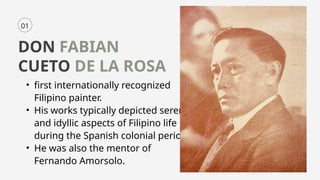
DON FABIAN
CUETO DE LA ROSA
• first internationally recognized
Filipino painter.
• His works typically depicted serene
and idyllic aspects of Filipino life
during the Spanish colonial period.
• He was also the mentor of
Fernando Amorsolo.
Planting Rice
02
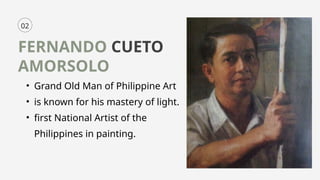
FERNANDO CUETO
AMORSOLO
• Grand Old Man of Philippine Art
• is known for his mastery of light.
• first National Artist of the
Philippines in painting.
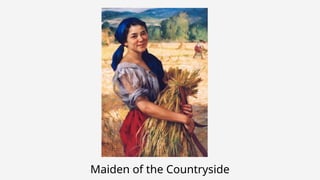
Maiden of the Countryside
03
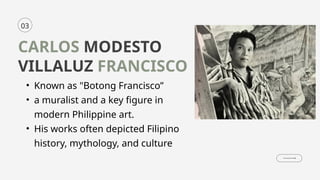
CARLOS MODESTO
VILLALUZ FRANCISCO
• Known as "Botong Francisco”
• a muralist and a key figure in
modern Philippine art.
• His works often depicted Filipino
history, mythology, and culture
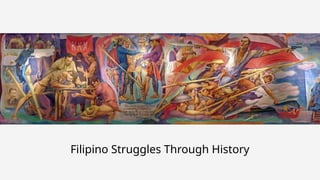
Filipino Struggles Through History
04
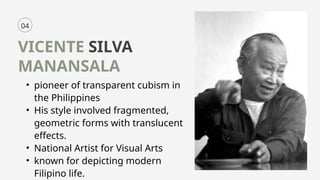
VICENTE SILVA
MANANSALA
• pioneer of transparent cubism in
the Philippines
• His style involved fragmented,
geometric forms with translucent
effects.
• National Artist for Visual Arts
• known for depicting modern
Filipino life.
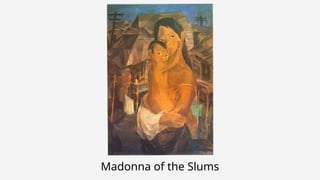
Madonna of the Slums
05
GUILLERMO ESTRELLA
TOLENTINO
• sculptor and National Artist for
Visual Arts
• known for his classical sculptures
that embody Filipino ideals and
history.
• His art reflects patriotism and is
strongly associated with the
identity of the Filipino nation.
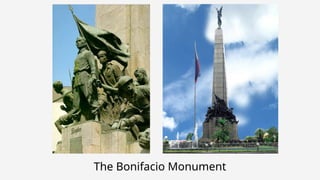
The Bonifacio Monument

MAPEH SUBJECT - ARTS FOR GRADE 5 STUDENTS

Editor's Notes

  • #4 The scene emphasizes harmony between people and nature, reflecting De la Rosa’s romantic view of rural life.
  • #6 This portrait features a young provincial woman with a radiant smile, symbolizing Filipino beauty. It embodies Amorsolo’s signature style of idealized rural life bathed in warm sunlight.
  • #8 narrative of Philippine history, covering significant events and personalities from pre-colonial times to the American period. It’s housed in the Manila City Hall.
  • #10 post-war Manila, showing a mother and child in a poor community. The painting captures both the suffering and hope of urban life, expressed through Manansala’s distinct cubist style.
  • #12 located in Caloocan, depicts Andres Bonifacio leading a group of Katipuneros. It is a symbol of the Philippine revolution and Tolentino’s masterpiece in portraying heroism and struggle.