– refers to the muscle’s ability to
generate force against physical
objects. In the fitness world, this
typically refers to how much
weight you can lift for different
strength training exercises.
Purpose – to measure strength of upper
extremities
Equipment Exercise mats or any clean mats
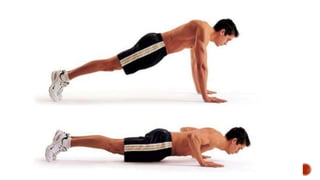
For you: a. Lie down on the mat; face down in
standard push-up position: palms on the mat under
the shoulders, fingers pointing forward, and legs
straight, parallel, and slightly apart, with the toes
supporting the feet.
b. FOR BOYS: Straighten the arms, keeping the
back and knees straight, then lower the arms until
there is a 90-degree angle at the elbows (upper arms
are parallel to the floor).
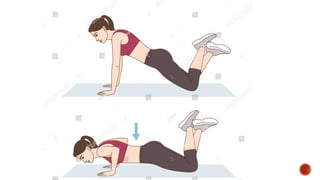
FOR GIRLS: With knees in contact
with the floor, straighten the arms,
keeping the back straight, then lower
the arms until there is a 90-degree
angle at the elbows (upper arms are
parallel to the floor).
c. Perform as many repetitions as
possible, maintaining a cadence of 20
push-ups per minute (2 seconds going
down and 1 second going up).
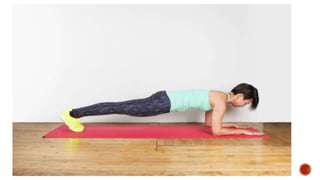
Lay on the floor with your elbows under
your shoulders, hands flat on the floor
and core engaged. Keeping your forearms
and knees on the floor slowly raise
yourself upwards until your body is in a
straight line from your knees to your
head. Hold the position for as long as you
FLEXIBILITY –
refers to the ability of the
joints to move through a full
range of motion.
 a test of flexibility for the lower extremities, particularly the
hamstring.
Purpose – reach as far as possible without bending the
hamstring
Equipment: Tape Measure
For you:
a. Sit on the floor with back flat on the wall with
feet approximately 12 inches apart.
b. Without bending your back, knees, and elbows,
place one hand on top of the other and position the
hands on the floor.
c. After the tester has positioned the zero point of
the tape measure, start the test by slowly reaching
the farthest point possible without bending the
knees.
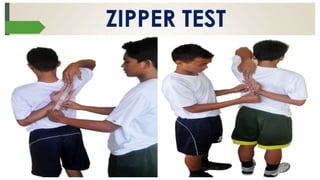
–Shoulder flexibility test is
also called the zipper test and
here are some of the things
you might want to know about
this.
– is the ability of the heart, lungs and
blood vessels to deliver oxygen to working
muscles and tissues, as well as the ability
of those muscles and tissues to utilize that
oxygen. Endurance may also refer to the
ability of the muscle to do repeated work
without fatigue.
Purpose - to measure cardiovascular
endurance
Equipment 1. Step with a height of 12
inches
2. Stopwatch
For you:
a. Position in front of the step.
b. At the signal go, step up and down on a bench for 3
minutes at a rate of 24 steps per minute. One step consists
of 4 beats, – that is, “up with the left foot, up with the right
foot, down with the left foot, down with the right foot.”
c. Immediately after the exercise, stand and relax. Don't
talk.
d. Right after the activity, locate your pulse. (the first beat is
zero.)
e. Count the pulse for 10 seconds. Multiply by 6.
he rate at which
someone or something is
able to move or operate.
The 40 Meter Sprint is a 40
meter run primarily
to evaluate the speed of a
person. It shows how fast a
person can finish the 40 meter
move or travel with
great speed or force.
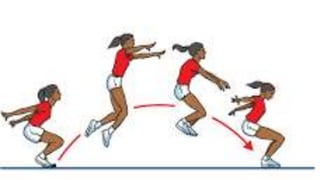
also known as the standing broad jump, is
an athletics event. It was an Olympic
event until 1912. It is one of three
standing variants of track and field
jumping events, which also include the
standing high jump and standing triple
jump.
an ability to change the body's position
quickly and requires the integration of
isolated movement skills using a
combination of balance, coordination,
speed, reflexes, strength, and
endurance.
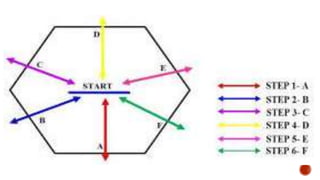
is a measure of speed, agility and
the ability to change direction
while maintaining a sound
balance (foundation).
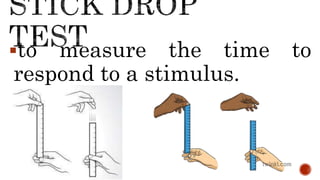
REACTION TIME
is an ability often overlooked in
sport. It simply means how fast
an athlete is able to respond
to a stimulus.
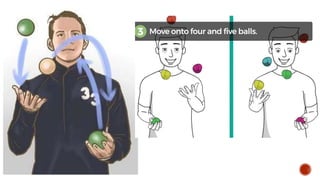
to measure the time to
respond to a stimulus.
the ability to use the senses with
the body parts to perform motor
tasks smoothly and accurately.
to measure the coordination of the eye
and hand.
Equipment – Sipa (washer w/ straw)/20
pcs. bundled rubber bands/any similar
local materials (4-5 grams)
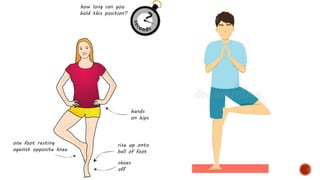
– is the maintenance of
equilibrium while
stationary or while moving.
Purpose – to assess ones ability to
maintain equilibrium.
Equipment: flat, non-slip surface,
stopwatch
mapeh 8 (lesson 1).pptx

mapeh 8 (lesson 1).pptx

  • 6.
    – refers tothe muscle’s ability to generate force against physical objects. In the fitness world, this typically refers to how much weight you can lift for different strength training exercises.
  • 7.
    Purpose – tomeasure strength of upper extremities Equipment Exercise mats or any clean mats
  • 8.
    For you: a.Lie down on the mat; face down in standard push-up position: palms on the mat under the shoulders, fingers pointing forward, and legs straight, parallel, and slightly apart, with the toes supporting the feet. b. FOR BOYS: Straighten the arms, keeping the back and knees straight, then lower the arms until there is a 90-degree angle at the elbows (upper arms are parallel to the floor).
  • 10.
    FOR GIRLS: Withknees in contact with the floor, straighten the arms, keeping the back straight, then lower the arms until there is a 90-degree angle at the elbows (upper arms are parallel to the floor). c. Perform as many repetitions as possible, maintaining a cadence of 20 push-ups per minute (2 seconds going down and 1 second going up).
  • 12.
    Lay on thefloor with your elbows under your shoulders, hands flat on the floor and core engaged. Keeping your forearms and knees on the floor slowly raise yourself upwards until your body is in a straight line from your knees to your head. Hold the position for as long as you
  • 14.
    FLEXIBILITY – refers tothe ability of the joints to move through a full range of motion.
  • 15.
     a testof flexibility for the lower extremities, particularly the hamstring. Purpose – reach as far as possible without bending the hamstring Equipment: Tape Measure
  • 16.
    For you: a. Siton the floor with back flat on the wall with feet approximately 12 inches apart. b. Without bending your back, knees, and elbows, place one hand on top of the other and position the hands on the floor. c. After the tester has positioned the zero point of the tape measure, start the test by slowly reaching the farthest point possible without bending the knees.
  • 18.
    –Shoulder flexibility testis also called the zipper test and here are some of the things you might want to know about this.
  • 20.
    – is theability of the heart, lungs and blood vessels to deliver oxygen to working muscles and tissues, as well as the ability of those muscles and tissues to utilize that oxygen. Endurance may also refer to the ability of the muscle to do repeated work without fatigue.
  • 21.
    Purpose - tomeasure cardiovascular endurance Equipment 1. Step with a height of 12 inches 2. Stopwatch
  • 22.
    For you: a. Positionin front of the step. b. At the signal go, step up and down on a bench for 3 minutes at a rate of 24 steps per minute. One step consists of 4 beats, – that is, “up with the left foot, up with the right foot, down with the left foot, down with the right foot.” c. Immediately after the exercise, stand and relax. Don't talk. d. Right after the activity, locate your pulse. (the first beat is zero.) e. Count the pulse for 10 seconds. Multiply by 6.
  • 25.
    he rate atwhich someone or something is able to move or operate.
  • 26.
    The 40 MeterSprint is a 40 meter run primarily to evaluate the speed of a person. It shows how fast a person can finish the 40 meter
  • 28.
    move or travelwith great speed or force.
  • 29.
    also known asthe standing broad jump, is an athletics event. It was an Olympic event until 1912. It is one of three standing variants of track and field jumping events, which also include the standing high jump and standing triple jump.
  • 31.
    an ability tochange the body's position quickly and requires the integration of isolated movement skills using a combination of balance, coordination, speed, reflexes, strength, and endurance.
  • 32.
    is a measureof speed, agility and the ability to change direction while maintaining a sound balance (foundation).
  • 34.
    REACTION TIME is anability often overlooked in sport. It simply means how fast an athlete is able to respond to a stimulus.
  • 35.
    to measure thetime to respond to a stimulus.
  • 36.
    the ability touse the senses with the body parts to perform motor tasks smoothly and accurately.
  • 37.
    to measure thecoordination of the eye and hand. Equipment – Sipa (washer w/ straw)/20 pcs. bundled rubber bands/any similar local materials (4-5 grams)
  • 39.
    – is themaintenance of equilibrium while stationary or while moving.
  • 40.
    Purpose – toassess ones ability to maintain equilibrium. Equipment: flat, non-slip surface, stopwatch