RIS MAP™ Parent Forum
Friday Oct. 9, 2015
7:45 in H408
You are invited to join us to learn:
What is MAP testing?
How to read MAP reports?
How are results used at school?
How can you support your child?
2
Intended Accomplishments
To develop an awareness of:
▪ Measures of Academic Progress™ (MAP)
assessments
▪ The Rasch unIT (RIT) scale
▪ The characteristics and uses of MAP™ data
3
Types of Tests
READING- MATHEMATICS-LANGUAGE
Survey w/ Goals
▪ 42-52 questions
▪ Overall score for subject
▪ Goal area scores
▪ Average time for each test 50 minutes
4
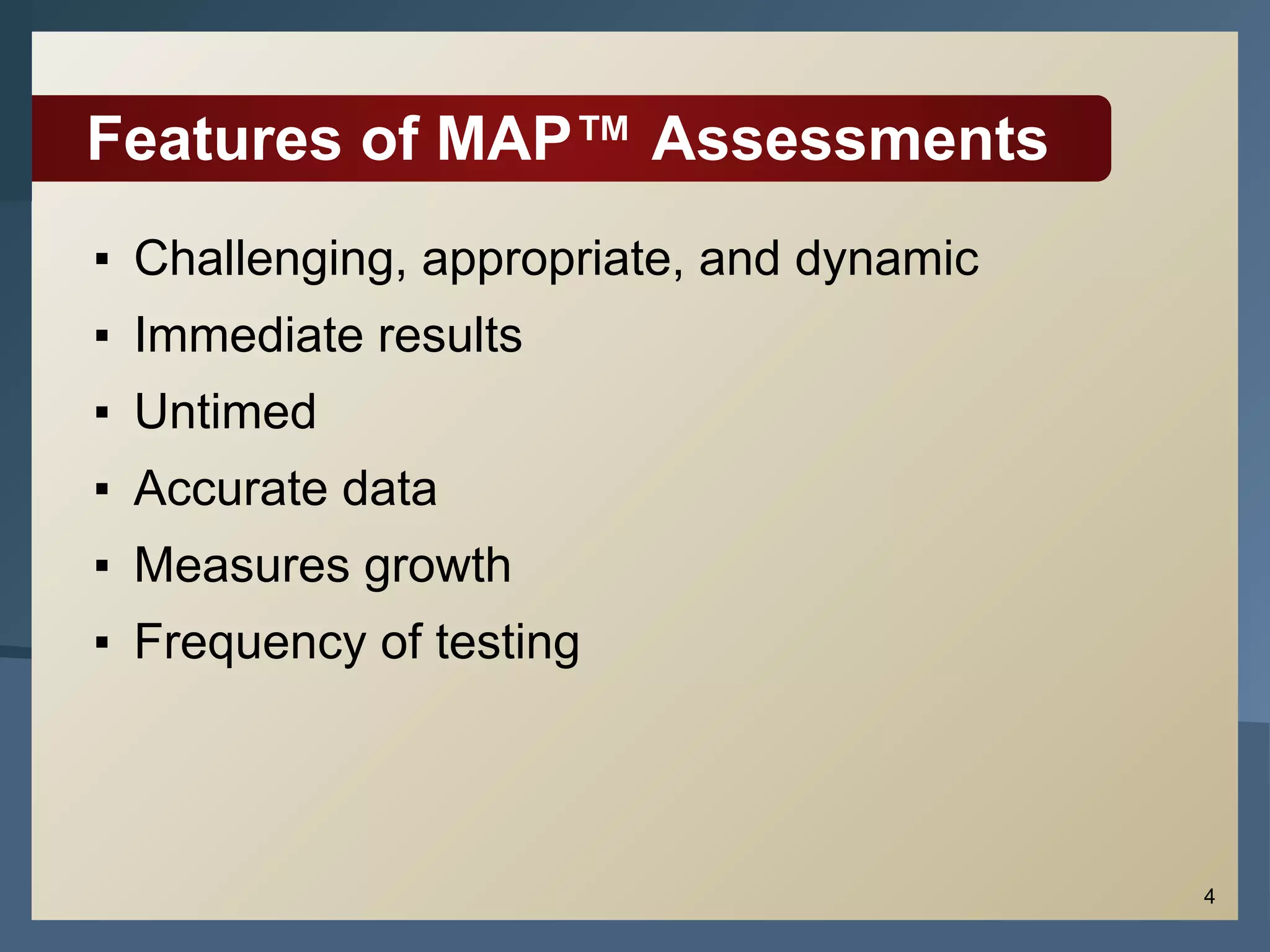
Features of MAP™ Assessments
▪ Challenging, appropriate, and dynamic
▪ Immediate results
▪ Untimed
▪ Accurate data
▪ Measures growth
▪ Frequency of testing
The MAP test:
◼ Provides information about the
instructional level of the student.
◼ Provides a roadmap for students
toward achieving mastery.
◼ Is not a test for determining mastery
of skills.
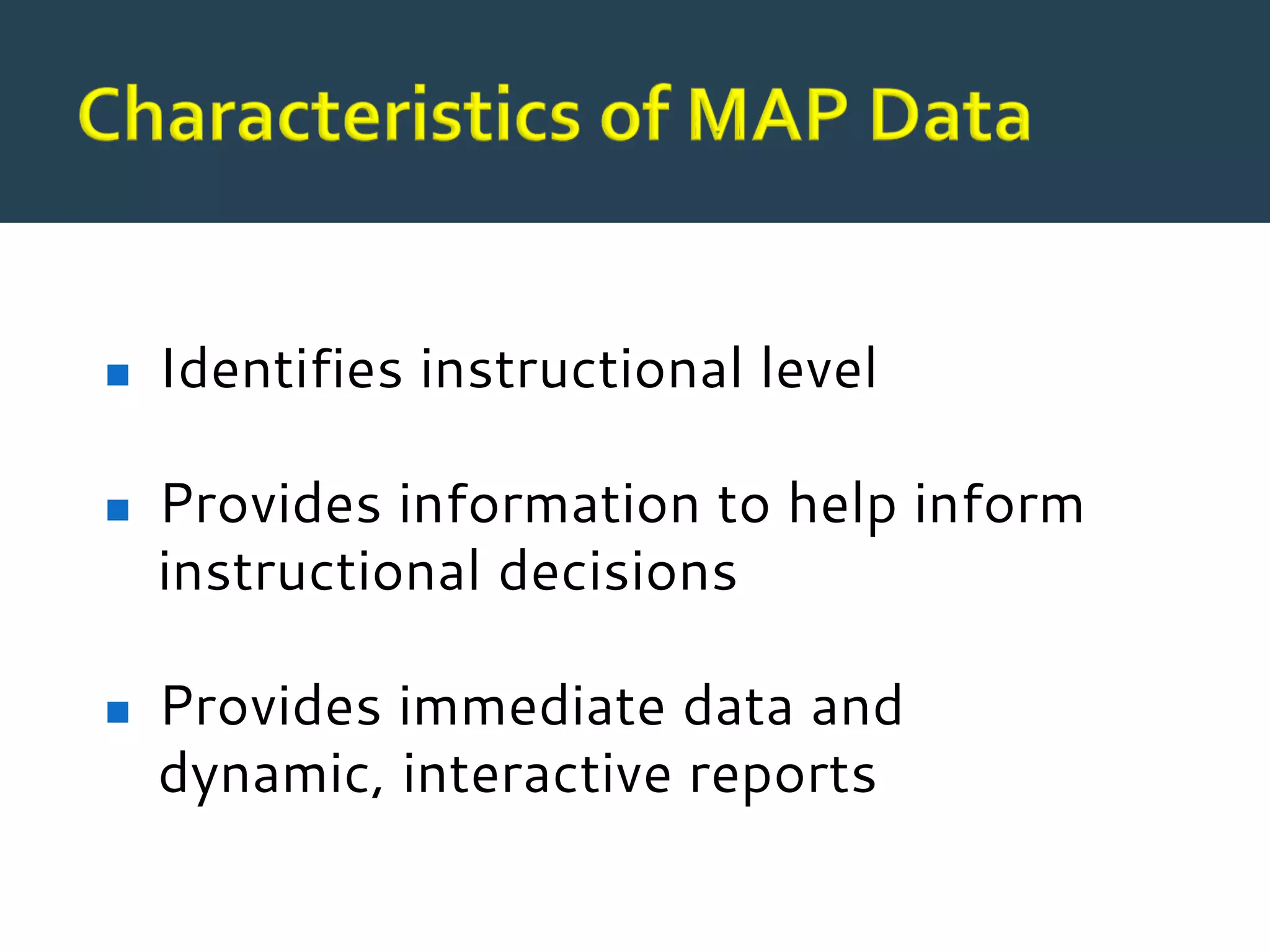
◼ Identifies instructional level
◼ Provides information to help inform
instructional decisions
◼ Provides immediate data and
dynamic, interactive reports
Beginning Literacy
Adult
Reading
5th
Grade
x x x
x
x
x
x
x
x
x
x
x
x
x
x
MAP Test
+ +
-
+ -- - +++
+ 215
7
▪ Achievement scale
▪ Equal-interval scale
▪ Used to show growth
over time
▪ Independent of grade
level
120
250
2
3
4
5
6
7
6
7
8
9
10
Grade-
Level
Norms
RIT
Skills Data
DesCartes or
Primary Grades
Instructional Data
K
1
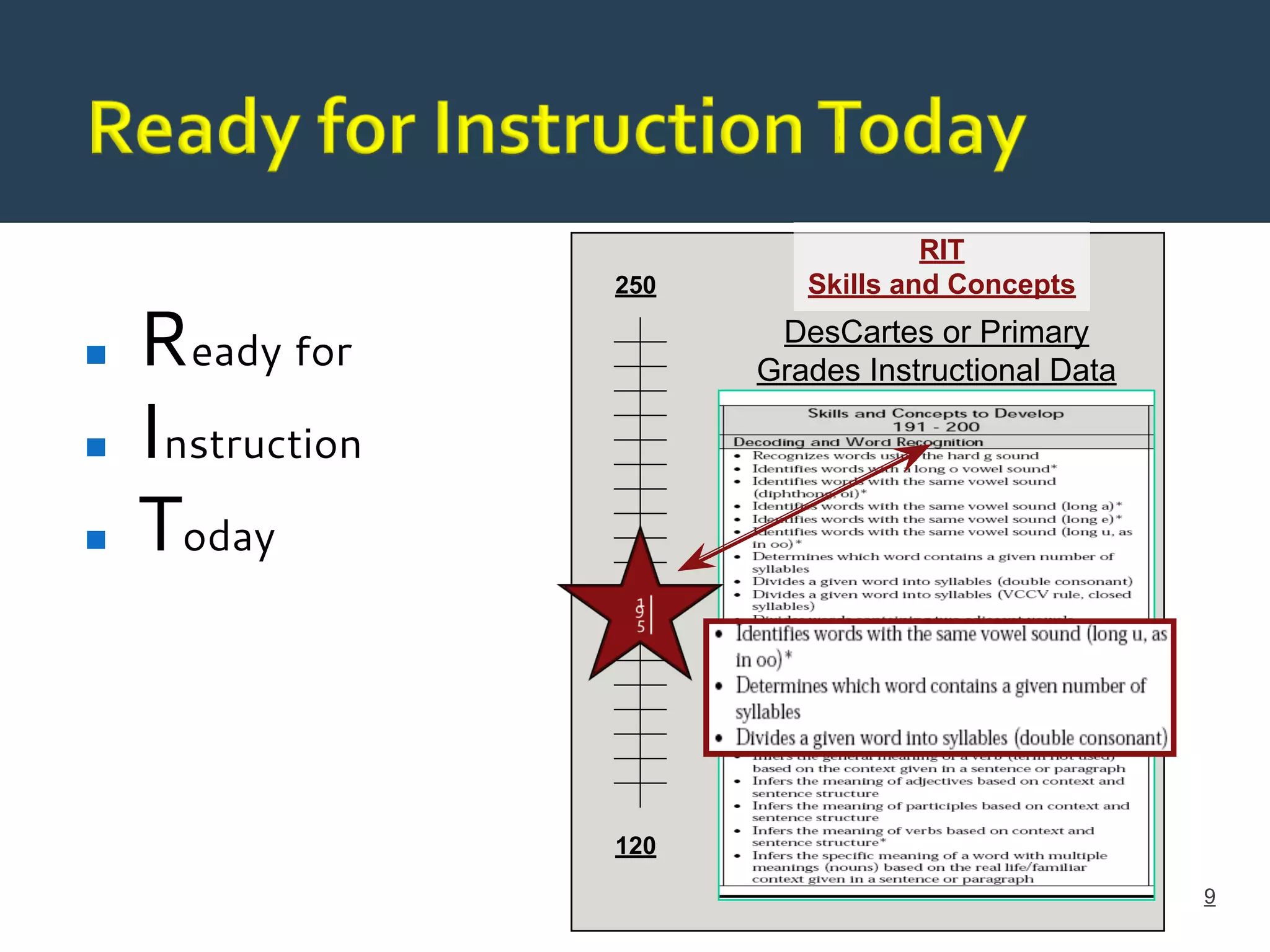
◼ Ready for
◼ Instruction
◼ Today
9
120
250
RIT
Skills and Concepts
DesCartes or Primary
Grades Instructional Data
What are expected RIT and growth
scores?
10
typical
Normative Data, grades K-11
▪ 2015 Norm Study
▪ millions of test takers
12
MAP tells us…
◼ A snapshot in time
◼ Norm referenced
◼ School performance
Classroom evidence
tells us…
◼ A more complete
story
◼ Triangulated data
◼ Based on our
curriculum
Collecting evidence
Referencing with
classroom work
Making plans according
to RIS curriculum
Collaborating with each
other
16
17
◼ Helps inform instructional decisions
◼ Differentiation
◼ Flexible grouping
◼ Program and curriculum evaluation
18
Questions?
Parent Toolkit at:
https://www.nwea.org/resources/parent-toolkit/

MAP Parent Forum

  • 1.
    RIS MAP™ ParentForum Friday Oct. 9, 2015 7:45 in H408 You are invited to join us to learn: What is MAP testing? How to read MAP reports? How are results used at school? How can you support your child?
  • 2.
    2 Intended Accomplishments To developan awareness of: ▪ Measures of Academic Progress™ (MAP) assessments ▪ The Rasch unIT (RIT) scale ▪ The characteristics and uses of MAP™ data
  • 3.
    3 Types of Tests READING-MATHEMATICS-LANGUAGE Survey w/ Goals ▪ 42-52 questions ▪ Overall score for subject ▪ Goal area scores ▪ Average time for each test 50 minutes
  • 4.
    4 Features of MAP™Assessments ▪ Challenging, appropriate, and dynamic ▪ Immediate results ▪ Untimed ▪ Accurate data ▪ Measures growth ▪ Frequency of testing
  • 5.
    The MAP test: ◼Provides information about the instructional level of the student. ◼ Provides a roadmap for students toward achieving mastery. ◼ Is not a test for determining mastery of skills.
  • 6.
    ◼ Identifies instructionallevel ◼ Provides information to help inform instructional decisions ◼ Provides immediate data and dynamic, interactive reports
  • 7.
    Beginning Literacy Adult Reading 5th Grade x xx x x x x x x x x x x x x MAP Test + + - + -- - +++ + 215 7
  • 8.
    ▪ Achievement scale ▪Equal-interval scale ▪ Used to show growth over time ▪ Independent of grade level 120 250 2 3 4 5 6 7 6 7 8 9 10 Grade- Level Norms RIT Skills Data DesCartes or Primary Grades Instructional Data K 1
  • 9.
    ◼ Ready for ◼Instruction ◼ Today 9 120 250 RIT Skills and Concepts DesCartes or Primary Grades Instructional Data
  • 10.
    What are expectedRIT and growth scores? 10 typical Normative Data, grades K-11 ▪ 2015 Norm Study ▪ millions of test takers
  • 12.
  • 14.
    MAP tells us… ◼A snapshot in time ◼ Norm referenced ◼ School performance Classroom evidence tells us… ◼ A more complete story ◼ Triangulated data ◼ Based on our curriculum
  • 15.
    Collecting evidence Referencing with classroomwork Making plans according to RIS curriculum Collaborating with each other
  • 16.
  • 17.
  • 18.
    ◼ Helps informinstructional decisions ◼ Differentiation ◼ Flexible grouping ◼ Program and curriculum evaluation 18
  • 19.