MAP
A map is a picture or representation of the Earth's surface, showing how things are
related to each other by distance, direction, and size. Maps are a way of showing many
things about a portion of the earth's surface on a flat piece of paper that can be carried
and transported easily. A map is not a photograph of the Earth's surface. It can show
many things that a picture cannot show, and as a result, a map looks different in many
ways from a photograph of the Earth's surface.
Maps have been used for centuries. A person who creates map as a profession is
called a cartographer.

USES OF MAPS
Maps are used by people to find places they have not seen. Let’s say you are asked to
find the nearest high school from your house. You could walk aimlessly from your house
and hope you find a school.

TOPOGRAPHIC MAPS
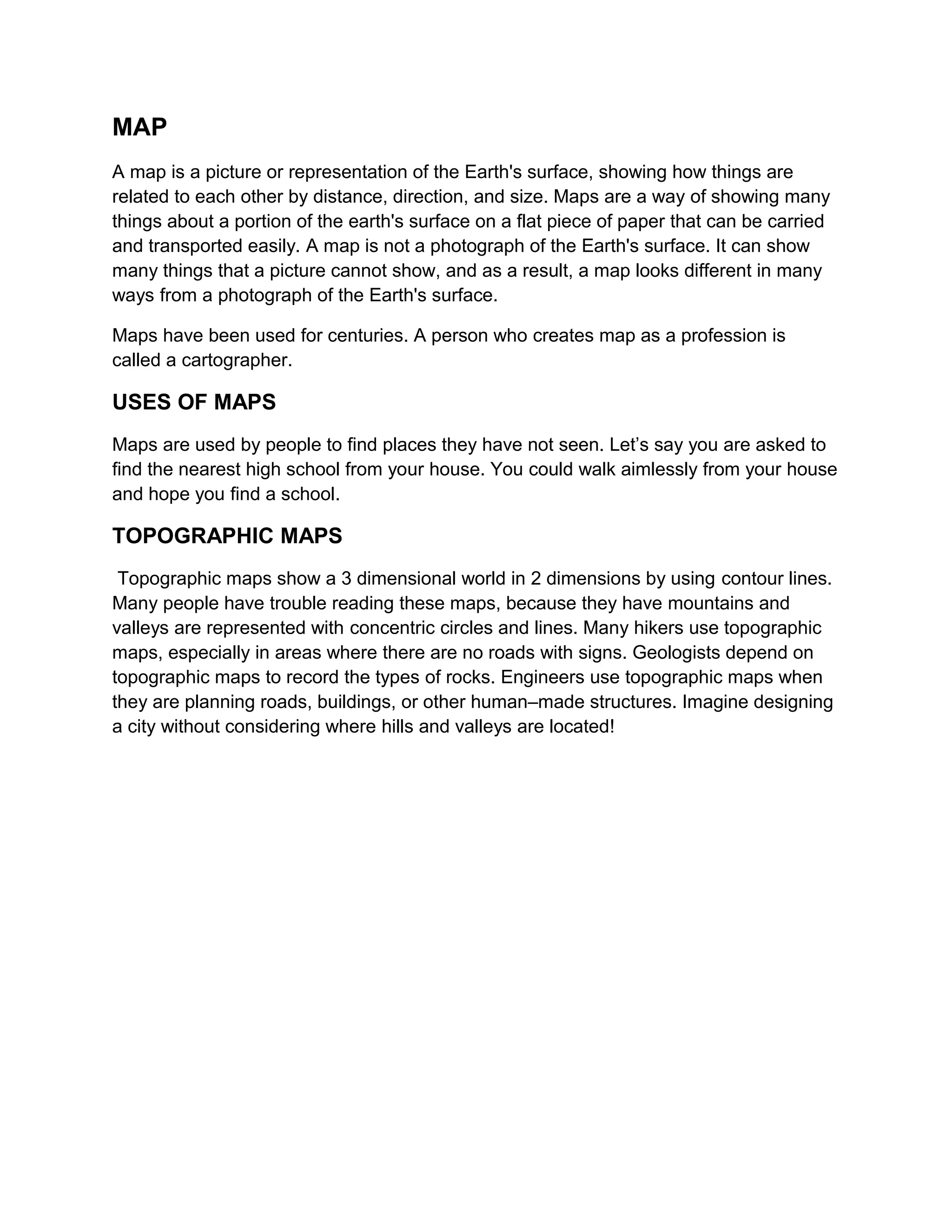
Topographic maps show a 3 dimensional world in 2 dimensions by using contour lines.
Many people have trouble reading these maps, because they have mountains and
valleys are represented with concentric circles and lines. Many hikers use topographic
maps, especially in areas where there are no roads with signs. Geologists depend on
topographic maps to record the types of rocks. Engineers use topographic maps when
they are planning roads, buildings, or other human–made structures. Imagine designing
a city without considering where hills and valleys are located!
GEOLOGIC MAPS
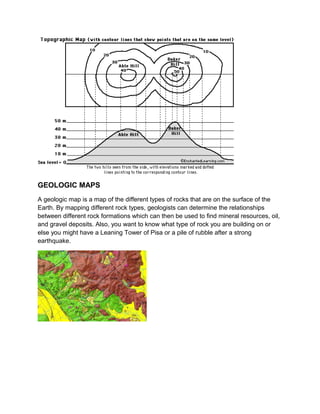
A geologic map is a map of the different types of rocks that are on the surface of the
Earth. By mapping different rock types, geologists can determine the relationships
between different rock formations which can then be used to find mineral resources, oil,
and gravel deposits. Also, you want to know what type of rock you are building on or
else you might have a Leaning Tower of Pisa or a pile of rubble after a strong
earthquake.
BIOGEOGRAPHIC MAPS
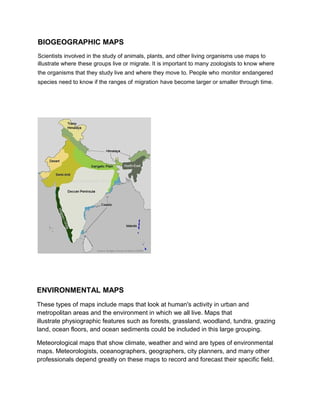
Scientists involved in the study of animals, plants, and other living organisms use maps to
illustrate where these groups live or migrate. It is important to many zoologists to know where
the organisms that they study live and where they move to. People who monitor endangered
species need to know if the ranges of migration have become larger or smaller through time.

ENVIRONMENTAL MAPS
These types of maps include maps that look at human's activity in urban and
metropolitan areas and the environment in which we all live. Maps that
illustrate physiographic features such as forests, grassland, woodland, tundra, grazing
land, ocean floors, and ocean sediments could be included in this large grouping.
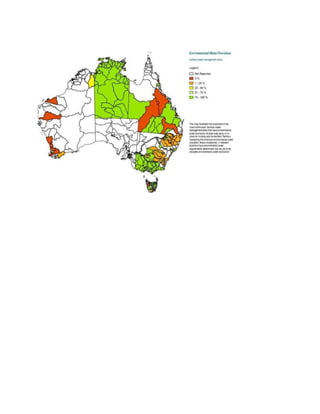
Meteorological maps that show climate, weather and wind are types of environmental
maps. Meteorologists, oceanographers, geographers, city planners, and many other
professionals depend greatly on these maps to record and forecast their specific field.
Map

Map

  • 1.
    MAP A map isa picture or representation of the Earth's surface, showing how things are related to each other by distance, direction, and size. Maps are a way of showing many things about a portion of the earth's surface on a flat piece of paper that can be carried and transported easily. A map is not a photograph of the Earth's surface. It can show many things that a picture cannot show, and as a result, a map looks different in many ways from a photograph of the Earth's surface. Maps have been used for centuries. A person who creates map as a profession is called a cartographer. USES OF MAPS Maps are used by people to find places they have not seen. Let’s say you are asked to find the nearest high school from your house. You could walk aimlessly from your house and hope you find a school. TOPOGRAPHIC MAPS Topographic maps show a 3 dimensional world in 2 dimensions by using contour lines. Many people have trouble reading these maps, because they have mountains and valleys are represented with concentric circles and lines. Many hikers use topographic maps, especially in areas where there are no roads with signs. Geologists depend on topographic maps to record the types of rocks. Engineers use topographic maps when they are planning roads, buildings, or other human–made structures. Imagine designing a city without considering where hills and valleys are located!
  • 2.
    GEOLOGIC MAPS A geologicmap is a map of the different types of rocks that are on the surface of the Earth. By mapping different rock types, geologists can determine the relationships between different rock formations which can then be used to find mineral resources, oil, and gravel deposits. Also, you want to know what type of rock you are building on or else you might have a Leaning Tower of Pisa or a pile of rubble after a strong earthquake.
  • 3.
    BIOGEOGRAPHIC MAPS Scientists involvedin the study of animals, plants, and other living organisms use maps to illustrate where these groups live or migrate. It is important to many zoologists to know where the organisms that they study live and where they move to. People who monitor endangered species need to know if the ranges of migration have become larger or smaller through time. ENVIRONMENTAL MAPS These types of maps include maps that look at human's activity in urban and metropolitan areas and the environment in which we all live. Maps that illustrate physiographic features such as forests, grassland, woodland, tundra, grazing land, ocean floors, and ocean sediments could be included in this large grouping. Meteorological maps that show climate, weather and wind are types of environmental maps. Meteorologists, oceanographers, geographers, city planners, and many other professionals depend greatly on these maps to record and forecast their specific field.