BY:NAYAN
ROHIT
Stakeholder
Management
What do you need?
You need to
› Develop relationships and trust among stakeholders and
individuals that influence your products
› Manage relationships among your stakeholders
› Benefit from powerful stakeholders
› Ensure requirements are identified and aligned as early as
possible
› Mitigate risks and problems that delay your product
› Understand stakeholder tolerance in your risks
› Identify positive existing relationships
› Identify stakeholders and align with their expectations early
enough
Stakeholder Management ?..
› It is the process of interpreting and
influencing both the external and
internal environments exist in your
product life cycle by creating positive
relationships with stakeholders through
the appropriate management of their
expectations and agreed objectives.
.
• Product owner
• Scrum master
• Feature development teams
What we want!
Product owner
By definition, the primary goal of a product owner is to
represent the needs and desires of the stakeholder
community
› Help the stakeholders understand
• Product/feature requirements
• Product/feature plans
• Business and product/feature risks
› Listens to all stakeholders
› Report to internal & external product stakeholders
› Negotiate with internal & external product stakeholders
› Collaborate closely with all product stakeholders
› Understand stakeholder needs and expectations
Scrum master
› As a facilitator,
–to facilitate stakeholder management activities
–to help all roles and functions to collaborate closely
› As a coach,
–educate the Team and Product Owner
› to follow the process
› to remain engaged from the definition to the completion of the
feature
› to set the right expectations
› to provide ongoing feedback and support
› to allow all the transparency required and needed towards their
stakeholders
Development team
› › Keep stakeholders satisfied, actively engaged and
informed
› Monitor them and be aware if their expectations changed
› Communicate often using the right tools
› Be able to justify their decisions
› Be informed of future’s risks
› Determine product team interaction points
› Define the objectives
› Set the frequency
The challenge
›Unidentified stakeholders
–those who were not identified early in the project
›Unclear stakeholders
–those who do not clearly articulate
–those who are not open and honest about their
interests and expectations
› There’smisalignment
– Conflicting priorities
– Unshared vision
› There are politics
› You may be the messenger...
– At some point, you will need to give bad new
– You will need to say no
› And stakeholders changing over time
– At any given point, you may not know who they all are
– We need a systematic approach to identify and prioritize
The challenge
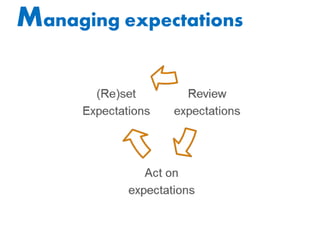
Managing expectations
What is needed
›Patience
› Settingthe right expectation
–on scope
–and timing
›Prioritize right
›Allocate feature resources and budget right
›Be able to justify your decisions
› Continuous planning and riskassessment
Be prepared for
›Questions from those not familiar with your
practices
–“What do you mean you can’t commit to what
I’m getting six months from now?”
–“Can you squeeze it in? It’s really small.”
–“Why are you wasting time on architecture
and
refactoring?”
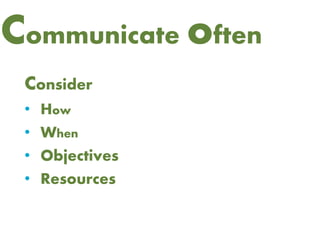
Consider
• How
• When
• Objectives
• Resources
Communicate often
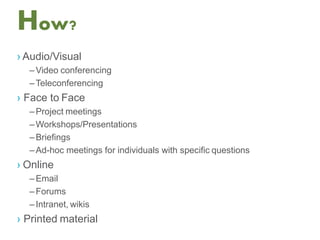
How?
› Audio/Visual
–Video conferencing
–Teleconferencing
› Face to Face
–Project meetings
–Workshops/Presentations
–Briefings
–Ad-hoc meetings for individuals with specific questions
› Online
–Email
–Forums
–Intranet, wikis
› Printed material
When?
›Proactive communication (preferably)
›Reactive communication
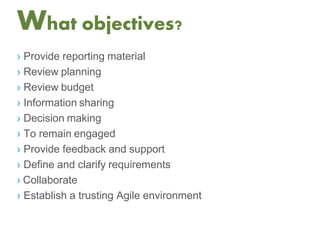
What objectives?
› Provide reporting material
› Review planning
› Review budget
› Information sharing
› Decision making
› To remain engaged
› Provide feedback and support
› Define and clarify requirements
› Collaborate
› Establish a trusting Agile environment
Which resources?
›Define spokes-people
–Good to speak with one voice
–Good to know the audience
Proposals
› Gather all stakeholder intelligence in one place
› After product completion forward or present your
feedback and experiences to your organization
and development community
› Share your good practices
THANKU…..

Managing stakeholder expectation

  • 1.
  • 2.
  • 3.
    You need to ›Develop relationships and trust among stakeholders and individuals that influence your products › Manage relationships among your stakeholders › Benefit from powerful stakeholders › Ensure requirements are identified and aligned as early as possible › Mitigate risks and problems that delay your product › Understand stakeholder tolerance in your risks › Identify positive existing relationships › Identify stakeholders and align with their expectations early enough
  • 4.
    Stakeholder Management ?.. ›It is the process of interpreting and influencing both the external and internal environments exist in your product life cycle by creating positive relationships with stakeholders through the appropriate management of their expectations and agreed objectives. .
  • 5.
    • Product owner •Scrum master • Feature development teams What we want!
  • 6.
    Product owner By definition,the primary goal of a product owner is to represent the needs and desires of the stakeholder community › Help the stakeholders understand • Product/feature requirements • Product/feature plans • Business and product/feature risks › Listens to all stakeholders › Report to internal & external product stakeholders › Negotiate with internal & external product stakeholders › Collaborate closely with all product stakeholders › Understand stakeholder needs and expectations
  • 7.
    Scrum master › Asa facilitator, –to facilitate stakeholder management activities –to help all roles and functions to collaborate closely › As a coach, –educate the Team and Product Owner › to follow the process › to remain engaged from the definition to the completion of the feature › to set the right expectations › to provide ongoing feedback and support › to allow all the transparency required and needed towards their stakeholders
  • 8.
    Development team › ›Keep stakeholders satisfied, actively engaged and informed › Monitor them and be aware if their expectations changed › Communicate often using the right tools › Be able to justify their decisions › Be informed of future’s risks › Determine product team interaction points › Define the objectives › Set the frequency
  • 9.
    The challenge ›Unidentified stakeholders –thosewho were not identified early in the project ›Unclear stakeholders –those who do not clearly articulate –those who are not open and honest about their interests and expectations
  • 10.
    › There’smisalignment – Conflictingpriorities – Unshared vision › There are politics › You may be the messenger... – At some point, you will need to give bad new – You will need to say no › And stakeholders changing over time – At any given point, you may not know who they all are – We need a systematic approach to identify and prioritize The challenge
  • 11.
  • 12.
    What is needed ›Patience ›Settingthe right expectation –on scope –and timing ›Prioritize right ›Allocate feature resources and budget right ›Be able to justify your decisions › Continuous planning and riskassessment
  • 13.
    Be prepared for ›Questionsfrom those not familiar with your practices –“What do you mean you can’t commit to what I’m getting six months from now?” –“Can you squeeze it in? It’s really small.” –“Why are you wasting time on architecture and refactoring?”
  • 14.
    Consider • How • When •Objectives • Resources Communicate often
  • 15.
    How? › Audio/Visual –Video conferencing –Teleconferencing ›Face to Face –Project meetings –Workshops/Presentations –Briefings –Ad-hoc meetings for individuals with specific questions › Online –Email –Forums –Intranet, wikis › Printed material
  • 16.
  • 17.
    What objectives? › Providereporting material › Review planning › Review budget › Information sharing › Decision making › To remain engaged › Provide feedback and support › Define and clarify requirements › Collaborate › Establish a trusting Agile environment
  • 18.
    Which resources? ›Define spokes-people –Goodto speak with one voice –Good to know the audience
  • 19.
    Proposals › Gather allstakeholder intelligence in one place › After product completion forward or present your feedback and experiences to your organization and development community › Share your good practices
  • 20.