Russell Cummings
27 June 2018
Webinar 2
Agenda
•Coaching your Team members
•Having difficult conversations
•Step off the accelerator
•Looking for Waste
•Finance basics
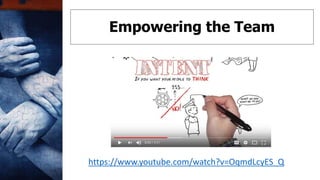
Empowering the Team
https://www.youtube.com/watch?v=OqmdLcyES_Q
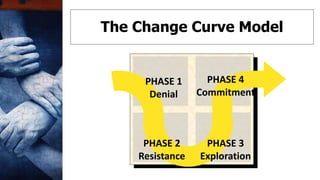
PHASE 2
Resistance
PHASE 3
Exploration
PHASE 4
Commitment
PHASE 1
Denial
The Change Curve Model
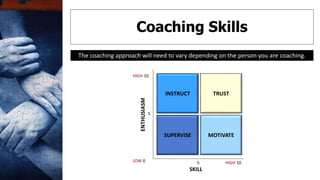
INSTRUCT
MOTIVATE
TRUST
SUPERVISE
SKILL
ENTHUSIASM
LOW 0
HIGH 10
HIGH 10
5
5
The coaching approach will need to vary depending on the person you are coaching.
Coaching Skills
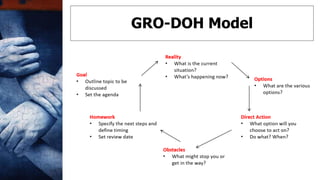
GRO-DOH Model
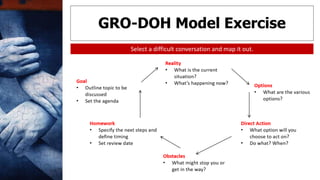
GRO-DOH Model Exercise
Select a difficult conversation and map it out.
Personal Performance
Slow down to speed up
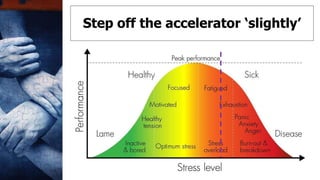
Step off the accelerator ‘slightly’
Actions: Step off the accelerator
‘slightly’
What can do to slow down
slightly and do a better job?
Looking for Waste
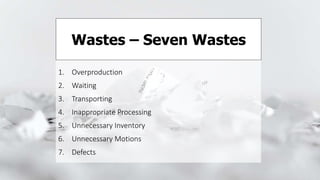
1. Overproduction
2. Waiting
3. Transporting
4. Inappropriate Processing
5. Unnecessary Inventory
6. Unnecessary Motions
7. Defects
Wastes – Seven Wastes
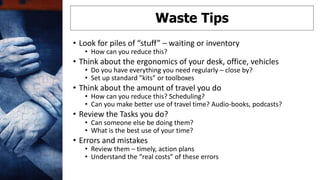
• Look for piles of “stuff” – waiting or inventory
• How can you reduce this?
• Think about the ergonomics of your desk, office, vehicles
• Do you have everything you need regularly – close by?
• Set up standard ”kits” or toolboxes
• Think about the amount of travel you do
• How can you reduce this? Scheduling?
• Can you make better use of travel time? Audio-books, podcasts?
• Review the Tasks you do?
• Can someone else be doing them?
• What is the best use of your time?
• Errors and mistakes
• Review them – timely, action plans
• Understand the “real costs” of these errors
Waste Tips
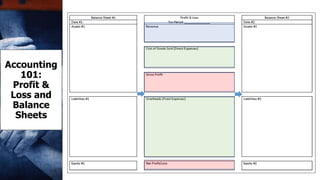
Accounting Basics
Accounting
101:
Profit &
Loss and
Balance
Sheets
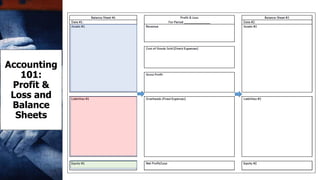
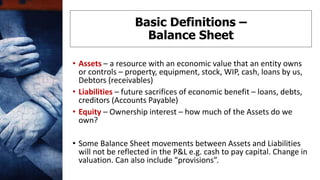
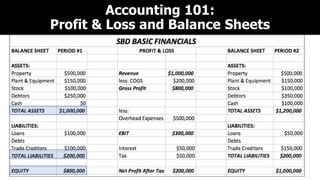
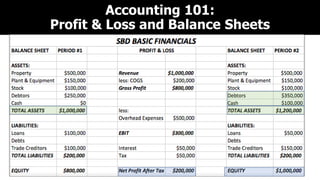
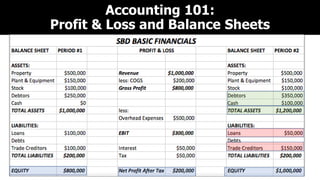
• Assets – a resource with an economic value that an entity owns
or controls – property, equipment, stock, WIP, cash, loans by us,
Debtors (receivables)
• Liabilities – future sacrifices of economic benefit – loans, debts,
creditors (Accounts Payable)
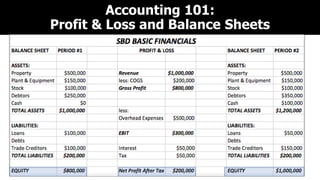
• Equity – Ownership interest – how much of the Assets do we
own?
• Some Balance Sheet movements between Assets and Liabilities
will not be reflected in the P&L e.g. cash to pay capital. Change in
valuation. Can also include “provisions”.
Basic Definitions –
Balance Sheet
Accounting
101:
Profit &
Loss and
Balance
Sheets
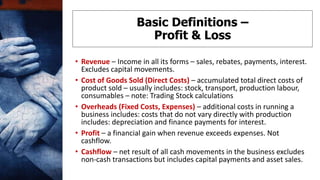
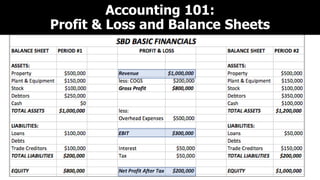
• Revenue – Income in all its forms – sales, rebates, payments, interest.
Excludes capital movements.
• Cost of Goods Sold (Direct Costs) – accumulated total direct costs of
product sold – usually includes: stock, transport, production labour,
consumables – note: Trading Stock calculations
• Overheads (Fixed Costs, Expenses) – additional costs in running a
business includes: costs that do not vary directly with production
includes: depreciation and finance payments for interest.
• Profit – a financial gain when revenue exceeds expenses. Not
cashflow.
• Cashflow – net result of all cash movements in the business excludes
non-cash transactions but includes capital payments and asset sales.
Basic Definitions –
Profit & Loss
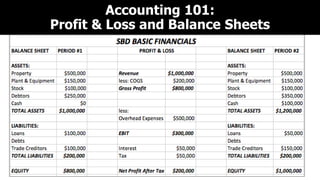
Accounting 101:
Profit & Loss and Balance Sheets
Accounting 101:
Profit & Loss and Balance Sheets
Accounting 101:
Profit & Loss and Balance Sheets
Accounting 101:
Profit & Loss and Balance Sheets
Accounting 101:
Profit & Loss and Balance Sheets
Accounting 101:
Profit & Loss and Balance Sheets
Some financial models
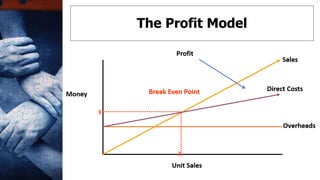
The Profit Model
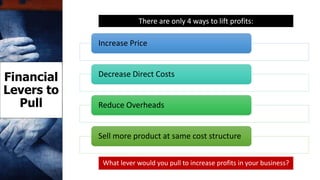
There are only 4 ways to lift profits:
What lever would you pull to increase profits in your business?
Increase Price
Decrease Direct Costs
Reduce Overheads
Sell more product at same cost structure
Financial
Levers to
Pull
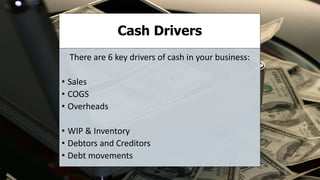
There are 6 key drivers of cash in your business:
• Sales
• COGS
• Overheads
• WIP & Inventory
• Debtors and Creditors
• Debt movements
Cash Drivers
Thank
You
Russell Cummings
Business Consultant
M: 0414 929 585
W: www.shifft.com.au
E: russell@shifft.com.au

Managing People and Finance