Managing Distribution
Channels
Subject : Marketing Managemen
Submitted To : Dr. Aarti Joshi
Submitted By : Pallavi Priya
MBA, Semester – II
Date : 6 March 2017
Distribution Channels
Distribution channels in marketing are one of
the classic “4 Ps” (product, promotion, price,
placement also known as “distribution”). They
are the key elements in your entire marketing
strategy.
Meaning
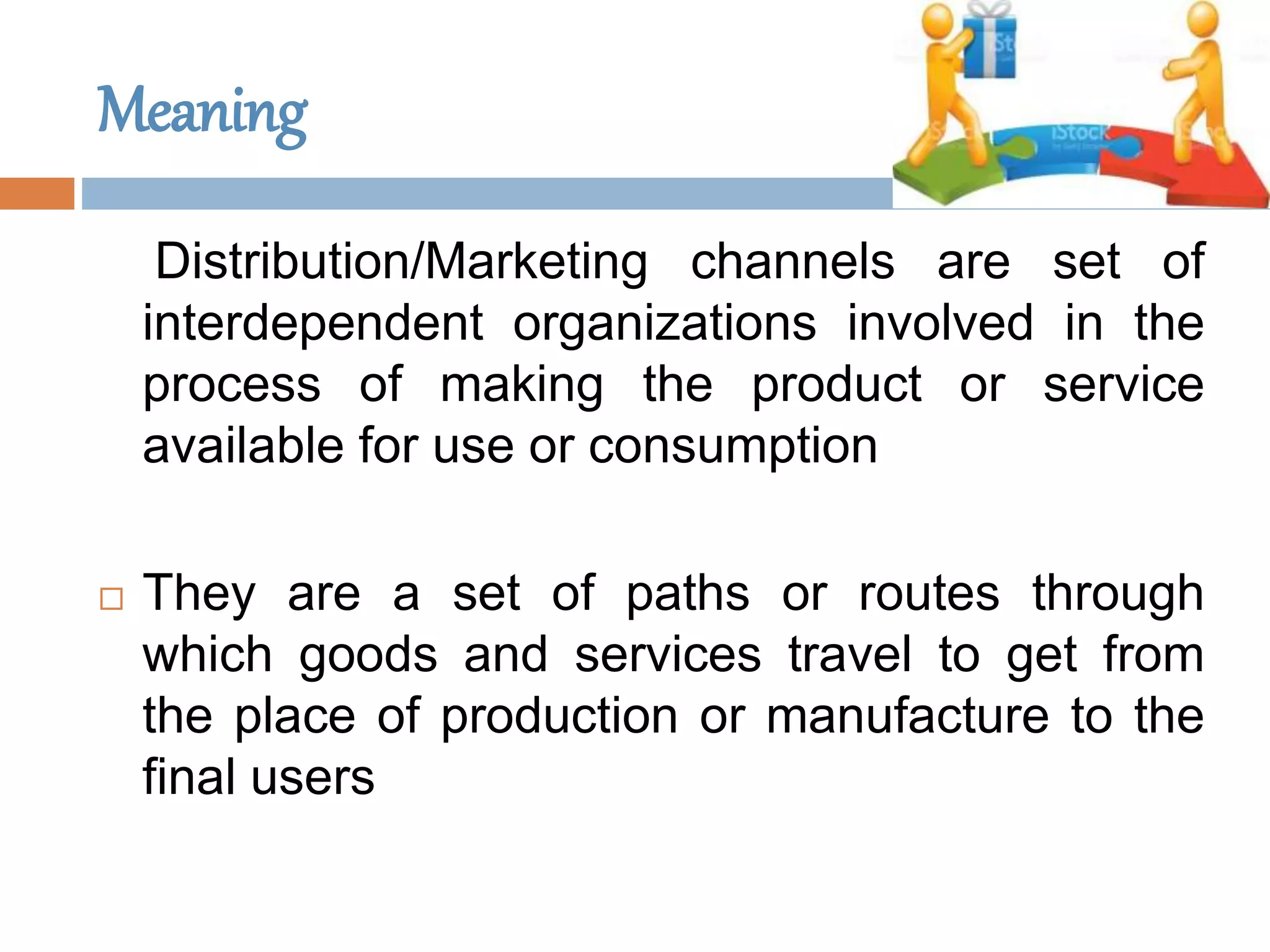
Distribution/Marketing channels are set of
interdependent organizations involved in the
process of making the product or service
available for use or consumption
 They are a set of paths or routes through
which goods and services travel to get from
the place of production or manufacture to the
final users
Intermediaries
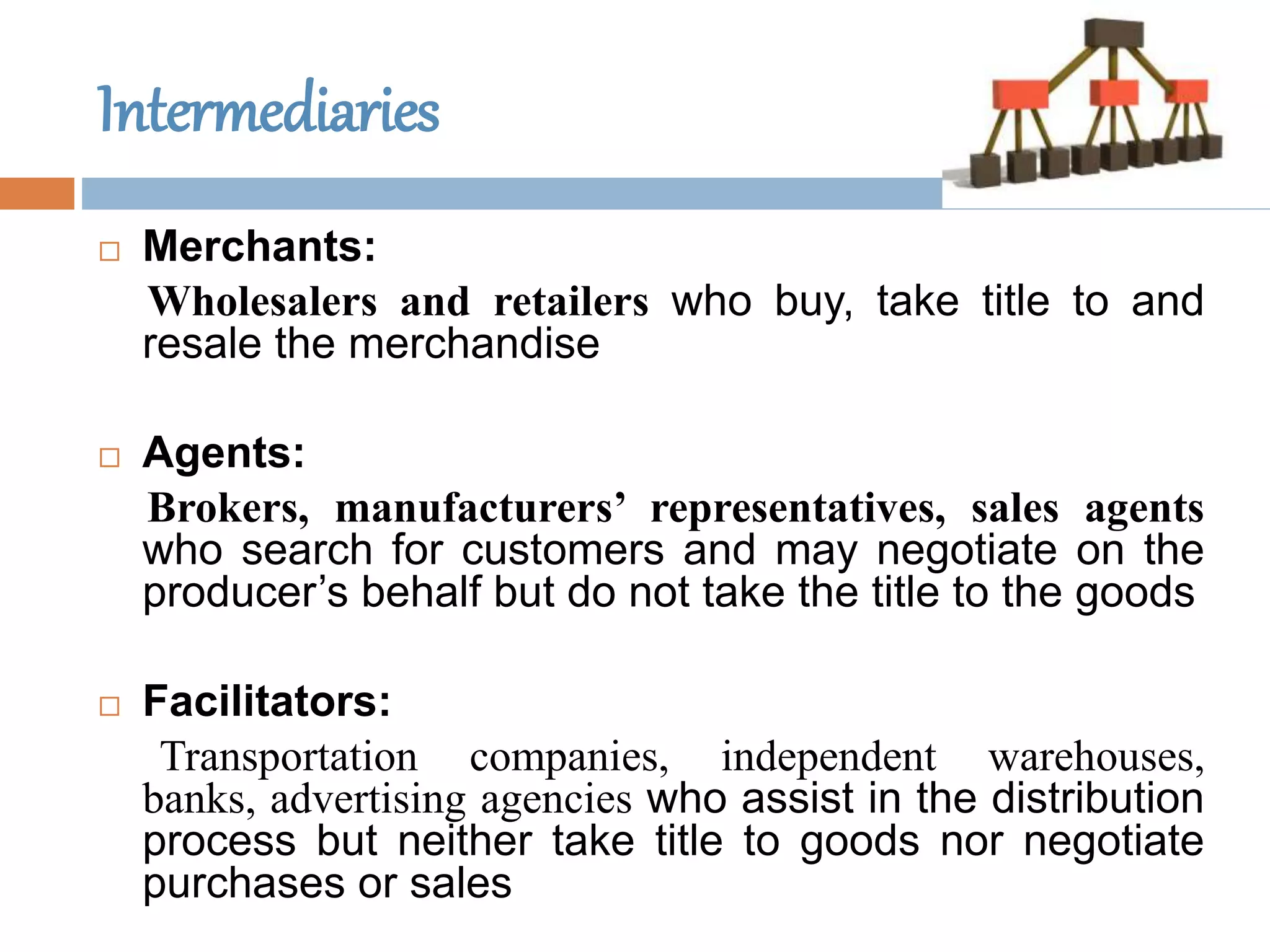
 Merchants:
Wholesalers and retailers who buy, take title to and
resale the merchandise
 Agents:
Brokers, manufacturers’ representatives, sales agents
who search for customers and may negotiate on the
producer’s behalf but do not take the title to the goods
 Facilitators:
Transportation companies, independent warehouses,
banks, advertising agencies who assist in the distribution
process but neither take title to goods nor negotiate
purchases or sales
Strategies:
Marketing
Strategy
Push
Strategy
Pull
Strategy
Push Strategy
 Push strategy: Producers induce
intermediaries to carry, promote and sell
products and services to the end users through
its sales force, trade promotions and other
means.
 Appropriate when:-
1. Low brand loyalty
2. Brand choice is made in the store
3. Product is an impulse item
4. Product benefits are well understood
Pull Strategy
 Pull strategy: Manufacturers use advertising,
promotion and other forms of communication to
persuade consumers to demand the product
from intermediaries, thus inducing
intermediaries to order it from producer.
 Appropriate when:-
1. Brand loyalty is high
2. High involvement in the category
3. Brand distinction is possible
4. Brand selection prior to purchase
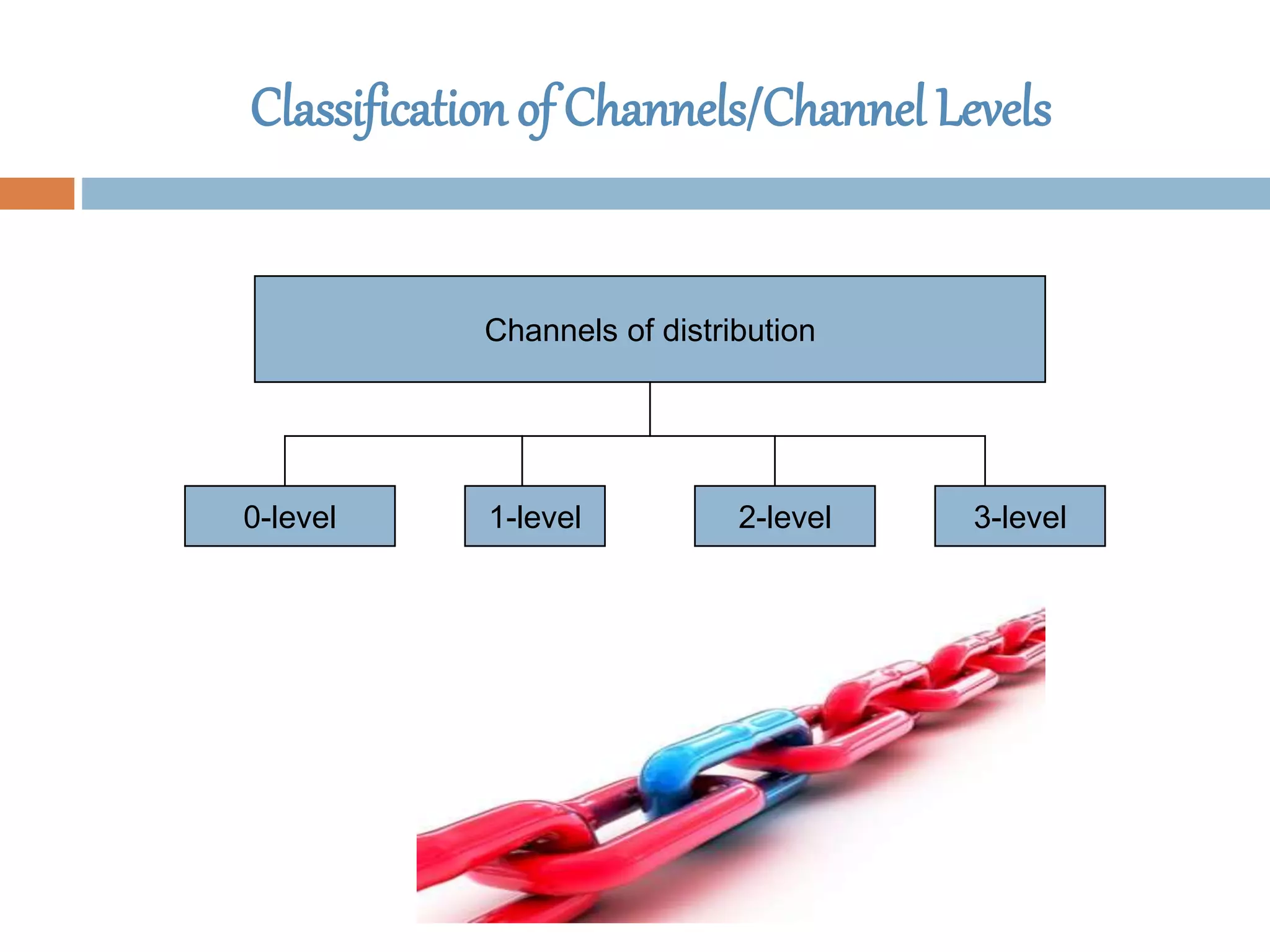
Classification of Channels/Channel Levels
Channels of distribution
0-level 1-level 2-level 3-level
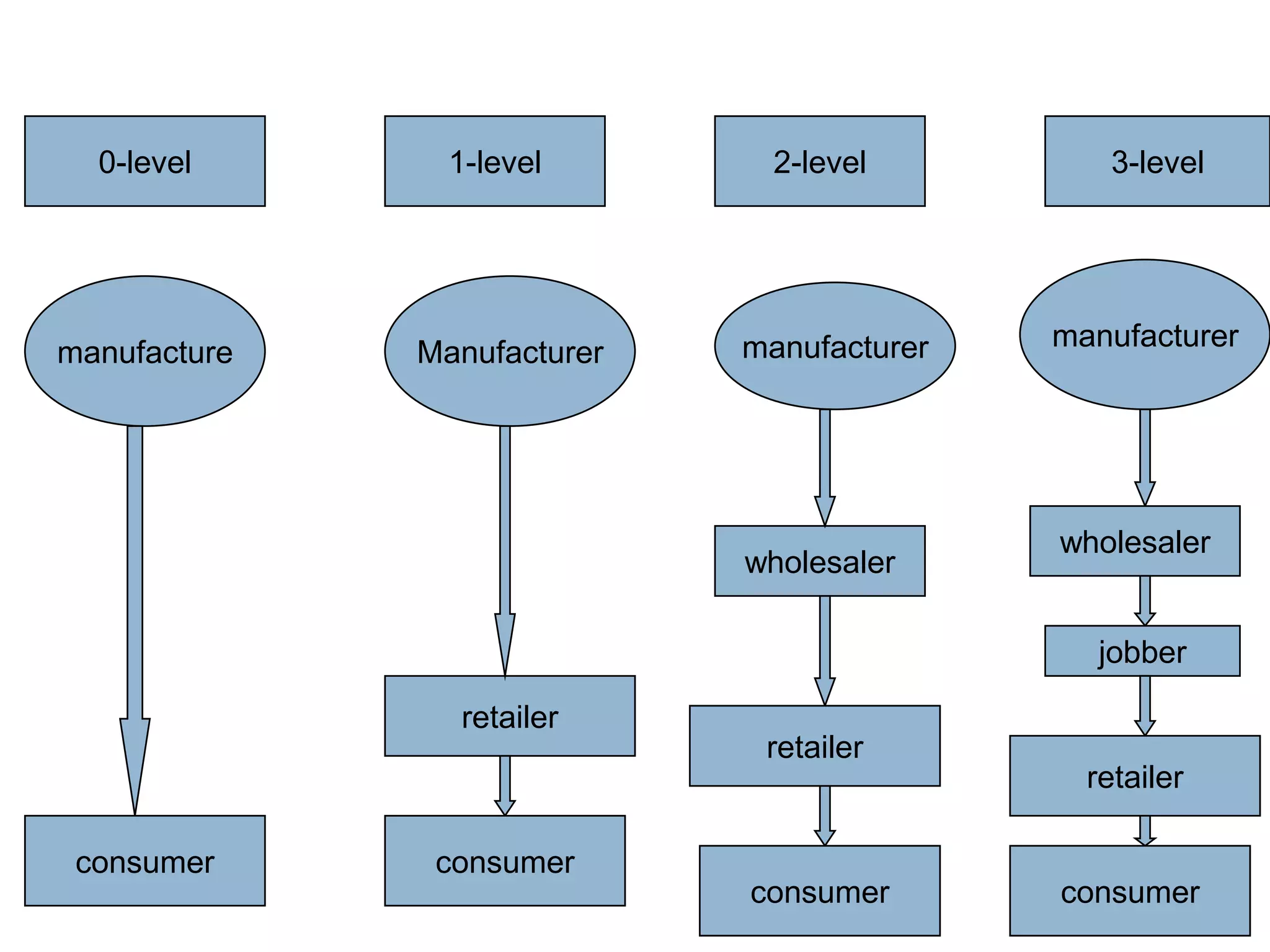
manufacture
consumer
Manufacturer manufacturer manufacturer
retailer
consumer
wholesaler
retailer
consumer
wholesaler
jobber
retailer
consumer
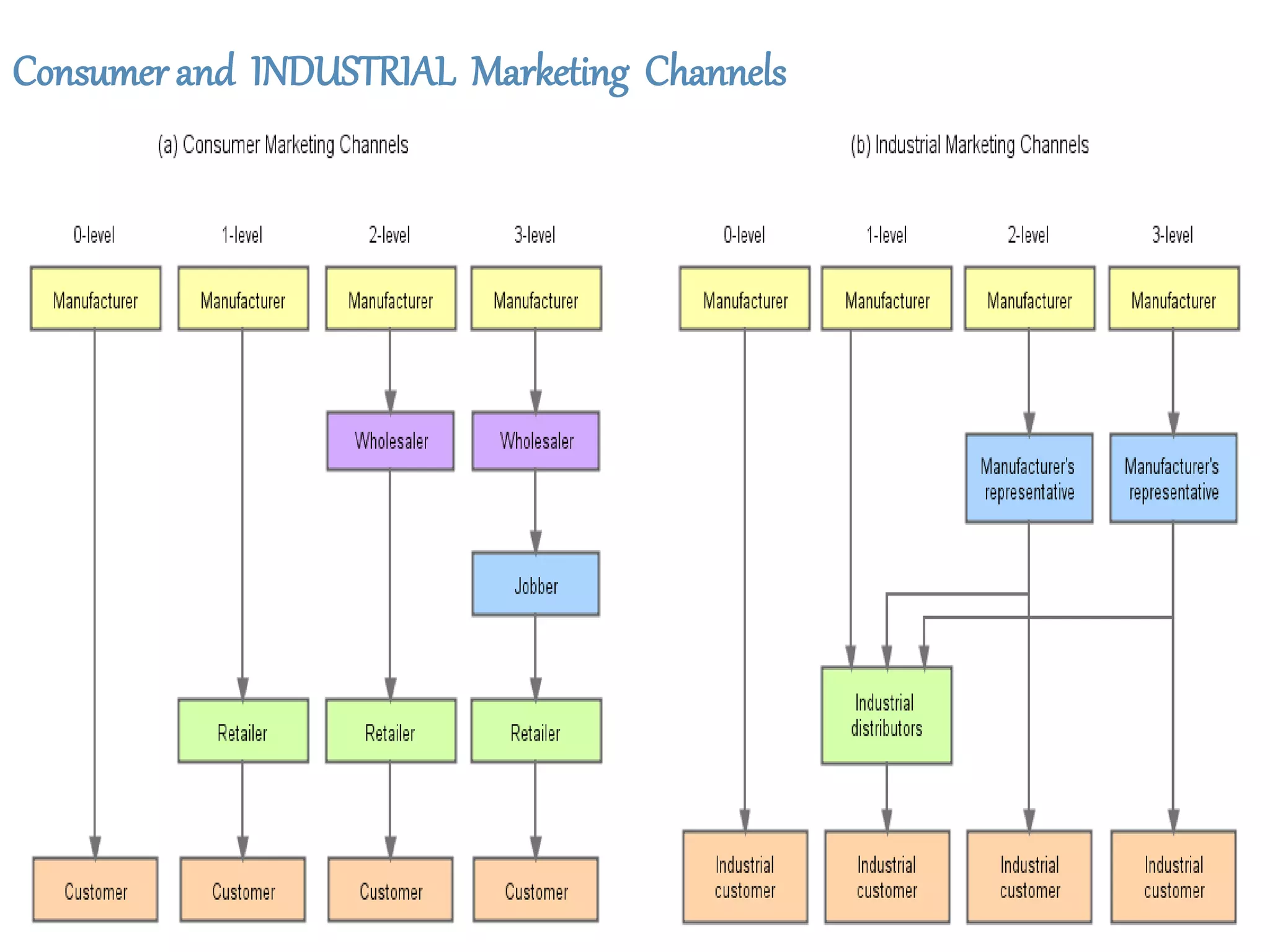
Consumer and INDUSTRIAL Marketing Channels
SERVICE SECTOR CHANNELS
 Service Industries such as banking, insurance,
travel, hospitals and stock buying and selling, all
are operating through new channels because of
the advancement of internet and other
technologies
 Such as Apollo hospitals uses multiple modes
that are:
 Apollo Reach hospitals for small towns
 Apollo clinic in various parts of large cities
 Apollo Health Street
 Apollo Global Projects Consultancy
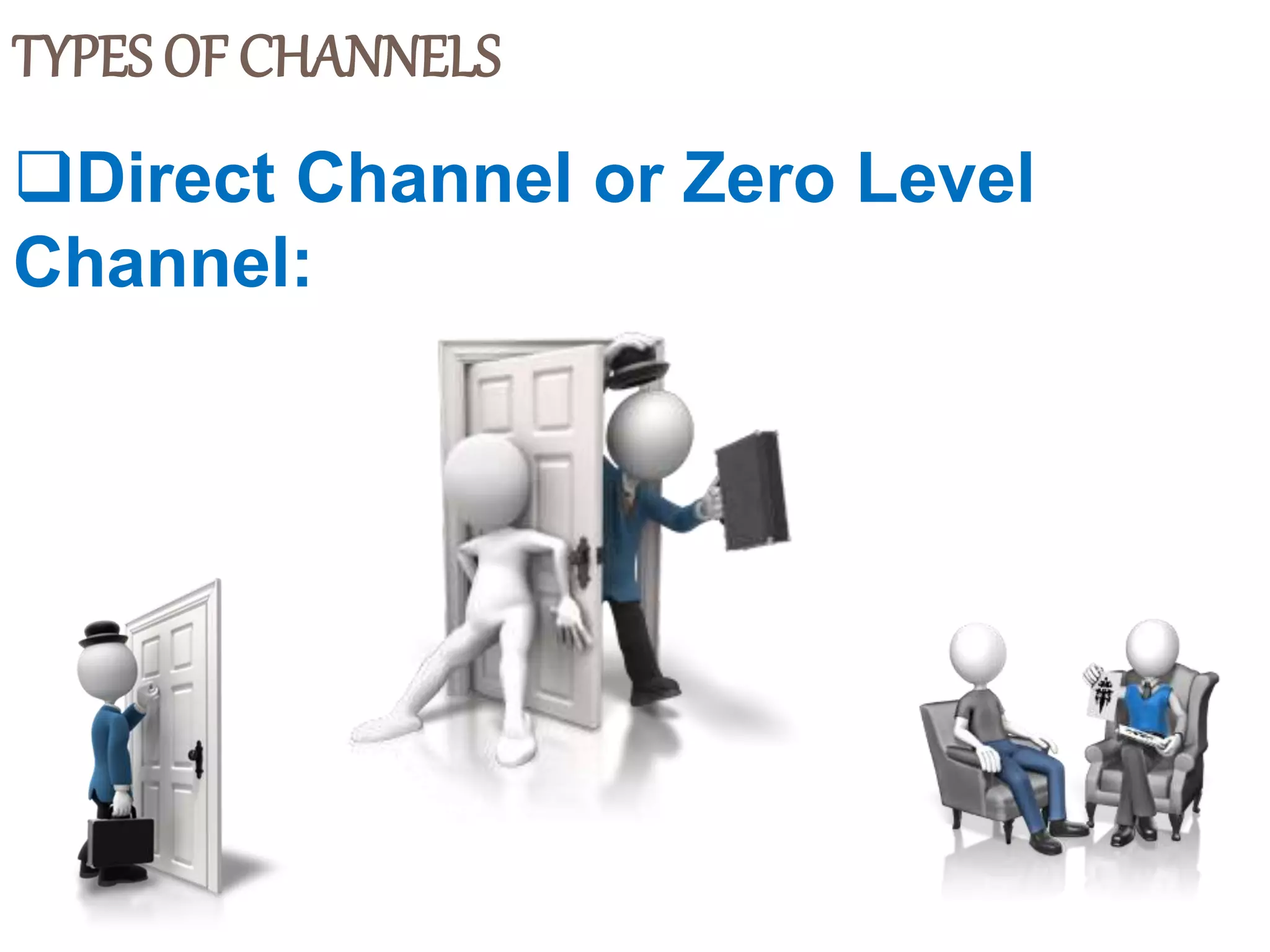
Direct Channel or Zero Level
Channel:
TYPES OF CHANNELS
Conti...
Example
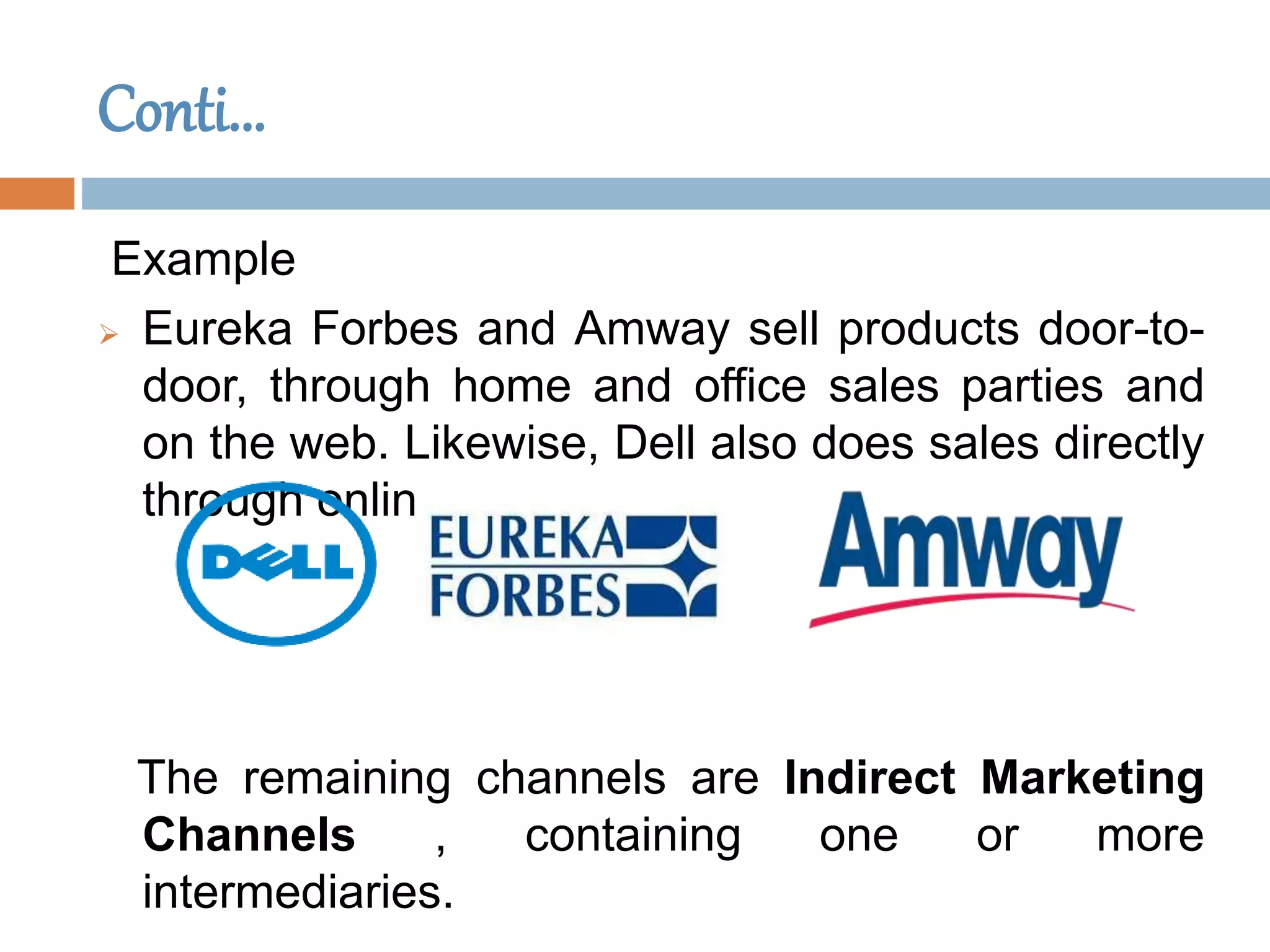
 Eureka Forbes and Amway sell products door-to-
door, through home and office sales parties and
on the web. Likewise, Dell also does sales directly
through online
The remaining channels are Indirect Marketing
Channels , containing one or more
intermediaries.
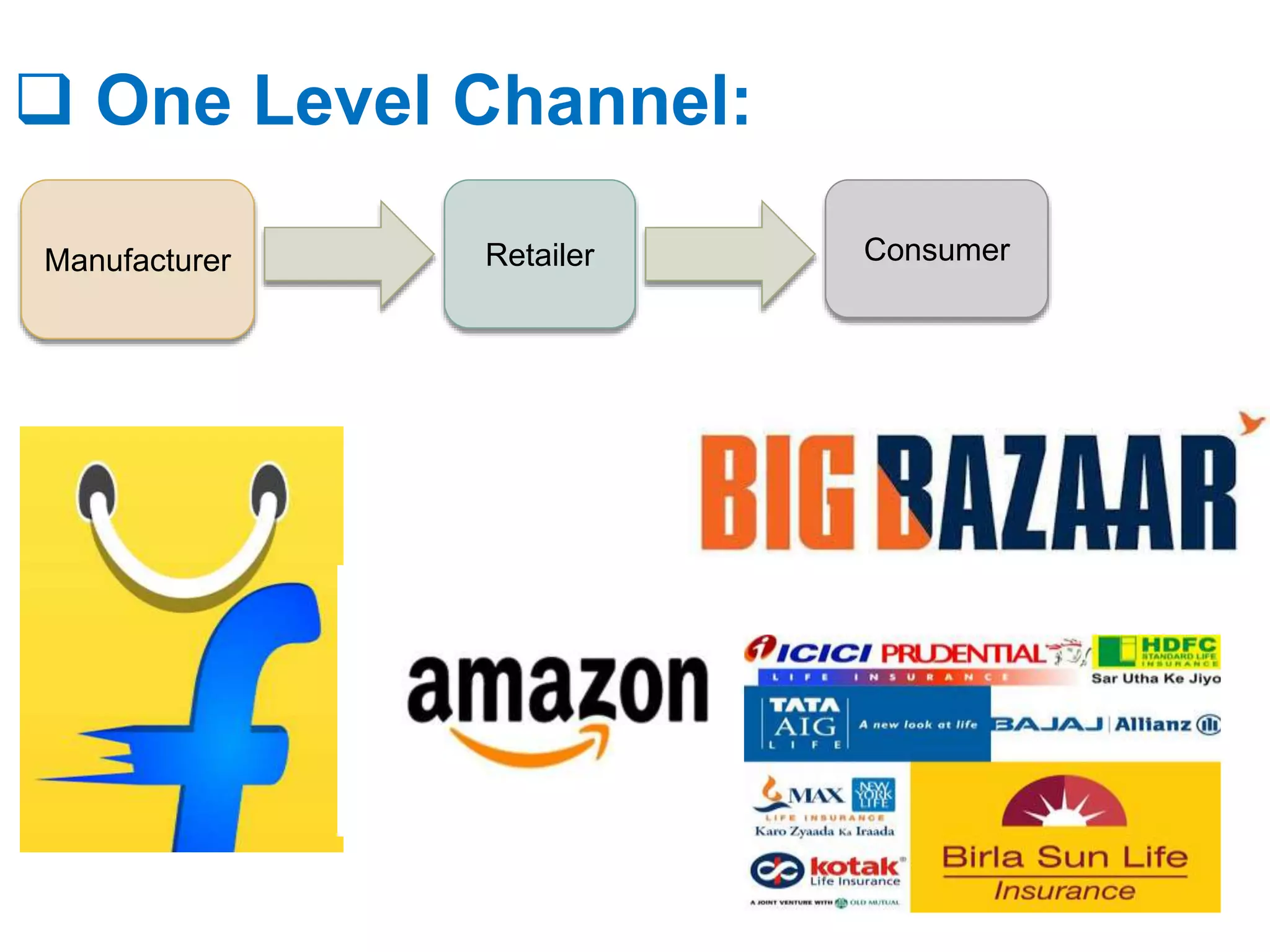
 One Level Channel:
Manufacturer Retailer Consumer
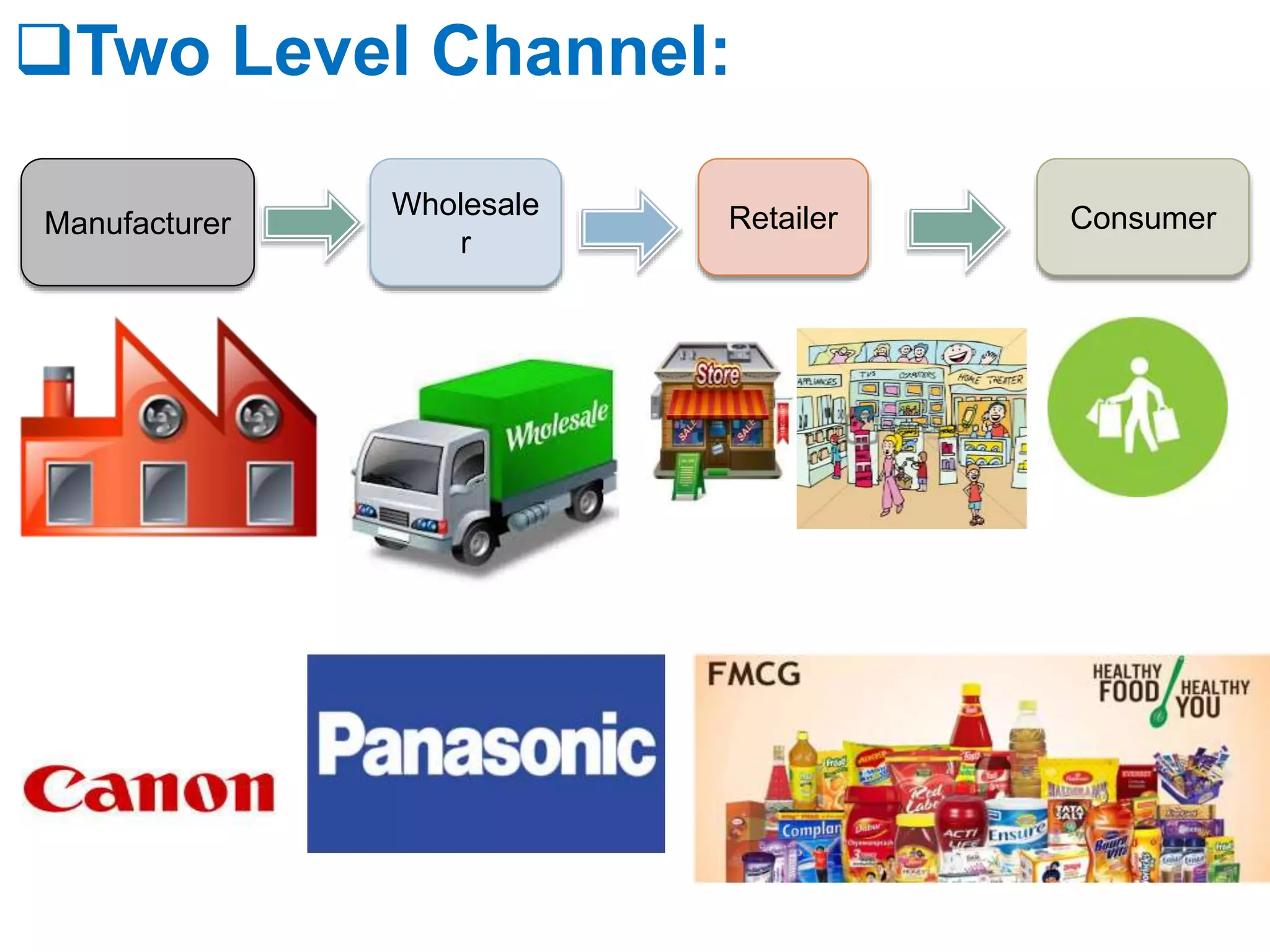
Two Level Channel:
Manufacturer
Wholesale
r
Retailer Consumer
Three Level Channel
Manufacturer
Wholesale
r
Dealer Retailer
Consumer
Managing distribution channels

Managing distribution channels

  • 1.
  • 2.
    Subject : MarketingManagemen Submitted To : Dr. Aarti Joshi Submitted By : Pallavi Priya MBA, Semester – II Date : 6 March 2017
  • 3.
    Distribution Channels Distribution channelsin marketing are one of the classic “4 Ps” (product, promotion, price, placement also known as “distribution”). They are the key elements in your entire marketing strategy.
  • 4.
    Meaning Distribution/Marketing channels areset of interdependent organizations involved in the process of making the product or service available for use or consumption  They are a set of paths or routes through which goods and services travel to get from the place of production or manufacture to the final users
  • 5.
    Intermediaries  Merchants: Wholesalers andretailers who buy, take title to and resale the merchandise  Agents: Brokers, manufacturers’ representatives, sales agents who search for customers and may negotiate on the producer’s behalf but do not take the title to the goods  Facilitators: Transportation companies, independent warehouses, banks, advertising agencies who assist in the distribution process but neither take title to goods nor negotiate purchases or sales
  • 6.
  • 7.
    Push Strategy  Pushstrategy: Producers induce intermediaries to carry, promote and sell products and services to the end users through its sales force, trade promotions and other means.  Appropriate when:- 1. Low brand loyalty 2. Brand choice is made in the store 3. Product is an impulse item 4. Product benefits are well understood
  • 8.
    Pull Strategy  Pullstrategy: Manufacturers use advertising, promotion and other forms of communication to persuade consumers to demand the product from intermediaries, thus inducing intermediaries to order it from producer.  Appropriate when:- 1. Brand loyalty is high 2. High involvement in the category 3. Brand distinction is possible 4. Brand selection prior to purchase
  • 9.
    Classification of Channels/ChannelLevels Channels of distribution 0-level 1-level 2-level 3-level
  • 10.
    0-level 1-level 2-level3-level manufacture consumer Manufacturer manufacturer manufacturer retailer consumer wholesaler retailer consumer wholesaler jobber retailer consumer
  • 11.
    Consumer and INDUSTRIALMarketing Channels
  • 12.
    SERVICE SECTOR CHANNELS Service Industries such as banking, insurance, travel, hospitals and stock buying and selling, all are operating through new channels because of the advancement of internet and other technologies  Such as Apollo hospitals uses multiple modes that are:  Apollo Reach hospitals for small towns  Apollo clinic in various parts of large cities  Apollo Health Street  Apollo Global Projects Consultancy
  • 13.
    Direct Channel orZero Level Channel: TYPES OF CHANNELS
  • 14.
    Conti... Example  Eureka Forbesand Amway sell products door-to- door, through home and office sales parties and on the web. Likewise, Dell also does sales directly through online The remaining channels are Indirect Marketing Channels , containing one or more intermediaries.
  • 15.
     One LevelChannel: Manufacturer Retailer Consumer
  • 16.
  • 17.