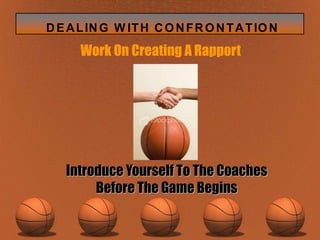
Work On Creating A RapportIntroduce Yourself To The CoachesBefore The Game Begins
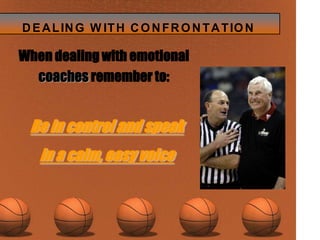
When dealing with emotional coachesremember to:Be in control and speak in a calm, easy voice
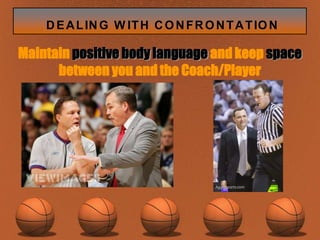
Maintain positive body language and keep space between you and the Coach/Player
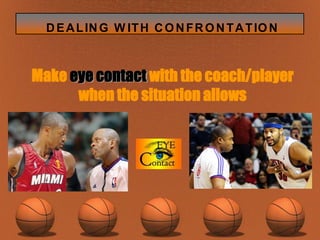
Make eye contact with the coach/player when the situation allows
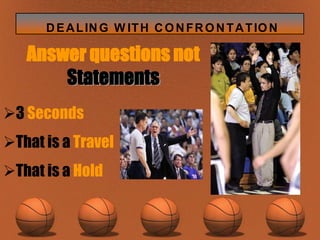
Answer questions not Statements3 Seconds
That is a Travel
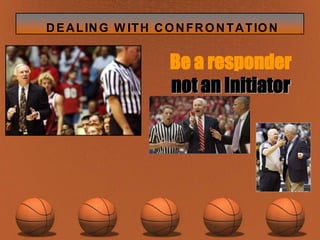
That is a HoldBe a responder not an Initiator
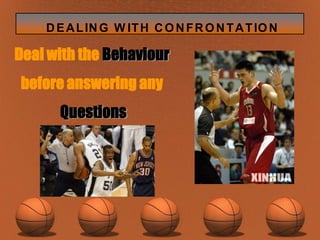
Deal with the Behaviour before answering anyQuestions
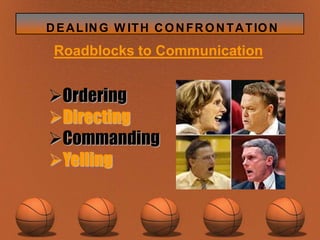
Roadblocks to CommunicationOrdering
Directing
Commanding
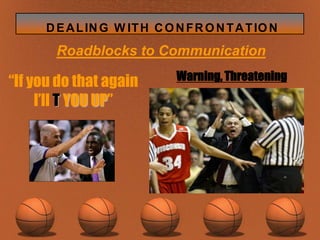
YellingRoadblocks to CommunicationWarning, Threatening“If you do that again I’ll T YOU UP”
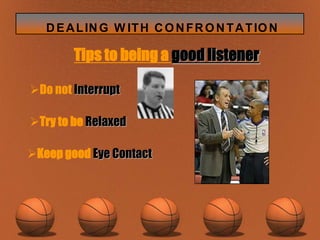
Tips to being a good listenerDo not Interrupt
Try to beRelaxed
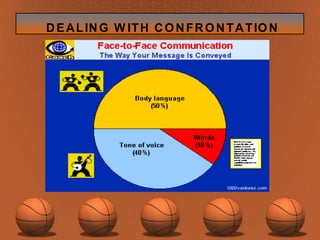
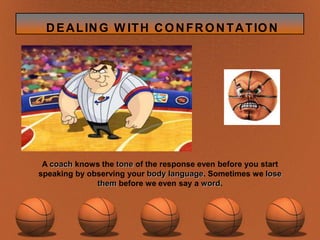
Keep goodEye ContactA coach knows the tone of the response even before you start speaking by observing your body language. Sometimes we lose them before we even say a word.
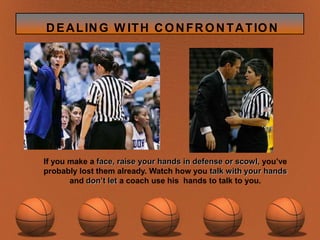
If you make a face,raise your hands in defense or scowl, you’ve probably lost them already. Watch how you talk with your hands and don’t let a coach use his  hands to talk to you.
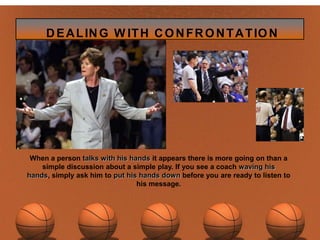
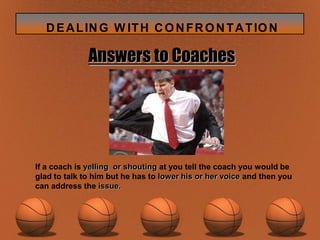
When a person talks with his hands it appears there is more going on than a simple discussion about a simple play. If you see a coach waving his hands, simply ask him to put his hands down before you are ready to listen to his message.
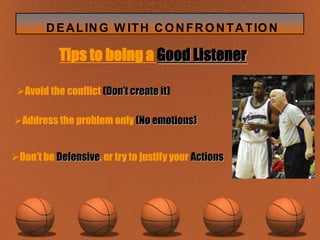
Tips to being a Good ListenerAvoid the conflict (Don’t create it)
Address the problem only (No emotions)
Don’t be Defensive, or try to justify your ActionsOfficiating is not about the referee being the only Winner……….Nor is it about the referee being the only Loser,A balance between the TWO Extremesneeds to be AchievedYou do not always have to get in the Last Word
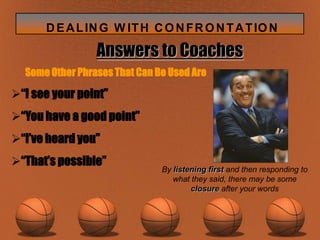
Answers to Coaches“Okay Coach I hear you”

Managing Coaches And Players

Editor's Notes

  • #3 Body language and tone of voice is 90% of communication. Use simple words.
  • #7 Eyes can show everything, including conviction or lack thereof.