
MANAGEMENT SKILLS
TARGET
• Determine the roles and responsibilities of a manager.
• Build up teamwork and a friendly working place.
• Effective communication skills and motivation for
workers.
• Improve solving problem skills.
• Effective time management to work successfully.
PART I:
TO BE A PROFESSIONAL
MANAGER
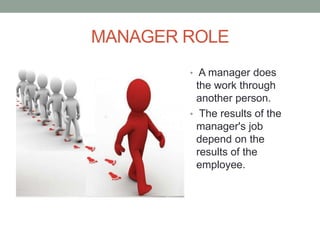
MANAGER ROLE
• A manager does
the work through
another person.
• The results of the
manager's job
depend on the
results of the
employee.
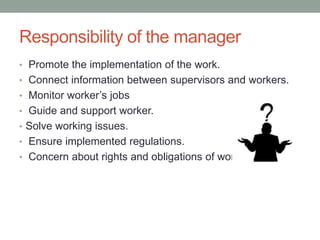
Responsibility of the manager
• Promote the implementation of the work.
• Connect information between supervisors and workers.
• Monitor worker’s jobs
• Guide and support worker.
• Solve working issues.
• Ensure implemented regulations.
• Concern about rights and obligations of workers
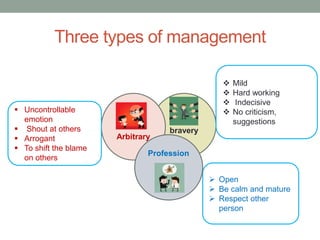
 Open
 Be calm and mature
 Respect other
person
Three types of management
Lack of
bravery
Arbitrary
Profession
 Uncontrollable
emotion
 Shout at others
 Arrogant
 To shift the blame
on others
 Mild
 Hard working
 Indecisive
 No criticism,
suggestions
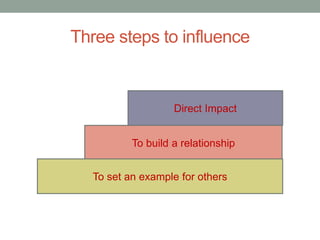
Three steps to influence
Direct Impact
To build a relationship
To set an example for others
Build a positive attitude
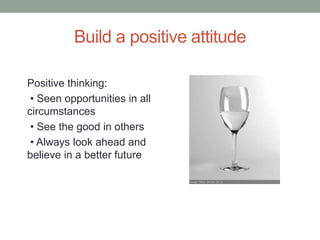
Positive thinking:
• Seen opportunities in all
circumstances
• See the good in others
• Always look ahead and
believe in a better future
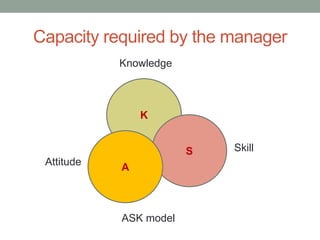
Capacity required by the manager
Knowledge
Skill
Attitude
ASK model
K
S
A
PART II: TIME MANAGEMENT SKILLS
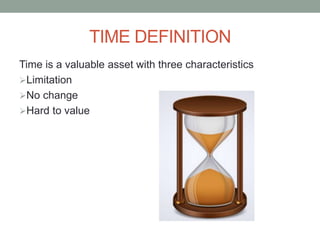
TIME DEFINITION
Time is a valuable asset with three characteristics
Limitation
No change
Hard to value
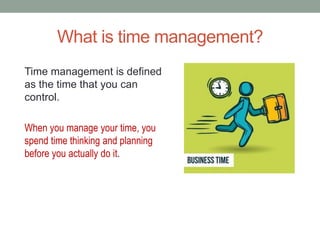
What is time management?
Time management is defined
as the time that you can
control.
When you manage your time, you
spend time thinking and planning
before you actually do it.
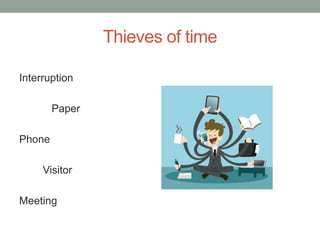
Thieves of time
Interruption
Paper
Phone
Visitor
Meeting
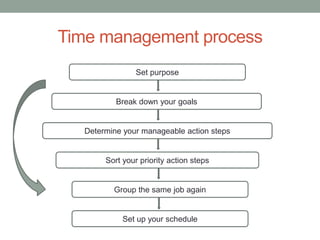
Time management process
Set purpose
Break down your goals
Determine your manageable action steps
Sort your priority action steps
Group the same job again
Set up your schedule
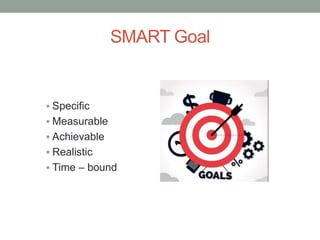
SMART Goal
 Specific
 Measurable
 Achievable
 Realistic
 Time – bound
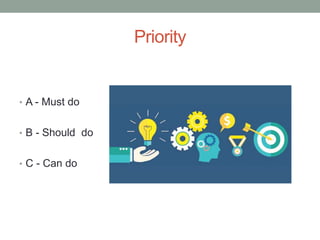
Priority
• A - Must do
• B - Should do
• C - Can do
PART III: COMMUNICATION SKILLS
AND EXCHANGE INTERNAL
INFORMATION
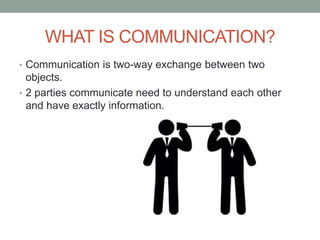
WHAT IS COMMUNICATION?
• Communication is two-way exchange between two
objects.
• 2 parties communicate need to understand each other
and have exactly information.
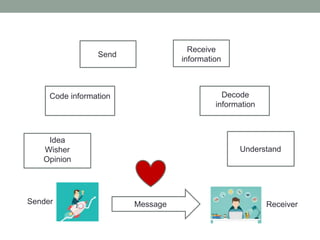
Sender
Idea
Wisher
Opinion
Code information
Send
Receive
information
Decode
information
Understand
ReceiverMessage
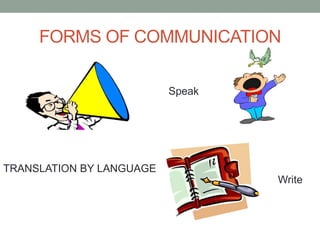
FORMS OF COMMUNICATION
TRANSLATION BY LANGUAGE
Speak
Write
fff
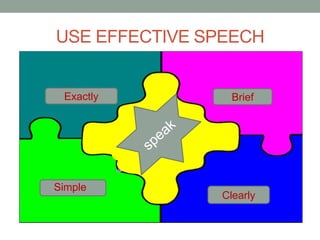
USE EFFECTIVE SPEECH
Simple
Exactly Brief
Clearly
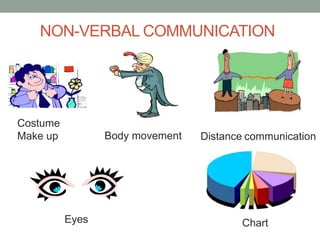
NON-VERBAL COMMUNICATION
Costume
Make up Body movement Distance communication
Eyes Chart
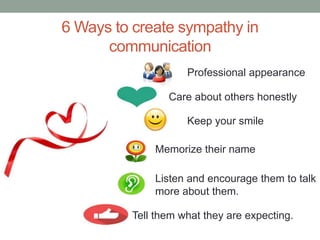
6 Ways to create sympathy in
communication
Professional appearance
Keep your smile
Memorize their name
Listen and encourage them to talk
more about them.
Care about others honestly
Tell them what they are expecting.
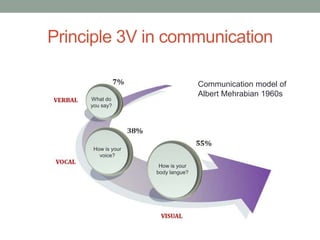
Principle 3V in communication
Communication model of
Albert Mehrabian 1960s
What do
you say?
How is your
voice?
How is your
body langue?
PART IV: PROBLEM-SOLVING AND
DECISION-MAKING SKILLS
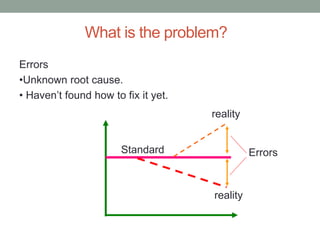
What is the problem?
Errors
•Unknown root cause.
• Haven’t found how to fix it yet.
Standard
reality
reality
Errors
Realize the problem
To find reason and solve problem proactively.
Evaluate problem.
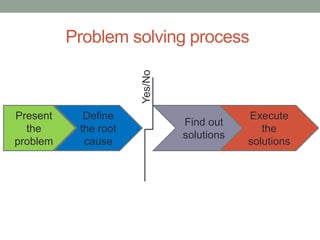
Problem solving process
Present
the
problem
Define
the root
cause
Find out
solutions
Execute
the
solutionsYes/No
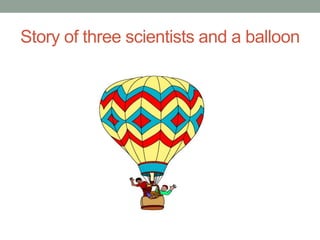
Story of three scientists and a balloon
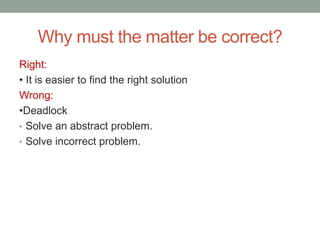
Why must the matter be correct?
Right:
• It is easier to find the right solution
Wrong:
•Deadlock
• Solve an abstract problem.
• Solve incorrect problem.
FIND CAUSE OF THE PROBLEM
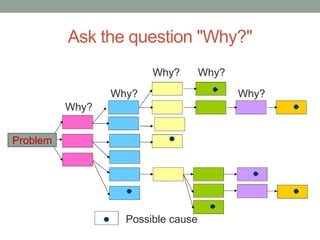
Ask the question "Why?"
Why?
Why?
Why? Why?
Why?
Problem
Possible cause
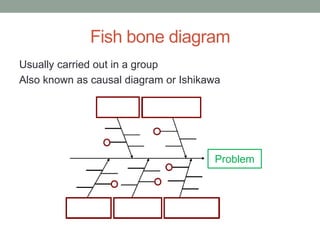
Fish bone diagram
Usually carried out in a group
Also known as causal diagram or Ishikawa
Problem
SELECTION AND ENFORCEMENT
SOLUTION
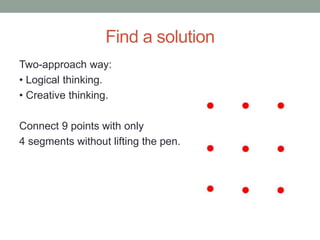
Find a solution
Two-approach way:
• Logical thinking.
• Creative thinking.
Connect 9 points with only
4 segments without lifting the pen.
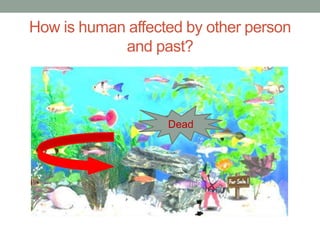
How is human affected by other person
and past?
Dead
PART V: MAKE PARTNERSHIP AND
ENCOURAGE YOUR EMPLOYEE
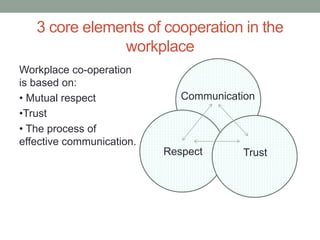
3 core elements of cooperation in the
workplace
Workplace co-operation
is based on:
• Mutual respect
•Trust
• The process of
effective communication.
Communication
Respect Trust
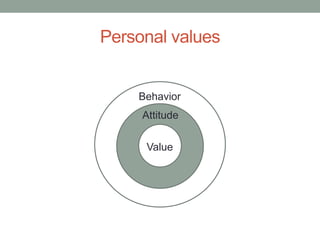
Personal values
Behavior
Attitude
Value
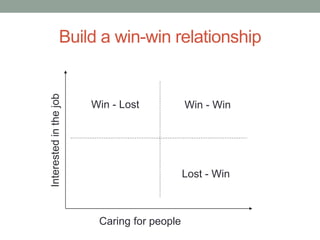
Build a win-win relationship
Interestedinthejob
Caring for people
Win - Lost Win - Win
Lost - Win
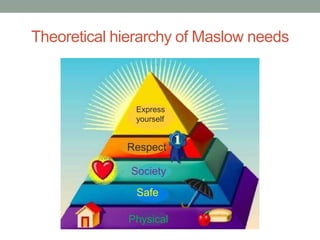
Theoretical hierarchy of Maslow needs
Physical
Safe
Society
Respect
Express
yourself
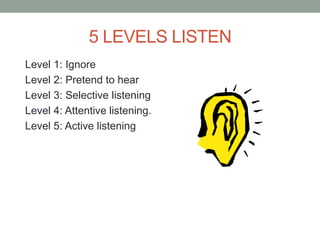
5 LEVELS LISTEN
Level 1: Ignore
Level 2: Pretend to hear
Level 3: Selective listening
Level 4: Attentive listening.
Level 5: Active listening
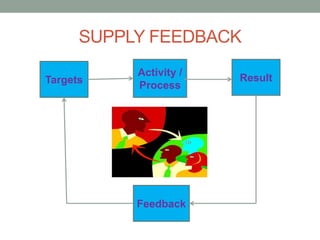
SUPPLY FEEDBACK
Targets
Activity /
Process
Result
Feedback
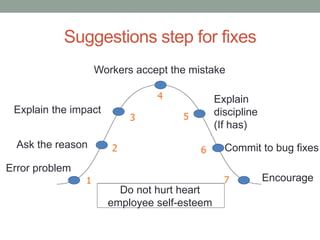
Suggestions step for fixes
Do not hurt heart
employee self-esteem
Error problem
Ask the reason
Explain the impact
Workers accept the mistake
Explain
discipline
(If has)
Commit to bug fixes
Encourage
PART VI: CONVINCE SKILLS AND
SOLVE CONFLICT IN GROUP
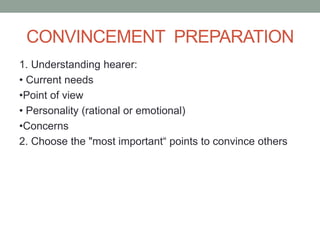
CONVINCEMENT PREPARATION
1. Understanding hearer:
• Current needs
•Point of view
• Personality (rational or emotional)
•Concerns
2. Choose the "most important“ points to convince others
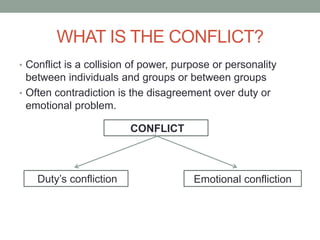
WHAT IS THE CONFLICT?
• Conflict is a collision of power, purpose or personality
between individuals and groups or between groups
• Often contradiction is the disagreement over duty or
emotional problem.
COCCONFLICT
Duty’s confliction Emotional confliction
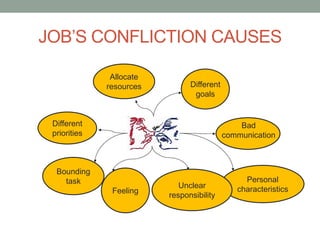
JOB’S CONFLICTION CAUSES
Personal
characteristicsUnclear
responsibility
Feeling
Bounding
task
Different
priorities
Allocate
resources Different
goals
Bad
communication
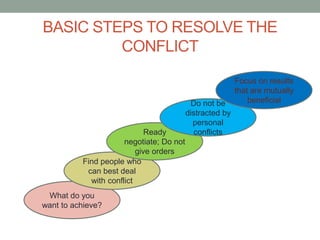
BASIC STEPS TO RESOLVE THE
CONFLICT
What do you
want to achieve?
Find people who
can best deal
with conflict
Ready
negotiate; Do not
give orders
Do not be
distracted by
personal
conflicts
Focus on results
that are mutually
beneficial
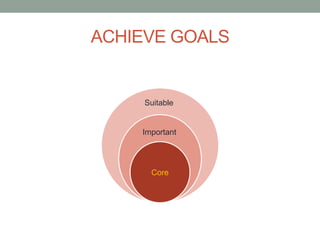
ACHIEVE GOALS
Core
Important
Suitable
6 PRINCIPLES’S NEGOTIATION
Principle 1. Separate people from the problem
Principle 2. Focus on benefits, not position
Principle 3. Searching for solutions is a common concern
of both parties
Principle 4. Use objective criteria as criteria to determine
the outcome
Rule 5. Do not ONLY talk about "faith“
Rule 6. Think about (prepare) your best alternative way.
Management skills.

Management skills.