This document provides an overview of information systems and information technology with real-world examples. It begins with an agenda that covers the components of information systems, the difference between information systems and information technology, and examples of different types of systems used in business. It then defines what a system and information system are. The next sections explain the differences between information systems and information technology in terms of their objectives, history, scope, and components. Real-world examples are also provided of different types of information systems used in banking, retail, and telecommunications. Finally, some ethical and societal issues related to information technology are briefly discussed.
Vital component ofsuccessful businessesHelps businesses expand and competeBusinesses use IS and IT To improve efficiency and effectiveness of business processes
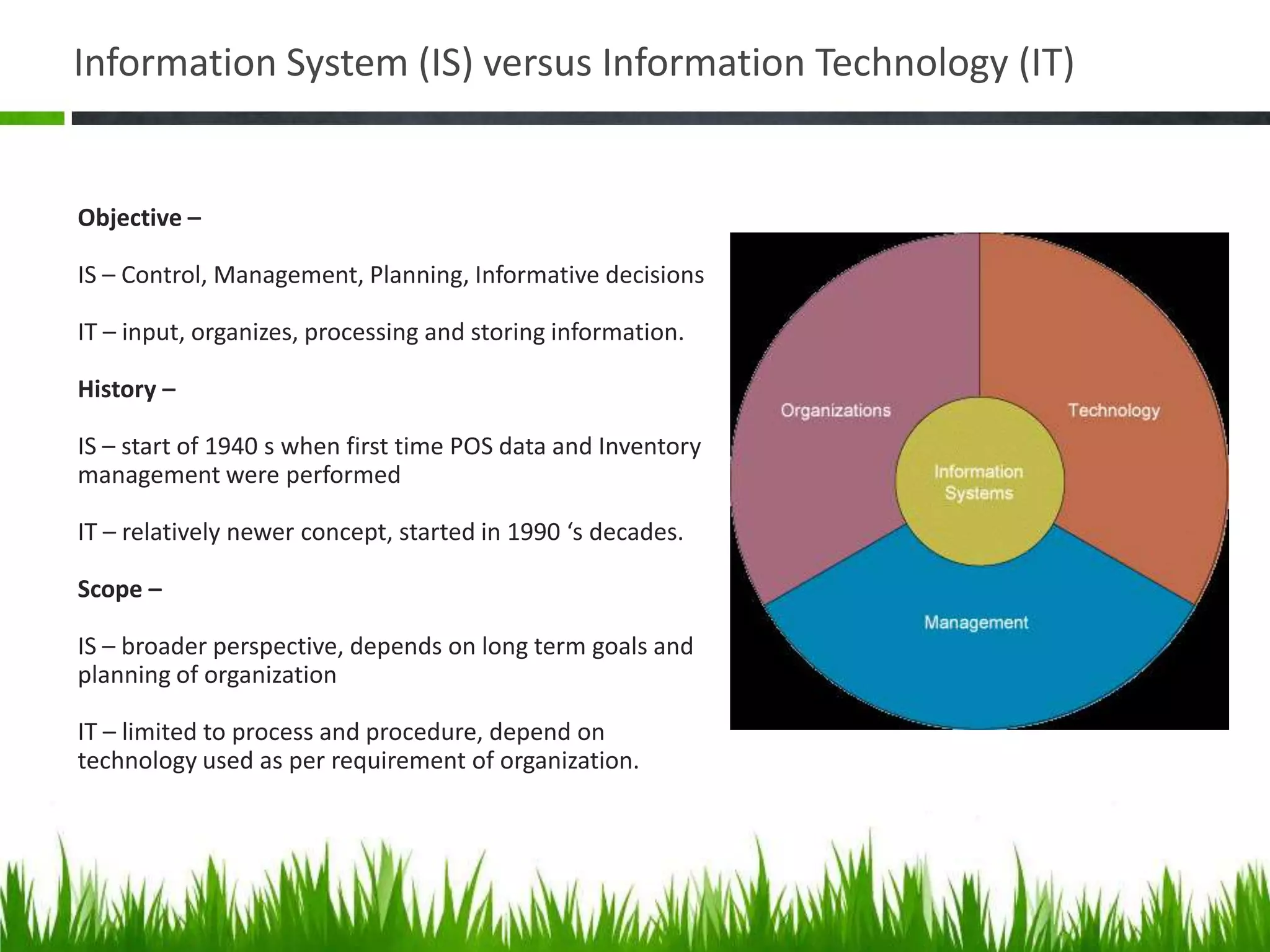
Objective –IS –Control, Management, Planning, Informative decisionsIT – input, organizes, processing and storing information.History –IS – start of 1940 s when first time POS data and Inventory management were performedIT – relatively newer concept, started in 1990 ‘s decades.Scope –IS – broader perspective, depends on long term goals and planning of organizationIT – limited to process and procedure, depend on technology used as per requirement of organization.Information System (IS) versus Information Technology (IT)
17.
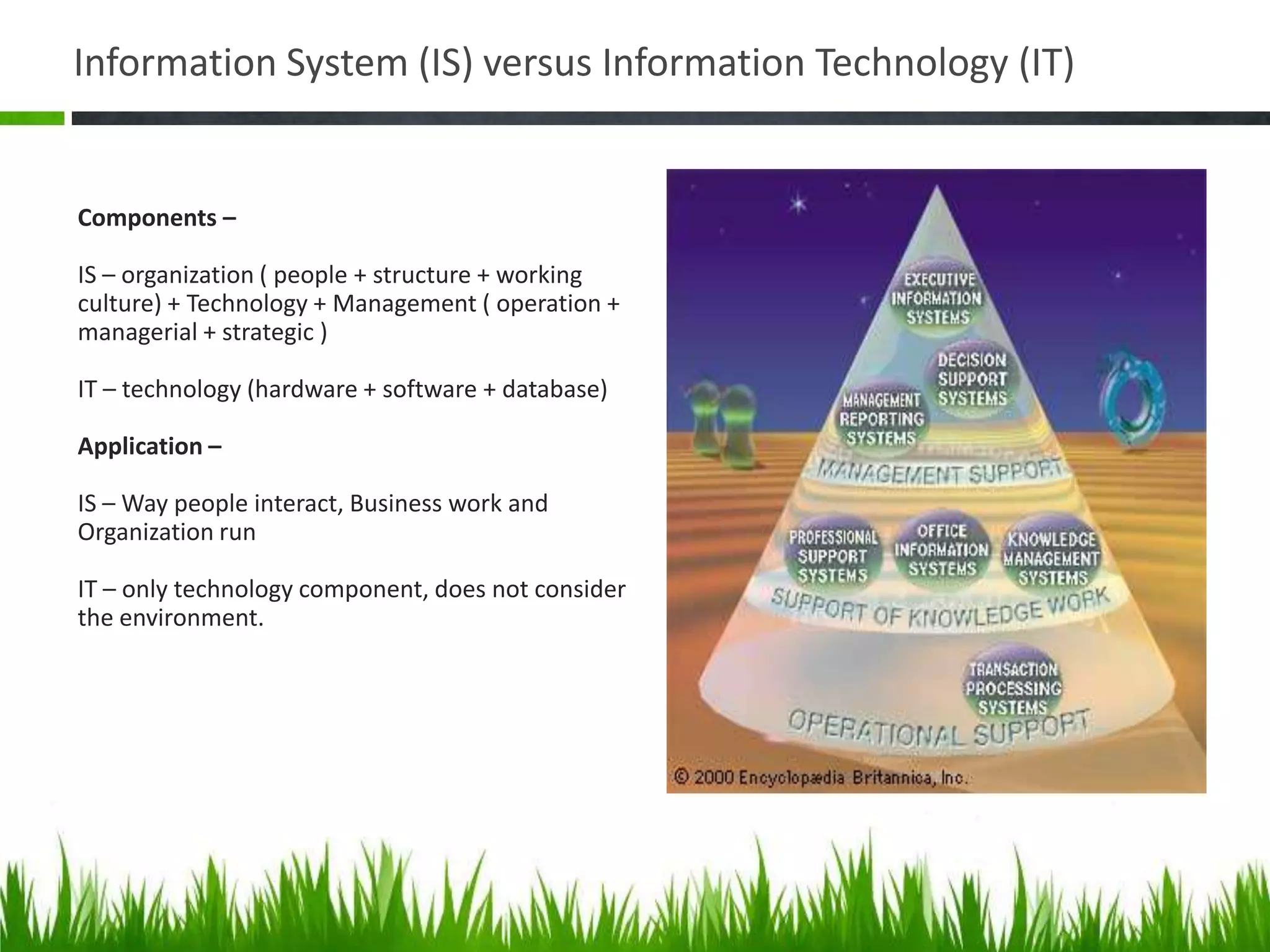
Components –IS –organization ( people + structure + working culture) + Technology + Management ( operation +managerial + strategic )IT – technology (hardware + software + database)Application –IS – Way people interact, Business work and Organization runIT – only technology component, does not consider the environment.Information System (IS) versus Information Technology (IT)
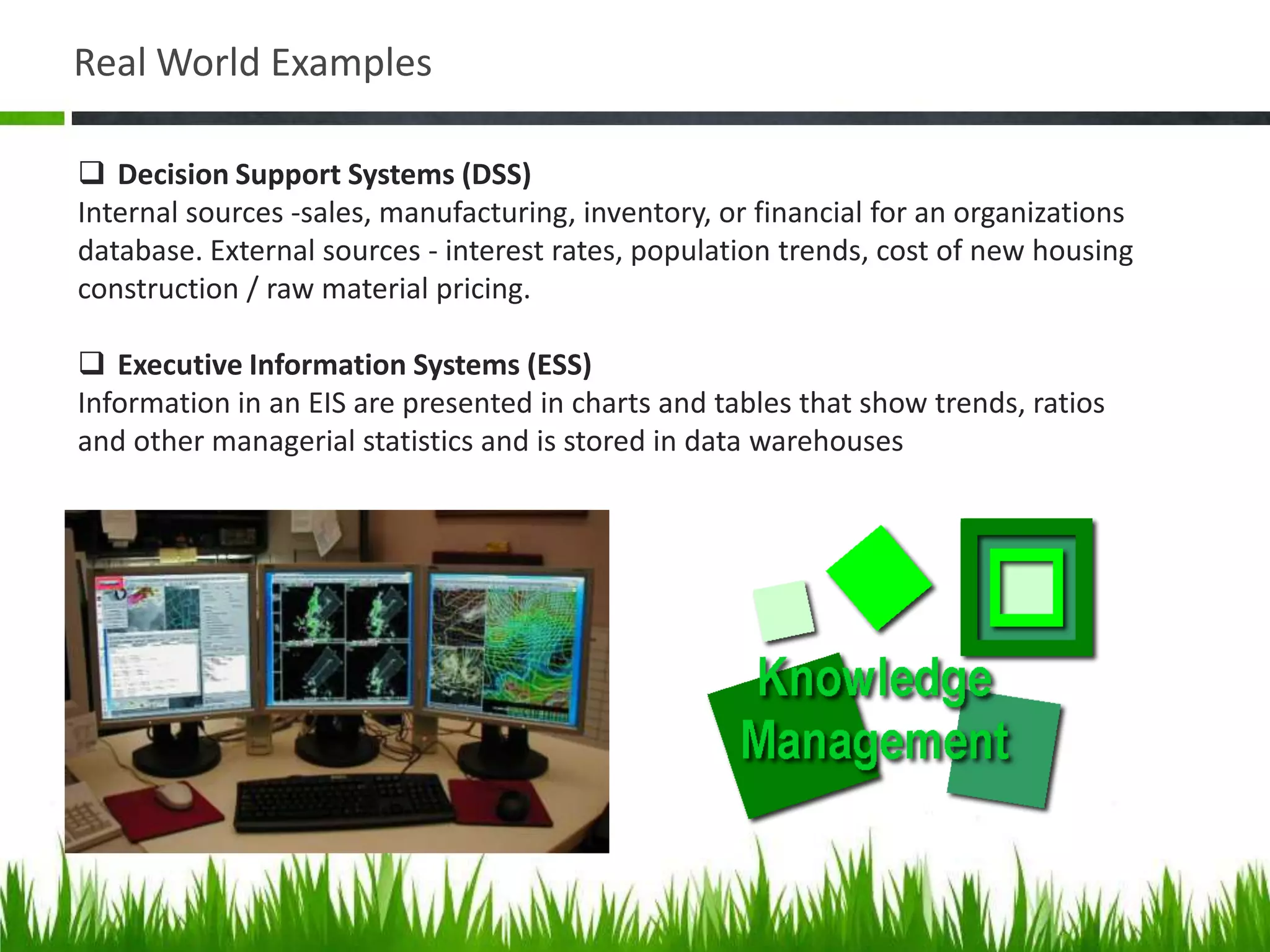
Decision Support Systems(DSS)Internal sources -sales, manufacturing, inventory, or financial for an organizations database. External sources - interest rates, population trends, cost of new housing construction / raw material pricing.Executive Information Systems (ESS) Information in an EIS are presented in charts and tables that show trends, ratios and other managerial statistics and is stored in data warehousesReal World Examples
20.
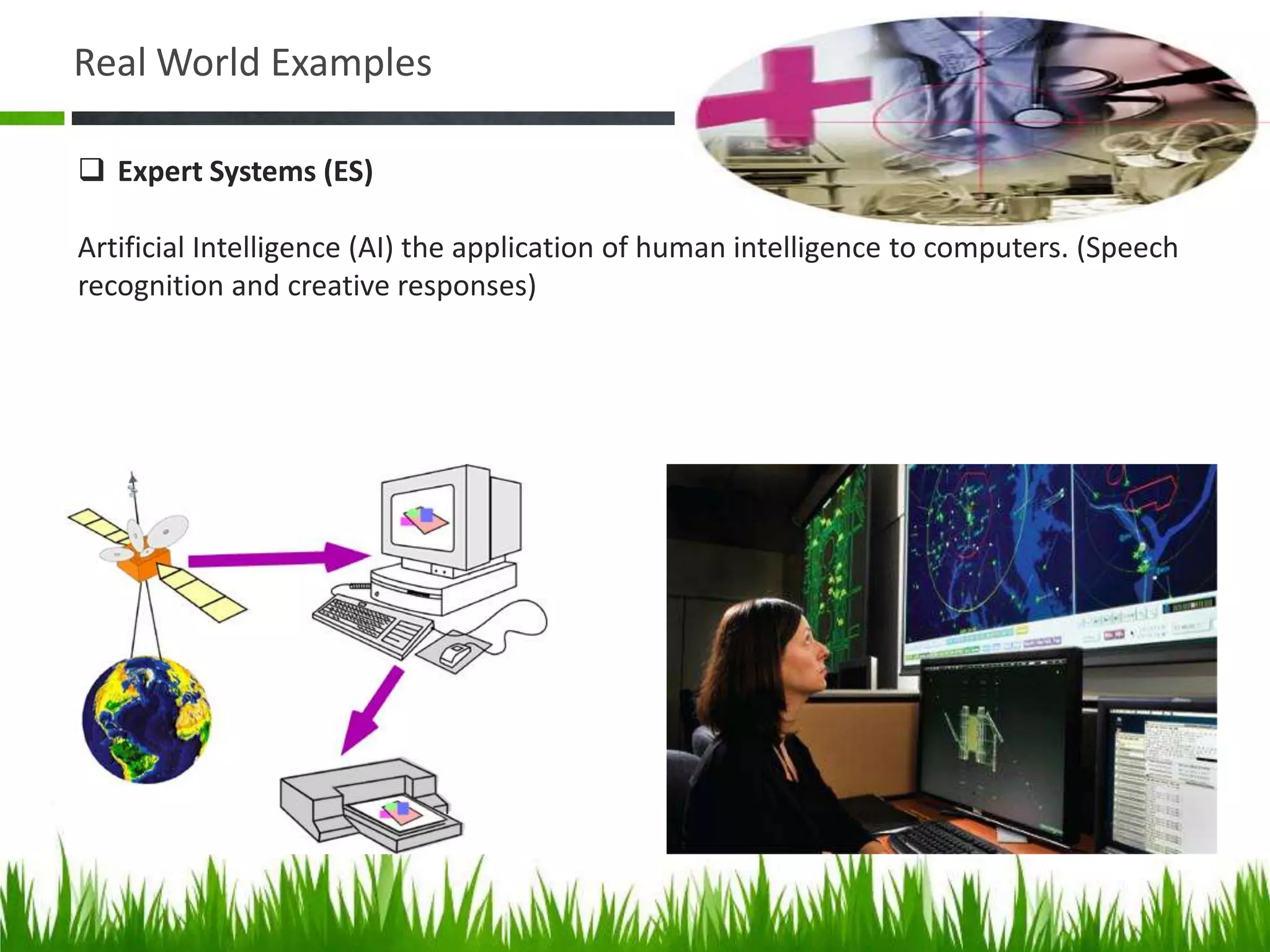
Real World ExamplesExpertSystems (ES)Artificial Intelligence (AI) the application of human intelligence to computers. (Speech recognition and creative responses)
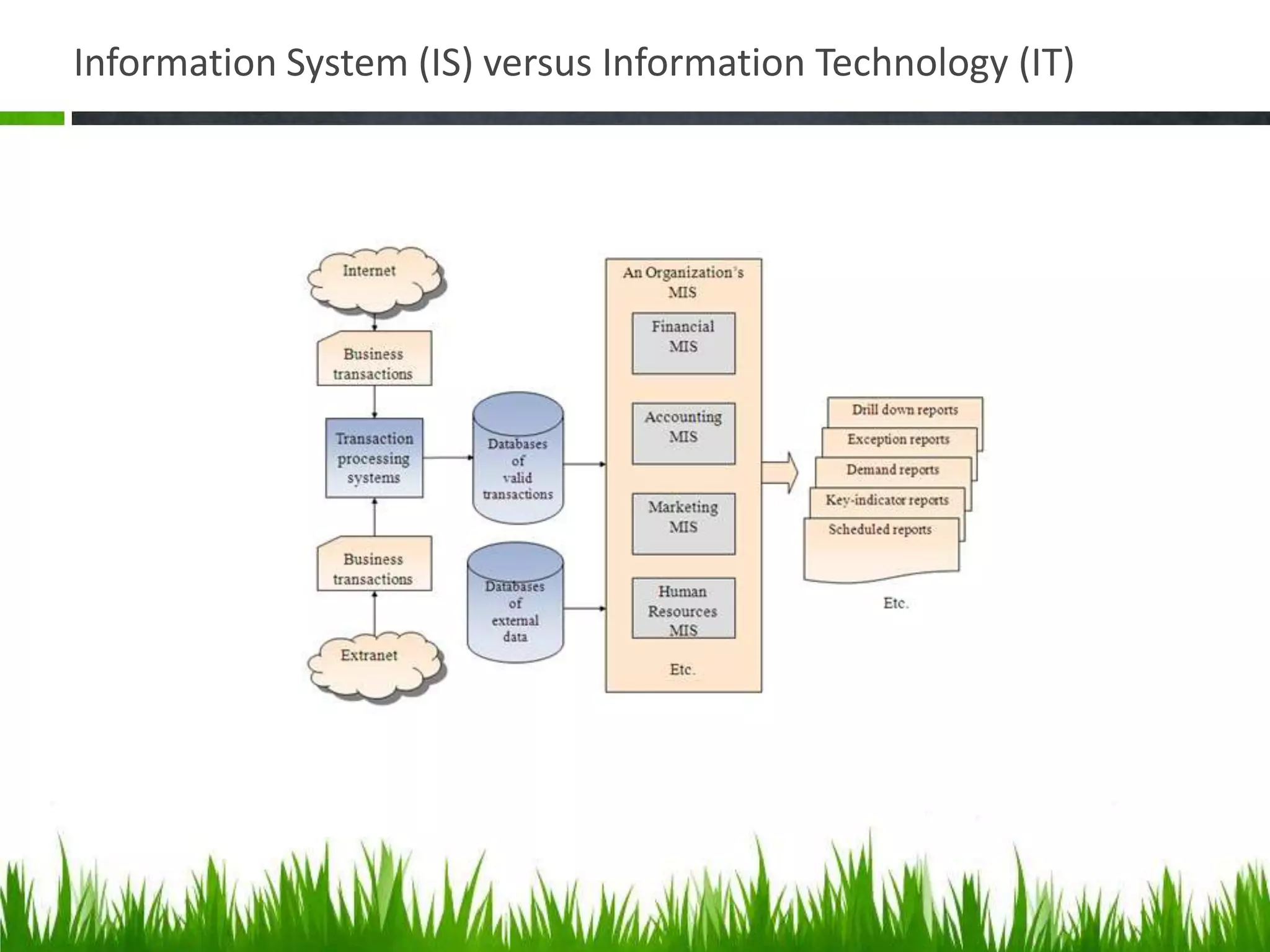
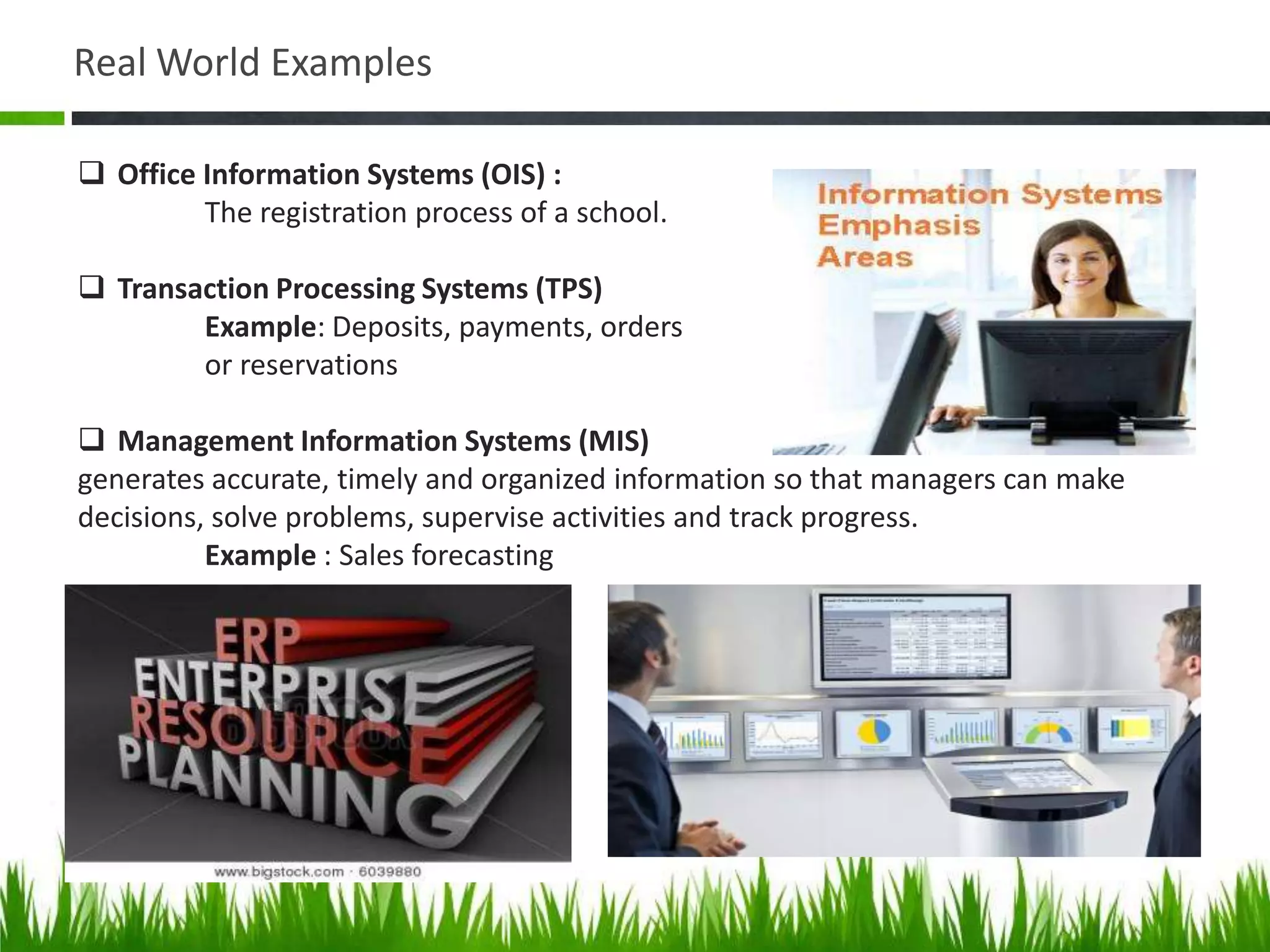
Office Information Systems(OIS) :The registration process of a school.Transaction Processing Systems (TPS) Example: Deposits, payments, orders or reservationsManagement Information Systems (MIS) generates accurate, timely and organized information so that managers can make decisions, solve problems, supervise activities and track progress. Example : Sales forecastingReal World Examples
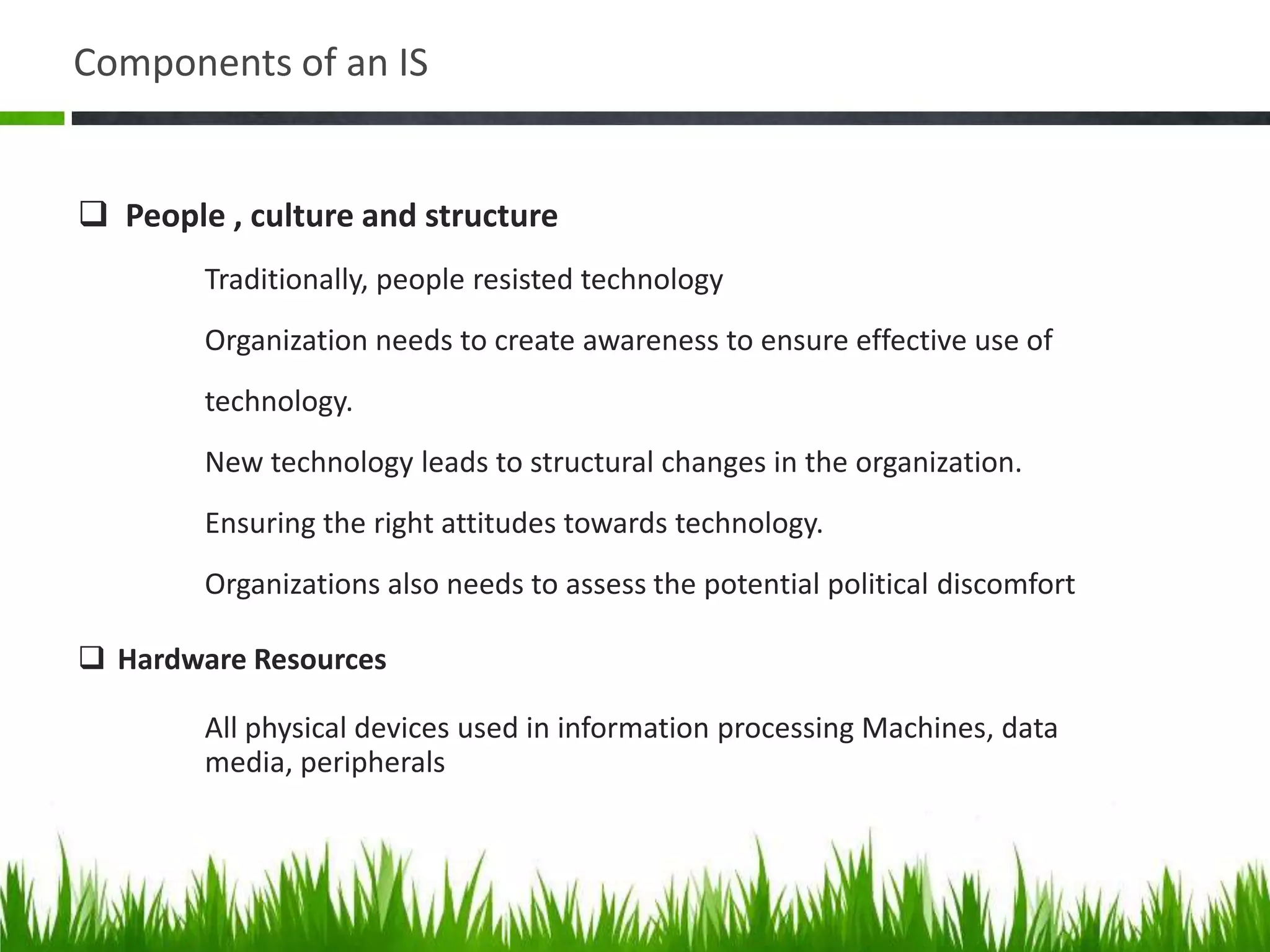
People , cultureand structure Traditionally, people resisted technology Organization needs to create awareness to ensure effective use of technology. New technology leads to structural changes in the organization. Ensuring the right attitudes towards technology. Organizations also needs to assess the potential political discomfortHardware Resources All physical devices used in information processing Machines, data media, peripheralsComponents of an IS
25.
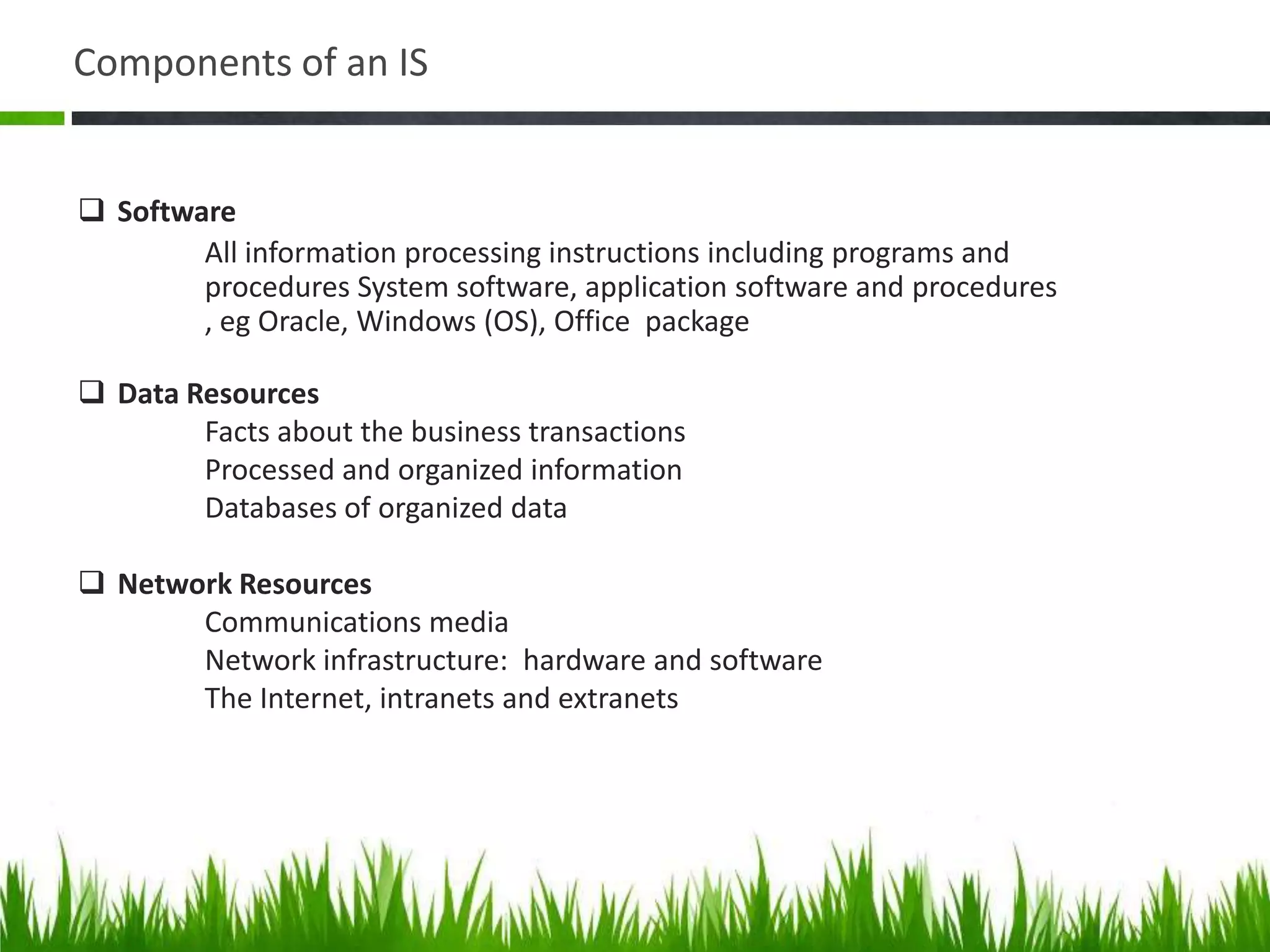
SoftwareAll information processinginstructions including programs and procedures System software, application software and procedures, egOracle, Windows (OS), Office packageData Resources Facts about the business transactions Processed and organized information Databases of organized dataNetwork Resources Communications media Network infrastructure: hardware and software The Internet, intranets and extranetsComponents of an IS
Ethical & SocietalIssuesThe Not-So-Bright SideConsumer PrivacyOrganizations collect (and sometimes sell) huge amounts of data on individuals.Employee PrivacyIT supports remote monitoring of employees, violating privacy and creating stressFreedom of SpeechIT increases opportunities for pornography, hate speech, intellectual property crime, an d other intrusions; prevention may abridge free speech. IT ProfessionalismNo mandatory or enforced code of ethics for IT professionals--unlike other professions. Social InequalityLess than 20% of the world’s population have ever used a PC; less than 3% have Internet access.
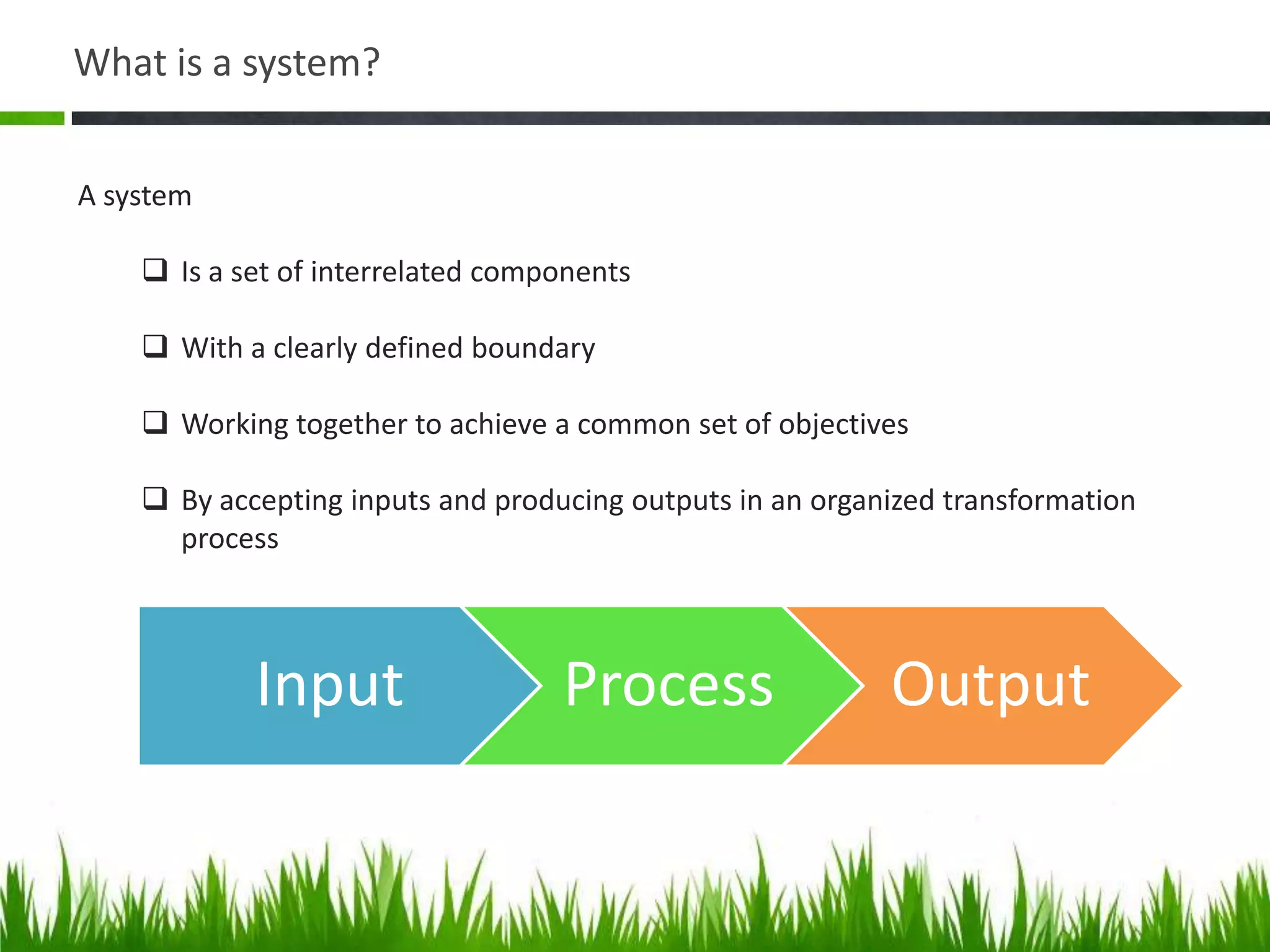
#5 Almost everything is a systemOne system can be made up of other systems or can be part of a bigger system
#6 This is a simple definition that we will expand upon laterWhat’s an example?Smoke signals to transmit informationCard catalogs in a libraryBook bag with day planner, notebooks, that allows you organize inputs from lectures, presentations and discussions. The output is homework and good exam gradesCash register at restaurantOther examples?