VARIETY
• Big data is not always structured data and it is not always
easy to put big data into a relational database.
• This means that the category to which Big Data belongs to is
also a very essential fact that needs to be known by the data
analysis.
• Dealing with a variety of structured and unstructured data
greatly increases the complexity of both storing and
analyzing Big Data.
• 90% of data generated is data is in unstructured form.
PRIMARY SOURCE OF BIG DATA
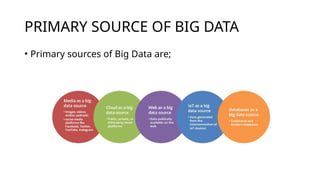
• Primary sources of Big Data are;
MEDIA AS A BIG DATA SOURCE
• Media is the most popular source of big data, as it provides
valuable insights on consumer preferences and changing trends.
• Since it is self-broadcasted and crosses all physical and
demographical barriers, it is the fastest way for businesses to get
an in-depth overview of their target audience, draw patterns and
conclusions, and enhance their decision-making.
• Media includes social media and interactive platforms, like
Google, Facebook, Twitter, YouTube, Instagram, as well as
generic media like images, videos, audios, and podcasts that
provide quantitative and qualitative insights on every aspect of
user interaction.
CLOUD AS A BIG DATA SOURCE
• Today, companies have moved ahead of traditional data
sources by shifting their data on the cloud.
• Cloud storage accommodates structured and unstructured
data and provides business with real-time information and
on-demand insights.
• The main attribute of cloud computing is its flexibility and
scalability.
• As big data can be stored and sourced on public or private
clouds, via networks and servers, cloud makes for an
efficient and economical data source.
WEB AS A BIG DATA SOURCE
• The public web constitutes big data that is widespread and
easily accessible.
• Data on the Web or ‘Internet’ is commonly available to
individuals and companies alike.
• Moreover, web services such as Wikipedia provide free and
quick informational insights to everyone.
• The enormity of the Web ensures for its diverse usability and
is especially beneficial to start-ups and SME’s, as they don’t
have to wait to develop their own big data infrastructure and
repositories before they can leverage big data.

Big Data 4 a tool for data mining in companies

  • 2.
    VARIETY • Big datais not always structured data and it is not always easy to put big data into a relational database. • This means that the category to which Big Data belongs to is also a very essential fact that needs to be known by the data analysis. • Dealing with a variety of structured and unstructured data greatly increases the complexity of both storing and analyzing Big Data. • 90% of data generated is data is in unstructured form.
  • 3.
    PRIMARY SOURCE OFBIG DATA • Primary sources of Big Data are;
  • 4.
    MEDIA AS ABIG DATA SOURCE • Media is the most popular source of big data, as it provides valuable insights on consumer preferences and changing trends. • Since it is self-broadcasted and crosses all physical and demographical barriers, it is the fastest way for businesses to get an in-depth overview of their target audience, draw patterns and conclusions, and enhance their decision-making. • Media includes social media and interactive platforms, like Google, Facebook, Twitter, YouTube, Instagram, as well as generic media like images, videos, audios, and podcasts that provide quantitative and qualitative insights on every aspect of user interaction.
  • 5.
    CLOUD AS ABIG DATA SOURCE • Today, companies have moved ahead of traditional data sources by shifting their data on the cloud. • Cloud storage accommodates structured and unstructured data and provides business with real-time information and on-demand insights. • The main attribute of cloud computing is its flexibility and scalability. • As big data can be stored and sourced on public or private clouds, via networks and servers, cloud makes for an efficient and economical data source.
  • 6.
    WEB AS ABIG DATA SOURCE • The public web constitutes big data that is widespread and easily accessible. • Data on the Web or ‘Internet’ is commonly available to individuals and companies alike. • Moreover, web services such as Wikipedia provide free and quick informational insights to everyone. • The enormity of the Web ensures for its diverse usability and is especially beneficial to start-ups and SME’s, as they don’t have to wait to develop their own big data infrastructure and repositories before they can leverage big data.