Patchwork of
learnings.
A compilation of (useful) tips
for business (& personal) life.
2021.10.29 /om@
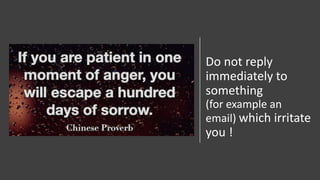
Do not reply
immediately to
something
(for example an
email) which irritate
you !
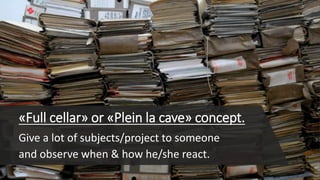
«Full cellar» or «Plein la cave» concept.
Give a lot of subjects/project to someone
and observe when & how he/she react.

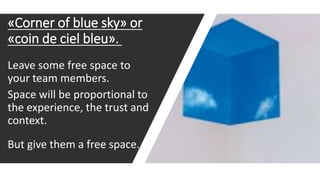
«Corner of blue sky» or
«coin de ciel bleu».
Leave some free space to
your team members.
Space will be proportional to
the experience, the trust and
context.
But give them a free space.
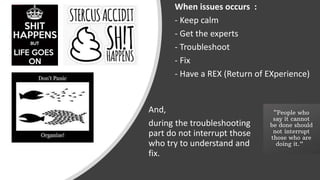
When issues occurs :
- Keep calm
- Get the experts
- Troubleshoot
- Fix
- Have a REX (Return of EXperience)
And,
during the troubleshooting
part do not interrupt those
who try to understand and
fix.
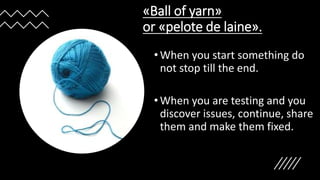
«Ball of yarn»
or «pelote de laine».
•When you start something do
not stop till the end.
•When you are testing and you
discover issues, continue, share
them and make them fixed.
• Don’t be stuck on an issue. Sometimes it can be solved
simply by explaining it to someone else.
• Sometimes a walk or a break is a good to refresh your mind
and to see other options to fix it.
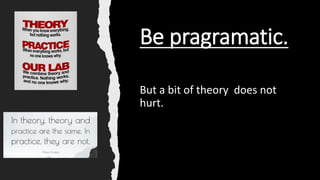
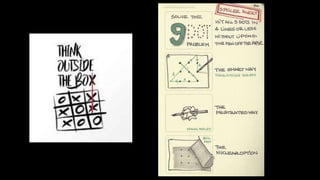
Be pragramatic.
But a bit of theory does not
hurt.
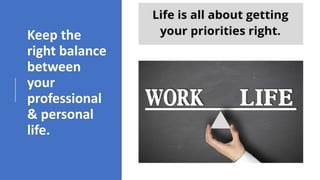
Keep the
right balance
between
your
professional
& personal
life.
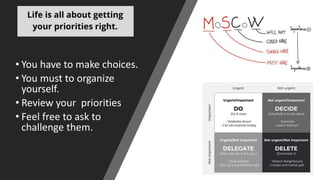
• You have to make choices.
• You must to organize
yourself.
• Review your priorities
• Feel free to ask to
challenge them.
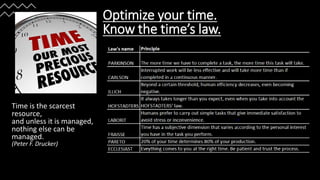
TIME’s law
Time is the scarcest
resource,
and unless it is managed,
nothing else can be
managed.
(Peter F. Drucker)
Optimize your time.
Know the time’s law.
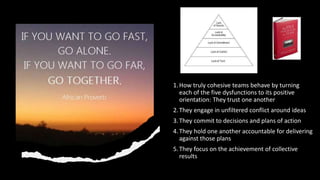
1.How truly cohesive teams behave by turning
each of the five dysfunctions to its positive
orientation: They trust one another
2.They engage in unfiltered conflict around ideas
3.They commit to decisions and plans of action
4.They hold one another accountable for delivering
against those plans
5.They focus on the achievement of collective
results
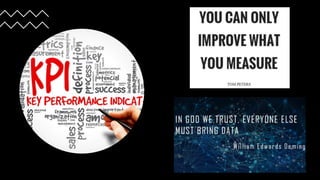
Always check
the quality
of data
& informations.
There are four types of people in the world:
• Those who make things happen
• Those to whom things happen
• Those who watch things happen
• Those who don’t even know things are
happening
(Lou Gerstner, CEO, IBM )
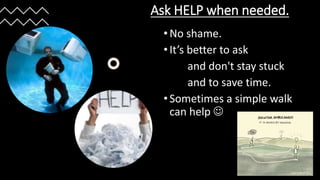
Ask HELP when needed.
• No shame.
• It’s better to ask
and don't stay stuck
and to save time.
• Sometimes a simple walk
can help 
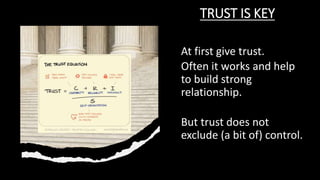
TRUST IS KEY
At first give trust.
Often it works and help
to build strong
relationship.
But trust does not
exclude (a bit of) control.
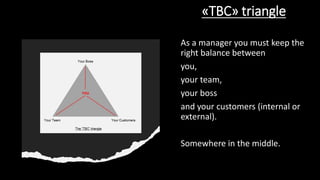
«TBC» triangle
As a manager you must keep the
right balance between
you,
your team,
your boss
and your customers (internal or
external).
Somewhere in the middle.
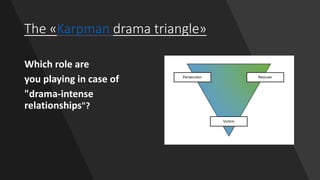
The «Karpman drama triangle»
Which role are
you playing in case of
"drama-intense
relationships"?
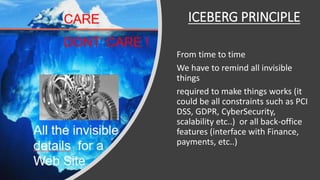
ICEBERG PRINCIPLE
From time to time
We have to remind all invisible
things
required to make things works (it
could be all constraints such as PCI
DSS, GDPR, CyberSecurity,
scalability etc..) or all back-office
features (interface with Finance,
payments, etc..)
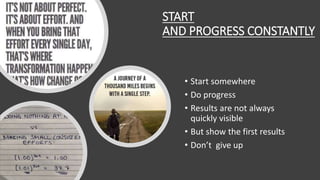
START
AND PROGRESS CONSTANTLY
• Start somewhere
• Do progress
• Results are not always
quickly visible
• But show the first results
• Don’t give up
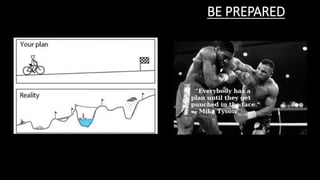
BE PREPARED
BE
& STAY
PROFESSIONAL
The Four Toltec Agreements
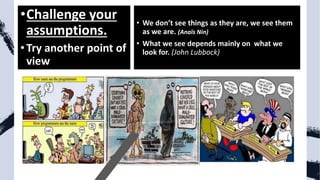
•Challenge your
assumptions.
•Try another point of
view
• We don’t see things as they are, we see them
as we are. (Anaïs Nin)
• What we see depends mainly on what we
look for. (John Lubbock)
Be professional
does not mean
you have to leave your
sense of humor.
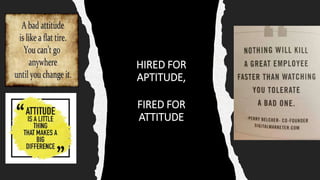
HIRED FOR
APTITUDE,
FIRED FOR
ATTITUDE
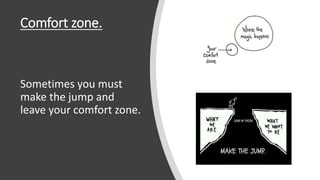
Comfort zone.
Sometimes you must
make the jump and
leave your comfort zone.
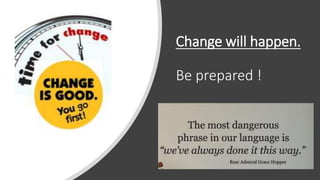
Change will happen.
Be prepared !
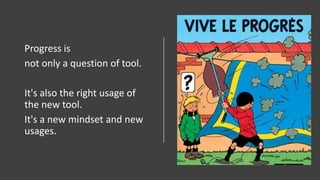
Progress is
not only a question of tool.
It's also the right usage of
the new tool.
It's a new mindset and new
usages.
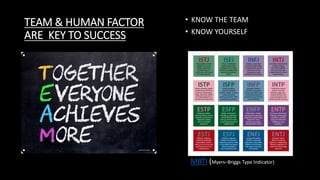
TEAM & HUMAN FACTOR
ARE KEY TO SUCCESS
• KNOW THE TEAM
• KNOW YOURSELF
MBTI (Myers–Briggs Type Indicator)
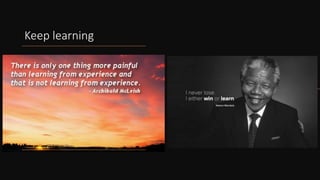
Keep learning
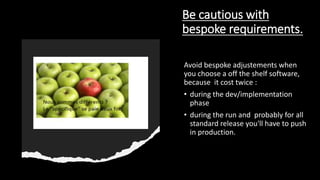
Be cautious with
bespoke requirements.
Avoid bespoke adjustements when
you choose a off the shelf software,
because it cost twice :
• during the dev/implementation
phase
• during the run and probably for all
standard release you'll have to push
in production.
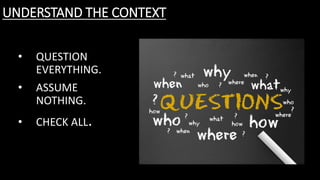
UNDERSTAND THE CONTEXT
• QUESTION
EVERYTHING.
• ASSUME
NOTHING.
• CHECK ALL.
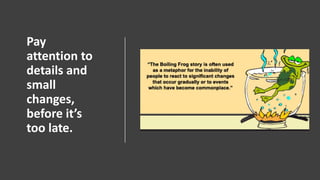
Pay
attention to
details and
small
changes,
before it’s
too late.
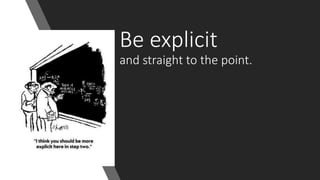
Be explicit
and straight to the point.
Technology
is just a tool.
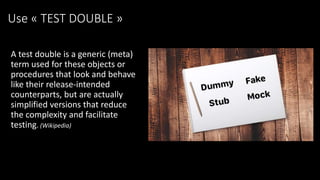
Use « TEST DOUBLE »
A test double is a generic (meta)
term used for these objects or
procedures that look and behave
like their release-intended
counterparts, but are actually
simplified versions that reduce
the complexity and facilitate
testing. (Wikipedia)
Be flexible but
stick to your
principles.
(Eleanor Roosevelt)
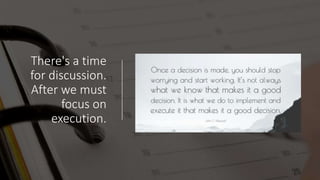
There's a time
for discussion.
After we must
focus on
execution.
Win#12 oma learnings

Win#12 oma learnings

  • 1.
    Patchwork of learnings. A compilationof (useful) tips for business (& personal) life. 2021.10.29 /om@
  • 2.
    Do not reply immediatelyto something (for example an email) which irritate you !
  • 3.
    «Full cellar» or«Plein la cave» concept. Give a lot of subjects/project to someone and observe when & how he/she react.
  • 4.
    «Corner of bluesky» or «coin de ciel bleu». Leave some free space to your team members. Space will be proportional to the experience, the trust and context. But give them a free space.
  • 5.
    When issues occurs: - Keep calm - Get the experts - Troubleshoot - Fix - Have a REX (Return of EXperience) And, during the troubleshooting part do not interrupt those who try to understand and fix.
  • 6.
    «Ball of yarn» or«pelote de laine». •When you start something do not stop till the end. •When you are testing and you discover issues, continue, share them and make them fixed.
  • 7.
    • Don’t bestuck on an issue. Sometimes it can be solved simply by explaining it to someone else. • Sometimes a walk or a break is a good to refresh your mind and to see other options to fix it.
  • 8.
    Be pragramatic. But abit of theory does not hurt.
  • 9.
  • 10.
    • You haveto make choices. • You must to organize yourself. • Review your priorities • Feel free to ask to challenge them.
  • 11.
    TIME’s law Time isthe scarcest resource, and unless it is managed, nothing else can be managed. (Peter F. Drucker) Optimize your time. Know the time’s law.
  • 12.
    1.How truly cohesiveteams behave by turning each of the five dysfunctions to its positive orientation: They trust one another 2.They engage in unfiltered conflict around ideas 3.They commit to decisions and plans of action 4.They hold one another accountable for delivering against those plans 5.They focus on the achievement of collective results
  • 13.
    Always check the quality ofdata & informations.
  • 14.
    There are fourtypes of people in the world: • Those who make things happen • Those to whom things happen • Those who watch things happen • Those who don’t even know things are happening (Lou Gerstner, CEO, IBM )
  • 17.
    Ask HELP whenneeded. • No shame. • It’s better to ask and don't stay stuck and to save time. • Sometimes a simple walk can help 
  • 18.
    TRUST IS KEY Atfirst give trust. Often it works and help to build strong relationship. But trust does not exclude (a bit of) control.
  • 19.
    «TBC» triangle As amanager you must keep the right balance between you, your team, your boss and your customers (internal or external). Somewhere in the middle.
  • 20.
    The «Karpman dramatriangle» Which role are you playing in case of "drama-intense relationships"?
  • 21.
    ICEBERG PRINCIPLE From timeto time We have to remind all invisible things required to make things works (it could be all constraints such as PCI DSS, GDPR, CyberSecurity, scalability etc..) or all back-office features (interface with Finance, payments, etc..)
  • 22.
    START AND PROGRESS CONSTANTLY •Start somewhere • Do progress • Results are not always quickly visible • But show the first results • Don’t give up
  • 23.
  • 25.
  • 26.
    •Challenge your assumptions. •Try anotherpoint of view • We don’t see things as they are, we see them as we are. (Anaïs Nin) • What we see depends mainly on what we look for. (John Lubbock)
  • 27.
    Be professional does notmean you have to leave your sense of humor.
  • 28.
  • 29.
    Comfort zone. Sometimes youmust make the jump and leave your comfort zone.
  • 30.
  • 31.
    Progress is not onlya question of tool. It's also the right usage of the new tool. It's a new mindset and new usages.
  • 32.
    TEAM & HUMANFACTOR ARE KEY TO SUCCESS • KNOW THE TEAM • KNOW YOURSELF MBTI (Myers–Briggs Type Indicator)
  • 33.
  • 34.
    Be cautious with bespokerequirements. Avoid bespoke adjustements when you choose a off the shelf software, because it cost twice : • during the dev/implementation phase • during the run and probably for all standard release you'll have to push in production.
  • 35.
    UNDERSTAND THE CONTEXT •QUESTION EVERYTHING. • ASSUME NOTHING. • CHECK ALL.
  • 36.
  • 37.
  • 38.
  • 39.
    Use « TESTDOUBLE » A test double is a generic (meta) term used for these objects or procedures that look and behave like their release-intended counterparts, but are actually simplified versions that reduce the complexity and facilitate testing. (Wikipedia)
  • 40.
    Be flexible but stickto your principles. (Eleanor Roosevelt)
  • 41.
    There's a time fordiscussion. After we must focus on execution.