MAMMOGRAM
Presented by Dr. LT
15. 6. 2023
Presentation outline
Definition
 Indication
Non-Indication
 Equipment
 Technique & Radiological Views
Mammography Lexicon
 BI –RADS Assessment Category
 References
What is mammogram?
Mammogram is a x-ray examination of the breast to
detect and evaluate any changes in the breast.
2
Indications
 Focal signs in women aged ≥40 years in the context of triple
(i.e.clinical, radiological and pathological) assessment at a
specialist, multidisciplinary diagnostic breast clinic
Following diagnosis of breast cancer, to exclude multifocal/
multicentric/bilateral disease
Breast cancer follow-up, no more frequently than annually
or less frequently than biennially for at least 10 years
3
Investigation of metastatic malignancy of unknown origin
Screening of women with a moderate/high risk of familial
breast cancer who have undergone genetic risk assessment in
accordance with National Institute for Health and Clinical
Excellence (NICE) guidance
4
Not Indicated
Asymptomatic women without familial history of breast
cancer, aged younger than 40 years
Investigation of generalized signs/symptoms—e.g.
cyclical mastalgia or nonfocal pain/lumpiness
Prior to commencement of hormone replacement therapy
To assess the integrity of silicone implants
5
Individuals affected by ataxia-telangiectasia mutated
(ATM) gene mutation with resultant high sensitivity to
radiation exposure, including medical x-rays
Routine investigation of gynaecomastia
6
Equipment
Conventional film-screen mammographic technology has
been superseded by full-field digital mammography (FFDM),
which has a higher sensitivity in:
• women aged younger than 50 years
• pre/perimenopausal women
• women with dense fibroglandular breast tissue
7
Developments of FFDM include the following:
1. Tomosynthesis, which creates a single 3D image of the
breast by combining data from a series of 2D radiographs
acquired during a single sweep of the x-ray tube. This
technique has a proven significant increased accuracy in
the diagnostic evaluation of masses and parenchymal
distortions, irrespective of breast composition:
8
Its increased accuracy in the morphological and
margin extent analysis allows more precise assessment of
tumour size, both in fatty and dense breast tissue,
confirming its role in diagnostic symptomatic and
screening practice.
9
A mammogram and a stationary digital breast tomosynthesis 10
2. Contrast-enhanced digital mammography
(i.e.angiomammography). Two approaches are available:
temporal sequencing (in which images pre- and postcontrast are
subtracted with a resultant angiomammogram) and dual energy
imaging (in which imaging at low and high energies detailing
parenchyma and fat, respectively, with and without iodine are
obtained). The subsequent views can then be subtracted.
Ongoing studies will inform the future diagnostic role of this
technique.
11
The high-energy
image of CEM
The low-energy
image of CEM
12
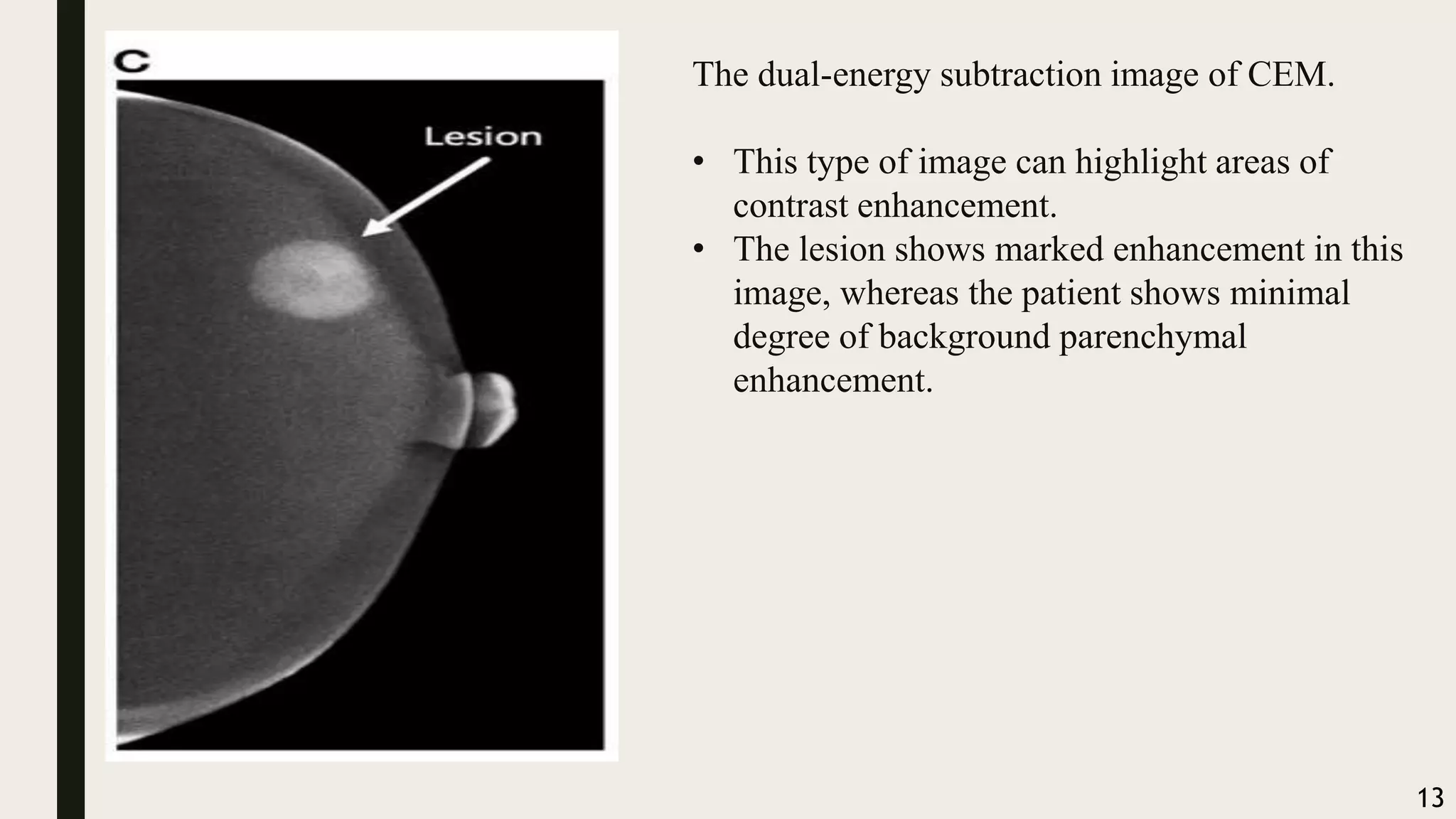
The dual-energy subtraction image of CEM.
• This type of image can highlight areas of
contrast enhancement.
• The lesion shows marked enhancement in this
image, whereas the patient shows minimal
degree of background parenchymal
enhancement.
13
3. Computer-aided detection (CAD) software can assist film
reading by placing prompts over areas of potential
mammographic concern. There is evidence that, even in the
screening setting, single reading in association with CAD may
offer sensitivities and specificities comparable to that of double
reading.
14
Technique & Radiological Views
Standard mammographic examination comprises imaging of
both breasts in two views—namely the mediolateral oblique
(MLO) and craniocaudal (CC) positions.
Screening methodology is bilateral, two-view (MLO and CC)
mammography at all screening rounds.
Additional views may be required to provide adequate
visualization of specific anatomical sites:
1. Lateral/medial extended CC
2. Axillary tail
3. Mediolateral/lateromedial
15
 Compression of the breast is an integral part of mammographic
imaging resulting in:
1. reduction in radiation dose
2. immobilization of the breast, thus reducing blurring
3. uniformity of breast thickness, allowing even penetration
4. reduction in breast thickness, thus reducing scatter/noise
achieving higher resolution
16
Adaptation of the technique can provide additional
information:
1. Spot compression, to remove overlapping composite tissue
2. Magnification (smaller focal spot combined with air gap),
to provide morphological analysis
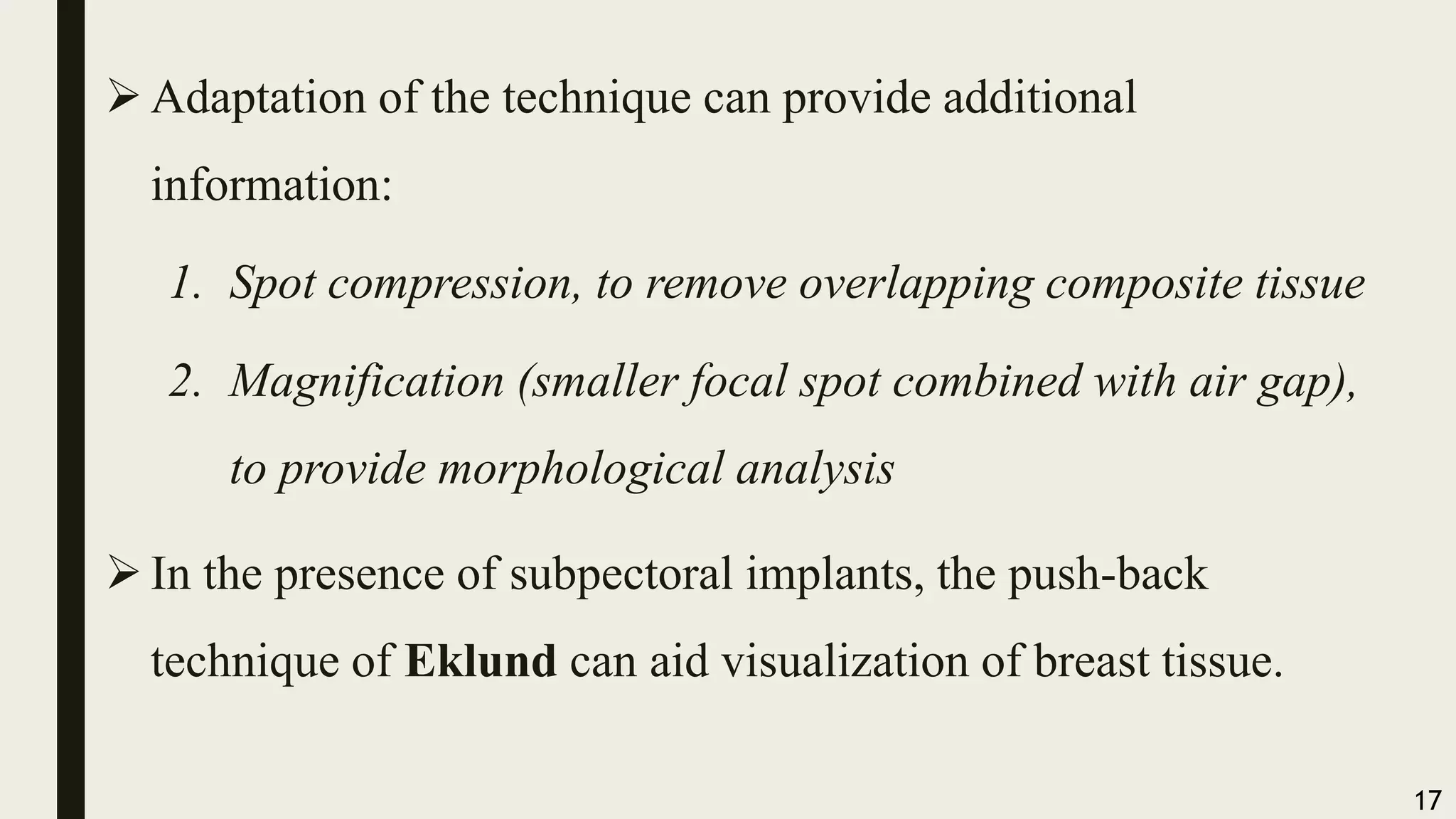
In the presence of subpectoral implants, the push-back
technique of Eklund can aid visualization of breast tissue.
17
the push-back technique of Eklund
18
■ If you find any
abnormality, make a
decription and
assessment
category.
19
20
BI-RADS Assessment Categories
21
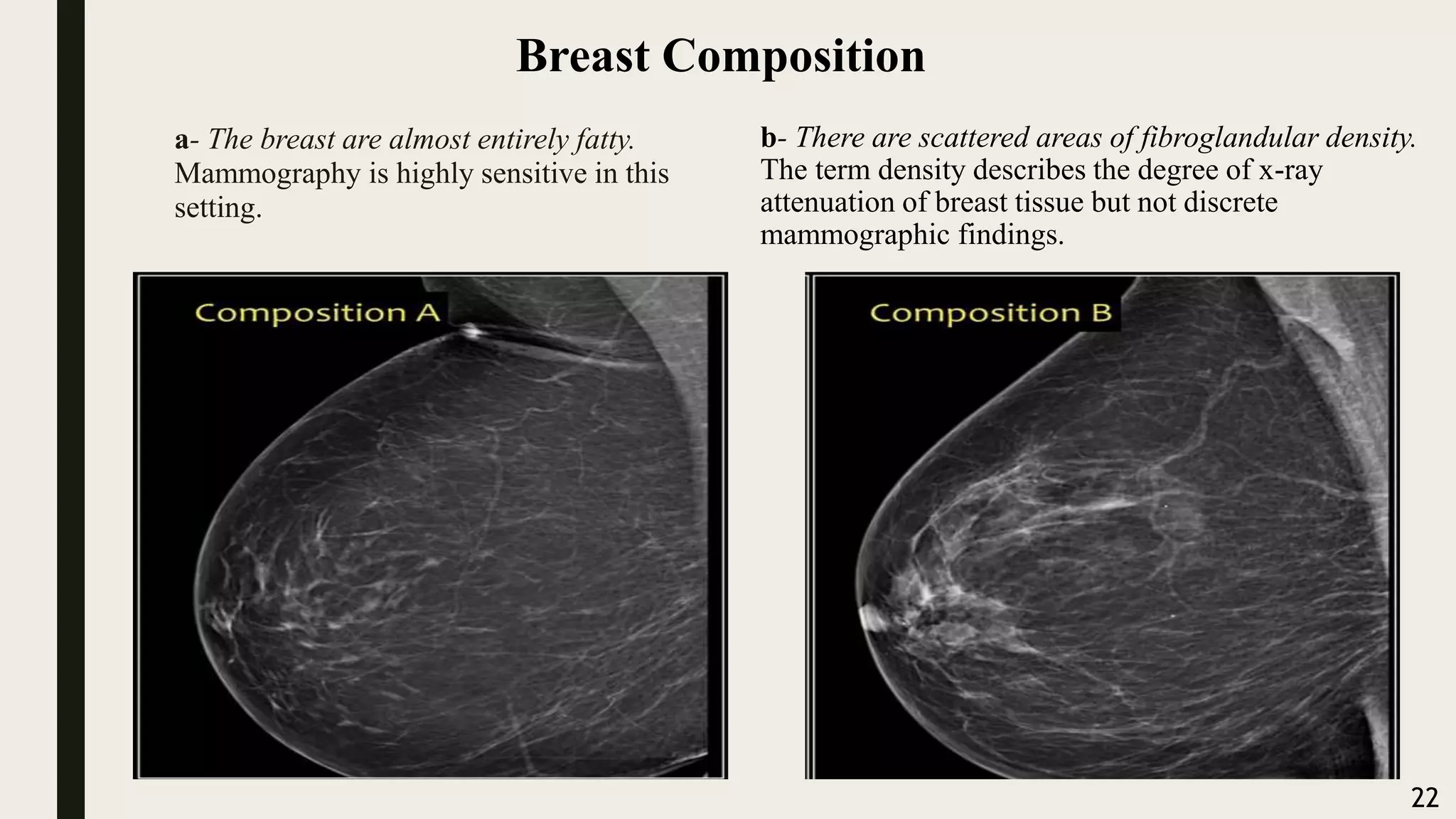
a- The breast are almost entirely fatty.
Mammography is highly sensitive in this
setting.
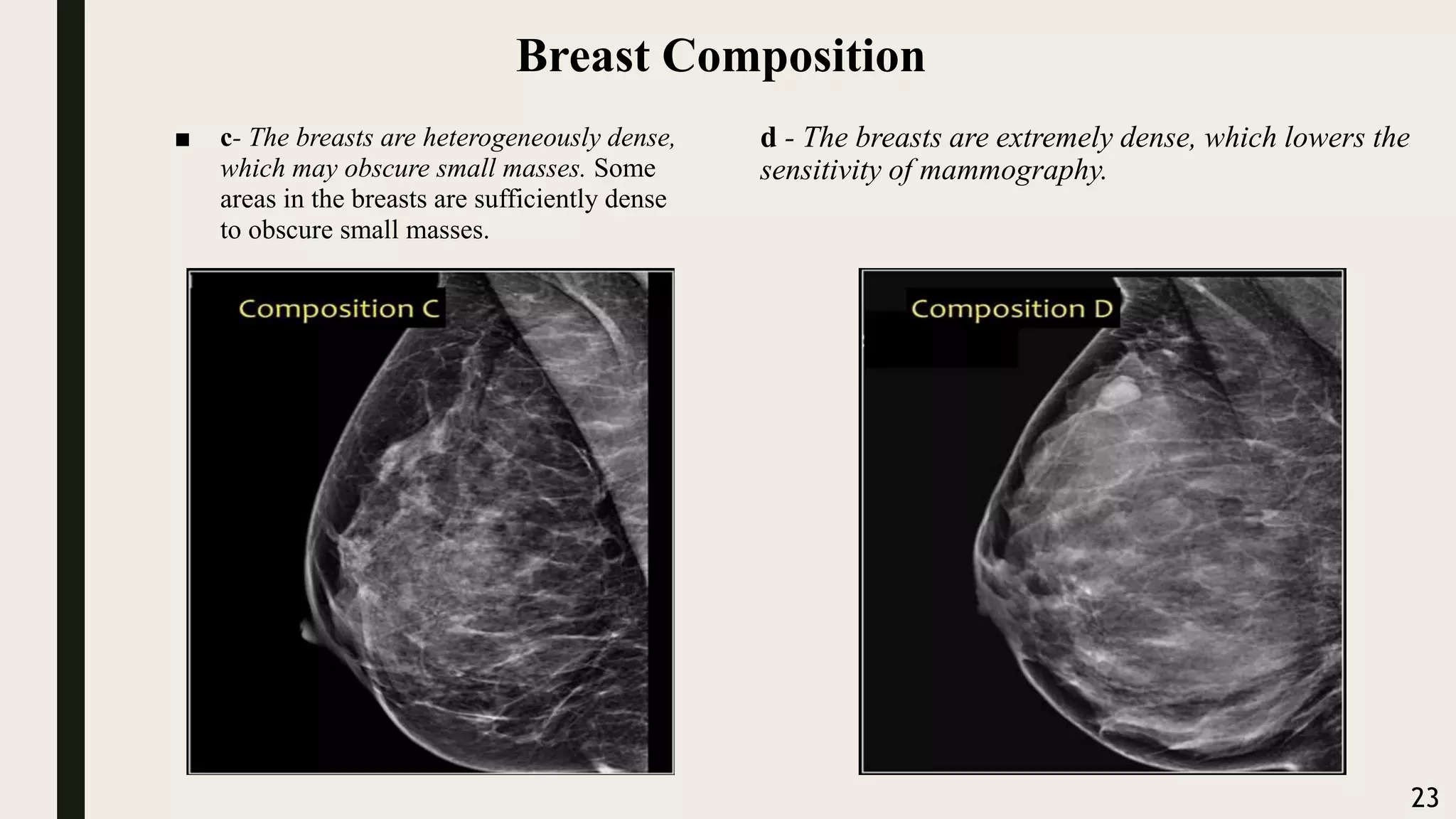
b- There are scattered areas of fibroglandular density.
The term density describes the degree of x-ray
attenuation of breast tissue but not discrete
mammographic findings.
Breast Composition
22
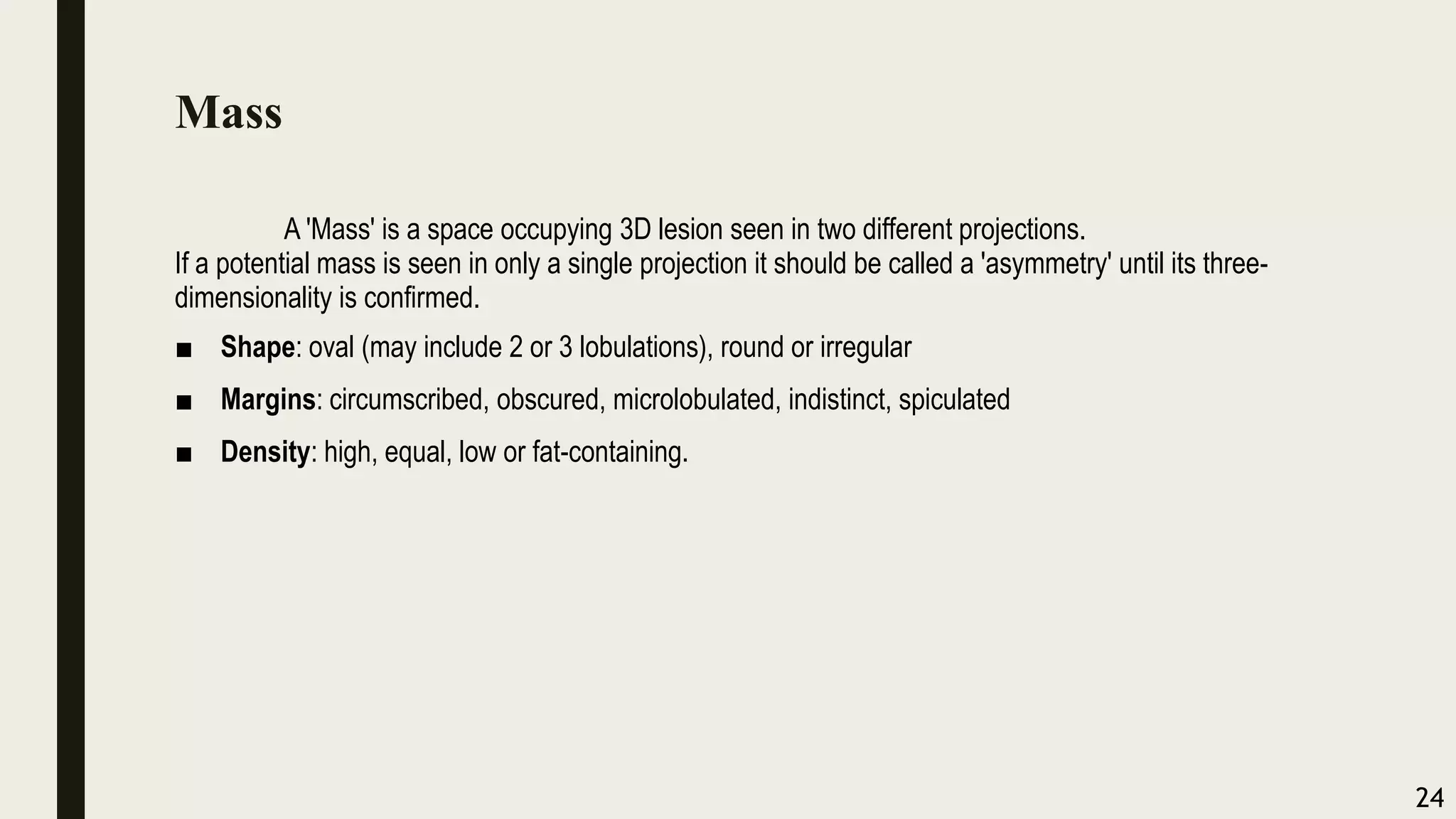
■ c- The breasts are heterogeneously dense,
which may obscure small masses. Some
areas in the breasts are sufficiently dense
to obscure small masses.
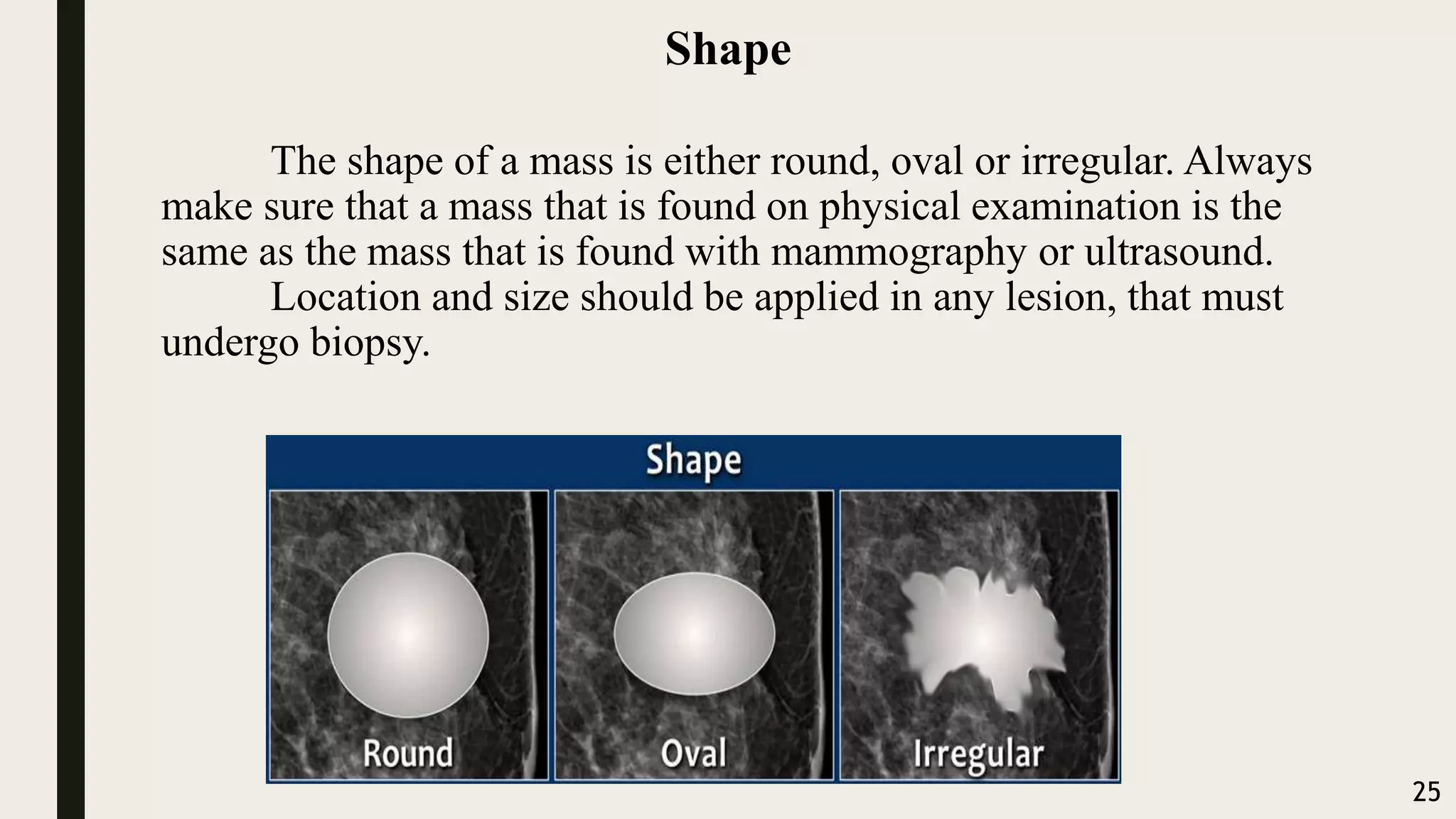
d - The breasts are extremely dense, which lowers the
sensitivity of mammography.
Breast Composition
23
Mass
A 'Mass' is a space occupying 3D lesion seen in two different projections.
If a potential mass is seen in only a single projection it should be called a 'asymmetry' until its three-
dimensionality is confirmed.
■ Shape: oval (may include 2 or 3 lobulations), round or irregular
■ Margins: circumscribed, obscured, microlobulated, indistinct, spiculated
■ Density: high, equal, low or fat-containing.
24
The shape of a mass is either round, oval or irregular. Always
make sure that a mass that is found on physical examination is the
same as the mass that is found with mammography or ultrasound.
Location and size should be applied in any lesion, that must
undergo biopsy.
Shape
25
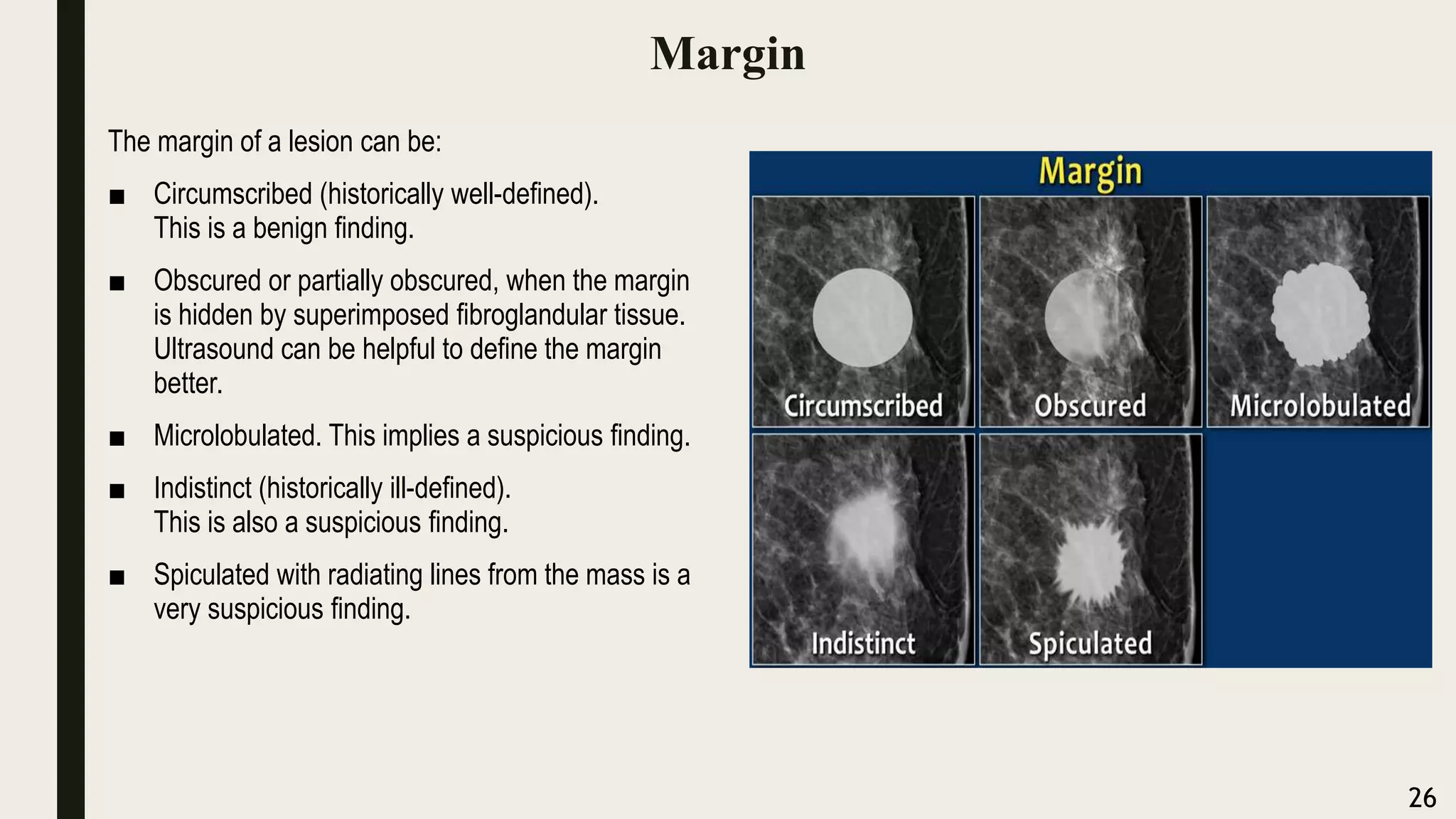
Margin
The margin of a lesion can be:
■ Circumscribed (historically well-defined).
This is a benign finding.
■ Obscured or partially obscured, when the margin
is hidden by superimposed fibroglandular tissue.
Ultrasound can be helpful to define the margin
better.
■ Microlobulated. This implies a suspicious finding.
■ Indistinct (historically ill-defined).
This is also a suspicious finding.
■ Spiculated with radiating lines from the mass is a
very suspicious finding.
26
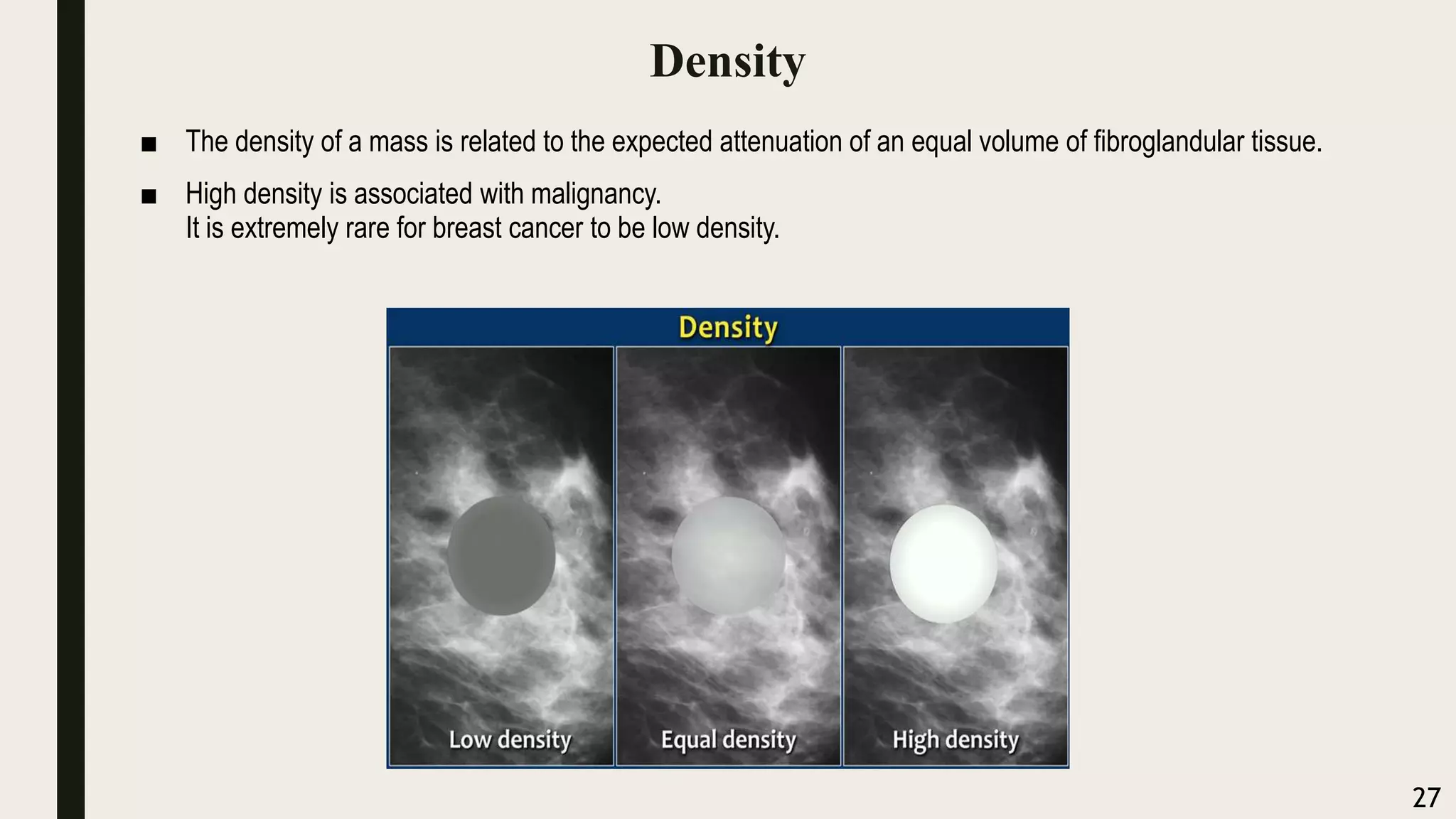
Density
■ The density of a mass is related to the expected attenuation of an equal volume of fibroglandular tissue.
■ High density is associated with malignancy.
It is extremely rare for breast cancer to be low density.
27
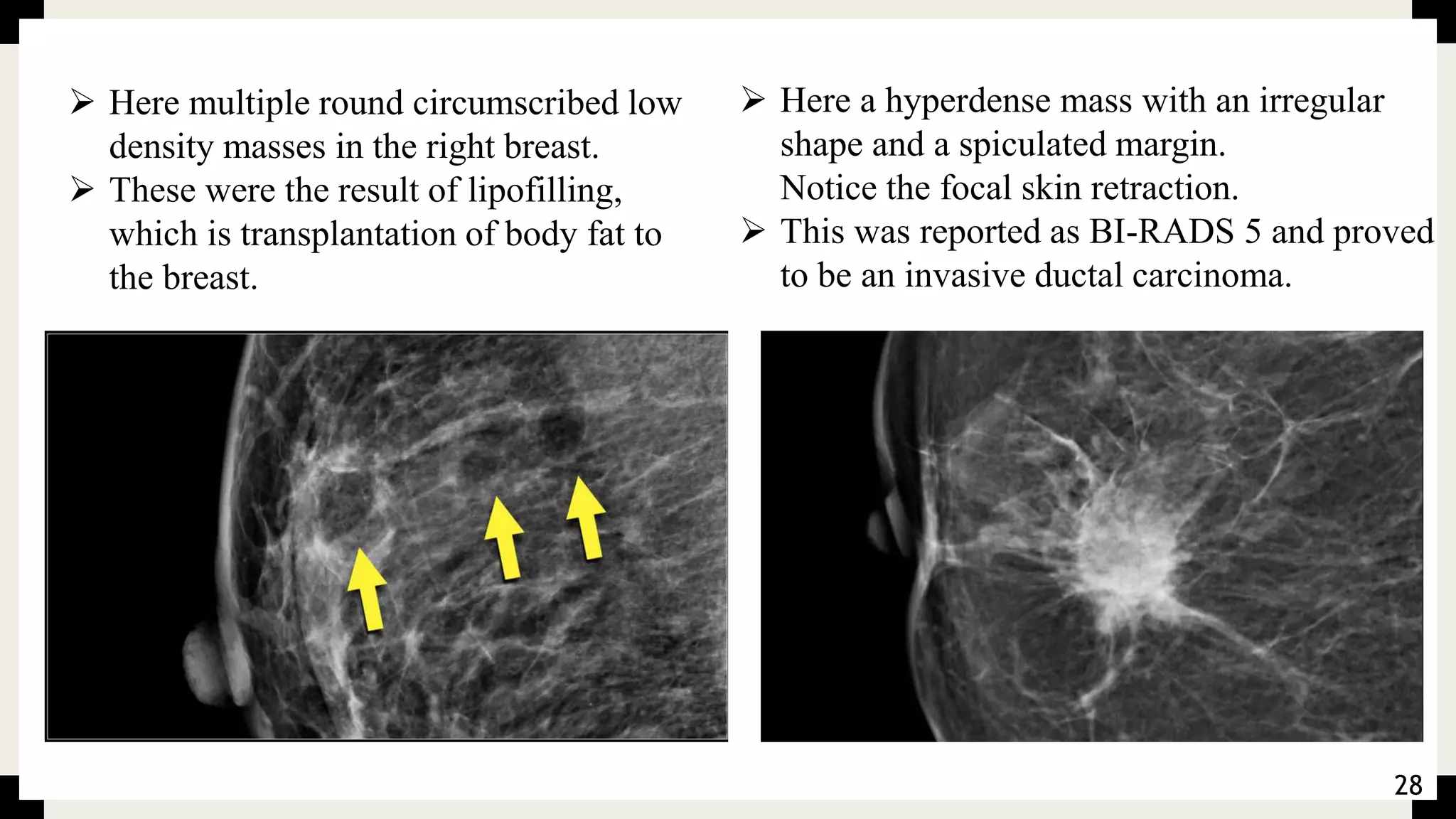
 Here multiple round circumscribed low
density masses in the right breast.
 These were the result of lipofilling,
which is transplantation of body fat to
the breast.
 Here a hyperdense mass with an irregular
shape and a spiculated margin.
Notice the focal skin retraction.
 This was reported as BI-RADS 5 and proved
to be an invasive ductal carcinoma.
28
Findings that represent unilateral
deposits of fibroglandulair tissue not
conforming to the definition of a mass.
•Asymmetry as an area of fibroglandulair
tissue visible on only one mammographic
projection, mostly caused by
superimposition of normal breast tissue.
•Focal asymmetry visible on two
projections, hence a real finding rather than
superposition.
This has to be differentiated from a mass.
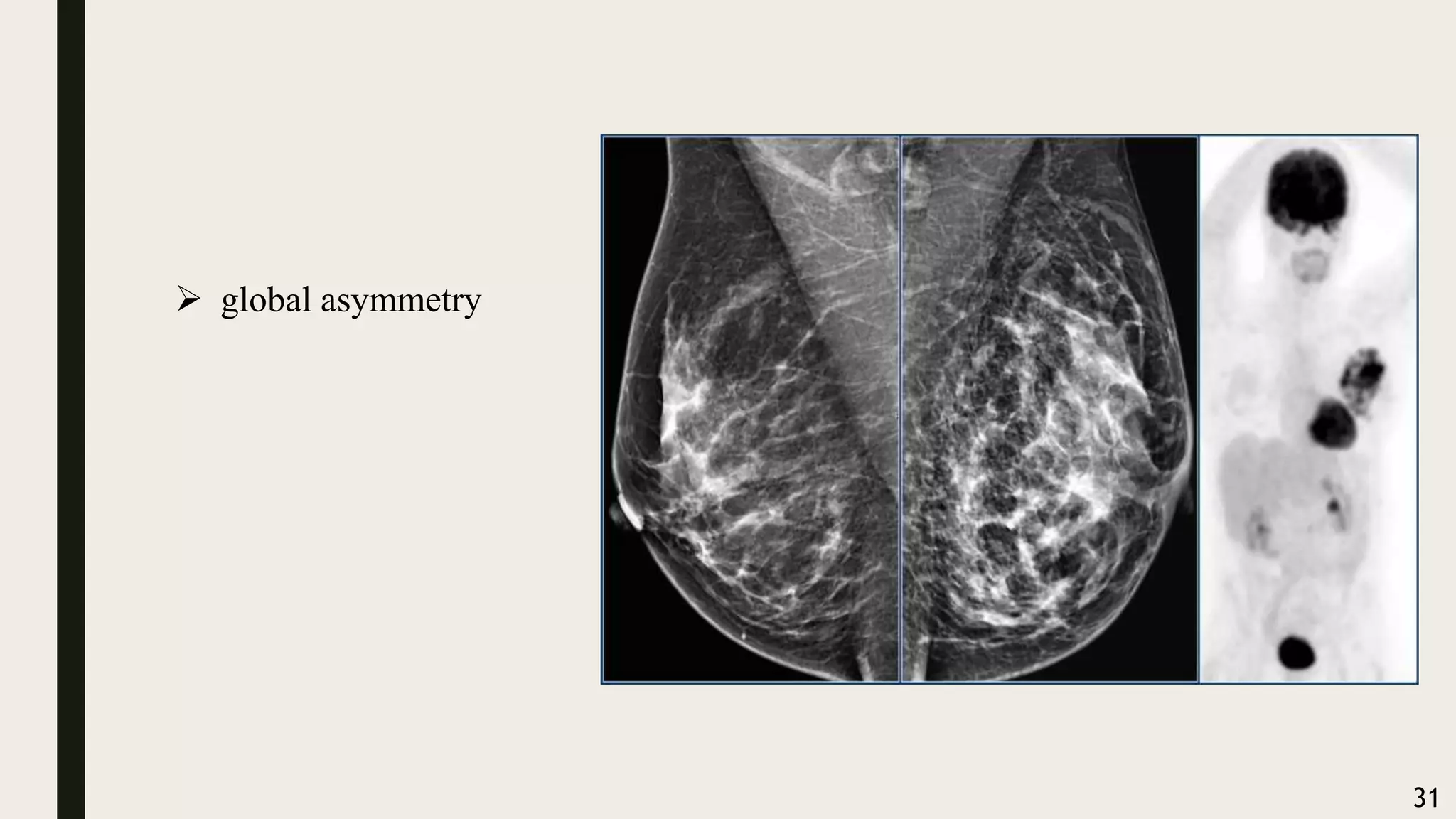
•Global asymmetry consisting of an
asymmetry over at least one quarter of the
breast and is usually a normal variant.
•Developing asymmetry new, larger and
more conspicuous than on a previous
examination.
29
 a focal asymmetry
seen on MLO and
CC-view.
30
 global asymmetry
31
Architectural
Distortion
The term architectural
distortion is used, when the
normal architecture is distorted
with no definite mass visible.
This includes thin
straight lines or spiculations
radiating from a point, and
focal retraction, distortion or
straightening at the edges of
the parenchyma.
The differential
diagnosis is scar tissue or
carcinoma.
32
Calcification
33
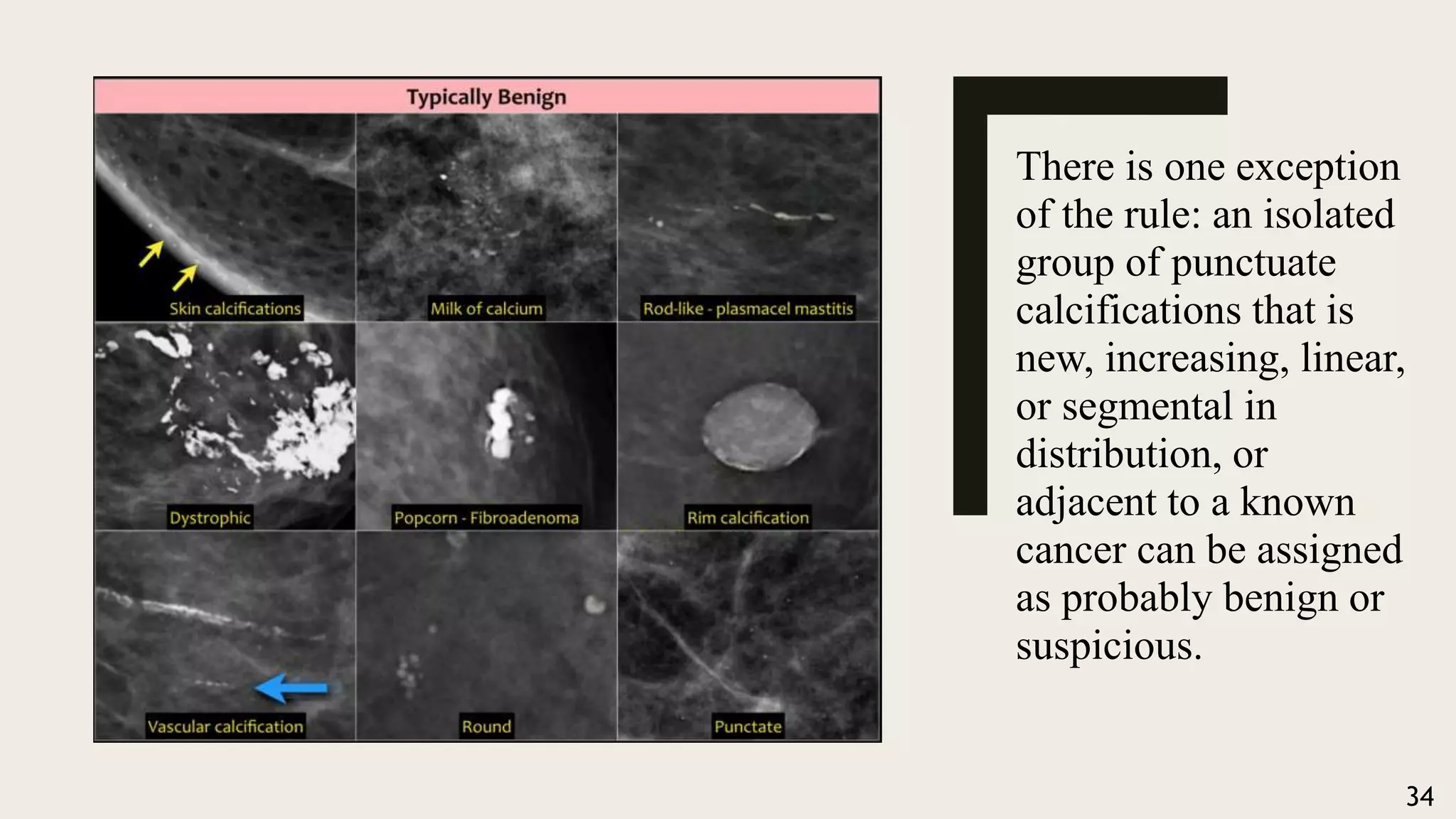
There is one exception
of the rule: an isolated
group of punctuate
calcifications that is
new, increasing, linear,
or segmental in
distribution, or
adjacent to a known
cancer can be assigned
as probably benign or
suspicious.
34
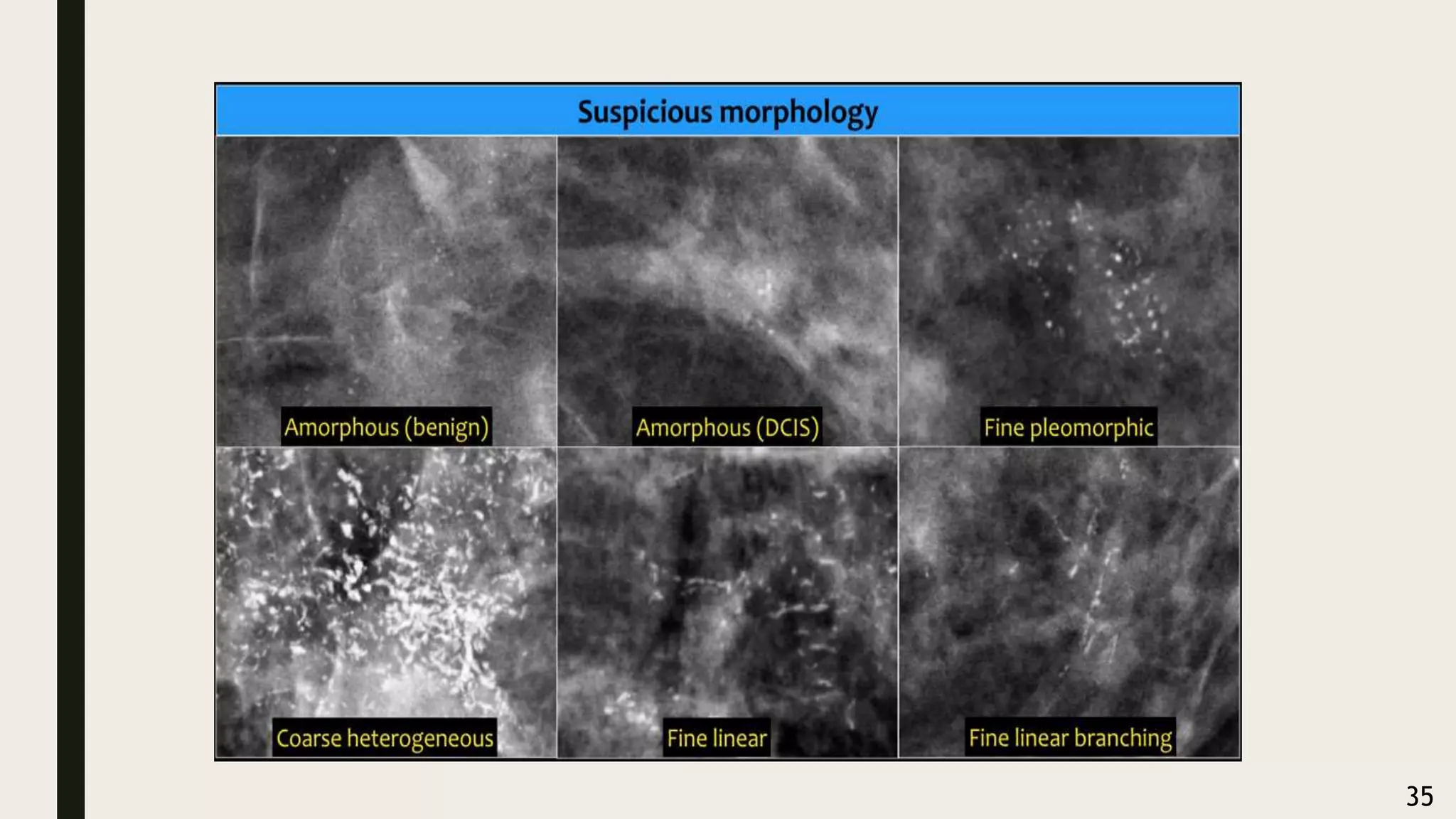
35
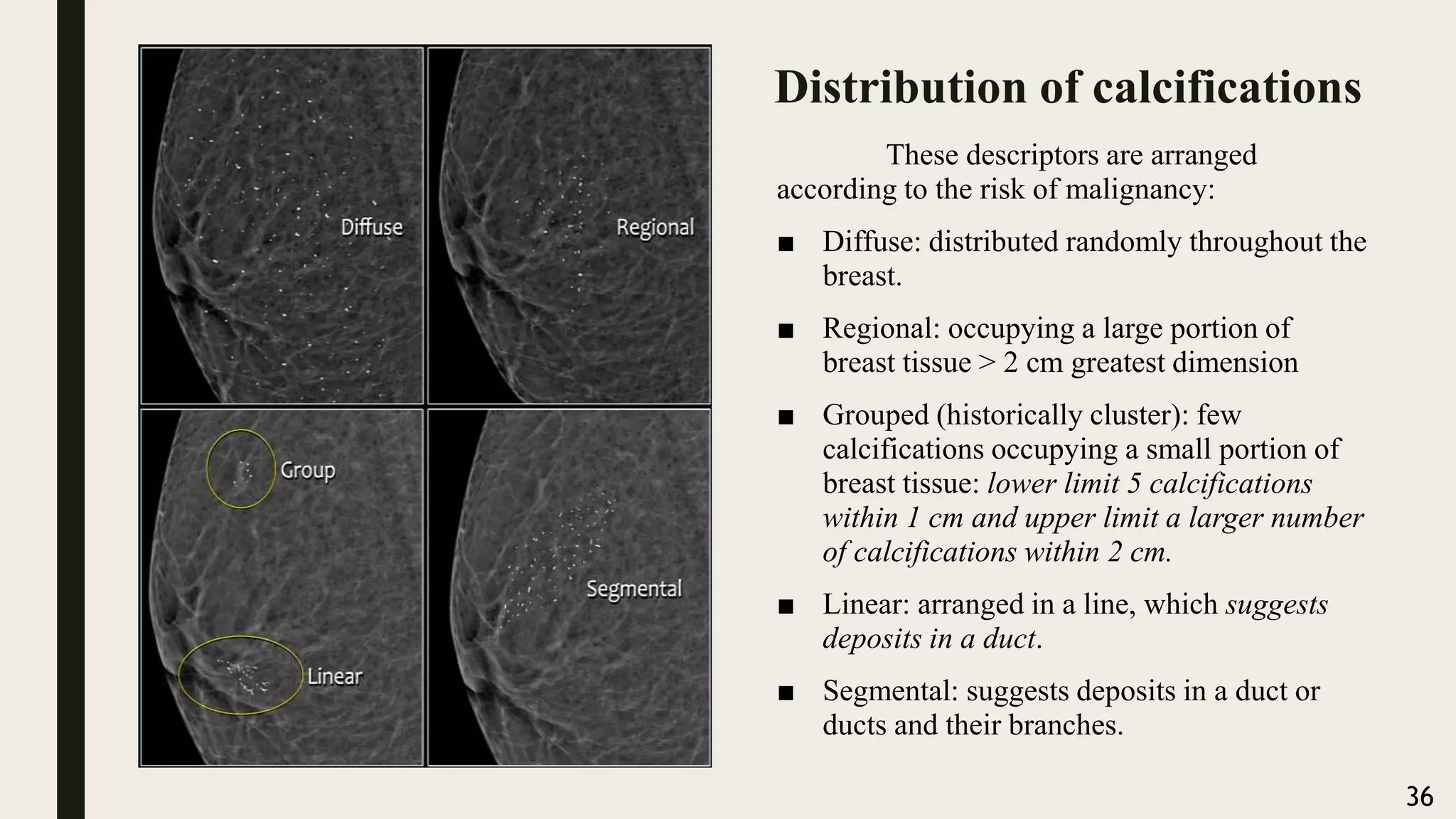
Distribution of calcifications
These descriptors are arranged
according to the risk of malignancy:
■ Diffuse: distributed randomly throughout the
breast.
■ Regional: occupying a large portion of
breast tissue > 2 cm greatest dimension
■ Grouped (historically cluster): few
calcifications occupying a small portion of
breast tissue: lower limit 5 calcifications
within 1 cm and upper limit a larger number
of calcifications within 2 cm.
■ Linear: arranged in a line, which suggests
deposits in a duct.
■ Segmental: suggests deposits in a duct or
ducts and their branches.
36
37
References
 https://radiologyassistant.nl/breast/bi-rads/bi-rads-for-mammography-and-
ultrasound-2013#mammography-breast-imaging-lexicon-breast-composition
 Chapman & Nakielny's Guide to Radiological Procedures
38
T h a n k y o u
Have A Nice Day

Mammogram and BI-RADS classification .pptx

  • 1.
  • 2.
    Presentation outline Definition  Indication Non-Indication Equipment  Technique & Radiological Views Mammography Lexicon  BI –RADS Assessment Category  References
  • 3.
    What is mammogram? Mammogramis a x-ray examination of the breast to detect and evaluate any changes in the breast. 2
  • 4.
    Indications  Focal signsin women aged ≥40 years in the context of triple (i.e.clinical, radiological and pathological) assessment at a specialist, multidisciplinary diagnostic breast clinic Following diagnosis of breast cancer, to exclude multifocal/ multicentric/bilateral disease Breast cancer follow-up, no more frequently than annually or less frequently than biennially for at least 10 years 3
  • 5.
    Investigation of metastaticmalignancy of unknown origin Screening of women with a moderate/high risk of familial breast cancer who have undergone genetic risk assessment in accordance with National Institute for Health and Clinical Excellence (NICE) guidance 4
  • 6.
    Not Indicated Asymptomatic womenwithout familial history of breast cancer, aged younger than 40 years Investigation of generalized signs/symptoms—e.g. cyclical mastalgia or nonfocal pain/lumpiness Prior to commencement of hormone replacement therapy To assess the integrity of silicone implants 5
  • 7.
    Individuals affected byataxia-telangiectasia mutated (ATM) gene mutation with resultant high sensitivity to radiation exposure, including medical x-rays Routine investigation of gynaecomastia 6
  • 8.
    Equipment Conventional film-screen mammographictechnology has been superseded by full-field digital mammography (FFDM), which has a higher sensitivity in: • women aged younger than 50 years • pre/perimenopausal women • women with dense fibroglandular breast tissue 7
  • 9.
    Developments of FFDMinclude the following: 1. Tomosynthesis, which creates a single 3D image of the breast by combining data from a series of 2D radiographs acquired during a single sweep of the x-ray tube. This technique has a proven significant increased accuracy in the diagnostic evaluation of masses and parenchymal distortions, irrespective of breast composition: 8
  • 10.
    Its increased accuracyin the morphological and margin extent analysis allows more precise assessment of tumour size, both in fatty and dense breast tissue, confirming its role in diagnostic symptomatic and screening practice. 9
  • 11.
    A mammogram anda stationary digital breast tomosynthesis 10
  • 12.
    2. Contrast-enhanced digitalmammography (i.e.angiomammography). Two approaches are available: temporal sequencing (in which images pre- and postcontrast are subtracted with a resultant angiomammogram) and dual energy imaging (in which imaging at low and high energies detailing parenchyma and fat, respectively, with and without iodine are obtained). The subsequent views can then be subtracted. Ongoing studies will inform the future diagnostic role of this technique. 11
  • 13.
    The high-energy image ofCEM The low-energy image of CEM 12
  • 14.
    The dual-energy subtractionimage of CEM. • This type of image can highlight areas of contrast enhancement. • The lesion shows marked enhancement in this image, whereas the patient shows minimal degree of background parenchymal enhancement. 13
  • 15.
    3. Computer-aided detection(CAD) software can assist film reading by placing prompts over areas of potential mammographic concern. There is evidence that, even in the screening setting, single reading in association with CAD may offer sensitivities and specificities comparable to that of double reading. 14
  • 16.
    Technique & RadiologicalViews Standard mammographic examination comprises imaging of both breasts in two views—namely the mediolateral oblique (MLO) and craniocaudal (CC) positions. Screening methodology is bilateral, two-view (MLO and CC) mammography at all screening rounds. Additional views may be required to provide adequate visualization of specific anatomical sites: 1. Lateral/medial extended CC 2. Axillary tail 3. Mediolateral/lateromedial 15
  • 17.
     Compression ofthe breast is an integral part of mammographic imaging resulting in: 1. reduction in radiation dose 2. immobilization of the breast, thus reducing blurring 3. uniformity of breast thickness, allowing even penetration 4. reduction in breast thickness, thus reducing scatter/noise achieving higher resolution 16
  • 18.
    Adaptation of thetechnique can provide additional information: 1. Spot compression, to remove overlapping composite tissue 2. Magnification (smaller focal spot combined with air gap), to provide morphological analysis In the presence of subpectoral implants, the push-back technique of Eklund can aid visualization of breast tissue. 17
  • 19.
  • 20.
    ■ If youfind any abnormality, make a decription and assessment category. 19
  • 21.
  • 22.
  • 23.
    a- The breastare almost entirely fatty. Mammography is highly sensitive in this setting. b- There are scattered areas of fibroglandular density. The term density describes the degree of x-ray attenuation of breast tissue but not discrete mammographic findings. Breast Composition 22
  • 24.
    ■ c- Thebreasts are heterogeneously dense, which may obscure small masses. Some areas in the breasts are sufficiently dense to obscure small masses. d - The breasts are extremely dense, which lowers the sensitivity of mammography. Breast Composition 23
  • 25.
    Mass A 'Mass' isa space occupying 3D lesion seen in two different projections. If a potential mass is seen in only a single projection it should be called a 'asymmetry' until its three- dimensionality is confirmed. ■ Shape: oval (may include 2 or 3 lobulations), round or irregular ■ Margins: circumscribed, obscured, microlobulated, indistinct, spiculated ■ Density: high, equal, low or fat-containing. 24
  • 26.
    The shape ofa mass is either round, oval or irregular. Always make sure that a mass that is found on physical examination is the same as the mass that is found with mammography or ultrasound. Location and size should be applied in any lesion, that must undergo biopsy. Shape 25
  • 27.
    Margin The margin ofa lesion can be: ■ Circumscribed (historically well-defined). This is a benign finding. ■ Obscured or partially obscured, when the margin is hidden by superimposed fibroglandular tissue. Ultrasound can be helpful to define the margin better. ■ Microlobulated. This implies a suspicious finding. ■ Indistinct (historically ill-defined). This is also a suspicious finding. ■ Spiculated with radiating lines from the mass is a very suspicious finding. 26
  • 28.
    Density ■ The densityof a mass is related to the expected attenuation of an equal volume of fibroglandular tissue. ■ High density is associated with malignancy. It is extremely rare for breast cancer to be low density. 27
  • 29.
     Here multipleround circumscribed low density masses in the right breast.  These were the result of lipofilling, which is transplantation of body fat to the breast.  Here a hyperdense mass with an irregular shape and a spiculated margin. Notice the focal skin retraction.  This was reported as BI-RADS 5 and proved to be an invasive ductal carcinoma. 28
  • 30.
    Findings that representunilateral deposits of fibroglandulair tissue not conforming to the definition of a mass. •Asymmetry as an area of fibroglandulair tissue visible on only one mammographic projection, mostly caused by superimposition of normal breast tissue. •Focal asymmetry visible on two projections, hence a real finding rather than superposition. This has to be differentiated from a mass. •Global asymmetry consisting of an asymmetry over at least one quarter of the breast and is usually a normal variant. •Developing asymmetry new, larger and more conspicuous than on a previous examination. 29
  • 31.
     a focalasymmetry seen on MLO and CC-view. 30
  • 32.
  • 33.
    Architectural Distortion The term architectural distortionis used, when the normal architecture is distorted with no definite mass visible. This includes thin straight lines or spiculations radiating from a point, and focal retraction, distortion or straightening at the edges of the parenchyma. The differential diagnosis is scar tissue or carcinoma. 32
  • 34.
  • 35.
    There is oneexception of the rule: an isolated group of punctuate calcifications that is new, increasing, linear, or segmental in distribution, or adjacent to a known cancer can be assigned as probably benign or suspicious. 34
  • 36.
  • 37.
    Distribution of calcifications Thesedescriptors are arranged according to the risk of malignancy: ■ Diffuse: distributed randomly throughout the breast. ■ Regional: occupying a large portion of breast tissue > 2 cm greatest dimension ■ Grouped (historically cluster): few calcifications occupying a small portion of breast tissue: lower limit 5 calcifications within 1 cm and upper limit a larger number of calcifications within 2 cm. ■ Linear: arranged in a line, which suggests deposits in a duct. ■ Segmental: suggests deposits in a duct or ducts and their branches. 36
  • 38.
  • 39.
  • 40.
    T h an k y o u Have A Nice Day