By Sheena Smith
August 14,2017
Making Learning Fun
Introduction
Keeping students engaged in learning can be a
difficult task. Even the strongest curriculum needs
some change every once in a while to make it fun.
It is easier to work together for both the students
and teachers when it is engaging and motivating.
I will discuss some strategies to keep it fun and
engaging.
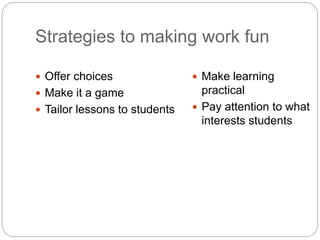
Strategies to making work fun
 Offer choices
 Make it a game
 Tailor lessons to students
 Make learning
practical
 Pay attention to what
interests students
Offer Choices
 Kids go through much of their daily routine
without a lot of choices, both at home and at
school. To offer kids the control they want, it’s
important to include choices into lessons as
frequently as possible. Keep in mind that offering
choices is not a method for kids to get out of
doing work. Giving a choice of doing homework
or playing a game is not a productive choice.
However, letting students pick the order of
homework assignments they will work on may
help.
Make it a Game
Turning any lesson into a game will almost always
make learning fun! And turning review activities or
rote memorization drills into games does not
require a lot of prep time or expense. There is
nothing wrong with purchasing pre-made games
once in a while, but many of the most popular,
effective games are the simplest.
Lessons to students
 It is easy to expect all children to have the same
attention span and to build your lessons
accordingly. While it may not seem unreasonable
to expect a six-year-old to sit through a half-hour
lesson, this is a very long period of structured
time for most six year olds. Consider how you can
break down lessons to keep kids engaged and
make learning fun. Even a thirty-second break
every six minutes to do a round of jumping jacks
or get a drink of water can make a big difference.
Practical Learning
Most people agree that it is tough to stay engaged
in a lesson when you do not know the purpose of
the knowledge. Instead of telling the students that
there is a practical purpose for the lesson at hand,
give them some real examples. As a student, do
not be afraid to question a teacher about the
practicality of a particular lesson. A good teacher
will make the effort to give you a real answer, even
if it takes a few days to do some research.
Attention to Interests
 Take a while to ask your students about their
hobbies and interests. While some interests are
easier to include than others, it is important to
take note of them and make the most of their
potential. If you cannot find a game or
assignment to fit a desire, think about other ways
to use it in a lesson, such as train stickers as
rewards. Ask students to bring in books they like
or suggest subjects they would like to learn.
Many education theorists (Dulay & Burt, 1977;
Krashen, 1982) have proposed that students
retain what they learn when the learning is
associated with strong positive emotion. Cognitive
psychology studies provide clinical evidence that
stress, boredom, confusion, low motivation, and
anxiety can individually, and more profoundly in
combination, interfere with learning
(Christianson,1992)
References
Dulay, H., & Burt, M. (1977). Remarks on creativity
in language acquisition. In M. Burt, H. Dulay, & M.
Finocchiaro (Eds.), Viewpoints on English as a
second
language. New York: Regents.
Christianson, S.A. (1992). Emotional stress and
eyewitness memory: A critical review. Psychological
Bulletin, 112(2), 284–309.

Making learning fun

  • 1.
    By Sheena Smith August14,2017 Making Learning Fun
  • 2.
    Introduction Keeping students engagedin learning can be a difficult task. Even the strongest curriculum needs some change every once in a while to make it fun. It is easier to work together for both the students and teachers when it is engaging and motivating. I will discuss some strategies to keep it fun and engaging.
  • 3.
    Strategies to makingwork fun  Offer choices  Make it a game  Tailor lessons to students  Make learning practical  Pay attention to what interests students
  • 4.
    Offer Choices  Kidsgo through much of their daily routine without a lot of choices, both at home and at school. To offer kids the control they want, it’s important to include choices into lessons as frequently as possible. Keep in mind that offering choices is not a method for kids to get out of doing work. Giving a choice of doing homework or playing a game is not a productive choice. However, letting students pick the order of homework assignments they will work on may help.
  • 5.
    Make it aGame Turning any lesson into a game will almost always make learning fun! And turning review activities or rote memorization drills into games does not require a lot of prep time or expense. There is nothing wrong with purchasing pre-made games once in a while, but many of the most popular, effective games are the simplest.
  • 6.
    Lessons to students It is easy to expect all children to have the same attention span and to build your lessons accordingly. While it may not seem unreasonable to expect a six-year-old to sit through a half-hour lesson, this is a very long period of structured time for most six year olds. Consider how you can break down lessons to keep kids engaged and make learning fun. Even a thirty-second break every six minutes to do a round of jumping jacks or get a drink of water can make a big difference.
  • 7.
    Practical Learning Most peopleagree that it is tough to stay engaged in a lesson when you do not know the purpose of the knowledge. Instead of telling the students that there is a practical purpose for the lesson at hand, give them some real examples. As a student, do not be afraid to question a teacher about the practicality of a particular lesson. A good teacher will make the effort to give you a real answer, even if it takes a few days to do some research.
  • 8.
    Attention to Interests Take a while to ask your students about their hobbies and interests. While some interests are easier to include than others, it is important to take note of them and make the most of their potential. If you cannot find a game or assignment to fit a desire, think about other ways to use it in a lesson, such as train stickers as rewards. Ask students to bring in books they like or suggest subjects they would like to learn.
  • 9.
    Many education theorists(Dulay & Burt, 1977; Krashen, 1982) have proposed that students retain what they learn when the learning is associated with strong positive emotion. Cognitive psychology studies provide clinical evidence that stress, boredom, confusion, low motivation, and anxiety can individually, and more profoundly in combination, interfere with learning (Christianson,1992)
  • 10.
    References Dulay, H., &Burt, M. (1977). Remarks on creativity in language acquisition. In M. Burt, H. Dulay, & M. Finocchiaro (Eds.), Viewpoints on English as a second language. New York: Regents. Christianson, S.A. (1992). Emotional stress and eyewitness memory: A critical review. Psychological Bulletin, 112(2), 284–309.