How Do Weathering and Erosion Affect the Earth’s Features?You have learned how volcanoes and earthquakes change the features of the Earth.  However, landforms are also changed in other ways.
WeatheringThe breaking and changing of rocks
Types of WeatheringWater and ice can change rocks.  Water fills tiny cracks in the rocks and freezes when the weather gets the cold.  The freezing water pushes against the rocks.  Then the weather gets warm and melts the ice.  The rocks move back, but the cracks may be larger than they were before.  When this happens over and over again, the rocks break apart.
Types of WeatheringPlant roots can cause weathering!  As roots grow, they push against the sides of the cracks and break the rocks apart.
ErosionThe moving of weathered rocks and soils by wind, water, or ice
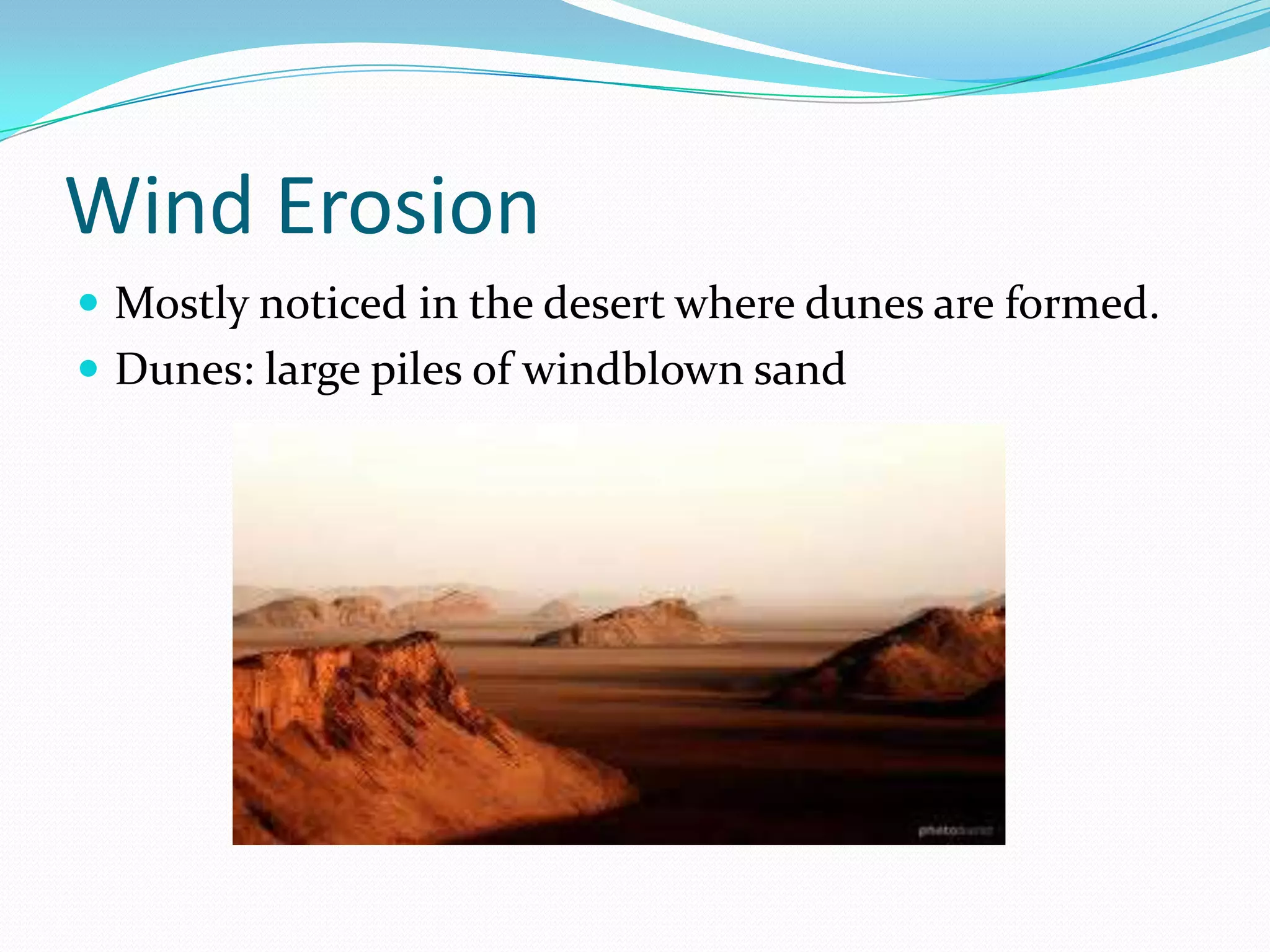
Wind ErosionMostly noticed in the desert where dunes are formed.Dunes: large piles of windblown sand
GlaciersLarge areas of ice formed from snow.  As these large, slowly moving patches of ice move, the land below them changes.
Water ErosionAs water moves through the land, it can move rocks and carve out the land.
Let’s Review!What is weathering?Weather is the breaking and changing of rocks.
What is erosion?Erosion is the moving of weathered rocks and soils by wind, water, and ice.

Makeup of the earth, lesson 2

  • 1.
    How Do Weatheringand Erosion Affect the Earth’s Features?You have learned how volcanoes and earthquakes change the features of the Earth. However, landforms are also changed in other ways.
  • 2.
  • 3.
    Types of WeatheringWaterand ice can change rocks. Water fills tiny cracks in the rocks and freezes when the weather gets the cold. The freezing water pushes against the rocks. Then the weather gets warm and melts the ice. The rocks move back, but the cracks may be larger than they were before. When this happens over and over again, the rocks break apart.
  • 4.
    Types of WeatheringPlantroots can cause weathering! As roots grow, they push against the sides of the cracks and break the rocks apart.
  • 5.
    ErosionThe moving ofweathered rocks and soils by wind, water, or ice
  • 6.
    Wind ErosionMostly noticedin the desert where dunes are formed.Dunes: large piles of windblown sand
  • 7.
    GlaciersLarge areas ofice formed from snow. As these large, slowly moving patches of ice move, the land below them changes.
  • 8.
    Water ErosionAs watermoves through the land, it can move rocks and carve out the land.
  • 9.
    Let’s Review!What isweathering?Weather is the breaking and changing of rocks.
  • 10.
    What is erosion?Erosionis the moving of weathered rocks and soils by wind, water, and ice.