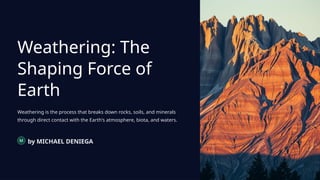
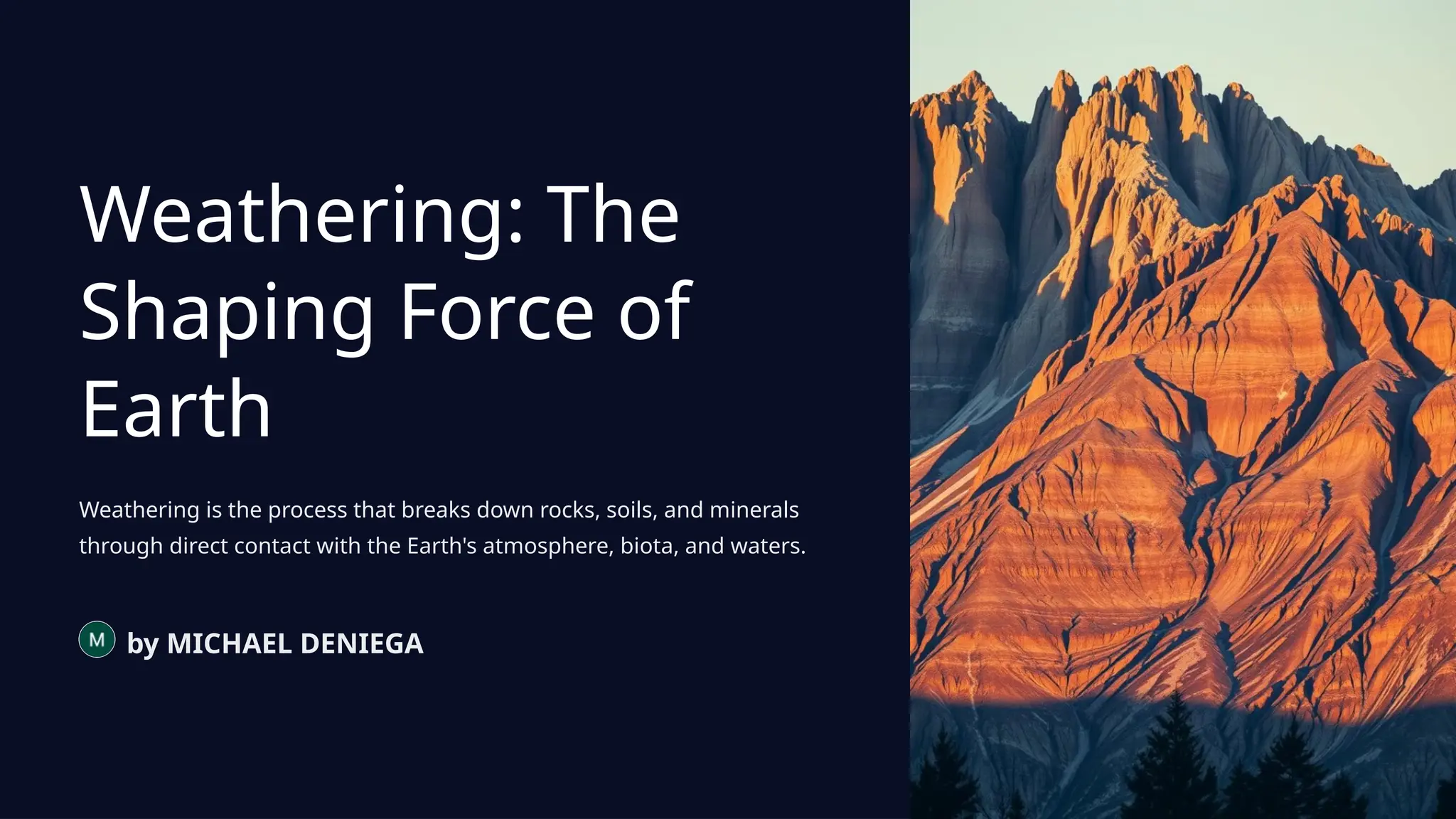
Weathering: The
Shaping Force of
Earth
Weathering is the process that breaks down rocks, soils, and minerals
through direct contact with the Earth's atmosphere, biota, and waters.
by MICHAEL DENIEGA
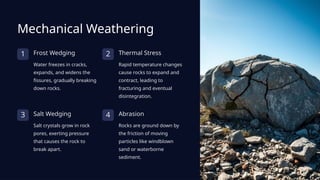
Mechanical Weathering
1 Frost Wedging
Water freezes in cracks,
expands, and widens the
fissures, gradually breaking
down rocks.
2 Thermal Stress
Rapid temperature changes
cause rocks to expand and
contract, leading to
fracturing and eventual
disintegration.
3 Salt Wedging
Salt crystals grow in rock
pores, exerting pressure
that causes the rock to
break apart.
4 Abrasion
Rocks are ground down by
the friction of moving
particles like windblown
sand or waterborne
sediment.
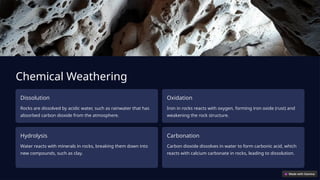
Chemical Weathering
Dissolution
Rocks are dissolved by acidic water, such as rainwater that has
absorbed carbon dioxide from the atmosphere.
Oxidation
Iron in rocks reacts with oxygen, forming iron oxide (rust) and
weakening the rock structure.
Hydrolysis
Water reacts with minerals in rocks, breaking them down into
new compounds, such as clay.
Carbonation
Carbon dioxide dissolves in water to form carbonic acid, which
reacts with calcium carbonate in rocks, leading to dissolution.
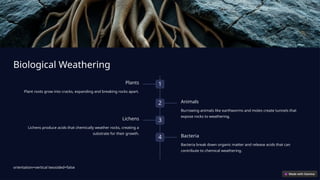
Biological Weathering
1
Plants
Plant roots grow into cracks, expanding and breaking rocks apart.
2 Animals
Burrowing animals like earthworms and moles create tunnels that
expose rocks to weathering.
3
Lichens
Lichens produce acids that chemically weather rocks, creating a
substrate for their growth.
4 Bacteria
Bacteria break down organic matter and release acids that can
contribute to chemical weathering.
orientation=vertical twosided=false
Factors Affecting Weathering
Climate
Temperature, rainfall, and freeze-
thaw cycles influence weathering
rates.
Rock Type
Different rocks have varying
resistance to weathering based on
their mineral composition and
structure.
Topography
Slope, elevation, and exposure to
sunlight affect weathering rates.
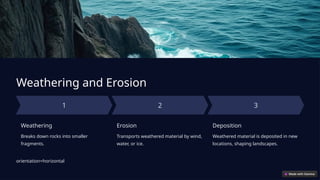
Weathering and Erosion
Weathering
Breaks down rocks into smaller
fragments.
Erosion
Transports weathered material by wind,
water, or ice.
Deposition
Weathered material is deposited in new
locations, shaping landscapes.
orientation=horizontal
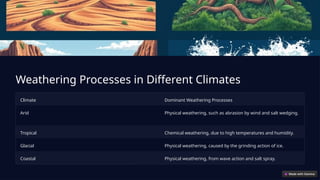
Weathering Processes in Different Climates
Climate Dominant Weathering Processes
Arid Physical weathering, such as abrasion by wind and salt wedging.
Tropical Chemical weathering, due to high temperatures and humidity.
Glacial Physical weathering, caused by the grinding action of ice.
Coastal Physical weathering, from wave action and salt spray.
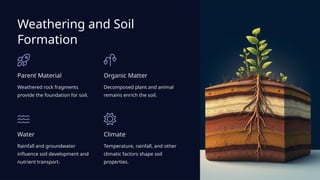
Weathering and Soil
Formation
Parent Material
Weathered rock fragments
provide the foundation for soil.
Organic Matter
Decomposed plant and animal
remains enrich the soil.
Water
Rainfall and groundwater
influence soil development and
nutrient transport.
Climate
Temperature, rainfall, and other
climatic factors shape soil
properties.
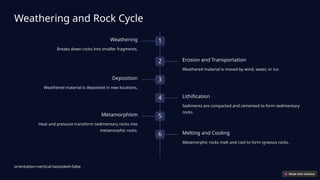
Weathering and Rock Cycle
1
Weathering
Breaks down rocks into smaller fragments.
2 Erosion and Transportation
Weathered material is moved by wind, water, or ice.
3
Deposition
Weathered material is deposited in new locations.
4 Lithification
Sediments are compacted and cemented to form sedimentary
rocks.
5
Metamorphism
Heat and pressure transform sedimentary rocks into
metamorphic rocks.
6 Melting and Cooling
Metamorphic rocks melt and cool to form igneous rocks.
orientation=vertical twosided=false
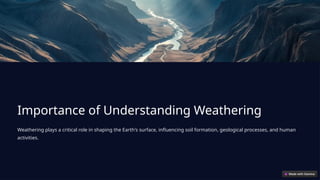
Importance of Understanding Weathering
Weathering plays a critical role in shaping the Earth's surface, influencing soil formation, geological processes, and human
activities.

Exogenic Process: How Weathering Shapes the Planet

  • 1.
    Weathering: The Shaping Forceof Earth Weathering is the process that breaks down rocks, soils, and minerals through direct contact with the Earth's atmosphere, biota, and waters. by MICHAEL DENIEGA
  • 2.
    Mechanical Weathering 1 FrostWedging Water freezes in cracks, expands, and widens the fissures, gradually breaking down rocks. 2 Thermal Stress Rapid temperature changes cause rocks to expand and contract, leading to fracturing and eventual disintegration. 3 Salt Wedging Salt crystals grow in rock pores, exerting pressure that causes the rock to break apart. 4 Abrasion Rocks are ground down by the friction of moving particles like windblown sand or waterborne sediment.
  • 3.
    Chemical Weathering Dissolution Rocks aredissolved by acidic water, such as rainwater that has absorbed carbon dioxide from the atmosphere. Oxidation Iron in rocks reacts with oxygen, forming iron oxide (rust) and weakening the rock structure. Hydrolysis Water reacts with minerals in rocks, breaking them down into new compounds, such as clay. Carbonation Carbon dioxide dissolves in water to form carbonic acid, which reacts with calcium carbonate in rocks, leading to dissolution.
  • 4.
    Biological Weathering 1 Plants Plant rootsgrow into cracks, expanding and breaking rocks apart. 2 Animals Burrowing animals like earthworms and moles create tunnels that expose rocks to weathering. 3 Lichens Lichens produce acids that chemically weather rocks, creating a substrate for their growth. 4 Bacteria Bacteria break down organic matter and release acids that can contribute to chemical weathering. orientation=vertical twosided=false
  • 5.
    Factors Affecting Weathering Climate Temperature,rainfall, and freeze- thaw cycles influence weathering rates. Rock Type Different rocks have varying resistance to weathering based on their mineral composition and structure. Topography Slope, elevation, and exposure to sunlight affect weathering rates.
  • 6.
    Weathering and Erosion Weathering Breaksdown rocks into smaller fragments. Erosion Transports weathered material by wind, water, or ice. Deposition Weathered material is deposited in new locations, shaping landscapes. orientation=horizontal
  • 7.
    Weathering Processes inDifferent Climates Climate Dominant Weathering Processes Arid Physical weathering, such as abrasion by wind and salt wedging. Tropical Chemical weathering, due to high temperatures and humidity. Glacial Physical weathering, caused by the grinding action of ice. Coastal Physical weathering, from wave action and salt spray.
  • 8.
    Weathering and Soil Formation ParentMaterial Weathered rock fragments provide the foundation for soil. Organic Matter Decomposed plant and animal remains enrich the soil. Water Rainfall and groundwater influence soil development and nutrient transport. Climate Temperature, rainfall, and other climatic factors shape soil properties.
  • 9.
    Weathering and RockCycle 1 Weathering Breaks down rocks into smaller fragments. 2 Erosion and Transportation Weathered material is moved by wind, water, or ice. 3 Deposition Weathered material is deposited in new locations. 4 Lithification Sediments are compacted and cemented to form sedimentary rocks. 5 Metamorphism Heat and pressure transform sedimentary rocks into metamorphic rocks. 6 Melting and Cooling Metamorphic rocks melt and cool to form igneous rocks. orientation=vertical twosided=false
  • 10.
    Importance of UnderstandingWeathering Weathering plays a critical role in shaping the Earth's surface, influencing soil formation, geological processes, and human activities.