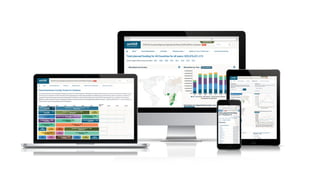
Make Your Data Understandable
Communicating for Action and Impact
Welcome!
Brian Pagels
Chief Impact Officer
bpagels@forumone.com
@bkpagels
About Forum One
Seattle, WA
Alexandria, VA - HQ
Washington, DC
Cologne, Germany
ActionAudience
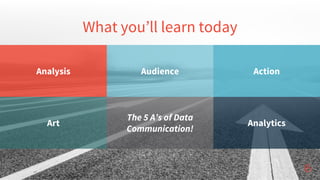
What you’ll learn today
Analysis
Art Analytics
The 5 A’s of Data
Communication!
1. Analysis: What stories do the data tell?
2. Audience: Who are we trying to reach?
3. Action: What do we want our audiences to do?
4. Art: What design will maximize desired actions?
5. Analytics: How can we measure our success?
The Five A’s of Data Communication
First, a history lesson
(you’re going to love it!)
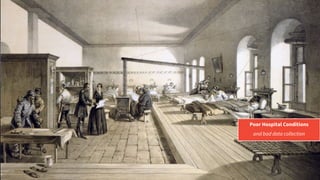
The Crimean War
1853-1856
Poor Hospital Conditions
and bad data collection
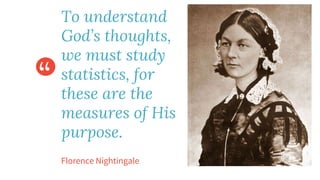
“ To understand God’s
thoughts, we must study
statistics, for these are the
measures of His purpose.
“
Florence Nightingale
To understand
God’s thoughts,
we must study
statistics, for
these are the
measures of His
purpose.
More soldiers are dying from preventable diseases,
largely due to unsanitary conditions, than from battle
wounds.
Nightingale’s Analysis
First Published Bar Chart
by WIlliam Playfair (1786)
Cholera Outbreak Map
John Snow (1854)
“
William Farr
You complain that
your report would be
dry. The dryer the
better. Statistics
should be the dryest
of all reading.
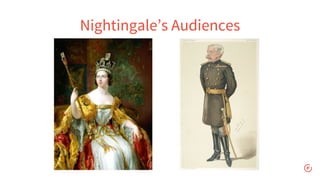
Nightingale’s Audiences
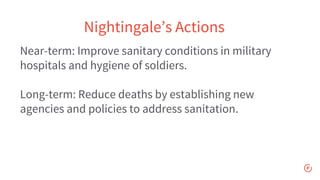
Near-term: Improve sanitary conditions in military
hospitals and hygiene of soldiers.
Long-term: Reduce deaths by establishing new
agencies and policies to address sanitation.
Nightingale’s Actions
Nightingale’s Art
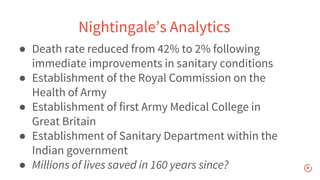
● Death rate reduced from 42% to 2% following
immediate improvements in sanitary conditions
● Establishment of the Royal Commission on the
Health of Army
● Establishment of first Army Medical College in
Great Britain
● Establishment of Sanitary Department within the
Indian government
● Millions of lives saved in 160 years since?
Nightingale’s Analytics
Have we learned?
(you decide)
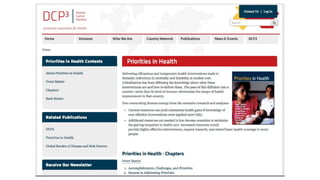
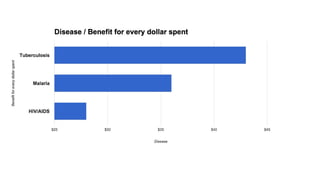
$1,000 to save a life from malaria
$10,000 to save a life from HIV/AIDS
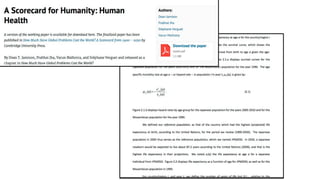
Cost benefit of disease treatment
A modern example
(going back in time)
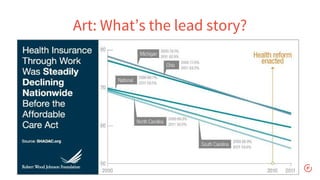
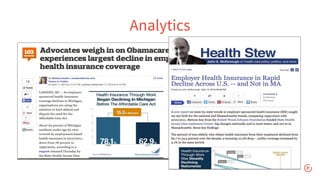
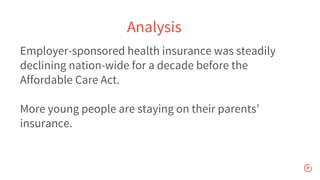
Employer-sponsored health insurance was steadily
declining nation-wide for a decade before the
Affordable Care Act.
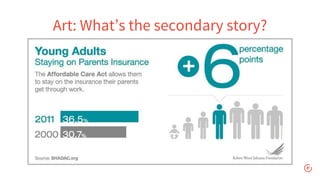
More young people are staying on their parents’
insurance.
Analysis
Primary: Journalists
Secondary: Advocates, General Public, Policy Makers
Tertiary: Policy Analysts, Researchers
Audiences
Journalists: Publish an article including key findings
from the report
Everyone else: Read and share the findings
Actions
Art: What’s the lead story?
Art: What’s the secondary story?
Art: What’s the local angle?
Analytics
Analytics: Articles in 300+ outlets
Art: Interactive data explorer
Analytics: Re-use of the data
A Framework
(to make your lives easier)
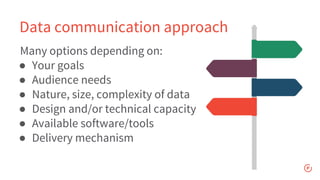
Many options depending on:
● Your goals
● Audience needs
● Nature, size, complexity of data
● Design and/or technical capacity
● Available software/tools
● Delivery mechanism
Data communication approach
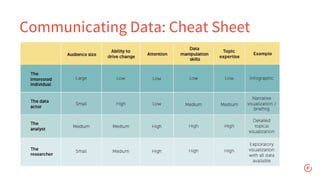
Communicating Data: Cheat Sheet
● Interviews
● Focus groups
● Surveys
● Field studies
● Web analytics
● Usability testing
How to understand your audiences?
Audience research > better products
Your turn
(don’t be shy)
ActionAudience
Use what you’ve learned (hopefully)
Analysis
Art Analytics
The 5 A’s of Data
Communication!
Measuring impact
(a sneak peek into new research)
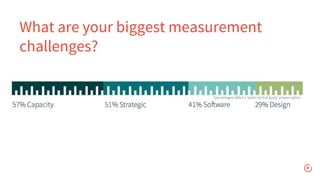
What are your biggest measurement
challenges?
Are communications aligned with
mission?
Common measurement tools
Thanks!
bpagels@forumone.com

Make Your Data Understandable: Communicating for Action and Impact