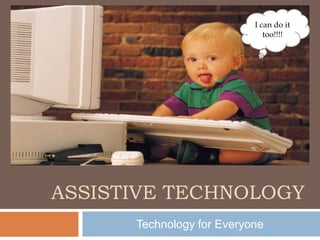
I can do it
                              too!!!!


ASSISTIVE TECHNOLOGY
      Technology for Everyone
Assistive Technology
   When technology is used with students with
    disabilities the term used is Assistive
    Technology.
   Based on the Texas Assistive Technology
    Network, Assistive Technology (AT) is any
    device, system or piece of equipment, whether
    acquired commercially off the self, modified, or
    customized, used to compensate for a
    student’s disability.
WHAT’S THE DIFFERENCE BETWEEN
EDUCATIONAL TECHNOLGY USED IN
  THE CLASSROOM AND ASSISTIVE
         TECHNOLOGY?
Very Little if Any!
   There may be a very fine line between
    educational and assistive technology; they are
    often interrelated.
   Assistive technology is more personal to the
    student
   Educational technology is more classroom-
    based.
Universal Design for Learning
   Instead of focusing on educational vs. assistive
    technology, the concept of "Universal Design for
    Learning" is being developed.
   A relatively new term, but it incorporates age-old,
    basic principles of good teaching through different
    modes.
   It involves using technology that allows students to
    access educational materials through their strongest
    learning mode.
   Provides equal access to learning, not simply equal
    access to information.
   It does not remove academic challenges; it removes
    barriers to access.
Different types of
           Assistive Technology
   Hearing Aids
   Personal FM units
   Wheelchairs
   Self propelled walkers
   Talking Software
   Communication Boards
   Head Pointers
   Modified Keyboars
Example devices for the Learning
Disabled (Reading, Writing and Math)
   Writing
     Word  Processor: built in features such as
      correction of spelling and grammatical errors
     Student’s with issues with handwriting


   Math:
     Talkingcalculators
     Electronic math worksheets
Example devices for the Learning Disabled
  (Reading, Writing and Math), continue

   Reading
     Tape recorders for books on tape
     Text Reading Systems

     Reading Pens
Examples devices for Speech
            Impairment
   Students with speech impairments are
    sometimes related to students with Down
    Syndrome or Autism
     Devices
            used with these impairments will
     supplement a child’s attempt to verbally
     communicate with others.
       Communication  Board
       Picture exchange communication system
       Smart boards
References
   Considering Assistive Technology in the IEP Process-
    Resource Guide. (2007, February). Retrieved January 26,
    2012, from Texas Asssistive Technology Network (TATN):
    www.texasat.net
   Jenron, J. (2011, October 14). AT and Learning Disabilities.
    Retrieved January 26, 2012, from South Carolina Assistive
    Technology Program: http://www.sc.edu/scatp/ld.htm
   Marshall Raskind, P. K. (2010, February). Assistive
    technology for kids with LD: An overview. Retrieved January
    26, 2012, from Great Schools:
    http://www.greatschools.org/special-education/assistive-
    technology/702-assisstive-technology

Assistive technology

  • 1.
    I can doit too!!!! ASSISTIVE TECHNOLOGY Technology for Everyone
  • 2.
    Assistive Technology  When technology is used with students with disabilities the term used is Assistive Technology.  Based on the Texas Assistive Technology Network, Assistive Technology (AT) is any device, system or piece of equipment, whether acquired commercially off the self, modified, or customized, used to compensate for a student’s disability.
  • 3.
    WHAT’S THE DIFFERENCEBETWEEN EDUCATIONAL TECHNOLGY USED IN THE CLASSROOM AND ASSISTIVE TECHNOLOGY?
  • 4.
    Very Little ifAny!  There may be a very fine line between educational and assistive technology; they are often interrelated.  Assistive technology is more personal to the student  Educational technology is more classroom- based.
  • 5.
    Universal Design forLearning  Instead of focusing on educational vs. assistive technology, the concept of "Universal Design for Learning" is being developed.  A relatively new term, but it incorporates age-old, basic principles of good teaching through different modes.  It involves using technology that allows students to access educational materials through their strongest learning mode.  Provides equal access to learning, not simply equal access to information.  It does not remove academic challenges; it removes barriers to access.
  • 6.
    Different types of Assistive Technology  Hearing Aids  Personal FM units  Wheelchairs  Self propelled walkers  Talking Software  Communication Boards  Head Pointers  Modified Keyboars
  • 7.
    Example devices forthe Learning Disabled (Reading, Writing and Math)  Writing  Word Processor: built in features such as correction of spelling and grammatical errors  Student’s with issues with handwriting  Math:  Talkingcalculators  Electronic math worksheets
  • 8.
    Example devices forthe Learning Disabled (Reading, Writing and Math), continue  Reading  Tape recorders for books on tape  Text Reading Systems  Reading Pens
  • 9.
    Examples devices forSpeech Impairment  Students with speech impairments are sometimes related to students with Down Syndrome or Autism  Devices used with these impairments will supplement a child’s attempt to verbally communicate with others.  Communication Board  Picture exchange communication system  Smart boards
  • 10.
    References  Considering Assistive Technology in the IEP Process- Resource Guide. (2007, February). Retrieved January 26, 2012, from Texas Asssistive Technology Network (TATN): www.texasat.net  Jenron, J. (2011, October 14). AT and Learning Disabilities. Retrieved January 26, 2012, from South Carolina Assistive Technology Program: http://www.sc.edu/scatp/ld.htm  Marshall Raskind, P. K. (2010, February). Assistive technology for kids with LD: An overview. Retrieved January 26, 2012, from Great Schools: http://www.greatschools.org/special-education/assistive- technology/702-assisstive-technology