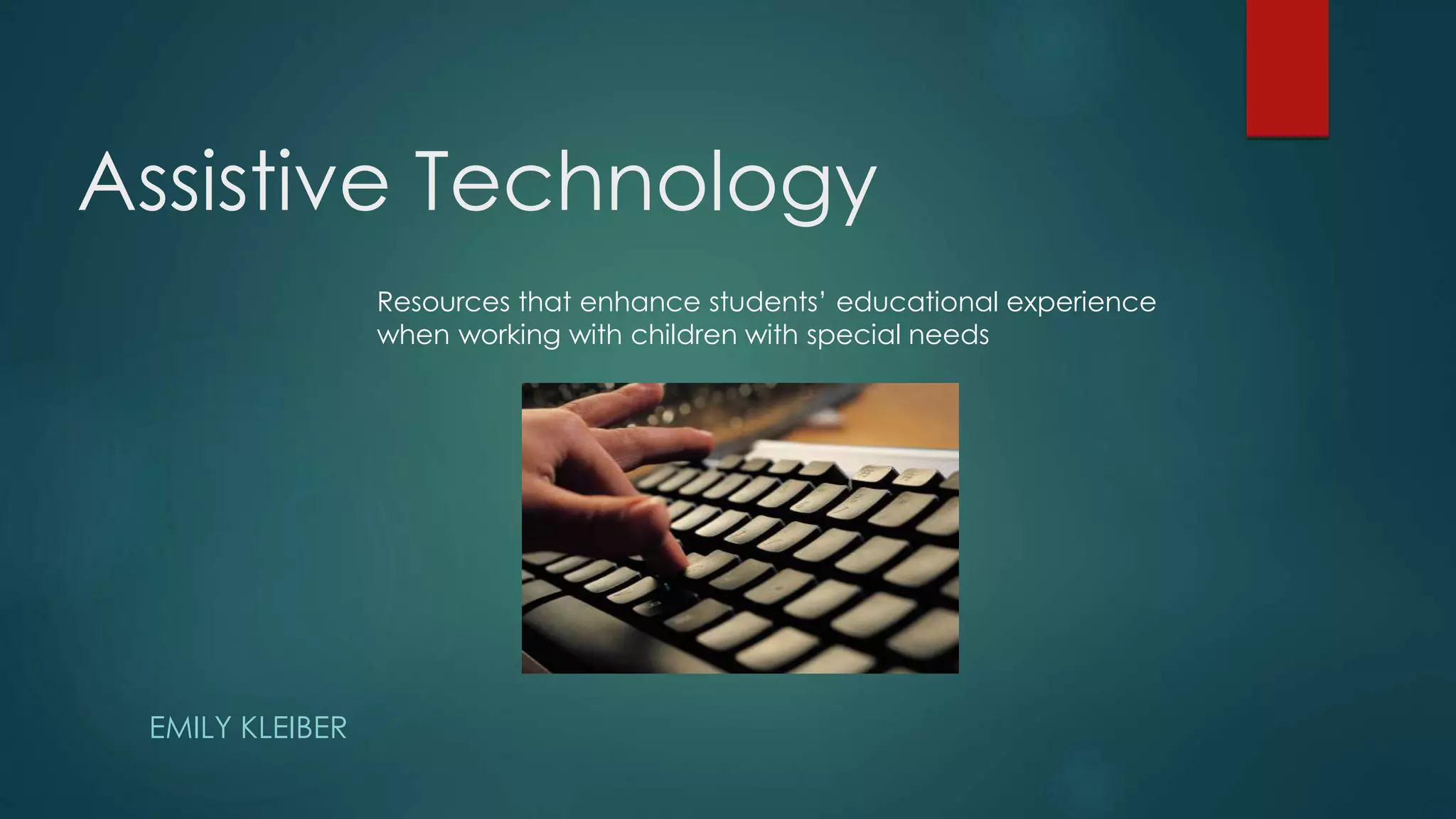
Assistive Technology
EMILY KLEIBER
Resources that enhance students’ educational experience
when working with children with special needs
Special Education
 Specially designed instruction, at no cost to
parents, to meet the unique needs of a child with a
disability.
 The Individuals with Disabilities Education Act (IDEA) of 2004 ensures
the educational rights of students with disabilities and their parents.
Collaboration
 Team process to determine interests, abilities, and needs of each
individual child.
 Individualized Education Program (IEP) – the roadmap for each child
who has been determined as needing services by IDEA (2004) to lead to
their success in school that has been determined is in need of services.
 Involves parents, student, teachers, counselor, social worker, general
education teacher, special education teacher, speech-language
therapist.
 Clear goals and strategies.
Steps for Intervention
 Child and Family Information – strategies that work best focusing on
strengths.
 Activities for participation and success.
 Success of previous intervention.
 Brainstorm with Team.
 Try it out and have an observation plan in place.
 Identify what worked.
Assistive Technology
 An important part of IEP and goals/strategies
 “Any item, equipment, or product used to increase, maintain, or
improve functional capabilities of individuals with disabilities.”
 Shared within multi-disciplinary team to communicate needs of
student.
Examples of Assistive Technology
for Students with ADHD
 Match technology to needs
 Inspiration - Graphic Organizer Program – engages children in the
writing process.
 Read & Write Gold – reading and writing support tools
 Word Q – reads text aloud
 Animoto - Multimedia and films
 www.help4adhd.org
 www.attitudemag.com
Additional Supports for ADHD
students
 Modeling
 "think-aloud" techniques
 guided practice
 visual aids such as posters, checklists, and charts
 physical space organized and free of distractions
 www.aboutkidshealth.ca
Assistive Technology for Auditory
Disability
 Hearing Assistive Technology (HATS)
 Provides hearing assistance in the classroom.
 Devices that can help you function better in your day-to-day
communication situations.
www.asha.org
www.agbell.org
Additional Supports for Students
with Auditory Disabilities
 Environmental Supports
 Reduce background noise
 Face the student when talking
 Use of an interactive whiteboard
 Visual Teaching Strategies
 Graphic organizers
 Story maps
www.nad.org
Assistive Technology for Students
with Mild Learning Disabilities in
Reading and Writing
 Electronic software
 Read Plus 2002 – text-to-speech engine
 Starfall - drill and practice website
 Lexia Learning Systems – phonics based reading based on research and
Orton-Gillingham
www.pacer.org
www.GPAT.org
Additional Supports for Students
with Mild Learning Disabilities
 Clear goals set by IEP
 Inclusive practices whenever possible
 Least restrictive environment
More Resources
 The Ultimate Guide to Assistive Technology in Special Education
by Joan Green
www.amazon.com
“Those who believe in our ability do
more than stimulate us. They create for
us an atmosphere in which it becomes
easier to succeed.”

Assistive technology kleiber

  • 1.
    Assistive Technology EMILY KLEIBER Resourcesthat enhance students’ educational experience when working with children with special needs
  • 2.
    Special Education  Speciallydesigned instruction, at no cost to parents, to meet the unique needs of a child with a disability.  The Individuals with Disabilities Education Act (IDEA) of 2004 ensures the educational rights of students with disabilities and their parents.
  • 3.
    Collaboration  Team processto determine interests, abilities, and needs of each individual child.  Individualized Education Program (IEP) – the roadmap for each child who has been determined as needing services by IDEA (2004) to lead to their success in school that has been determined is in need of services.  Involves parents, student, teachers, counselor, social worker, general education teacher, special education teacher, speech-language therapist.  Clear goals and strategies.
  • 4.
    Steps for Intervention Child and Family Information – strategies that work best focusing on strengths.  Activities for participation and success.  Success of previous intervention.  Brainstorm with Team.  Try it out and have an observation plan in place.  Identify what worked.
  • 5.
    Assistive Technology  Animportant part of IEP and goals/strategies  “Any item, equipment, or product used to increase, maintain, or improve functional capabilities of individuals with disabilities.”  Shared within multi-disciplinary team to communicate needs of student.
  • 6.
    Examples of AssistiveTechnology for Students with ADHD  Match technology to needs  Inspiration - Graphic Organizer Program – engages children in the writing process.  Read & Write Gold – reading and writing support tools  Word Q – reads text aloud  Animoto - Multimedia and films  www.help4adhd.org  www.attitudemag.com
  • 7.
    Additional Supports forADHD students  Modeling  "think-aloud" techniques  guided practice  visual aids such as posters, checklists, and charts  physical space organized and free of distractions  www.aboutkidshealth.ca
  • 8.
    Assistive Technology forAuditory Disability  Hearing Assistive Technology (HATS)  Provides hearing assistance in the classroom.  Devices that can help you function better in your day-to-day communication situations. www.asha.org www.agbell.org
  • 9.
    Additional Supports forStudents with Auditory Disabilities  Environmental Supports  Reduce background noise  Face the student when talking  Use of an interactive whiteboard  Visual Teaching Strategies  Graphic organizers  Story maps www.nad.org
  • 10.
    Assistive Technology forStudents with Mild Learning Disabilities in Reading and Writing  Electronic software  Read Plus 2002 – text-to-speech engine  Starfall - drill and practice website  Lexia Learning Systems – phonics based reading based on research and Orton-Gillingham www.pacer.org www.GPAT.org
  • 11.
    Additional Supports forStudents with Mild Learning Disabilities  Clear goals set by IEP  Inclusive practices whenever possible  Least restrictive environment
  • 12.
    More Resources  TheUltimate Guide to Assistive Technology in Special Education by Joan Green www.amazon.com “Those who believe in our ability do more than stimulate us. They create for us an atmosphere in which it becomes easier to succeed.”