Lymphatic System and Immune SystemBy: Maria R. Garcia
Lymphadenitis	Infection of the lymph nodesCondition in lymph nodes that help your body fight off illness become inflamed.The inflammation is a response to bacteria, viruses or fungi.The swollen glands are usually found near the site where the underlying infection, tumor or inflammation.Can be cause by rare infections such as tuberculosis or a simple cat scratch (Bartonella).
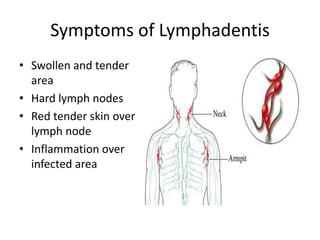
Symptoms of LymphadentisSwollen and tender areaHard lymph nodesRed tender skin over lymph nodeInflammation over infected area
Test and Treatment	Biopsy of affected area or nodeLymphadenitis may spread within hours and should be treated promptlyTypes of treatment include: antibiotics, pain killers, anti-inflammatory medication and cool compresses
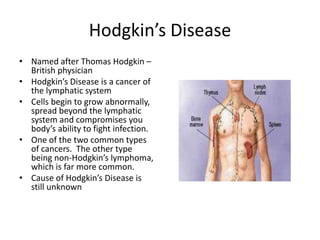
Hodgkin’s DiseaseNamed after Thomas Hodgkin – British physicianHodgkin’s Disease is a cancer of the lymphatic systemCells begin to grow abnormally, spread beyond the lymphatic system and compromises you body’s ability to fight infection.One of the two common types of cancers.  The other type being non-Hodgkin’s lymphoma, which is far more common.Cause of Hodgkin’s Disease is still unknown
Symptoms: Hodgkin’s DiseasePainless swelling of lymph nodes in your neck, armpits or groin Persistent fatigue Fever and chills Night sweats Unexplained weight lossCoughing, trouble breathing or chest painLoss of appetite Itching Pain in your lymph nodes after drinking alcohol
Complications: Hodgkin’s DiseaseCardiovascular diseaseSecond malignancy, such as leukemia, non-Hodgkin's lymphoma and tumors in the lungs, breasts or gastrointestinal systemVascular disease, including strokeThyroid dysfunctionSterility
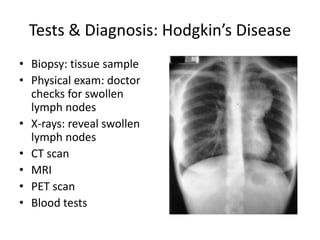
Tests & Diagnosis: Hodgkin’s DiseaseBiopsy: tissue samplePhysical exam: doctor checks for swollen lymph nodesX-rays: reveal swollen lymph nodesCT scanMRIPET scanBlood tests
Treatment Options: Hodgkin’s DiseaseThe most important factor is to diagnose the stage of the diseaseand how many lymph nodes are affected.ChemotherapyRadiationBone marrow or stem cell transplant
non-Hodgkin’s lymphomaOur lymphatic system is a disease fighting network spread throughout our body.Non-Hodgkin’s lymphoma is a cancer that originates in your lymphatic system.Occurs when our body produces too many lymphocytes – a type of white blood cell.Tumors develop from lymphocytes.The most common non-Hodgkin’s lymphoma is diffuse large B-cell lymphoma  and  follicular lymphoma.
non-Hodgkin’s lymphomaOur lymphocytes go through a life cycle, old lymphocytes die and our body creates new ones to replace them. In non-Hodgkin’s lymphoma, your lymphocytes don’t die, they continue to grow and divide and begin to overcrowd your lymph nodes and cause them to swell.There are two type of lymphocytes: they are B cells and T cells
Symptoms: non-Hodgkin’s lymphomaSwollen lymph nodes in your neck, armpit or groinAbdominal pain or swellingChest pain, coughing or trouble breathingFeverFatigueNight sweatsRapid weight loss
Acquired Immunodeficiency Syndrome (AIDS)AIDS is chronic and potential life threatening condition which is caused by the human immunodeficiency virus (HIV). HIV is known to damage your immune system, HIV interferes with your body's ability to fight the organisms that cause disease.It is a sexually transmitted disease that can also be spread by contact with infected blood, or from mother to child during pregnancy, childbirth or breast-feeding. It can take years before HIV weakens your immune system to the point that you have AIDS.There is currently no cure for HIV/AIDS but there are medications that can slow the progression.
Symptoms of AIDSWhen one is first infected it could take years for signs to appear. You may feel symptom free for years and not know you have AIDS But, you can still spread the virus to others.Many people start out with flu like symptoms and other symptoms include: fever, headache, sore throat, swollen lymph glands, diarrhea, weight loss, cough, shortness of breath and a rash.
Progression of AIDSThe disease progresses from HIV to AIDS in 10 years.HIV becomes AIDS by destroying CD4 cells, which is a specific type of white blood cell that plays a large role in helping your body fight disease. Your immune system weakens as more CD4 cells are killed. You can have an HIV infection for years before it progresses to AIDS. When one develops AIDS, ones immune system is severely damaged making one susceptible to  infections such as: night sweats, chronic diarrhea,  headaches, fatigue, skin rashes or bumps, blurred vision and lesions on body.
SarcoidosisIs a disease that forms lesions of clumps of inflammatory cells in your body, such as the lungs, lymph nodes, spleen, eyes, skinand small bones of hands and feet.Doctor’s believe that Sarcoidosis results from abnormal immune system, possibly from inhaling something in the air. It often goes away on its own but may last a lifetime for others.Sometimes develops gradually and produces signs that can last for years.Symptoms may include: fatigue, fever, swollen lymph nodes  and weight loss
What causes Sarcoidosis?Normally one’s immune system helps protect against foreign invaders, such as bacteria  and viruses.  But, Sarcoidosis cells clump together to form lumps called granulomas, which build up in the organ and thus the organ worsens.It is still unclear to doctor’s what causes Sarcoidosis . Doctor’s believe that some people have a genetic predisposition for developing  the disease. Researchers are still trying to test the gene that is associated with this disease.
Severe Combined Immunodeficiency SyndromeBecame widely known in the 1970’s  and 80’s and also called the “Bubble Boy disease” after David Vetter who lived in a sterile enviroment and because its victims are prone to infectious disease.Immune deficiency seen in children born with nonfunctioning immune system.It is a severe defect in both the T&B lymphocyte system. A child will usually have serious infections within the first few months of life and may even be life threatening. They may include pneumonia, meningitis or bloodstream infections.
Severe Combined Immunodeficiency SyndromeChronic diarrhea ,ear infections, recurrent pneumonia, and profuse oral candidiasis commonly occur. If babies are untreatedthey will usually die within 1 year due to severe, recurrent infections unless they have undergone successful Hematopoietic stem cell transplantation.SCIDS occurs in 1 in 100,000 births.SCIDS babys look normal and it is normally diagnosed until about 6 months of age, usually when the child has recurrent infections.Currently the treatment for SCID is a bone marrow transplant

Lymphatic system and immune system discussion 6

  • 1.
    Lymphatic System andImmune SystemBy: Maria R. Garcia
  • 2.
    Lymphadenitis Infection of thelymph nodesCondition in lymph nodes that help your body fight off illness become inflamed.The inflammation is a response to bacteria, viruses or fungi.The swollen glands are usually found near the site where the underlying infection, tumor or inflammation.Can be cause by rare infections such as tuberculosis or a simple cat scratch (Bartonella).
  • 3.
    Symptoms of LymphadentisSwollenand tender areaHard lymph nodesRed tender skin over lymph nodeInflammation over infected area
  • 4.
    Test and Treatment Biopsyof affected area or nodeLymphadenitis may spread within hours and should be treated promptlyTypes of treatment include: antibiotics, pain killers, anti-inflammatory medication and cool compresses
  • 5.
    Hodgkin’s DiseaseNamed afterThomas Hodgkin – British physicianHodgkin’s Disease is a cancer of the lymphatic systemCells begin to grow abnormally, spread beyond the lymphatic system and compromises you body’s ability to fight infection.One of the two common types of cancers. The other type being non-Hodgkin’s lymphoma, which is far more common.Cause of Hodgkin’s Disease is still unknown
  • 6.
    Symptoms: Hodgkin’s DiseasePainlessswelling of lymph nodes in your neck, armpits or groin Persistent fatigue Fever and chills Night sweats Unexplained weight lossCoughing, trouble breathing or chest painLoss of appetite Itching Pain in your lymph nodes after drinking alcohol
  • 7.
    Complications: Hodgkin’s DiseaseCardiovasculardiseaseSecond malignancy, such as leukemia, non-Hodgkin's lymphoma and tumors in the lungs, breasts or gastrointestinal systemVascular disease, including strokeThyroid dysfunctionSterility
  • 8.
    Tests & Diagnosis:Hodgkin’s DiseaseBiopsy: tissue samplePhysical exam: doctor checks for swollen lymph nodesX-rays: reveal swollen lymph nodesCT scanMRIPET scanBlood tests
  • 9.
    Treatment Options: Hodgkin’sDiseaseThe most important factor is to diagnose the stage of the diseaseand how many lymph nodes are affected.ChemotherapyRadiationBone marrow or stem cell transplant
  • 10.
    non-Hodgkin’s lymphomaOur lymphaticsystem is a disease fighting network spread throughout our body.Non-Hodgkin’s lymphoma is a cancer that originates in your lymphatic system.Occurs when our body produces too many lymphocytes – a type of white blood cell.Tumors develop from lymphocytes.The most common non-Hodgkin’s lymphoma is diffuse large B-cell lymphoma and follicular lymphoma.
  • 11.
    non-Hodgkin’s lymphomaOur lymphocytesgo through a life cycle, old lymphocytes die and our body creates new ones to replace them. In non-Hodgkin’s lymphoma, your lymphocytes don’t die, they continue to grow and divide and begin to overcrowd your lymph nodes and cause them to swell.There are two type of lymphocytes: they are B cells and T cells
  • 12.
    Symptoms: non-Hodgkin’s lymphomaSwollenlymph nodes in your neck, armpit or groinAbdominal pain or swellingChest pain, coughing or trouble breathingFeverFatigueNight sweatsRapid weight loss
  • 13.
    Acquired Immunodeficiency Syndrome(AIDS)AIDS is chronic and potential life threatening condition which is caused by the human immunodeficiency virus (HIV). HIV is known to damage your immune system, HIV interferes with your body's ability to fight the organisms that cause disease.It is a sexually transmitted disease that can also be spread by contact with infected blood, or from mother to child during pregnancy, childbirth or breast-feeding. It can take years before HIV weakens your immune system to the point that you have AIDS.There is currently no cure for HIV/AIDS but there are medications that can slow the progression.
  • 14.
    Symptoms of AIDSWhenone is first infected it could take years for signs to appear. You may feel symptom free for years and not know you have AIDS But, you can still spread the virus to others.Many people start out with flu like symptoms and other symptoms include: fever, headache, sore throat, swollen lymph glands, diarrhea, weight loss, cough, shortness of breath and a rash.
  • 15.
    Progression of AIDSThedisease progresses from HIV to AIDS in 10 years.HIV becomes AIDS by destroying CD4 cells, which is a specific type of white blood cell that plays a large role in helping your body fight disease. Your immune system weakens as more CD4 cells are killed. You can have an HIV infection for years before it progresses to AIDS. When one develops AIDS, ones immune system is severely damaged making one susceptible to infections such as: night sweats, chronic diarrhea, headaches, fatigue, skin rashes or bumps, blurred vision and lesions on body.
  • 16.
    SarcoidosisIs a diseasethat forms lesions of clumps of inflammatory cells in your body, such as the lungs, lymph nodes, spleen, eyes, skinand small bones of hands and feet.Doctor’s believe that Sarcoidosis results from abnormal immune system, possibly from inhaling something in the air. It often goes away on its own but may last a lifetime for others.Sometimes develops gradually and produces signs that can last for years.Symptoms may include: fatigue, fever, swollen lymph nodes and weight loss
  • 17.
    What causes Sarcoidosis?Normallyone’s immune system helps protect against foreign invaders, such as bacteria and viruses. But, Sarcoidosis cells clump together to form lumps called granulomas, which build up in the organ and thus the organ worsens.It is still unclear to doctor’s what causes Sarcoidosis . Doctor’s believe that some people have a genetic predisposition for developing the disease. Researchers are still trying to test the gene that is associated with this disease.
  • 18.
    Severe Combined ImmunodeficiencySyndromeBecame widely known in the 1970’s and 80’s and also called the “Bubble Boy disease” after David Vetter who lived in a sterile enviroment and because its victims are prone to infectious disease.Immune deficiency seen in children born with nonfunctioning immune system.It is a severe defect in both the T&B lymphocyte system. A child will usually have serious infections within the first few months of life and may even be life threatening. They may include pneumonia, meningitis or bloodstream infections.
  • 19.
    Severe Combined ImmunodeficiencySyndromeChronic diarrhea ,ear infections, recurrent pneumonia, and profuse oral candidiasis commonly occur. If babies are untreatedthey will usually die within 1 year due to severe, recurrent infections unless they have undergone successful Hematopoietic stem cell transplantation.SCIDS occurs in 1 in 100,000 births.SCIDS babys look normal and it is normally diagnosed until about 6 months of age, usually when the child has recurrent infections.Currently the treatment for SCID is a bone marrow transplant