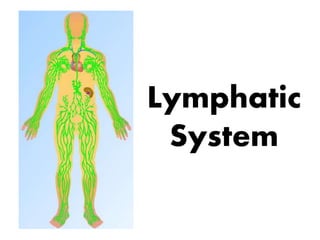
Lymphatic
System
Arteriole end of capillaries venule end of capillaries
Blood capillaries
High hydrostatic
pressure
low hydrostatic
pressure90%
10%
1. When blood flows from the arteriole into the
capillaries, there is a high hydrostatic pressure in
the capillaries. This is due to the pumping of the
heart and the resistance in the capillaries.
2. The high hydrostatic pressure in the capillaries
forces the plasma to pass across the one-cell thick
capillary walls into the space between the cells.
3. The plasma consisting of small molecules of
dissolved substances such as water, minerals,
glucose and amino acids.
4. The fluid that fills up the space between the cells
is called tissue fluid or interstitial fluid.
5. The larger molecules like erythrocytes, platelets
and plasma proteins cannot pass through the
capillary walls. However, leucocytes like
phagocytes can squeeze into the fine pore
between the capillary walls and pass through it.
6. The interstitial fluid is the medium for exchange
of nutrients, waste products and respiratory
gases between the body cells and the capillaries.
7. The interstitial fluid is also an optimal
internal environment for an organism.
8. The role of the phagocytes in the
interstitial fluid is to destroy any
microorganisms present.
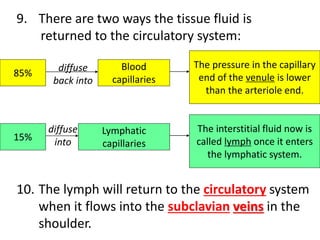
9. There are two ways the tissue fluid is
returned to the circulatory system:
85%
Blood
capillaries
The pressure in the capillary
end of the venule is lower
than the arteriole end.
diffuse
back into
15%
Lymphatic
capillaries
The interstitial fluid now is
called lymph once it enters
the lymphatic system.
diffuse
into
10. The lymph will return to the circulatory system
when it flows into the subclavian veins in the
shoulder.
10 The lymphatic system consists of organs
such as:
 Lymph nodes
 Spleen
 Thymus gland
 Bone marrow
 Tonsils
 Appendix
Structures
of The
Lymphatic
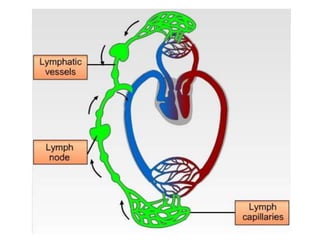
1. Lymphatic system consists of lymphatic vessels,
lymphatic capillaries, lymph nodes, spleen and
thymus.
2. The lymphatic vessel branches out into a very
fine vessel with blind-end called lymph
capillary.
3. At every interval along the lymphatic vessels,
there are valves to prevent the backflow of
lymph and to ensure the lymph flows in one
direction.
Lymph nodes
4. Lymph nodes are found in the specific areas along the
lymphatic vessels. The lymph nodes produce
lymphocytes which provide antibody to defend the body
from virus and bacteria infections. Phagocytes are also
present in the lymph nodes to ingest the bacteria, dead
leucocytes and other foreign particles.
5. In human, the major lymph nodes are located in the neck,
underarms and groin.
The Flow
Of
Lymph
1. Lymph flows from the lymph capillary into
lymph vessels.
2. Lymph from the left part of the head arm,
thorax, hind limbs and whole abdomen is
drained into thoracic duct, while lymph from the
right parts is drained into the right lymphatic
duct.
3. Lymph in the thoracic duct eventually enters
into the circulatory system via the left
subclavian vein, while the lymph in the right
lymphatic duct enter into the circulatory system
via the right subclavian vein.
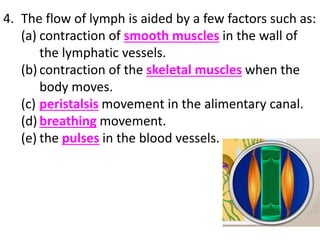
4. The flow of lymph is aided by a few factors such as:
(a) contraction of smooth muscles in the wall of
the lymphatic vessels.
(b) contraction of the skeletal muscles when the
body moves.
(c) peristalsis movement in the alimentary canal.
(d) breathing movement.
(e) the pulses in the blood vessels.
The Role Of The
Lymphatic System
1. To collect the interstitial fluid in the spaces
between cells and return it to the circulatory
system.
2. To defend the body against disease by producing
lymphocytes which release antibodies to react with
the antigens.
3. To transport lipids, glycerol and fat soluble vitamins
(A, D, E, K) from the lacteal (lymph capillary) of the
villus into the thoracic duct back to the circulatory
system.
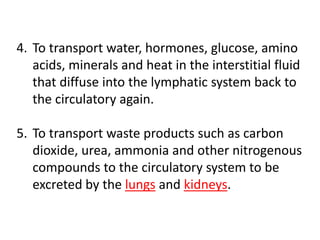
4. To transport water, hormones, glucose, amino
acids, minerals and heat in the interstitial fluid
that diffuse into the lymphatic system back to
the circulatory again.
5. To transport waste products such as carbon
dioxide, urea, ammonia and other nitrogenous
compounds to the circulatory system to be
excreted by the lungs and kidneys.
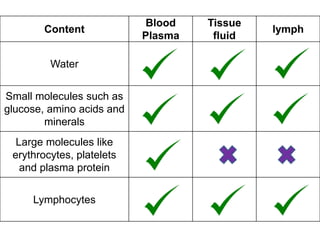
Content
Blood
Plasma
Tissue
fluid
lymph
Water
Small molecules such as
glucose, amino acids and
minerals
Large molecules like
erythrocytes, platelets
and plasma protein
Lymphocytes
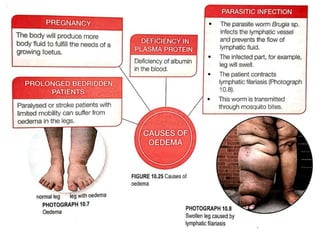
Failure Of Interstitial
Fluid to Return to
Circulatory system
The interstitial fluid accumulates in
the space between the cells causing
swelling of the affected part. This
condition is called oedema.
Elephantiasis /
Filariasis
There is no cure for elephantiasis. It is not a
common disease in most countries, but in
some tropical and subtropical countries it is a
fairly common and horribly disfiguring
disease. It's caused by infection-carrying
mosquitoes, usually in childhood and takes 9
to 12 years for victims to fully manifest the
symptoms. It's generally treated with palliative
care (reduce pain only).

Lymphatic system

  • 1.
  • 3.
    Arteriole end ofcapillaries venule end of capillaries Blood capillaries High hydrostatic pressure low hydrostatic pressure90% 10%
  • 4.
    1. When bloodflows from the arteriole into the capillaries, there is a high hydrostatic pressure in the capillaries. This is due to the pumping of the heart and the resistance in the capillaries. 2. The high hydrostatic pressure in the capillaries forces the plasma to pass across the one-cell thick capillary walls into the space between the cells. 3. The plasma consisting of small molecules of dissolved substances such as water, minerals, glucose and amino acids.
  • 5.
    4. The fluidthat fills up the space between the cells is called tissue fluid or interstitial fluid. 5. The larger molecules like erythrocytes, platelets and plasma proteins cannot pass through the capillary walls. However, leucocytes like phagocytes can squeeze into the fine pore between the capillary walls and pass through it. 6. The interstitial fluid is the medium for exchange of nutrients, waste products and respiratory gases between the body cells and the capillaries.
  • 6.
    7. The interstitialfluid is also an optimal internal environment for an organism. 8. The role of the phagocytes in the interstitial fluid is to destroy any microorganisms present.
  • 7.
    9. There aretwo ways the tissue fluid is returned to the circulatory system: 85% Blood capillaries The pressure in the capillary end of the venule is lower than the arteriole end. diffuse back into 15% Lymphatic capillaries The interstitial fluid now is called lymph once it enters the lymphatic system. diffuse into 10. The lymph will return to the circulatory system when it flows into the subclavian veins in the shoulder.
  • 8.
    10 The lymphaticsystem consists of organs such as:  Lymph nodes  Spleen  Thymus gland  Bone marrow  Tonsils  Appendix
  • 11.
  • 12.
    1. Lymphatic systemconsists of lymphatic vessels, lymphatic capillaries, lymph nodes, spleen and thymus. 2. The lymphatic vessel branches out into a very fine vessel with blind-end called lymph capillary. 3. At every interval along the lymphatic vessels, there are valves to prevent the backflow of lymph and to ensure the lymph flows in one direction.
  • 13.
    Lymph nodes 4. Lymphnodes are found in the specific areas along the lymphatic vessels. The lymph nodes produce lymphocytes which provide antibody to defend the body from virus and bacteria infections. Phagocytes are also present in the lymph nodes to ingest the bacteria, dead leucocytes and other foreign particles. 5. In human, the major lymph nodes are located in the neck, underarms and groin.
  • 17.
  • 18.
    1. Lymph flowsfrom the lymph capillary into lymph vessels. 2. Lymph from the left part of the head arm, thorax, hind limbs and whole abdomen is drained into thoracic duct, while lymph from the right parts is drained into the right lymphatic duct. 3. Lymph in the thoracic duct eventually enters into the circulatory system via the left subclavian vein, while the lymph in the right lymphatic duct enter into the circulatory system via the right subclavian vein.
  • 22.
    4. The flowof lymph is aided by a few factors such as: (a) contraction of smooth muscles in the wall of the lymphatic vessels. (b) contraction of the skeletal muscles when the body moves. (c) peristalsis movement in the alimentary canal. (d) breathing movement. (e) the pulses in the blood vessels.
  • 23.
    The Role OfThe Lymphatic System
  • 24.
    1. To collectthe interstitial fluid in the spaces between cells and return it to the circulatory system. 2. To defend the body against disease by producing lymphocytes which release antibodies to react with the antigens. 3. To transport lipids, glycerol and fat soluble vitamins (A, D, E, K) from the lacteal (lymph capillary) of the villus into the thoracic duct back to the circulatory system.
  • 25.
    4. To transportwater, hormones, glucose, amino acids, minerals and heat in the interstitial fluid that diffuse into the lymphatic system back to the circulatory again. 5. To transport waste products such as carbon dioxide, urea, ammonia and other nitrogenous compounds to the circulatory system to be excreted by the lungs and kidneys.
  • 26.
    Content Blood Plasma Tissue fluid lymph Water Small molecules suchas glucose, amino acids and minerals Large molecules like erythrocytes, platelets and plasma protein Lymphocytes
  • 27.
    Failure Of Interstitial Fluidto Return to Circulatory system
  • 29.
    The interstitial fluidaccumulates in the space between the cells causing swelling of the affected part. This condition is called oedema.
  • 30.
  • 33.
    There is nocure for elephantiasis. It is not a common disease in most countries, but in some tropical and subtropical countries it is a fairly common and horribly disfiguring disease. It's caused by infection-carrying mosquitoes, usually in childhood and takes 9 to 12 years for victims to fully manifest the symptoms. It's generally treated with palliative care (reduce pain only).