Lupus Stephanie Harvin ANAPHYS 115
Introduction The reason why I chose lupus is because lupus is one of the many diseases that can affect me because I am a woman.  Lupus is one of the many diseases that are an autoimmune disease. Personally I know of three people in my life that have this disease, and it affects me because I am so close to these people.
Explanation and History of Lupus Lupus was included in the atlas of skin diseases in 1856. Lupus is an chronic autoimmune disease that can damage any part of the human body.  Lupus can affect the different body systems, including your joints, skin, kidneys, blood cells, heart and lungs. Lupus is a disease that flares which means the symptoms worsen and you feel ill and goes into remission. Lupus is not contagious! Affects women more than men. Four types of Lupus: Systemic Lupus Discoid Lupus Drug-induced Lupus Neonatal Lupus Of these four types of lupus Systemic Lupus is the most common and serious 1.5 million Americans have lupus More than 16,000 cases are reported annually
Cause of Lupus The cause of lupus is not known. It can be from many factors. Lupus is likely due to a combination of factors such as genes inherited from parents and exposure to certain substances and chemicals.
Signs and Symptoms Symptoms Fatigue Headaches Painful or swollen joints Fever Anemia (low amounts of iron in the bloodstream) Swelling in feet, hands, and around eyes When breathing deep there is pain in the chest Photosensitivity Unusual hair loss Abnormal blood clotting Mouth or Nose Ulcers Fingers turning white or blue when cold Butterfly rash between nose and cheeks
Diagnostic Testing A patients entire medical history is reviewed Lab Tests including: Complete Blood Count which is red blood cell and white blood cell count, hemoglobin total, hematocrit (the amount of blood composed of red blood cells) and  the size of the red blood cells Inflammation rate  Urinalysis Complement level testing Antinuclear antibody testing Lupus Anticoagulant Antibody Test
Diagnosis Doctors use the “Eleven Criteria” to diagnose lupus. Malar rash (butterfly rash on face) Skin rashes Photosensitivity Painless mouth or nose ulcers Arthritis in two or more joints Inflammation of the lining around the heart and or lungs Seizures and or psychosis Renal Kidney Disorder Hemotologic Blood Disorder Immunologic Disorder Antinuclear Antibodies (ANA)
Treatments Treating lupus is a very hard task considering that every person affected can have different signs and symptoms and a different type of lupus. Medicines can take months even years to treat the problems associated with lupus. People with lupus are often treated by a rheumatologist who specializes in diseases of the joints and muscles. Medicines often include: Corticosteroids (prednisone, prednisolone, methylprednisolone, and hydrocortisone)   Hydroxychloroquine Aspirin There are also alternative ways of treating lupus which include: Acupuncture and Tai Chi Massage therapy Mediation Herbs and other natural supplements
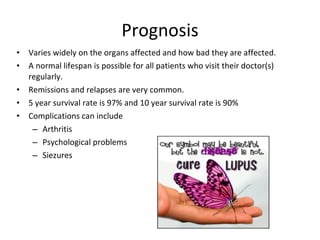
Prognosis Varies widely on the organs affected and how bad they are affected. A normal lifespan is possible for all patients who visit their doctor(s) regularly. Remissions and relapses are very common. 5 year survival rate is 97% and 10 year survival rate is 90% Complications can include Arthritis Psychological problems Siezures
Conclusion Lupus is a very difficult disease to deal with if you or a loved one has.  It is an autoimmune system disease that affects the bodys immune system. It affects all and any part of the body. It is more common in females than males and it is not contagious.  More than 16,000 cases are reported annually. So make sure you get checked if you feel as if you or any one you love have any of the symptoms.
Bibliography www.pennhealth.com www.mayoclinic.com www.lupus.org www.lupus.webmd.com www.images.google.com/lupus

Lupus Final Presentation

  • 1.
  • 2.
    Introduction The reasonwhy I chose lupus is because lupus is one of the many diseases that can affect me because I am a woman. Lupus is one of the many diseases that are an autoimmune disease. Personally I know of three people in my life that have this disease, and it affects me because I am so close to these people.
  • 3.
    Explanation and Historyof Lupus Lupus was included in the atlas of skin diseases in 1856. Lupus is an chronic autoimmune disease that can damage any part of the human body. Lupus can affect the different body systems, including your joints, skin, kidneys, blood cells, heart and lungs. Lupus is a disease that flares which means the symptoms worsen and you feel ill and goes into remission. Lupus is not contagious! Affects women more than men. Four types of Lupus: Systemic Lupus Discoid Lupus Drug-induced Lupus Neonatal Lupus Of these four types of lupus Systemic Lupus is the most common and serious 1.5 million Americans have lupus More than 16,000 cases are reported annually
  • 4.
    Cause of LupusThe cause of lupus is not known. It can be from many factors. Lupus is likely due to a combination of factors such as genes inherited from parents and exposure to certain substances and chemicals.
  • 5.
    Signs and SymptomsSymptoms Fatigue Headaches Painful or swollen joints Fever Anemia (low amounts of iron in the bloodstream) Swelling in feet, hands, and around eyes When breathing deep there is pain in the chest Photosensitivity Unusual hair loss Abnormal blood clotting Mouth or Nose Ulcers Fingers turning white or blue when cold Butterfly rash between nose and cheeks
  • 6.
    Diagnostic Testing Apatients entire medical history is reviewed Lab Tests including: Complete Blood Count which is red blood cell and white blood cell count, hemoglobin total, hematocrit (the amount of blood composed of red blood cells) and the size of the red blood cells Inflammation rate Urinalysis Complement level testing Antinuclear antibody testing Lupus Anticoagulant Antibody Test
  • 7.
    Diagnosis Doctors usethe “Eleven Criteria” to diagnose lupus. Malar rash (butterfly rash on face) Skin rashes Photosensitivity Painless mouth or nose ulcers Arthritis in two or more joints Inflammation of the lining around the heart and or lungs Seizures and or psychosis Renal Kidney Disorder Hemotologic Blood Disorder Immunologic Disorder Antinuclear Antibodies (ANA)
  • 8.
    Treatments Treating lupusis a very hard task considering that every person affected can have different signs and symptoms and a different type of lupus. Medicines can take months even years to treat the problems associated with lupus. People with lupus are often treated by a rheumatologist who specializes in diseases of the joints and muscles. Medicines often include: Corticosteroids (prednisone, prednisolone, methylprednisolone, and hydrocortisone) Hydroxychloroquine Aspirin There are also alternative ways of treating lupus which include: Acupuncture and Tai Chi Massage therapy Mediation Herbs and other natural supplements
  • 9.
    Prognosis Varies widelyon the organs affected and how bad they are affected. A normal lifespan is possible for all patients who visit their doctor(s) regularly. Remissions and relapses are very common. 5 year survival rate is 97% and 10 year survival rate is 90% Complications can include Arthritis Psychological problems Siezures
  • 10.
    Conclusion Lupus isa very difficult disease to deal with if you or a loved one has. It is an autoimmune system disease that affects the bodys immune system. It affects all and any part of the body. It is more common in females than males and it is not contagious. More than 16,000 cases are reported annually. So make sure you get checked if you feel as if you or any one you love have any of the symptoms.
  • 11.
    Bibliography www.pennhealth.com www.mayoclinic.comwww.lupus.org www.lupus.webmd.com www.images.google.com/lupus