The Key to Continuing
Success
By: Alexis Kelly
Final Project
Creating Customer Value Through Marketing
Introduction
• Founded in 1998 by Chip Wilson in
Vancouver, Canada
• Started as a ”One Stop Shop”
• Focused on Female Yoga Enthusiasts
• Wilson believed the yoga products
available weren’t fashionable or
efficient
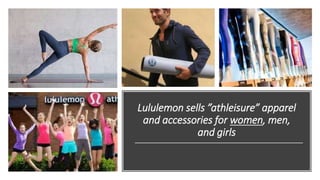
Lululemon sells ”athleisure” apparel
and accessories for women, men,
and girls
Company Description
• 350 stores Internationally
• 12,500 Employees Worldwide
• 2015: Profit = $997.2 million
• 10 % growth in sales
• 9% increase in profit
• Created Ivviva brand in 2011 to reach
children
• Focus Switch: Males and Children
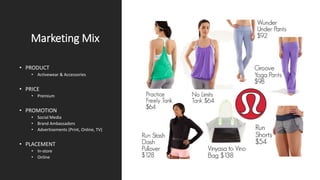
Marketing Mix
• PRODUCT
• Activewear & Accessories
• PRICE
• Premium
• PROMOTION
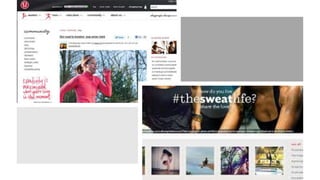
• Social Media
• Brand Ambassadors
• Advertisements (Print, Online, TV)
• PLACEMENT
• In-store
• Online
Target Market
• Demographics:
• Primary: Women
• Secondary: Males and Young Girls
• Age: 25-45
• Income: High
• Psychographics:
• Lifestyle: Active, Outgoing, and Healthy
• Personality: Social, Extroverted and
Trendy
“At lululemon, we’ve made it our
vision to elevate the world from
mediocrity to greatness.”
Market Trends & Macro
Analysis
• Health Consciousness
• Physical activity, organic foods, etc.
• Casualization of Fitness Apparel
• ”Athleisure” Market
• Increased disposable income
• Increased apparel spending
• Advancing Technology
• Apps, online shopping, fitness technology
• Low Price Alternatives
• Fitness product line extension
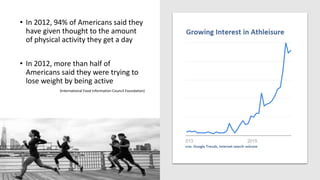
• In 2012, 94% of Americans said they
have given thought to the amount
of physical activity they get a day
• In 2012, more than half of
Americans said they were trying to
lose weight by being active
(International Food Information Council Foundation)
Market Analysis
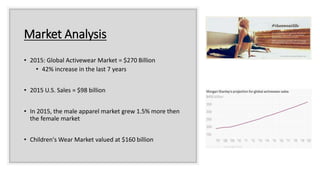
• 2015: Global Activewear Market = $270 Billion
• 42% increase in the last 7 years
• 2015 U.S. Sales = $98 billion
• In 2015, the male apparel market grew 1.5% more then
the female market
• Children's Wear Market valued at $160 billion
Market Position
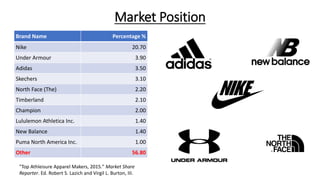
Brand Name Percentage %
Nike 20.70
Under Armour 3.90
Adidas 3.50
Skechers 3.10
North Face (The) 2.20
Timberland 2.10
Champion 2.00
Lululemon Athletica Inc. 1.40
New Balance 1.40
Puma North America Inc. 1.00
Other 56.80
"Top Athleisure Apparel Makers, 2015." Market Share
Reporter. Ed. Robert S. Lazich and Virgil L. Burton, III.
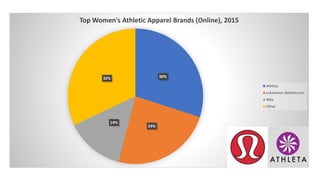
30%
24%
14%
32%
Top Women's Athletic Apparel Brands (Online), 2015
Athleta
Lululemon Athletica Inc.
Nike
Other
Strategic & Tactical Issues
• Competition
• Low price alternatives
• Nike, Under Armor, Adidas
• Negative Publicity
• Negative WOM
• Product recalls
• Brand Perception
• Yoga gear for females
• Limited Products
• No footwear
• Sizes 0-12
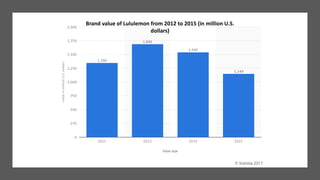
Brand value of Lululemon from 2012 to 2015 (in million U.S.
dollars)
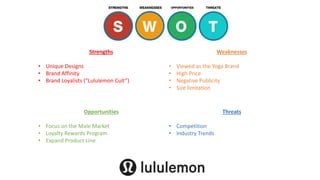
Strengths
• Unique Designs
• Brand Affinity
• Brand Loyalists (“Lululemon Cult”)
Weaknesses
• Viewed as the Yoga Brand
• High Price
• Negative Publicity
• Size limitation
Opportunities
• Focus on the Male Market
• Loyalty Rewards Program
• Expand Product Line
Threats
• Competition
• Industry Trends
Conclusion & Recommendations
Lululemon needs to revisit their value proposition
• Expand Product Line
• Plus Size Line
• Sneakers and Footwear
• International Expansion
• Product Placement
• Movies and TV Shows (Ex. Dancing with the Stars and
Sporting Events)
• Create a Loyalty Rewards Program
• Added value for loyal customers
• Celebrity Endorsement (Face of the Company)
• Ex. Khloe Kardashian, Juliane Hough, Kayla Itness,
Trending Male Sports Player

Lululemon: The Key to Continuing Success

  • 1.
    The Key toContinuing Success By: Alexis Kelly Final Project Creating Customer Value Through Marketing
  • 2.
    Introduction • Founded in1998 by Chip Wilson in Vancouver, Canada • Started as a ”One Stop Shop” • Focused on Female Yoga Enthusiasts • Wilson believed the yoga products available weren’t fashionable or efficient
  • 3.
    Lululemon sells ”athleisure”apparel and accessories for women, men, and girls
  • 4.
    Company Description • 350stores Internationally • 12,500 Employees Worldwide • 2015: Profit = $997.2 million • 10 % growth in sales • 9% increase in profit • Created Ivviva brand in 2011 to reach children • Focus Switch: Males and Children
  • 5.
    Marketing Mix • PRODUCT •Activewear & Accessories • PRICE • Premium • PROMOTION • Social Media • Brand Ambassadors • Advertisements (Print, Online, TV) • PLACEMENT • In-store • Online
  • 6.
    Target Market • Demographics: •Primary: Women • Secondary: Males and Young Girls • Age: 25-45 • Income: High • Psychographics: • Lifestyle: Active, Outgoing, and Healthy • Personality: Social, Extroverted and Trendy
  • 7.
    “At lululemon, we’vemade it our vision to elevate the world from mediocrity to greatness.”
  • 9.
    Market Trends &Macro Analysis • Health Consciousness • Physical activity, organic foods, etc. • Casualization of Fitness Apparel • ”Athleisure” Market • Increased disposable income • Increased apparel spending • Advancing Technology • Apps, online shopping, fitness technology • Low Price Alternatives • Fitness product line extension
  • 10.
    • In 2012,94% of Americans said they have given thought to the amount of physical activity they get a day • In 2012, more than half of Americans said they were trying to lose weight by being active (International Food Information Council Foundation)
  • 11.
    Market Analysis • 2015:Global Activewear Market = $270 Billion • 42% increase in the last 7 years • 2015 U.S. Sales = $98 billion • In 2015, the male apparel market grew 1.5% more then the female market • Children's Wear Market valued at $160 billion
  • 12.
    Market Position Brand NamePercentage % Nike 20.70 Under Armour 3.90 Adidas 3.50 Skechers 3.10 North Face (The) 2.20 Timberland 2.10 Champion 2.00 Lululemon Athletica Inc. 1.40 New Balance 1.40 Puma North America Inc. 1.00 Other 56.80 "Top Athleisure Apparel Makers, 2015." Market Share Reporter. Ed. Robert S. Lazich and Virgil L. Burton, III.
  • 13.
    30% 24% 14% 32% Top Women's AthleticApparel Brands (Online), 2015 Athleta Lululemon Athletica Inc. Nike Other
  • 14.
    Strategic & TacticalIssues • Competition • Low price alternatives • Nike, Under Armor, Adidas • Negative Publicity • Negative WOM • Product recalls • Brand Perception • Yoga gear for females • Limited Products • No footwear • Sizes 0-12
  • 15.
    Brand value ofLululemon from 2012 to 2015 (in million U.S. dollars)
  • 17.
    Strengths • Unique Designs •Brand Affinity • Brand Loyalists (“Lululemon Cult”) Weaknesses • Viewed as the Yoga Brand • High Price • Negative Publicity • Size limitation Opportunities • Focus on the Male Market • Loyalty Rewards Program • Expand Product Line Threats • Competition • Industry Trends
  • 18.
    Conclusion & Recommendations Lululemonneeds to revisit their value proposition • Expand Product Line • Plus Size Line • Sneakers and Footwear • International Expansion • Product Placement • Movies and TV Shows (Ex. Dancing with the Stars and Sporting Events) • Create a Loyalty Rewards Program • Added value for loyal customers • Celebrity Endorsement (Face of the Company) • Ex. Khloe Kardashian, Juliane Hough, Kayla Itness, Trending Male Sports Player

Editor's Notes

  • #5 http://investor.lululemon.com/releasedetail.cfm?releaseid=962616
  • #11 http://www.foodinsight.org/2012_Food_Health_Survey_Consumer_Attitudes_toward_Food_Safety_Nutrition_and_Health https://www.morganstanley.com/ideas/global-athletic-wear-geared-for-growth
  • #14 "Top Women's Athletic Apparel Brands (Online), 2015." Market Share Reporter. Ed. Robert S. Lazich and Virgil L. Burton, III. 28th