Group: A 
MM 2113- Marketing Management 
Department of Marketing Management 
Sabaragamuwa University of Sri Lanka
Content… 
1) Introduction of Coca Cola Company 
2) Defining Mission Statement 
 
3) Resent Changes of Business Environment 
4) Currant Marketing Strategy 
5) Strength & weaknesses of Currant Strategy 
6) Segmentation, Targeting & Positioning 
7) Segmentation of Coca Cola 
8) Target marketing of Coca Cola 
9) Target Market Selection 
10) Positioning 
11) Developing the Marketing Mix
Introduction of 
Coca Cola company 
 
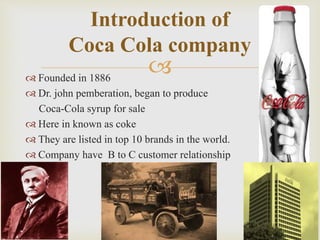
 Founded in 1886 
 Dr. john pemberation, began to produce 
Coca-Cola syrup for sale 
 Here in known as coke 
 They are listed in top 10 brands in the world. 
 Company have B to C customer relationship
Defining Mission Statement 
 
 Coca-Cola declares the purpose as a company and 
serves as the standard against actions and 
decisions: 
 To refresh the world… 
 To inspire moments of optimism and 
happiness… 
 To create value and make a 
difference.
Resent Changes of Business 
Environment 
 
Business Environment 
Micro Macro 
 individual departments 
 Suppliers 
 marketing intermediaries 
 customers 
 competitors 
 publics 
 Political 
Factors 
 Economic 
Factors 
 Social Factors 
Technological 
Factors
Current Marketing 
Strategy 
 
 Place 
Coca-Cola has changes its strategy regarding to selling 
and marketing of products. Coca-Cola has changes its 
packing styles, packing design according to place like 
country according to customer’s demands. 
 Price 
Coca-Cola is making its pricing strategy according to 
its competitor’s pricing strategy.
 
 Product 
Organization has launched some new product like 
some energy drinks, fruit juice and syrups. 
 Promotion 
This is the most important agenda and strategy used 
to by all the organization to increase sale revenue 
and fame of organization coca cola has changed its 
promotional strategy in past few years.
Strength & Weaknesses of 
Current Strategy 
 
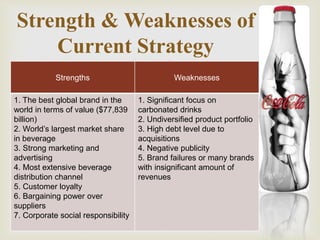
Strengths Weaknesses 
1. The best global brand in the 
world in terms of value ($77,839 
billion) 
2. World’s largest market share 
in beverage 
3. Strong marketing and 
advertising 
4. Most extensive beverage 
distribution channel 
5. Customer loyalty 
6. Bargaining power over 
suppliers 
7. Corporate social responsibility 
1. Significant focus on 
carbonated drinks 
2. Undiversified product portfolio 
3. High debt level due to 
acquisitions 
4. Negative publicity 
5. Brand failures or many brands 
with insignificant amount of 
revenues
Segmentation, Targeting 
& Positioning 
 
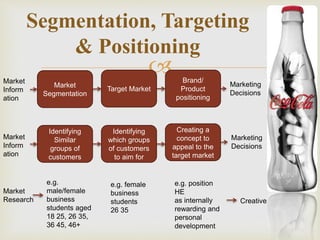
Market 
Segmentation 
Market 
Inform 
ation 
Market 
Inform 
ation 
Target Market 
Brand/ 
Product 
positioning 
Identifying 
Similar 
groups of 
customers 
Identifying 
which groups 
of customers 
to aim for 
Creating a 
concept to 
appeal to the 
target market 
Marketing 
Decisions 
Marketing 
Decisions 
Market 
Research 
e.g. 
male/female 
business 
students aged 
18 25, 26 35, 
36 45, 46+ 
e.g. female 
business 
students 
26 35 
e.g. position 
HE 
as internally 
rewarding and 
personal 
development 
Creative
Segmentation 
 
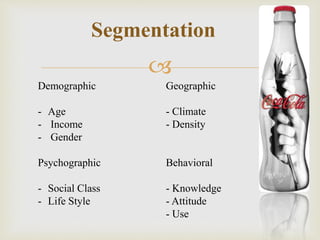
Demographic Geographic 
- Age - Climate 
- Income - Density 
- Gender 
Psychographic Behavioral 
- Social Class - Knowledge 
- Life Style - Attitude 
- Use
Target Marketing of 
Coca-Cola 
 
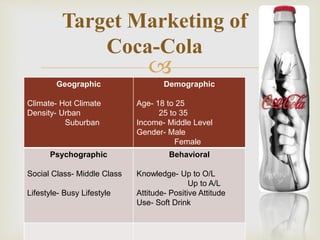
Geographic 
Climate- Hot Climate 
Density- Urban 
Suburban 
Demographic 
Age- 18 to 25 
25 to 35 
Income- Middle Level 
Gender- Male 
Female 
Psychographic 
Social Class- Middle Class 
Lifestyle- Busy Lifestyle 
Behavioral 
Knowledge- Up to O/L 
Up to A/L 
Attitude- Positive Attitude 
Use- Soft Drink
Target Market Selection 
 
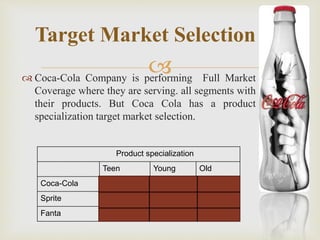
 Coca-Cola Company is performing Full Market 
Coverage where they are serving. all segments with 
their products. But Coca Cola has a product 
specialization target market selection. 
Product specialization 
Teen Young Old 
Coca-Cola 
Sprite 
Fanta
 
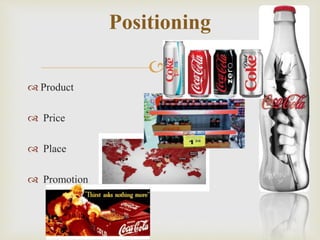
 Product 
 Price 
 Place 
 Promotion 
Positioning
Developing the Marketing 
Mix 
 
 The marketing mix is probably the most crucial 
stage of the marketing planning process. 
 Product 
Consumers will buy the coke product 
because of the high standards and high 
quality of the Coca Cola products. 
 Positioning 
Coca Cola and Franklins both make soft 
drinks; although Franklins may try to 
compete they will still be seen as down 
market from Coca Cola.
 Price 
Price is a very important part of the 
marketing mix as it can effect both the 
supply and demand for Coca Cola. The price 
of Coca Cola’s products  
is one of the most 
important factors in a customer’s decision to 
buy. 
 Pricing Strategies and Tactics 
Once customer loyalty is established as seen 
with Coca Cola it is then able to slowly raise 
the price of its product. 
 Pricing Methods 
Over the years Coca has lost ground here in 
its pricing but has regained its strength as it 
employed the Competition-based pricing 
method which allowed it to compete more 
effectively in the soft drink market.
 
 Promotion 
Coca Cola also utilizes below the line 
promotions such as contests, coupons, and 
free samples. 
 Place and Distribution 
One key element of the “Place or 
Distribution” aspect is the respective 
distribution channels that Coca Cola has 
elected to transport and sells its product.
Group Members 
 
 10/MS/003 ABEYWARDHANA D.T.S. 
 10/MS/004 ANANDA M.P.D.S. 
 10/MS/136 BALASURIYA P.B. 
 10/MS/137 BANDARA H.B.M.W. 
 10/MS/138 BANDARA O.T.M.W.A. 
 10/MS/147 CHULANTHIKA K.M.V.U.


SUSL - Coca cola presentation

  • 1.
    Group: A MM2113- Marketing Management Department of Marketing Management Sabaragamuwa University of Sri Lanka
  • 2.
    Content… 1) Introductionof Coca Cola Company 2) Defining Mission Statement  3) Resent Changes of Business Environment 4) Currant Marketing Strategy 5) Strength & weaknesses of Currant Strategy 6) Segmentation, Targeting & Positioning 7) Segmentation of Coca Cola 8) Target marketing of Coca Cola 9) Target Market Selection 10) Positioning 11) Developing the Marketing Mix
  • 3.
    Introduction of CocaCola company   Founded in 1886  Dr. john pemberation, began to produce Coca-Cola syrup for sale  Here in known as coke  They are listed in top 10 brands in the world.  Company have B to C customer relationship
  • 4.
    Defining Mission Statement   Coca-Cola declares the purpose as a company and serves as the standard against actions and decisions:  To refresh the world…  To inspire moments of optimism and happiness…  To create value and make a difference.
  • 5.
    Resent Changes ofBusiness Environment  Business Environment Micro Macro  individual departments  Suppliers  marketing intermediaries  customers  competitors  publics  Political Factors  Economic Factors  Social Factors Technological Factors
  • 6.
    Current Marketing Strategy   Place Coca-Cola has changes its strategy regarding to selling and marketing of products. Coca-Cola has changes its packing styles, packing design according to place like country according to customer’s demands.  Price Coca-Cola is making its pricing strategy according to its competitor’s pricing strategy.
  • 7.
      Product Organization has launched some new product like some energy drinks, fruit juice and syrups.  Promotion This is the most important agenda and strategy used to by all the organization to increase sale revenue and fame of organization coca cola has changed its promotional strategy in past few years.
  • 8.
    Strength & Weaknessesof Current Strategy  Strengths Weaknesses 1. The best global brand in the world in terms of value ($77,839 billion) 2. World’s largest market share in beverage 3. Strong marketing and advertising 4. Most extensive beverage distribution channel 5. Customer loyalty 6. Bargaining power over suppliers 7. Corporate social responsibility 1. Significant focus on carbonated drinks 2. Undiversified product portfolio 3. High debt level due to acquisitions 4. Negative publicity 5. Brand failures or many brands with insignificant amount of revenues
  • 9.
    Segmentation, Targeting &Positioning  Market Segmentation Market Inform ation Market Inform ation Target Market Brand/ Product positioning Identifying Similar groups of customers Identifying which groups of customers to aim for Creating a concept to appeal to the target market Marketing Decisions Marketing Decisions Market Research e.g. male/female business students aged 18 25, 26 35, 36 45, 46+ e.g. female business students 26 35 e.g. position HE as internally rewarding and personal development Creative
  • 10.
    Segmentation  DemographicGeographic - Age - Climate - Income - Density - Gender Psychographic Behavioral - Social Class - Knowledge - Life Style - Attitude - Use
  • 11.
    Target Marketing of Coca-Cola  Geographic Climate- Hot Climate Density- Urban Suburban Demographic Age- 18 to 25 25 to 35 Income- Middle Level Gender- Male Female Psychographic Social Class- Middle Class Lifestyle- Busy Lifestyle Behavioral Knowledge- Up to O/L Up to A/L Attitude- Positive Attitude Use- Soft Drink
  • 12.
    Target Market Selection   Coca-Cola Company is performing Full Market Coverage where they are serving. all segments with their products. But Coca Cola has a product specialization target market selection. Product specialization Teen Young Old Coca-Cola Sprite Fanta
  • 13.
      Product  Price  Place  Promotion Positioning
  • 14.
    Developing the Marketing Mix   The marketing mix is probably the most crucial stage of the marketing planning process.  Product Consumers will buy the coke product because of the high standards and high quality of the Coca Cola products.  Positioning Coca Cola and Franklins both make soft drinks; although Franklins may try to compete they will still be seen as down market from Coca Cola.
  • 15.
     Price Priceis a very important part of the marketing mix as it can effect both the supply and demand for Coca Cola. The price of Coca Cola’s products  is one of the most important factors in a customer’s decision to buy.  Pricing Strategies and Tactics Once customer loyalty is established as seen with Coca Cola it is then able to slowly raise the price of its product.  Pricing Methods Over the years Coca has lost ground here in its pricing but has regained its strength as it employed the Competition-based pricing method which allowed it to compete more effectively in the soft drink market.
  • 16.
      Promotion Coca Cola also utilizes below the line promotions such as contests, coupons, and free samples.  Place and Distribution One key element of the “Place or Distribution” aspect is the respective distribution channels that Coca Cola has elected to transport and sells its product.
  • 17.
    Group Members   10/MS/003 ABEYWARDHANA D.T.S.  10/MS/004 ANANDA M.P.D.S.  10/MS/136 BALASURIYA P.B.  10/MS/137 BANDARA H.B.M.W.  10/MS/138 BANDARA O.T.M.W.A.  10/MS/147 CHULANTHIKA K.M.V.U.
  • 18.