Nursing Interventions for Clients
with lower Gastrointestinal
Disorders
1
Intestinal and Rectal Disorders
Constipation
Abnormal hardening of stool
Retention of stool on rectum for prolonged period
Clinical Manifestations
Abdominal distention
Pain & pressure
Anorexia fatigue & headache
Incomplete emptying & strain defecation
2
Constipation (2)
Medical Management
Treatment of the underlying cause
High Fiber Diet & increase fluid intake
Maintain regular pattern of exercises
Laxatives & bulk forming Agents
Complications:
Hypertension
Hemorrhoid & fissure
Fecal impaction
3
Diarrhea
It is an increase frequency of bowel movement
more than three times a day
Causes
Certain medications
Tube feeding formula
Certain metabolic disease
Viral & bacterial infectious disease
Ulcerative colitis, Enteritis & Crohn’s Disease
4
Diarrhea (2)
Clinical Manifestations
Abdominal cramps, distention
Increase frequency & fluid content of stool
Anorexia, thirst & dehydration
Fluid electrolytes imbalance
Complications
Cardiac arrhythmia due to fluid & K+ loss
Drowsiness & Hypotension
5
Diarrhea (3)
Medical Management
1. Treatment of the underlying cause
2. Controlling symptoms & preventing
complications
3. Antibiotics & anti-inflammatory agents
4. Anti-diarrheal & antispasmoic agents
Opiate related drugs, act on opoid receptors in GI
tract decreased motility.
 Loperamide (Lomotril)
 Defenoxin with atropine (Motofen)
 Diphenoxylate with Atropine (Lomotil)
6
Diarrhea (4)
Nursing Managements
1. Assessment of the nature & pattern of the
diarrhea
2. Bed rest & monitoring of fluid status
3. Serum electrolytes (K)
4. Perineal care
7
Intestinal Obstruction
 Intestinal obstruction exists when blockage prevents
the normal flow of intestinal contents through the
intestinal tract.
 Obstruction can be Partial or Complete
 Severity of intestinal obstruction depends on
 The region of bowel that is affected
 The degree to which the lumen is occluded
 The degree to which the blood circulation in the
bowel wall is disturbed
8
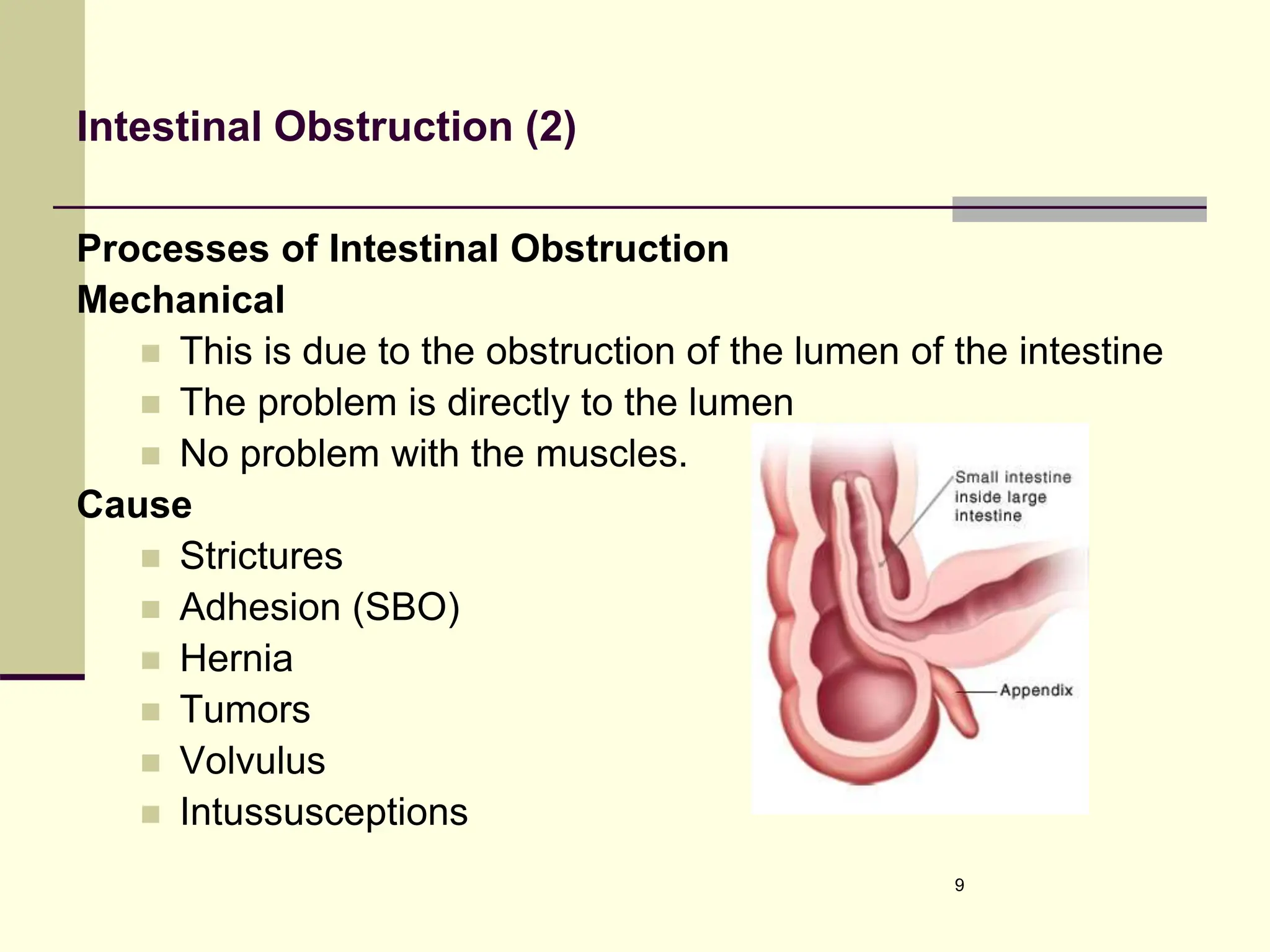
Intestinal Obstruction (2)
Processes of Intestinal Obstruction
Mechanical
 This is due to the obstruction of the lumen of the intestine
 The problem is directly to the lumen
 No problem with the muscles.
Cause
 Strictures
 Adhesion (SBO)
 Hernia
 Tumors
 Volvulus
 Intussusceptions
9
Intestinal Obstruction (3)
Functional /Non mechanical/
 The intestinal musculature is unable to propel the
contents along the bowel.
 The problem is due to dysfunction of intestinal
musculature.
Cause
 Muscular dystrophy
 Amyloidosis
 Neurologic disorders
10
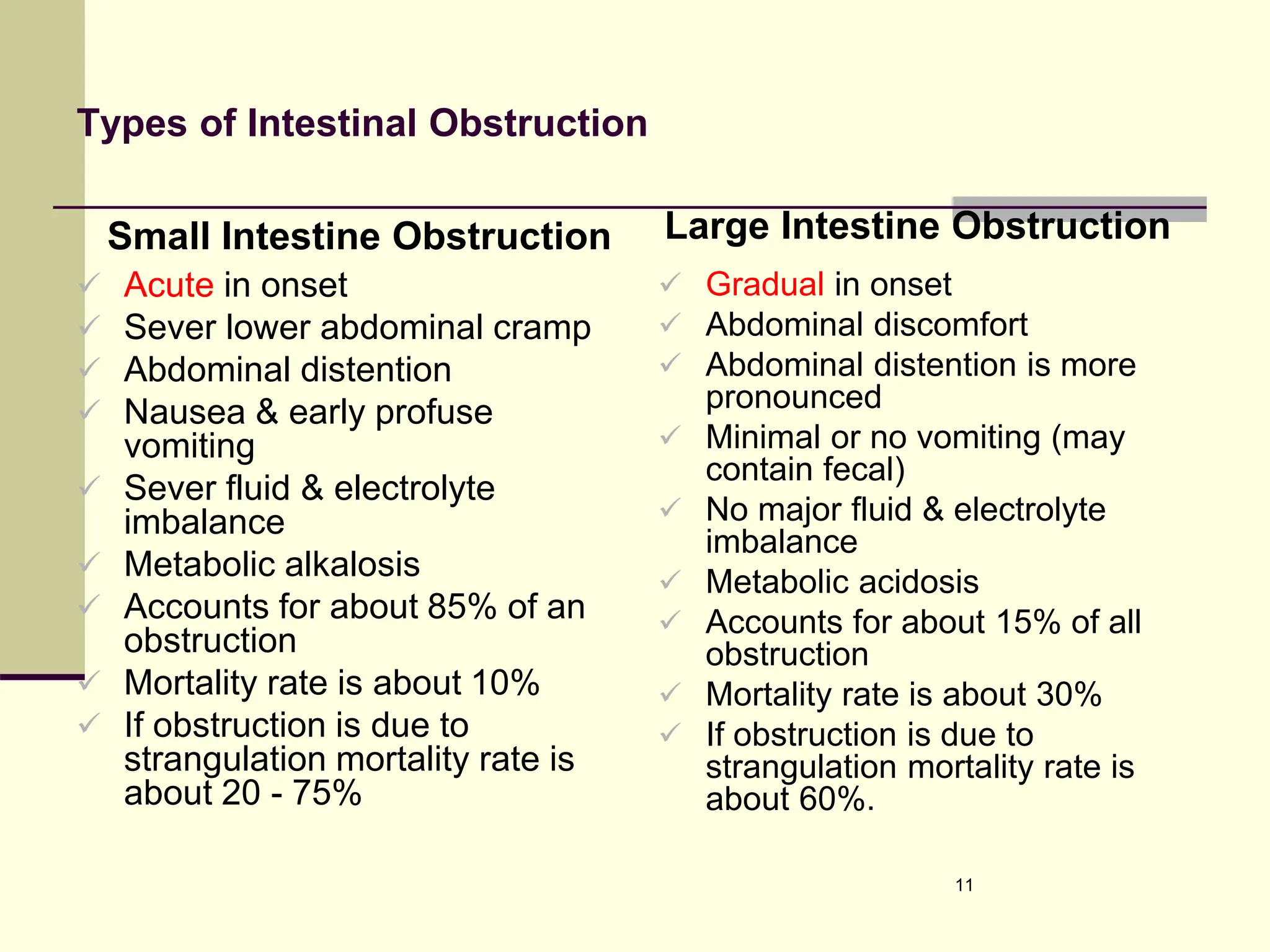
Types of Intestinal Obstruction
Small Intestine Obstruction
 Acute in onset
 Sever lower abdominal cramp
 Abdominal distention
 Nausea & early profuse
vomiting
 Sever fluid & electrolyte
imbalance
 Metabolic alkalosis
 Accounts for about 85% of an
obstruction
 Mortality rate is about 10%
 If obstruction is due to
strangulation mortality rate is
about 20 - 75%
Large Intestine Obstruction
 Gradual in onset
 Abdominal discomfort
 Abdominal distention is more
pronounced
 Minimal or no vomiting (may
contain fecal)
 No major fluid & electrolyte
imbalance
 Metabolic acidosis
 Accounts for about 15% of all
obstruction
 Mortality rate is about 30%
 If obstruction is due to
strangulation mortality rate is
about 60%.
11
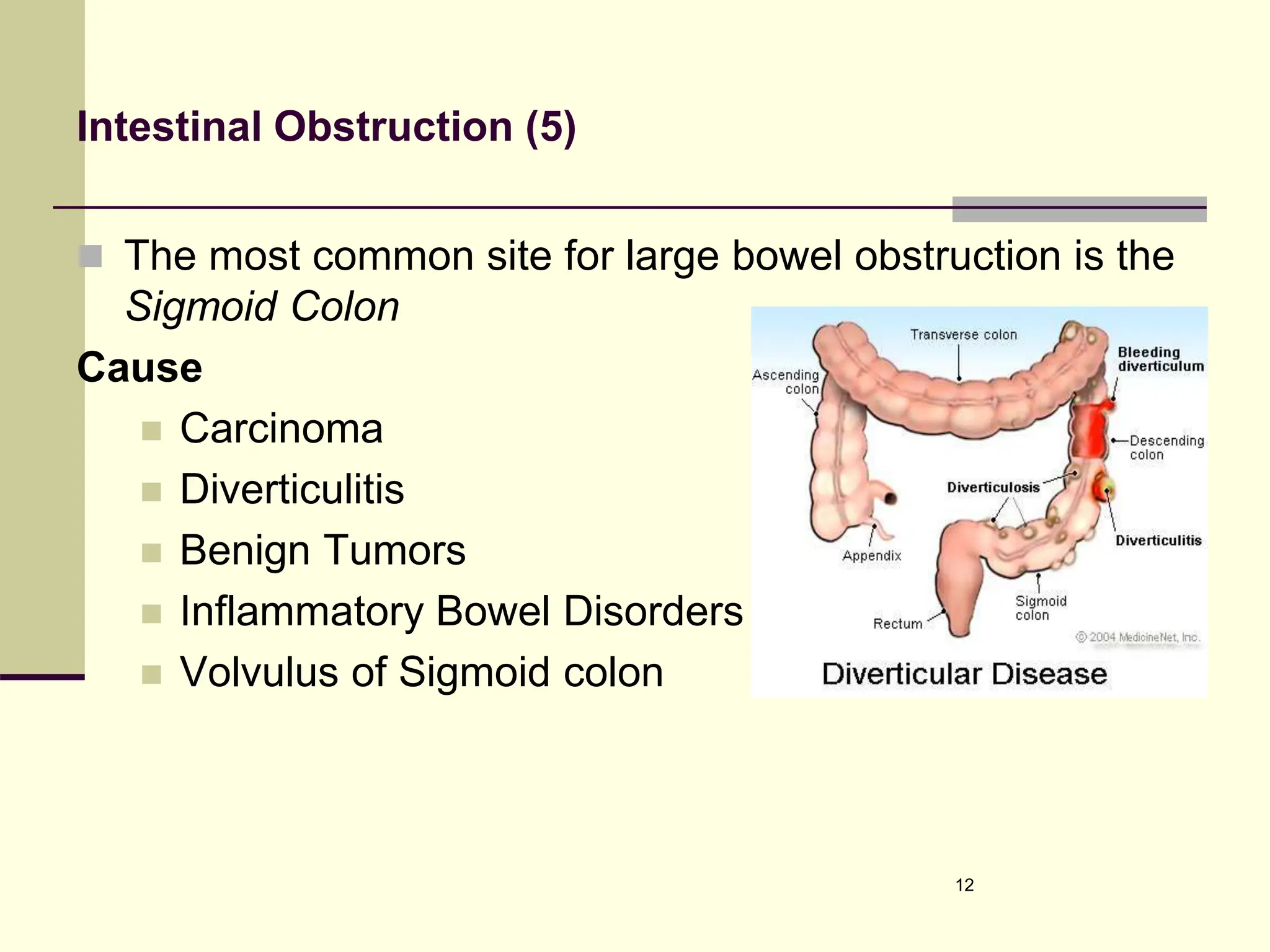
Intestinal Obstruction (5)
 The most common site for large bowel obstruction is the
Sigmoid Colon
Cause
 Carcinoma
 Diverticulitis
 Benign Tumors
 Inflammatory Bowel Disorders
 Volvulus of Sigmoid colon
12
Intestinal Obstruction (7)
Diagnostic evaluation
 Abdominal X-ray
 Electrolytes studies
13
Intestinal Obstruction (8)
Treatment
Medical Management
 Abdominal decompression by using NGT
 IV fluid (replacement of fluid and electrolytes)
 NPO the patient
Surgical Mx
 Indication of surgical Mx
 If obstruction is due to Strangulation, Adhesion ,Hernia
 If pt has increased pulse, increased Temperature,
Decreased B.P, and increased WBC
 Surgery depends on the cause of the obstruction and
severity and size of the obstruction
14
Intestinal Obstruction (9)
 Complication
 Hypovolemic shock
 Renal failure
 Septicemia
 Peritonitis
 Metabolic acidosis or alkalosis
 Perforation
 Death
15
Intestinal Obstruction (10)
Nursing intervention
 Teach the patient to eat high fiber foods
 To eat raw fruits & vegetables & whole grain products
 Encourage patient to take plenty of fluids
 To exercise regularly
 Close follow up of the NGT
 Monitor input and output
 Preoperative preparation of the patient
 Monitor the patient for passing of feces & flatus
 Observe the color of the stool
16
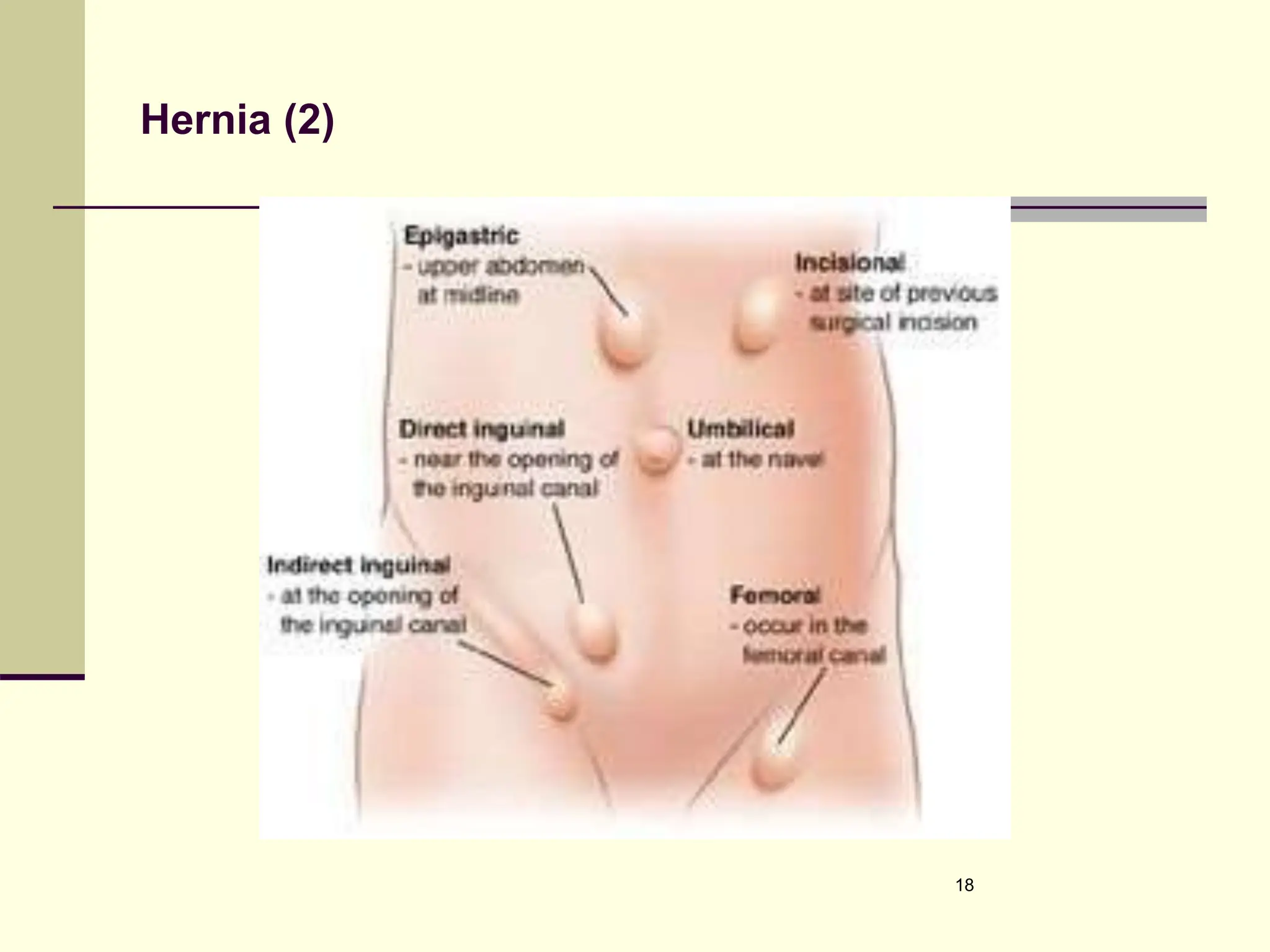
Hernia
 It is a weakness in the abdominal muscle wall through
which a segment of bowel or other abdominal structure
protrudes.
 The most common types of abdominal hernias
 Indirect - sac formed from the peritoneum that contains a
portion of the intestine
 Direct /through a weak point in the ab. wall
 Femoral (protrude through the femoral region
 Umbilical congenital (in infant) /acquired increased intra abd.
pressure
 Incisional (ventral) occur at the site of previous surgical incision
17
Hernia (2)
18
Hernia (3)
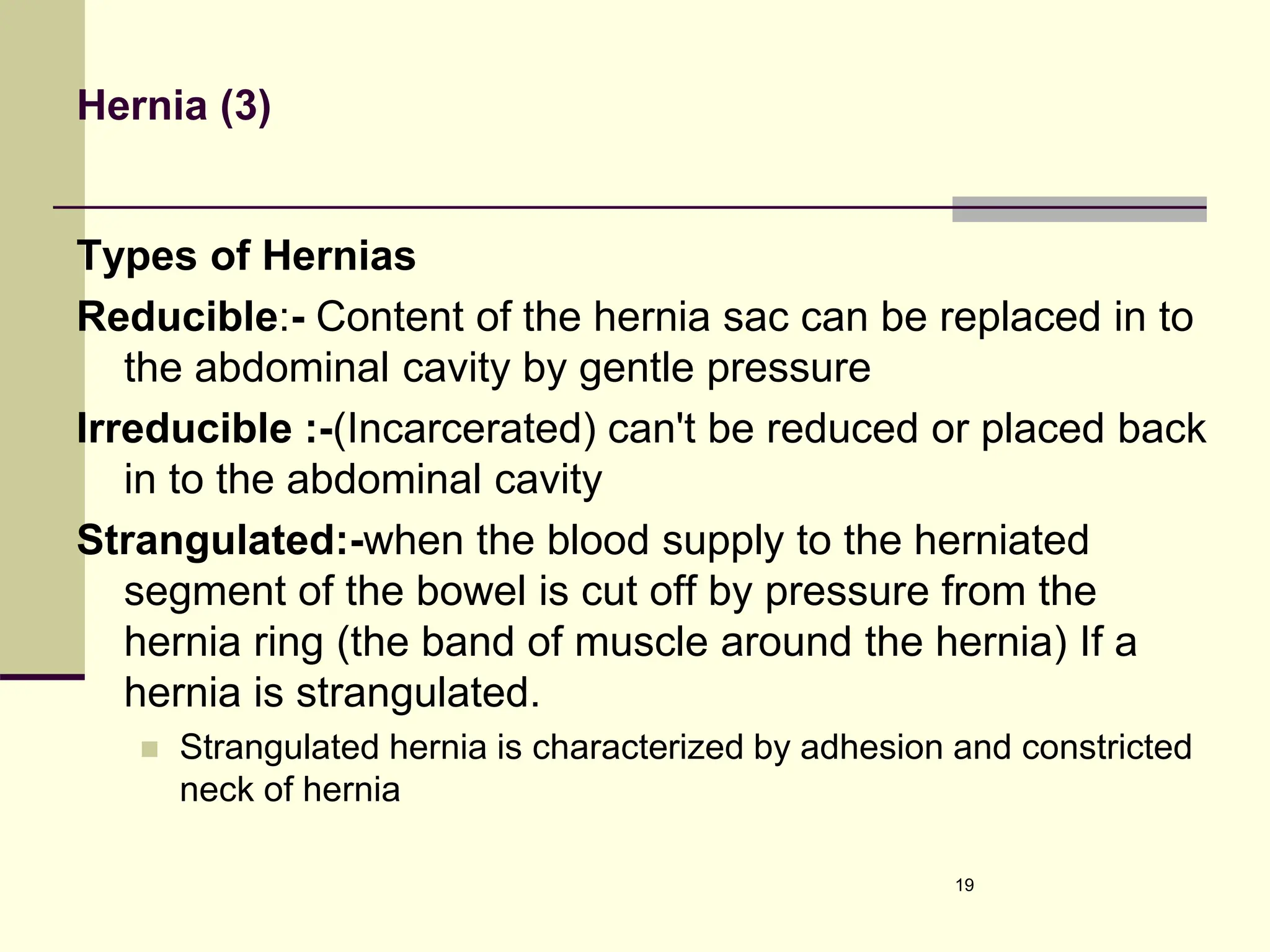
Types of Hernias
Reducible:- Content of the hernia sac can be replaced in to
the abdominal cavity by gentle pressure
Irreducible :-(Incarcerated) can't be reduced or placed back
in to the abdominal cavity
Strangulated:-when the blood supply to the herniated
segment of the bowel is cut off by pressure from the
hernia ring (the band of muscle around the hernia) If a
hernia is strangulated.
 Strangulated hernia is characterized by adhesion and constricted
neck of hernia
19
Hernia (4)
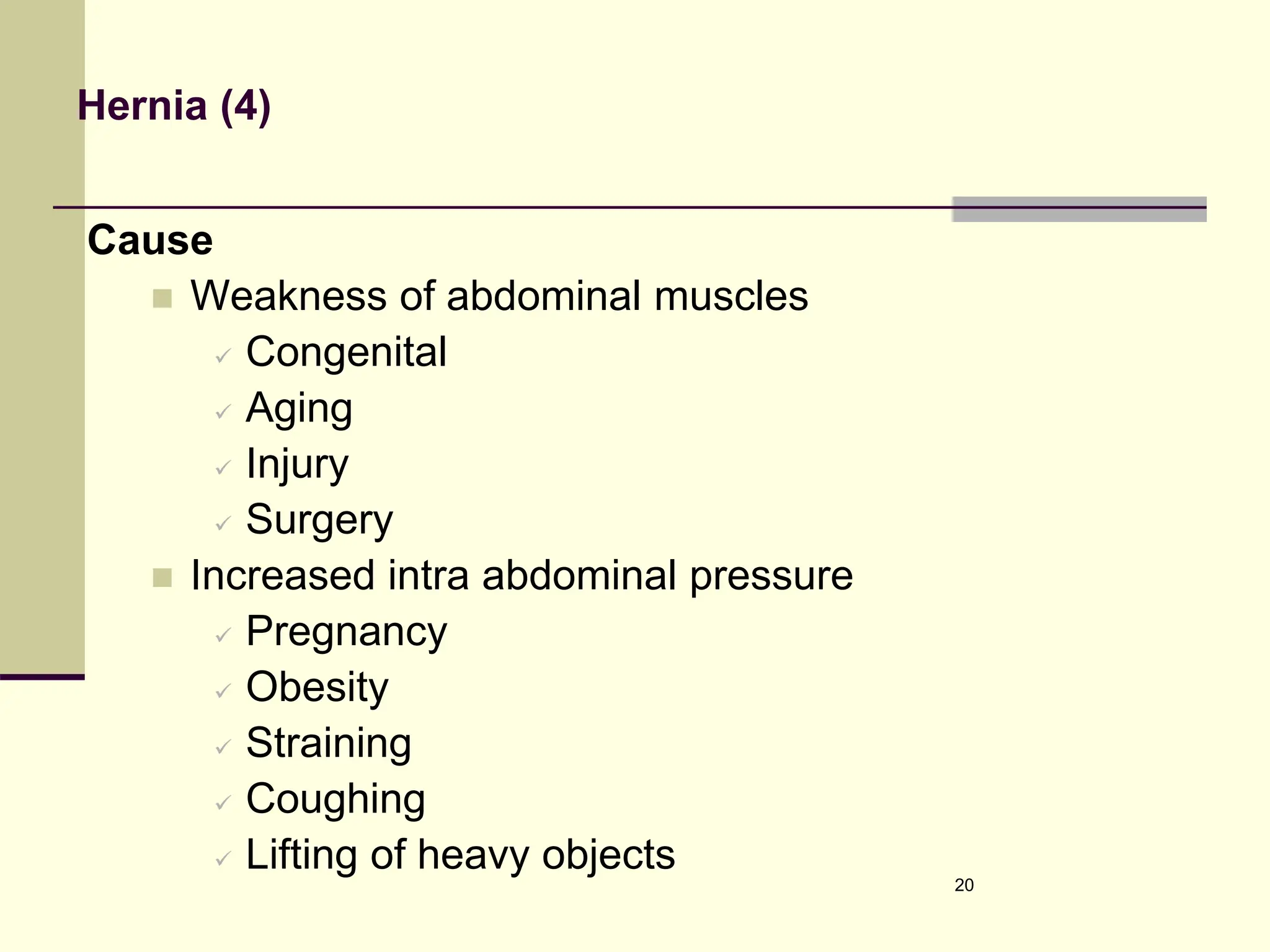
Cause
 Weakness of abdominal muscles
 Congenital
 Aging
 Injury
 Surgery
 Increased intra abdominal pressure
 Pregnancy
 Obesity
 Straining
 Coughing
 Lifting of heavy objects
20
Hernia (5)
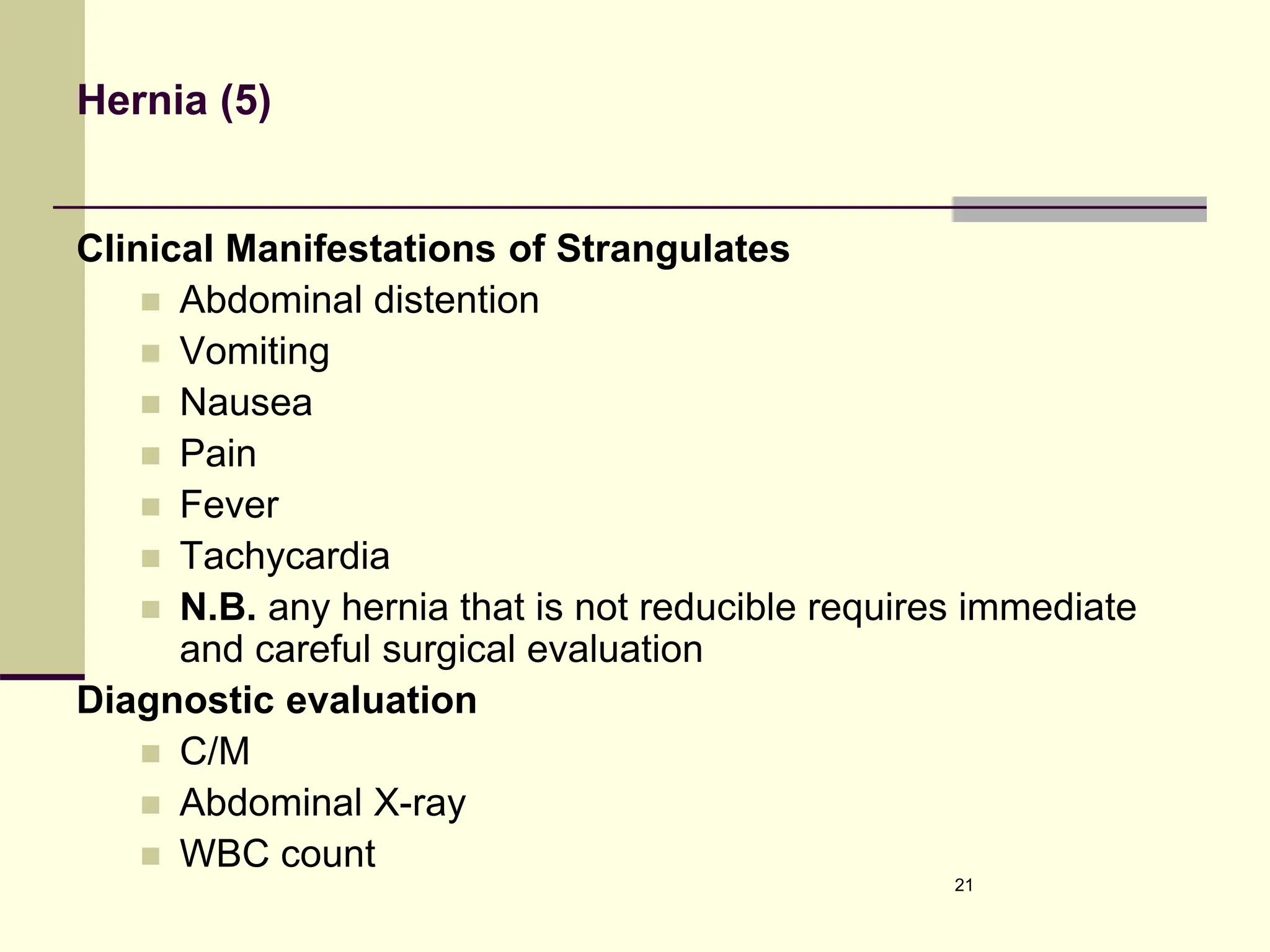
Clinical Manifestations of Strangulates
 Abdominal distention
 Vomiting
 Nausea
 Pain
 Fever
 Tachycardia
 N.B. any hernia that is not reducible requires immediate
and careful surgical evaluation
Diagnostic evaluation
 C/M
 Abdominal X-ray
 WBC count
21
Hernia (6)
Treatment
 Medical (non surgical MX)
 Truss - for elderly or debilitated clients who are poor
surgical risks.
Surgical Management
 Repair of the hernia is generally Rx of choice
 Herniorrhaphy - is surgical correction of the defected
structure
 Hernioplasty (less frequently used)
22
Appendicitis
 Is an acute inflammation of the vermiform appendix.
 Most common cause of acute inflammation in the RLQ
of the abdominal cavity.
 It is more common between the age of 5 and 30 years
 Perforation is relatively more common in the elderly
because of difficulty in diagnosis.
23
Appendicitis (2)
Cause
 Fecal material
 Tumor
 Calculi
 Viral infection
 Barium Ingestion
 Trauma (Scar)
 Worms
 Stricture
24
Appendicitis (3)
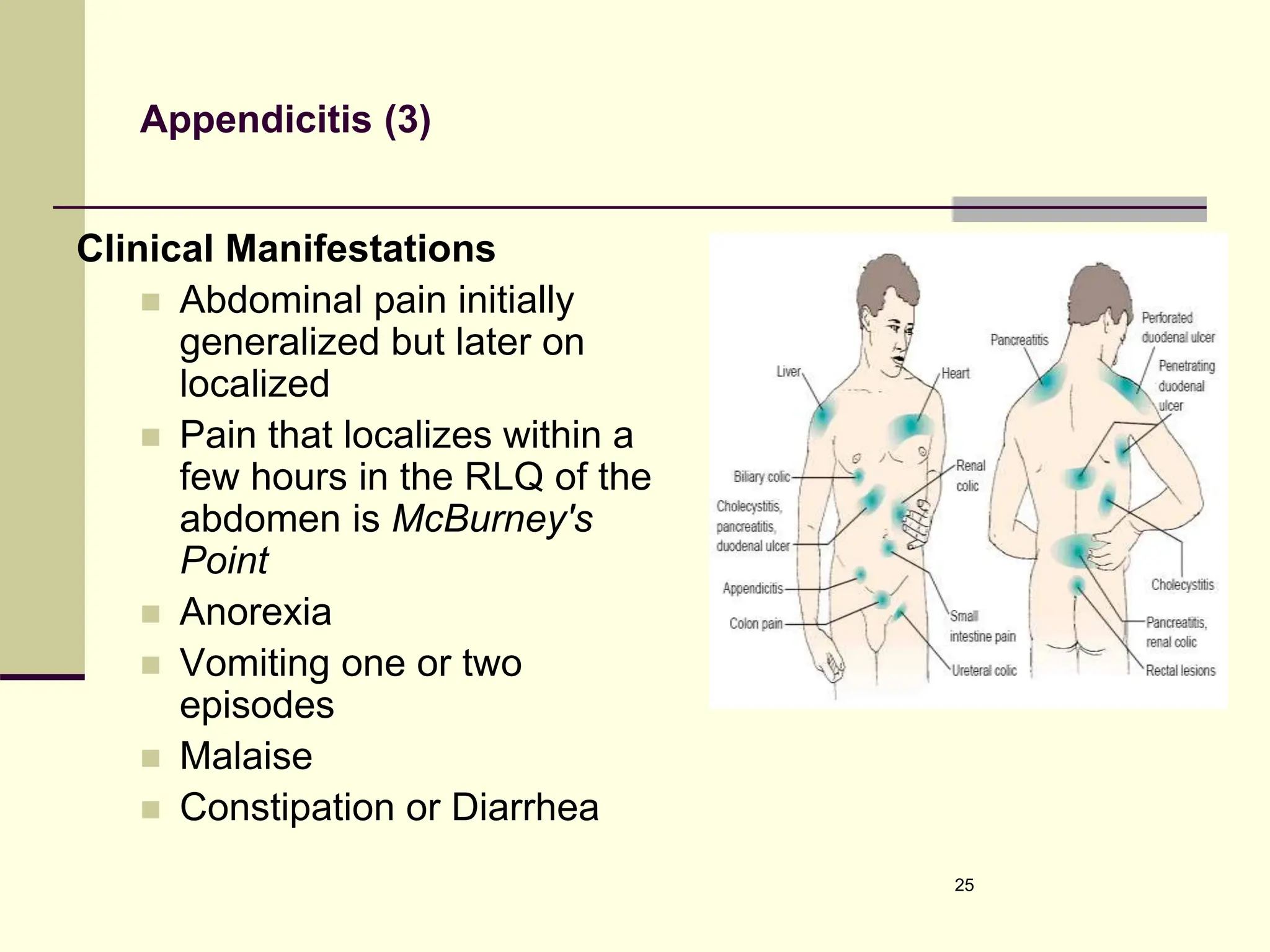
Clinical Manifestations
 Abdominal pain initially
generalized but later on
localized
 Pain that localizes within a
few hours in the RLQ of the
abdomen is McBurney's
Point
 Anorexia
 Vomiting one or two
episodes
 Malaise
 Constipation or Diarrhea
25
Appendicitis (4)
 Low grade fever (37.2- 380C)
 Later palpation may show tenderness in the RLQ of
the abdomen that worsen when the patient is asked
to cough or during gentle percussion
 Sudden cessation of abdominal pain signals
perforation or infarction
Diagnostic evaluations
 C/M
 Slight Leukocytes
 X-Ray
26
Appendicitis (5)
RX
 Appendectomy is the treatment of choice
Nursing management
 IV fluids
 Anti-pain while patient is ready for surgery
 Reducing anxiety
 Elimination of infection
 Maintain skin integrity
 Attaining optimum nutrition
27
Appendicitis (6)
Preoperative Nursing Management
 Physical & Psychological support
 Secure IV line
 NG tube
 Enema is CI
Postoperative Nursing Management
 Position patient in Semi Fowler's Position
 Administering Antibiotics (if ordered)
28
Appendicitis (7)
 Give oral fluids and food on the day of surgical if
tolerated.
 Discharge patient on the day of surgery (if it is un
complicated)
 Provided that the temperature is in a normal limits &
there is no discomfort in the operative area
Complication
 Rupture or Perforation
 Peritonitis
 Appendical abscess
 Pyelonephritis
29
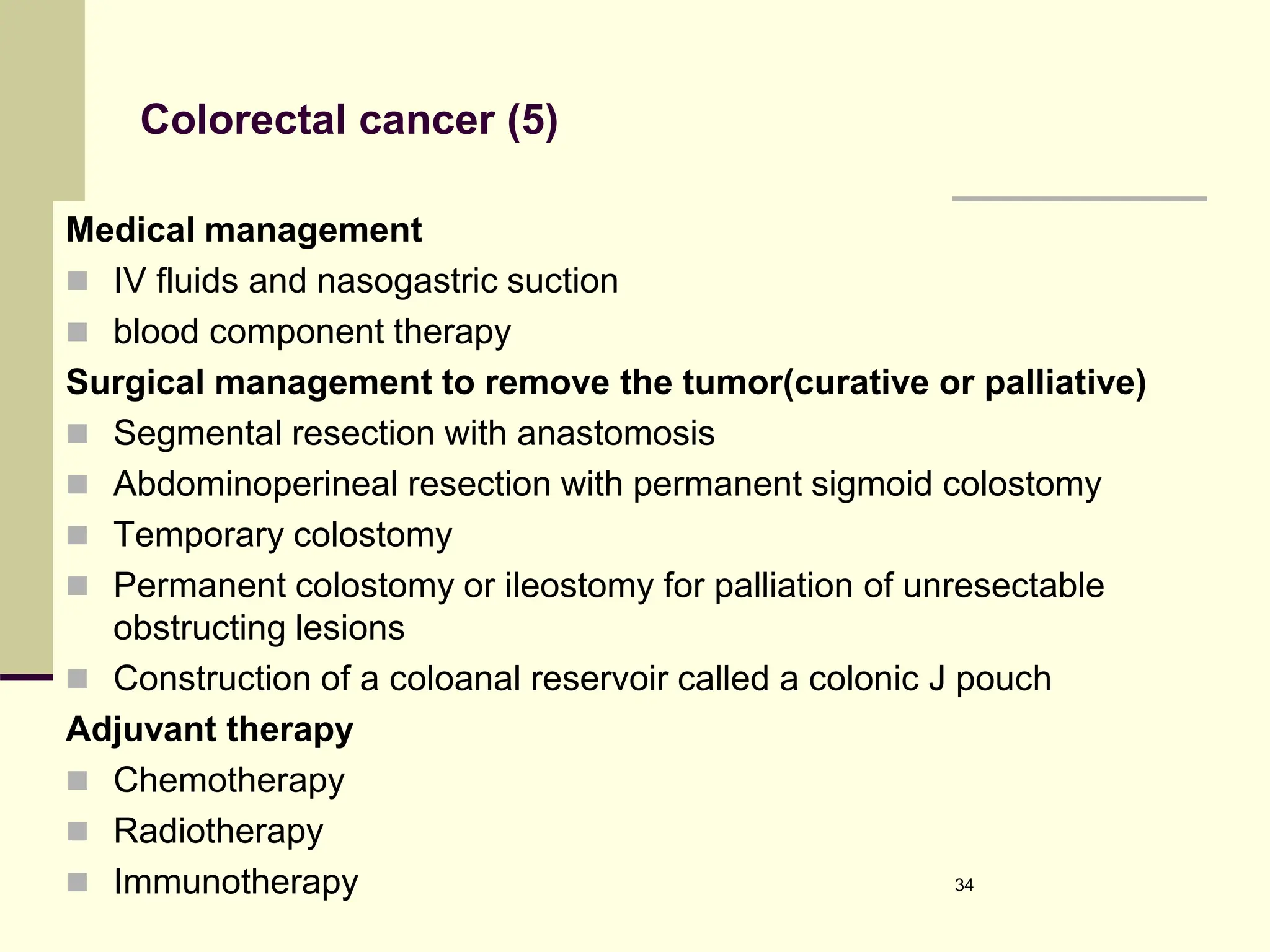
Colorectal cancer
 Cancer colon is the abnormal growth of cancer cells
in the lower digestive tract.
Risk factors
 Increasing age
 Family history of colon cancer or polyps
 Previous colon cancer or adenomatous polyps
 High consumption of alcohol
 Cigarette smoking
 Obesity
 History of gastrectomy
 History of inflammatory bowel disease
 High-fat, high-protein (with high intake of beef), low-fiber diet
 Genital cancer (eg, endometrial cancer, ovarian cancer) or
breast cancer (in women)
30
Colorectal cancer (2)
Clinical manifestations :determined by the location of the tumor, the
stage of the disease, and the function of the affected intestinal segment:
 a change in bowel habits (most common) .
 The passage of blood in or on the stools (second most common)
 unexplained anemia, anorexia, weight loss, and fatigue.
 Symptoms of Right sided lesions are dull abdominal pain and melena.
 Symptoms of left-sided lesions are abdominal pain and cramping,
narrowing stools, constipation, distention), as well as bright-red blood
in the stool
 rectal lesions symptoms are tenesmus, rectal pain, the feeling of
incomplete evacuation after a bowel movement, alternating
constipation and diarrhea, and bloody stool.
31
Colorectal cancer (3)
Assessment and diagnostic findings
 abdominal and rectal examination,
 fecal occult blood testing,
 barium enema,
 proctosigmoidoscopy
 Colonoscopy with biopsy.
 Carcinoembryonic antigen (CEA): With complete excision
of the tumor, the elevated levels of CEA should return to
normal within 48 hours. Elevations of CEA at a later date
suggest recurrence.
32
Colorectal cancer (4)
 Stages of colorectal cancer (Duke's classification)
 Class A: Tumor limited to muscular mucosa and
submucosa
 Class B1: Tumor extends into mucosa
 Class B2: Tumor extends through entire bowel wall into
serosa or pericolic fat, no nodal involvement
 Class C1: Positive nodes, tumor is limited to bowel wall
 Class C2: Positive nodes, tumor extends through entire
bowel wall
 Class D: Advanced and metastasis to liver, lung, or
bone
33
Colorectal cancer (5)
Medical management
 IV fluids and nasogastric suction
 blood component therapy
Surgical management to remove the tumor(curative or palliative)
 Segmental resection with anastomosis
 Abdominoperineal resection with permanent sigmoid colostomy
 Temporary colostomy
 Permanent colostomy or ileostomy for palliation of unresectable
obstructing lesions
 Construction of a coloanal reservoir called a colonic J pouch
Adjuvant therapy
 Chemotherapy
 Radiotherapy
 Immunotherapy 34
Colorectal cancer (6)
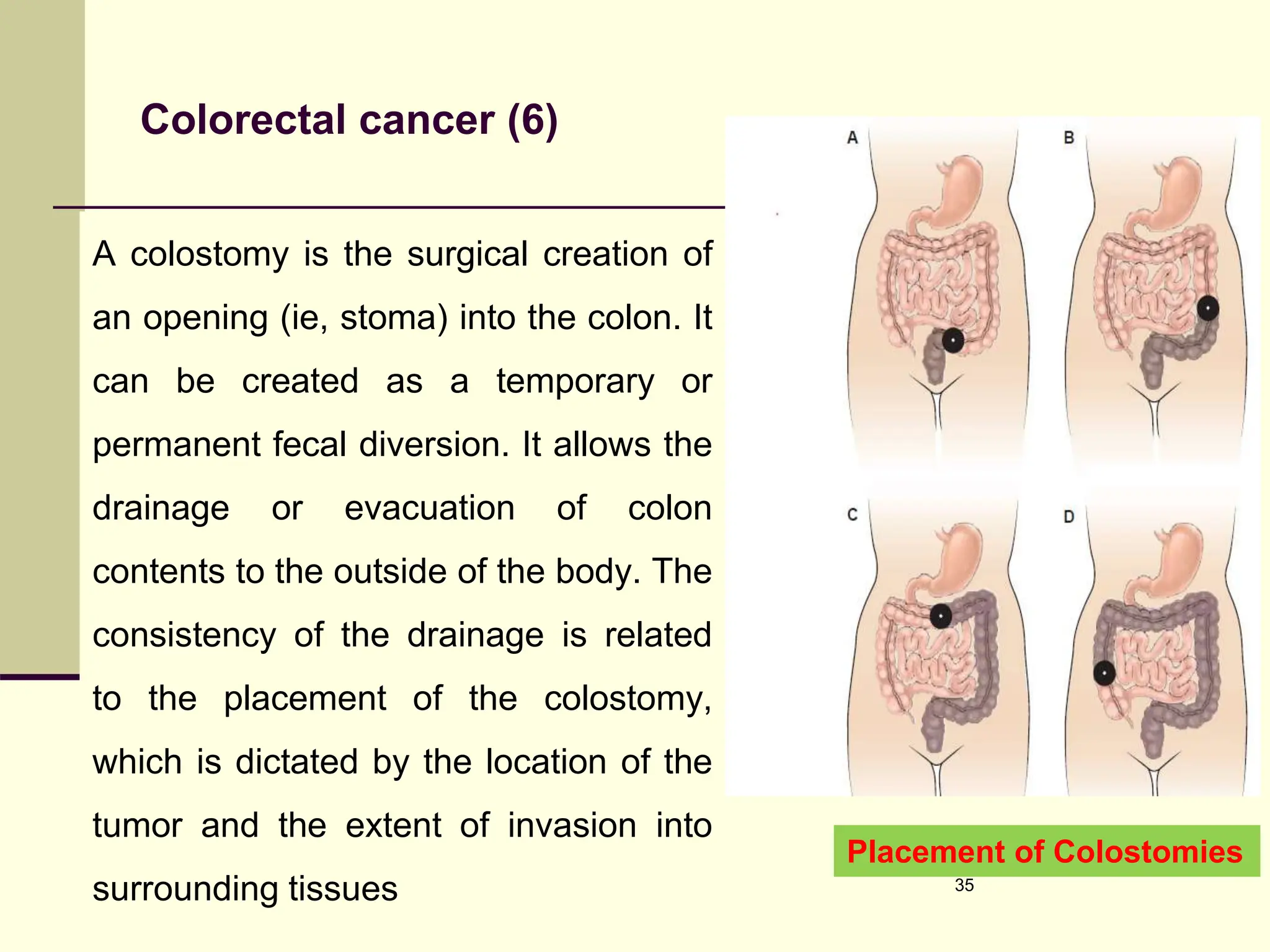
A colostomy is the surgical creation of
an opening (ie, stoma) into the colon. It
can be created as a temporary or
permanent fecal diversion. It allows the
drainage or evacuation of colon
contents to the outside of the body. The
consistency of the drainage is related
to the placement of the colostomy,
which is dictated by the location of the
tumor and the extent of invasion into
surrounding tissues 35
Placement of Colostomies
Nursing Process: The Care of the Patient with
Cancer of the Colon or Rectum— Assessment
 Health history
 Fatigue and weakness
 Abdominal or rectal pain
 Nutritional status and dietary habits
 Elimination patterns
 Abdominal assessment
 Characteristics of stool
Colorectal cancer (7)
Colorectal cancer (8)
 Nursing diagnosis
o Imbalanced nutrition, less than body requirements, related to nausea and
anorexia
o Risk for deficient fluid volume related to vomiting and decrease fluid intake
o Anxiety related to impending surgery and the diagnosis of cancer
o Risk for ineffective therapeutic regimen management related to knowledge
deficit concerning the diagnosis, the surgical procedure, and self-care after
discharge
o Impaired skin integrity related to the surgical incisions, the formation of a
stoma, and frequent fecal contamination of peristomal skin
o Disturbed body image related to colostomy
o Ineffective sexuality patterns related to presence of ostomy and changes in
body image and self-concept
37
Collaborative Problems/Potential Complications
 Intraperitoneal infection
 Complete large bowel obstruction
 GI bleeding
 Bowel perforation
 Peritonitis, abscess, and sepsis
Colorectal cancer (9)
Nursing Process: The Care of the Patient with Cancer
of the Colon or Rectum— Planning
 attainment of optimal level of nutrition
 maintenance of fluid and electrolyte balance
 reduction of anxiety
 knowledge of diagnosis and treatment
 self-care ability
 optimal tissue healing
 protection of peristomal skin
 expressing feelings and concerns about the colostomy and the
impact on himself or herself
 avoidance of complications.
Colorectal cancer (10)
Interventions
 Preparing the patient for surgery
 Emotional support
 Providing postoperative care
 Maintaining optimal nutrition
 Providing wound care
 Monitoring and managing complications
 Removing and applying the colostomy appliance
 Irrigating the colostomy
 Supporting a positive body image
 Discussing sexuality issues
 Promoting home and community-based care
Colorectal cancer (11)
Hemorrhoids
 Hemorrhoids are dilated portions of veins in the anal
Canal
Classification
Internal hemorrhoids
 Those occurring above the internal sphincter
External hemorrhoids
 Those appearing outside the external sphincter
Cause
 An increased intravenous pressure and the reason
why the veins are dilated is not clear
41
Hemorrhoids (2)
Risk Factor
 Chronic Constipation
 Intestinal disorders
 Prolonged sitting on hot objects
 Presence of varicose vein in the lower leg.
 Hereditary
Aggravating Factors
 Pregnancy
 Straining
42
Hemorrhoids (3)
Clinical manifestation
 Anal pain and discomfort
 Itching in the anus
 Inflammation of the anal canal
 Visible blood in stool
 Visible dilated vein
 Thrombosis/Clotting of blood within the hemorrhoid
43
Hemorrhoids (4)
Treatment
Palliative
 Cold & warm sits bath alternatively
 High fluid intake to make stool soft
 High roughage foods
 Laxatives in severe constipation
 Avoidance of
 Straining during defecation
 Lifting heavy objects
 Prolonged sitting
44
Hemorrhoids (5)
Radical treatment
Surgical treatment
 Elastic Band /Rubber Band/ the dilated blood vessels
will be tighten up.
 Cryotherapy: The dilated blood vessels will be applied
excessive cold.
 Sclerotherapy: injection of a solution (salt) to veins
make them swell and stick together. Overtime the scar
tissue will heal and make the veins normal.
 Haemorrhoidectomy : Surgical removal of the dilated
blood vessels
45
Hemorrhoids (6)
Nursing Intervention
 Sits bath to sooth pain and discomfort
 Alternate warm & cold sits bath at every 3-4 hrs
 Provide patient with prescribed anti - biotic
 Teach patient to avoid straining
 Teach patient to avoid prolong sitting on hot objects
46
47

Lower gastrointestinal disorders 2- week 12.ppt

  • 1.
    Nursing Interventions forClients with lower Gastrointestinal Disorders 1
  • 2.
    Intestinal and RectalDisorders Constipation Abnormal hardening of stool Retention of stool on rectum for prolonged period Clinical Manifestations Abdominal distention Pain & pressure Anorexia fatigue & headache Incomplete emptying & strain defecation 2
  • 3.
    Constipation (2) Medical Management Treatmentof the underlying cause High Fiber Diet & increase fluid intake Maintain regular pattern of exercises Laxatives & bulk forming Agents Complications: Hypertension Hemorrhoid & fissure Fecal impaction 3
  • 4.
    Diarrhea It is anincrease frequency of bowel movement more than three times a day Causes Certain medications Tube feeding formula Certain metabolic disease Viral & bacterial infectious disease Ulcerative colitis, Enteritis & Crohn’s Disease 4
  • 5.
    Diarrhea (2) Clinical Manifestations Abdominalcramps, distention Increase frequency & fluid content of stool Anorexia, thirst & dehydration Fluid electrolytes imbalance Complications Cardiac arrhythmia due to fluid & K+ loss Drowsiness & Hypotension 5
  • 6.
    Diarrhea (3) Medical Management 1.Treatment of the underlying cause 2. Controlling symptoms & preventing complications 3. Antibiotics & anti-inflammatory agents 4. Anti-diarrheal & antispasmoic agents Opiate related drugs, act on opoid receptors in GI tract decreased motility.  Loperamide (Lomotril)  Defenoxin with atropine (Motofen)  Diphenoxylate with Atropine (Lomotil) 6
  • 7.
    Diarrhea (4) Nursing Managements 1.Assessment of the nature & pattern of the diarrhea 2. Bed rest & monitoring of fluid status 3. Serum electrolytes (K) 4. Perineal care 7
  • 8.
    Intestinal Obstruction  Intestinalobstruction exists when blockage prevents the normal flow of intestinal contents through the intestinal tract.  Obstruction can be Partial or Complete  Severity of intestinal obstruction depends on  The region of bowel that is affected  The degree to which the lumen is occluded  The degree to which the blood circulation in the bowel wall is disturbed 8
  • 9.
    Intestinal Obstruction (2) Processesof Intestinal Obstruction Mechanical  This is due to the obstruction of the lumen of the intestine  The problem is directly to the lumen  No problem with the muscles. Cause  Strictures  Adhesion (SBO)  Hernia  Tumors  Volvulus  Intussusceptions 9
  • 10.
    Intestinal Obstruction (3) Functional/Non mechanical/  The intestinal musculature is unable to propel the contents along the bowel.  The problem is due to dysfunction of intestinal musculature. Cause  Muscular dystrophy  Amyloidosis  Neurologic disorders 10
  • 11.
    Types of IntestinalObstruction Small Intestine Obstruction  Acute in onset  Sever lower abdominal cramp  Abdominal distention  Nausea & early profuse vomiting  Sever fluid & electrolyte imbalance  Metabolic alkalosis  Accounts for about 85% of an obstruction  Mortality rate is about 10%  If obstruction is due to strangulation mortality rate is about 20 - 75% Large Intestine Obstruction  Gradual in onset  Abdominal discomfort  Abdominal distention is more pronounced  Minimal or no vomiting (may contain fecal)  No major fluid & electrolyte imbalance  Metabolic acidosis  Accounts for about 15% of all obstruction  Mortality rate is about 30%  If obstruction is due to strangulation mortality rate is about 60%. 11
  • 12.
    Intestinal Obstruction (5) The most common site for large bowel obstruction is the Sigmoid Colon Cause  Carcinoma  Diverticulitis  Benign Tumors  Inflammatory Bowel Disorders  Volvulus of Sigmoid colon 12
  • 13.
    Intestinal Obstruction (7) Diagnosticevaluation  Abdominal X-ray  Electrolytes studies 13
  • 14.
    Intestinal Obstruction (8) Treatment MedicalManagement  Abdominal decompression by using NGT  IV fluid (replacement of fluid and electrolytes)  NPO the patient Surgical Mx  Indication of surgical Mx  If obstruction is due to Strangulation, Adhesion ,Hernia  If pt has increased pulse, increased Temperature, Decreased B.P, and increased WBC  Surgery depends on the cause of the obstruction and severity and size of the obstruction 14
  • 15.
    Intestinal Obstruction (9) Complication  Hypovolemic shock  Renal failure  Septicemia  Peritonitis  Metabolic acidosis or alkalosis  Perforation  Death 15
  • 16.
    Intestinal Obstruction (10) Nursingintervention  Teach the patient to eat high fiber foods  To eat raw fruits & vegetables & whole grain products  Encourage patient to take plenty of fluids  To exercise regularly  Close follow up of the NGT  Monitor input and output  Preoperative preparation of the patient  Monitor the patient for passing of feces & flatus  Observe the color of the stool 16
  • 17.
    Hernia  It isa weakness in the abdominal muscle wall through which a segment of bowel or other abdominal structure protrudes.  The most common types of abdominal hernias  Indirect - sac formed from the peritoneum that contains a portion of the intestine  Direct /through a weak point in the ab. wall  Femoral (protrude through the femoral region  Umbilical congenital (in infant) /acquired increased intra abd. pressure  Incisional (ventral) occur at the site of previous surgical incision 17
  • 18.
  • 19.
    Hernia (3) Types ofHernias Reducible:- Content of the hernia sac can be replaced in to the abdominal cavity by gentle pressure Irreducible :-(Incarcerated) can't be reduced or placed back in to the abdominal cavity Strangulated:-when the blood supply to the herniated segment of the bowel is cut off by pressure from the hernia ring (the band of muscle around the hernia) If a hernia is strangulated.  Strangulated hernia is characterized by adhesion and constricted neck of hernia 19
  • 20.
    Hernia (4) Cause  Weaknessof abdominal muscles  Congenital  Aging  Injury  Surgery  Increased intra abdominal pressure  Pregnancy  Obesity  Straining  Coughing  Lifting of heavy objects 20
  • 21.
    Hernia (5) Clinical Manifestationsof Strangulates  Abdominal distention  Vomiting  Nausea  Pain  Fever  Tachycardia  N.B. any hernia that is not reducible requires immediate and careful surgical evaluation Diagnostic evaluation  C/M  Abdominal X-ray  WBC count 21
  • 22.
    Hernia (6) Treatment  Medical(non surgical MX)  Truss - for elderly or debilitated clients who are poor surgical risks. Surgical Management  Repair of the hernia is generally Rx of choice  Herniorrhaphy - is surgical correction of the defected structure  Hernioplasty (less frequently used) 22
  • 23.
    Appendicitis  Is anacute inflammation of the vermiform appendix.  Most common cause of acute inflammation in the RLQ of the abdominal cavity.  It is more common between the age of 5 and 30 years  Perforation is relatively more common in the elderly because of difficulty in diagnosis. 23
  • 24.
    Appendicitis (2) Cause  Fecalmaterial  Tumor  Calculi  Viral infection  Barium Ingestion  Trauma (Scar)  Worms  Stricture 24
  • 25.
    Appendicitis (3) Clinical Manifestations Abdominal pain initially generalized but later on localized  Pain that localizes within a few hours in the RLQ of the abdomen is McBurney's Point  Anorexia  Vomiting one or two episodes  Malaise  Constipation or Diarrhea 25
  • 26.
    Appendicitis (4)  Lowgrade fever (37.2- 380C)  Later palpation may show tenderness in the RLQ of the abdomen that worsen when the patient is asked to cough or during gentle percussion  Sudden cessation of abdominal pain signals perforation or infarction Diagnostic evaluations  C/M  Slight Leukocytes  X-Ray 26
  • 27.
    Appendicitis (5) RX  Appendectomyis the treatment of choice Nursing management  IV fluids  Anti-pain while patient is ready for surgery  Reducing anxiety  Elimination of infection  Maintain skin integrity  Attaining optimum nutrition 27
  • 28.
    Appendicitis (6) Preoperative NursingManagement  Physical & Psychological support  Secure IV line  NG tube  Enema is CI Postoperative Nursing Management  Position patient in Semi Fowler's Position  Administering Antibiotics (if ordered) 28
  • 29.
    Appendicitis (7)  Giveoral fluids and food on the day of surgical if tolerated.  Discharge patient on the day of surgery (if it is un complicated)  Provided that the temperature is in a normal limits & there is no discomfort in the operative area Complication  Rupture or Perforation  Peritonitis  Appendical abscess  Pyelonephritis 29
  • 30.
    Colorectal cancer  Cancercolon is the abnormal growth of cancer cells in the lower digestive tract. Risk factors  Increasing age  Family history of colon cancer or polyps  Previous colon cancer or adenomatous polyps  High consumption of alcohol  Cigarette smoking  Obesity  History of gastrectomy  History of inflammatory bowel disease  High-fat, high-protein (with high intake of beef), low-fiber diet  Genital cancer (eg, endometrial cancer, ovarian cancer) or breast cancer (in women) 30
  • 31.
    Colorectal cancer (2) Clinicalmanifestations :determined by the location of the tumor, the stage of the disease, and the function of the affected intestinal segment:  a change in bowel habits (most common) .  The passage of blood in or on the stools (second most common)  unexplained anemia, anorexia, weight loss, and fatigue.  Symptoms of Right sided lesions are dull abdominal pain and melena.  Symptoms of left-sided lesions are abdominal pain and cramping, narrowing stools, constipation, distention), as well as bright-red blood in the stool  rectal lesions symptoms are tenesmus, rectal pain, the feeling of incomplete evacuation after a bowel movement, alternating constipation and diarrhea, and bloody stool. 31
  • 32.
    Colorectal cancer (3) Assessmentand diagnostic findings  abdominal and rectal examination,  fecal occult blood testing,  barium enema,  proctosigmoidoscopy  Colonoscopy with biopsy.  Carcinoembryonic antigen (CEA): With complete excision of the tumor, the elevated levels of CEA should return to normal within 48 hours. Elevations of CEA at a later date suggest recurrence. 32
  • 33.
    Colorectal cancer (4) Stages of colorectal cancer (Duke's classification)  Class A: Tumor limited to muscular mucosa and submucosa  Class B1: Tumor extends into mucosa  Class B2: Tumor extends through entire bowel wall into serosa or pericolic fat, no nodal involvement  Class C1: Positive nodes, tumor is limited to bowel wall  Class C2: Positive nodes, tumor extends through entire bowel wall  Class D: Advanced and metastasis to liver, lung, or bone 33
  • 34.
    Colorectal cancer (5) Medicalmanagement  IV fluids and nasogastric suction  blood component therapy Surgical management to remove the tumor(curative or palliative)  Segmental resection with anastomosis  Abdominoperineal resection with permanent sigmoid colostomy  Temporary colostomy  Permanent colostomy or ileostomy for palliation of unresectable obstructing lesions  Construction of a coloanal reservoir called a colonic J pouch Adjuvant therapy  Chemotherapy  Radiotherapy  Immunotherapy 34
  • 35.
    Colorectal cancer (6) Acolostomy is the surgical creation of an opening (ie, stoma) into the colon. It can be created as a temporary or permanent fecal diversion. It allows the drainage or evacuation of colon contents to the outside of the body. The consistency of the drainage is related to the placement of the colostomy, which is dictated by the location of the tumor and the extent of invasion into surrounding tissues 35 Placement of Colostomies
  • 36.
    Nursing Process: TheCare of the Patient with Cancer of the Colon or Rectum— Assessment  Health history  Fatigue and weakness  Abdominal or rectal pain  Nutritional status and dietary habits  Elimination patterns  Abdominal assessment  Characteristics of stool Colorectal cancer (7)
  • 37.
    Colorectal cancer (8) Nursing diagnosis o Imbalanced nutrition, less than body requirements, related to nausea and anorexia o Risk for deficient fluid volume related to vomiting and decrease fluid intake o Anxiety related to impending surgery and the diagnosis of cancer o Risk for ineffective therapeutic regimen management related to knowledge deficit concerning the diagnosis, the surgical procedure, and self-care after discharge o Impaired skin integrity related to the surgical incisions, the formation of a stoma, and frequent fecal contamination of peristomal skin o Disturbed body image related to colostomy o Ineffective sexuality patterns related to presence of ostomy and changes in body image and self-concept 37
  • 38.
    Collaborative Problems/Potential Complications Intraperitoneal infection  Complete large bowel obstruction  GI bleeding  Bowel perforation  Peritonitis, abscess, and sepsis Colorectal cancer (9)
  • 39.
    Nursing Process: TheCare of the Patient with Cancer of the Colon or Rectum— Planning  attainment of optimal level of nutrition  maintenance of fluid and electrolyte balance  reduction of anxiety  knowledge of diagnosis and treatment  self-care ability  optimal tissue healing  protection of peristomal skin  expressing feelings and concerns about the colostomy and the impact on himself or herself  avoidance of complications. Colorectal cancer (10)
  • 40.
    Interventions  Preparing thepatient for surgery  Emotional support  Providing postoperative care  Maintaining optimal nutrition  Providing wound care  Monitoring and managing complications  Removing and applying the colostomy appliance  Irrigating the colostomy  Supporting a positive body image  Discussing sexuality issues  Promoting home and community-based care Colorectal cancer (11)
  • 41.
    Hemorrhoids  Hemorrhoids aredilated portions of veins in the anal Canal Classification Internal hemorrhoids  Those occurring above the internal sphincter External hemorrhoids  Those appearing outside the external sphincter Cause  An increased intravenous pressure and the reason why the veins are dilated is not clear 41
  • 42.
    Hemorrhoids (2) Risk Factor Chronic Constipation  Intestinal disorders  Prolonged sitting on hot objects  Presence of varicose vein in the lower leg.  Hereditary Aggravating Factors  Pregnancy  Straining 42
  • 43.
    Hemorrhoids (3) Clinical manifestation Anal pain and discomfort  Itching in the anus  Inflammation of the anal canal  Visible blood in stool  Visible dilated vein  Thrombosis/Clotting of blood within the hemorrhoid 43
  • 44.
    Hemorrhoids (4) Treatment Palliative  Cold& warm sits bath alternatively  High fluid intake to make stool soft  High roughage foods  Laxatives in severe constipation  Avoidance of  Straining during defecation  Lifting heavy objects  Prolonged sitting 44
  • 45.
    Hemorrhoids (5) Radical treatment Surgicaltreatment  Elastic Band /Rubber Band/ the dilated blood vessels will be tighten up.  Cryotherapy: The dilated blood vessels will be applied excessive cold.  Sclerotherapy: injection of a solution (salt) to veins make them swell and stick together. Overtime the scar tissue will heal and make the veins normal.  Haemorrhoidectomy : Surgical removal of the dilated blood vessels 45
  • 46.
    Hemorrhoids (6) Nursing Intervention Sits bath to sooth pain and discomfort  Alternate warm & cold sits bath at every 3-4 hrs  Provide patient with prescribed anti - biotic  Teach patient to avoid straining  Teach patient to avoid prolong sitting on hot objects 46
  • 47.

Editor's Notes

  • #4 It increases the bulk in your stool, an effect that helps to cause movement of the intestines. It also works by increasing the amount of water in the stool, making the stool softer and easier to pass. e.g. Psyllium Bisacodyl, Pedia-Lax, Dulcolax (laxatives)
  • #7 Atropine belongs to a class of drugs known as anticholinergics, which help to dry up body fluids and also slow gut movement. Diphenoxylate is similar to narcotic pain relievers, but it acts mainly to slow the gut. 
  • #10 Small Bowel Obstruction Adhesion: The union of two opposing tissue surfaces. A stricture is a narrowing of a section of intestine Volvulus - an obstruction caused by twisting of the stomach or intestine Intussusception - an instance of the inversion of one portion of the intestine within another.
  • #11 Amyloid is an abnormal protein that is usually produced in your bone marrow and can be deposited in any tissue or organ.
  • #13 outpocketings of the colonic mucosa and submucosa through weaknesses of muscle layers in the colon wall
  • #23 Omentum - membrane lining the abdominal wall Hernia Truss – supportive undergarment designed to keep the protruding organ/hernia in place. Mesh is used in Hernioplasty
  • #26 Mcburney’s Point – point in the abdomen that is one third in distance between anterior superior iliac spine and the umbilicus.
  • #29 Enema increases the risk of RUPTURED APPENDIX
  • #30 PN- infection of the kidneys, as in ascending UTI.
  • #46 Radical – to cure