CBNRM Namibia Cape town  March 2009 Maxi Pia Louis  and  Kauna Ndilula
Key topics to be covered: Overview of CBNRM Namibia H istorical financing mechanisms  CBNRM vision Fund initiative Workshop expectations
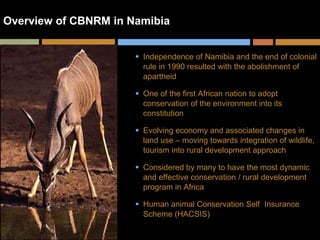
Overview of CBNRM in Namibia Independence of Namibia and the end of colonial rule in 1990 resulted with the abolishment of apartheid One of the first African nation to adopt conservation of the environment into its constitution Evolving economy and associated changes in land use – moving towards integration of wildlife, tourism into rural development approach Considered by many to have the most dynamic and effective conservation / rural development program in Africa Human animal Conservation Self  Insurance Scheme (HACSIS)
Overview (continued) Unlocking and promoting Namibia’s comparative advantages? Policy and Legislative Reform Promotion of Innovative Conservation / Development Approaches Freehold Conservancies Communal Conservancies  Concessions Policy for National Parks Public / Community / Private Conservation Linkages
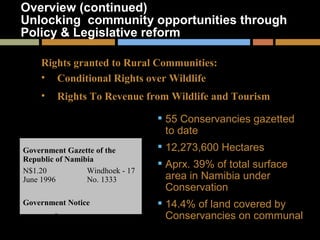
Overview (continued) Unlocking  community opportunities through Policy & Legislative reform Government Gazette of the Republic of Namibia N$1.20 Windhoek - 17 June 1996 No. 1333 Government Notice Page No. 151Promulgation of Nature Conservation Amendment Act, 1996 (Act 5 Rights granted to Rural Communities: Conditional Rights over Wildlife Rights To Revenue from Wildlife and Tourism 55 Conservancies gazetted to date 12,273,600 Hectares Aprx. 39% of total surface area in Namibia under Conservation 14.4% of land covered by Conservancies on communal
Overview (continued) Empowerment: 1 in 8 Namibians  >80 Communities mobilized into representative governance bodies Additional 70,000 people in emerging conservancies
Treat rural residents as respected & valued partners and they will then become the solution to conservation and not the problem! Community attitudes to Conservation “We do not hate conservation just the problems –and in not being allowed to benefit!”
Benefits from Communal Area Conservancy  in 2007:  US$
 
Financial program benefits are growing Total for 2007: US$ 5,2 mil
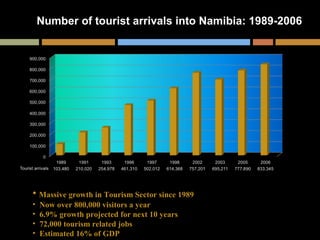
Number of tourist arrivals into Namibia: 1989-2006 Massive growth in Tourism Sector since 1989 Now over 800,000 visitors a year 6.9% growth projected for next 10 years 72,000 tourism related jobs Estimated 16% of GDP
Historical Funding mechanisms? Donor funding (WWF, EC, USAID, SIDA, NORAD,DANIDA, DFID) Namibian Government (ICEMA) Private sector funding In kind contribution by Conservancies and the Namibian Government Joint venture funding
Challenges vs Strategies Challenges Demand on support services Demand on local technical capacity Financial compliance / accountability Human wildlife conflict Expectations / Utopia Integration with other livelihood strategies Sustainability Strategy Maintain Political Support / Goodwill  Identify and implement long term  objectives and activities Address Capacity and Implementation Approaches of Service Providers Develop a Long Term Funding Strategies
CBNRM Vision A Namibian CBNRM Programme  which  empowers present and future generations to manage integrated wildlife  and  other natural resources  as a recognized and valued  rural development option
Sustainability Fund initiative Engagement of sustainability finance coordinator with the objective to:  d evelop a sustainability finance strategy (funding mechanisms) secure stakeholder buy in implement strategy together with stakeholders
Workshop expectations Learn from other countries with comparable set  – ups L earn from others on trust fund establishment F undraising strategies in mobilizing sizable funding support E stablish network relations
Thank You!

Louis Ndilula Cbnrm Namibia 31 03 09

  • 1.
    CBNRM Namibia Capetown March 2009 Maxi Pia Louis and Kauna Ndilula
  • 2.
    Key topics tobe covered: Overview of CBNRM Namibia H istorical financing mechanisms CBNRM vision Fund initiative Workshop expectations
  • 3.
    Overview of CBNRMin Namibia Independence of Namibia and the end of colonial rule in 1990 resulted with the abolishment of apartheid One of the first African nation to adopt conservation of the environment into its constitution Evolving economy and associated changes in land use – moving towards integration of wildlife, tourism into rural development approach Considered by many to have the most dynamic and effective conservation / rural development program in Africa Human animal Conservation Self Insurance Scheme (HACSIS)
  • 4.
    Overview (continued) Unlockingand promoting Namibia’s comparative advantages? Policy and Legislative Reform Promotion of Innovative Conservation / Development Approaches Freehold Conservancies Communal Conservancies Concessions Policy for National Parks Public / Community / Private Conservation Linkages
  • 5.
    Overview (continued) Unlocking community opportunities through Policy & Legislative reform Government Gazette of the Republic of Namibia N$1.20 Windhoek - 17 June 1996 No. 1333 Government Notice Page No. 151Promulgation of Nature Conservation Amendment Act, 1996 (Act 5 Rights granted to Rural Communities: Conditional Rights over Wildlife Rights To Revenue from Wildlife and Tourism 55 Conservancies gazetted to date 12,273,600 Hectares Aprx. 39% of total surface area in Namibia under Conservation 14.4% of land covered by Conservancies on communal
  • 6.
    Overview (continued) Empowerment:1 in 8 Namibians >80 Communities mobilized into representative governance bodies Additional 70,000 people in emerging conservancies
  • 7.
    Treat rural residentsas respected & valued partners and they will then become the solution to conservation and not the problem! Community attitudes to Conservation “We do not hate conservation just the problems –and in not being allowed to benefit!”
  • 8.
    Benefits from CommunalArea Conservancy in 2007: US$
  • 9.
  • 10.
    Financial program benefitsare growing Total for 2007: US$ 5,2 mil
  • 11.
    Number of touristarrivals into Namibia: 1989-2006 Massive growth in Tourism Sector since 1989 Now over 800,000 visitors a year 6.9% growth projected for next 10 years 72,000 tourism related jobs Estimated 16% of GDP
  • 12.
    Historical Funding mechanisms?Donor funding (WWF, EC, USAID, SIDA, NORAD,DANIDA, DFID) Namibian Government (ICEMA) Private sector funding In kind contribution by Conservancies and the Namibian Government Joint venture funding
  • 13.
    Challenges vs StrategiesChallenges Demand on support services Demand on local technical capacity Financial compliance / accountability Human wildlife conflict Expectations / Utopia Integration with other livelihood strategies Sustainability Strategy Maintain Political Support / Goodwill Identify and implement long term objectives and activities Address Capacity and Implementation Approaches of Service Providers Develop a Long Term Funding Strategies
  • 14.
    CBNRM Vision ANamibian CBNRM Programme which empowers present and future generations to manage integrated wildlife and other natural resources as a recognized and valued rural development option
  • 15.
    Sustainability Fund initiativeEngagement of sustainability finance coordinator with the objective to: d evelop a sustainability finance strategy (funding mechanisms) secure stakeholder buy in implement strategy together with stakeholders
  • 16.
    Workshop expectations Learnfrom other countries with comparable set – ups L earn from others on trust fund establishment F undraising strategies in mobilizing sizable funding support E stablish network relations
  • 17.